
Business
Costco, Instacart offering delivery of retailer’s custom cakes, party platters


Check out what’s clicking on FoxBusiness.com.
Costco is now offering delivery for its famous sheet cakes and party platters, giving shoppers a major convenience perk when ordering customizable items.
Instacart, Costco’s primary delivery partner, announced Wednesday that shoppers can now order bakery and deli options through its marketplace and SameDay Costco and customize them in advance for delivery.
The newly available items include its beloved custom sheet cakes and 10-inch round cakes. Customers can also order sandwich platters, shrimp trays and fruit platters.
The move marks a significant expansion of Costco’s digital offerings for the fan-favorite products, which were previously unavailable for online ordering until February, when Costco retired a decades-old system that required customers to visit a warehouse and fill out paper order forms.
COSTCO BRINGS BACK FAN-FAVORITE KIRKLAND TREAT AFTER TWO-YEAR ABSENCE

Newly available items include custom sheet cakes and 10-inch round cakes, Costco and Instacart said. (Marlene Awaad/Bloomberg via Getty Images / Getty Images)
“For nearly a decade, we’ve worked closely with Costco to expand the ways their members can shop online, and this is another exciting step in that partnership,” Ryan Hamburger, chief commercial officer at Instacart, said in a statement.
| Ticker | Security | Last | Change | Change % |
|---|---|---|---|---|
| COST | COSTCO WHOLESALE CORP. | 956.12 | -3.89 | -0.41% |
| CART | MAPLEBEAR INC | 50.77 | -0.74 | -1.44% |
“We’re proud to bring Costco’s beloved made-to-order bakery and deli to sameday.costco.com and the Instacart marketplace, making delivery available for the first time and giving members even more ways to order for life’s biggest celebrations.”
COSTCO PLOTS MAJOR EXPANSION INTO SENIOR HEALTHCARE WITH MEDICARE PARTNERSHIP

Instacart, Costco’s primary delivery partner, announced shoppers can order the bakery and deli options through its marketplace and SameDay Costco. (Instacart)
According to Instacart, shoppers can choose the size, shape and flavor of their cake from a catalog of available options.
They can also select from a preset list of designs and add a message of up to 30 characters in a color of their choice.

The move marks a significant expansion of Costco’s digital offerings for fan-favorite products. (Lindsey Nicholson/UCG/Universal Images Group / Getty Images)
Wednesday’s announcement builds on Instacart’s longstanding partnership with Costco, which began in 2017 with the launch of same-day delivery.
CLICK HERE TO GET FOX BUSINESS ON THE GO
Since then, the companies have expanded their partnership to include Costco’s same-day e-commerce sites.
Costco did not immediately respond to FOX Business’ request for comment.


American Airlines A321XLR.
Courtesy: American Airlines
American Airlines announced Thursday it will add seven international routes to its 2027 schedule, with many of those on its Airbus A321XLR planes.
Here are the additions:
- Charlotte, North Carolina, to Barcelona, Spain, starting May 27, on a Boeing 777-200ER.
- Chicago O’Hare International Airport to Tokyo’s Narita International Airport, starting March 19, on a Boeing 787-9.
- New York John F. Kennedy International Airport to Amsterdam, starting March 28, on an Airbus A321XLR.
- New York JFK to Nice, France, starting May 6, on an Airbus A321XLR.
- Philadelphia to Porto, Portugal, starting March 28, on an Airbus A321XLR.
- Philadelphia to Reykjavik, Iceland, starting May 27, on an Airbus A321neo.
- Philadelphia to Vienna, starting May 6, on an Airbus A321XLR.
The carrier is also adding a fourth daily flight between JFK and London Heathrow Airport, on a Boeing 787-9, starting March 28.
The Airbus XLR, which stands for extra long range, has the ability to go up to 4,700 nautical miles. The single-aisle planes are smaller than others in the airline’s fleet, like a Boeing 777 or Boeing 787 Dreamliner, which makes them cheaper to operate.
The airline rolled out a new interior and configuration with its inaugural XLR flight last year. It’s allocated more space to premium seats — which take up a fifth of the plane — than it has on its other aircraft.
American’s plan is to use the XLRs to focus on routes to smaller European cities from its Philadelphia hub or from New York City.
“It really opens up the menu for all these destinations that are just too small for a widebody,” American’s senior vice president of network and schedule planning, Brian Znotins, told CNBC last year.
The interior of American Airlines’ new Airbus A321XLR aircraft during a showcase event at John F. Kennedy International Airport in New York, U.S., December 11, 2025.
Rajesh Kumar Singh | Reuters
The airline said its Vienna route will extend through early January 2028 to draw tourists who are aiming to visit European Christmas markets. That follows a growing trend, as airlines have been adding more capacity in the shoulder seasons and even in the off-peak winter period as travelers opt to fly in the fall and other cooler, cheaper times of the year.
American’s announcement comes the same week that United Airlines unveiled its 2027 destinations. United is adding routes to less traditionally popular tourist destinations for U.S. travelers, spanning Ljubljana, Slovenia, to Okinawa, Japan.
United offers more international service than other U.S. airlines.
American has been trying to close a profit gap with rivals United and Delta Air Lines and said earlier this year that its flying is split about 80% domestic versus 20% international.
International flights often carry a high premium compared with domestic routes — and the planes serving them generally have more luxurious seats on board, which can be more profitable for airlines.

The New York Stock Exchange on April 14, 2025.
View Press | Corbis News | Getty Images
A version of this article first appeared in CNBC’s Inside Wealth newsletter with Robert Frank, a weekly guide to the high-net-worth investor and consumer. Sign up to receive future editions, straight to your inbox.
Family offices boosted their stock holdings in the second quarter and trimmed their exposure to real estate and private market investments, according to the latest CNBC Family Office Portfolio Tracker.
Single family offices held 37% of their portfolios in stocks in the second quarter, up from 34% in the first quarter, according to the CNBC Portfolio Tracker powered by Addepar, the foundational data and artificial intelligence platform used by financial professionals globally.
The surge in family office stock holdings is the largest in several years and signals their continued bullishness on the AI trade and equities, despite fears of a bubble and highly concentrated market.
“I’d read it as family offices are more comfortable being more highly allocated to public equities,” said Addepar CEO Eric Poirier. “The increase in public equities was the biggest quarter-on-quarter shift that we’ve seen over the over the course of the last three four years.”
The CNBC Portfolio Tracker provides a real-time look into the portfolios of single family offices, the private investment arms of wealthy families. While most information on family office investments comes from surveys, Addepar’s data reflects the actual portfolios of hundreds of family offices — aggregated and anonymized — representing a total of more than $1.4 trillion in assets.
The rise in stocks in the second quarter was offset by a pullback in private markets and real estate. Family office holdings of private companies, real estate, private equity, venture capital and private credit dropped by 3 percentage points. They also drew down their cash piles by less than 1 percentage point in the quarter, suggesting a push to put more of their money to work.
While the 3 percentage point swing from alts to stocks is substantial for family offices, and challenges the notion that the richest investors prefer exotic alts over retail-friendly stocks, it was largely the result of market fluctuations rather than active buying and selling. The rally in stock markets in the second quarter — with the S&P 500 up about 15% during the quarter — powered their stock gains. The declines in private market valuations, led by troubles in private credit, brought down their allocations to alts.
Yet family offices are letting their stock allocations grow as a share of their portfolio, rather than rebalancing, suggesting a long-term bullish tilt to stocks. Poirer said the AI trade is likely driving much of the interest.
“The AI thematic bet is getting so much action and so much activity, and it’s being expressed in large part in public markets versus private markets,” he said.
The top five most commonly held stocks by family offices in the second quarter were Microsoft, owned by 77% of family offices, followed by Amazon and Alphabet (76%), Apple (70%) and Nvidia (69%).
In private markets, family office allocations to alternatives fell to 46% from 49% in the second quarter, the largest drop in years. Addepar said the decline was mainly driven by private credit funds marking down the values of their assets. Fully 18% of recent vintage private credit funds (vintages 2020 or later) have posted markdowns in net asset values, according to Addepar. That compares with an average of 9% in write-downs for private credit funds with vintages of 2016 or later through the first four years of the lifecycle.
Real estate and venture capital funds also had markdowns, Poirier said.
“We’re not actually seeing changes in inflows or outflows,” Poirier said. “It’s more just where family offices are marking their private holdings.”
Family office holdings of fixed income held steady at 8%, hedge funds remain at 7% and “other alts,” which includes commodities and collectibles, held at 6%. Their largest investment segment after pubic equities was private companies, at 15% of their portfolios.
Looking ahead to the third quarter CNBC Family Office Portfolio Tracker, Poirier said the big themes to watch will be in interest rates and bonds.
“The rates environment, the fixed income world is very dynamic right now,” he said.

The UK has its own measures in place to protect children online.
The Online Safety Act mainly put restrictions on what content young people can see online.
But the UK government has gone further than the US ban already.
Earlier this year, it announced an outright social media ban for under-16s, which will take effect in 2027.
Some other measures will apply to 16 and 17-year-olds, such as curfews and restrictions during certain hours of the day.
The US has to some extent followed the same path: Start by policing the content on the platforms, then move on to restricting access to social media.
But the core difference is children in the US will not be banned completely.
Instead, they will not have access to Facebook and Instagram overnight, have to follow time limits, and there will be prompts for children who use them for a long time.
Unlike in the UK, these are not put in by law, and will only apply to the two platforms so far (more on that below).
The UK government said it was “following developments closely” in the Meta settlement.
But now those safety features have been accepted by Meta in the US, other countries may start asking for them too.
“These tech platforms don’t usually do anything unless they are told to do it,” said Trevor Johnson, a former senior figure at Meta and TikTok, who spoke to Radio 4’s Today programme.
“But I do think the UK will feel empowered to at least ask for the same restrictions.”
Another former Meta director, Zvika Krieger, said Meta agreed to the changes because it saw “the writing on the wall”.
“They’re trying to demonstrate, ‘Oh, you don’t need to go and do a complete ban’,” he told 5 Live Breakfast.
“I think that they probably would roll out a lot of these features to the rest of the world as well.”


I am a CFA Charterholder with over 15 years of experience in global capital markets, having worked across fixed income, equity analysis, structured products, and quantitative analytics at several of the world’s leading financial institutions. My career has given me hands-on experience with the full spectrum of financial analysis — from loan-level mortgage data and CLO tranche modeling to equity valuation, earnings quality assessment, and macroeconomic framework development across multiple market cycles. On Seeking Alpha, my primary focus is fundamental stock analysis grounded in CFA Institute methodology. This means rigorous application of discounted cash flow modeling, comparable company analysis, EV/EBITDA and P/E relative valuation, DuPont decomposition of returns on equity, and earnings quality screening — the same frameworks used by institutional buy-side analysts, not the surface-level price target commentary that dominates most retail finance content. I believe most individual investors are underserved by analysis that stops at headline EPS and price-to-earnings multiples without examining the underlying quality of earnings, capital allocation discipline, balance sheet strength, and competitive positioning that actually drive long-term returns. My stock analysis approach follows a structured three-stage process. First, I screen for businesses with durable competitive advantages — companies with pricing power, high returns on invested capital, and management teams with demonstrated capital allocation discipline. Second, I build a full valuation model using multiple methodologies, stress-testing assumptions across bull, base, and bear scenarios rather than anchoring to a single price target. Third, I assess the macro and sector context — interest rate sensitivity, credit cycle positioning, and industry structure — using the same analytical lens applied on institutional trading desks. My sector interests include financial services, technology, industrials, and dividend-paying equities where balance sheet analysis and cash flow quality are particularly differentiated factors. I have a strong interest in identifying situations where the market misprices companies based on short-term earnings noise rather than long-term intrinsic value — the classic gap between price and value that the CFA curriculum identifies as the foundation of active investing. I hold a Master of Science in Information Systems and have completed advanced coursework in financial valuation, M&A analysis, and financial risk management in addition to the CFA designation. I am also the founder of an AI-powered technology company, which informs my analysis of technology sector companies and the growing intersection of artificial intelligence with business model disruption across industries. My motivation for writing on Seeking Alpha is to bring institutional-grade equity research discipline to individual investors. The CFA curriculum represents hundreds of hours of investment analysis training — I want to put that framework to work in public analysis that goes deeper than most retail-facing content and gives readers a genuine analytical edge rather than recycled consensus views.
Analyst’s Disclosure: I/we have a beneficial long position in the shares of BUG either through stock ownership, options, or other derivatives. I wrote this article myself, and it expresses my own opinions. I am not receiving compensation for it (other than from Seeking Alpha). I have no business relationship with any company whose stock is mentioned in this article.
BUG is an ETF that has 8.14% allocation to FTNT. I hold long-term call options in my IRA.
Seeking Alpha’s Disclosure: Past performance is no guarantee of future results. No recommendation or advice is being given as to whether any investment is suitable for a particular investor. Any views or opinions expressed above may not reflect those of Seeking Alpha as a whole. Seeking Alpha is not a licensed securities dealer, broker or US investment adviser or investment bank. Our analysts are third party authors that include both professional investors and individual investors who may not be licensed or certified by any institute or regulatory body.
Business
Waist Size, Not BMI, May Better Predict Longevity Risk in Older Adults, New Study Finds, Doctor Explains

A new study is complicating the long-standing use of body mass index as a measure of health in older adults, finding that waist circumference may offer a more reliable signal of early death risk than the widely used BMI formula.
The research, published Aug. 19 in the Journal of the American Geriatrics Society, found that among adults 65 and older, having a larger waist circumference was linked to a higher risk of early death. But being classified as overweight by BMI was, counterintuitively, associated with a lower risk of early death in the same population — a seemingly contradictory finding that has prompted closer examination from medical experts.
What the study found
Researchers analyzed data from nearly 7,000 adults age 65 and older who were tracked as part of a large, nationally representative study funded by the U.S. National Institutes of Health. Participants were followed for up to 14 years, allowing scientists to examine how changes in BMI and waist circumference correlated with mortality risk over time.
Compared with men whose BMI fell in the normal range, men classified as overweight, with a BMI between 25 and 29.9, had a 46% lower risk of death. Men with class I or II obesity, defined as a BMI between 30 and just under 40, also showed a lower risk of death relative to the normal-BMI group.
Among women, those classified as overweight had a 27% lower risk of death compared with those in the normal BMI range. However, class I or II obesity was not associated with a statistically significant difference in mortality risk for women, and for both men and women with class III obesity, defined as a BMI of 40 or higher, there was no statistically significant difference in mortality risk compared with the normal-BMI group.
The pattern shifted considerably when researchers instead examined waist circumference. Men with a waist circumference greater than 40 inches and women with one greater than 35 inches had a 24% higher risk of early death compared with those below those thresholds — and that elevated risk held up even after researchers statistically accounted for participants’ BMI.
Making sense of the contradiction
The findings touch on what researchers sometimes call the “obesity paradox“: the puzzling pattern in which obesity is strongly linked to increased risk of conditions such as heart disease and type 2 diabetes, yet appears associated with lower mortality risk in some older populations.
Dr. Leana Wen, CNN’s wellness expert, an emergency physician and clinical associate professor at George Washington University who previously served as Baltimore’s health commissioner, cautioned against reading the results as evidence that gaining weight is protective in older age. The study’s authors explicitly caution against interpreting the findings as evidence that excess body fat is biologically beneficial, Wen said.
Wen pointed to several possible explanations. One is reverse causation: serious illnesses such as cancer and heart disease can cause people to lose weight, which could make lower body weight appear linked to higher mortality risk when an underlying illness is actually driving both outcomes. A related factor is survivorship bias — people who reach older age despite having obesity may differ in meaningful ways from those who developed obesity-related disease and died earlier in life. Wen also noted that BMI itself may simply be an imperfect measure of body composition.
Why BMI can be misleading with age
BMI is calculated using only height and weight, without accounting for what actually makes up that weight. Two people of identical height and weight could have very different body compositions — one with substantial muscle mass and relatively little fat, the other with less muscle and more fat — yet register an identical BMI.
That limitation becomes more pronounced with age, according to Wen. Older adults tend to lose muscle mass over time, and can also lose height and experience shifts in where fat is stored on their bodies. As a result, a higher BMI in an older adult could actually reflect greater preservation of lean muscle mass, while someone with a BMI in the “normal” range might have lost substantial muscle while retaining excess body fat — a combination that can leave a person more vulnerable despite an outwardly reassuring number.
Why waist size matters
Fat that accumulates around the waist and deep within the abdomen, often referred to as visceral fat, is associated with inflammation, insulin resistance and other metabolic changes that raise the risk of cardiovascular disease and diabetes. Waist circumference offers a simple way to estimate that visceral fat, and Wen said many experts now advocate using waist circumference, waist-to-hip ratio, or direct body fat measurements alongside BMI when assessing whether someone has overweight or obesity.
Measuring waist circumference requires no specialized equipment, allowing people to track it at home using a simple tape measure placed around the abdomen, between the bottom of the ribs and the top of the hip bones, kept level and snug without compressing the skin.
The risks of being underweight
The study also identified a particularly elevated mortality risk among older adults who were underweight, with men and women in that category facing nearly double the risk of early death compared with those in the normal BMI range. Wen said this finding aligns with known risks tied to frailty, since older adults depend on muscle strength to perform daily activities, maintain mobility and reduce their risk of falls. Someone losing weight due to muscle loss could become more vulnerable even as their BMI moves toward a range conventionally considered healthier. Still, Wen cautioned that being underweight may often be a consequence of poor health rather than its cause, since chronic disease can itself drive unintentional weight and muscle loss.
What older adults should focus on instead
Rather than fixating on a specific weight or BMI target, Wen recommended that older adults prioritize overall health and physical function — including the ability to perform everyday tasks independently, maintain muscle strength, and stay physically active through a mix of aerobic exercise and strength training, along with adequate protein intake.
She also advised paying attention to changes over time rather than single measurements: an expanding waistline can signal rising abdominal fat even when overall weight and BMI remain largely unchanged, while unexplained weight loss should prompt a conversation with a healthcare provider. Wen recommended that older adults discuss with their doctors what a healthy weight looks like for them individually, incorporating not just BMI but body composition, fat distribution, physical function, and metrics such as blood pressure, blood sugar and cholesterol.
This story touches on health and mortality-related research; readers experiencing concerns about their own weight, health or mental wellbeing are encouraged to speak with a licensed healthcare provider.

Tjx stock hits 52-week low at 135.2 USD


Rick is a Wall Street Journal best-selling author and financial writer specializing in stocks and options trading. He’s recognized as a top 1% financial expert and blogger on TipRanks, and his work, in both written and video form, has appeared in Good Morning America, Forbes, Yahoo Finance, MSN, Business Insider, InvestorPlace, Benzinga, SoFi, Barchart, Thrive Global, and many more. Journalists and editors can find his verified credentials on MuckRack.His passion is business, and he works tirelessly to make complex investing ideas easy to understand, whether on his YouTube channel, in his books, or across his published work.Rick started his career young. In 2004, he founded a web marketing agency that was acquired in 2007. He and his partner then became pioneers in the telecom industry, offering a business phone service that worked from anywhere. The company grew rapidly through innovation and strategic acquisitions before being sold in 2014 for a seven-figure exit.Between 2009 and 2015, Rick served on the board of directors of GVCCU, where he gained inside experience in the mortgage and lending business.In 2018, he wrote The Financially Independent Millennial to share his story of reaching financial independence at age 35 despite not learning about money growing up. His books are written to be approachable and often highlight the lessons he wishes he could have told his younger self.Rick later co-authored Success Mindsets, which became a Wall Street Journal bestseller on November 13, 2021.When he’s not analyzing markets, Rick is an enthusiast of fast cars, technology, and good food.
Analyst’s Disclosure: I/we have no stock, option or similar derivative position in any of the companies mentioned, and no plans to initiate any such positions within the next 72 hours. I wrote this article myself, and it expresses my own opinions. I am not receiving compensation for it (other than from Seeking Alpha). I have no business relationship with any company whose stock is mentioned in this article.
Seeking Alpha’s Disclosure: Past performance is no guarantee of future results. No recommendation or advice is being given as to whether any investment is suitable for a particular investor. Any views or opinions expressed above may not reflect those of Seeking Alpha as a whole. Seeking Alpha is not a licensed securities dealer, broker or US investment adviser or investment bank. Our analysts are third party authors that include both professional investors and individual investors who may not be licensed or certified by any institute or regulatory body.

Unknown Executive
Good morning, everyone, in Europe. Good afternoon to those in Asia. Thank you for joining Jinhui Shipping and Transportation Limited Q2 and First Half 2026 financial results. Can everyone hear me? Sorry, there are other people joining, so I’ll accept…
I trust that you’ve all had a look at the financial results announcement, and you have a copy, and I’ve shared the presentation on the screen. So going through the highlights of current quarter. For Q2, we recorded USD 36 million for revenue, EBITDA of USD 17 million and a net profit for the quarter, USD 5 million. Basic earnings per share, USD 0.048 for Q2. For the first half of 2026, we recorded a revenue of USD 69 million, EBITDA of USD 34 million, a net profit of $10 million, basic earnings per share, 0.088 and a gearing ratio as of the end of June, 7%.
Compared to Q2 2025, Q2 2026 recorded a slight decrease. This should be a 9% decrease. This should be quite apparent because we — there’s a reduction in the number of ships we sold some secondhand ships. Net profit, $5.3 million in Q2 2026, which represents a 374% quarter-on-quarter increase. Average daily TCE stands in Q2 2026, USD 18,015 per day, which is a 30% increase compared to Q2 2025 number. For the first half, first half 2026 revenue compared to first half 2025 is a 13% drop. Again, this is due to the lower number of vessels in our fleet, given that we’ve sold some. Net profit, $9.6 million, 37% drop compared to the first half of 2025.
Average TCE in the first half 2026, USD 17,150 per day, a 30% increase compared


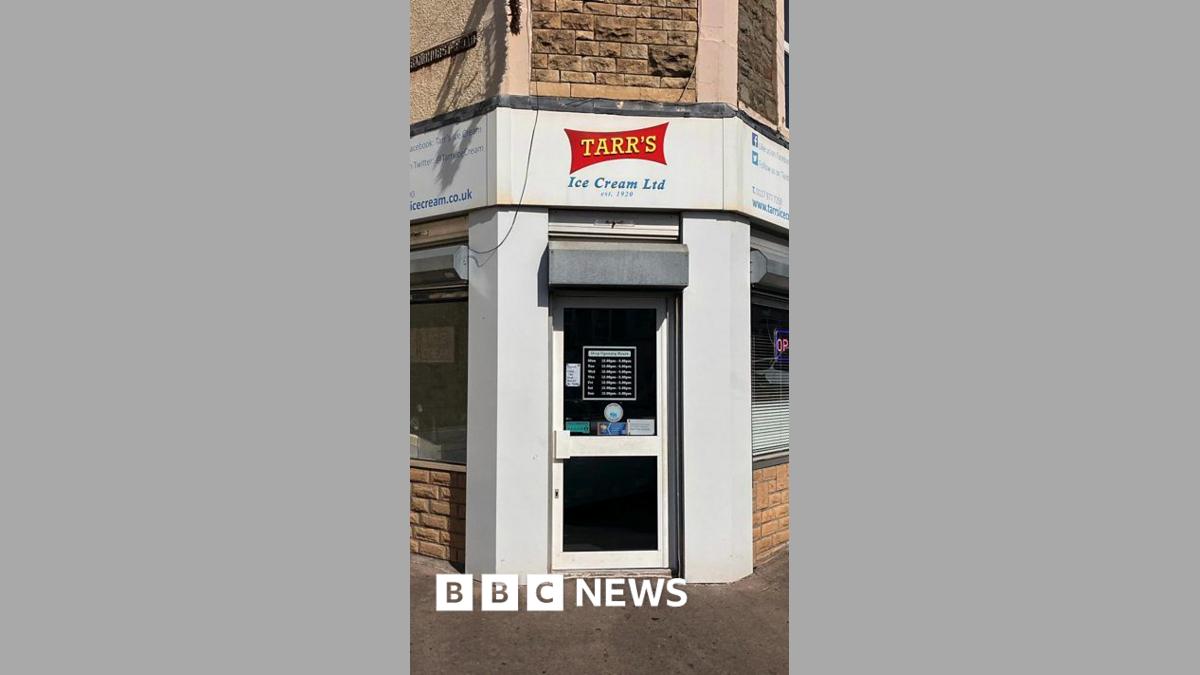
The family-run shop has been a fixture in Brislington, Bristol since the 1920s.

TOKEN2049 Singapore Returns to Marina Bay Sands This October

Bianca Censori Spotted With Chicago West and Dream Kardashian

Dallas Wings coach gives ‘great’ injury update on UConn’s Azzi Fudd after season-ending surgery

Weekend Open Thread – Corporette.com

Weekend Open Thread: Brooks Brothers

London Mayor Sadiq Khan handed a peerage by Keir Starmer alongside 15 other Labour figures… just days before the PM leaves No10

Andrew Tate Suffers MAJOR Humiliation As Lawyer Reveals Damning Financial Lies

Her Husband Knew She Took the Money And Then Use The Best Technique For Finding #shorts #money#funny

Bessent Threatens To Blow Up GLOBAL FINANCIAL SYSTEM
-

 Fashion6 days ago
Weekend Open Thread: Madewell – Corporette.com
-

 Crypto World2 days ago
SpaceX stock could rise 75% to $240, JPMorgan says
-

 Business5 days ago
Musk’s Tesla, SpaceX Confirm $16.8 Billion ‘Terafab’ Chip Plant as World’s Largest Building in Texas
-

 Crypto World5 days ago
anatomy of crypto’s biggest liquidation event since 2021
-

 Crypto World3 days ago
A $30 Billion AI Fund Implodes, Now the SEC Is Investigating Wall Street’s Role
-

 Politics5 days ago
6 months on, Irish renters crushed by effects of government housing bill
-

 Crypto World1 day ago
Did Trump Just Move SpaceX Stock With One Truth Social Post?
-

 Business4 days ago
Mystery AI Model ‘Ox Alpha’ Draws Developers With Free Access as Chinese Lab Origins Remain Debated
-
 NewsBeat5 days ago
The ‘Lucky Dip Gang’ causing carnage for clicks: After five thugs were killed speeding in the wrong direction on a motorway, GUY ADAMS investigates a sick new trend… and why police aren’t even allowed to pursue them
-

 Business3 days ago
Moderna CEO warns China is pouring state money into mRNA technology
-

 Business7 days ago
Five Below: Kids Discount Retailer Reaps Rich Rewards
-

 Business3 days ago
NVIDIA Stock Drops Nearly 2 Percent to $210 on Seventh Losing Day Ahead of Critical AI Earnings
-
 Crypto World6 days ago
Nvidia Stock Suffers Longest Losing Streak Since 2022: Will Q2 Earnings End It?
-

 Business6 days ago
UK firms in critical financial distress rise 9% to 53,756
-

 Sports4 days ago
Deshaun Watson fires back at Browns fans after being booed: ‘It’s a disrespectful thing’
-
 Crypto World4 days ago
Google Gemini AI Predicts Ethereum Could Become the Trade Retail Misses in 2026
-

 Tech6 days ago
Unitree’s New Superman Robot Claims to Outjump and Outrun Every Human, Usain Bolt Included
-

 Tech6 days ago
Faster chip in a familiar form factor
-

 Business5 days ago
Will Tesla Stock Be Higher or Lower a Year From Now? Here’s What Wall Street Analysts Are Saying
-

 Crypto World6 days ago
SEC Regulation Crypto vs CLARITY Act: which framework wins
You must be logged in to post a comment Login