

Business
Costco to open its first stand-alone gas station in Mission Viejo


Check out what’s clicking on FoxBusiness.com.
Costco is set to debut its first stand-alone gas station this summer in Mission Viejo, California, marking a major expansion of its fuel operations, with a second location in Hawaii slated to open next year.
The California location, located roughly 50 miles from Los Angeles, is expected to open in late June, according to local outlet KABC, citing city officials. It will become the chain’s largest gas station, featuring 40 pumps.
A second location is in the works for Honolulu, Hawaii, in the Kapālama Kai community, according to C-store Dive, citing a spokesperson from private education system Kamehameha Schools, which owns the project.
The move marks a major step for the discount retail giant, whose gas stations at existing warehouse locations have long been plagued by lengthy wait times, heavy traffic and crowded parking lots.
COSTCO SAYS YOUR NEXT CHECKOUT COULD TAKE UNDER 10 SECONDS THANKS TO NEW AUTOMATED PAY STATIONS

Vehicles in line at a Costco gas station in Vallejo, California, US, on Thursday, May 29, 2025. (David Paul Morris/Bloomberg / Getty Images)
Costco’s Mission Viejo site at 25732 El Paseo will sit on the former location of a Bed Bath & Beyond, which city officials approved for demolition last year to make way for the project. It will neighbor a Krispy Kreme location, a Dairy Queen Chill & Grill and a Jack in the Box.
The project will feature 20 fueling dispensers, equivalent to 40 pumping stations, according to 2025 city planning documents.
Spanning 17,234 square feet, the “fueling canopy” will also house an accessory office and breakroom building for employees, the documents stated.
The new gas station will be open daily from 5 a.m. to 10 p.m. exclusively for Costco members, C-store Dive reported.
COSTCO ENTERS FERTILITY CARE WITH MASSIVE DISCOUNTS FOR MEMBERS THROUGH NEW HEALTHCARE PARTNERSHIPS

A customer pumps gas on Wednesday, Dec. 3, 2025, in Schenectady, N.Y. (Lori Van Buren/Albany Times Union via Getty Images / Getty Images)
According to GasBuddy, gas prices in the Mission Viejo area currently range from $5.69 to $6.35 per gallon.
The two closest existing Costco gas stations — at the Laguna Niguel and Laguna Marketplace warehouses, roughly 2.5 to 3 miles from the planned Mission Viejo site — both list gas at $5.69 per gallon, according to the Costco app.

Drivers refuel vehicles at a Costco Wholesale Corp. gas station in Brookhaven, Georgia. (Elijah Nouvelage/Bloomberg via Getty Images / Getty Images)
For the Hawaii location, demolition and preparation of the property began in October 2025 and are ongoing, according to the project’s website.
| Ticker | Security | Last | Change | Change % |
|---|---|---|---|---|
| COST | COSTCO WHOLESALE CORP. | 983.86 | +4.21 | +0.43% |
CLICK HERE TO READ MORE ON FOX BUSINESS
Gas prices in Honolulu range from $5.14 to $5.59 per gallon, according to GasBuddy. The closest Costco in Iwilei, about 2.2 miles from the planned Kapālama Kai site, lists gas at $4.14 per gallon, according to the Costco app.


Quarterly volume falls 2% in second quarter.

UBS managing director and senior portfolio manager Jason Katz discusses whether the biggest gains from the AI boom are already behind investors and opportunities in consumer stocks on ‘Varney & Co.’
A finance expert is urging investors to look beyond the artificial intelligence trade after a massive rally in technology stocks, arguing that future market gains may come from other areas of the economy.
UBS Managing Director and Senior Portfolio Manager Jason Katz joined FOX Business’ “Varney & Co.” host Stuart Varney to discuss market leadership, the outlook for consumers and where investors may find opportunities if enthusiasm around AI begins to cool.

The New York Stock Exchange (NYSE) in New York, New York. (Michael Nagle/Bloomberg / Getty Images)
Artificial intelligence has driven much of the stock market’s gains over the past several years as companies race to build data centers, expand computing capacity and develop new AI-powered products. The surge has helped lift major technology stocks and fuel broader optimism on Wall Street.
FOX Business host Charles Payne discusses the market shift driven by artificial intelligence on ‘Making Money.’
But Katz suggested investors may need to adjust expectations after the sector’s rapid run-up.
“AI has taken all the air out of the room, and with good reason,” Katz said. “But this rally is astounding. There isn’t a single cautionary tone or voice out there.”
HOW ETFS CAN BE EFFECTIVE BUILDING BLOCKS FOR RETIREES
While Katz said he is not predicting a major downturn, he noted that investors may be waiting for the next catalyst as markets assess factors, including energy prices and corporate earnings.
Hennion & Walsh Asset Management President and CIO Kevin Mahn joins ‘Mornings with Maria’ to weigh the strength of the AI-driven market rally as experts debate whether oil prices are headed lower or could spike amid Middle East tensions.
Katz pointed to consumer discretionary stocks as a potential area to watch, noting they have significantly lagged the broader market this year despite the importance of consumer spending to the U.S. economy.
The discussion comes as Americans continue to closely monitor fuel costs and other household expenses. Katz argued that lower oil prices could provide meaningful relief for consumers.
WORKERS FACE GROWING ‘AUTOMATION ANXIETY’ AS TECH LAYOFFS SURGE, AI ADOPTION ACCELERATES
“For every dollar that that consumer is not spending at the pump, she’s spending at shopping… Hopefully, we see the consumer step up to the plate, and we believe that will be the case.” Katz said.
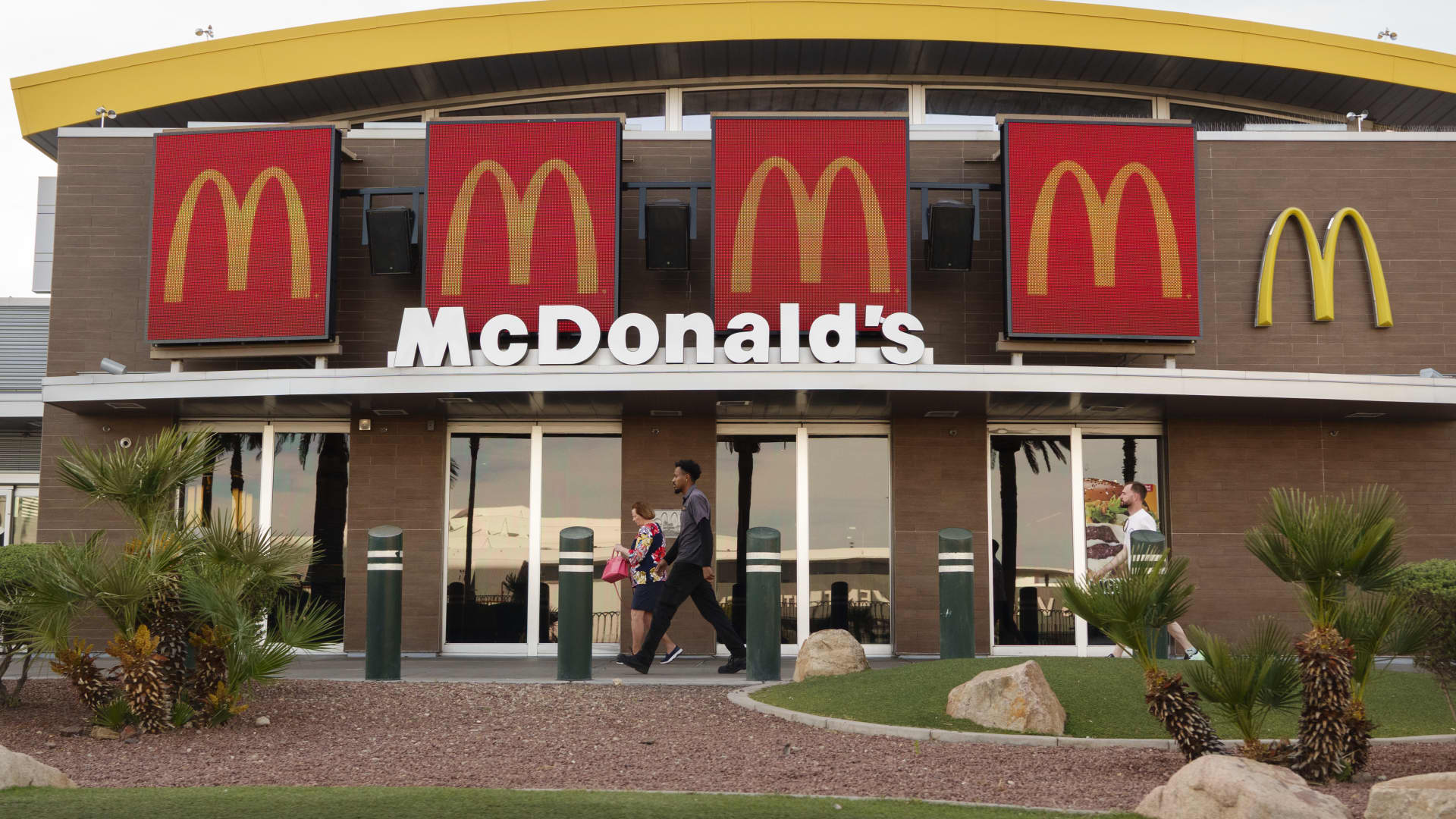
People walk by a McDonald’s restaurant on March 11, 2026 in Las Vegas, Nevada.
Kevin Carter | Getty Images
McDonald’s on Monday unveiled its latest global growth strategy to help the fast-food giant become customers’ first choice as it faces new rivals and consumer spending stretched by high gas prices.
A new restaurant design, better tasting food and drinks, consumer-led innovation and improved customer service are the four cornerstones of the new plan, which the company calls “McDonald’s > NEXT.”
Executives made the announcement at McDonald’s biennial Worldwide Convention for franchisees, held this year in Las Vegas. The chain released its last global strategy, known as “Accelerating the Arches,” in November 2020 as its sales bounced back from the pandemic.
The growth plan comes as restaurants compete for a smaller pool of customers, and a new crop of chains, like Raising Cane’s and 7 Brew Drive Thru Coffee, threaten McDonald’s sales. So far, McDonald’s, the largest U.S. restaurant chain by revenue, has managed to hold onto its dominant spot, with four straight quarters of same-store sales growth.
“Traditional competitors are upgrading their menus, and a new wave of specialists are emerging and redefining taste and quality across chicken, beef, and beverages,” McDonald’s CEO Chris Kempczinski wrote in a memo to the chain’s global system.
“In a world where every restaurant is a swipe away, there is no such thing as second place,” he added.
To become diners’ first option, McDonald’s plans to focus on menu innovation that elevates taste and quality, like improvements to its McCrispy chicken line. For years, the chain has sought to improve and expand its chicken offerings as rivals like Chick-fil-A stole its customers. Plus, Americans have been eating more chicken than beef for the last 16 years, due to health concerns tied to red meat consumption and higher beef prices, according to U.S. Department of Agriculture data.
“We’re raising the bar for our menu by improving quality and consistency at scale and innovating in spaces where we see growth potential and know matter to our customers, like chicken, beef and beverages,” said Jill McDonald, the chain’s global chief restaurant experience officer.
The chain also wants to “co-create” with customers, by listening more closely to what consumers want and how they interact with brands. Recent examples include the popularity of its viral Grimace milkshake and its collaboration with “A Minecraft Movie.”
The new restaurant design will give McDonald’s a recognizable look, but it should also ease employee headaches and improve kitchen operations. The company said back-end systems will be more intuitive and connected, for example.
McDonald’s is also testing automated order taking at five U.S. restaurants using a system it named ARCHY to let employees focus on other tasks. More broadly, the chain also said it wants to “redefine hospitality” by improving customer service and training employees to interact more with diners.
In September, the company will hold an investor day that will include more details about the strategy and relevant financial targets.

ImmunityBio presents ANKTIVA data at ASCO meeting

Penguin Solutions: A Great Run, But The Easy Money Has Been Made (Downgrade)

Citing superior earnings compounding potential and more attractive risk-reward dynamics at current valuations, analysts are explicitly tilting toward larger private sector banks.
Shrikant Chouhan, Head of Equity Research at Kotak Securities, highlights this tactical preference by stating that while the favorable operating momentum is likely to continue because they do not see any significant near-term fundamental headwinds, they currently prefer leading private sector banks since they offer a more attractive risk-reward profile at current valuations.
The record books
By every financial metric, FY26 was a watershed year for government-owned banks. Finance Ministry data shows aggregate PSU bank net profit rose 11.1% year-on-year to a historic high of ₹1.98 lakh crore, the fourth straight year of aggregate profitability for the sector. Gross advances grew 15.7% to ₹127 lakh crore, while aggregate deposits climbed 10.6% to ₹156.3 lakh crore, reflecting what the ministry described as continued depositor confidence and strong resource mobilisation.Asset quality, once the sector’s Achilles heel, has been transformed. The gross NPA ratio fell to 1.93% as of March 31, 2026, and the net NPA ratio to 0.39%, levels that now match or beat several private sector peers. Every single PSB maintained a provisioning coverage ratio above 90%. Fresh slippages continued to decline, with the slippage ratio at 0.7% for FY26, and total recoveries, including from written-off accounts, reached ₹86,971 crore.
What drove FY26 and why it may not repeat
Chouhan identifies two structural tailwinds that powered last year’s performance. First, PSU banks gained loan market share from private sector peers because they operated with lower credit-deposit ratios at a time when deposit growth was a key industry-wide constraint, giving them the balance sheet flexibility to grow their loan books faster. Second, substantial recoveries from legacy stressed assets provided a meaningful boost to profitability that supported both earnings growth and valuation re-rating across several PSU bank stocks.

But both tailwinds are now largely played out. There simply isn’t as much legacy stress left to recover from, and the deposit-ratio advantage has narrowed. “While the favourable operating momentum is likely to continue, as we do not see any significant near-term fundamental headwinds, we currently prefer leading private sector banks,” Chouhan says.
The earnings divergence that matters most
Motilal Oswal’s banking team lays out the starkest version of the divergence case. Over FY26–28, they project private banks to deliver earnings at roughly a 21% CAGR against just 8% for PSU banks, a gap of more than 2.5 times. Net interest income is expected to follow a similar split, with private banks delivering around a 17% CAGR against 13% for state-owned lenders. For the full banking coverage universe, Motilal Oswal estimates a 15% earnings CAGR over the period, modestly ahead of consensus expectations of 14%. Their top picks for the cycle: ICICI Bank, HDFC Bank, State Bank of India, and AU Small Finance Bank. SBI is the only PSU bank to make the cut.
Among private banks, Motilal Oswal expects mid-sized players to outperform on earnings, supported by improving net interest margins, easing stress in unsecured portfolios, and relatively stable credit costs driven by better asset quality trends.
The NIM problem
Elara Securities’ Prakhar Agarwal flags one of the sector’s most pressing structural concerns heading into FY27: the erosion of low-cost current and savings account deposits. “Sustained pressure points on low-cost deposits mean incremental growth will be funded by retail term and wholesale deposits, which will have pressure points on spreads,” he says. Some banks have already raised deposit rates, and incremental spreads are narrowing.
Agarwal argues that FY27 will favour banks with strong liability franchises and robust balance sheets. Large private banks with mid-teen returns on equity are best positioned to compound earnings even without a valuation re-rating. For smaller, less differentiated lenders, the combination of geopolitical uncertainty, margin compression, and tighter deposit competition could prove a difficult test. “Given near-term uncertainty, we prefer larger private banks with mid-teen ROE, justifying a case for earnings compounding if not for valuation re-rating,” he says.
Axis Direct’s Dnyanada Vaidya stops short of writing off the PSU bank space entirely. Most larger government-owned banks have maintained a 1% return on assets, a threshold that has historically supported strong stock performance, and the asset quality outlook remains constructive with no visible headwinds to credit costs. “Over the medium term, we expect PSU banks to replicate the performance of larger private banks on credit growth, while maintaining stable loan-to-deposit ratios,” she says.
But she flags the same NIM headwind: with the cost of funds having bottomed and the Reserve Bank’s rate-cut cycle underway, margin pressure is likely to persist near-term. Banks will need to reprice select lending segments to offset the squeeze, a process that takes time and carries execution risk. Her preference within the PSU space: SBI, and SBI alone.
(Disclaimer: Recommendations, suggestions, views and opinions given by the experts are their own. These do not represent the views of The Economic Times)
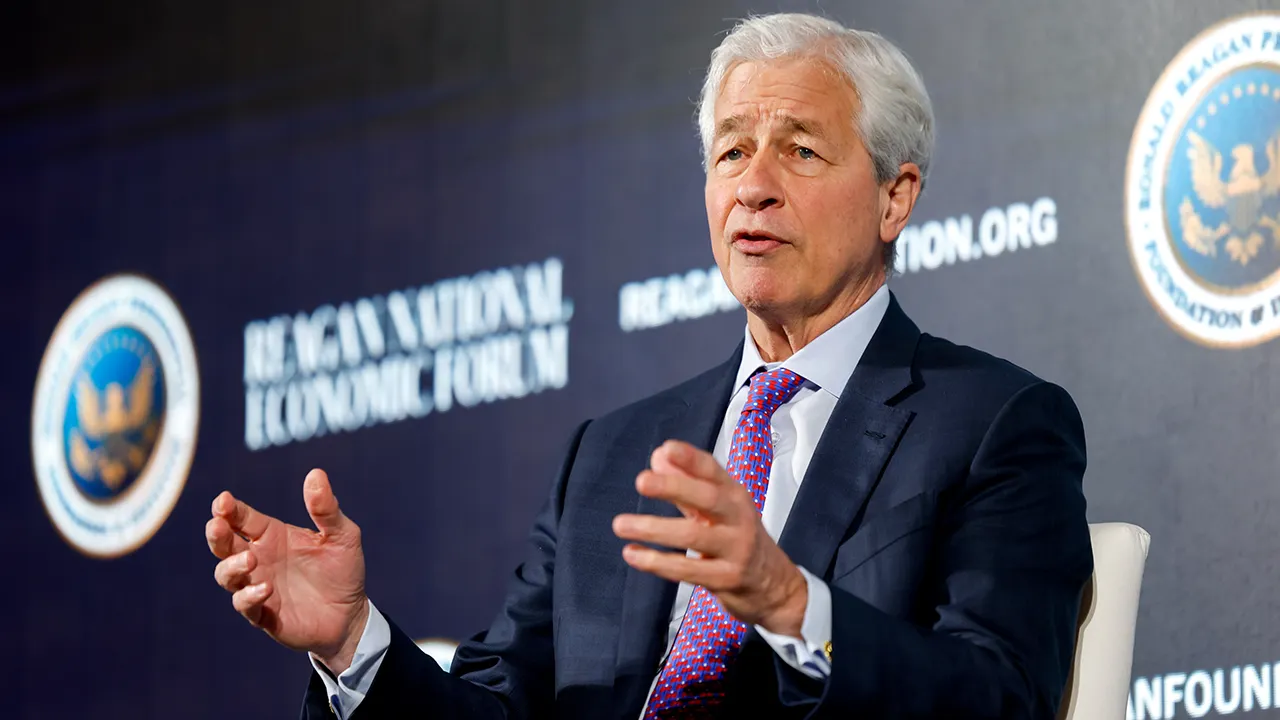
JPMorgan Chase CEO Jamie Dimon joins ‘Mornings with Maria’ in a wide-ranging interview on AI risks, stablecoin regulation, housing affordability and his recent meeting with New York City Mayor Zohran Mamdani.
JPMorgan Chase Chairman and CEO Jamie Dimon issued an unfiltered, aggressive warning against a new crypto-friendly bill moving through Congress while also targeting Coinbase CEO Brian Armstrong’s multimillion-dollar lobbying push.
In a wide-ranging interview with FOX Business’ Maria Bartiromo on Friday, Dimon was asked for his thoughts on the CLARITY Act, which aims to establish clear regulatory guidelines in the U.S. for digital assets and stablecoins.
Dimon then rejected Coinbase’s messaging that its lobbying represents broad consumer interests, promising an all-out industry “fight” on Capitol Hill.
“We’ll fight it. If we lose, we lose and we’ll live,” Dimon said. “But it will be fought… No one’s going to bow down to this guy, OK? Or that company… And he’s spending hundreds of millions of dollars… He’s full of s–t.”
“Just be fair. If he takes deposits like a bank, he should have bank rules. We have social requirements, litigation, legal liquidity requirements, capital requirements, AML requirements, financial reporting requirements, transparency requirements,” he continued. “If he wants to be a bank, be a bank. That’s all it is.”
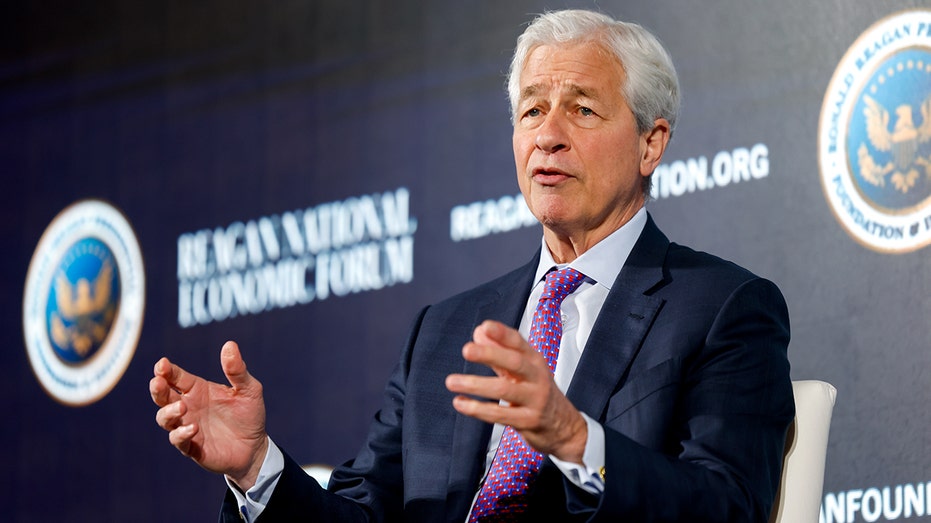
Jamie Dimon, chief executive officer of JPMorgan Chase & Co., during the 2026 Reagan National Economic Forum on Friday, May 29, 2026. (Getty Images)
Dimon argued that if crypto platforms want to act like banks and take customer deposits, they must play by the exact same rules.
“And they’re not FDIC-insured. We have requirements to build branches in lower-income neighborhoods… We have like 84 regulators all over us. We’re just saying it should be fair and equal, period. Not that they can’t do what they want to do,” Dimon said. “If you want to buy cryptocurrency, be my guest. You know, I believe it’s a free country, and I defend that right. But we just want it to be fair.”
Coinbase CEO Brian Armstrong joins ‘Mornings with Maria’ to break down Senate crypto legislation, the future of digital finance, and how AI, stablecoins and new products are driving Coinbase’s growth.
When asked if he’s “happy” with the legislative language of the CLARITY Act, Dimon responded: “No, because it allows them to effectively pay interest on deposits, stablecoins or something like that, without the protection that they should have… it has almost no legal protections. So no, the banks will not accept it that way.”
Coinbase did not immediately respond to Fox News Digital’s request for comment.
GET FOX BUSINESS ON THE GO BY CLICKING HERE
The CEO of America’s largest bank also warned that decentralized crypto networks risk becoming a preferred pipeline for cartels and human traffickers if Washington doesn’t enforce strict oversight.
The Lonski Group President John Lonski joins ‘Mornings with Maria’ to discuss the strength of the U.S. economy, Wall Street’s record rally and how AI investment is driving growth.
“I do think it will be used for cross-border payments, small dollar payments, you know, for person-to-person [transactions],” Dimon said. “Remember, once that money’s in a wallet overseas, it could be in anyone’s wallet. And it goes to a third wallet, a fourth wallet. So the first one may be legitimate, [the] second one may be a sex trafficker. So, you know, it’s complicated and the government needs to do it thoughtfully. If they don’t do it thoughtfully… it’ll be a huge problem.”

Meritage, KB Home and Other Midsize Builders That Could Be Takeover Targets

NEW YORK — ServiceNow Inc. shares climbed 9.03 percent to $135.60 in midday trading on Monday, June 1, 2026, as investors responded positively to the company’s expanding role in artificial intelligence workflow automation and robust enterprise cloud adoption.
The significant gain pushed ServiceNow’s market capitalization higher and reflected growing confidence in the software company’s ability to capitalize on the accelerating digital transformation across global businesses. Trading volume was notably elevated as the stock attracted attention from both institutional investors and retail traders seeking exposure to enterprise AI platforms.
ServiceNow, a leader in digital workflow solutions, has positioned itself at the forefront of AI-powered business process automation. Its Now Platform helps organizations streamline operations, improve service delivery and enhance employee experiences through intelligent automation tools that integrate seamlessly with existing enterprise systems.
Drivers Behind Today’s Movement
Analysts attributed the sharp rise to several positive developments. ServiceNow has reported strong subscription revenue growth in recent quarters, driven by demand for its AI-enhanced products such as Virtual Agent and AI Search capabilities. The company’s focus on helping enterprises automate complex workflows has resonated with large organizations seeking efficiency gains amid economic pressures.
Recent product announcements and customer wins in key verticals including finance, healthcare and government have reinforced investor optimism. ServiceNow’s ability to deliver measurable return on investment through automation has differentiated it from more generalized software providers. Management’s disciplined approach to innovation while maintaining strong margins has supported the positive sentiment.
Broader market interest in artificial intelligence applications for enterprise software has provided a favorable backdrop. As companies increase spending on digital transformation initiatives, platforms like ServiceNow’s that combine workflow management with AI capabilities have seen heightened demand. The company’s expansion into new use cases, including IT service management and customer service automation, has expanded its addressable market.
Company Background and Strategic Evolution
ServiceNow was founded in 2004 and went public in 2012. The company has grown from a niche IT service management provider to a comprehensive enterprise platform that powers digital workflows across multiple departments. Its cloud-native architecture allows for rapid deployment and scalability, making it attractive to organizations of all sizes.
Under current leadership, ServiceNow has accelerated its artificial intelligence integration while maintaining a customer-centric approach. The company’s Now Platform serves as a single system of record for digital operations, enabling organizations to connect disparate systems and automate processes end-to-end. This unified approach has helped clients reduce complexity and improve operational efficiency.
ServiceNow continues investing in research and development to enhance its AI capabilities. Recent updates have focused on generative AI features that assist with natural language processing, predictive analytics and automated decision-making. These advancements have positioned the company as a key enabler of intelligent automation across industries.
Financial Performance and Outlook
ServiceNow has delivered consistent revenue growth while improving profitability metrics. The company’s subscription-based model provides predictable revenue streams and high retention rates. Recent earnings reports have shown strong performance in core segments, with particular strength in its AI and workflow automation offerings.
Management has maintained guidance for continued growth while investing in product innovation and market expansion. The company’s focus on large enterprise customers has supported robust average contract values and long-term relationships. ServiceNow’s ability to expand within existing accounts through additional modules and use cases has been a key growth driver.
The stock’s valuation, while elevated following today’s gain, remains reasonable when compared to other high-growth enterprise software companies. ServiceNow’s strong cash flow generation and market leadership in workflow automation support premium multiples for many investors.
Analyst Perspectives
Wall Street analysts have generally maintained constructive views on ServiceNow. Most covering firms rate the stock as Buy or Outperform, citing its strong competitive position, recurring revenue model and growth potential in artificial intelligence. Average price targets suggest moderate upside from current levels, with some optimistic forecasts projecting higher valuations if AI adoption accelerates.
However, analysts also note challenges including competition from larger enterprise software providers and potential economic slowdowns affecting technology spending. ServiceNow’s ability to maintain high growth rates while expanding margins will be critical for sustaining current momentum.
The stock’s performance today stands out even within a stronger technology sector, suggesting company-specific catalysts at play. ServiceNow’s movement may also reflect broader rotation into enterprise software names with clear AI strategies.
Risks and Challenges Ahead
Despite today’s strong performance, ServiceNow faces several ongoing challenges. Competition in the enterprise software market is intense, with larger players commanding significant resources. The company must continue innovating to maintain its leadership position as artificial intelligence capabilities evolve rapidly.
Economic uncertainty and potential reductions in corporate technology budgets could impact growth rates. ServiceNow’s success will depend on its ability to demonstrate clear return on investment for customers while navigating these external pressures.
Regulatory developments around data privacy and artificial intelligence governance may also present both opportunities and risks. The company’s strong emphasis on security and compliance has been a competitive advantage, but evolving regulations require continuous adaptation.
Investment Considerations for 2026
Investors evaluating ServiceNow shares should consider its exposure to enterprise digital transformation trends balanced against the company’s strong execution track record. The stock may appeal to those bullish on artificial intelligence adoption in business operations and seeking quality growth in the software sector.
Risk management is important given the competitive landscape and macroeconomic sensitivities. Diversification and careful position sizing are recommended when investing in enterprise software companies. Analysts generally recommend a long-term perspective for ServiceNow, with attention to subscription revenue growth and customer expansion metrics.
Professional financial advice tailored to individual circumstances is recommended before making investment decisions in the technology sector. Market conditions can shift rapidly based on economic data and industry developments.
Broader Enterprise Software Sector Context
The enterprise software sector in 2026 has shown strong performance as organizations continue investing in digital transformation and automation technologies. Companies with proven platforms and clear artificial intelligence strategies have generally outperformed, with ServiceNow benefiting from its leadership position in workflow management.
ServiceNow’s performance today reflects continued investor willingness to reward firms demonstrating strong execution and sustainable growth models. As businesses prioritize operational efficiency and intelligent automation, platforms that deliver measurable outcomes are well-positioned to capture value.
The strong trading in ServiceNow shares on the first day of June underscores growing optimism about the company’s prospects in artificial intelligence and enterprise software markets. Whether this momentum sustains will depend on continued execution and favorable industry trends in the months ahead.
For now, today’s substantial gain highlights investor confidence in ServiceNow’s strategic direction and its potential to deliver value in critical business technology areas. As the company advances its offerings and customer relationships, it remains one of the more closely watched names in the enterprise software landscape.

Sequoia Capital partner Konstantine Buhler discusses Waymo and the companies showcased at the HumanX conference on ‘The Claman Countdown.’
Yum Brands is reportedly in exclusive talks to sell Pizza Hut to private-equity firm LongRange Capital, according to a report citing a source familiar with the matter.
The potential transaction would mark a significant shift for one of America’s most recognizable pizza chains and underscores growing consolidation across the restaurant industry as operators navigate slowing consumer demand and higher costs.
The discussions could result in a deal within several weeks, although no agreement has been reached and there is no guarantee the talks will lead to a transaction, Reuters reported Friday.
PIZZA HUT TO CLOSE AROUND 250 LOCATIONS
Yum said last year it was evaluating strategic alternatives for Pizza Hut, including a potential sale, as the chain worked to reverse a prolonged sales slump.

A Pizza Hut restaurant in New York. (Michael Nagle/Bloomberg via Getty Images)
According to Reuters, Pizza Hut generated about 12% of Yum’s revenue in 2025 and has reported declining U.S. comparable sales for 10 straight quarters.
Reuters previously reported that LongRange Capital was among several firms interested in acquiring Pizza Hut. Apollo Global Management and Sycamore Partners were also reported to have explored potential bids for the chain.
RED LOBSTER TO CLOSE TIMES SQUARE RESTAURANT AFTER MORE THAN 20 YEARS
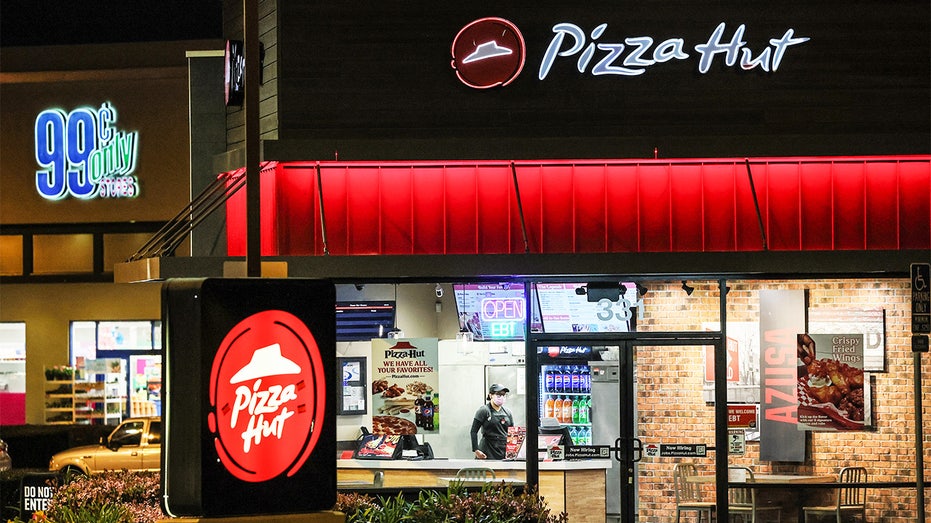
Yum said last year it was evaluating strategic alternatives for Pizza Hut. (Robert Gauthier/Los Angeles Times via Getty Images)
The reported talks come as restaurant companies face softer consumer demand and elevated operating costs, creating potential turnaround opportunities for investors focused on established brands.
Pizza Hut rival Papa John’s has also drawn acquisition interest. Reuters reported earlier this month that investment firm Irth Capital Management was working with the company’s largest U.S. franchisee on a proposal to take the pizza chain private.
| Ticker | Security | Last | Change | Change % |
|---|---|---|---|---|
| YUM | YUM! BRANDS INC. | 147.95 | -2.08 | -1.39% |
BAHAMA BREEZE TO CLOSE ALL ITS RESTAURANTS
Shares of Yum Brands rose roughly 3% in extended trading following reports of the discussions. Shares are down more than 5% year to date.
FOX Business has reached out to Yum Brands and LongRange Capital for comment.
CLICK HERE TO GET FOX BUSINESS ON THE GO
The potential Pizza Hut sale highlights how major restaurant brands are increasingly evaluating strategic transactions to improve performance and shareholder returns in a challenging operating environment.

OPINION: The beehive hairdo 80s icon is back!

Retail remains a challenge for Hormel Foods

ECB Says Stablecoin Risks Strengthen Digital Euro Case

Steven Gerrard disagrees with Gary Neville over ‘shock’ Chelsea and Arsenal claim | Football

US brings back mandatory military draft registration

Register Renaming | Hackaday

How Much Money Does He Make from the Gold Dust He Has Been Saving? #shorts #gold #viral #money

All Banking Exam in 2026 | Banking & Financial Awareness | GA Practice Set-164 I By Chandan Sir

FINANCE CAREERS That Will Make You RICH! @ZellEducation
-

 NewsBeat5 days ago
Israel says it has killed new Hamas military leader in Gaza City airstrikes
-

 Tech5 days ago
NASA taps Blue Origin to deliver lunar rovers for Moon Base initiative
-

 Sports7 days ago
2026 NBA Finals schedule, odds: Knicks await Thunder or Spurs after winning East
-

 News Videos6 days ago
XRP *JUST* SUCCEEDED!!!! CLARITY ACT EXPOSED!!! (SHE EXPOSED IT)
-

 News Videos3 days ago
This is BROKEN! INSANE 5x MONEY CAR WASH WEEK! The NEW GTA Online UPDATE Today! (GTA5 New Update)
-
 Crypto World6 days ago
Micron Crosses $1 Trillion Market Cap as AI Demand Reshapes Memory Sector
-
 NewsBeat7 days ago
Hottest May day ever as London hits 34.8C in 2C leap from previous records
-

 Business6 days ago
Selena Gomez Reportedly Upset Over Benny Blanco’s Comments on Her ‘Terrible’ Diet
-

 Business7 days ago
Nikkei 225 Surges Past 65,000 for First Time as Iran Peace Hopes Fuel Record Rally
-
 Tech7 days ago
China assigns ID codes to 28,000+ humanoid robots
-

 Tech4 days ago
Waymo dominates autonomous vehicle registrations as Tesla trails behind
-
 Entertainment7 days ago
‘Breaking Bad’ Star’s Easy-to-Binge 6-Part Crime Series Spin-Off Is Finally Heading to Free Streaming
-
 Tech2 days ago
SpaceX just won a second Golden Dome contract. This one is $4.16 billion.
-

 Tech5 days ago
The Samsung pay deal is the moment Korean unions changed register
-

 Entertainment6 days ago
Days of our Lives 2-Week Spoilers May 25-June 5: Gwen Rages, Abe Confesses & 2 Tragic Anniversaries!
-

 News Videos3 days ago
SHE IS KILLING XRP!!! WATCH URGENT AND ACT FAST
-
 NewsBeat3 days ago
FIRST NIGHT REVIEW: Take That bring the Circus back to life in spectacular sun-soaked style
-
 Entertainment7 days ago
Taylor Swift Fans Label Travis Kelce’s Beer-Chugging A ‘Red Flag
-

 Tech6 days ago
Millions of AI agents imperiled by critical vulnerability in open source package
-
Crypto World5 days ago
SpaceX’s $2 Trillion IPO: Why Tech Giants Nvidia (NVDA), Apple (AAPL), and Microsoft (MSFT) May Face Pressure
You must be logged in to post a comment Login