

Business
Jamie Dimon vows to fight crypto bill, calls Coinbase CEO ‘full of s–t’

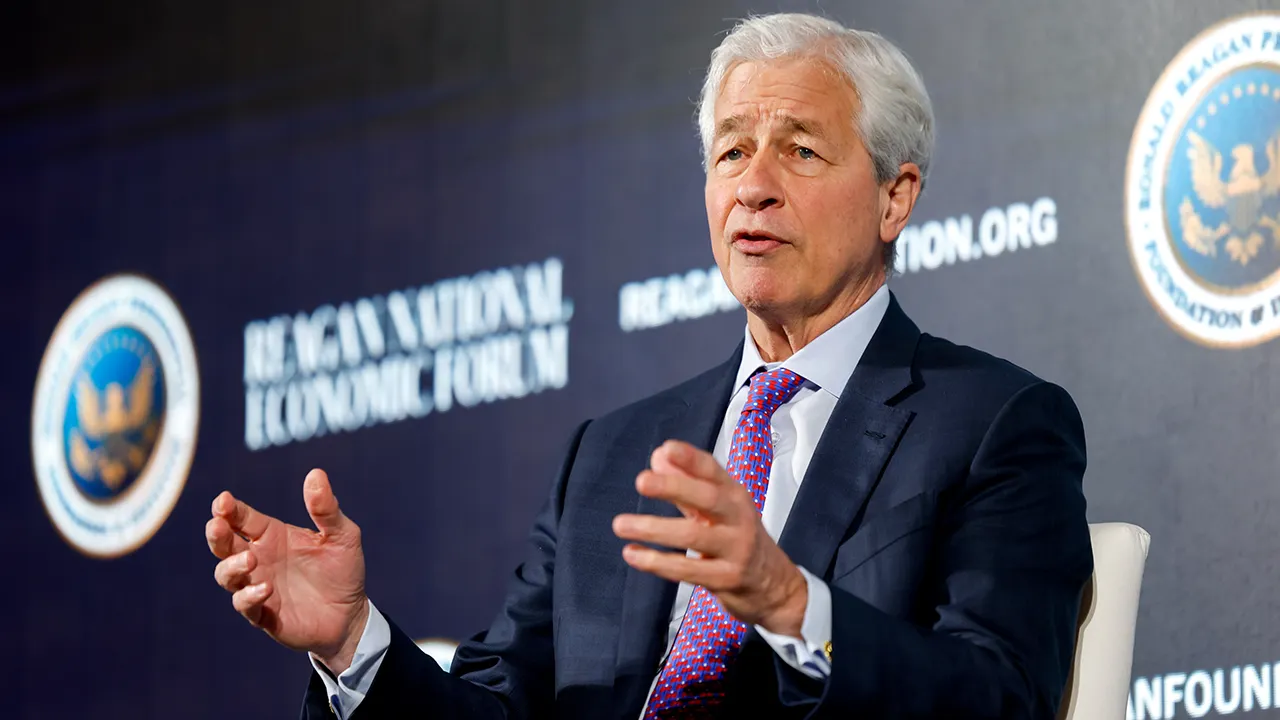
JPMorgan Chase CEO Jamie Dimon joins ‘Mornings with Maria’ in a wide-ranging interview on AI risks, stablecoin regulation, housing affordability and his recent meeting with New York City Mayor Zohran Mamdani.
JPMorgan Chase Chairman and CEO Jamie Dimon issued an unfiltered, aggressive warning against a new crypto-friendly bill moving through Congress while also targeting Coinbase CEO Brian Armstrong’s multimillion-dollar lobbying push.
In a wide-ranging interview with FOX Business’ Maria Bartiromo on Friday, Dimon was asked for his thoughts on the CLARITY Act, which aims to establish clear regulatory guidelines in the U.S. for digital assets and stablecoins.
Dimon then rejected Coinbase’s messaging that its lobbying represents broad consumer interests, promising an all-out industry “fight” on Capitol Hill.
“We’ll fight it. If we lose, we lose and we’ll live,” Dimon said. “But it will be fought… No one’s going to bow down to this guy, OK? Or that company… And he’s spending hundreds of millions of dollars… He’s full of s–t.”
“Just be fair. If he takes deposits like a bank, he should have bank rules. We have social requirements, litigation, legal liquidity requirements, capital requirements, AML requirements, financial reporting requirements, transparency requirements,” he continued. “If he wants to be a bank, be a bank. That’s all it is.”
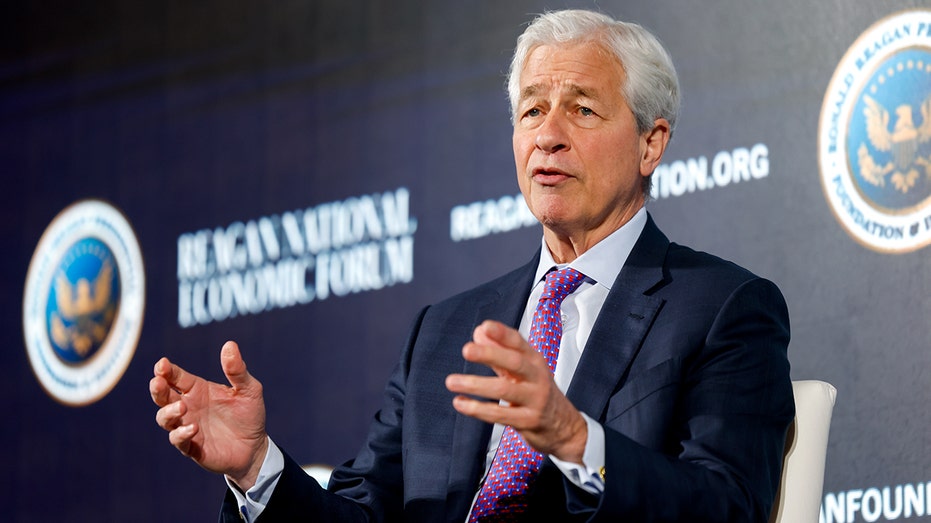
Jamie Dimon, chief executive officer of JPMorgan Chase & Co., during the 2026 Reagan National Economic Forum on Friday, May 29, 2026. (Getty Images)
Dimon argued that if crypto platforms want to act like banks and take customer deposits, they must play by the exact same rules.
“And they’re not FDIC-insured. We have requirements to build branches in lower-income neighborhoods… We have like 84 regulators all over us. We’re just saying it should be fair and equal, period. Not that they can’t do what they want to do,” Dimon said. “If you want to buy cryptocurrency, be my guest. You know, I believe it’s a free country, and I defend that right. But we just want it to be fair.”
Coinbase CEO Brian Armstrong joins ‘Mornings with Maria’ to break down Senate crypto legislation, the future of digital finance, and how AI, stablecoins and new products are driving Coinbase’s growth.
When asked if he’s “happy” with the legislative language of the CLARITY Act, Dimon responded: “No, because it allows them to effectively pay interest on deposits, stablecoins or something like that, without the protection that they should have… it has almost no legal protections. So no, the banks will not accept it that way.”
Coinbase did not immediately respond to Fox News Digital’s request for comment.
GET FOX BUSINESS ON THE GO BY CLICKING HERE
The CEO of America’s largest bank also warned that decentralized crypto networks risk becoming a preferred pipeline for cartels and human traffickers if Washington doesn’t enforce strict oversight.
The Lonski Group President John Lonski joins ‘Mornings with Maria’ to discuss the strength of the U.S. economy, Wall Street’s record rally and how AI investment is driving growth.
“I do think it will be used for cross-border payments, small dollar payments, you know, for person-to-person [transactions],” Dimon said. “Remember, once that money’s in a wallet overseas, it could be in anyone’s wallet. And it goes to a third wallet, a fourth wallet. So the first one may be legitimate, [the] second one may be a sex trafficker. So, you know, it’s complicated and the government needs to do it thoughtfully. If they don’t do it thoughtfully… it’ll be a huge problem.”


The “Thailand Surf Therapy Real Experience and Trust Building Journey” in Phang-nga, organized by TAT, showcases surf-based wellness for emotional healing, enhancing Thailand’s coastal tourism and wellness offerings.
Launch of Thailand Surf Therapy
In June 2026, the Tourism Authority of Thailand (TAT) organized the “Thailand Surf Therapy Real Experience and Trust Building Journey” in Phang-nga. This initiative precedes the concept’s official unveiling at Thailand Health Excellence 2026 on 30 June. Collaborating with Prince of Songkla University, La Vita Sana, and international partner Waves for Change, the event gathered 36 tourism and wellness stakeholders to explore surf therapy’s potential in boosting coastal tourism and wellness.
Integrating Wellness and Coastal Tourism
The event’s programme included a “Discover Talk” session on surf therapy, led by Waves for Change’s Lian Papier, and practical surf therapy experiences at Memories Beach. Participants learned about surf therapy’s role in emotional and mental well-being, advancing Thailand’s wellness tourism. The event continued with activities like “Wellness-Breath with the Ocean” using Tibetan bowls, enhancing coastal experiences, and preparing for diverse surf-based wellness programs aimed at stress management.
Future of Thailand Surf Therapy
The Thailand Surf Therapy model aims to integrate international surf therapy techniques with local Thai identities to enrich the wellness tourism landscape. Supported by Span Global through the Rise On Wave network, the initiative includes varied programs such as the Wave Reset and Ocean Balance initiatives. At Thailand Health Excellence 2026, TAT will position Thailand as a premier destination for science-based wellness and therapeutic tourism in Asia.
Source : TAT shapes Thailand Surf Therapy as science-based coastal wellness model
Other People are Reading


Jefferies quarterly profit more than doubles on dealmaking, equities strength

Microsoft: Don't Sit On Your Hands, We Might Never See Such A Discount Again

Operator
Hello, and welcome to the Energy Fuels Inc. 2026 Annual Meeting of Shareholders. Please note that this meeting is being recorded. [Operator Instructions].
Bruce Hansen
Good morning, everyone, and welcome again to the 2026 Annual Meeting of Shareholders of Energy Fuels Inc. My name is Bruce Hansen. I’m speaking to you from our corporate headquarters in Lakewood, Colorado.
I serve as the Chair of the Energy Fuels Board of Directors, and I will act as Chair of this meeting. Corporate Counsel and Corporate Secretary of the company, Julia Hoffmeier, will act as Secretary of the meeting.
Also with us today are Ross Bhappu, our President and Chief Executive Officer; Curtis Moore, Senior Vice President of Marketing and Corporate Development; Nathan Bennett, Chief Financial Officer; Nathan Longenecker, Chief Legal Officer and Executive Vice President of Global Government Relations; Kim Casey, Director of Investor Relations; and [ Brian Sheed ], KPMG Audit Partner. I would also like to acknowledge our Board of Directors, many of whom are in attendance with us today.
Finally, I’d like to pay special recognition to 2 directors that have chosen not to stand for reelection this year. That includes Birks Bovaird, who joined the Board in 2006 and served as its Chair from March 2007 to June of 2025, a period of more than 18 years in his notable 20-year tenure with Energy Fuels. Birks strong leadership, sound judgment and balanced perspective have helped support the company through numerous challenges, opportunities and successes.
Our longest-standing director and a member of various Board committees. Birks has

MIAMI — Lionel Messi turned 39 on Wednesday, yet the Argentine superstar continues to perform at an elite level that draws comparisons to players half his age, showcasing remarkable longevity in a physically demanding sport.
Messi’s latest displays of brilliance, including a goal against Austria where he evaded multiple defenders with precise control and finishing, have fueled discussions about the secrets behind his enduring excellence. Observers note his vision, anticipation and technical mastery remain as sharp as ever.
The Inter Miami and Argentina captain has long emphasized personal responsibility for his fitness. His approach combines disciplined nutrition, targeted training and an enduring passion for the game that keeps him motivated.
Messi began working with an Italian nutritionist around 2014, focusing on reducing inflammation through dietary changes. He significantly cut back on sugar and refined flour while emphasizing whole grains, fresh vegetables and balanced meals to fuel his body efficiently.
This regimen supports sustained energy levels and faster recovery, allowing him to maintain high performance despite the rigors of professional soccer. Messi’s commitment extends beyond the kitchen to recovery protocols and smart workload management.
Rather than heavy weightlifting, he prioritizes flexibility, speed and functional movements tailored to soccer’s demands. The strategy helps preserve his agility and reduce injury risk as he advances in his career.
In comments reflecting on his approach, Messi highlighted a mindset focused on the present. He avoids dwelling on age, instead concentrating on his physical condition and giving full effort in every training session and match.
The forward’s dedication has produced a trophy-laden career, including World Cup glory with Argentina and consistent club success. At an age when many players retire or see diminished roles, Messi remains a central figure capable of deciding matches.
Career Longevity in Focus
Messi’s ability to sustain world-class output stems from holistic self-management. Professional athletes often face accelerated physical decline, but targeted habits can extend prime years significantly.
His dietary discipline aligns with broader trends in sports science emphasizing anti-inflammatory foods and nutrient density. Avoiding processed items while prioritizing recovery nutrition has become a model for aspiring players.
Training philosophy also plays a key role. By focusing on sport-specific preparation over general strength building, Messi optimizes performance without unnecessary wear on his body. Regular monitoring and adjustments ensure he trains smart rather than simply training hard.
Mental resilience complements physical preparation. Messi has spoken about his deep love for football as a driving force, helping him maintain motivation through challenges and the natural aging process.
When asked about potential participation in the 2030 World Cup, he deflected speculation. “It’s still a long way off,” Messi said, preferring to concentrate on daily responsibilities and current commitments.
This grounded perspective allows him to avoid unnecessary pressure while maximizing present opportunities with Inter Miami in Major League Soccer and the Argentina national team.
Impact and Legacy
Messi’s influence extends far beyond statistics. His work ethic and professionalism set standards for younger teammates and global fans. Young players study his movement, decision-making and preparation routines in hopes of replicating aspects of his success.
At Inter Miami, he continues elevating the league’s profile while mentoring emerging talents. His presence draws sellout crowds and heightened competition whenever he steps on the pitch.
Argentina national team coach and teammates value his leadership and on-field intelligence. Despite turning 39, Messi’s contributions remain vital in competitive matches, where experience often proves decisive.
The soccer world watches with admiration as he challenges conventional notions of athletic prime. While genetics play a role, Messi’s consistent habits demonstrate the power of discipline and smart choices over decades.
Broader Context in Professional Soccer
Longevity has become an increasingly studied topic as athletes seek extended careers. Advances in sports medicine, nutrition and recovery technology enable top performers to compete longer than previous generations.
Messi joins a select group of players who have excelled into their late 30s, including contemporaries like Cristiano Ronaldo. Their sustained success highlights evolving approaches to training and lifestyle management.
Clubs and national teams invest heavily in player care to maximize return on talent. Individual responsibility, however, remains crucial as seen in Messi’s proactive management of his body and career.
As the 2026 season progresses, expectations around Messi will persist. His ability to contribute at the highest level continues inspiring debates about age and performance in elite sports.
For now, Messi focuses on daily improvement and team success. His journey offers valuable lessons on commitment, adaptability and finding joy in pursuit of excellence regardless of calendar years.
The soccer icon’s story resonates globally, reminding fans and athletes alike that sustained greatness requires more than natural talent — it demands unwavering dedication to craft and well-being.

Federal Reserve Board Governor Michelle Bowman, U.S. President Donald Trump’s nominee to be Federal Reserve vice chair for supervision, testifies before a Senate Banking, Housing, and Urban Affairs Committee confirmation hearing on Capitol Hill in Washington, D.C., U.S., April 10, 2025.
Kevin Mohatt | Reuters
The biggest U.S. banks would be able to absorb more than $708 billion in losses in a severe global recession while continuing to lend to households and businesses, according to the Federal Reserve’s annual stress test released Wednesday.
All 32 banks examined by the Fed remained above their minimum capital requirements under the regulator’s hypothetical scenario, which included unemployment surging to 10%, a 39% drop in commercial real estate prices and a 30% decline in home prices.
The industry’s common equity tier 1 capital ratio, a key capital measure that would absorb losses in a downturn, fell by 1.6 percentage points during the exercise, remaining comfortably above required minimums. Projected losses for the group included roughly $200 billion tied to credit cards, $160 billion from commercial and industrial loans and $75 billion from commercial real estate.
“Today’s results underscore the strength of the banking system,” Federal Reserve Vice Chair for Supervision Michelle Bowman said in a release.
The annual exercise comes at a pivotal moment for bank regulation because, unlike in previous years, the results will not affect the amount of capital large banks are required to hold.
That’s because the Fed said in February that it would leave the stress test buffers untouched until 2027 as regulators rework the methodology, heeding industry complaints, a move that could eventually reshape how much capital firms must hold against future downturns.
In a June 21 research note that described this year’s exercise as “going through the motions,” KBW analysts led by Christopher McGratty said banks are likely to remain focused on the pending Basel III Endgame proposal expected later this year rather than the stress test results themselves.
KBW estimated that if this year’s results had counted toward capital requirements, Morgan Stanley, Citigroup, Citizens Financial and KeyCorp would have seen some of the largest reductions in capital buffers.
This story is developing. Please check back for updates.
Jamie Levy
President, CEO & Director
Thank you all for attending. Good morning. Welcome to the 2026 Annual and Special Meeting of Generation Mining Limited. My name is Jamie Levy, and I am President and Chief Executive Officer and Director of the company. It’s my pleasure to welcome shareholders and others present in person and those watching the 3 of you in-person, thank you and those listening via Zoom to this meeting. Thank you for your interest in Generation Mining. Sorry, I’m just admitting more people here.
We will first proceed with the formal business of the meeting. As highlighted in our notice of meeting and management circular, shareholders joining us via Zoom shall not be able to vote or participate in the formal business of the meeting. Following the formal business of the meeting, I will present an update of the company and those joining us in person or participating via Zoom will have an opportunity to ask questions. Instructions on how to ask questions via Zoom will be provided after the formal business of the meeting has been completed.
The meeting now come to order. I, Jamie Levy, will act as Chair of the meeting. And with the consent of the meeting, I appoint Brian Jennings, the company’s Chief Financial Officer, act as Secretary of the meeting.
With the consent of the meeting, I appoint TSX Trust Company, the registrar and transfer agent for the company, acting through its representative, Ms. Julie Kim, to act as scrutineer of the meeting. In order for a quorum to be present in accordance with the bylaws of the company, the scrutineer reports must show that there are not less than 2

Athleisure brand Vuori bets Chinese consumers will shell out for its stylish workout clothes in a global push that primes it to challenge rivals like Lululemon LULU 3.14%increase; up pointing triangle overseas.
The brand—known for its jogger pants as well as attire for tennis, golf and other sports—grew out of California, gaining cachet for its knack for men’s activewear. As the company cements itself in the woman’s activewear segment, it is eyeing an expansion in Asia and could snag market share in the region from rivals like Lululemon and Alo Yoga.
Copyright ©2026 Dow Jones & Company, Inc. All Rights Reserved. 87990cbe856818d5eddac44c7b1cdeb8


Dorine is a financial journalist passionate about making crypto accessible. With three years covering digital assets, market trends, and blockchain innovation, she helps readers stay ahead of developments that move markets, without the jargon.
Analyst’s Disclosure: I/we have no stock, option or similar derivative position in any of the companies mentioned, and no plans to initiate any such positions within the next 72 hours. I wrote this article myself, and it expresses my own opinions. I am not receiving compensation for it (other than from Seeking Alpha). I have no business relationship with any company whose stock is mentioned in this article.
Seeking Alpha’s Disclosure: Past performance is no guarantee of future results. No recommendation or advice is being given as to whether any investment is suitable for a particular investor. Any views or opinions expressed above may not reflect those of Seeking Alpha as a whole. Seeking Alpha is not a licensed securities dealer, broker or US investment adviser or investment bank. Our analysts are third party authors that include both professional investors and individual investors who may not be licensed or certified by any institute or regulatory body.
Business
Home Depot Shares Surge Over 5 Percent as Retailer Strengthens Position in Housing Market Recovery

NEW YORK — Home Depot Inc. shares climbed sharply on Wednesday, rising more than 5 percent to around $342.49 as investors responded positively to the home improvement giant’s resilience amid shifting economic conditions.
The stock’s notable gain reflected broader optimism around consumer spending in the housing sector and the company’s strategic positioning for potential market recovery. Home Depot, a bellwether for both consumer confidence and the housing industry, has navigated challenges including elevated interest rates that previously dampened big-ticket purchases.
The retailer’s performance underscores its ability to adapt through diversified offerings, supply chain efficiencies and targeted investments in e-commerce and professional contractor services. As mortgage rates show signs of stabilization, analysts anticipate improved demand for home improvement projects.
Home Depot has consistently demonstrated strength in core categories such as building materials, appliances and seasonal products. Its vast store network and online platform provide customers with comprehensive solutions for renovations, repairs and new construction support.
Financial Performance and Strategy
The company has reported steady revenue despite macroeconomic headwinds. Comparable sales metrics have reflected a cautious consumer environment, but professional customer segments have offered relative stability.
Leadership continues emphasizing operational excellence, inventory management and customer experience enhancements. Investments in technology, including improved digital tools for contractors and DIY enthusiasts, aim to capture shifting shopping behaviors.
Home Depot’s balance sheet strength supports ongoing share repurchases, dividend growth and strategic capital expenditures. The retailer maintains a disciplined approach to expansion while returning capital to shareholders.
Analysts have highlighted the company’s market share leadership and competitive advantages in a fragmented home improvement landscape. Pricing strategies and supplier relationships help navigate inflationary pressures on key commodities.
Housing Market Context
The U.S. housing sector has faced affordability challenges due to higher borrowing costs and limited inventory in recent years. However, improving job markets and potential rate easing could unlock pent-up demand for repairs, upgrades and new home-related spending.
Existing homeowners represent a significant opportunity as many delay selling or moving. This dynamic benefits retailers like Home Depot, which cater to maintenance and improvement needs regardless of transaction volumes.
New construction activity, while variable, provides additional tailwinds through partnerships with builders and suppliers. Home Depot’s professional business segment has grown in importance as contractors rely on reliable, efficient sourcing.
Seasonal factors also influence performance, with spring and summer typically driving higher sales in outdoor living, gardening and project materials. The company optimizes merchandising and promotions to capitalize on these periods.
Competitive Landscape
Home Depot competes with Lowe’s and specialized retailers while facing pressure from online pure-plays and big-box general merchandisers. Its scale, assortment depth and omnichannel capabilities provide differentiation.
Recent initiatives focus on enhancing in-store experiences, faster fulfillment and personalized recommendations. Loyalty programs and credit offerings further strengthen customer relationships and repeat business.
Supply chain investments have improved product availability and reduced costs over time. These efficiencies contribute to margin stability even as product mix evolves with market trends.
Investment Outlook
For long-term investors, Home Depot offers exposure to essential consumer spending and housing-related cycles. The company’s dividend yield and history of consistent payouts appeal to income-oriented portfolios.
Valuation metrics reflect expectations for recovery and growth as economic conditions normalize. While sensitive to housing indicators, the retailer’s essential nature provides defensive characteristics during downturns.
Risks include prolonged high interest rates, material cost volatility and labor market shifts affecting contractor activity. Execution on digital transformation and cost management will influence future results.
The stock’s recent movement suggests renewed confidence in the company’s fundamentals and sector prospects. Market participants will monitor upcoming earnings for further insight into consumer trends and guidance.
Broader Retail Environment
Retail spending patterns have shown resilience supported by employment gains, though discretionary categories face selectivity. Home improvement remains a priority for many households focused on property value and livability.
Home Depot’s role as an economic indicator extends beyond its financial reports. Foot traffic, basket sizes and category performance offer glimpses into homeowner confidence and spending capacity.
Sustainability initiatives and product sourcing practices increasingly influence consumer preferences. The company continues adapting to demands for eco-friendly options and responsible supply chains.
As the year progresses, attention will center on interest rate trajectories, housing inventory levels and consumer sentiment. Home Depot appears well-prepared to capitalize on any upswing while maintaining discipline in challenging periods.
The retailer’s long track record of adaptation through economic cycles reinforces its position as a core holding for many portfolios. Continued innovation and customer focus should support sustained relevance in evolving markets.

Public Records Bill Would Make California The ‘Most Secretive’ State In The US

Stormont Minister’s light up for USA 250 request approved in Lisburn despite Trump concerns

TAT Launches Surf Therapy as Thailand’s Coastal Wellness Tourism Model


-

 Fashion5 days ago
Weekend Open Thread: Miami – Corporette.com
-

 Entertainment4 days ago
Renter of Home in Anne Heche Crash Denies Settlement With Son
-

 Tech2 days ago
Microsoft accidentally kills epic Outlook email threads
-
 Sports1 day ago
Two goals and an assist by sheer aura: Cristiano Ronaldo just entered the World Cup chat
-

 Business4 days ago
Soccer-U.S. defends Iran World Cup travel restrictions, says discussions ongoing
-
Crypto World17 hours ago
Bitcoin (BTC) Dips Below $62K, Ethereum (ETH) Plunges 6% Daily: Market Watch
-

 Politics6 days ago
BBC Reporter Discusses Cross Party Criticism Of Trumps Iran Deal
-

 Crypto World14 hours ago
Securitize Wraps Roubini's SEC-Registered ETF as Dubai VARA Digital Security
-
Business20 hours ago
Entergy settles forward sale agreements, raises $672 million in cash proceeds
-
 Business5 days ago
Wall Street Week Ahead: Investors see Micron earnings as pulse check of AI rally momentum
-

 Politics4 days ago
Andy Burnham and the meaning of Makerfield
-

 Tech6 days ago
AWS enters the context layer race with a graph that learns from agents, not manual curation
-

 NewsBeat5 days ago
Keir Starmer Allies Question His Chances For No 10
-
 Crypto World4 days ago
Can Charles Hoskinson Really Rescue Cardano?
-

 Crypto World5 days ago
HIVE shares jump as $220M AI deal speeds Bitcoin mining pivot
-

 Crypto World4 days ago
Jake Chervinsky accuses CME of protecting derivatives monopoly
-
 Tech3 days ago
Signal’s Meredith Whittaker says AI chatbots ‘are not your friends’ and calls Copilot agents a backdoor
-

 Entertainment5 days ago
Jose Alvarado Wants Taylor Swift at More Knicks Games
-

 Tech2 days ago
Nearly 7,000 fake Amazon domains registered ahead of Prime Day 2026, researchers warn
-

 Business6 days ago
Brexit cost 6% of UK economy, Bank of England company data suggests
You must be logged in to post a comment Login