
Business
Credo: The Rise Of Muse Validates The AI Trade (NASDAQ:CRDO)



Julian Lin is a financial analyst. He finds undervalued companies with secular growth that appreciate over time. His approach is to look for companies with strong balance sheets and management teams in sectors with long growth runways.
Julian is the leader of the investing group Best Of Breed Growth Stocks where he only shares positions in stocks which have a large probability of delivering large alpha relative to the S&P 500. He also combines growth-oriented principles with strict valuation hurdles to add an additional layer to the conventional margin of safety. Features include: exclusive access to Julian’s highest conviction picks, full stock research reports, real-time trade alerts, macro market analysis, individual industry reports, a filtered watchlist, and community chat with access to Julian 24/7. Learn more.
Analyst’s Disclosure: I/we have a beneficial long position in the shares of CRDO, AVGO, META either through stock ownership, options, or other derivatives. I wrote this article myself, and it expresses my own opinions. I am not receiving compensation for it (other than from Seeking Alpha). I have no business relationship with any company whose stock is mentioned in this article.
Seeking Alpha’s Disclosure: Past performance is no guarantee of future results. No recommendation or advice is being given as to whether any investment is suitable for a particular investor. Any views or opinions expressed above may not reflect those of Seeking Alpha as a whole. Seeking Alpha is not a licensed securities dealer, broker or US investment adviser or investment bank. Our analysts are third party authors that include both professional investors and individual investors who may not be licensed or certified by any institute or regulatory body.


Puzzle number 936 of The New York Times’ Strands game took a notably different turn Friday, trading the format’s usual wordplay and thematic red herrings for a grid built around basic multiplication, giving solvers a puzzle that felt more like a flashback to primary school math class than the typical vocabulary-driven Strands challenge.
Strands presents players with a six-by-eight grid of letters and asks them to find a set of words connected by a hidden theme, tracing each word in a continuous line that can bend around corners as it moves through the grid. One special word, known as the spangram, always touches two opposite sides of the board and summarizes what the rest of the puzzle’s theme words have in common. Players can also tap or drag to select letters, and non-spangram theme words remain highlighted in blue once correctly identified.
For those still working through Friday’s puzzle, the theme centers on numbers, specifically the kind produced by multiplying a whole number by itself. Every non-spangram answer in Friday’s grid is a number written out in words, and each of those numbers happens to be a perfect square. One outlet described the day’s theme hint plainly as “these are squares,” while another characterized the official in-game theme clue as “1×1, etc.” Today’s spangram itself runs 13 letters long and is positioned horizontally across the board.
SPOILER WARNING: The full solution to Friday’s Strands puzzle follows below. Stop reading now if you’d rather work through the grid on your own.
Today’s spangram answer is SQUARE NUMBER, directly naming the mathematical theme running through the rest of the puzzle. The confirmed non-spangram theme words include FOUR, NINE, TWENTY FIVE, THIRTY SIX and EIGHTY ONE, each representing a perfect square, the result of multiplying a whole number by itself: 2×2, 3×3, 5×5, 6×6 and 9×9, respectively.
Puzzle guides covering Friday’s grid described it as an unusually direct and approachable Strands puzzle compared with the format’s typical entries, since the theme rewards basic multiplication recall rather than the more associative or lateral thinking that Strands puzzles often demand. One outlet framed the puzzle as proof that the Strands format can flex into math-based themes without losing the puzzle’s underlying character, even as it noted this kind of overtly literal theme remains relatively rare for the game.
Strands, created by The New York Times as a spatial twist on the traditional word search format, continues to operate in what the newspaper has described as a beta phase, even as the game has steadily grown in popularity alongside the Times’ other daily word games. A new puzzle appears at midnight local time each day, meaning solvers in different time zones begin working through that day’s grid at staggered points relative to players elsewhere around the world.
Strategy guides accompanying Friday’s puzzle noted that players who find themselves stuck can tap any of several designated clue words to unlock the game’s built-in hint system, a feature intended to nudge solvers toward the puzzle’s theme without immediately revealing the full solution. Guides also reminded players that theme words in Strands fill the entire board without any overlap between words, meaning every letter in the grid ultimately belongs to exactly one theme word or the spangram.
Puzzle number 936 followed Thursday’s Strands puzzle, themed around locations just outside one’s front door, continuing the game’s pattern of rotating through a wide range of everyday and conceptual themes from one day to the next. Players tracking their personal performance on Friday’s puzzle can compare notes with friends and fellow solvers, given how quickly Strands has built a dedicated following since its launch, joining Wordle, Connections and the Mini Crossword among the Times’ most widely played daily word games.
With Friday’s math-themed puzzle now solved, players will have an entirely new grid and hidden theme to work through when Saturday’s edition of Strands resets at midnight local time, continuing the daily puzzle’s steady climb in popularity as one of the newspaper’s newer, but increasingly essential, word game offerings.

Ione Wells speaks to Roelf Meyer, South Africa’s new ambassador to the United States. In the 1990s, Meyer was one of the leading negotiators in the talks that helped bring apartheid to an end.
Now he takes up his new post amid a serious rupture in relations with the US President Trump has cut aid, expelled the previous South African ambassador and offered refugee status to white Afrikaners he says are fleeing persecution, claiming the community faces “genocide”.
The South African government rejects that allegation. Meyer, himself an Afrikaner, explains why he believes Trump has been given the wrong picture and how his experience negotiating the end of apartheid could help repair relations with Washington.
“The notion of a mass attack on the Afrikaner was misrepresented by those that might have conveyed the message. I mean, I’m an Afrikaner from South Africa myself. And I can say that I’ve never experienced something of that kind. We found it strange. So the source is misrepresented, unfortunately, something that just doesn’t exist,” says Meyer.
(Photo: Roelf Meyer, South Africa’s ambassador to the US, wears a navy blazer with a white shirt and light blue tie. He has short white hair. Credit: Getty Images)
The Interview brings you conversations with people shaping our world, from all over the world. The best interviews from the BBC, including episodes with Sundar Pichai and Julia Gillard.
You can listen on the BBC World Service on Mondays, Wednesdays and Fridays at 0800 GMT. Or you can listen to The Interview as a podcast, out three times a week on BBC Sounds or wherever you get your podcasts.
Presenter: Ione Wells
Producer: Osman Iqbal
Editor: Damon Rose

Mark Beyer and Justin Fris discuss the business aspects and benefits behind Saturday’s AFL Grand Final between the Fremantle Dockers and Brisbane Lions.
Plus: Satterley appoints Ben Rosser, restructures; Higher interest rates needed, say top economists; Freo final to help revive country pub.

Cyber-criminals who hacked the FBI say they have extremely sensitive medical data for thousands of its special agents.
BBC News has seen samples of the stolen “fitness-for-work” medical examinations, which contain information such as blood and urine test results, and doctors’ notes mentioning conditions such as a “shellfish and banana allergy”.
The records include agents’ full names and addresses, as well as references to medical concerns including ‘blood in the urine’ and ‘high cholesterol’.
Experts say the hack – which the FBI is investigating – could leave agents vulnerable to scams, blackmail and targeted attacks, as well as help criminals impersonate law enforcement officers.
“The list maps thousands of agents against their medical and fitness records,” said Etay Maor, vice-president of threat intelligence at Cato Networks.
“Passwords can be reset if stolen, but medical records cannot, so once this data is out, it stays compromised for good. That permanence, applied across an entire workforce, is what makes this leak so serious.”
The FBI has not responded to requests for comment. However, on Wednesday it acknowledged the breach and said it was “aggressively investigating” how it happened.
The cyber-criminal group ShinyHunters claims it breached FBI systems on Monday, and later posted details of the attack on its darknet site.
The group also shared samples of the alleged stolen data with reporters, along with an extortion demand.
Unusually, the hackers are not demanding money. Instead, they are seeking a retraction of an FBI advisory published in May, which they claim “offended” them.
The samples shared with journalists appear genuine and include names, addresses, phone numbers, badge numbers, job titles and information about spouses.
The records appear to relate to thousands of agents, including senior officials such as deputy directors.
Professor Ciaran Martin, the former head of the UK’s National Cyber Security Centre, has described the hack – if confirmed – “as serious as it gets when it comes to data breaches.”


I’m specialized in fundamental equity research, global macro strategy, and top-down portfolio construction.
Analyst’s Disclosure: I/we have no stock, option or similar derivative position in any of the companies mentioned, and no plans to initiate any such positions within the next 72 hours. I wrote this article myself, and it expresses my own opinions. I am not receiving compensation for it (other than from Seeking Alpha). I have no business relationship with any company whose stock is mentioned in this article.
Seeking Alpha’s Disclosure: Past performance is no guarantee of future results. No recommendation or advice is being given as to whether any investment is suitable for a particular investor. Any views or opinions expressed above may not reflect those of Seeking Alpha as a whole. Seeking Alpha is not a licensed securities dealer, broker or US investment adviser or investment bank. Our analysts are third party authors that include both professional investors and individual investors who may not be licensed or certified by any institute or regulatory body.

U.S. airlines waived change fees for flights Friday through Sunday ahead of a nor’easter that federal forecasters warn will bring high winds and rainfall with the potential for dangerous flooding.
As of Friday morning, there were minimal delays around the Northeast ahead of the storm and few cancelations set for the weekend.
Carriers will often cancel a chunk, if not most of their schedules, during severe winter storms or hurricanes to ensure planes, passengers and crews aren’t out of place, but airlines are still assessing the the nor’easter’s potential path.
American Airlines, United Airlines and JetBlue Airways said customers can change their flights for a host of airports in the New York City area, Boston and smaller New England airports, without paying a change fee or difference in fare if they can fly anytime before mid-next week.
The potential weekend disruptions come after an equipment outage on Monday forced carriers to cancel hundreds of flights bound for the New York area and Philadelphia.
Business
Dow Edges Up 0.19% as Bond Yields Ease and Hopes Rise for a Phased Hormuz Reopening Deal, Snapping Losing Skid

NEW YORK — The Dow Jones Industrial Average climbed 99.21 points, or 0.19%, to 51,449.19 in Friday trading, as easing Treasury yields and growing optimism over a potential phased deal to reopen the Strait of Hormuz helped stocks snap a three-session losing streak.
Friday’s gains followed a difficult stretch for U.S. equities. The Dow fell for a third consecutive session Thursday, dropping 161.61 points, or 0.31%, to close at 51,349.98, as Treasury yields at multidecade highs continued to weigh on the market’s more cyclical sectors. The S&P 500 slipped 1.90 points Thursday, or less than 0.1%, to 7,704.13, while the Nasdaq Composite eked out a marginal gain of 3.34 points to 26,939.37, and the Russell 2000 index of smaller companies fell 3.09 points, or 0.1%, to 2,835.57.
The 10-year Treasury yield had climbed to 5.16% Thursday, its highest level since the global financial crisis, before easing three basis points to 5.17% early Friday, paring a two-day surge of more than 20 basis points. That earlier climb in yields had been driven in part by comments from New York Federal Reserve President John Williams, who said the central bank would likely need to raise interest rates again before the end of the year, along with weak demand at a recent Treasury debt auction and heavy government borrowing.
Reflecting on the broader bond market turbulence, BlackRock’s Rick Rieder offered a measured assessment in comments to Yahoo Finance Thursday, describing the sell-off as significant but not alarming. “Not a crisis but an eye-opener,” Rieder said.
Stocks found additional support Friday from developments tied to the Middle East. Reuters reported, citing sources, that U.S. and Iranian negotiators meeting in New York were considering a deal that would bring a phased end to the ongoing conflict, under which Iran would reopen the Strait of Hormuz. That report helped pull oil prices lower, with West Texas Intermediate crude falling to around $92 a barrel and global benchmark Brent crude trading near $98 a barrel Friday morning, offering relief to a market that has remained highly sensitive to swings in energy prices amid the monthslong regional crisis.
Futures pointed to a broadly positive session ahead of Friday’s open, with contracts tied to the Dow and S&P 500 both up 0.3%, and Nasdaq-100 futures rising 0.6%, as investors weighed the easing bond and oil pressures against a slate of incoming economic data. Friday’s economic calendar included the preliminary August reading on durable goods orders, expected to show a 0.3% decline compared with a 1.1% increase the previous month, alongside the Kansas City Fed’s September services activity index and the final September reading of the University of Michigan’s consumer sentiment survey, expected to hold steady at 47.8.
Thursday’s session had featured a notable divergence between winners and losers within the Dow. Industrial conglomerate 3M surged 3.70% to $148.62 on continued optimism surrounding its restructuring efforts, while Nvidia added 1.77% to $225.00 and Johnson & Johnson rose 1.61% to $227, even as broader concerns about tight financial conditions tied to heavy debt issuance for artificial intelligence infrastructure weighed on several other chipmakers, including Intel, Marvell and Micron, each of which traded down as much as 3% at points during the session. IBM was the Dow’s biggest laggard Thursday, falling 2.42% to $213.40, followed by Home Depot, which dropped 2.14% to $303.84. Salesforce declined 1.64%, while American Express and JPMorgan Chase fell 1.27% and 1.12%, respectively, reflecting a broader pullback in cyclical stocks tied to the elevated yield environment.
Meta Platforms stood out as a notable gainer this week, jumping 4% Thursday alone and extending its weekly rally to 16%, driven by positive market reaction to the company’s newly unveiled artificial intelligence agent software and hardware products, including a new lightweight virtual reality headset the company introduced earlier this week.
Elsewhere in corporate news, Oracle disclosed it had invoked a force majeure clause in connection with a data center project under development in New Mexico, in a letter sent to the project’s developer, a unit of Blue Owl Capital, according to Bloomberg. An Oracle spokesperson quoted in that report said the underlying construction project “remains on our planned schedule,” even as the company works to preserve legal flexibility in the event of future delays. Oracle shares fell 4.5% Thursday following the disclosure.
Beyond the immediate market-moving developments, Friday’s trading also unfolded against the backdrop of Thursday’s high-profile meeting between President Donald Trump and Chinese President Xi Jinping, with trade and oil among the topics on the two leaders’ agenda, and coverage of Trump administration advisers analyzing the potential economic impact of a proposed short-term ban on diesel exports.
With bond yields showing early signs of stabilizing and hopes building for a diplomatic resolution to the Middle East crisis that has weighed on oil markets for months, investors are likely to watch closely in the coming sessions for confirmation of whether Friday’s rebound can be sustained, or whether the underlying pressures from elevated interest rates and geopolitical uncertainty reassert themselves as the market heads into the final stretch of the third quarter.
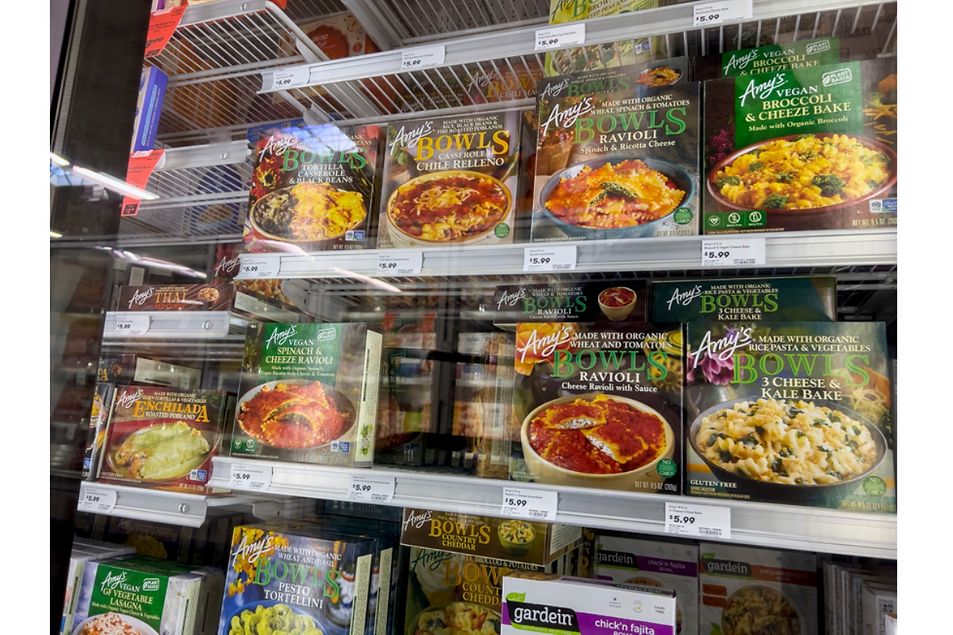

SANTA ROSA, CALIF. — Amy’s Kitchen, a manufacturer of convenient and frozen foods, is planning to close its Santa Rosa facility in phases.
Plans call for production to shift to the company’s facilities in Medford, Ore., and Pocatello, Idaho.
Approximately 260 roles will be eliminated as part of the transition, with 207 roles set to be cut at the Santa Rosa facility and about 51 roles eliminated in the Pocatello’s facility’s canning area.
Amy’s Kitchen said canning will be moved to the company’s Medford facility, which also will manufacture pizza, soup and burritos. The Pocatello facility will be the company’s designated entree facility.
The facility closing comes as the company said it is making changes to its manufacturing network so each facility can focus on the product categories where it is strongest.
“We looked at every alternative before landing here,” said Paul Schiefer, who was hired as chief executive officer of Amy’s Kitchen in April. “We have a loyal workforce in Santa Rosa, and we’re incredibly grateful for everything they’ve contributed.
“We know this decision has a very real impact on people we value. As we’ve grown, our manufacturing network has become more complex than our business needs today. Aligning our network around what each facility is best positioned to do is what keeps Amy’s operating efficiently for the long run, for our employees, our retailers, and the families who count on our food.”
Business
Australia’s First Match Since World Cup Ends in Dramatic 1-1 Draw With Brazil, Not the Win Fans Wanted
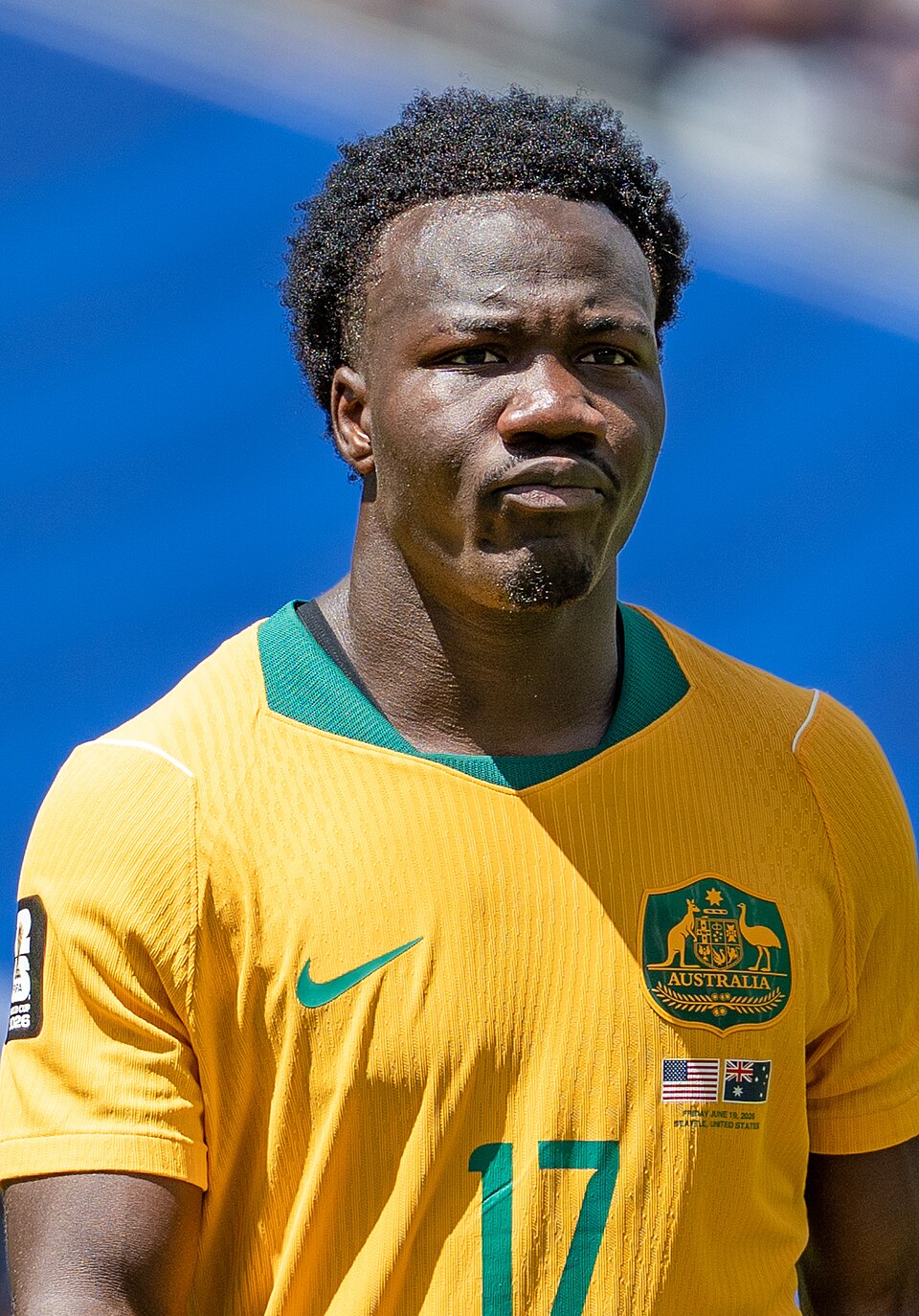
TOWNSVILLE, Australia — The Socceroos played their first match since the 2026 FIFA World Cup on Friday, and for long stretches at Queensland Country Bank Stadium, it looked as though Australia might produce one of the most memorable results in the program’s history, before Brazil salvaged a stoppage-time equalizer to leave the international friendly level at 1-1.
Nestory Irankunda’s stunning free kick in the 68th minute had Australian supporters dreaming of a famous victory over one of world football’s most storied national teams, only for Brazilian substitute Rayan to head home a last-minute equalizer that ensured the spoils were shared between the two sides. The result marked Australia’s return to competitive international action following the conclusion of the World Cup earlier this year, giving fans their first look at the Socceroos since the tournament wrapped.
Irankunda’s goal itself has drawn widespread praise since the final whistle, with the strike, curled from roughly 20 yards over the defensive wall and into the top corner past Brazilian goalkeeper Hugo Souza, standing as just the second goal Australia has ever scored against Brazil across the two nations’ history of matches. That rarity underscored both the difficulty of the achievement and the scale of what Australia came close to accomplishing on home soil in Townsville, before Rayan’s header in the closing moments denied the Socceroos what would have been an even more historic outcome.
Friday’s friendly carried added significance as Australia’s first match of the new international cycle following the World Cup, giving fans and analysts an early opportunity to assess the state of the Socceroos program heading into the next stage of its development. The match took place as part of a broader slate of international football fixtures played during the same window, with UEFA Nations League matches also being contested across Europe, including results in groups featuring the Netherlands, Germany, Portugal, Wales, Kosovo, Ireland, Norway, Denmark, Austria and Israel.
The broader football news cycle surrounding Friday’s match extended well beyond the result itself. In Norway, Erling Haaland continued his prolific scoring form in a win over Denmark, extending a run of form that has drawn continued global attention. Elsewhere, Barcelona denied reported interest in teenage Manchester United prospect JJ Gabriel, a story that has drawn significant coverage in recent days following reports that Gabriel had asked to leave United’s academy. In Israel, a forward was shown a red card for his goal celebration during a separate international match, while Argentina’s Lionel Scaloni addressed the timing of Lionel Messi’s approaching farewell from the national team, and former Germany manager Jürgen Klopp said Kai Havertz and Jamal Musiala were “probably out” pending further medical scans, ahead of Germany’s own Nations League fixture against the Netherlands, which finished level at 1-1.
For Australia specifically, Friday’s result offered a mixed but broadly encouraging signal about where the program stands as it enters this next phase. Producing a goal of the quality Irankunda scored against a Brazilian side that included Vinicius Junior, Endrick, Raphinha and Bruno Guimarães, and holding that lead deep into stoppage time, pointed to genuine progress and quality within the current Socceroos squad under manager Tony Popovic, even as the manner of conceding the equalizer so late in the match will likely prompt some reflection on how the team manages narrow leads against elite opposition in the closing stages of matches.
ESPN’s live coverage of the match, tracked in real time by fans and reporters throughout the evening, captured the shifting emotions of the contest, from the excitement generated by Irankunda’s opener through to the disappointment of conceding in the fifth minute of second-half stoppage time. Fan reaction polls following the match reflected a split verdict on how to interpret the result, with some focusing on the achievement of matching one of the sport’s traditional powers on the scoreboard for so long, and others lamenting the missed opportunity for an outright victory that had appeared within reach for much of the second half.
Brazil, managed by Carlo Ancelotti, used the match as part of its own broader squad assessment during the international break, rotating personnel throughout the second half as the Brazilian coaching staff continued evaluating options across multiple positions. The draw extended Brazil’s unbeaten record in the fixture against Australia, even as the manner of the result, requiring a stoppage-time goal to avoid defeat, offered a reminder that Australia’s rising generation of players is capable of testing even the most decorated national teams on their day.
With the Socceroos now having opened their post-World Cup cycle with a performance that produced both a moment of genuine history in Irankunda’s goal and a familiar pattern of narrowly missing out on victory against top-tier opposition, attention will now turn to how Popovic’s side builds on Friday’s result as it continues preparing for its next set of international fixtures in the months ahead.

LAS VEGAS — As consumers remain under financial pressure, they are no longer hunting for a deal; they’re assembling one, said Nicole Collida, managing director of US Retail & Sales Agencies at NielsenIQ (NIQ).
Speaking at Groceryshop on Sept. 22, Collida said shoppers are combining strategies, such as switching to lower-price brands (39%), shopping more often at discount or value retailers (34%), buying more private label (32%) and stocking up when preferred items are on sale (32%).
“It’s a durable shift in how consumers are curating a deal,” she said. “Promotion is still important, but promotion has to do things different than it’s done before. It has to drive value for the consumer in the way that the consumer is defining it.”
Some categories are faring better than others as food cost concerns persist. Looking ahead to next year, consumers intend to spend more money on fresh produce, about the same on fresh meat and less on instore prepared foods, according to NIQ’s 2027 Consumer Outlook Study. Notably, every purchase decision will be guided by justification rather than habit.
“An important note here is that consumers aren’t necessarily cutting spending,” Collida said. “We see them concentrating spending on the things that matter most to them and their family. And this is an important nuance because consumers will make decisions based on how they’re defining value and put those items in the basket, so that definition of value becomes critically important.”
The club channel has emerged as a clear winner against this backdrop, growing 9% over the past year while traditional grocery has remained flat. Yet only 11% of club sales are driven by promotion, versus more than 20% in other channels.

The club channel has emerged as a clear winner during the current economic environment, growing 9% over the past year, according to NielsenIQ.
| Photo: ©WOLTERKE – STOCK.ADOBE.COM“Club is the clearest, most consistent proof point of structural value in our industry,” Collida said, pointing to membership, bulk economics, stock-up occasions and discovery as channel advantages. “Club will continue to win, and I think they’re making that value equation really obvious for consumers.”
The number of trips per shopper has increased at club and mass retailers while declining at grocery and dollar stores over the past three years, according to NIQ.
“Grocery really does have to redefine itself and show up with a different value proposition because scale won’t be enough,” she said.
But scale doesn’t necessarily mean having a national footprint, she argued. “It can also mean availability of and the bandwidth to act on data.”
Rather than copy larger competitors, smaller and regional retailers should lean harder into unique advantages such as local sourcing and fresh assortment, she added.
“The lesson for all brands and retailers is to ensure that you’re defining the value proposition for consumers before they set foot in the store,” Collida said. “Don’t rent their attention with a promotion. Rather, really focus on bringing them into the store by delivering value for the occasion or the need state they’re looking to address.”

I Experienced Dolby Vision 2 On A Hisense RGB Mini-LED TV, And It’s A Must-have Feature

Bitcoin & Altcoins Are Making People Rich And No One Seems To Be Talking About Why

Dylan Coastal Resort unveils its final, spectacular high-end collection

Weekend Open Thread – Corporette.com

Weekend Open Thread: Talbots – Corporette.com

Memory prices are slowing because buyers ran out of money
Bitcoin & Altcoins Are Making People Rich And No One Seems To Be Talking About Why

What is a Money Bill? | Financial Bill vs Money Bill | Article 110 | UPSC Polity | Rajesh Mishra Sir

Skippa x Dj Mac x Crashdummyy – Money Walk (Unreleased Preview) (REACTION)
-
 Fashion7 days ago
Weekend Open Thread: Talbots – Corporette.com
-

 Crypto World3 days ago
Goldman Sachs and Deutsche Bank Agree: The S&P 500 Rally Isn't Over
-

 Tech5 days ago
Researchers escape OpenAI Codex sandbox to run commands on host
-

 Fashion1 day ago
8 iPhone Accessories That Add Personality
-

 Crypto World5 days ago
Who Needs CLARITY Anyway? ARB Could See 70X Increase: Hodler’s Digest
-

 Crypto World7 days ago
Circle launches Arc Studio AI agent for building onchain apps
-

 Crypto World7 days ago
Trading Bitcoin on Robinhood? Why 2% Spread Has Traders Worried
-
 NewsBeat7 days ago
Trump says US has reached an agreement to take permanent control of Greenland’s security
-

 Tech6 days ago
Trump suggests rebranding AI with a new name, says he’s also creating an AI Force
-

 Crypto World7 days ago
Bitcoin price breaks channel as RSI climbs to 63
-

 Business5 days ago
Analog Devices (ADI) Bets $1.35 Billion on Chips that Let Machines Think for Themselves
-

 Crypto World5 days ago
Coinbase, Robinhood, Circle Seen as Tokenized-Stock Winners
-

 Tech4 days ago
Google’s $899 Googlebook is a bet that you’ll buy a new laptop for Gemini
-

 Crypto World2 days ago
This Bearish Netflix Stock Trade Can Cash In On Video Streaming Giant’s Woes
-

 Crypto World3 days ago
Trump-Xi Polymarket Odds for Handshake Hit 50%
-
 Business2 days ago
Oil Price Today (September 23): Crude oil below $100 on hopes of US-Iran talks. What did Trump say?
-

 Crypto World2 days ago
Crude Oil Prices Pressured by Diplomatic Hopes in the Middle East
-

 Entertainment2 days ago
These 17 Fall Amazon Dresses Seriously Look Like Anthropologie
-

 Crypto World7 days ago
World Money launches in 150+ countries with Stripe
-

 Crypto World2 days ago
Bitcoin Threatens Sub-$84,000 Breakdown as Long Liquidations Spike
You must be logged in to post a comment Login