Intellia Therapeutics, building exterior and company sign, Cambridge, Massachusetts, USA.
Spencer Grant | Universal Images Group | Getty Images
Intellia Therapeutics said its Crispr-based treatment for a rare swelling condition met its goals in a late-stage trial, marking a milestone for the field of gene editing and putting the company on track to seek approval from the U.S. Food and Drug Administration.
Advertisement
The company’s treatment uses Nobel Prize-winning technology Crispr to edit DNA and turn off the gene that controls production of a peptide that’s overactive in people with hereditary angioedema, causing them to experience potentially life-threatening swelling attacks. Intellia’s treatment is administered once through an hourslong infusion, making the edits directly in the liver.
Intellia said the one-time treatment reduced attacks by 87% compared with a placebo, meeting the study’s main goal. Six months after treatment, 62% of patients were free from attacks and weren’t using other therapies, Intellia said.
The company described the safety and tolerability of the treatment as “favorable,” reporting the most common side effects were infusion-related reactions, headaches and fatigue. Analysts were closely watching safety in the trial since a patient in a separate trial of a different treatment from Intellia died from liver toxicity.
“When you think about where we started with Crispr, just 12 years ago with some of the fundamental insights, I think there was a lot of talk about what might be possible, and we’ve had reports along the way in terms of milestones, but this is the first Phase 3 data in any indication with in vivo Crispr where you’re actually changing a gene that causes disease,” said Intellia CEO John Leonard.
Advertisement
The only FDA-approved Crispr-based medicine comes from Vertex Pharmaceuticals. Called Casgevy, the gene editing is done outside the body, or ex vivo. The process requires collecting a person’s blood cells, making the edits outside the body, then reinfusing them back into a patient. Intellia’s treatment, meanwhile, makes the edits inside the body, or in vivo.
Intellia said it has started a rolling application with the FDA and plans to complete the filing in the second half of this year. The company expects to launch the treatment in the U.S. in the first half of next year, if it’s approved.
If approved, Intellia’s treatment, lonvoguran ziclumeran, will compete with about a dozen other chronic drugs for HAE. Despite the allure of a one-time treatment, genetic medicines haven’t always been a commercial successes. BioMarin withdrew its gene therapy for Hemophilia A because of weak sales, for example.
Leonard said there are important differences between the two, like the fact that BioMarin’s therapy faced questions about how long the effects would last. In contrast, he said Intellia hasn’t seen a single case in almost six years where the effects diminished over time.
Advertisement
Despite the results, he’s reluctant to call Intellia’s treatment a functional cure.
“I think this is a tipping point for the disease and tipping point for Crispr-based in vivo therapy where you can make a change [and] it’s permanent,” Leonard said. “And, as far as we can tell, we don’t have a single patient in this program or other program where there’s been any waning of the effect of what we did to the gene or the effect of what we’ve seen with the clinical aspects of the disease itself. So it’s pretty exciting.”
Grosvenor, the property company controlled by the Duke of Westminster, has broken ground on a £40m repositioning of The Hive in Manchester’s Northern Quarter, in a move that takes the group’s directly managed flexible workspace model outside London for the first time.
The Lever Street landmark, which extends to 78,000 sq ft, will be reimagined as a destination office building anchored by 25,500 sq ft of flex space and a hospitality-led amenity offer. Ground-floor units fronting Lever Street will house a deli and a restaurant, both run by what Grosvenor describes as “well-known Manchester names”, with a launch pencilled in for autumn 2026.
For Grosvenor’s UK property arm, the project is the most visible test yet of a regional strategy launched in 2020 that now stretches across roughly 500,000 sq ft in Manchester, Birmingham, Bristol and Leeds. The portfolio is currently 90 per cent let, a figure that compares favourably with a regional office market still wrestling with hybrid working and a flight to quality.
The group has appointed x+why, the B Corp-certified workspace operator, to run more than 22,000 sq ft of the flex floors under a management agreement. The deal extends a partnership that began in 2023 at Fivefields, Grosvenor’s social-impact workspace in Victoria, and signals a growing appetite among traditional landlords to plug operating expertise into their own buildings rather than cede space to third-party flex providers on conventional leases.
Interiors will be designed by x+why’s in-house team, whydesign, with a deliberate nod to local craftsmanship. Pieces by Manchester-based furniture designers and artists including Aiden Donovan, Jesse Cracknell, Matt Dennis and Mima Adams will be woven into the scheme, while elements from the fit-out installed by previous tenant The Arts Council are to be repurposed, a small but pointed gesture towards the building’s creative heritage.
Advertisement
The bet on Manchester reflects a wider conviction inside Grosvenor that the city’s office market remains one of the most resilient outside the capital, underpinned by a deep talent pool, inward business migration and a structural shortage of grade-A space. The landlord’s nearby Ship Canal House is, it says, close to full occupancy following a run of new lettings and renewals.
Fergus Evans, office portfolio director at Grosvenor Property UK, said the Hive scheme typified the group’s regional playbook of taking “a prime asset in a great location and repositioning it to meet the evolving needs of today’s occupiers”. He added: “Manchester continues to perform strongly for us, and our investment in The Hive reflects sustained demand for well-located, high-quality offices, particularly from the city’s growing digital and creative economy. Combining x+why’s experience in creating design-led, community-focused workspaces with our approach to active asset management, we are well placed to deliver a distinctive, flexible offer that responds to local demand.”
Rupert Dean, chief executive and co-founder of x+why, said the operator was “delighted to be partnering with Grosvenor again to bring The Hive into its next chapter”. He added: “The Northern Quarter is one of the most exciting and entrepreneurial parts of the UK, and The Hive will reflect that energy, offering a workspace that is not only functional, but inspiring and socially driven.”
For SMEs and scale-ups in Manchester’s digital and creative cluster, the very occupiers Grosvenor and x+why are courting, the arrival of a higher-end, hospitality-led flex product on Lever Street is likely to sharpen competition with established players such as WeWork, Bruntwood and Department, and could nudge headline rents in the Northern Quarter higher when the doors open next autumn.
Advertisement
Jamie Young
Jamie is Senior Reporter at Business Matters, bringing over a decade of experience in UK SME business reporting.
Jamie holds a degree in Business Administration and regularly participates in industry conferences and workshops.
When not reporting on the latest business developments, Jamie is passionate about mentoring up-and-coming journalists and entrepreneurs to inspire the next generation of business leaders.
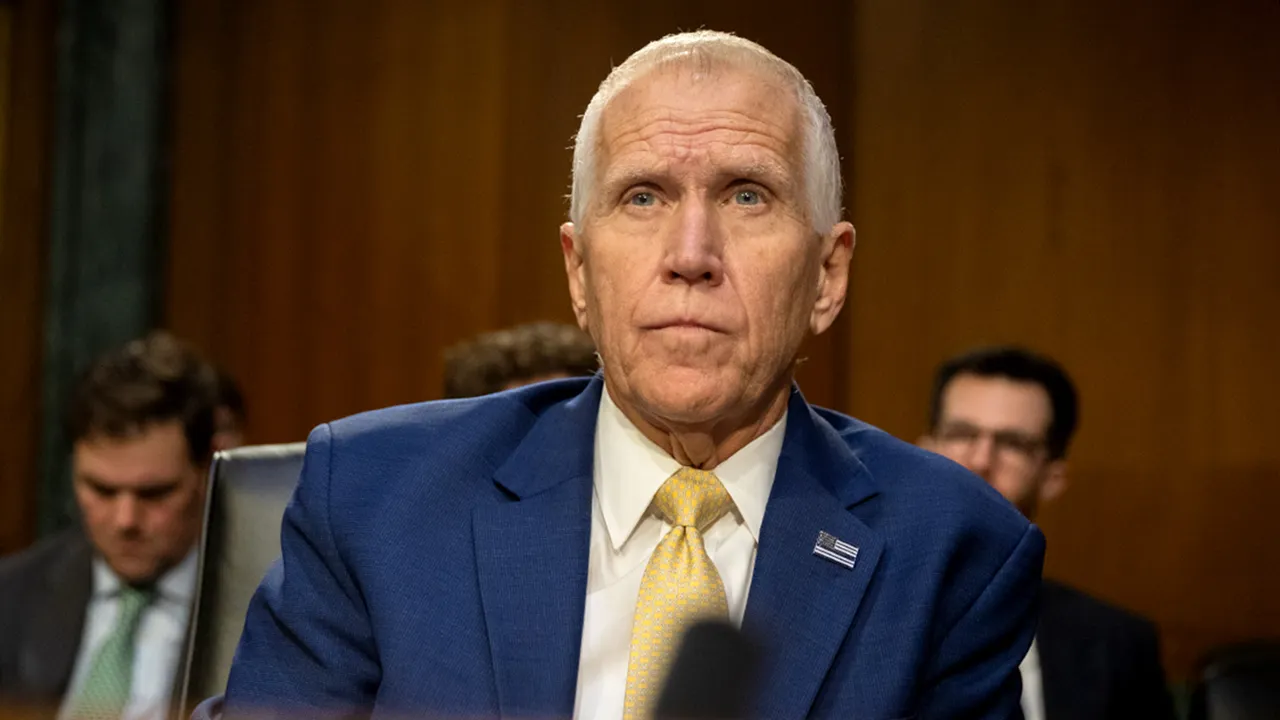
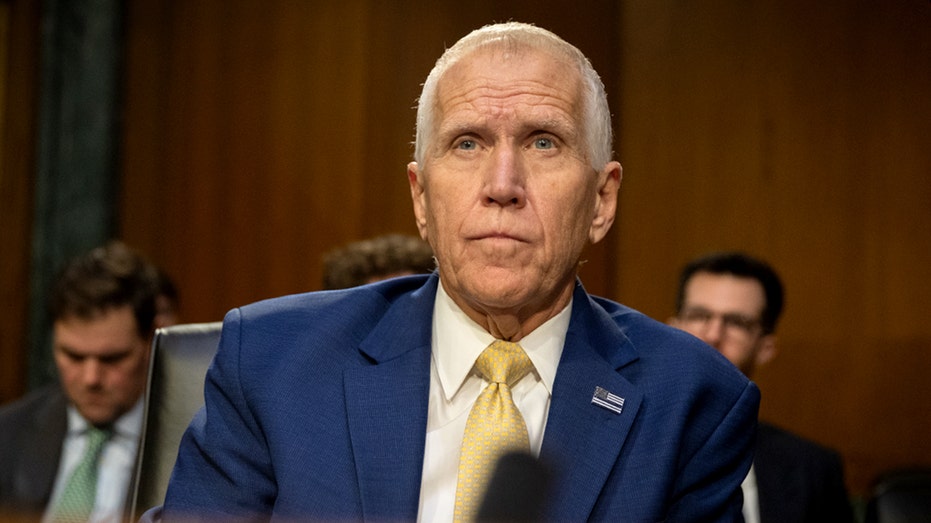
Republican Sen. Thom Tillis on Tuesday reiterated that he opposes Kevin Warsh’s nomination over President Donald Trump’s Federal Reserve investigation.
Now that the Justice Department has dropped its Federal Reserve probe, Sen. Thom Tillis, R-N.C., said he is willing to vote to confirm Kevin Warsh to serve as the next chair of the Federal Reserve System board of governors.
“I have been clear from the start: the U.S. Attorney’s Office criminal investigation into Chair Powell was a serious threat to the Fed’s independence, and it needed to end before I could support Kevin Warsh’s confirmation. I welcome the Inspector General’s investigation. This is a necessary and appropriate measure, and I have confidence it will be conducted thoroughly and professionally,” Tillis stated in a post on X.
Advertisement
The senator noted that he is looking “forward to supporting Kevin Warsh’s confirmation,” describing Warsh as “an outstanding nominee.”
Sen. Thom Tillis listens as Homeland Security Secretary Kristi Noem testifies during a Senate hearing in Washington, D.C., on March 3, 2026. (Nathan Posner/Anadolu via Getty Images)
U.S. Attorney for the District of Columbia Jeanine Pirro announced last week that she had directed her office to close the probe.
“This morning the Inspector General for the Federal Reserve has been asked to scrutinize the building costs overruns – in the billions of dollars – that have been borne by taxpayers,” she wrote in a Friday post on X.
U.S. Attorney Jeanine Pirro during a news conference at the Department of Justice in Washington, D.C., on Feb. 6, 2026. (Aaron Schwartz/Bloomberg via Getty Images)
“I have directed my office to close our investigation as the IG undertakes this inquiry,” Pirro noted, while warning that she “will not hesitate to restart a criminal investigation should the facts warrant doing so.”
A spokesperson with the Fed’s Office of Inspector General said in a statement obtained by Fox News Digital, “In July of last year, the OIG announced that it was conducting an evaluation of the Board’s building renovation project.
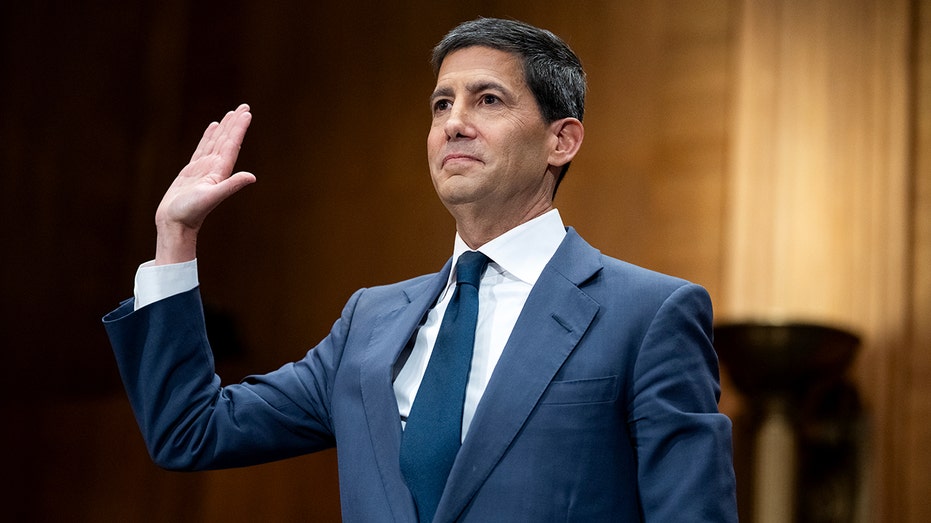
Kevin Warsh, nominee for chairman of the Federal Reserve, is sworn in to his Senate confirmation hearing on Tuesday, April 21, 2026. (Tom Williams/CQ-Roll Call, Inc via Getty Images)
“This assessment includes our independent analysis of the project’s substantial cost increases and overruns. We are actively working to complete our review, and look forward to making the results available to the public and Congress upon completion. We decline further comment,” the spokesperson noted in the statement.
Valmont Industries, Inc. (VMI) Shareholder/Analyst Call April 27, 2026 11:00 AM EDT
Company Participants
Mogens Bay John Schwietz – Executive VP, CFO & Corporate Secretary
Advertisement
Presentation
Operator
Greetings, and welcome to Valmont Industries 2026 Annual Shareholders Meeting. [Operator Instructions]
Advertisement
As a reminder, this conference is being recorded. I would now like to turn the call over to Valmont’s Chairman of the Board, Mogens Bay. Thank you. You may begin.
Mogens Bay
Good morning. My name is Mogens Bay, and as Chairman of Valmont, it’s my pleasure to welcome you to our Annual Meeting. Today’s meeting is being audio webcast to our shareholders and will be made available for replay at our website, valmont.com.
Advertisement
We have four proposals that are outlined in Valmont’s proxy statement to be voted upon at this meeting. We will then announce the results. All Valmont directors are present at today’s meeting.
Greg Geyer of KPMG is participating in today’s meeting, and KPMG is available to respond to any questions you may have about our financials. At this point, I call upon John Schwietz, CFO and Corporate Secretary, to read the required legal notice.
John Schwietz Executive VP, CFO & Corporate Secretary
Advertisement
Mr. Chairman, this meeting is convened in accordance with the proxy mailed on March 11, 2026, to all shareholders of record as of March 2, 2026. We have received the affidavit of mailing from Broadridge stating that this mailing was complete and accurate.
Anita Gillespie has been appointed inspector of the election, and a list of all shareholders is available for review. The inspector has advised us that there were 19,547,213 shares outstanding and entitled to vote at this meeting. Of that number, more than 91% are represented by proxy at this time.
Mogens Bay
Advertisement
Thank you. There are four matters for shareholders to
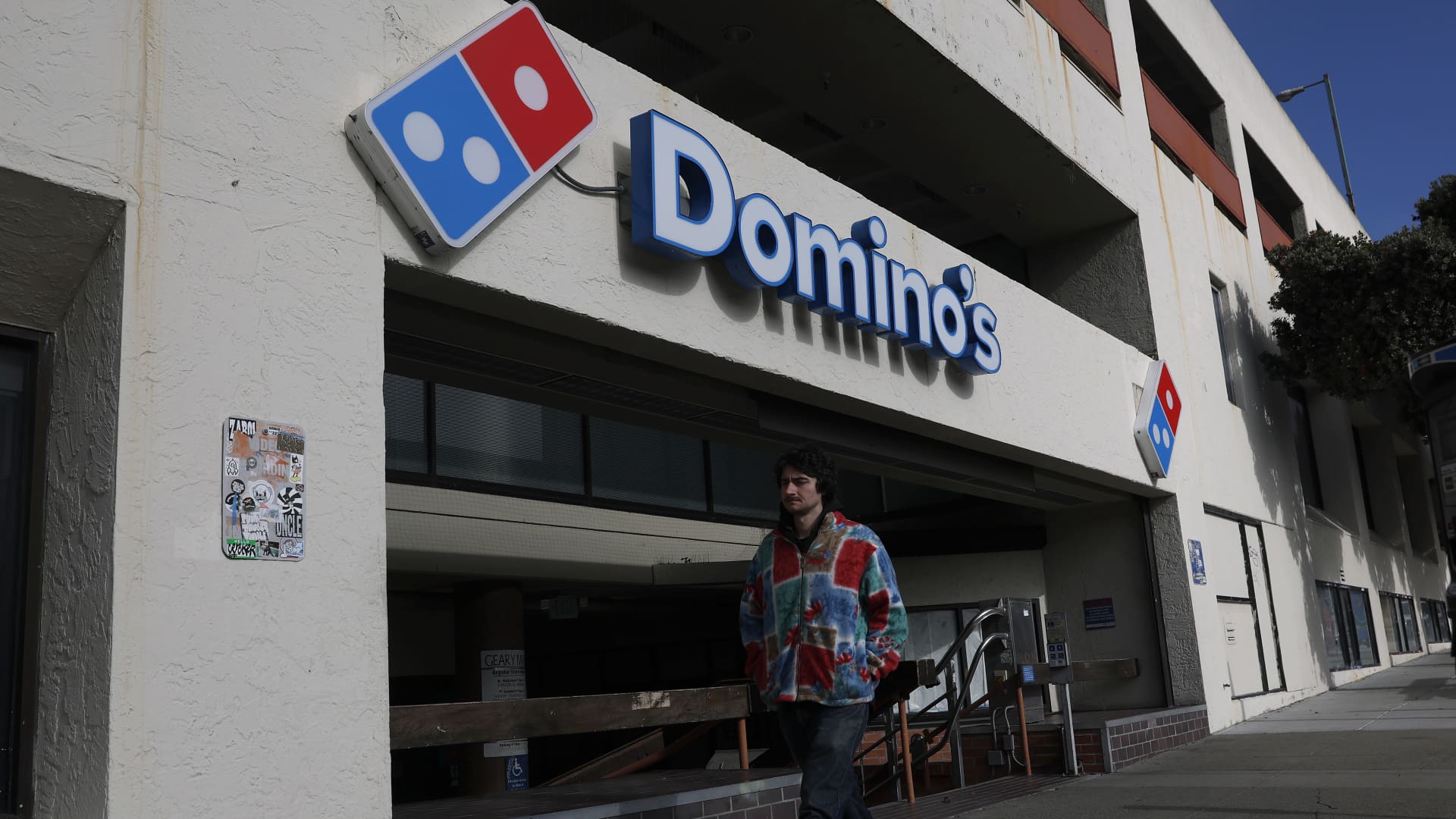
A pedestrian walks by a Domino’s Pizza on Dec. 9, 2025 in San Francisco, California.
Justin Sullivan | Getty Images
Domino’s Pizza stock fell 10% in morning trading on Monday after it reported weaker-than-expected U.S. same-store sales growth.
Advertisement
The chain’s domestic same-store sales rose just 0.9%, lower than the 2.3% bump expected by Wall Street analysts, based on StreetAccount estimates.
“We’re not happy with it,” CEO Russell Weiner told CNBC.
The pizza chain also lowered its full-year U.S. same-store sales forecast to low-single digit growth, down from its prior projection that U.S. same-store sales will increase 3%.
Weiner said he expects more fast-food chains to report similar headwinds from winter weather and weak consumer sentiment, which took a dive in March due to spiking fuel prices caused by the U.S.-Israeli war with Iran.
Advertisement
“One of the bad things about reporting first is you don’t get to hear about anybody else,” Weiner said.
Domino’s kicked off the earnings season for restaurant chains. Starbucks is on deck after the bell on Tuesday, and Chipotle Mexican Grill and Pizza Hut owner Yum Brands are expected to share their results on Wednesday. Rival Papa John’s will report its earnings next Thursday.
During the quarter, Domino’s also faced stiffer competition from rival pizza chains. Papa John’s and Pizza Hut both matched Domino’s $9.99 “Best Deal Ever” with promotions at the same price point. And Little Caesars undercut Domino’s $6.99 Mix & Match deal with a $5.99 version.
“People are seeing what we’re doing, and they’re sick of losing share, and they’re coming at it,” Weiner said, adding that he still expects Papa John’s and Pizza Hut to report same-store sales declines for the quarter despite the new promotions.
Advertisement
Looking ahead, Weiner expressed confidence that Domino’s will prove itself in the long run.
“Domino’s has got a bigger advertising budget than our second two competitors combined,” he said. “And those competitors are both going up for sale, so we know things aren’t good there right now.”
Yum announced in November that it was exploring strategic options for Pizza Hut, which could include a sale. And Papa John’s is reportedly in talks with Qatari-backed Irth Capital to go private. Both chains have also announced plans to close hundreds of restaurants this year, which could further boost Domino’s dominant position in the pizza category.
And if either Pizza Hut or Papa John’s goes private, Weiner said he expects that a new owner would shutter even more locations — a win for Domino’s.
Advertisement
Shares of Domino’s have lost nearly a third of their value over the last year. The company’s market cap has fallen to roughly $11.2 billion.
NEW YORK — Veradermics Inc. shares skyrocketed more than 42% Monday, surging to $96.60 in morning trading after the dermatology-focused biopharmaceutical company announced strongly positive topline results from its Phase 2/3 clinical trial of VDPHL01, an oral treatment for male pattern hair loss that demonstrated early, consistent and robust hair growth.
Veradermics Stock Explodes 43% After Positive Phase 3 Hair Loss Drug Trial Results
The New Haven, Connecticut-based company, which went public earlier this year, saw its market capitalization jump by more than $1 billion in a single session as investors rushed to buy shares following the news. Trading volume was exceptionally heavy, with millions of shares changing hands in the first hours of the session.
Veradermics said its lead candidate VDPHL01 achieved statistically significant hair growth in the pivotal “302” study involving men with mild-to-moderate pattern hair loss. The oral, non-hormonal therapy showed rapid onset of action, with visible improvements noted as early as eight weeks and continuing through the 24-week endpoint. The results position VDPHL01 as a potential first-in-class treatment in a market long dominated by topical minoxidil and oral finasteride.
Breakthrough in Hair Loss Treatment
The company plans to hold a conference call Tuesday to discuss the detailed results. Analysts hailed the data as “transformational,” noting that VDPHL01 could capture a significant share of the multibillion-dollar global hair loss market if approved. Leerink Partners raised its price target on the stock to $90 from $75 following the announcement, maintaining an Outperform rating.
Advertisement
Veradermics CEO Dr. Reid Waldman expressed excitement in a prepared statement. “These results represent a major milestone not only for Veradermics but for the millions of men seeking safe, effective and convenient solutions for hair loss,” he said. The company is also advancing studies for female pattern hair loss, marking the first Phase 3 program of its kind in the U.S.
Company Background and IPO Success
Veradermics went public in February 2026 at $17 per share and has seen extraordinary volatility since its debut. The stock has more than quadrupled in value this year, driven by investor enthusiasm for its pipeline of dermatology and aesthetics products. The company focuses on turning common skin and hair concerns into proven therapeutic solutions through rigorous clinical development.
With cash reserves strengthened by its upsized IPO, Veradermics is well-funded to complete its ongoing Phase 3 programs and prepare for potential regulatory submissions. The company ended 2025 with significant cash on hand and has been aggressively advancing its clinical timeline.
Advertisement
Market Reaction and Analyst Views
Wall Street reacted enthusiastically to the news. Several firms reiterated Buy ratings, citing the strong efficacy data and large addressable market for hair loss treatments. Jim Cramer highlighted the stock on his show, calling it a “double or nothing” opportunity in the aesthetics space.
However, some analysts cautioned that the stock’s rapid run-up leaves it vulnerable to pullbacks. Valuation concerns persist, with the company still in the pre-revenue stage and facing competition from established players. Shares remain well below their recent 52-week high but have shown remarkable resilience.
Broader Industry Context
Advertisement
The positive results come at a time of growing interest in non-hormonal hair loss solutions. Current treatments like finasteride carry potential side effects that deter many patients, creating an opening for new therapies. Veradermics’ approach, if successful, could disrupt the market and offer a convenient oral option for both men and women.
The dermatology and aesthetics sector has seen increased investor attention in recent years, driven by aging populations and rising demand for cosmetic and therapeutic solutions. Veradermics’ progress validates the potential for innovation in this space.
What’s Next for Veradermics
The company will now focus on completing its remaining Phase 3 trials, including studies in female patients. Topline data from additional trials is expected later this year and in 2027. If approved, VDPHL01 could reach the market as early as 2028, representing a major commercial opportunity.
Advertisement
For investors, Monday’s surge underscores the high-risk, high-reward nature of clinical-stage biotech stocks. While the data appears compelling, full approval and commercial success are still years away and subject to regulatory hurdles.
As Veradermics continues its journey from clinical development to potential commercialization, the company’s progress will be closely watched by patients, physicians and investors alike. The strong Phase 2/3 results mark a pivotal moment that could transform treatment options for pattern hair loss and reward shareholders who bet on the company’s innovative approach.


















































You must be logged in to post a comment Login