
Business
Crypto And Crypto Stocks Surge




For business leaders, stagnant growth can be frustrating, but it can also provide an opportunity to reassess the organisation and identify what needs to change. The challenge is recognising the underlying cause rather than simply responding to the most visible symptoms. Read on to learn more.
When a Successful Strategy Stops Working
One common reason for stagnation is market saturation. A product or service that once had substantial room to grow may eventually reach a point where most of its readily available customers have already been reached. Continuing to invest in the same channels and audiences can then produce diminishing returns.
Businesses facing this situation may need to consider new customer segments, markets, products, or services. This does not necessarily mean abandoning the core business. Instead, leaders can examine where their existing capabilities could create value elsewhere.
External expertise can also provide a fresh perspective when established assumptions become difficult to challenge internally. Cognosis is one of the leading consulting firms in London, specialising in growth strategy and helping organisations identify opportunities, develop business strategies, and translate those strategies into action.
Losing Sight of the Customer
Customer expectations rarely remain static. New technologies, competitors, and changing buying habits can gradually alter what customers value. A business can continue delivering a high-quality product while still losing relevance if the market has moved in another direction. Regular customer research, competitor analysis, and feedback can help leaders identify these shifts before they become serious barriers to growth.
Companies should also examine their value proposition. Customers need a convincing reason to choose one business over another, particularly in crowded markets. If that distinction has become unclear, refining the proposition may help restore momentum.
Internal Structures Can Restrict Progress
Sometimes the obstacle is inside the organisation. Processes and structures designed for a smaller company may become inefficient as the business expands. Decision-making can slow, responsibilities may become unclear, and teams can become focused on their own objectives rather than wider strategic priorities. Businesses may also accumulate too many initiatives, spreading resources across projects that make little contribution to long-term growth.
Reviewing the operating model can reveal whether people, processes, technology, and investment remain aligned with the company’s ambitions. Simplifying priorities can be particularly valuable when employees are being pulled in too many directions.
Strategy Without Execution
A strong strategy achieves little if it cannot be implemented effectively. Leadership teams may have ambitious growth targets without establishing clear responsibilities, measurable objectives, or adequate resources. Breaking strategic goals into practical actions can help close this gap. Each priority should have clear ownership, realistic timescales, and measures of progress. Regular reviews can then identify problems early and allow the business to adapt.
Turning Stagnation Into an Opportunity
Stagnant growth does not automatically indicate that a business model has failed. It can signal that the conditions which supported earlier success have changed. The businesses most capable of restoring momentum are often those willing to question previous assumptions.
By taking the above points into consideration, leaders can use a period of stagnation as a prompt for renewal and create stronger foundations for sustainable growth.

KANSAS CITY — School meal and snack programs ensure students from kindergarten through 12th grade are served nourishing foods that support lifelong healthy eating patterns. In the United States, these programs rely on food and beverage manufacturers to allow them to meet the nutritional requirements set forth by the US Department of Agriculture (USDA), and at the same time, ensure they are affordable, simple to serve and delicious to eat. This is no easy feat, especially with nutritional requirements evolving and many unknowns still out there.
“Every day, school meal programs are juggling financial, staffing and equipment challenges while trying to meet strict federal nutrition standards and the taste preferences of their students,” said Diane Pratt-Heavner, spokesperson for the School Nutrition Association (SNA). “In addition to following whole grain requirements, they must also meet limits on calories, sodium and now added sugar.”
Since July 2025, US schools have had to adhere to limits on added sugars in cereal, milk and yogurt. Starting in July 2027, they will have to ensure that less than 10% of calories in meals comes from added sugar. New sodium reductions will also take effect at that time.
“With many programs struggling to keep their kitchens fully staffed, schools rely on their K-12 industry partners to offer a variety of menu options that meet these federal standards,” Pratt-Heavner said. “This year, schools will be seeking new whole grain breakfast options that are lower in sugar and sodium, including packaged options that are ideal for grab-and-go or breakfast in the classroom programs. Several states have also passed legislation restricting artificial dyes and additives in school foods, so schools are also looking for products that don’t contain ingredients of concern.”
Addressing the unknowns
The USDA will soon release proposed regulations to align current school nutrition standards with the recently updated Dietary Guidelines for Americans (DGA). It’s a development school lunch program operators are keeping an eye on.
“The new DGAs put an increased emphasis on protein, which could translate to a daily meat or meat alternate requirement for school breakfast,” Pratt-Heavner said. “We’ll have to see how USDA proposes to change the breakfast meal pattern and if they modify breakfast grain requirements.”
Moreover, the USDA may choose to further restrict added sugar limits, establish limits on highly processed foods in schools or restrict ingredients of concern, she said. USDA has also indicated changes are being considered in the Smart Snacks in Schools rules.
Another unknown for bakers surfaced on July 14 when USDA posted an online pledge asking states to engage in “making school meals healthier,” which included a call for 100% whole grain items.
“This pledge was not accompanied with more specific details, so it’s unclear how state-level school foodservice leaders may be considering it,” said Tricia Psota, partner, Nutrition In Demand, a strategic consulting group focused on science-based nutrition. “Currently, most grains offered with a school meal are required to be whole grain-rich, which means that items, such as bread for a sandwich, need to be made with at least 50% whole grains and the remaining grains are required to be enriched.”
If USDA shifts to require that all school foods must be 100% whole grain, school foodservice operators will be challenged with identifying products that meet the requirement, while also addressing budgetary goals and children’s taste preferences. Bakers need to get busy now.

Further restrictions on added sugar and sodium in school meals will be implemented in 2027.
| Photo: ©NEW AFRICA – STOCK.ADOBE.COM“Whole grains remain a policy and public health priority, but in practice, schools need products students will actually eat,” said Sasha Chamberlain, owner, Chamberlain Nutrition Consulting, a public health and nutrition policy consultancy.
The most important baked foods to focus on are the high-volume staples schools serve repeatedly. This includes breads and buns, pizza crusts, tortillas and wraps, and breakfast items, such as muffins, waffles and cereals.
“Bakers can help by developing products that are familiar in taste and texture, operationally easy, clearly documented for school meal crediting and cost-conscious,” Chamberlain said. “In this market, the best formulation is the one schools can actually serve successfully at scale.”
Reformulation provides a first start
After great taste, familiarity is often the key to successful better-for-you foods for students. Kids don’t eat Nutrition Facts panels. They eat food. The bakers who succeed will be the ones who deliver products that are both nutritionally compliant and enjoyable to eat.
“If the bun is soft, the muffin is moist and the cookie still tastes like a cookie, you’ve already won half the game,” said Thom King, chief innovations officer, Icon Foods. “The biggest opportunity isn’t reinventing these products. It’s making them better through smarter formulation.”
There is no one-for-one ingredient replacement. Reformulation requires a systems approach.
“Successful reformulation starts with understanding the role each ingredient plays beyond nutrition,” said Kaitlin Prindle, bakery application scientist, ADM. “Sugar contributes sweetness, but it also provides bulk, moisture retention and browning. Salt delivers flavor while also influencing dough performance and shelf life.”
Replacing these ingredients often requires multiple complementary solutions.
“Successful reformulation for school meal applications requires bakers to think beyond simply removing sodium or sugar or swapping in whole grains,” said Erin Surratt, senior director, research, development and applications, Corbion. “These ingredients play important functional roles in baked goods, impacting everything from flavor and texture to dough handling, freshness and microbial stability.”
Taste is paramount. When lowering sodium content, it is often necessary to include flavor modulators. And, because salt is a natural preservative, shelf life extenders may be necessary.
“For sodium reduction, bakers may look at specialty salt technologies, salt-potassium blends, fermentation-based flavor development, yeast-derived flavors, acids, herbs, spices and other flavor-building ingredients,” said Alexander Blissenbach, senior scientist, bakery applications, Cargill. “The goal is to lower sodium while preserving the perception of a balanced, flavorful product.”
Extending the shelf life
Reformulation requires bakers to revisit product quality throughout desired shelf life. It’s all about managing moisture and texture.
“Water activity directly influences microbial stability, softness, shelf life and texture,” King said. “Polyols can help manage free water while preserving moisture and softness, making them useful for extending freshness and improving eating quality. Fibers add another layer of functionality by contributing bulk, water binding, structure and moisture retention.”
Bakers need to design products for freezing, thawing, distribution and cafeteria holding. Communicating handling requirements is important.
“Bakers must also account for the operational realities of school foodservice,” Surratt said. “Products often move through extended distribution networks and may be exposed to varying storage conditions.”
Other challenges include process difficulties related to machinability and dough rheology and ensuring a consistent product that maintains a long enough shelf life. That’s because whole grain baked foods tend to be more susceptible to faster spoilage.
“Bakers can help to improve their shelf life by using natural mold inhibitors to prevent mold and anti-staling enzymes to prevent the onset of staling,” said Sherrill Cropper, new product development lab manager, bakery formulator, Lesaffre. “This can help to reduce product waste and improve the sensory attributes of the final product.”
Natural mold inhibitors can be used to replace chemical-sounding ingredients such as calcium propionate. This helps clean up labels.
“Lesaffre has a variety of natural mold inhibitors based on wheat flour or wheat starch with and without citric acid,” Cropper said. “In addition, enzymes can also be used to help with improving nutrition as certain enzymes can be added to cut down starch into simple sugars, which can help reduce the amount of added sugars needed in the formulation.”
Lesaffre provides a number of anti-staling enzyme options to meet a variety of shelf life needs, including up to 21 days or more. Enzymes are considered a label-friendly option for preventing mold growth and staling.
“These anti-staling improvers can also enhance the texture of baked goods by providing softness, resilience or even moistness to the crumb,” Cropper said. “They are used at a low dosage, which can lower the bowl costs compared to conventional softening emulsifiers.”
Improving nutrition, ensuring consumption
Reformulating to meet nutritional goals and state regulations is mandatory. Some bakers may choose to add extra nutrition to stand out in the market. Others may invest in premium ingredients to ensure consumption.
“Nutrition only creates value when it’s actually eaten,” said Jessica Wellnitz, director of business development for emerging brands, Bay State Milling. “If students bypass foods because of flavor or texture, the intended nutritional benefits are never realized. For bakers, small nutritional improvements, like increasing fiber across high-volume products served every day can have a meaningful impact on children’s diets.”
An emerging opportunity is the use of high-fiber wheat flour, which can be incorporated into whole grain-rich products to significantly increase fiber content while maintaining the familiar sensory characteristics of conventional whole wheat formulations.
“Our non-GMO variety has high levels of naturally occurring resistant starch,” Wellnitz said. “It’s available in refined and whole wheat formats, giving formulators additional flexibility depending on the application.”

Innovations in whole wheat flour are making whole grain baked foods more palatable for children.
| Photo: ©FOTOFABRIKA – STOCK.ADOBE.COMCompared with traditional whole wheat flour, these ingredients can provide more than twice the dietary fiber. That figure jumps to 10 times the fiber content when compared to traditional white flour.
“Whole wheat ingredient innovation allows bakers to increase whole grain content while maintaining the eating experience students are familiar with,” said Lauren Lahn, senior research and development manager, Ardent Mills.
Ardent Mills offers several whole wheat options tailored to different applications. Their grains have a finer particle size, which helps create a softer texture and appearance that is more similar to products made with refined flour.
“From a formulation standpoint, bakers can generally begin with a one-to-one replacement for traditional whole wheat flour,” Lahn said. “In many applications, up to 30% of white flour can be replaced with minimal adjustments. At higher inclusion levels, additional water may be needed to support hydration and dough performance.”
White whole wheat flour is another option. It has become a leading whole grain for school bakery applications, and it improves nutrition while maintaining student acceptance.
“Bakers may also consider finely milled whole grain flours, enzyme systems, emulsifiers and starch-based texture solutions to support softness, volume and eating quality while helping reduce graininess,” Blissenbach said. “Whole grain-rich formulations can affect color, volume, softness and flavor. Added sugar reduction can affect sweetness, browning, moisture and shelf life. Sodium reduction can change flavor perception.”
Bakers need to account for ingredient interactions while keeping products practical for school kitchens and appealing to students.
“Incorporating alternative and ancient grains, such as sorghum, barley, quinoa, millet and flax, can further elevate nutritional value while supporting whole grain goals,” said Kaitlin Prindle, bakery application scientist, ADM. “Beans, pulses, soy and pea protein also present opportunities to boost nutrition in products like muffins, waffles, pancakes and snack bars.”
Beneo offers whole grain beta-glucan-rich barley flour. It contains about 10 times the total fiber of traditional white flour and is high in protein.
“Its industry-leading content of beta-glucan and other soluble fiber supports the FDA-approved heart health claims, such as those found on oatmeal and whole grain snacks, at a very cost-effective level in baked goods,” said Kyle Krause, product manager, functional fibers and carbohydrates, Beneo. “This nutrient-dense, fiber-diverse, whole grain flour is perfect for children’s school nutrition, which can easily be incorporated into bread, bagels, muffins, cereals and other baked goods.”
Bakers who are suppliers to the K-12 school meal programs have many challenges ahead of them. Products must not only meet nutritional standards, but they also must offer enough menu value, student appeal and operational functionality to fit the school environment.

James Williams is co-founder and CEO of Sero, a Cardiff-based B Corp that upgrades social housing with insulation, solar panels, batteries and smart energy services.
In February 2026 the company secured investment from Innovation Investment Capital, the fund backed by the Cardiff Capital Region, to scale work that already covers up to 2,500 homes across the UK, with a contracted pipeline of up to 10,000 more. Founded in 2017 with former architect Andy Sutton, Sero connects housing providers with impact investors through its Energy as a Service model. He tells Business Matters why purpose, values and trust sit at the heart of how he leads, and why cash is king.
What do you currently do at Sero?
At Sero, we help social housing providers improve the energy performance of their existing homes, making them healthier to live in, more affordable to run and better for the environment.
My role is to bring together the different pieces needed to make that happen at scale. We help landlords understand what improvements each home needs, whether that is insulation, ventilation, heat pumps, solar panels or battery storage, and we make sure those upgrades are designed and delivered to the highest possible standards. We currently work with partners on up to 2,500 homes across the UK, with a further contracted pipeline of up to 10,000.
One of the biggest challenges facing the sector is funding. Many housing providers want to improve their homes but do not have access to enough capital to do so at the pace and scale required. Government programmes only go so far, leaving many residents in the least efficient homes with the highest energy costs.
A significant part of what we do is overcoming that challenge. We have developed funding models that connect housing providers with impact investors, enabling retrofit programmes to move forward where they otherwise might not. Through our Energy as a Service approach, we are helping unlock investment into home improvements while creating long-term value for landlords and residents alike.
What excites me most is that we are doing more than upgrading buildings. We are helping to bring a new type of energy service into social housing, one that gives landlords greater responsibility for how homes are powered and helps residents reduce their bills. We can tackle climate change and fuel poverty at the same time.
What was the inspiration behind your business?
Before founding Sero, I worked in the energy sector, and I became increasingly convinced that one of the biggest opportunities to reduce carbon emissions sat right in front of us: our homes. The housing sector was not changing at the pace or scale needed to make a meaningful difference.
Around the same time, I had a serious cycling accident which left me with a long recovery and a lot of time to think. I came away with a renewed sense of purpose and a determination to build something that could contribute to solving one of society’s biggest challenges.
I then met my co-founder, Andy Sutton, a former architect who shared my passion for sustainable homes and brought deep expertise in how buildings are designed and perform. Together, we founded Sero in 2017 with the ambition of helping create a net zero future.
Our original vision focused on new-build homes, but as we spent more time with housing providers, we realised the greatest opportunity for impact lay elsewhere. The UK already has millions of existing homes that need upgrading, and many of the people living in them are struggling with high energy bills, poor thermal comfort and ageing housing stock. Retrofitting those homes could deliver some of the biggest environmental and social benefits.
That insight shaped the business we are today. Whether it is new funding solutions, better retrofit delivery or helping landlords take a more active role in how homes are powered and heated, we are constantly challenging conventional approaches.
While net zero remains an important goal, I have come to believe that the outcome matters just as much as the technology. Our mission is to help create homes that are healthier, more comfortable and more affordable to live in. If we can improve people’s quality of life while reducing carbon emissions, we are achieving exactly what we set out to do.
Who do you admire?
I have always admired Henry Engelhardt, the founder of Admiral. What he achieved in building one of Wales’ most successful businesses is impressive in its own right, but what stands out most is the culture he created along the way. When people talk about Admiral, they talk about the way people were treated, the values embedded in the organisation and the environment created for employees to thrive.
I believe culture is one of the most important responsibilities of a leader. Businesses succeed through people, and creating a place where people want to work and stay is something I admire enormously.
More broadly, I admire people who challenge convention and are not afraid to take on established systems, pursue big ideas and work relentlessly to create positive change. I am particularly drawn to leaders who combine ambition with purpose and focus on meaningful impact rather than growth for growth’s sake. Purpose and culture are the two things that matter most to me.
Looking back, is there anything you would have done differently?
Honestly, no, although that should not be confused with saying everything has gone perfectly.
Every business experiences challenges, setbacks and mistakes, and we have made our share. But some lessons can only be learned through experience. Much of the advice entrepreneurs receive is valuable, but often it only resonates once you have experienced the challenge yourself.
I compare it to health and fitness. Most people know what they should be doing, but they do not always change until they have a reason to. Business is very similar.
What I have learned is the importance of surrounding yourself with good people. Mentors are incredibly important, not because they tell you what to do, but because they give you perspective when things do not go to plan.
I do not have regrets because every decision was made with the best information available at the time and for the right reasons. It is easy to look back with hindsight, but leadership requires making decisions in the moment. As long as you are guided by your values and act with integrity, you have to trust the process and keep moving forward.
What defines your way of doing business?
Three things define my approach: purpose, values and trust.
First, it is important to know why you are doing something. For me, business has never been solely about financial performance; it has always been about creating positive impact. A clear purpose makes decisions much easier because you understand what you are ultimately trying to achieve.
Second, values matter. They provide the framework for decision-making, especially when there is no obvious answer, and help ensure decisions are consistent with what you stand for.
Third, trust is essential. I believe in hiring talented people, giving them responsibility and trusting them to deliver. The strongest organisations are not built around control; they are built around empowering people to do their best work. If people understand the purpose, share the values and feel trusted, extraordinary things can happen. That is the foundation of how we have built Sero.
What advice would you give to someone starting out?
The simplest advice I would give is this: cash is king.
It may not be the most exciting answer, but it is one of the most important lessons I have learned. I have seen many businesses with excellent products, talented people and strong market opportunities fail because they ran out of cash at the wrong moment. When you are starting out, it is easy to focus on growth, investment or new capabilities, but without careful cash management even the best business can find itself in trouble.
So understand your cash position early, monitor it closely and always plan ahead. Do not allow cash flow to be the thing that stops an otherwise great business from succeeding.
Alongside that, seek out mentors and experienced people who can support you. Entrepreneurship can be challenging and often lonely, and people who can offer perspective and guidance are invaluable.
Most importantly, stay true to your purpose. Building a business takes resilience, and there will always be obstacles. If you are passionate about what you are trying to achieve and manage the fundamentals well, you give yourself the best possible chance of success.

China making progress on finalizing Boeing purchases announced in May

California AG Rob Bonta leads a push to block a potential merger between Paramount and Warner Bros. Discovery. Charlie Gasparino analyzes the regulatory battle, while actor Mark Ruffalo urges officials to stop the deal.
Paramount Skydance Corp. has reportedly reached a settlement with the states seeking to block its proposed takeover of Warner Bros. Discovery Inc., clearing the way for a historic Hollywood merger.
California Attorney General Rob Bonta led a group of state attorneys general who filed a lawsuit challenging the massive $111 billion deal that was initially expected to close during the third quarter of this year.
“After a frenzied weekend of negotiations, $PSKY and state AGs have agreed to a settlement framework and an official deal announced this morning,” FOX Business Network senior correspondent Charlie Gasparino reported on Monday.
PARAMOUNT-WBD MERGER ON HOLD AFTER JUDGE GRANTS TEMPORARY RESTRAINING ORDER

Paramount Skydance Corp. has reportedly reached a settlement with the states seeking to block its proposed takeover of Warner Bros. Discovery Inc. (Eric Thayer/Bloomberg via Getty Images)
Gasparino added that Paramount will make a commitment to movies in California and the U.S., keep the company headquarters in California and distribute 30 movies a year. CNN will have an “independent editorial structure,” according to Gasparino.
Paramount and Bonta’s office did not immediately respond to requests for comment.
Bloomberg, The New York Times and the Wall Street Journal have also reported a looming settlement.
WARNER BROS DISCOVERY SHAREHOLDERS APPROVE PARAMOUNT SKYDANCE DEAL
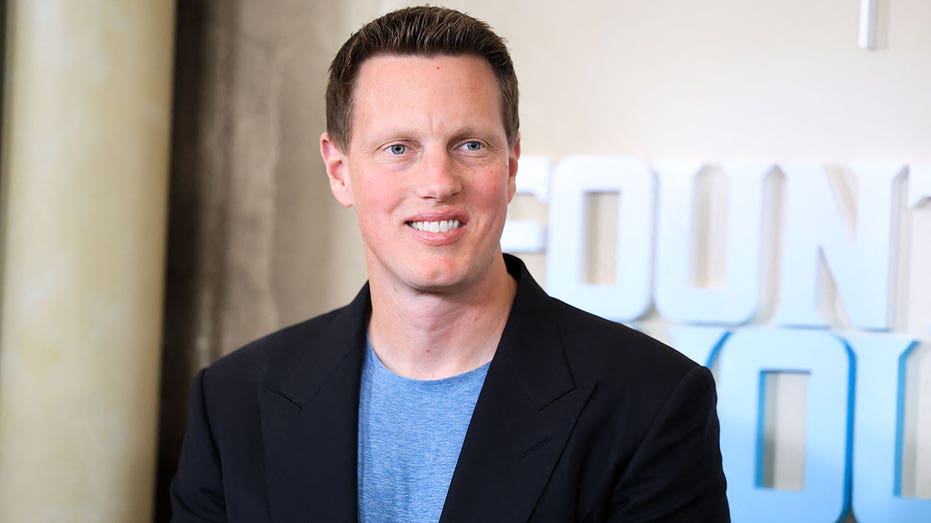
Paramount CEO David Ellison. (Charly Triballeau/AFP via Getty Images)
The Justice Department (DOJ) announced earlier this year it has closed its antitrust investigation into Paramount Skydance’s proposed acquisition of WBD, concluding the transaction is not likely to harm competition or American consumers.
The Antitrust Division said its eight-month review examined more than 2 million documents and found the deal could strengthen competition across the media and entertainment industry, including in streaming video, traditional television and theatrical film distribution. However, state attorneys general retain independent authority under antitrust laws.
Paramount CEO David Ellison, the son of billionaire Oracle co-founder Larry Ellison, took control of Paramount last year when Skydance Media and Paramount Global completed an $8 billion merger. Adding WBD to his portfolio would make the younger Ellison one of Hollywood’s most powerful people.
CLICK HERE TO GET THE FOX NEWS APP
This is a developing story. Please check back for updates.

I won’t bury the lede. Low prices come with high risks on Wall Street. I’ll be diving into some of the market’s more compelling stocks with single-digit price tags, but there’s often a price to pay, given how low the price can be. Investing in low-priced stocks often means being in the market alongside speculators or less-experienced investors who misinterpret a rock-bottom share price as an opportunity rather than weighing the ugly circumstances that got us here.
Who do I like here, as summer blends into autumn? I think that Archer Aviation (NYSE: ACHR), StubHub Holdings (NYSE: STUB), and Snap (NYSE: SNAP) are interesting stocks for those willing to stomach the risks. Let’s take a closer look at these three stocks trading under $10 apiece.
Missed Nvidia in 2009? This Rare Signal Is Flashing Again. In 2009, a “Double Down” signal flashed for a little-known chipmaker called Nvidia. For the first time in years, that same “Total Conviction” signal is flashing for a company 1/100th the size of Nvidia. Continue »

1. Archer Aviation: $5.26
Archer Aviation stock seems to be flying low these days. The developer of the emerging electric vertical takeoff and landing (eVTOL) aircraft industry has seen its shares fall by 30% this year, even as its next-gen Midnight aircraft nears open availability.
Archer kicked off what it calls the No Roads flight tour two weeks ago, flying its aircraft between destinations ahead of a widespread launch in the coming years. The limitations are real in terms of passenger and weight capacity, as well as the distance that can be traveled. However, it won’t be long before premium air taxi services take passengers from metropolitan airports with notorious street traffic into city centers in a fraction of the time cabs, rideshare services, and mass transit can.
Archer has struck what could be lucrative deals with commercial airlines and military partners. It’s already closing in on its opportunity to shine on the largest stage as the official air taxi provider for the 2028 Olympic Games in Los Angeles, now just two summers away.
Yes, it’s losing money. It’s hard to make money when you’re not making revenue. However, analysts expect this business to take off and fly high once it gets off the ground, literally and figuratively. Here’s how analyst revenue targets see the business jumping 150-fold in just the next four years:
-
2026: $15 million
-
2027: $143 million
-
2028: $511 million
-
2029: $1.39 billion
-
2030: $2.25 billion
A lot can happen between now and when it hits these beefy milestones, but its balance sheet is built for the market turbulence. Archer’s market cap, just above $4 billion, gets whittled down to an enterprise value of $2.6 billion when you factor in its $1.6 billion in cash.

Sarah Horrocks is the founder of PALAIR, a London-based brand making premium padel and activewear for women and men, designed to be worn on and off the court.
The company took the label to the US in March 2025 with a week of events in Miami built around The Show Miami trade fair, according to its own announcement. Last month she was at the Sci-Mx Padel Series at Manchester Padel Club in Stockport, where she was reported as heading up the Padel Foundation, a registered charity working to bring the sport to communities that need it most. She tells Business Matters how a sport she discovered in 2023 became a business, and why a background in recruitment has proved more useful than she expected.
What do you currently do at PALAIR?
I am the Founder and CEO, responsible for driving the vision, strategy and growth of the brand. I am very hands-on, as I am running the brand solo.
My role spans product, brand positioning, partnerships, marketing and commercial growth. As a very early-stage company, I am involved in everything from the big picture strategy to the day-to-day detail, building the brand and creating opportunities for long-term growth.
I have found this extremely useful for understanding the whole business, and the challenges and opportunities within each area.
What was the inspiration behind your business?
The inspiration really came from my own lifestyle. I fell in love with padel in 2023 when I discovered the sport at my local tennis club, and I am someone who practically lives in activewear unless I am going out in the evening.
I always felt there was a gap. I loved the comfort and functionality, but I did not always want to look like I was dressed for the gym.
I wanted to create something that brought those two worlds together: pieces you can genuinely move and play in, but that also feel stylish and considered enough to become part of your everyday wardrobe. The idea was to take you from the court into the rest of your day without feeling like you need to change.
Who do you admire?
I do not think there is one individual person I would say I admire. I am inspired by lots of people, but I really admire anyone who works incredibly hard for what they want, and especially women who genuinely support and champion other women.
Since starting this business, I have experienced first hand how generous people can be with their time, advice and support. I have had people help me when they absolutely did not have to, simply because they wanted to see me succeed, and I will always be incredibly grateful for that.
I suppose those are the people I admire most: the ones who work hard for their own success but still make the time to lift others up along the way. As I grow the business, I would love to be able to do the same for others.
Looking back, is there anything you would have done differently?
Absolutely, but I think that is part of building any business, especially in an industry you are learning as you go. I am hoping I will look back and laugh at some of the things that have happened. There are definitely decisions I would make differently now, simply because I know more than I did when I started.
Building a fashion brand has taught me that there is a huge difference between having a great idea and actually bringing it to life. You make decisions, some work and some do not, and you learn very quickly from both.
I am also very conscious that I am still building the business, and I certainly do not feel like I have “made it” yet. Ask me again in a few years and I am sure I will have a much longer answer.
What defines your way of doing business?
Hard work and relationships are probably at the heart of it. I really believe in treating people well and building genuine, long-term relationships, whether that is with customers or the people I work with.
I am also very intentional about having high standards. If I am going to put my time, energy or name behind something, I want it to be done properly. I care about the details, I am not afraid to challenge people, and I want to work with people who have that same drive to make something the best it can be.
I will always expect a lot from the people around me, because that is what I put in myself, and I want to share the journey with those people.
What advice would you give to someone starting out?
Just go for it. I had no experience in either the fashion or sports industry when I started. My background was in recruitment, so there was a huge amount I did not know, and I am still learning every day. I quickly realised that you do not have to have all the answers at the beginning. You learn so much by actually doing it.
What I did have were transferable skills. Recruitment taught me how to build relationships, network, communicate with people and not be afraid to pick up the phone and ask for help. Those skills have been invaluable in building the business.
I think sometimes we all focus too much on the experience we do not have, rather than recognising what we can bring from somewhere else. I still do not feel ready some days and I have made mistakes, but I think that would happen even if I had industry experience, and that is all part of it.


Bob Kirtley has traded options and stocks since 1980. Bob Kirtley spent many years working on Oil projects including some in Alberta, such as the tar sands installations in Fort McMurray. He lived and worked in many different countries, as that is the nature of the construction business. Planning and cost control are key to a projects success and he tries to apply those disciplines on a daily basis when dealing with investments. His training in such areas as SWOT and Risk analysis can be applied from time to time. His qualifications include being chartered in the United Kingdom, which is similar to that of a Professional Engineer in Canada, along with a Masters Degree in Project Management from South Bank University, London, England. He has been working for a number of years on a full time basis representing a group of investors in England.
Analyst’s Disclosure: I/we have a beneficial long position in the shares of AG, PAAS, EXK, SVM, DSVSF either through stock ownership, options, or other derivatives. I wrote this article myself, and it expresses my own opinions. I am not receiving compensation for it (other than from Seeking Alpha). I have no business relationship with any company whose stock is mentioned in this article.
Seeking Alpha’s Disclosure: Past performance is no guarantee of future results. No recommendation or advice is being given as to whether any investment is suitable for a particular investor. Any views or opinions expressed above may not reflect those of Seeking Alpha as a whole. Seeking Alpha is not a licensed securities dealer, broker or US investment adviser or investment bank. Our analysts are third party authors that include both professional investors and individual investors who may not be licensed or certified by any institute or regulatory body.


I have been managing investments for over eight years in capital markets. By qualification I am a CFA Charter holder. I primarily look for discrepancies between the price and value of a security. With a focus on first-principal mindset, I try breaking down ideas into their core- most tangible parts, affecting the theses while deliberately avoiding the non-significant matter into crowding the analysis. If you like my ideas or frameworks, reach out via email/message for more granular and concentrated- portfolio level specific investment researches and ideas. I am at prakhar@shrihittruealphacapital.com.
Analyst’s Disclosure: I/we have no stock, option or similar derivative position in any of the companies mentioned, and no plans to initiate any such positions within the next 72 hours. I wrote this article myself, and it expresses my own opinions. I am not receiving compensation for it (other than from Seeking Alpha). I have no business relationship with any company whose stock is mentioned in this article.
Readers are advised to fact-check thoroughly before committing any capital to this idea; this reflects the personal views of the author and should not be pursued as formal financial or investment advice in any manner. While every effort has been made to ensure accuracy, errors may exist in the data and financial projections presented. The author is not responsible for any financial gains or losses incurred from investments made based on this content.
Seeking Alpha’s Disclosure: Past performance is no guarantee of future results. No recommendation or advice is being given as to whether any investment is suitable for a particular investor. Any views or opinions expressed above may not reflect those of Seeking Alpha as a whole. Seeking Alpha is not a licensed securities dealer, broker or US investment adviser or investment bank. Our analysts are third party authors that include both professional investors and individual investors who may not be licensed or certified by any institute or regulatory body.

Novo Nordisk NOVO.B -7.65%decrease; down pointing triangle Chief Executive Mike Doustdar, who took over in 2025 promising to find a sustainable growth path, said the company will launch several new blockbusters over the next few years but investors aren’t yet convinced the Danish drugmaker is close to finding its next Ozempic.
Novo’s shares were down roughly 8% on Monday during the company’s investor day in London.
Copyright ©2026 Dow Jones & Company, Inc. All Rights Reserved. 87990cbe856818d5eddac44c7b1cdeb8

Tom Lee Says Institutions Are Still Underweight Crypto After Latest BitMine ETH Buy

Dakota Johnson Would Kiss Anne Hathaway Forever

Rivington and Belmont walks to mark Autumn Equinox and Harvest Moon




-

 Fashion3 days ago
Weekend Open Thread: Talbots – Corporette.com
-

 Tech18 hours ago
Researchers escape OpenAI Codex sandbox to run commands on host
-

 Crypto World3 days ago
Circle launches Arc Studio AI agent for building onchain apps
-

 Crypto World7 days ago
Revolut Attackers Warn of Ongoing Daily Customer Data Leaks
-
 NewsBeat3 days ago
Trump says US has reached an agreement to take permanent control of Greenland’s security
-

 Crypto World6 days ago
Robinhood engineers charged over $50K crypto scheme
-

 Crypto World7 days ago
Kraken Lets xStocks Holders Earn Yield Through DeFi
-

 Crypto World3 days ago
Bitcoin price breaks channel as RSI climbs to 63
-

 Crypto World5 days ago
US Charges Robinhood Engineers Over Crypto Listing Trades
-

 Crypto World6 days ago
What Is the Status of the U.S.-Iran Peace Talks? Here's What Both Sides Are Saying
-

 Crypto World6 days ago
NVIDIA Analysis: Attempted Rising Wedge Breakout Amid Pressure on the AI Sector
-

 Tech6 days ago
Webb’s IC 348 Mosaic Includes Two-Jupiter Dwarfs, Twin Jets, and a Nursery Still Making Worlds
-

 Crypto World3 days ago
World Money launches in 150+ countries with Stripe
-

 Crypto World3 days ago
Silver prices recover quickly, hitting weekly high today
-
Crypto World7 days ago
Can Circle’s Arc Repeat Robinhood Chain’s Meme Coin Boom?
-

 Entertainment6 days ago
Big Brother Update: Melody Explodes at Drew as Illness Sweeps BB28 House
-
 NewsBeat3 days ago
US was ‘on brink of war’ with China over false AI report of nukes moving in Middle East
-

 Crypto World7 days ago
Kraken Adds DeFi Yield on Tokenized Stocks and ETF Assets
-

 Crypto World3 days ago
Trading Bitcoin on Robinhood? Why 2% Spread Has Traders Worried
-

 Crypto World7 days ago
DOJ Seeks to Seize $61M in Iran Oil Funds From Binance Accounts It Vouched For
You must be logged in to post a comment Login