

Business
Data, Iran, US-China meeting in focus for scorching US stock market





Chart Industries earnings up next as estimates slide

CLEVELAND — KeyBank customers across the United States encountered significant disruptions Saturday as the regional bank’s online banking platform and mobile app experienced a widespread outage, preventing many from accessing accounts, making transfers or completing routine transactions on a busy weekend. While core branch and ATM services remained operational, the digital banking failure frustrated thousands of users who reported login errors, frozen screens and failed fund transfers throughout the day.
Downdetector and other outage tracking sites showed a sharp spike in user reports beginning early Saturday morning, with the majority of complaints centered on the mobile app and online banking portal. As of Saturday evening, many services had partially recovered, but intermittent issues persisted for some customers, according to real-time monitoring data. KeyBank has not issued a detailed public explanation but confirmed it is actively working to restore full functionality.
A KeyBank spokesperson said in a statement: “We are aware of the technical issues impacting our digital banking services and apologize for any inconvenience. Our teams are working urgently to resolve the matter and restore normal access as quickly as possible.” The bank encouraged customers to use branch locations, ATMs or the automated phone system for urgent needs during the disruption.
The outage comes at an inconvenient time for many customers, with Mother’s Day weekend shopping, bill payments and travel-related transactions peaking. Social media platforms filled with complaints, memes and expressions of frustration from users unable to check balances or send payments. Some reported being locked out entirely, while others could log in but faced delays or error messages when attempting transfers or deposits.
Scope of the Disruption
Reports indicate the problems primarily affected online banking and the mobile app, with users unable to view account balances, pay bills, transfer funds or deposit checks remotely. ATM and in-branch services continued without major interruptions, though some customers noted longer-than-usual wait times at branches as people sought alternatives to digital channels. International wire transfers and certain business banking features were also impacted for a period.
KeyBank serves millions of customers primarily in the Northeast and Midwest, with a strong presence in Ohio, New York, Pennsylvania and other states. The outage appeared nationwide rather than regionally concentrated, suggesting a central system or cloud-related issue rather than a localized problem.
This is not the first time KeyBank has faced digital banking challenges. Similar, though shorter, disruptions occurred earlier in 2026, prompting the bank to invest in infrastructure upgrades. Industry analysts suggest that rapid growth in digital banking usage, combined with increasing cybersecurity threats, has strained legacy systems at several regional banks.
Customer Impact and Frustration
Many customers took to social media to voice their dissatisfaction. “Been trying to pay my rent for two hours — KeyBank app is completely down,” one user posted. Others expressed concern about time-sensitive payments, including mortgages, utilities and payroll deposits. Small business owners reported particular difficulty managing cash flow during the outage.
KeyBank’s customer service lines experienced longer hold times as callers sought assistance. The bank activated additional support staff and encouraged use of its automated systems where possible. Some users reported success using the website via desktop browsers when the app remained unresponsive.
Financial experts advise customers facing urgent needs to visit a physical branch with proper identification or use alternative payment methods such as cash, checks or services from other institutions if available. Once systems are fully restored, users should review account activity carefully for any delayed transactions.
Possible Causes and Technical Context
While KeyBank has not confirmed the root cause, industry observers point to several common triggers for such outages: scheduled maintenance gone wrong, cloud service provider issues, cybersecurity incidents or unexpected spikes in traffic. The timing on a Saturday — typically a lower-volume day — suggests it may have been related to backend maintenance or a third-party service failure.
Regional banks like KeyBank often rely on a mix of in-house systems and external vendors for digital platforms, increasing vulnerability to cascading failures. The increasing sophistication of cyber threats has also forced banks to implement frequent updates and patches, sometimes leading to unintended disruptions.
The Consumer Financial Protection Bureau and state banking regulators monitor such incidents closely. While isolated outages are common in the industry, repeated or prolonged disruptions can trigger greater scrutiny and potential fines if customer harm is demonstrated.
KeyBank’s Response and Recovery Efforts
The bank has prioritized restoring mobile app functionality first, given its popularity among younger and on-the-go customers. Technical teams are conducting system-wide checks to prevent recurrence. Customers affected by delayed transactions or fees incurred due to the outage are encouraged to contact support for potential reimbursement once services normalize.
KeyBank has a history of transparent communication during technology issues and typically offers goodwill gestures such as waived fees for impacted customers. An official post-incident review is expected in the coming days.
Broader Implications for Digital Banking
This outage highlights the growing reliance on digital banking and the vulnerabilities that come with it. As more consumers shift away from branches, even brief disruptions can cause significant inconvenience. Banks across the country continue investing billions in cybersecurity, cloud infrastructure and redundant systems to minimize future risks.
For KeyBank specifically, the incident may accelerate plans for platform modernization. The bank has been expanding its digital offerings in recent years to compete with larger national players and fintech disruptors. Maintaining trust through reliable service remains critical in a competitive market.
Customers are advised to keep multiple access methods available — including desktop websites, mobile apps and phone banking — and to maintain up-to-date contact information with the bank. Setting up alerts for account activity can also help catch any delayed transactions quickly.
As services continue to recover Saturday evening, KeyBank urged patience and thanked customers for their understanding. Full restoration is expected within hours, though some residual delays in transaction processing may linger into Sunday.
The incident serves as a reminder of both the convenience and fragility of modern digital banking. While KeyBank works to resolve the current issues, customers and the broader industry will be watching closely to see how quickly and effectively the bank rebounds from this disruption.
Business
Sensex to hit 3 lakh by 2036? Raamdeo Agrawal says India is the ‘Ferrari’ among markets, here’s why

Speaking at Groww India Investor Festival 2026, the market veteran said that decades of compounding, rising financialisation and structural growth trends have built the strong foundation of the Indian market. “I have seen Sensex go from 100 to 80,000 in 40 years. For me to believe the journey will be any different over the next 40 years, there is no argument for that,” Agrawal said.
Markets in South Korea and Japan have recently seen sharp surges to record highs, while Dalal Street delivered comparatively muted returns. Many analysts highlighted that the strong earnings growth by several of these markets, thanks to the AI boom, is attracting FPI flows into those markets. Agrawal, however, reaffirmed that India’s long-term structural trajectory remains unmatched, while acknowledging that some regions are currently benefiting from an AI-led earnings cycle.
Drawing a comparison between India’s Sensex and South Korea’s KOSPI, both launched in January 1980, Agrawal pointed out that while the Korean benchmark index is at around 5,000 points today, the Sensex has climbed past 80,000. “Form may be temporary, but class is permanent. India is the way to go,” he said at the event.
The market expert highlighted that India’s market capitalisation has compounded at nearly 14% annually in dollar terms over the last two decades, compared with around 7% for the US market. “Every five to six years, you double. That is the pace,” he added.

Why India creates more multibaggers
The MOFSL Chairman said his investing philosophy has always focused on finding businesses operating in fast-growing industries within fast-growing economies. Referring to an internal study inspired by Thomas Phelps’ book ‘100 to 1 in the Stock Market’, Agrawal noted that nearly 20% of companies in the NSE 500 delivered over 25% annualised returns for a decade — effectively becoming 10-baggers. The comparable figure in the S&P 500, he said, stood at just around 7%.
“Multi-bagging happens where growth is fastest. You get the maximum multi-baggers in the country which is growing fastest and in the industry which is growing fastest,” he said. Vision, courage and patience are the three things that act as the formula for identifying outsized winners, according to the market veteran. “Whenever you are hitting a big one, you are mostly alone. You need conviction to stay with it,” he added.
Investors often underestimate how compounding works over long periods, Agrawal said, adding that in a stock that delivers 100x returns over two decades, a disproportionate amount of wealth creation typically happens in the final few years. “You sit through 19 years because most of the compounding comes in the 19th and 20th year,” he said.
The Bharti Airtel bet that shaped his investing career
Raamdeo Agrawal reminisced about his early investment in Bharti Airtel. In 2003, after studying the economics of network businesses and speaking with Sunil Bharti Mittal, the market expert became convinced that India’s mobile revolution would create enormous value.
At the time, India had only around 50 million fixed-line phones for a population of more than one billion. Agrawal estimated Bharti Airtel could generate Rs 27,000–28,000 crore in profits over the following five years, even though its market capitalisation was only around Rs 5,000 crore.
He bought Bharti Airtel’s shares at around Rs 19–30 apiece, despite scepticism from peers and friends. “I was alone all the way through,” he recalled. While he sold some shares early under pressure, he held on to a significant portion as the stock multiplied several times over. His final exit came years later at around Rs 650, translating into roughly a 25-fold return.
The next generation of winners
Agrawal pointed out that India’s expanding capital markets ecosystem can create the next wave of multi-baggers. “We are adding nearly 3 million new customers every month…We already have more than 220 million demat accounts. By 2031–32, we could reach 500–600 million,” he said.
Rising retail participation will create opportunities across brokers, exchanges, asset managers, wealth platforms and depositories, he said, admitting to missing out on the sharp rally in BSE despite understanding the sector deeply.
“The stock went up almost 50 times, and I did not make a single paisa,” he said with a laugh.
Today’s quick commerce momentum is similar to Bharti Airtel in 2003
Agrawal drew parallels between India’s quick commerce industry and the early days of telecom. He said the firms operating in the segment are still in the heavy cash-burn phase, but the underlying network effects could eventually create very large businesses.
“This is a Bharti moment,” he said, referring to the potential scale of India’s quick commerce opportunity. He cited comments from global retail executives, including leadership at Walmart, describing India’s quick commerce ecosystem as a glimpse into the future of retail.
What Raamdeo Agrawal avoids completely
Despite his appetite for growth, Agrawal said that he maintains strict filters while evaluating businesses. He avoids companies generating return on equity below 20% and pays close attention to receivables cycles as an indicator of business quality.
“If return on equity is 9 or 10%, I do not even want to enter the meeting,” he said, adding that management quality remains his biggest filter. “They will go to hell and take you along,” he said, referring to promoters with compromised governance standards.
Agrawal also stressed the importance of visiting factories and observing operations first-hand instead of relying solely on management presentations.
Sensex at 3 lakh by 2036?
Agrawal remained bullish on India’s long-term macroeconomic trajectory, projecting that per capita income could double over the next six to seven years. The market veteran expects Sensex to touch 1.5 lakh by 2030 and potentially 3 lakh by 2036, driven by sustained earnings growth and rising participation in financial assets. “Three lakh in 12 years is more guaranteed than one-and-a-half lakh in six years,” he said. “That is how compounding works,” he said at the event.
(Disclaimer: Recommendations, suggestions, views and opinions given by the experts are their own. These do not represent the views of The Economic Times)
Business
Bonus issues, stock splits & dividends: SBI among 18 stocks turning ex-date this week. Do you own any?

Kothari Petrochemicals – Dividend
Kothari Petrochemicals has set May 11 (Monday) as the record date to determine shareholder eligibility for its interim dividend of Rs 1 per share (10%) with a face value of Rs 10 each. The dividend will be paid on or before June 3.
Manappuram Finance – Dividend
Manappuram Finance has set May 11 (Monday) as the record date to determine shareholder eligibility for its interim dividend of Rs 0.50 per share (25%) with a face value of Rs 2 each.
PAE – Dividend
PAE, whose core activity includes marketing and distributing automotive components, has set May 11 (Monday) as the record date to determine shareholder eligibility for its interim dividend of Rs 0.20 per share with a face value of Rs 10 each. Notably, the stock will also turn ex-record date for its 6:1 bonus issue on May 25.
Aptus Pharma – Bonus issue
Aptus Pharma has set May 12 (Tuesday) as the record date for its 3:2 bonus issue. This means that the shareholders who own the shares of the company as on the record date will get 3 bonus shares for every two shares held.
Godrej Consumer Products – Dividend
FMCG-major Godrej Consumer Products has fixed May 12 (Tuesday) as the record date to determine the eligibility of shareholders to receive its interim dividend of Rs 5 per share (500%) with a face value of Rs 1 each. The dividend will be paid on or before June 4.
NRB Bearings – Dividend
Needle roller bearing manufacturer NRB Bearings has fixed May 13 (Wednesday) as the record date to determine the eligibility of shareholders to receive its interim dividend of Rs 2.25 per share (112.5%) with a face value of Rs 1 each.
Brookfield India Real Estate Trust REIT – Dividend
Brookfield India Real Estate Trust REIT has fixed May 14 (Thursday) as the record date to determine the eligibility of shareholders set to receive its prospective dividend, which will be considered and approved by its board of directors during its meeting on Monday.
Oberoi Realty – Dividend
Oberoi Realty has fixed May 14 (Thursday) as the record date to determine the eligibility of shareholders to receive its fourth interim dividend of Rs 2 per share (20%) with a face value of Rs 10 each. The dividend will be paid on or before May 22.
Anand Rathi Wealth – Dividend
Anand Rathi Wealth has fixed May 15 (Friday) as the record date to determine the eligibility of shareholders to receive its interim dividend of Rs 7 per share.
Aptus Value Housing Finance India – Dividend
Aptus Value Housing Finance India has fixed May 15 (Friday) as the record date to determine the eligibility of shareholders to receive its second interim dividend of Rs 2.50 per share (125%) with a face value of Rs 2 each.
Biogen Pharmachem Industries – Bonus issue
Biogen Pharmachem Industries has fixed May 15 (Friday) as the record date to determine the eligibility of shareholders for its 1:6 bonus issue. The company had announced in April that it will issue “1 new equity shares of Rs.1 each for every 6 existing equity shares of Rs.1 each fully paid up”.
Dev Labtech Venture – Bonus issue, stock split
Dev Labtech Venture has set May 15 (Friday) as the record date for 1:1 bonus issue and 1:2 stock split. As part of the bonus issue, eligible shareholders will get one bonus share for every share held in the company as on the record date. As part of the stock split, each share of the company will be split into two shares.
Gopal Snacks – Dividend
Gopal Snacks has fixed May 16 (Saturday) as the record date to determine the eligibility of shareholders to receive its prospective third interim dividend which may be considered and approved by its board of directors during its meeting scheduled on Tuesday. As the record day falls on a weekend when markets are closed, May 15 will be the effective record date.
HBG Hotels – Dividend
HBG Hotels has fixed May 15 (Friday) as the record date to determine the eligibility of shareholders to receive its interim dividend of Rs 0.15 per share (1.5%).
IEX – Dividend
Indian Energy Exchange (IEX) has fixed May 15 (Friday) as the record date to determine the eligibility of shareholders to receive its final dividend of Rs 2 per share with a face value of Rs 1 each.
Kennametal India
Kennametal India has fixed May 15 (Friday) as the record date to determine the eligibility of shareholders to receive its interim dividend of Rs 40 per share (400%).
Nexus Select Trust
Nexus Select Trust has fixed May 15 (Friday) as the record date to determine the eligibility of shareholders to receive its prospective dividend that its board may consider and approve during its upcoming meeting this week.
State Bank of India
State Bank of India (SBI) declared a dividend of Rs 17.35 per equity share for the financial year ended March 31, 2026. The bank has fixed May 16 (Saturday) as the record date for determining the eligibility of shareholders entitled to receive the dividend. As the record date falls on a weekend when markets are closed, May 15 will be the effective record date. The dividend payment is scheduled to be made on June 4, 2026, the bank said in a regulatory filing on Friday.
(Disclaimer: Recommendations, suggestions, views and opinions given by the experts are their own. These do not represent the views of The Economic Times)


When wildlife TV personality Forrest Galante sat down for his monthly call with YouTube consultant Paddy Galloway, he received some bad news.
No more turtles.
Galante has 2.5 million YouTube subscribers. He’s been producing wildlife programming for more than a decade, including a docuseries on Animal Planet and a show on the History Channel. He owns his own production company. Generally speaking, Galante’s got a good feel for what his audience wants.
But it was Galloway, something of a guru in the still-burgeoning YouTube creator economy, who identified that whenever Galante showed turtles in his videos, viewer engagement dropped. It was consistent and significant.
“Maybe it’s just turtles are more commonplace and they’re kind of slow and they don’t really do much,” Galloway said in an interview. “We noticed three or four videos in a row, when Forrest was showing turtles, the viewers were just kind of disengaged, and they were leaving.”
This is the kind of insight that many of the most popular YouTube creators, including Jimmy Donaldson, known to the world as MrBeast, and sports creator Jesse Riedel, also known as Jesser, have paid Galloway to provide.
As YouTube creatorship cracks open millions, or potentially even billions, of dollars for the most-watched personalities, Galloway has made a name for himself as one of the best of a growing class of YouTube consultants — a bona fide YouTube whisperer.
“I think he’s an absolute genius,” said Galante.
“Super smart guy,” Riedel told CNBC.
“I don’t want to say Paddy has changed my life completely,” said Humphrey Yang, a former financial advisor whose YouTube channel has more than 2 million subscribers. “But he’s definitely helped a lot.”
YouTube’s media dominance
YouTube will showcase many of its top creators on Wednesday in New York City’s Lincoln Center for its annual upfront advertising presentation, which it calls Brandcast. Like YouTube’s influence in modern media, the event has grown in size and prestige every year as YouTube’s viewership share rises.
YouTube makes up 12.7% of all streaming in the U.S., according to Nielsen’s most recent “The Gauge” report. Netflix is second with 8.4%, followed by Disney with 5%.
Sixty-seven million people consider themselves online content creators, according to a 2025 Goldman Sachs report. That number could rise to more than 100 million by 2030, Goldman estimates.
About 10,000 U.S. YouTube channels have more than 1 million subscribers, according to a YouTube spokesperson. For many of these creators, YouTube can be a lucrative full-time job. But to make a business out of the largely free platform, videos need to get consistent clicks — preferably in the millions.
With YouTube’s recommendation algorithm constantly evolving, many creators have been turning to strategists to maintain success on the platform.
“From zero [subscribers] to 1 million, you don’t need it, but from 1 million to 10 million, or 1 million to 100 million, you definitely need a strategist,” Aniket Mishra, a YouTube growth strategist, told CNBC.
In recent years, videos best watched on TV, rather than on mobile devices, have surged in popularity as YouTube has taken over more and more connected-TV viewing, rivaling subscription streaming services such as Netflix and Disney+.
Creators say the Alphabet-owned platform has responded by favoring longer videos, often exceeding 30 minutes. That shift means higher production value and bigger investment from creators. It also means the potential to earn more money.
Since 2021, YouTube has paid out over $100 billion to creators, and an increasing share of that money is flowing to those producing content for bigger screens, YouTube said. The number of channels earning more than $100,000 from TV screens jumped 45% year over year, the company reported.
Regardless, success on the platform remains a simple task of getting viewers through the door, and these strategists maintain that they are the best equipped to optimize a creator’s videos.
“The reason people pay us top dollar is because we have been doing it for the longest, and we have the best success rate,” Galloway said. “Our average increase in views after a year — so, year-on-year after working with us — is 350%.”
The YouTube whisperer
Galloway’s interest in YouTube consulting began out of self-interest. He started posting YouTube videos of his own in 2006, just a year after the service first began, and wanted to figure out why certain videos went viral so his own could gain popularity, he told CNBC.
Within a few years, Galloway’s search for the ingredients of virality became the subject of his videos. He began creating self-dubbed “YouTube Masterclass” videos such as “How Peter McKinnon gained 1 million subscribers in under 1 year” and “Here’s How Mr Beast BLEW UP – How He Grew His YouTube Channel.”
YouTube personality Jimmy Donaldson, better known as MrBeast, arrives for the 36th Annual Nickelodeon Kids’ Choice Awards at the Microsoft Theater in Los Angeles on March 4, 2023.
Michael Tran | Afp | Getty Images
Galloway grew his channel to about 500,000 subscribers, and the videos got Donaldson’s attention. Galloway began working directly for Donaldson, providing him with strategy ideas. Donaldson is now the undisputed king of YouTube with 483 million subscribers.
Galloway worked with Riedel from 2021 through January of this year, encouraging him to change his focus from daily vlogs to bigger concept ideas that pulled in more viewers.
“He was like, ‘You need to make videos that anybody can enjoy,’” Riedel said. “A lot of my videos were personal joke after personal joke. Right in the intro, if you watched it and you didn’t know me or my jokes, you’d be like, ‘What am I watching?’”
After years of plateauing at roughly 3 million subscribers, Riedel saw his subscriber number begin to soar. Today, Riedel is the largest sports-focused creator on YouTube with more than 41 million subscribers.
Content creator Jesser attends a game between the Brooklyn Nets and the Los Angeles Clippers at Intuit Dome in Los Angeles, Jan. 15, 2025.
Juan Ocampo | National Basketball Association | Getty Images
Galloway’s secrets often center around two simple concepts: headline and thumbnail image.
“We will deliberate a title — just one title — for like 30 minutes,” said Yang, who’s worked with Galloway since early 2022. “Changing a couple of the words in the title can have a huge impact on how the actual video does.”
Galloway has a staff of seven people who analyze what’s working on YouTube and how to create the best content target to perform well on the platform. He also owns three other companies, including one, Upright Media, that helps with the production and editing of videos.
Galloway’s largest clients have daily Slack communication with his team to discuss thumbnails and to run detailed diagnostics of video performance.
What’s the return on investment?
At his peak, Galloway said, he had a waitlist of 5,000 people and was only able to work with about 10 clients at a time.
His services aren’t cheap.
Paddy Galloway.
Courtesy: Paddy Galloway
Galloway typically charges flat fees for his work “starting in the $15,000 a month range” he said, though rates can go “considerably higher” depending on the project. That price gets clients full-time service — “in the weeds with you every day,” he said.
“It was like, ‘Oh my god, we’re paying this big amount of money for this unknown factor, will we ever get a return?” said Galante, of the turtle-light wildlife videos.
Strategist Mishra said he works primarily with business owners who have built YouTube channels around their products or services. He said he charges between $1,500 and $12,000 a month, depending on how much work he takes on, and said the creators who hire him have already figured out the basics on their own and hit a ceiling.
Mishra said his advice is often to study what is already working in a certain niche and replicate it.
American wildlife biologist Forrest Galante watches a wild crocodile caught in a motorcycle tire on the Palu River, Central Sulawesi, Indonesia, March 11, 2020.
Mohamad Hamzah | Nurphoto | Getty Images
“Copy with taste,” he said. “It’s very important that you have some kind of unique angle, but make sure the formatting of the videos, the pacing and everything else is similar to an outlier idea that is already proven in the niche.”
And while these strategists can’t promise guaranteed subscribers or views, they say their value lies in familiarity with what the platform rewards.
“What I do is I promise you knowledge, and hopefully with enough knowledge, growth comes next,” said Mario Joos, who spent nearly three years as retention director for MrBeast. “The algorithm will just reward what people want to watch.”
Though the highest level of advisory services can run into the thousands of dollars, an initial call with a YouTube coach can cost as little as $250, Joos said. He described the next level of service as “consultant” — someone who is providing advice but not actually helping a creator implement it. That’s Joos’ role today, he said.
The final rung is pure strategist — a role Joos had when he was working with MrBeast, he said, and the rung Galloway falls into.
“Now it’s not just like you’re telling the creator to execute on the knowledge. You are applying the knowledge,” said Joos. “You leave notes on videos. You go through the ideation process. And when there’s 100 ideas on the table, you look into them, you think about them, and you may even come up with the ideas. So that’s what a strategist does there. They have expertise.”
YouTube’s evolving trends
For YouTube’s most popular creators, the platform offers some consultant-like services for free, including thumbnail art guidance, guest ideas and suggestions for video introductions, according to Reed Fernandez, a strategic partner manager for YouTube’s top creators since 2021.
Fernandez is one of several hundred strategic partner managers for YouTube around the world who focus on the top 10% of YouTube creators. Fernandez’s specific team works with about 100 creators in the U.S., he said. Some of his clients include Brittany Broski, Dude Perfect and Alix Earle.
Brittany Broski at VidCon 2022 in Anaheim, California, June 23, 2022.
David Livingston | Getty Images Entertainment | Getty Images
Fernandez’s team typically approaches the creators it wants to help, based on perceived growth opportunity on the platform, Fernandez said. That makes the partnership beneficial for both YouTube and the individual creator, boosting overall engagement on the site.
“We’re looking for things like: Do we see them growing a lot year over year? We think they’re a big bet that we should try to put our full force behind to help them succeed on the platform,” said Fernandez.
Beyond consultant services, YouTube also connects some of these creators with speaking events and press junkets to extend reach and boost awareness.
Fernandez’s team can also offer insider tips on monetization, he said. He used the example of a creator whose videos were consistently just under the 8-minute threshold to qualify for mid-roll advertisements. Making their videos just 30 seconds longer, he told the creator, could make a significant difference in their earnings.
But even with YouTube’s internal support, many creators still turn to outside strategists to go deeper on the technical side.
When a viewer clicks on a YouTube video, watches it through, shares it or leaves a comment, YouTube registers that as a positive signal of interest. Videos that consistently generate those responses get surfaced more broadly and pushed onto the homepage, into recommendations and in front of new audiences.
Joos said his expertise sits specifically in retention, understanding not just whether a video performs, but exactly when viewers stop watching and why.
YouTube Studio, the backend dashboard that gives creators detailed statistics on their content, includes a retention chart that tracks audience drop-off. YouTube strategists use that data to inform everything from pacing decisions to keeping the viewer engaged until the end of the video.
Gabriel Leblanc-Picard, co-founder of Upload Strategy and the former head of ideation for MrBeast, said simplicity is the most reliable formula for success on the platform.
“Dim it down to like, if a 6-year-old could understand it,” he said. “People don’t want to watch something that is complicated, even the language that you use.”
During his time at MrBeast, Leblanc-Picard said he filtered through roughly 10,000 ideas, constantly looking for concepts that could expand the channel’s audience. One challenge he was given: Attract more female viewers to a channel whose fanbase he described as mostly “11-year-old boys.”
His answer was to develop a video about being stranded in the woods with an ex-girlfriend.
A video titled “Survive 30 Days Stranded With Your Ex, Win $250,000” was posted in March and has already surpassed 120 million views.
“At the end of the day, you’re making content for people,” Leblanc-Picard said. “The algorithm will reward what people want to watch.”


I’m a Portfolio manager (flexible equity funds and private clients), fundamental equity research, macro and geopolitical strategy.Over 10 years across global markets, managing multi-asset strategies and equity portfolios at a European asset manager.I combine top-down macro, bottom-up stock selection and real-time positioning (Bloomberg, models, data).I focus on earnings, tech disruption, policy shifts and capital flows — to identify mispriced opportunities before the market.On Seeking Alpha I share high-conviction ideas, contrarian views and deep breakdowns of both growth and value names.For more insights: follow me on X @AgarCapital
Analyst’s Disclosure: I/we have a beneficial long position in the shares of KEYS either through stock ownership, options, or other derivatives. I wrote this article myself, and it expresses my own opinions. I am not receiving compensation for it (other than from Seeking Alpha). I have no business relationship with any company whose stock is mentioned in this article.
Seeking Alpha’s Disclosure: Past performance is no guarantee of future results. No recommendation or advice is being given as to whether any investment is suitable for a particular investor. Any views or opinions expressed above may not reflect those of Seeking Alpha as a whole. Seeking Alpha is not a licensed securities dealer, broker or US investment adviser or investment bank. Our analysts are third party authors that include both professional investors and individual investors who may not be licensed or certified by any institute or regulatory body.
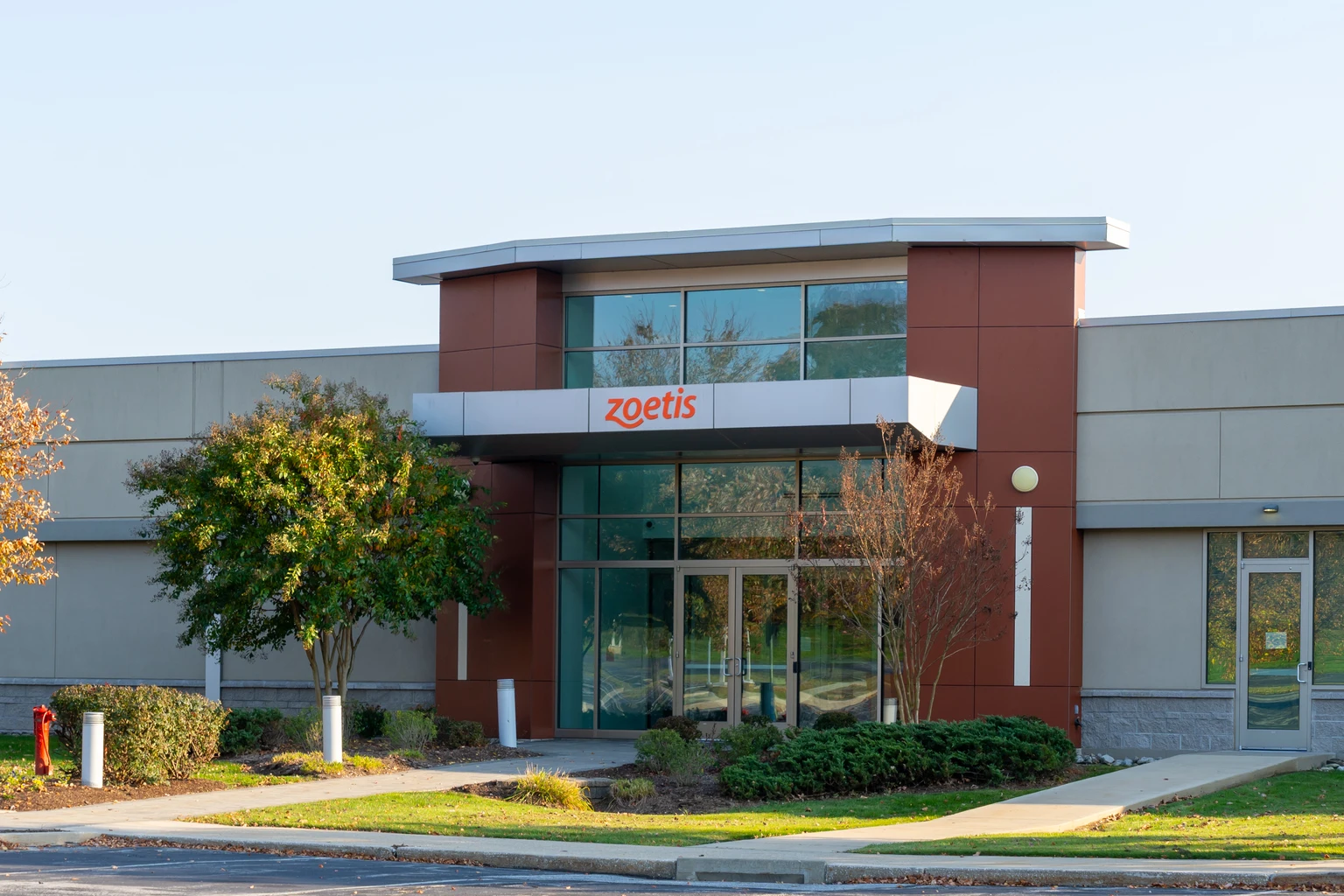
Zoetis Q1 Review: Is A Darkened Outlook Cyclical Or Structural? (Rating Downgrade)


CLIFTON, New Jersey — Along with aisles of diapers and colorful onesies, Target shoppers in some of the retailer’s big-box stores can now find baby brands typically carried by specialty boutiques.
Shoppers can see, feel and test strollers, car seats and high chairs outside of cardboard boxes at about 200 stores, or roughly 10% of the retailer’s footprint. They can find merchandise from high-end brands, including a $1,000 UPPAbaby stroller. And customers can browse nearly 2,000 new baby items, which are available across all of the retailer’s stores and online.
Target’s “baby boutiques,” which have rolled out over the past two months, are just one piece of a broader push to refresh stores and woo a crucial customer base: busy families, who have increasingly turned to rivals like Walmart.
Whether Target makes progress with those shoppers will help determine whether CEO Michael Fiddelke, who stepped into the company’s top role in early February, can follow through on his pledge to end the company’s three-year sales slump. The retailer is scheduled to report its first-quarter earnings on May 20, its first three-month period under the new CEO.
Target has rolled out “baby boutiques” to about 200 stores where customers can touch, feel and test items like car seats and strollers. It’s also added premium brands like UPPAbaby and Stokke.
Melissa Repko | CNBC
In an interview with CNBC, Chief Merchandising Officer Cara Sylvester said families with children ages 5 and under spend two times as much, and families with children across age groups visit stores twice as much as the average Target shopper.
She said Target recognized it had a large share of sales from young families when it took a hard look at its business after Fiddelke got tapped to lead its turnaround efforts. She said the realization inspired Target to lean more into that competitive edge.
“We see an incredible opportunity at Target to really deepen our relationships with busy families and become their first choice for even more of life’s everyday needs,” Sylvester said.
That strategy, which hinges in part on improving the quality of its offerings, stepping up its store experience, and expanding convenient options like same-day pickup and delivery, is critical to boosting sales and fending off Walmart and Amazon.
The big-box retailer said in March that it expects to return to annual sales growth this year. It said it anticipates net sales will rise about 2% year over year and will grow in every quarter of the year compared with the year-ago periods.
While customer traffic across Target’s stores and website has dropped for the past four quarters in a row, there are some promising signs that store traffic is growing again, according to Placer.ai, an analytics firm that uses anonymized data from mobile devices to estimate visits to locations.
Even so, Target faces challenges to its turnaround plan. Among them, it must overcome stiffer competition from rivals, a fresh threat of a boycott from a major teachers’ union as it heads into back-to-school season and the risk of higher gas prices dampening consumer spending.
Those rising gas prices could exacerbate the “K-shaped economy,” the widening gap in spending between lower- and higher-income Americans, said Simeon Gutman, a Morgan Stanley retail analyst. At retail competitor Walmart, gains among wealthier households have helped offset losses of sales among cash-strapped customers, he said.
“I don’t think Target is in as good a position as others in that regard,” he said.
Still, he said he’s encouraged by changes Target has made to sharpen its stores and refresh merchandise categories and believes that will drive more customer traffic.
Target already sells a lot of baby items, including diapers and clothing. Yet it’s trying to freshen its baby department to attract more sales from busy families.
Melissa Repko | CNBC
Why Target is refreshing the baby section
Target’s revamp of the baby department, its largest investment in that category in more than a decade, may surprise some who have checked the U.S.’ latest birth rate.
Births in the U.S. have tumbled from a peak of 4.32 million in 2007 to 3.61 million in 2025, according to preliminary data from the Centers for Disease Control and Prevention’s National Center for Health Statistics. That represents a roughly 16% drop over the past 18 years, which researchers have attributed to a variety of factors including a decline in teen pregnancies and a rise in women delaying having children until later in life.
Sylvester, however, said even with the lower birth rate, Target needed to shake up the way it appeals to families, beginning with the baby aisles. She said Target’s research shows that when consumers become parents, they tend to consolidate the number of places where they shop because they have less time. That means if Target can win those customers, it can sell not only more diapers and wipes, but also more groceries and clothing, she said.
Sylvester added Target is prioritizing the baby department because it’s a way to earn trust with first-time parents who have a large lifetime value across all of the retailer’s categories.
Target is the third-largest retailer in the U.S. for the baby sector in terms of market share, but has lost ground with competitors in recent years, according to market researcher Numerator. The firm includes baby gear such as strollers, diapers, formula and baby food in its category definition, but excludes baby apparel.
Walmart captured the largest share with 27% of the category, followed by Amazon with 24.4% and Target with 17.6% in the 12-month period that ran through the end of February, the most recent data available.
However, Target has declined from 18.6% market share in the past two years, compared with Walmart, which has seen its market share grow from 25.4%. Amazon’s market share has remained roughly flat, according to Numerator.
Target declined to say how much it is spending to turn some of its baby departments into boutiques, but the retailer has increased investments to help drive its turnaround. The company said in March that it will spend about $5 billion on capital expenditures this fiscal year, an increase of more than $1 billion from last fiscal year. The funds will go toward store openings and remodels.
Sylvester said Target plans to add baby boutiques to more stores, but said it hasn’t yet decided the timetable.
By the retailer’s own admission, Target has lost the loyalty of some families. At an investor presentation at Target’s headquarters in early March, Sylvester delivered a blunt assessment.
“Our performance over the last few years has not met expectations. And that is on us,” she said. “We lost the clarity and the discipline that make Target a place loved by busy families.”
It is unclear how much of the decline in store and website traffic has specifically come from families, but Morgan Stanley’s Gutman said he sees the baby category as “inextricably linked to Target’s success” because it is an “on-ramp to greater sales and then to multiple years of higher wallet share.”
“It’s one of these categories where I think they have a right to win, and they ought to,” he said.
What the baby boutiques look like
In Target’s “baby boutiques,” more items are displayed outside of the cardboard box.
Melissa Repko | CNBC
Target’s baby boutiques go a step further than its previous offerings, Sylvester said. She said the baby department now feels more like a curated shop to try to simplify a dizzying decision process. Target added popular premium brands, including UPPAbaby, Stokke, Bugaboo and Doona. And it’s bulked up the items from its own baby brand, Cloud Island, which includes clothing, bibs and crib sheets, among other items.
At Target’s baby boutiques, customers can also now push, fold and lift items like strollers before they make a big purchase — an in-store experience that’s become rare because of the closure of specialty baby retailers. Buybuy Baby and Babies R Us shuttered their doors after bankruptcies, though Babies R Us has returned as a pop-up shop in some Kohl’s stores.
The retailer is also piloting a baby concierge service through Tot Squad, which offers free guidance to shoppers who are comparing products or putting together a baby registry. It is offered in person at the baby boutiques and online.
Secondhand markets, such as Facebook marketplace, are a competitive threat to all retailers, too, since families can find high-end brands at deep discount. Yet those markets can also justify a big purchase since well-known brands still have value a year or two later.
Some of the new baby brands carried by Target come with higher price tags, including an UPPAbaby stroller for about $1,000.
Melissa Repko | CNBC
WildBird, a brand that makes baby carriers, debuted on Target’s shelves in March. It marked the direct-to-consumer company’s first major foray into brick and mortar, co-founder and CEO Nate Gunn said.
With the rise of social media, many more brands have launched and grown. Yet he said that’s led to confusion and overwhelm, particularly in the baby category.
“Customers are more frustrated to shop, though it’s easier than ever,” he said. “The fatigue is ‘What do I buy?’ And that whole idea is compounded in the baby scene because parents are buying hundreds of products in the span of a few months.”
Compared with other parts of Target, the chain’s baby aisles “feel stale” and “a bit commoditized,” said Gunn, who is a father of three and has shopped in the big-box retailer’s baby section.
With the baby boutiques, Target may be able to better connect with the many parents who come to stores, grab a Starbucks coffee and stroll around with their toddler or baby, he said.
“I would like to see Target lean into what differentiates them from a Walmart,” he said. “Walmart, I’m going in there and looking for the best price possible. Target, I am looking for a more premium experience, but still accessible.”

A decade ago the Gold Coast was a tourism postcard. Today it is the destination of choice for Australia’s high-net-worth households, and the numbers tell a story of permanent migration that has remade the country’s property map.

The Gold Coast no longer markets itself to the rich. The rich market themselves to the Gold Coast.
In the calendar year ended December 2025, the Australian Bureau of Statistics recorded Queensland’s net interstate migration at over 35,000 people, the largest gain of any state for the seventh consecutive quarter. The Gold Coast local government area absorbed an outsized share of that flow. CoreLogic dwelling-value data tracking the highest-priced 25 per cent of Australian properties shows the Gold Coast top tier appreciated 18.4 per cent across 2025, outpacing Sydney’s 6.1 per cent and Melbourne’s 2.3 per cent. A broader Gold Coast median of just over a million dollars obscures the pricing reality of its prestige enclaves, where seven and eight-figure transactions have become routine.
The migration is not a tourism anecdote. It is a structural reordering of where Australia’s wealth physically lives.
The decade-long wealth shift
The Gold Coast’s transformation began before COVID, accelerated through it, and has not slowed since. The pandemic provided the catalyst, exposing a generation of Sydney and Melbourne professionals to remote-work flexibility for the first time. What started as temporary work-from-anywhere arrangements solidified into permanent relocations. By the time interstate borders fully reopened in 2022, a measurable share of Sydney’s and Melbourne’s eastern-suburbs and inner-city households had already lodged sale contracts.
Australian Taxation Office residence-change data, when cross-referenced with state revenue office records, suggests roughly 41 per cent of households moving from New South Wales to Queensland between 2023 and 2025 were in the top two income tax brackets. This is not the retirement migration of a generation ago. The cohort moving north now is in their thirties, forties and fifties. They are buying multi-million-dollar homes, not downsizing into apartments. They are bringing children, school enrolments, family offices, and the second car.
Specific Gold Coast postcodes tell the story most clearly. Mermaid Beach (postcode 4218) recorded a single-property sale at 31.5 million dollars in late 2024, surpassed in 2025 by a 35-million-dollar Hedges Avenue transaction. The Sovereign Islands continue to break their own price ceilings with purpose-built compounds incorporating helipads, private boat moorings and resort-grade swimming pools. Hope Island and Sanctuary Cove, the Gold Coast’s primary golf-and-marina precincts, have become the destinations of choice for departing Sydney financial-services executives and Melbourne professional partners.
The new postcodes of Australian wealth
What separates the current Gold Coast wealth migration from earlier waves is its breadth. The buyers are not all gravitating to a single suburb. The flow has segmented across distinct prestige tiers, each pulling a different demographic.
Mermaid Beach and the Hedges Avenue strip remain the absolute top of the market. Buyers here are predominantly self-made business founders, departing Eastern Suburbs Sydney for absolute beachfront with the privacy a Vaucluse or Mosman compound can no longer reliably provide. Sales prices commonly exceed 20 million dollars. The buyer profile matches what Knight Frank’s Wealth Report would call Australian Ultra-High-Net-Worth, individuals with investable assets above 30 million dollars.
Burleigh Heads and Palm Beach, immediately south, attract a different cohort. Tech founders, private-equity partners, and successful creatives in their thirties and forties have made these suburbs the country’s clearest example of millennial wealth migration. The 4220 postcode now consistently outperforms many Sydney equivalents on price-per-square-metre for renovated heritage homes within walking distance of beach and cafe culture.
Hope Island and Sanctuary Cove offer the gated-community model with golf, marina and concierge service. The buyer here often originates from Melbourne’s bayside or Sydney’s North Shore and is moving for the lifestyle infrastructure as much as the property itself. Sovereign Islands, behind Sanctuary Cove, takes that proposition further, with bespoke residences whose architects regularly headline Belle and Vogue Living. Movements between these enclaves and the broader Gold Coast property market have created sustained demand on Removalists in Gold Coast operators handling specialty and high-value relocations.
Robina, Mudgeeraba and Reedy Creek, slightly inland, have absorbed the upper-middle wealth tier. Families moving for school options (specifically Somerset, All Saints, Coomera Anglican, and TSS) and the lifestyle balance of beach-plus-hinterland have driven median prices in these suburbs from approximately 700,000 dollars in 2019 to above 1.4 million dollars in 2025. This is the cohort that quietly underwrites the broader prestige market by absorbing the supply at the second tier as the absolute-top buyers concentrate further north on the strip.
Why the rich are making the call
The drivers behind the wealth migration have hardened from preference into structural advantage. Cost is the most cited factor in CoreLogic and Knight Frank buyer-survey data. A four-bedroom Eastern Suburbs Sydney home priced at 7 million dollars commonly exchanges into a comparable specification on Mermaid Beach beachfront at 5.5 to 6.5 million, with change for the renovation. The mathematics works in favour of the Gold Coast across the entire prestige tier.
Tax considerations come second. Queensland’s land-tax regime, which does not aggregate landholdings across state lines the way New South Wales now does, has become an increasingly cited driver among high-net-worth investors with diversified property portfolios. While both state governments have signalled potential changes, the current asymmetry continues to favour Queensland by a margin that is meaningful for households with three or more investment properties.
Climate and lifestyle round out the trio. The 2024 floods across northern New South Wales and the prolonged heatwaves through Sydney’s western suburbs in early 2025 began to show up in insurance premium data. Households in flood-prone southern postcodes facing 30 to 50 per cent insurance increases are now factoring this into relocation decisions in a way they were not two years ago. The Gold Coast’s subtropical climate, year-round outdoor lifestyle, and proximity to both Brisbane Airport and the Gold Coast Airport for international and domestic travel have become, on the buyer-side calculus, more than amenity. They are decision-shifting variables.
What the move actually looks like
The logistics of relocating a high-net-worth household from Sydney or Melbourne to the Gold Coast carry their own economics. A standard interstate household move runs in the 4,000 to 8,000 dollar range. The kind of relocation now common at the high end of the Gold Coast market routinely runs five to ten times that figure.
Custom timber furniture from Eastern Sydney heritage homes, imported European kitchen appliances, fine art, wine collections, antique pianos and sculptural objects all require specialty handling. Multiple trucks rather than single-truck loads have become standard for the high-end interstate relocation. Climate-controlled transport for wine and art is a routine specification rather than an exception. Bookings frequently extend across multiple weeks rather than single days, with phased moves allowing renovations or new-build settlements to coincide with delivery schedules.
This is also why interstate removalists serving the Sydney-to-Gold-Coast corridor have been forced to expand specialty fleets and accreditation. Australian Furniture Removers Association membership, full goods-in-transit insurance, and the operational discipline to manage staged moves have become baseline requirements for any operator handling the high end of the corridor.
The capacity strain is structural, not seasonal. Three years ago, Sydney-to-Gold-Coast was largely a fixed-quote, shared-load proposition. Operators ran trucks on a regular schedule and the southbound leg carried near-equivalent freight. The equilibrium has shifted decisively. Northbound flows now dominate. Some interstate routes are essentially one-way trade, with trucks returning lightly loaded or empty. Pricing has lifted across the board over the past 18 months, and lead times that once stretched two to three weeks now extend to eight or ten during peak periods.
The economic ripple
The wealth migration’s secondary effects are now visible across the Gold Coast economy. Private school enrolment at the prestige institutions has climbed beyond capacity, with waiting lists at TSS, Somerset, All Saints and St Hilda’s extending into 2027. Family-office and wealth-management firms that previously dispatched advisers from Sydney and Melbourne for monthly client visits have opened permanent Gold Coast offices. Private banking divisions of the Big Four have expanded their relationship-manager headcount on the Gold Coast by between 30 and 60 per cent over the past three years, depending on the institution.
Restaurants and hospitality at the top of the market have become genuinely competitive with Sydney equivalents for the first time. Two Gold Coast establishments earned Good Food Guide recognition in 2025. The construction sector has tilted decisively toward custom architectural homes over volume product, with bespoke architects and interior designers reporting waiting lists of 18 months or more for new commissions. Marine and aviation services, marina berths and helipad-equipped private estates have all expanded measurably to meet the demand.
Brisbane 2032 Olympic infrastructure investment, particularly the venues planned in the Gold Coast precinct, has cemented the region’s positioning as Queensland’s prestige destination ahead of the Games. The Gold Coast Light Rail extensions and Coomera Connector roadworks are reshaping the access geography of the entire region. Suburbs that were once considered too far from beach or airport are about to become connected in ways that will produce a second wave of relocation activity, both inward as new corridors open up and outward as long-time residents cash out of suddenly-valuable real estate.
Why now and what comes next
The move-to-the-Gold-Coast trend has historically had counter-cycles. Property booms in the 1980s, mid-2000s, and again in the 2010s drew in waves of southern wealth, with subsequent corrections sending many back. The current migration shows different characteristics. The buyers are younger, the purchase reasons are more lifestyle-driven than speculative, and the underlying drivers (climate, cost-of-living differential, remote-work flexibility, tax structure) appear structural rather than cyclical.
Climate-driven migration is the next frontier. Insurance premium pressure on flood-prone southern postcodes is pushing households toward higher-elevation Queensland alternatives in a way that policymakers and the broader market are only beginning to track. Subtropical Queensland, with its different risk profile, is benefiting at the margins of decisions that previously came down to lifestyle preference alone.
The Brisbane 2032 Olympic Games will function as a multiplier. Olympic infrastructure construction across south-east Queensland is already producing a wave of relocation among construction executives, contractors and specialist trades that will continue through to the opening ceremony. Post-Games, the converted athlete villages and upgraded transport infrastructure will create new prestige residential corridors that did not previously exist. The Gold Coast’s positioning as a co-host venue, rather than a peripheral one, has placed it firmly inside the Olympic property-investment thesis.
The Gold Coast was once a postcode Australians visited. It is now the postcode where Australia’s wealthy live. The data has confirmed the shift. The only remaining question is how long the country’s traditional wealth corridors in Sydney’s eastern suburbs and Melbourne’s bayside will continue to lose ground.

Earnings call transcript: Paymentus beats Q1 2026 forecasts, stock dips

AI Agents Are Coming for Online Shopping: ARK Says $8 Trillion by 2030

NBA player prop picks, odds: Model reveals three best 2026 NBA Playoffs prop bets for Sunday, May 10

OMG XRP BOMB.. (LISTEN UP!)

Manchester United reach agreement with Casemiro over contract clause amid transfer speculation

US brings back mandatory military draft registration

Steven Gerrard disagrees with Gary Neville over ‘shock’ Chelsea and Arsenal claim | Football


-
 Crypto World2 days ago
HarrisX Poll Found 52% of Registered Voters Support the CLARITY Act
-

 NewsBeat7 days ago
Channel 5 – All Creatures Great and Small series 7 new post
-

 Crypto World3 days ago
Upbit adds B3 Korean won pair as Base token gains Korea access
-

 Fashion2 days ago
Weekend Open Thread: Marianne Dress
-

 Tech6 days ago
Image AI models now drive app growth, beating chatbot upgrades
-
 NewsBeat3 days ago
NCP car park operator enters administration putting 340 UK sites at risk of closure
-
 Business1 day ago
Ignore market noise, India’s long-term story intact, say D-Street bulls Ramesh Damani and Sunil Singhania
-

 Politics1 day ago
Politics Home Article | Starmer Enters The Danger Zone
-

 Entertainment6 days ago
Olivia Wilde Reacts To Viral ‘Corpse’ Comparison
-

 Crypto World7 days ago
BlackRock Buys $284M In Bitcoin On May 1 As The Best Crypto To Invest In For 2026 Sits Below A Pending Binance Listing
-
 Sports7 days ago
IPL 2026: Gujarat Titans opt to bowl vs Punjab Kings; Nishant Sindhu handed debut | Cricket News
-

 Sports6 days ago
Inter Milan Win Serie A Title After Victory Over Parma
-

 Sports7 days ago
Kofi Kingston and Xavier Woods reportedly released by WWE along with others
-

 Crypto World5 days ago
UAE Free Zone Deploys Blockchain IDs to Verify Registered Firms
-

 Business7 days ago
Can LeBron James Lead LA Past OKC Without Injured Luka Doncic?
-
 Sports6 days ago
Every word of Arne Slot’s heated rant after Manchester United win vs Liverpool
-

 Entertainment7 days ago
Other Bennet Sister Love Triangle Cast: Ella Bruccoleri, Donal Finn
-

 Sports7 days ago
Joel Embiid urges Sixers fans not to sell playoff tickets to Knicks fans
-

 Sports6 days ago
La Liga: Vinicius Jr scores twice as Real Madrid win to keep Barcelona waiting for title
-
Entertainment7 days ago
Jennifer Lawrence’s Mary Jane Sneakers Are Spring’s It-Girl Shoe
You must be logged in to post a comment Login