Connect with us
DAPA Banner
DAPA Coin
DAPA
COIN PAYMENT ASSET
PRIVACY · BLOCKDAG · HOMOMORPHIC ENCRYPTION · RUST
ElGamal Encrypted MINE DAPA
🚫 GENESIS SOLD OUT
DAPAPAY COMING

Business

David NGO Director: Building a Reputation in International Documentary Filmmaking

Published

on

David NGO Director: Building a Reputation in International Documentary Filmmaking

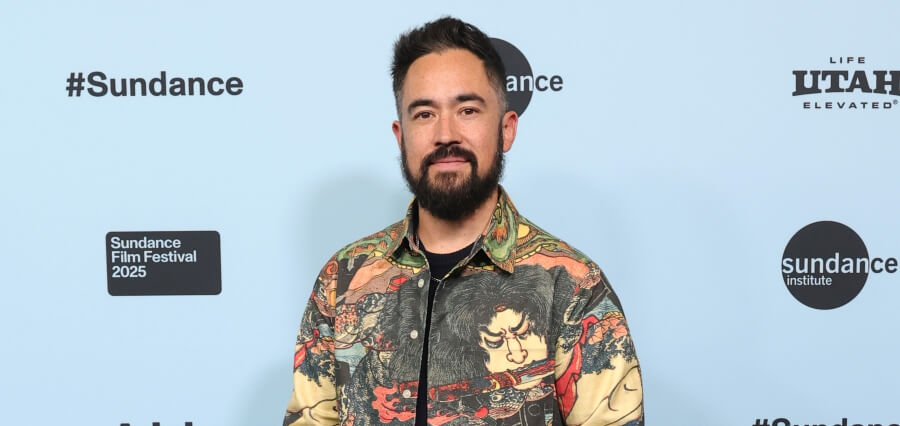
Director David Anthony Ngo has built his reputation through a combination of technical discipline, editorial precision, and a steadily expanding body of documentary work that reflects both international scope and strong creative control. Known professionally as David Anthony, the Australian-Canadian filmmaker represents a generation of directors whose authority comes not from rapid visibility, but from years spent understanding how stories are shaped from the inside out.

In documentary filmmaking, credibility is often earned long before a director’s name reaches festival programs or industry conversations. It is built in edit suites, production meetings, research calls, and long hours spent learning how stories actually function on screen. For  writer and director David Anthony, that foundation began in editing, post-production, and producing, where the mechanics of narrative became inseparable from the art of storytelling.

That progression from post-production to directing has helped define his professional identity. Rather than arriving as a director first, he developed his perspective through the less visible but often more formative work behind the scenes. It is one reason his transition into directing feels less like reinvention and more like a natural extension of years spent mastering the structure of film itself.

Recently, David Anthony helmed the Sundance feature Never Get Busted!, executive produced by John Battsek, the Academy Award-winning producer behind Searching for Sugar Man, and Chris Smith, known for Tiger King and 100 Foot Wave, and co-created by Erin Williams-Weir. The documentary follows a former Texas narcotics officer who turned against the system and became known for teaching drug users how to avoid police detection. The project added significant visibility to David Anthony’s work while reinforcing his place within the international film industry .

Advertisement

Early Foundation in Editing and Production

Many directors begin by chasing the camera. Others begin by learning how footage becomes meaning.

For David Anthony film director, editing and post-production provided that early education. Working in producing and post-production gave him access to every stage of narrative construction, from the first structural decisions to the final emotional rhythm of a finished film. It also offered something many directors spend years trying to develop: an instinct for what actually works on screen.

He has spoken about how producing and post-production created the foundation for directing, allowing him to collaborate with a wide range of filmmakers and observe both their successes and mistakes. That exposure shaped his understanding of what strong directors consistently share: a command of craft, the ability to communicate clearly, and an instinctive understanding of story .

Editorial work sharpens discipline. An editor understands pacing because they see where momentum dies. They understand emotional impact because they watch scenes fail when the structure underneath them is weak. They understand performance because they know exactly how fragile authenticity can be once a story reaches the cut.

Advertisement

David Anthony’s view reflects that mindset. He places heavy emphasis on studying story structure, from plot points and character arcs to theme and dramatic progression. In documentary filmmaking, where reality rarely arrives in clean dramatic form, that discipline becomes even more important. Strong nonfiction storytelling still requires architecture. Unlike fiction, where meaning is created through the chronological construction of events, in nonfiction, meaning must be made through the reconstruction of non-chronological events through rigorous writing and editorial work.

This background has given his directing a practical clarity. His work is not built around stylistic excess, but around narrative function. Every choice must serve the story.

Transition from Production to Directing

The move from supporting a project to leading it often reveals whether a filmmaker truly understands authorship.

For David Anthony, directing emerged as a progression shaped by experience rather than ambition alone. Years spent in production meant he already understood the collaborative machinery of filmmaking. Directing required stepping into a role where those lessons could be applied with full responsibility.

Advertisement

He has noted that the best directors he worked with were not simply talented visual thinkers. They were strong communicators who understood every department and could guide people toward a shared result. That broader understanding made directing feel like the next logical step rather than a separate discipline.

The transition also reflects creative maturity. Documentary directing requires far more than visual judgment. It demands ethical decisions, trust-building with subjects, editorial restraint, and the ability to remain calm inside uncertainty. Particularly in true crime and investigative storytelling, directors are often navigating people in conflict, legal tension, and competing versions of truth.

Anthony approaches that work with a clear philosophy: filmmakers are there to provide the microphone, not to impose judgment. He emphasizes objectivity and the importance of allowing people to tell their own side of the story while maintaining professional impartiality .

That perspective strengthens his work as a director because it prioritizes credibility over performance. In documentaries, audiences can sense when a filmmaker is forcing the narrative instead of letting it unfold.

Advertisement

International Work and Global Perspective

Modern documentary filmmaking rarely exists within a single national frame. Stories travel, audiences compare perspectives, and success increasingly depends on whether a film can resonate beyond one market.

David NGO Director has developed that international perspective through both his background and his professional collaborations. As an Australian-Canadian filmmaker working across North American and global contexts, he brings a cross-cultural awareness that benefits documentary storytelling, particularly in stories built around justice, rebellion, and institutional conflict.

He has pointed out that for films to succeed financially and culturally, they often need to work internationally. That means understanding how storytelling translates across different audiences without losing specificity. Themes must remain universal even when the details are highly local.

Film festivals have played an important role in that process. Exposure to audiences across different countries offers immediate feedback on what resonates and what does not. It sharpens the filmmaker’s understanding of human themes that transcend geography.

Advertisement

Anthony identifies justice, rebellion, and the power of the individual as recurring themes in his work. Those subjects travel well because they are understood across cultures. Whether the setting is American true crime or another international subject, the emotional stakes remain recognizable.

This global awareness also helps position him strongly within North American documentary filmmaking while giving his work broader relevance. In an industry increasingly shaped by streaming platforms and international distribution, that perspective matters.

Documentary Recognition and Festival Success

Recognition in documentary filmmaking tends to arrive through credibility rather than celebrity. Festival screenings, executive producer relationships, and industry trust often matter more than public visibility.

Anthony’s recent work reflects that kind of professional validation. Never Get Busted! brought him into collaboration with some of the most established names in nonfiction film, including John Battsek and Chris Smith. Working alongside producers with that level of documentary influence creates both opportunity and pressure.

Advertisement

He has described that experience as a defining moment, noting that working with filmmakers of that caliber raised expectations immediately. Their standards required him to elevate his own work and meet a higher professional bar every day .

That environment matters for emerging directors. Festival recognition does not simply provide exposure. It signals seriousness to the industry. It tells distributors, financiers, and collaborators that a filmmaker can deliver work that belongs in competitive spaces.

Anthony is also the recipient of the PBS Human Spirit Award and has earned recognition as a screenwriter through nominations for the WeScreenplay Diverse Voices and Tracking Board Launch Pad competitions . While awards alone do not define a career, they contribute to a pattern of professional credibility that strengthens long-term reputation.

For documentary directors, consistency matters more than a single breakthrough. Recognition is most meaningful when it reflects a broader body of work and a sustained standard.

Advertisement

Building Long-Term Industry Authority

Reputation in documentary filmmaking is rarely built quickly. It comes from repeated proof: good work, strong collaborators, careful judgment, and the ability to keep delivering under pressure.

David Anthony documentary filmmaker appears to be building that kind of authority. His career reflects substance more than spectacle. He speaks openly about the importance of choosing the right teams, maintaining rigorous fact-checking, and understanding that filmmaking remains deeply collaborative despite the mythology of independence.

He has quoted director Jim Sheridan’s observation that independent filmmaking is often a misnomer because filmmakers are dependent on everyone, from financiers to distributors to crew. That realism reflects an industry mindset shaped by experience rather than idealism .

His emphasis on authenticity also reinforces that professional identity. He argues that style should follow the needs of the subject rather than function as a signature imposed by the filmmaker. Audiences, he suggests, ultimately respond to strong stories told well, not visible directorial self-consciousness.

Advertisement

That restraint often marks stronger directors. It signals confidence in the material rather than dependence on aesthetic performance.

As he continues adapting new true crime material and expanding his directing portfolio, Anthony’s long-term position appears increasingly clear: a filmmaker building a durable career through technical rigor, international relevance, and narrative discipline.

David Anthony represents the kind of director whose credibility grows steadily because it is rooted in craft. His path from editing and production into directing reflects a deeper understanding of filmmaking than title alone can convey. For David NGO Director, reputation is not being built through visibility first, but through the kind of work that makes visibility last.

Advertisement
Continue Reading
Click to comment

You must be logged in to post a comment Login

Leave a Reply

Business

Houston Rockets Sign Marcus Smart to Signal Kevin Durant-Led Win-Now Era Has Officially Begun

Published

on

Kevin Durant

HOUSTON — The Houston Rockets have spent the past several years building one of the most intriguing young cores in the NBA, drafting and developing Alperen Şengün, Amen Thompson and Reed Sheppard while patiently waiting for the talent to mature around veteran star Kevin Durant. That patience, according to every signal the organization has sent over the first days of NBA free agency, is now officially over.

The Rockets have agreed to a two-year deal with former Boston Celtics point guard Marcus Smart and are finalizing an agreement with veteran shooter Bogdan Bogdanović, moves that appear modest on the surface but speak loudly about what the franchise expects from itself heading into the 2026-27 season. Both players are proven veterans who will push younger players on the roster for time and opportunity, and neither has been signed to develop or to absorb growing pains. They have been signed to win.

The urgency is understandable given how the previous season concluded. Durant arrived last summer to a team coming off a 52-win season and expectations of a deep Western Conference playoff run. The campaign unraveled early when veteran point guard Fred VanVleet suffered an ACL tear just before training camp, forcing Thompson and Sheppard into primary ball-handling roles they were not yet ready to carry at the highest level of the game’s pressure situations. Houston still won 52 games for the second consecutive season, but lost in the first round.

General manager Rafael Stone did not attempt to spin the outcome. He called the year “frustrating and disappointing” at his end-of-season news conference, a frank assessment that reflected how far short of expectations the season had fallen given the talent on the roster.

Advertisement

The Smart signing addresses the most glaring gap exposed by VanVleet’s injury. The 2022 NBA Defensive Player of the Year brings experience and physicality to a backcourt that was repeatedly burned by its own inexperience last season. Smart’s value extends beyond his defensive reputation. He is a player who communicates, organizes and competes at a level that resonates with younger teammates who are still learning how to perform consistently in high-leverage moments, and his presence alongside a returning VanVleet gives Houston options and redundancy rather than relying entirely on the health of a 31-year-old coming off major knee reconstruction.

Houston’s head coach Ime Udoka pointed to shooting as the most urgent priority for improvement after the playoff exit. The Rockets ranked 28th in the league in three-point attempts per game last season, a startlingly low figure for a team that asked Durant, one of the sport’s most complete offensive players, to carry the primary scoring burden. Bogdanović addresses that directly. The 33-year-old had a reduced role with the Los Angeles Clippers last season, but his track record as a knockdown shooter with the Sacramento Kings and Milwaukee Bucks established him as a perimeter option that defenses must respect even when his usage is limited. For a team that too often allowed opposing defenses to crowd Durant and collapse on the roll man without paying a price for leaving the corners open, having a genuine shooting threat off the bench changes the math.

The deeper implication of this offseason’s direction is the pressure it places on everyone in the organization, not just the players. Udoka, who signed a lucrative extension last summer, will face heightened scrutiny if the team’s offensive execution does not improve noticeably from the first weeks of the season. His rotations and his late-game decision-making drew pointed criticism after the first-round exit, and adding veteran players makes that standard of accountability more reasonable, not less. Coaches can more credibly ask for clean execution from experienced professionals than they can from players still adjusting to NBA pace and decision speed.

Stone faces a different but equally real version of the same pressure. He has been methodical and disciplined in building Houston’s roster, resisting the urge to deal from the youth core in pursuit of blockbuster upgrades that were available but came at prices he considered too high. Giannis Antetokounmpo, Jaylen Brown and Kawhi Leonard all became trade candidates at various points during the offseason, and Stone passed on each. His confidence in the existing core and his belief that the right deal would present itself at the right cost has kept assets intact, but it has also narrowed the gap between credit and accountability. If Houston underperforms again next season with Durant, VanVleet, Smart, Şengün, Thompson and Bogdanović on the roster, the questions about why Stone passed on bigger upgrades will only grow louder.

Advertisement

The most obvious remaining trade chip is Dorian Finney-Smith, set to earn $13.3 million this season on a deal with two non-guaranteed years beyond it. Attaching draft compensation to Finney-Smith could conceivably return additional rotation help in a deal, and the Rockets have enough first-round picks in reserve to structure something attractive if the right partner emerges.

Houston’s selection of former Ohio State guard Bruce Thornton with the 31st pick in this year’s draft also reveals something about how Stone views the roster’s near-term future. Adding a developmental guard to the mix only makes sense if the organization has settled on a clear hierarchy and is comfortable signaling to Sheppard that his path to consistent minutes must be earned through performance rather than preserved through rotation necessity. Thornton’s presence makes VanVleet’s $25 million expiring contract more viable as a trade piece and makes a theoretical departure from Sheppard more manageable if he does not take a clear step forward.

The Rockets have tried to balance winning now with developing for later for the past two seasons. Smart, Bogdanović and the clear message from Stone’s end-of-season press conference all say that balance has now shifted decisively toward winning now. Durant will be 38 when next season begins and is entering the final year before he could become an unrestricted free agent, a timeline that makes every game this season more consequential than it might otherwise seem.

The time for patience is over. Houston is telling its players, its coach and itself exactly that.

Advertisement
Continue Reading

Business

MSC Industrial: A Broadening Industrial Recovery Is Driving Shares To New Highs (NYSE:MSM)

Published

on

MSC Industrial: A Broadening Industrial Recovery Is Driving Shares To New Highs (NYSE:MSM)

This article was written by

Stephen Simpson is a freelance financial writer and investor.Spent close to 15 years on the Street (sell-side, buy-side, equities, bonds).

Analyst’s Disclosure: I/we have a beneficial long position in the shares of MSM either through stock ownership, options, or other derivatives. I wrote this article myself, and it expresses my own opinions. I am not receiving compensation for it (other than from Seeking Alpha). I have no business relationship with any company whose stock is mentioned in this article.

Seeking Alpha’s Disclosure: Past performance is no guarantee of future results. No recommendation or advice is being given as to whether any investment is suitable for a particular investor. Any views or opinions expressed above may not reflect those of Seeking Alpha as a whole. Seeking Alpha is not a licensed securities dealer, broker or US investment adviser or investment bank. Our analysts are third party authors that include both professional investors and individual investors who may not be licensed or certified by any institute or regulatory body.

Advertisement
Continue Reading

Business

June Jobs Report: Weak Hiring Or Fewer Workers?

Published

on

June Jobs Report: Weak Hiring Or Fewer Workers?

June Jobs Report: Weak Hiring Or Fewer Workers?

Continue Reading

Business

Form 4 NACCO Industries Inc For: 2 July

Published

on


Form 4 NACCO Industries Inc For: 2 July

Continue Reading

Business

Infuse Asset Management Q2 2026 Letter

Published

on

Infuse Asset Management Q2 2026 Letter

Q2 second quarter business report infographic data

cagkansayin/iStock via Getty Images

Dear partners,

Thank you for your continued trust and support; you are the best partners I could ask for.

I’ll get straight to the point; this was the second toughest quarter we’ve ever had in terms of performance vs. the index. We were down a little over 1% for the quarter while the index was up 15%. This will be a short letter as I don’t want to waste your time and I don’t have excuses. I was slow to react to just how much agentic AI has changed in the past six months and that factor combo of being overweight software and underweight semis hurt pretty badly but I think the real takeaway was the need to keep the growth and quality bars as high as possible alongside valuation. Frankly, I was stuck in the past, focused on trailing valuations instead of facing the stark reality of an evolving world. Looking at past multiples is easy, understanding the world as it currently is, not how you’d like it to be, is far more difficult. In light of this internalization, we have modified the core value of the fund starting with an “N” to noumenon. It’s a philosophical word that is the root of phenomenon. A phenomenon is something as it is perceived but the noumenon is the true, underlying reality of something. This word came from Immanuel Kant and it’s something to strive for, not something that can actually be known or understood. It’s sort of a Platonic ideal. But I think that’s what good investors strive for — a deep understanding of the world as it is, not as they want it to be.

Advertisement

Getting back to the portfolio, we can’t change the past but what are we doing to adjust to the future? As I study each loser, the main reason is sacrificing even slightly on the quality bar. What’s crazy is just how power-law-driven investing is. Of the thousands of companies in our database, I hold the minimum bar to basically the top 75 companies (top 2%). Almost every loser since inception was in the bottom half of that scoring system. The top half, however, has been incredibly resilient. Taking just the top 10 companies since inception in our system and holding only those, the backtested gross returns were ~43% annually. Now, of course, there are always problems with backtests but it was a jarring example of how all of my trading has destroyed value and lowering our standards is the root of the problem. My strengths are not trading and macro. My strength and the core value-add of this fund is the proprietary qualitative and quantitative system that we have to identify winners. Going forward, I am going to keep the bar higher than ever and be laser-focused on that. As I say in every single closing: “All we can do is focus on what we can control and work hard to continually raise our standards.” This quarter certainly forced us to raise our standards. That’s one thing about investing and life, the tough times can crush us or refine us. It’s our choice. I suspect we will look back on this quarter in several years as a turning point that forced us to raise our standards to the next level. That’s what we can control. May the results follow.

Closing

I’m honored to have you as a partner. Thank you for your trust and support. It enables me to think long-term and will be our own competitive advantage.

The stock market, like life, will have its ups and downs. All we can do is focus on what we can control and work hard to continually raise our standards. Our strategy is simple – hitch a ride to the world’s best entrepreneurs that are running the fastest-growing, highest-quality companies at the most attractive valuations we can find. Here’s to many more years of focusing on the inputs and letting the outputs take care of themselves.

Advertisement

Sincerely,

Ryan Reeves

Performance Appendix

Advertisement

Annual Net Returns

Infuse Partners LP

S&P 500

2022*

Advertisement

-30.65%

-7.25%

2023

17.62%

Advertisement

26.27%

2024

89.63%

25.05%

Advertisement

2025

79.52%

17.89%

H1 ’26

Advertisement

-19.96%

10.23%

Since inception

122.22%

Advertisement

91.46%

CAGR

22.72%

18.12%

Advertisement

* launched August 8, 2022

Disclosures

Infuse Asset Management LP (“Infuse”) is an investment management company to a fund that is in the business of buying and selling securities and other financial instruments. This information is provided for informational purposes only and does not constitute investment advice or an offer or solicitation to buy or sell an interest in a private fund or any other security. An offer or solicitation of an investment in a private fund will only be made to accredited investors pursuant to a private placement memorandum and associated documents.

Infuse may change its views about or its investment positions in any of the securities mentioned in this document at any time, for any reason or no reason. Infuse may buy, sell, or otherwise change the form or substance of any of its investments. Infuse disclaims any obligation to notify the market of any such changes.

Advertisement

The S&P 500 is a U.S. equity index. It is included for informational purposes only and may not be representative of the type of investments made by the fund. References made to this index are for comparative purposes only. Reference to an index does not imply that the funds will achieve returns, volatility, or other results similar to the index. The fund’s portfolios are less diversified than this index. Returns for the index are total returns which include dividends and do not reflect the deduction of any fees or expenses which would reduce returns.

An investment in the fund is speculative and involves a high degree of risk. The portfolio is under the sole trading authority of the general partner. An investor should not make an investment unless the investor is prepared to lose all or a substantial portion of its investment. The fees and expenses charged in connection with this investment may be higher than the fees and expenses of other investment alternatives and may offset profits.

The information in this material is only current as of the date indicated and may be superseded by subsequent market events or for other reasons. Statements concerning financial market trends are based on current market conditions, which will fluctuate. Any statements of opinion constitute only current opinions of Infuse which are subject to change and which Infuse does not undertake to update. Due to, among other things, the volatile nature of the markets, an investment in the fund/partnership may only be suitable for certain investors. Parties should independently investigate any investment strategy or manager, and should consult with qualified investment, legal and tax professionals before making any investment.

The fund is not registered under the investment company act of 1940, as amended, in reliance on an exemption thereunder. Interests in the fund have not been registered under the securities act of 1933, as amended, or the securities laws of any state and are being offered and sold in reliance on exemptions from the registration requirements of said act and laws.

Advertisement

Original Post

Editor’s Note: The summary bullets for this article were chosen by Seeking Alpha editors.

Advertisement
Continue Reading

Business

Car finance: Compensation payments delayed until next year

Published

on

A woman with shoulder-length blonde hair talks into a microphone

Millions of drivers were in line to receive compensation this year, and most of the remainder should have got compensation by the end of 2027.

But the FCA has confirmed that no compensation will be paid before 2027 as a result of legal challenges to the scheme.

Consumer Voice said the scheme left “too many people short-changed”. The FCA has also received challenges from three lenders: Volkswagen Financial Services, Mercedes Benz Financial Services, and Credit Agricole Auto Finance.

The UK’s Upper Tribunal has agreed to hear legal challenges to the scheme, either in December or February next year.

Advertisement

It means that lenders will no longer need to calculate or pay compensation to people owed money under its scheme, until the legal process concludes.

The FCA said it would need to decide what to do next if the courts decided to overturn the programme. Without a scheme in place, the FCA has estimated that up to 19 million complaints would need to be handled individually, taking three years and costing lenders £6bn more.

It said it would “defend the scheme robustly as lawful and the best way to resolve such a widespread, long running and complex issue”.

Ultimately, the industry is expected to cover the full costs of any compensation scheme, including any administrative costs.

Advertisement

Lenders – including some of the UK’s biggest banks and specialist motor finance firms – have already set aside billions of pounds for potential payouts.

The body that represents the lending industry, the Finance and Leasing Association, said it had “concerns” about the programme but that it was choosing not to raise a legal challenge.

Santander, Barclays and Lloyds also accepted the scheme, despite raising concerns that the level of redress is disproportionate to those who suffered harm.

Even if drivers are entitled to compensation from these lenders they will need to wait.

Advertisement

There were some concessions made to lenders in a scaled-down final compensation plan from the FCA.

The Supreme Court considered three test cases which influenced the FCA’s decision and, ultimately, limited how broad the compensation programme could have been.

It focused on whether the car dealers had a duty to act on behalf of their customers, rather than in their own interests. The test case which was upheld was that of Marcus Johnson, who bought his first car – a Suzuki Swift – in 2017.

In his case, the Supreme Court said the terms of his finance deal were unfair due of the size of the commission payment, and the fact he appeared to have been misled over the relationship between the finance firm and the dealer.

Advertisement
Continue Reading

Business

June 2026 jobs report: US economy added jobs at a steady pace

Published

on

April 2026 jobs report: US economy added jobs at a steady

The U.S. economy added jobs at a steady pace in June despite headwinds caused by elevated inflation and uncertainty over the Iran war’s economic impact.

What are the key findings of the June 2026 jobs report?

The Bureau of Labor Statistics on Thursday reported that employers added 57,000 jobs in June. That figure was below the estimate of economists polled by LSEG, who estimated 110,000 jobs added.

Advertisement

The unemployment rate dipped to 4.2%, which was also below the estimate of 4.3%.

A construction worker hammers a beam

The U.S. economy added jobs at a slower pace than expected in June. (Al Drago/Bloomberg via Getty Images)

Revisions were made to the payroll numbers for the prior two months, with April revised down by 31,000 from a gain of 179,000 to 148,000; while May’s report was revised down from 43,000 from a gain of 172,000 to 129,000.

Taken together, employment in April and May was 74,000 jobs lower than previously reported.

BLS TOOK STEPS TO FIX DATA RELEASE FAILURES BUT WATCHDOG SAYS MORE SAFEGUARDS ARE NEEDED

Advertisement

What sectors added or lost the most jobs in June 2026?

Private payrolls added 49,000 jobs in June, well below the LSEG poll’s prediction of 110,000 jobs. May’s private sector job gains were also revised down from a gain of 120,000 to 97,000.

Government payrolls grew by 8,000 jobs last month, while the increase of 52,000 in May was revised down to 32,000 jobs.

The manufacturing sector added 3,000 jobs in June, in line with the estimate of economists polled by LSEG. May’s figures were revised down from a gain of 7,000 jobs to a loss of 2,000.

Healthcare continued to add jobs last month, with the sector adding 21,500 jobs in June. That’s a slower pace than the average monthly gain of 38,000 over the last 12 months. Hospitals added 9,200 jobs for the month, contributing to a significant portion of the gain.

Advertisement

Leisure and hospitality employment declined by 61,000 in June, which reflected weaker than usual seasonal hiring. The sector has shown little net change in employment over the course of 2026 to date.

FEDERAL RESERVE LEAVES INTEREST RATES UNCHANGED AS WARSH ERA BEGINS

Fed Chair Kevin Warsh speaks at a press conference

Federal Reserve Chair Kevin Warsh and other Fed policymakers left interest rates unchanged at their meeting last month. (Al Drago/Bloomberg via Getty Images)

What does the June 2026 jobs report mean for the workforce?

The number of long-term unemployed, defined as those who have been jobless for 27 weeks or more, was little changed at 1.9 million in June but is up 286,000 over the year. The long-term unemployed accounted for 27.3% of all unemployed people last month.

The number of people employed part-time for economic reasons also held relatively steady at 4.7 million in June. These individuals would’ve preferred full-time employment but were working part-time because their hours were reduced, or they weren’t able to find full-time jobs.

Advertisement

The labor force participation rate decreased by 0.3 percentage points to 61.5% in June, while the employment-population ratio edged down by 0.2 percentage points to 59%. Both figures were changed little over the year after accounting for annual population control adjustments.

ACTING LABOR SECRETARY PRESSURES 53 STATES AND TERRITORIES TO TACKLE UNEMPLOYMENT INSURANCE FRAUD

workers places food in freezer racks

The leisure and hospitality sector shed jobs in June. (Daniel Acker/Bloomberg / Getty Images)

What experts are saying about the June 2026 jobs report

LPL chief economist Jeffrey Roach noted that, “Firms are still adding to their payrolls, but hours worked are below pre-pandemic levels as firms cut back labor utilization.”

“A concerning trend is the increasing flow of individuals dropping out of the job market altogether. For now, the labor market is holding, giving the Fed opportunity to stay focused on price stability,” Roach added.

Advertisement

Seema Shah, chief global strategist at Principal Asset Management, said that the June jobs report “paints a softer picture of the labor market than investors have become accustomed to, but it should ultimately be welcomed by markets.”

“The slowdown in payroll growth challenges the narrative of renewed labor market strength that has been building in recent months but, importantly, reinforces the view that the Federal Reserve is under little pressure to tighten policy,” Shah said.

GET FOX BUSINESS ON THE GO BY CLICKING HERE

What does it mean for interest rate cuts?

The Federal Reserve is expected to hold interest rates steady in the near term due to stubborn inflation remaining elevated above the central bank’s 2% target, though the market sees a strong possibility of rate hikes later this year.

Advertisement

The CME FedWatch tool shows a 41.8% probability that the Fed will hike the federal funds rate by 25-basis-points from its current target range of 3.5% to 3.75%, versus a 21.7% chance of rates remaining at their current level. 

What does the June 2026 jobs report mean for the market?

The benchmark S&P 500 index rose about 0.7% on Thursday during morning trading following the release of the June jobs report.

The Dow Jones Industrial Average was up about 0.6%, while the Nasdaq Composite was up a little more than 0.7%.

Advertisement
Continue Reading

Business

Greater Manchester’s economic growth has not boosted outer borough incomes, report finds

Published

on

Business Live

Greater Manchester’s economic boom has not increased household incomes across outer boroughs, with earnings remaining stagnant despite regional growth, according to new Oxford Economics research

The Manchester City skyline viewed from Werneth Low Country Park

The Manchester skyline viewed from Werneth Low Country Park(Image: Manchester Evening News)

Greater Manchester’s relative economic success has failed to translate into improved wages or earnings for residents in its outer boroughs, according to a new report.

Advertisement

Research by Oxford Economics has indicated that “exceptional economic growth” has not resulted in higher earnings or income growth across the wider region.

Economists noted that elevated levels of economic inactivity and stagnant productivity gains in areas beyond Manchester city centre have constrained household finances.

The report scrutinises the broader narrative unfolding ahead of Andy Burnham’s anticipated move into Number 10, with the former Greater Manchester mayor having claimed credit for the growth achievements recorded in recent years.

He has also leveraged strong growth figures to bolster his calls for greater devolution, while pledging “good growth in every postcode”, as reported by City AM.

Advertisement

Although average disposable income growth in the city has outstripped the national average by approximately 0.6 percentage points between 2008 and 2025, growth in Greater Manchester boroughs Salford and Bolton has trailed 0.7 percentage points behind the country’s benchmark rates.

Bury, Oldham and Wigan have similarly struggled to match the growth witnessed in areas such as Manchester, Trafford and Tameside.

Economists highlighted that these areas have been disproportionately impacted by a significant surge in economic inactivity among working-age residents, with long-term sickness rising by nearly 25 per cent across the entire city region.

The report also indicated that poor transport links and a “relatively small” labour market have prevented Manchester’s growth from filtering through to surrounding areas across the region.

Advertisement

The report noted that sluggish income growth beyond the city centre suggests urban areas “remain too weak, too small, and too poorly connected to spread. growth across the entire region”.

Economists at Oxford Economics also raised questions over the city’s productivity growth, which “has been weak by historical standards”.

While the city benefited from an average annual productivity growth of 2.1 per cent between 1991 and 2007, that figure has since fallen to an average of 1.2 per cent per year following the financial crisis — though this still outpaced levels recorded across the UK and in London.

A separate paper by the consultancy also cast doubt on the data underpinning Manchester’s growth figures, given that the Office for National Statistics has encountered difficulties in publishing reliable labour market statistics.

Advertisement

In contrast, the Centre for Cities, a think tank favoured by Burnham, argued that Manchester’s city centre has strengthened thanks to a sharper focus on buses through the privately operated Bee Network bus and tram services.

It described the new transport frameworks as a “devolution success story”. The report also noted that wages across the city exceeded the national average, though unemployment levels between 2024 and 2025 were equally higher than the UK’s overall rate.

Continue Reading

Business

OSF’s flavor innovations tap into ‘swicy’ trend

Published

on

OSF’s flavor innovations tap into ‘swicy’ trend

Company launches “swicy” soy barbecue and caramelized sweet corn and chili flavors.

Continue Reading

Business

Meta Might Have Just Popped The AI Bubble (NYSEARCA:SPY)

Published

on

It Takes A Pin To Burst A Bubble

This article was written by

I’ve been in the investing world for over 10 years at this point. My interests in writing on Seeking Alpha center around both the larger purview of macroeconomic themes, as well as around microeconomic issues regarding specific companies. In that way, my writing is very opportunistic, just like my investing. My goal, first and foremost, is to be able to articulate my views clearly and in a way that provides value for the reader, even if they disagree with the conclusions I come to. You might not always agree with me, but if I’m able to stimulate some interesting intellectual activity, I will consider that a success. Happy Investing!

Analyst’s Disclosure: I/we have a beneficial short position in the shares of QQQ either through stock ownership, options, or other derivatives. I wrote this article myself, and it expresses my own opinions. I am not receiving compensation for it (other than from Seeking Alpha). I have no business relationship with any company whose stock is mentioned in this article.

In addition to put options, I also have a short position against the Nasdaq through PSQ.

Advertisement

Seeking Alpha’s Disclosure: Past performance is no guarantee of future results. No recommendation or advice is being given as to whether any investment is suitable for a particular investor. Any views or opinions expressed above may not reflect those of Seeking Alpha as a whole. Seeking Alpha is not a licensed securities dealer, broker or US investment adviser or investment bank. Our analysts are third party authors that include both professional investors and individual investors who may not be licensed or certified by any institute or regulatory body.

Continue Reading

Trending

Copyright © 2025