The retailer, which also owns Pretty Little Thing, said it expects earnings to continue to improve
Henry Saker-Clark Press Association Deputy Business Editor
09:42, 17 Sep 2026
The Debenhams head office in Manchester city centre(Image: Reach)
Online retail group Debenhams has announced a return to earnings profits for the past six months as trading gathered strength.
Advertisement
The retailer, which also owns the Boohoo and Pretty Little Thing brands, said it anticipates earnings will continue to strengthen following cost-cutting measures as it pushes ahead with its turnaround strategy.
Boss Dan Finley said: “Our turnaround continues at pace.
“This is a strong first half and, importantly, one where growth accelerated as we went through it.”
Debenhams informed shareholders that gross merchandise value (GMV), the group’s preferred sales measure, rose by 1.8% in the six months to 31 August, compared with a year earlier.
Advertisement
It confirmed that growth of 0.5% in the first quarter picked up pace to 2.9% in the latest quarter.
The performance was particularly buoyed by the Debenhams brand, which posted a 14.1% sales uplift, while Pretty Little Thing, Boohoo and Karen Millen all moved back into growth territory.
The retail firm also disclosed reported earnings before interest, tax, depreciation and amortisation (EBITDA) of £20 million for the half-year, reversing a £3 million earnings loss from a year earlier.
It attributed this to an 83.5% drop in exceptional costs to £4 million.
Advertisement
Management said they anticipate a “continued material improvement” in earnings and a return to profitability for the year.
Debenhams confirmed it remains on course with plans to deliver £100 million in cost savings by next year. The group also revealed its ambition to bring down its net debt from £102 million to “negligible” levels following a series of asset disposals in recent weeks.
On Tuesday, Debenhams announced the sale of women’s fashion label Nasty Gal to WSG brands for 16 million US dollars (£11.9 million).
This followed the company’s announcement the previous week of the sale of its Sheffield warehouse to Primark for £90 million, with the retail giant intending to use the facility to support home deliveries.
Advertisement
Mr Finley added: “With the cost programme ahead of plan, lease costs falling and net debt down year on year, we are reiterating our guidance of double-digit adjusted EBITDA growth and free cash flow in full-year 2027.
“Since the half-year end, the Sheffield distribution centre and Nasty Gal disposals mark a further significant step in reducing leverage, and we now expect net debt to be negligible at our February 2027 year end.”
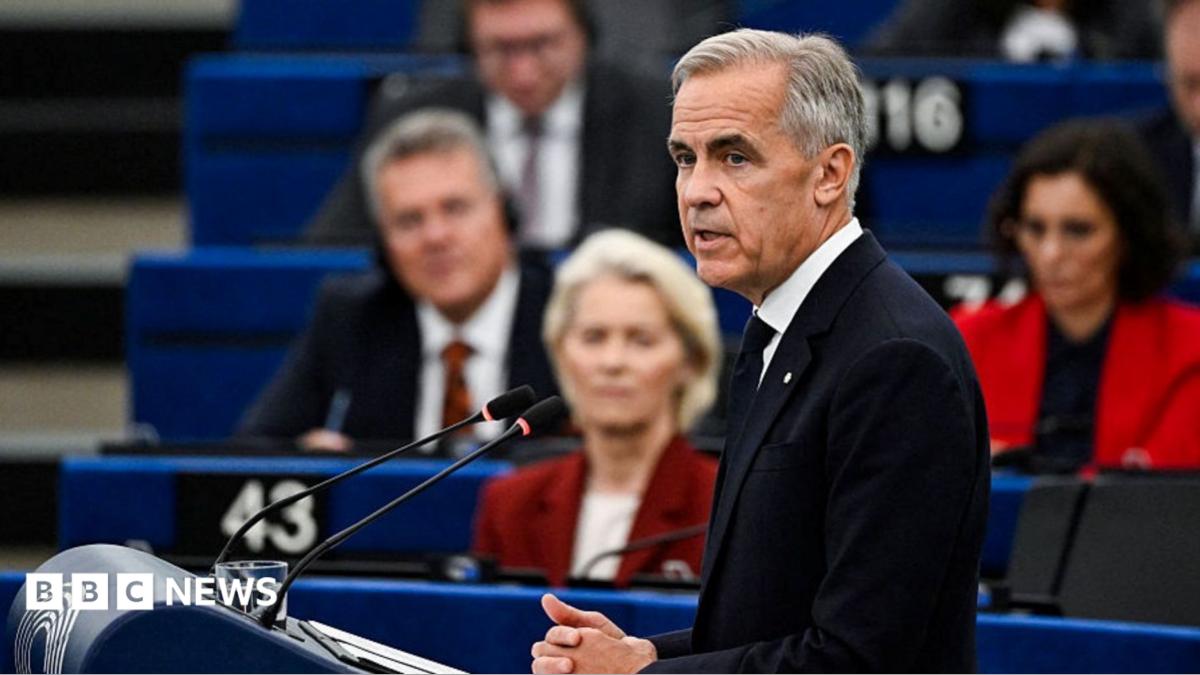
Canada is not alone among Europe’s far-flung allies, now seeking to cosy closer to the EU, as they worry the US is becoming too unpredictable a partner. Japan and South Korea show an interest in sheltering under the EU umbrella too.
For its part, the EU has recently hastened to secure a list of trade deals – with India, Indonesia and Japan for example – to intentionally diversify relationships.
But there is no guarantee Canada’s associate membership of the EU will ever get off the ground, never mind become a blueprint for other countries, like the UK wanting closer relations stopping short of full EU membership.
Any deal would have to be approved by each one of the EU’s 27 countries.
Advertisement
No legal precedent exists, negotiations would be lengthy and potential conflicts of interest loom, over steel tariffs for example.
A suggestion in May by Germany to make Ukraine – a country desperate for full membership of the European Union as soon as possible – an associate member was rejected by others in the EU.
Some, including France’s government, want to avoid EU non-members securing “too good” a deal. They fear eurosceptic forces at home and abroad could then encourage voters to clamour to leave the bloc.
In the end, “associate membership” is just a label. Buffeted by adverse winds – from China, the US and Russia, the normally rigid rules-based EU is coming under serious pressure to show more flexibility in accommodating countries wanting to stand by its side.
Yes. Corporate subscriptions are available for teams and organisations, with discounted rates as user numbers increase. Pricing starts from $1,625 + GST per user. Get in touch
to discuss the right option for your organisation.
Business News subscriptions are used by executives, investors, consultants and professionals who need to stay informed and make better decisions about the WA market. When you subscribe you’ll get
Unlimited access to WA’s most trusted business journalism
Data & Insights — detailed profiles of WA companies, people, projects and deals
MyBN — a personalised feed based on the companies, people and sectors you follow
Special publications and industry reports
Daily and weekly email newsletters
Data & Insights is a research tool built specifically for the WA market. It draws on more than 30 years of Business News reporting, updated regularly to reflect what’s happening now. Use it to:
Look up detailed profiles of WA companies, including financials, directors and ownership
Find decision-makers and track their career movements
Research live and completed projects across WA industries
Monitor deals, appointments and market activity
Access industry rankings and league tables
Data & Insights is updated daily by our dedicated research team, which uses the latest announcements, ASX filings and editorial coverage to keep our person, company, list and project records up to date.
Business News welcome all opportunities to make our dataset accurate, complete and current, so if you have an update request, please email the team at general@businessnews.com.au, and we’d be happy to assist.
Advertisement
MyBN
is part of every subscription. It’s your personalised view of Business News. You can follow the companies, people, sectors and projects that matter to you, and get a news feed and alerts tailored to your interests. You can save articles to read later and retain only what you need.
Only subscribers have full access to all content on the Business News website.
Advertisement
If staying informed about the WA economy is part of your job, and/or you’re looking for networking opportunities in WA, Business News is built for you.
Business News subscribers are:
Executives and directors tracking competitors, clients and market movements
Investors and advisers researching companies, deals and industry trends
Consultants and professionals staying across sectors relevant to their clients
Business owners looking for leads, context and market intelligence
Most Business News publications cover national or global markets. Business News is focused entirely on Western Australia, which means the journalism, the data and the intelligence are all built around WA companies, people and projects — not adapted from a national feed. Data & Insights, included with every subscription, combines more than 30 years of WA-specific editorial research with live business data. There’s no comparable product for the WA market.
Advertisement
The Morning Digest Email provides a comprehensive wrap of the major headlines, relevant to WA business, and includes with a snapshot of the overnight news covering oil, gold and ASX-listed companies.
The Afternoon Wrap Email focuses on the news covered by our team of journalists during the course of the working day, including exclusive stories and analysis, all of which relates to WA business and the local economy.
The BN Weekender Email contains a wrap of the Business News from the week that was, highlighting the top stories in each area of WA business. Sign up for free.
Advertisement
We’re happy to help. Get in touch
and our team will come back to you.
A New York Times poll reveals 51% of likely voters have an unfavorable view of socialism. Panelists discuss the generational disconnect among younger voters who criticize capitalism but support socialist policies.
The policy agenda of the Democratic Socialists of America (DSA) would cost between $71 trillion and $212 trillion in fresh spending over a decade, according to a new analysis.
The progressive wing of the Democratic Party has had electoral success recently, with some candidates backed by the DSA advancing in primaries in the wake of Zohran Mamdani’s election as mayor of New York City.
Advertisement
Angie Nixon, a DSA member in Florida, won the Democratic nomination for the U.S. Senate. Progressives who have touted similar policies as those in the DSA platform have also found recent success in Democratic primaries for U.S. Senate races, with Abdul El-Sayed winning in Michigan and Peggy Flanagan prevailing in Minnesota.
Adam Michel, the director of tax policy studies at the Cato Institute, wrote in the New York Post that the “DSA promises a world of plenty, paid for by somebody else. Simple math says otherwise.”
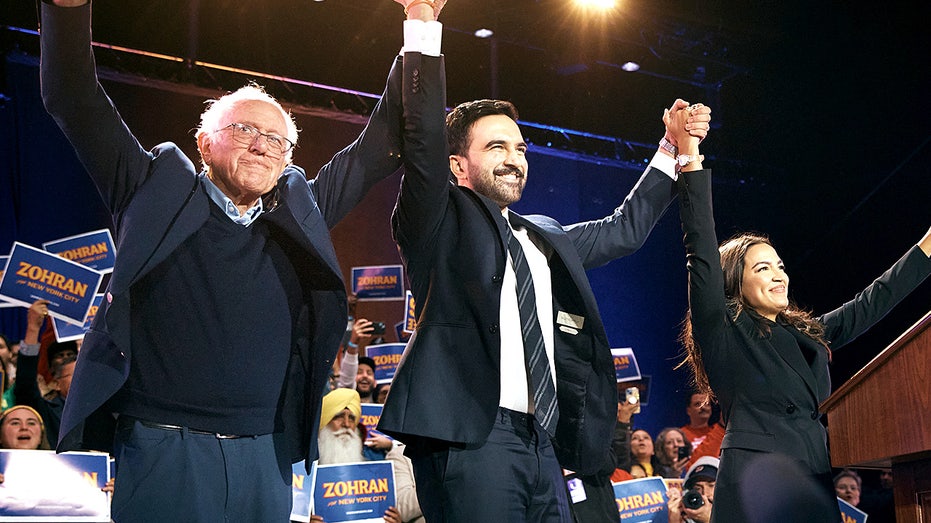
New York City Mayor Zohran Mamdani, center, celebrates with Sen. Bernie Sanders, I-Vt., and Rep. Alexandria Ocasio-Cortez, D-N.Y. (Andres Kudacki/Getty Images)
Michel analyzed the DSA platform and found that while the platform is “thin on details,” he was able to estimate the spending policies would total between $71 trillion and $212 trillion in new spending over the next decade.
Advertisement
He noted that, at the high end of that estimate, the total government spending would reach as high as 92% of U.S. economic output.
“The socialists claim their plan will do away with rent. They’ll make healthcare free and forgive student loans. Their system will provide utilities, college and food at no cost to the consumer,” Michel wrote.
“However, making something free at the point of use simply shifts the cost somewhere else, in this case, to taxpayers.”
Michel estimated the DSA platform would cost between $71 trillion and $212 trillion in new spending. (iStock)
Michel said universal healthcare could cost $40 trillion to $70 trillion over the course of a decade as reforms modeled off a Medicare-for-all-like healthcare system would see the government take on costs like paying for doctors and nurses as well as operating medical facilities.
Another plank in the DSA platform, a federal jobs guarantee, would cost up to $60 trillion to cover the wages of millions of American workers over a decade, according to Michel, who added that the elimination of rent or mortgages as part of a housing guarantee would cost trillions.
“Washington is currently projected to collect about $70 trillion in federal taxes over the next 10 years. To cover the costs of all those additional services, the DSA agenda requires roughly doubling federal revenue at the low end and quadrupling it at the high end,” Michel wrote.
The DSA platform calls for enacting “aggressive wealth taxes on the richest individuals and corporations to spend on public goods and infrastructure.”
Advertisement
He said that while advocates of those spending plans claim that they will be able to use higher taxes on wealthy Americans and corporations to pay for them, they would likely come up short.
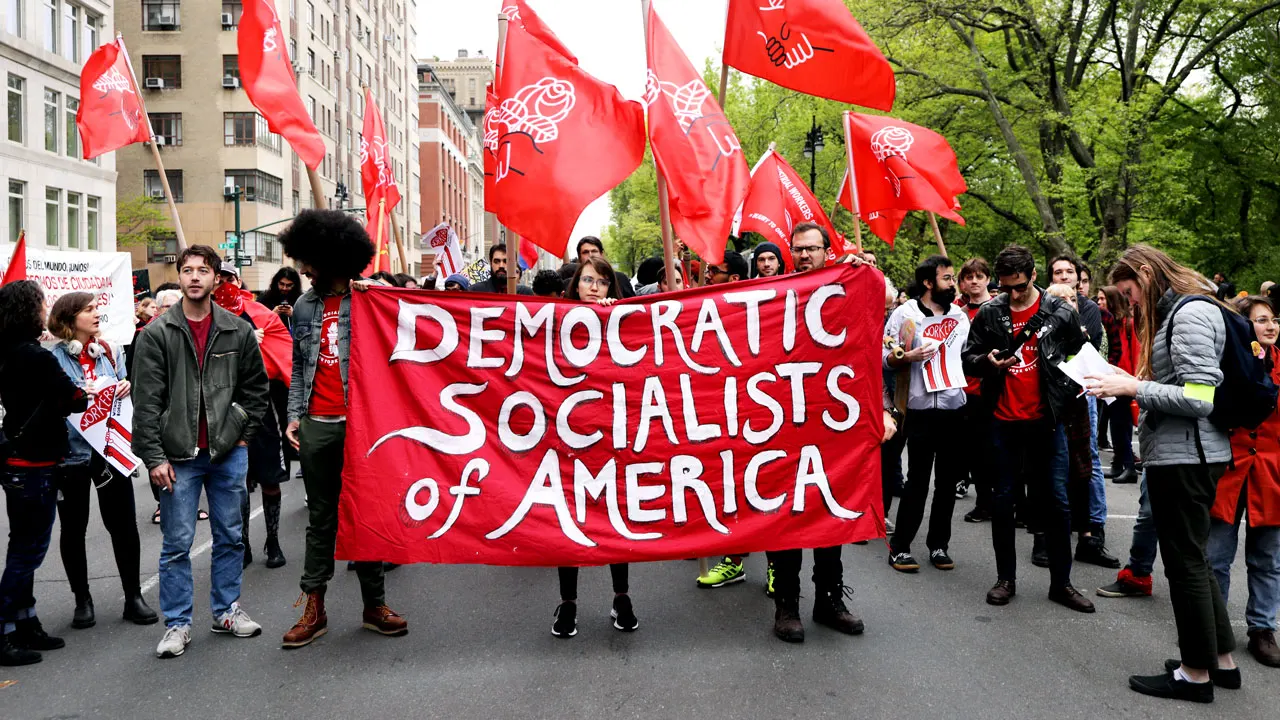
Members of the Democratic Socialists of America gather outside a Trump-owned building on May Day May 1, 2019, in New York City. (Spencer Platt/Getty Images / Getty Images)
The 400 wealthiest billionaires in America were worth an estimated $6.6 trillion last year, according to a Forbes analysis, which Michel noted would be insufficient to cover the DSA agenda.
“Imagine Washington could confiscate every dollar of that — liquidate their businesses, sell their homes, strip off their jewelry. All that covers less than one year of the low-end cost of the DSA’s platform – or not quite four months of it at the high end,” he wrote.
Advertisement
Taxing every dollar of corporate profits at 100% would fund between half and one-fifth of the DSA agenda, according to Michel, while hiking income taxes on high-income earners would cover less than 1% of those spending plans.
“Add it all together — confiscate the wealth of the richest Americans, seize every dollar of corporate profit and maximize top income-tax rates — and the DSA is still between $29 trillion and $169 trillion short of covering the cost of its promises,” Michel wrote.
He added that only “one tax base is large enough to fill a gap tens of trillions of dollars wide: the middle class,” noting that the European middle class has a significantly higher tax burden than its American counterpart to finance those countries’ social welfare programs.
Generac (Quant Hold) surged after announcing agreement with Amazon (Quant Strong Buy) (1:40) Powell in a similar situation to Generac (6:40) Growth does not look great for Kroger (Quant Hold) (9:05)
Transcript
Advertisement
Rena Sherbill: Hi everybody, good afternoon. For those expecting our wonderful Kim Khan today, he is off and in his stead, we bring you something new that I have been doing with our very own head of quant, Steven Cress, every morning around market open, Steve and I sit down and bring you a Wall Street breakfast of our own.
Riffing off Julie Morgan’s wonderful Wall Street Breakfast podcast, we highlight the top stocks of the day and we cover them from a quant perspective. Steve dives deep into each stock, shares why it’s a buy, a hold, or a sell, and gives some very edifying and actionable details along the way.
We also talk about that morning in the markets and basically afford yourselves an opportunity to hear from one of the really the investing greats of our time, and that’s Stephen Cress. I mean, I don’t even consider that hyperbolic.
So @CressTopStocks, that’s on YouTube, X, and TikTok, full episodes on TikTok and YouTube, coming soon, these episodes will be live on X, YouTube, and TikTok. But for now, you can catch them right after we record them at market open.
Advertisement
So as a little preview of what you can expect from that daily morning show, we are gonna give you a taste of that today and on Friday, as you head into the weekend. This is Steve Cress on this morning’s Wall Street Breakfast with Steven Cress. Hope you enjoy it.
Welcome back, everybody. It is Thursday, September 17th. We are here with none other than Mr. Steve Cress. Yesterday we were talking about the Fed meeting. They did indeed hike rates as expected. Steve, what are you looking at this morning?
Steven Cress: Really exciting day yesterday for traders and investors. And on the back of that twenty five basis point hike by the Fed, I can largely say that most traders expected it, especially the Bond vigilantes, the interest rate traders, roughly ninety-two percent saw the probability of rates going up twenty five basis points.
I think what was a little bit of a surprise was that forward guidance that there could be another twenty five basis point hike. So initially the expectation was and from history when a hike does take place, the market actually trades up on the day of the hike.
Advertisement
And it was trading up, but when that commentary came out from the Fed chair that there could be possibly another twenty five basis point hike, that projection from the dot plot.
I don’t think there was the anticipation that there could be another twenty-five basis point hike, and they clearly indicated that yesterday.
So the market rolled over a little bit, but the good news coming out of that rollover yesterday was that many of the stocks that had been hit hard starting in May and June, which were typically AI stocks, semiconductor stocks, industrial stocks that benefited from AI, have basically been trout from June to recent days.
There’s also an important announcement today that came out from Jenarack that kind of confirmations the existing demand for the sector. So I am gonna highlight Generac (GNRC) the stock today because it is up significantly.
Advertisement
Rena Sherbill: I saw that it was up over 30% pre-market after well, I I’ll just say after it announced a long-term supply agreement with Amazon (AMZN) that includes 2.4 billion of initial of initial generator deliveries in 2027 and 2028 for Amazon’s data centers.
Steven Cress: And that is huge. to the extent in the pre-market here. we’re minutes away from the opening, but in the pre-market, the stock is up 32%. so I think there’s really two things that are going on. One, we I will say we did have a quant hold on this stock. Looked like the hold wasfairly good.
As I mentioned, a lot of the stocks that focus around data centers and AI got trounced and Generac is not the exception. You can see back in June that the stock was up at 274 and it fell all the way to 175. But this order from Amazon indicates that these companies are live and well.
And yesterday I kind of felt like many of the stocks within the AI trade were bottoming out. So even with the Fed hiking rates by 25 basis points. And the likelihood that there could even be one or two more rate hikes. it may mean that the overall market is softer than expected.
Advertisement
But with these particular stocks that are in the AI trade, they sort of had valuation compression take place already. And as we go into the upcoming quarters, we see that orders and earnings and revenue continue to look good. This could be a really good time to look at companies like Generac.
So Generac, we did have a hold on. Analyst revisions are a B plus. I would imagine in the next day or so that revision grade will change. the growth for the company flattened out. That was one of the reasons for the C. And when I click on that, you can see the year-over-year numbers don’t look great for Generac, but some of the board numbers already look good.
And I think that’s actually gonna improve. So it has not been a strong stock since June. the fate of this may change on the back of that announcement from Amazon, but also the valuation compression as well. let’s take a look at Amazon, where we do have the strong buy. obviously, them being the provider of that order, that stock is up 1.9% in the free market after being off about 1% yesterday, which is really in line with the NASDAQ. So we maintain our strong buy on Amazon.
Now I will say, based on that announcement, I believe there are number of other companies that have gotten hit hard that I want to highlight that should perform well, sort of as we hit this capitulation phase. and we’re entering into a period where there’s validation that business is still well alive.
Advertisement
So I’m gonna share with you a stock called Powell (POWL). And similar to Generac, if you take a look at this, since June, the stock has gotten hammered. Back in June, it was 307. It’s down to 177, this is a quant hold as well. I would mention with this company, it’s actually an industrial company, and they benefit by providing a lot of supplies and infrastructure to data centers and to utilities. It’s sort of a situation where it’s similar to Generac.
Some of the year over year numbers you can see grades in yellow, and some of the forward numbers you see are quite strong. So forward revenue growth is 13.5%. EPS growth going forward is 18 and a half percent compared to the sector at 11.89. the revisions of C, I believe they have one of the biggest backlog orders that they’ve ever had. So even though a couple of the quarters came in a little bit spotty with these huge backlog orders.
The future should look a little bit better. More in the semiconductor space, but still more of a supplier and not an actual producer of semiconductors. We find Celestica (CLS), this is another stock in June it was 458. Right now it’s 339. It’s up almost 5% in trading this morning.
So seeing these stocks that I’m talking about right now that were actually up yesterday when the Dow was down one percent, kind of gives me a vote of confidence that that full valuation compression has largely been baked into the stocks.
Advertisement
And on the back of good news, we’re seeing these stocks really take off. So I’m seeing on the back of news that’s not great with the Fed taking the target rate up by twenty-five basis points and a projection of another twenty five basis point hike, which will most likely happen after the election.
It does provide additional headwinds for the market, but stocks where we saw a rotation from a risk on, risk off, it looks like on the back of this rate hike, investors are actually going back to the risk on trade.
As I said, the valuation compression has taken place already and with a validation of orders coming in, and most of these companies have actually reported on their last quarter record revenues and record earnings. I think we are in for a good period for many of these stocks.
Rena Sherbill: We love a robust answer. We love other options. in our last piece of news for today, Kroger (KR), the grocer, said a summer outbreak of cyclosporiasis cost the grocer more than a hundred million in lost sales as concerns over the contaminated produce weighed on customer traffic.
Advertisement
And Kroger lowered its fiscal year identical store sales outlook, excluding fuel to between point two and point eight percent from its previous forecast of between one and two percent.
The company said the impact continued into Q3. Steve, what do you have to say about Kroger?
Steven Cress: Since the market acts as a forward discount mechanism, a lot of this was baked into the stock already. You can see it’s barely down today.
We’re at an uptape and perhaps it’s on the confirmation of the news. I would say overall with Kroger literally digesting this news event and perhaps having a bit of an impact today, it’s down moderately.
Advertisement
I think largely it’s already been discounted into stock. But having said that, Quant has had a hold on it. Our Seeking Alpha contributor consensus was a buy and Wall Street consensus was a buy, but for a stock that’s in the consumer staple sector and where there’s largely been a big rotation to consumer staple stocks, this one has not benefited.
And I believe one of the reasons why is despite the valuation, the growth does not look great for Kroger. So if we take a look at the forward growth, it’s a C minus grade, which gives you that instant characterization. That growth is below that of the sector.
And indeed, by looking at the absolute data, you can see growth, forward growth for the company is only 1.23% versus the sector at three and a half. if you scroll down, the year over year numbers look awful for earnings per share. They actually fell by 56% year over year. That’s not a pleasant picture.
Going forward, it does look a little bit better. EPS is estimated by consensus for analysts at a growth rate of 7.24% versus the sector at 5.8. So that you know makes the future look a little bit better. Free cash flow for the company is very strong too. The forward free cash flow growth is almost 20% compared to the sector at 5.3%.
Advertisement
And the company’s ROE is growing at twelve point six percent. So that’s not the ROE rate, that’s the actual growth of the ROE. the forward estimate is at twelve percent versus flat for the sector. So there are some growth numbers going forward that look good, but the year over year actual numbers are dragging it down.
So that overall grade is D plus, hence the hold recommendation in terms of analyst revisions for the stock in the last ninety days.We’ve only had two analysts that have taken their estimates up, and eighteen analysts have actually revised their earnings estimates down. That’s painful.
Although I will say for the upcoming quarter, ten analysts revised up and eight revised down. So not quite as painful for the quarter as for the full year look, but certainly not positive enough to be out there buying the stock.
That early work shaped how he thinks about pressure, teamwork, and staying calm when something goes wrong.
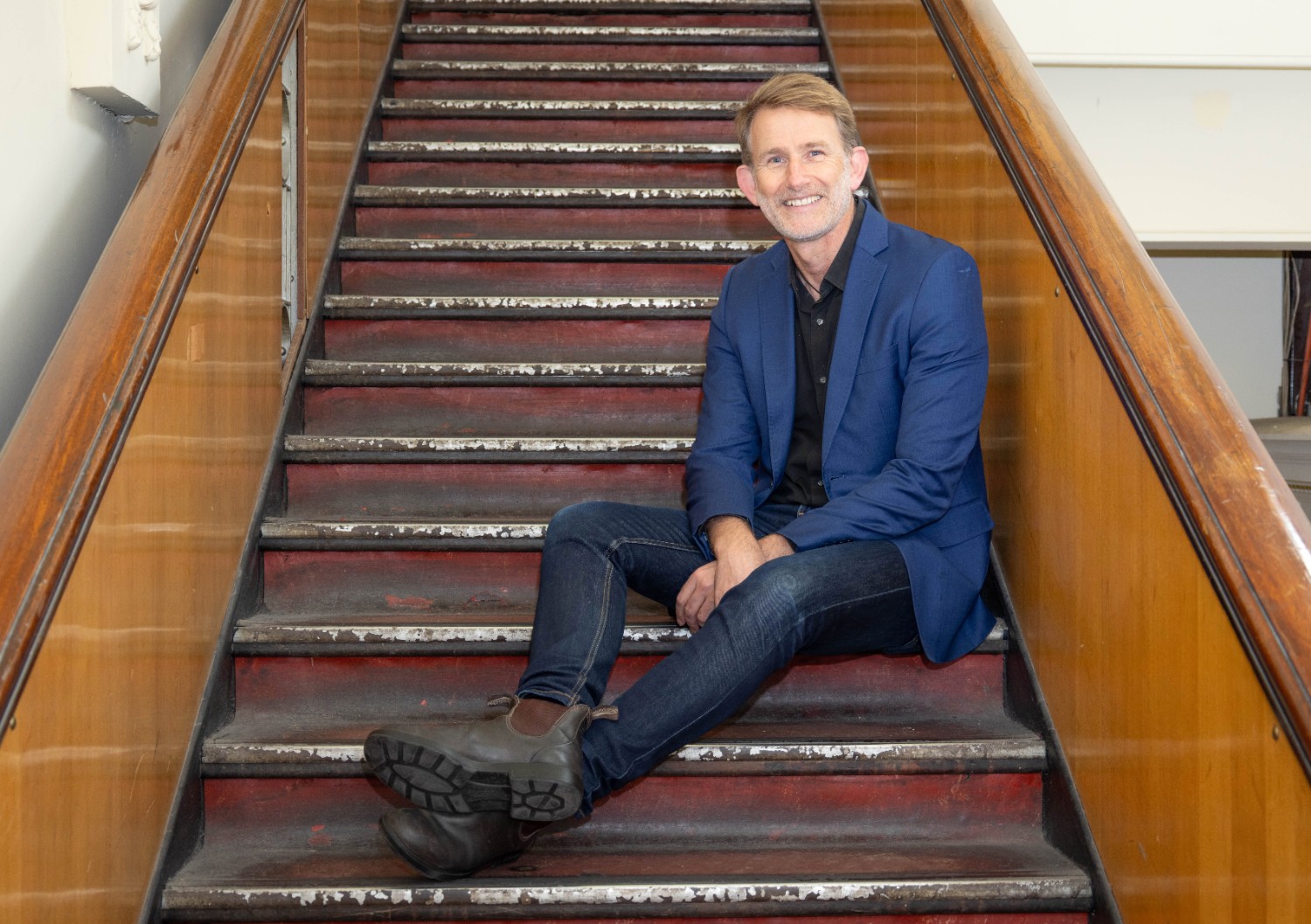
Reight studied psychology at the University of Maryland, College Park, then trained as a doctor at the Medical University of the Americas. Over the course of his career he has taken on several leadership posts alongside his surgical work: medical staff president, chief of surgery, and medical director of a breast centre and of a wound care and hyperbaric programme. He has also led as a robotic surgery surgeon, a role that sits at the newer end of general surgery.
Ian’s path has never run in a straight line from operating theatre to boardroom and back. He has treated leadership as part of the job, not separate from it, which is why he has moved between clinical roles and administrative ones without seeing much of a divide. Now based in Mount Vernon, Maine, he continues that pattern: seeing patients, running a surgical practice, and keeping an eye on how the systems around care actually work.
Free newsletters
Advertisement
The stories that matter to UK business, straight to your inbox.
Advertisement
He writes and speaks about medicine and leadership, drawing on the same instincts he built as a first responder: assess quickly, communicate clearly, and do not let ego get in the way of the outcome. That grounding, more than any single title, is what he brings to Mount Vernon.
Interview with Ian Reight
You grew up in Maryland but you’re practising in Mount Vernon, Maine now. How did that move come about?
Maryland is where I’m from, it’s where I trained early on and where I did my firefighting and paramedic work. Maine is where I practise now. Mount Vernon is a small place, and that changes the job in ways people don’t always expect. You’re not one of a dozen general surgeons in a big system. You’re often the surgeon a patient has met, and will meet again.
What’s different about practising surgery in a small Maine town compared to a bigger market?
The distances matter more. If a patient needs a specialist referral or a longer recovery stay, that’s not always five minutes away. You plan around that. You also tend to know more about a patient’s life before they ever get to the table, because word travels and because you see the same families over years, not just once.
Does that change how you approach a first consultation?
A little. In a bigger city, a first meeting is often the only meeting where you’re building trust from zero. In Mount Vernon, there’s usually some context already there, whether from the patient themselves or from someone they know who I’ve treated before. That doesn’t mean I skip steps. I still walk through the same things every time: what the procedure involves, what recovery looks like, what could go wrong. But the conversation starts from a slightly different place.
Advertisement
You’ve held both clinical and administrative leadership roles. Does a smaller setting change how you think about leadership?
It sharpens it, honestly. In a large hospital, a leadership title can mean managing systems you rarely see up close. In a smaller setting, you see the direct effect of a decision almost immediately. If a follow-up process isn’t working, you hear about it from the patient the next week, not from a report months later. That immediacy keeps you honest.
What drew you to general surgery in the first place, going back to your time in Maryland?
The firefighting and paramedic work came first. That taught me to work under pressure and to trust a process even when things are moving fast. Surgery asked something similar of me, but with more time to prepare and more room to think ahead of the moment itself. Psychology, which I studied before medicine, gave me another piece: patients aren’t just a set of symptoms. How they understand what’s happening to them affects how they recover.
How has your work in wound care and breast centre leadership shaped your day-to-day surgical practice now in Maine?
Those roles taught me to look past the operation itself and think about the whole arc of care. Wound care in particular is unglamorous but it tells you a lot about whether a recovery is on track. I carry that habit into general surgery here: I don’t consider a case finished at the incision closing. I want to know how it heals, and I want the patient to know what to watch for too.
What does a typical week look like for you in Mount Vernon?
It’s a mix of clinical time and the kind of oversight work I’ve done for years, just on a smaller scale. Fewer layers between me and the decision, which I don’t mind. At home, my dogs and cooking are how I switch off. Neither has anything to do with surgery, and that’s the point.
Advertisement
Is there anything about practising in a small Maine town that surprised you?
How much continuity matters to patients. In a larger system, people expect to be handed between providers. Here, they expect to see the same face again, and that expectation has made me more careful about the small things: a follow-up call, a clear explanation, remembering the details of someone’s case without having to check the chart first.
Stuart Varney and Madison Allworth report on Nvidia CEO Jensen Huang dismissing AI doomsday fears. Jensen Huang explains why extreme AI concerns are not grounded in science, as President Donald Trump calls into the event.
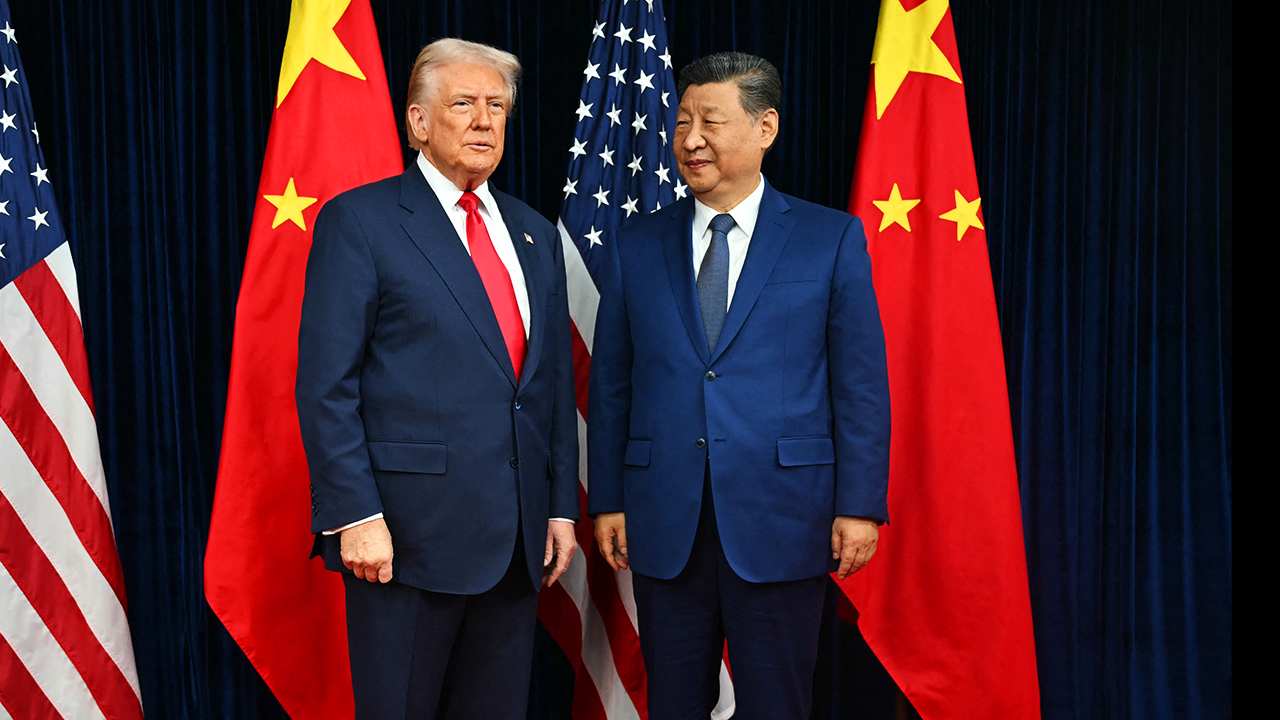
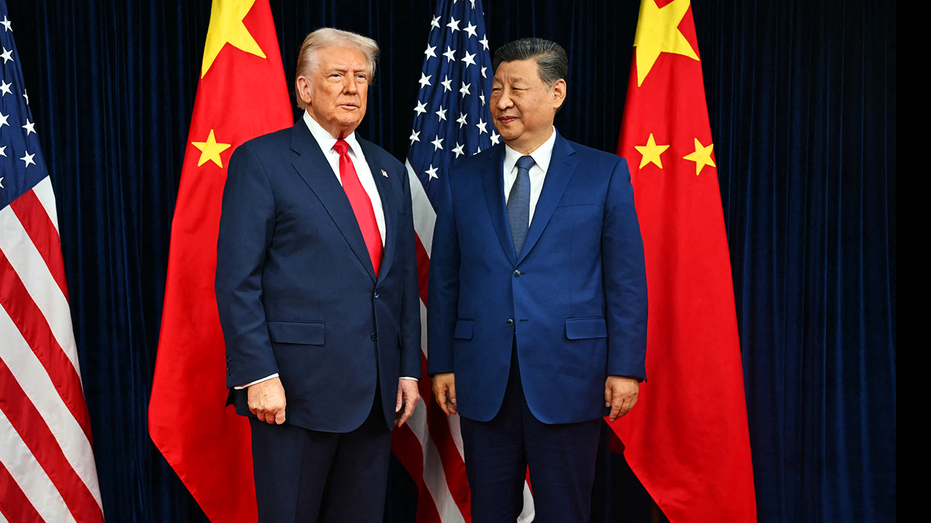
President Donald Trump is planning to hold a state dinner next week to mark a visit by Chinese President Xi Jinping, and several tech industry leaders are expected to attend.
OpenAI CEO Sam Altman and Apple Executive Chairman Tim Cook are both reportedly planning to attend the state dinner.
Advertisement
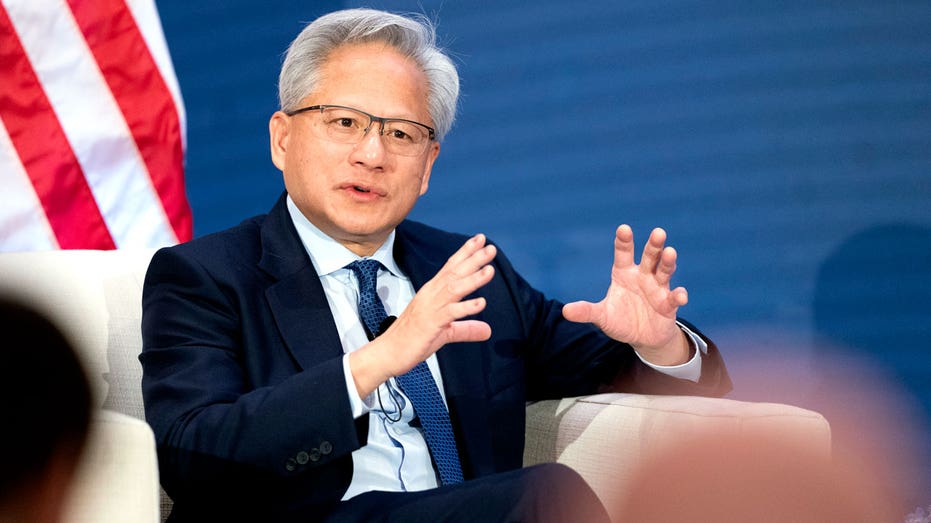
Nvidia CEO Jensen Huang is also expected to attend the event, a person familiar with the matter told FOX Business.
OpenAI CEO Sam Altman is expected to attend the state dinner with other tech leaders.
The tech leaders’ anticipated attendance at the Trump-Xi state dinner comes at a time of geopolitical tensions, including over the development of artificial intelligence (AI) and access to both models and the chips that power them.
President Donald Trump and China’s President Xi Jinping are scheduled to hold a state dinner during Xi’s visit next week. (Andrew Caballero-Reynolds/AFP)
The U.S. and China are locked in a competition in which the two world powers are racing to develop more capable AI tools, which have been a source of tension between the countries.
China’s access to specialized chips that power advanced AI models has been restricted through the U.S. government’s use of export controls on advanced semiconductors, like those made by Nvidia.
Huang has been critical of those restrictions and said in May that China has “all the chips they need” despite the U.S. restrictions.
Nvidia CEO Jensen Huang is among the tech leaders expected to attend the state dinner. (Sean Rayford/Getty Images)
American companies like OpenAI and Anthropic have relied on using frontier models, which are proprietary and not available for use without purchasing a license, to gain their edge in the AI race. Chinese tech companies have used distillation as a means of using open-weight models to keep up with U.S. firms’ frontier models.
Altman and other tech leaders have recently been discussing steps to rein in AI development to ensure the safety and alignment of those models amid concerns about their potential impact on humanity.
“It is the responsibility of the AI companies ourselves to develop the technology safely and to properly test it,” Huang told reporters. “If it’s not ready, just hold it back. You should go as fast as you can, but no faster than that.”
State dinners are among the highest diplomatic honors a U.S. president can bestow on a foreign leader.
Next week’s state dinner comes after Xi hosted a state dinner for Trump when he visited China in May. That event was also attended by Elon Musk, Huang and Cook – who was still CEO at the time and has recently transitioned into an executive chairman role at Apple.
The Trump-Xi state dinner will be the second hosted by Trump during his second term, as the first was held during a visit by Britain’s King Charles and Queen Camilla.
During his first term, he hosted state dinners for French President Emmanuel Macron in 2018 and Australian Prime Minister Scott Morrison in 2019.
Axon Enterprise (AXON) failed to bounce early Wednesday, a day after being among the biggest S&P 500 losers on Tuesday, as investors reacted negatively to its plan to issue $1 billion in 0% convertible notes. The Taser-maker said proceeds will fund operations, acquisitions, investments and the cost of the capped-call transaction, which is a hedge designed to limit share dilution.…


















































You must be logged in to post a comment Login