Connect with us
DAPA Banner

Business

Defence, financials, discretionary in structural sweet spot: SAMCO MF’s Viraj Gandhi

Published

on

Defence, financials, discretionary in structural sweet spot: SAMCO MF's Viraj Gandhi
Despite elevated headline valuations, select sectors continue to offer compelling structural growth visibility. Viraj Gandhi, CEO of SAMCO Mutual Fund, believes defence, financials and pockets of consumer discretionary are positioned to benefit from policy support, balance sheet strength and evolving demand dynamics. He advocates a momentum-led, risk-calibrated approach in navigating the current market cycle.

Edited excerpts from a chat:

What is your assessment of the current market cycle, and where do you believe we stand in terms of valuations versus earnings visibility?

The Indian markets continue to appear expensive on a headline basis as they are trading above their median valuations. However, there are pockets of opportunities across sectors and market caps that could benefit from strong domestic demand and policy support. Earnings visibility has been improving for sectors such as financials, industrial products, auto, and select consumer categories, while pockets like defense, and infrastructure continue to offer long-term growth potential. External factors such as global trade tensions, tariff concerns and India being viewed as an Anti AI trade has weighed on the sentiment of the market. India’s pursuit of signing free trade agreements (FTAs) with different countries like the EU and New Zealand is creating new avenues for trade, investment, and market diversification, which could support earnings growth over the medium term. We believe that the market is currently in a phase where broad valuations may appear rich, but earnings visibility is improving, and pockets of opportunities continue to exist for investors who focus on quality, growth potential, and sectors positioned to benefit from both domestic and global trends.

Advertisement

What stood out for you in the Q3 earnings season? Are you more hopeful of broad-based growth than before?

What stood out this Q3 earnings season was the divergence between underlying operating performance and the direction of earnings revisions. Corporate Earnings this quarter were broadly in line with expectations. Several consumption-linked and cyclical sector companies witnessed a growth in top-line with operating margins broadly stabilized or expanded and profit growth remained healthy. Banks and NBFCs showed signs of stability in asset quality and profitability metrics and industrial and defence names continued to benefit from execution momentum and policy tailwinds. Earnings downgrades in a couple of sectors were not driven purely by weak quarterly performance but due to a confluence of external factors such as currency volatility, commodity price swings, competitive intensity in certain segments, and global volatility. Management commentary indicated that domestic demand showed early signs of improvement following policy support, with autos and select consumer categories reflecting better business commentary. However, competitive intensity remains elevated in some sectors such as paints, consumer durables and telecom. IT services delivered a steady quarter with management commentary highlighting the concerns around AI related disruptions. Overall, the quarter reinforced a cautiously constructive view operationally, corporate India appears to be on a firmer footing as compared to previous quarters, but forward earnings expectations are still adjusting to a complex mix of macro, regulatory and competitive factors.

Which sectors appear structurally well-positioned over the next three to five years, and why?

Sectors that are beneficiary of secular trends and policy support given by the government appear structurally well positioned over the next three to five years. One prominent theme is defence. There is a multi-year potential for businesses in this sector due to rising government spending on defense equipment modernization, local manufacture, and indigenization. Strategic Partnerships with global players are improving technological access.


Furthermore, companies that are involved in the manufacturing of advanced electronics, aerospace components, and systems integration are well positioned to benefit from these structural tailwinds.
Pockets of consumer discretionary is another structurally attractive sector, reflecting changing preferences of the consumers as per capita income improves, urbanization and digital adoption encourages consumers to spend more on upgrading and preimmunizing their lifestyles.Banks and NBFCs are improving on asset quality, healthy credit growth, and increasing penetration across retail and corporate segments. The combination of robust balance sheets, policy support, and innovation in digital lending and payments provides a structural tailwind for earnings.

What is your outlook on financials, particularly in the context of credit growth, asset quality and margin sustainability?

The outlook on the financial sector remains constructive given improvement of credit growth and stable operating conditions. There are early signs that corporate lending is picking up which is expected to continue. Deposit growth continues to remain a challenge, and a higher reliance on bulk deposits could keep the cost of funds slightly elevated. Banks should be able to maintain their stable margins given the repricing of MCLR linked loans. Increased collection effectiveness and stress level mitigation, especially in unsecured portfolios, ensure that asset quality and credit costs continue to be controlled. Management commentary suggests that the second half of the year should be better, as growth is expected in both lending and controlled credit costs, which will improve their profitability. This creates a favorable backdrop for banks, balancing growth opportunities with prudent risk management.

How should investors approach the IT and digital ecosystem amid AI-led disruption and shifting global tech spending?

Investors should adopt a wait and watch approach in this space. AI is changing business models of traditional IT companies. The pace of AI-driven change is unprecedented in nature. Global hyperscalers are committing capex more than $600 billion towards AI related infrastructure, including data centers. As a result of these developments within the field of AI, companies are now investing more in automation and artificial intelligence as compared to traditional IT services. Companies who successfully implement AI stand to benefit from these changes, while others could lag, thereby impacting their revenue and profit margins. For Indian IT, the structural shift presents a dual challenge. Traditional service models face pressure as automation and generative AI reduce demand for conventional software maintenance. At the same time, India’s deep talent base and growing digital capabilities provide opportunities to support global clients in AI adoption.

Advertisement

How are you currently positioning portfolios in terms of sector allocation, cash levels and market-cap bias?

We use momentum as a factor across our funds and allocate capital to sectors and companies based on relative price strength, growth in revenue, and accelerating earnings, while using absolute momentum to manage risk and protect capital. From a market-cap bias, positioning depends on the mandate of the scheme. In categories such as Flexicap, ELSS and Special Opportunities where the fund managers have flexibility to allocate across market caps, we have a slight bias towards mid and small caps. Sector-wise, we are positioned in BFSI, Autos, Pharma and Industrial Products where we believe the balance between growth prospects and risk is favourable. These sectors offer a mix of cyclical recovery, structural tailwinds and improving profitability dynamics. On the risk management side, we actively use hedging to reduce downside risk particularly during phases where markets remain sideways or uncertain. In addition, we maintain cash in certain portfolios where near-term risk-reward warrant a more cautious stance. Overall, our approach seeks to participate in momentum-led opportunities while maintaining flexibility and prudent risk control.

Do you think that the sell-off in smallcaps we saw in last 1.5 years is done and that we will see gradual recovery in next 2 quarters?

Given the results in Q3FY26, there are encouraging signs that the extended weakness in small-caps could be stabilizing. Across a broad set of companies, revenue and profitability growth is accelerating, with smaller companies showing stronger momentum. Earnings downgrades appear to be moderating, and we expect upgrades to gradually emerge as macro conditions stabilize and companies benefit from policy tailwinds. Supportive monetary conditions due to the rate cuts done by the Reserve Bank of India should improve corporate earnings and investor sentiment. While valuations are above median levels at the broader index level, there continue to be selective pockets within this space with solid fundamentals and clear growth drivers. The combination of the above-mentioned factors suggests that small-caps could see a gradual recovery in the coming quarters.

Continue Reading
Click to comment

You must be logged in to post a comment Login

Leave a Reply

Business

Another $1.5b into health budget

Published

on

Another $1.5b into health budget

A further $1.5 billion will be spent on health infrastructure and the establishment of a new central coordination office as the Cook government pledges to “unlock” more than 900 hospital beds.

Continue Reading

Business

Two industrial estate buildings set for approval at site focusing on nuclear and clean energy

Published

on

Business Live

Leconfield Industrial Estate is key Cumberland ‘business cluster’

Two new buildings on a Cumbrian industrial estate could get the green light if the plans are approved next week.

The plans for two new buildings on a Cumbrian industrial estate (Image: ONE Environments via Cumberland Council planning application)

Two new buildings on a Cumbrian industrial estate could get the green light if the plans are approved this week.

Advertisement

Members of Cumberland Council’s planning committee are due to meet at The Civic Centre in Carlisle on Wednesday to consider the application for two sites at Leconfield Industrial Estate in Cleator Moor.

It is proposed that they would be for general industrial and ancillary office use with 6,356 square metres floorspace and associated car parking, hard and soft landscaping, infrastructure and biodiversity enhancements.

The planning application is being placed before the committee because the site exceeds two hectares in area.

It is recommended that members approve planning permission subject to planning conditions and agree a legal agreement to secure:

Advertisement
  • a Travel Plan monitoring fee of £6600;
  • a contribution of £74,032 towards the highway improvements at Moresby Road, Cleator Moor Road and Main Street; and
  • a contribution £30,039 towards the cost of junction improvement works at Cleator Moor Road and Overend Road.

According to the report Leconfield is an established industrial estate which comprises 17.6 hectares in area and is strategically located within Cleator Moor, between the town centre and the built-up area to the north-west.

It states: “It forms part of what is known as Cleator Moor Innovation Quarter (CMIQ), a ‘business cluster’ for the new nuclear and clean energy sectors, as a focus for collaboration, innovation and diversification.

“The estate currently accommodates some 20 industrial and warehouse units of varying sizes, a number of which are vacant.

“There are also several vacant or cleared plots. This established industrial estate has been in use since the 1940s and more recently has suffered from a period of decline.”

The application requests planning permission for two large buildings which will break down further into: Unit nine – four 658 square metre units, and Unit 12 – five 710 square metre units.

Advertisement

It adds: “The intention is for businesses to grow and move nearby within the wider estate into larger more self-contained accommodation. Plots nine and 12 will be ‘Grow On’ units and will cater for businesses in their growth stages and are sized accordingly.”

To find all the planning applications, traffic diversions, road layout changes, alcohol licence applications and more in your community, visit the Public Notices Portal.

Continue Reading

Business

Element 25 taps investors for $18m

Published

on

Element 25 taps investors for $18m

Osborne Park-based Element 25 has announced another capital raise in order to further expand its Butcherbird manganese project in the Pilbara.

Continue Reading

Business

Oil shock threat looms over Dalal Street rally

Published

on

Oil shock threat looms over Dalal Street rally
India’s stock indices and its currency face reversal risks from last week’s relief-inducing firmness after the US threatened to blockade the Hormuz Strait following the breakdown of peace talks between the US and Iran, spotlighting the fragility of a truce that dictates oil prices and capital allocation.

Last week’s stock market rebound—the best over a seven-day period since February 2021–hinges on the broad direction of oil prices in the aftermath of seemingly inconclusive talks in Islamabad, although Reuters cited shipping data to report the passage Saturday of three fully laden super-tankers through the Strait of Hormuz that accounts for a fourth of the global oil trade. “The market would see a gap down opening, though there should not be panic,” said Sham Chandak, head of institutional equities at Elios Financial Services.

“The market will take cues from oil prices, which are at the centre of this conflict.”

Last week, India’s equity indices climbed 6%, snapping a relentless six-week losing run, after the announcement of two-week truce. Oil slumped below $100 a barrel to $95.2 Friday, having climbed to nearly $120 in the immediate aftermath of the war.

Advertisement

For the currency, the bias would likely be weak, too. Stage-gated central bank curbs on speculative trading helped the rupee climb from record lows last week and those regulations could still provide the bulwark against a currency slide due to the oil prices, but the gains are expected to be capped if geopolitical concerns resurface.


The rupee’s upside may be capped in the 92.40/$ to 92.50/$ range in the absence of a further retreat in oil prices. On the downside, the central bank is expected to step up intervention around the 94.80/$ level, which is the currency’s record closing low.
‘TENTATIVE’
“Most avenues for speculative trades have been shut, so the market is now largely left with hedgers and market makers. That does make liquidity thinner, but at this point, stability is more important,” said Anindya Banerjee, head of commodity and currency, Kotak Securities.Banerjee expects meaningful intervention by the central bank at levels beyond 94.50/$, as these levels are psychologically very significant.

The rupee depreciated 10% in FY26, from 85.75/$ in April to close at 94.83/$ on March 31. The currency deprecated more than 4% in March alone, after the war started.

To curb the pace of deprecation, the Reserve Bank of India (RBI) came up with two back-to-back circulars on March 27 and April 1, restricting arbitrage trades between offshore and onshore markets.

“Currently, the ‘tweet risk’ outweighs traditional risk concerns. Despite talks of a ceasefire, the absence of a definitive agreement continues to sustain uncertainty,” said Kunal Sodhani, head of treasury at Shinhan Bank India. “This is evident in crude oil prices, which remain elevated in the $95–$100 per barrel range instead of easing meaningfully.”

Advertisement

‘ALL ISN’T LOST’
To be sure, market participants across asset classes expect the two-week time window to be fully utilised to hammer out a solution that is reasonably durable. “The market is cognisant of the fact that the current ceasefire expires on April 22. So there is still time for the parties involved to negotiate,” said Elios’ Chandak.

Some expect short sellers to return, pushing stock prices lower.

“The markets are expected to react negatively to the failure of talks and that is likely to imbue volatility,” said A Balasubramanian, managing director and CEO, Aditya Birla Sun Life AMC. “But typically, these dialogues involve a lot of back and forth and a strong outcome can’t be expected in a single day of talks.”

Advertisement
Continue Reading

Business

Wall St ends mixed as investors parse Iran negotiations

Published

on

Wall St ends mixed as investors parse Iran negotiations

US stocks have closed ‌mixed, with investors pressing pause as they headed into the weekend and kept an eye on ongoing Middle East peace negotiations.

Continue Reading

Business

Trump lashes out at Pope Leo over criticism of foreign policy

Published

on


Trump lashes out at Pope Leo over criticism of foreign policy

Continue Reading

Business

Global banks play hedge card after RBI blow on rupee bets

Published

on

Global banks play hedge card after RBI blow on rupee bets
Some of the large foreign banks are trying a clever ploy to soften the blow from Reserve Bank of India’s (RBI) sudden clampdown on speculative bets against the rupee.

They are understood to have passed off some of the arbitrage deals, which were hit by the recent regulatory directives, as transactions done to hedge the capital received from overseas parents, two persons told ET.

Arbitrage deals are cut to profit from price differences in the local foreign exchange forward market and the offshore market for non-deliverable forwards (NDFs).

Banks were forced to unwind these deals after the Indian regulator slapped a uniform limit of $100 mn on the net open position (NOP) a
bank can have onshore.

Advertisement

However, some MNC banks are showing the capital that has come in earlier or flowed in recently from their head-offices as underliers for the onshore forward leg in the arbitrage deals. Thus, this buy-dollar forward contract with a proper underlier is shown as a transaction to cover the risk arising from a slide in the rupee – and not as any part of an arbitrage deal.


Foreign banks function as branches in India which are part of the global books. The capital coming in as dollars or euros into an MNC bank’s India operations, are converted into rupees to support and grow the business here.
“Technically, this may be a response to the NOP limit. But whether this explanation would stand regulatory scrutiny is unclear as RBI may tend to look into the timeline – when the capital came in, when the forward deals were struck, which of these are now claimed as hedges, how they were accounted for, etc. Also, are there communications between India and the HQ to back the explanation?” said another person.THE NDF DEALS
When the rupee comes under pressure, banks cut arbitrage deals by buying dollar forward in India and selling dollar forward in the NDF market which has been flourishing in London, Singapore, Hong Kong, and New York since the ‘90s when foreign portfolio managers,hedge funds and others explored ways to bet on the USD-INR rate following partial convertibility of the rupee.

Typically, when geopolitical turmoil and sell off by foreign funds pulls down INR, the USD trades a little stronger (and INR quotes a tad weaker) in NDF compared to the onshore market. So, the USD-INR rate is higher in NDF than the forward USDINR rates in India.
MNC and Indian banks cash in on this by buying USD in the onshore forward market, and simultaneously selling USD-INR in the NDF market. Forward contracts with tenures of one to three months are the most liquid.

RBI came down heavily as the banks with their arb deals were providing liquidity to hedge funds and other international speculators who were shorting the INR. When these players shorted INR, they went long on USD and therefore bought USD-INR forward contracts in NDF. Their counterparties were the Indian banks selling USDINR forwards in the NDF – the offshore leg in the two-legged arbitrage deals.

REGULATORY BYPASS
The central bank, which rushed in with restrictions in two phases, had also taken an exception to the practice of corporates in India, who cannot access the NDF, using banks to enter the offshore market. Since USD-INR was slightly higher in NDF, large corporate exporters would sign forward deals with banks in India which did a backto-back deal in the NDF market to offer the companies rates that are very close to the NDF rate – thus, allowing clients to convert more rupees from their export proceeds. This partly shifted liquidity from the onshore to offshore market.

Advertisement

While a forex dealer or a corporate treasurer may find such company-bank-NDF deals kosher, legal practitioners would find them in violation of the central tenet of the Foreign Exchange Management Act: what cannot be done directly, cannot be done indirectly.

Continue Reading

Business

IXN: Global Tech Leadership Remains, Eyeing A New Record High

Published

on

Workday: A Bad Narrative Creates A Bargain - 5 Reasons To Buy

IXN: Global Tech Leadership Remains, Eyeing A New Record High

Continue Reading

Business

Karratha FIFO camp holds residential potential

Published

on

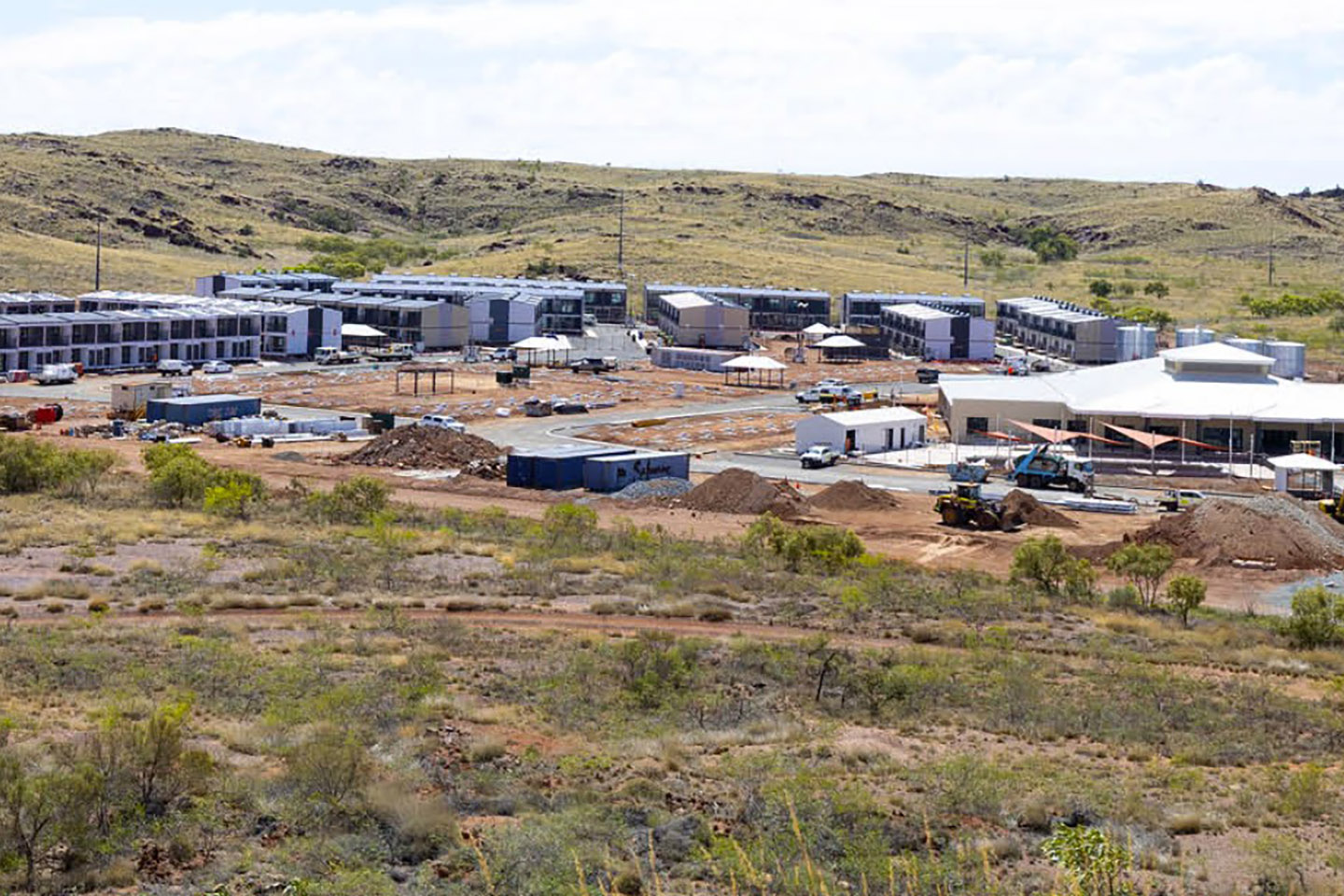
Karratha FIFO camp holds residential potential

The flexible design of a large modular camp on the outskirts of Karratha could lend itself to townhouse living.

Continue Reading

Business

US Foods Holding: A Truly Defensive Winner Of The Trade-Down Economy

Published

on

US Foods Holding: A Truly Defensive Winner Of The Trade-Down Economy

US Foods Holding: A Truly Defensive Winner Of The Trade-Down Economy

Continue Reading

Trending

Copyright © 2025