
Business
Diamond Hill Intermediate Bond Strategy Q2 2026 Commentary


Diamond Hill Capital Management, Inc. is a wholly owned subsidiary of Diamond Hill Investment Group, Inc. Diamond Hill Investment Group is a publicly traded company, and its shares trade on the NASDAQ (Ticker: DHIL). Note: This account is not managed or monitored by Diamond Hill Capital Management, and any messages sent via Seeking Alpha will not receive a response. For inquiries or communication, please use Diamond Hill Capital Management’s official channels.

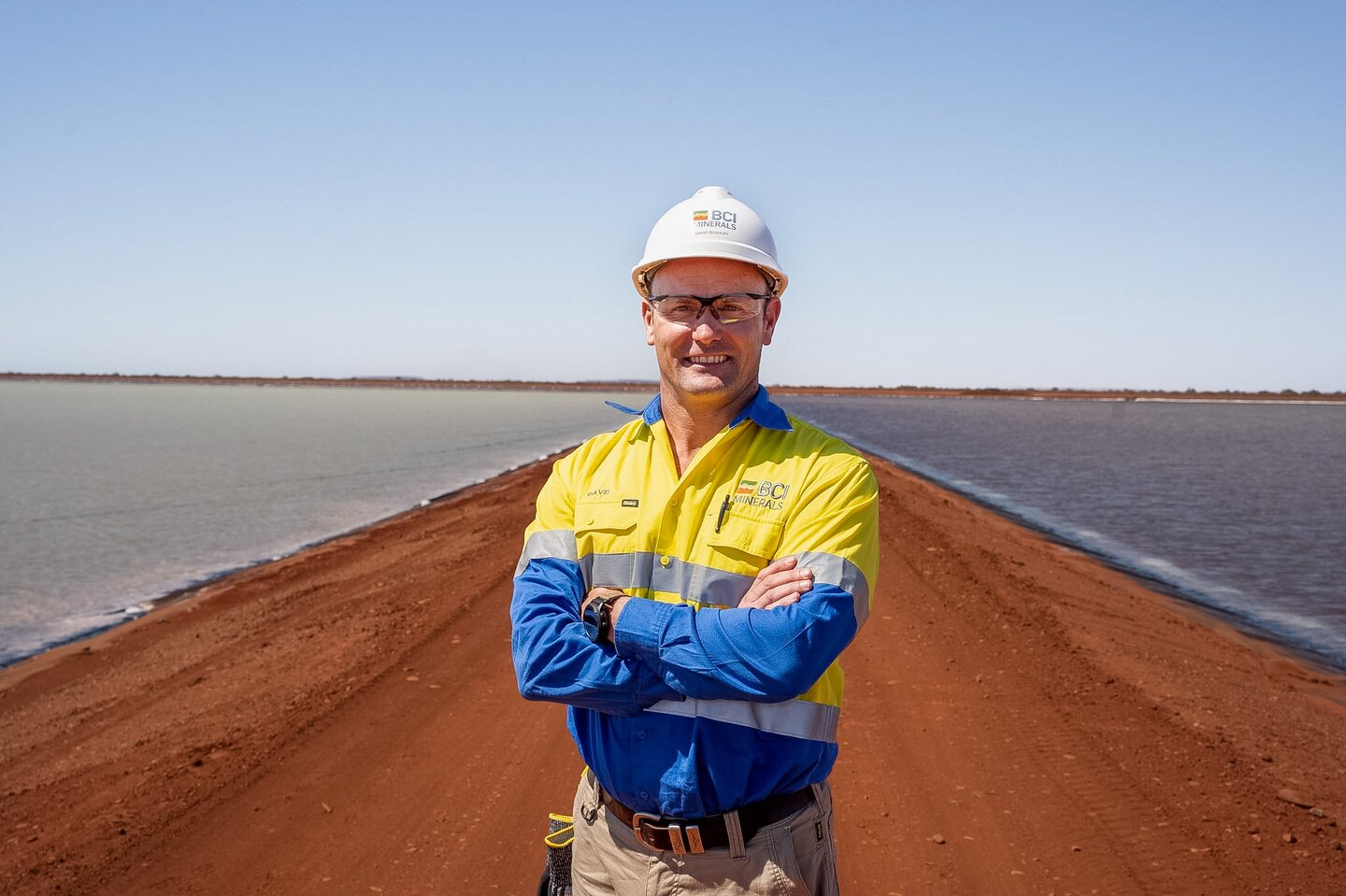
BCI Minerals says a by-product from its $1.48 billion expansive salt operation could aid Australian food security after fertiliser prices soared in the fallout of the Middle East conflict.

A Guide to Owning Bonds When They’re Selling Off

A new report from the Centre for Policy Development comes amid a surge in support for One Nation as voters vent anger at the two major parties.

But industry bodies argue that starting production at the sites would provide much-needed jobs and improve the UK’s energy security as overseas conflicts threaten supply.
Advocates of the project also told the BBC that Jackdaw’s output is critical to extending the life of other North Sea infrastructure including Shearwater – a large offshore oil and gas production hub that processes hydrocarbons before piping them to coastal refineries and terminals.
Adura said that if approval comes in September, the field could start delivering gas to UK homes by this winter as the construction is “99% complete”.
A public consultation on the future of Jackdaw and another new oil field, Rosebank, closed in August and the decision now rests with Energy Secretary Miatta Fahnbulleh.
Speaking in the House of Commons on Thursday, Energy Minister Kate White said that the energy secretary would make separate decisions on the two sites, but gave no indication of the timings of an announcement.
“The process ended in August, and the Secretary of State will be taking those decisions in due course,” she told MPs.
Prime Minister Andy Burnham recently said there needs to be a “pragmatic approach” towards domestic oil and gas.
“We won’t be able to stop using oil and gas for some time. That’s just a fact,” he said.
“The question is whether we can accelerate use of it so that we pay for the transition.”
Business
Earnings call transcript: PYC Therapeutics posts Q3 2026 EPS beat as trial data lifts outlook

Earnings call transcript: PYC Therapeutics posts Q3 2026 EPS beat as trial data lifts outlook

China’s humanoid robot manufacturers now dominate 97% of global shipments, establishing an early leadership advantage over U.S. competitors. This dominance highlights China’s rapid advancements in robotics technology and its growing influence in the global market. The trend underscores shifting technological power dynamics, with Beijing solidifying its position as a key player in humanoid robot development and deployment worldwide.
Humanoid robots are revolutionizing the technological landscape in China, positioning the country at the forefront of innovation. These advanced machines are capable of simulating human behaviors, including speech, gestures, and decision-making processes. Chinese tech companies and research institutions have invested heavily in developing sophisticated robots that can perform tasks ranging from customer service to healthcare support. This focus has enabled China to make significant technological breakthroughs, gaining a competitive edge in the global robotics industry.
The deployment of humanoid robots in various industries has bolstered China’s economy and technological reputation. In public spaces, such as malls and airports, these robots assist visitors, providing information and guidance efficiently. Moreover, in healthcare, humanoid robots are helping with patient care and rehabilitation. Such innovations showcase China’s commitment to integrating cutting-edge robotics into everyday life, enhancing efficiency and demonstrating technological leadership.
By advancing humanoid robotics, China is not only streamlining services but also driving the future of automation and AI. This progress positions China ahead in the fierce global tech race, attracting investments and talent from around the world. As these technologies evolve, China’s dominance in the robotics sector is likely to expand, reaffirming its status as a global tech powerhouse.

Asia continues to generate roughly half of global GDP on a purchasing-power-parity basis, though trade growth forecasts from the WTO and ADB point to moderation in 2026. Analysts argue the region’s growth is no longer automatic, requiring reform and strategic positioning, with Thailand and its ASEAN neighbors serving as a test case. Key themes include unequal AI-driven productivity gains between advanced and developing Asian economies, and Thailand’s challenge converting large data-center and AI-related foreign investment into broader economic benefits amid job losses in older sectors.
The piece also examines deepening intra-regional trade integration, Thailand’s strategic recalibration toward China, tightened governance around foreign investment rules, and positioning in sectors like semiconductors and AI, anchored by projects such as EECiti and the National Semiconductor Roadmap. It notes financial-sector developments including tokenized deposits and stablecoins, and highlights downside risks such as trade tensions, geopolitical pressure, China’s property market, and workforce displacement, framing Thailand’s coming years as a key indicator of regional success.
Asia still accounts for roughly half of global GDP on a purchasing-power-parity basis, and multilateral forecasters expect that share to keep inching up even as headline growth rates cool. The World Trade Organization sees Asia-Pacific trade growth slipping to 3.8 percent in 2026 from 4.1 percent, and the Asian Development Bank’s most recent outlook points to a similar moderation across the region.
None of that changes the underlying story: Asia remains the world’s principal growth engine. What has changed is that the opportunity is no longer automatic. It has to be seized, through reform, positioning, and the willingness to move before the window narrows. Thailand and its ASEAN neighbours offer one of the clearer test cases for how that plays out on the ground.
The productivity gap is the real battleground
The most consequential divide in Asia’s 2026 growth story is not between fast and slow economies but between those ready to absorb AI-driven productivity gains and those that are not. ADB’s modelling finds that generative AI lifts GDP growth earlier and more strongly in advanced economies, while gains in developing Asia and the Pacific arrive smaller but more durable, held back by constraints in computing capacity, workforce skills, innovation ecosystems, and data governance. Closing that readiness gap, rather than waiting for the technology to diffuse on its own, is where policymakers have the most leverage.
Thailand’s own experience illustrates both the opportunity and the risk of moving too slowly on distribution. The country secured $43.6 billion in first-half 2026 investment, concentrated in data centres, cloud infrastructure, and AI-adjacent electronics manufacturing. But the Bank of Thailand has simultaneously flagged that the country’s high-income ambitions require a shift toward higher-value industries, warning that large digital and data-centre inflows are struggling to spread their benefits across the wider economy while older sectors such as automotive parts and garments shed jobs under Section 75 suspensions. The policy task is converting foreign direct investment into local supply chains and skilled employment, not simply attracting the capital in the first place.
Deepening regional integration over global dependence
With global trade policy still unsettled, ADB’s 2026 economic integration report urges policymakers to deepen and better implement free trade agreements, capitalise on cross-border digital investment, and improve financial connectivity as a hedge against external volatility. The data backs the direction of travel: intra-regional trade dependence in Asia rose from 56.3 percent in 2023 to 57.2 percent in 2024, according to the Boao Forum’s Asian Economic Outlook, with China and ASEAN identified as key contributors to that stability.
For Thailand, this integration push is inseparable from its recalibration toward China as both an investment source and a strategic hedge, formalised through the AI cooperation agreement signed in mid-2026 and reflected in robotics and semiconductor capital flows into the Eastern Economic Corridor. It also underscores why governance quality has become a competitiveness issue in its own right: the Department of Business Development’s tightened rules on foreign nominee companies, which extend ownership scrutiny across a company’s entire lifecycle rather than just at incorporation, signal to legitimate investors that the rules of engagement are being cleaned up even as they close a route that badly-behaved capital had been using.
Where Thailand fits in the named growth sectors
Across ADB, Boao, and private-sector outlooks, the same cluster of sectors keeps recurring as the drivers of Asia’s next cycle: semiconductors, artificial intelligence, green energy, digital health, and electronics. Thailand’s positioning here is deliberate rather than incidental. The country’s pivot from Detroit of the East to regional linchpin rests on the National Semiconductor Roadmap 2050, the EEC’s digital cluster strategy, and a data-centre investment framework designed to make Thailand a node that regional supply chains route through by reliability rather than by cost.
The EECiti project is the physical anchor of that ambition. Now in its most concrete phase, with land compensation underway and a public-private partnership structuring the 2,339-hectare smart city between Pattaya and U-Tapao, EECiti is being framed by EEC officials as the administrative and commercial heart of the corridor rather than another industrial estate. Whether the ambition converts into durable economic architecture depends on infrastructure delivery timelines, whether the semiconductor workforce pipeline can scale fast enough, and whether the political continuity needed for a twenty-five-year industrial strategy survives Thailand’s domestic politics.
Financial deepening as the connective tissue
Asia’s growth remains substantially demand-led, powered by young populations and rising middle classes, but converting that consumption strength into durable productivity gains requires financial-sector deepening alongside it. This is where the region’s digital finance experimentation, including the rollout of tokenised deposits and regulated stablecoins across APAC financial centres, matters beyond the fintech trade press.
Multi-rail systems in which tokenised deposits, stablecoins, and traditional banking coexist are increasingly framed by regional policymakers as infrastructure for cross-border trade and settlement, not speculative instruments, with interoperability and shared standards taking priority over any single dominant model. Where Thailand positions itself in that build-out, relative to Hong Kong and Singapore’s more advanced regulatory frameworks, will shape how much of the region’s digital-asset capital flows through Bangkok rather than around it.
The risk counterweight
None of this is a guaranteed trajectory. ADB flags renewed trade tensions, financial market volatility, geopolitical pressure, and a worse-than-expected deterioration in China’s property market as the principal downside risks to the regional outlook. For Thailand specifically, the same forces that have exposed the country to scrutiny over transshipment practices and territorial-claims-adjacent investment risk remain live variables, as does the distributional question of what happens to the workforce displaced from automotive and light manufacturing as capital shifts toward capital-intensive data centres and semiconductor fabrication.
The Thailand test case
Seizing Asia’s next growth cycle is less a matter of one large bet than of running several structural reforms in parallel fast enough to outrun the drag from tariffs and China’s property overhang: AI readiness, regional integration, sector positioning, and financial-market depth, all while managing the distributional costs of the transition. Thailand’s experience over the next two to three years, as EECiti moves from blueprint to construction and the semiconductor roadmap’s workforce targets are tested against reality, will be one of the clearer regional readings of whether that combination can actually be pulled off.
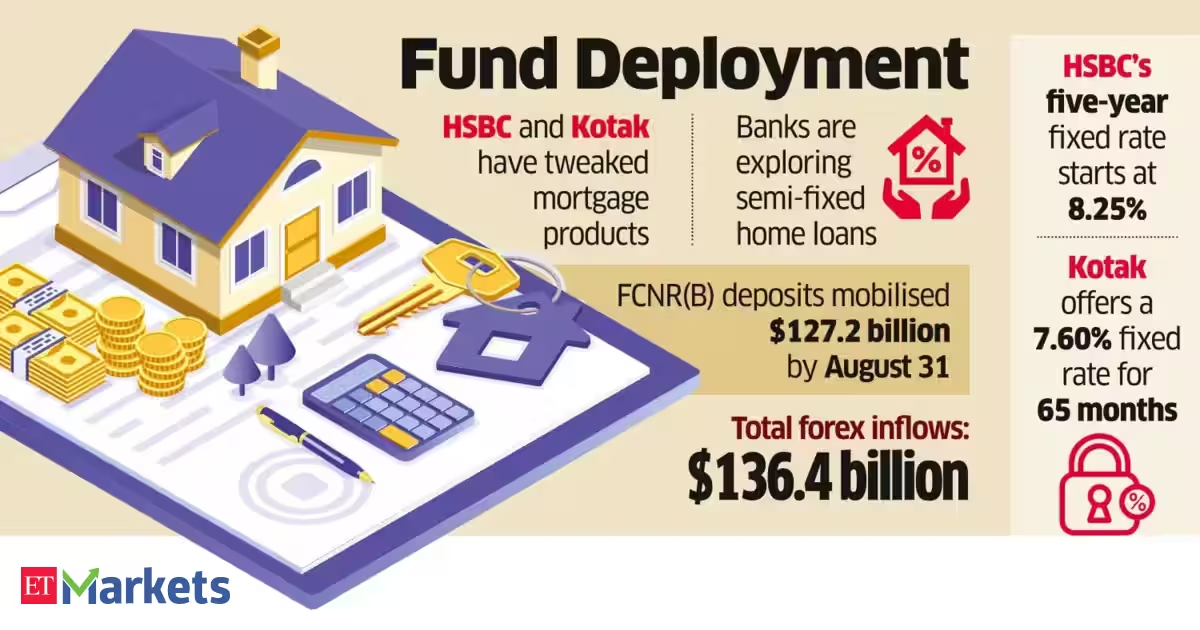
Banks are looking at semi-fixed home loans to deploy a surge in surplus liquidity following a record mobilisation of funds through the RBI’s FCNR(B) scheme, while protecting lending margins amid uncertainty over interest rates.
Read more: India’s bank liquidity surplus hits all-time high riding flood of dollar deposits
The special swap facility mobilised $136.4 billion in forex-inflow programs by August 31, including $127.2 billion through FCNR(B) deposits.
 ET Bureau
HSBC is offering such a product, with its three-year fixed option starting at 7.50% and a five-year fixed option at 8.25%, before switching to the prevailing floating rate.

Read more: Record FCNR (B) inflows as banks mobilise $127 bln
After the fixed rate period of three and five years, the bank will move customers to prevailing repo-rate at the time of roll-over and margin as communicated at the time of loan disbursement. Similarly, Kotak Bank is offering hybrid home loans for up to 65 months during which their interest rate and EMI remain unchanged even if the Repo Rate rises. The home loan has a fixed interest rate of 7.60% for 65 months, thereafter it will be linked to the prevailing rate.Traditionally, excess funds could be invested in government securities.
‘Risk Mitigation’
“For banks, the attraction is less about betting on the direction of rates and more about putting surplus money to work while locking in a spread,” said a bank executive. “Banks will look to deploy part of the sum into government securities but those assets carry marked-to-market risks when yields move.”

This assessment comes amid concerns the foreign currency non-resident-bank (FCNR-B) and other forex inflow programmes may have a high cost for the central bank, stemming largely from hedging and liquidity management expenses.
The RBI is, however, expected to earn good returns when these record inflows are deployed in US treasuries that have seen a sharp rise in interest rates, which would offset anticipated costs for the central bank, said the people cited above, setting aside concerns by a section of economists that hedging costs could eventually crimp future central bank surplus transfers to the government.
The investment yield on 52-week US Treasury bills was 4.14% a year as on August 31, 2026, they said. Robust flows are also expected to reduce intervention costs for the central bank to manage currency volatility, as the record proceeds are expected to calm the markets.
Creating Buffer
These flows carry two costs for the central bank: the cost of absorbing excess liquidity from dollar inflows (sterilisation cost), and the cost of exchange rate risk.
Economists believe the first task is an immediate priority, while in the medium term, the RBI will have to create a buffer for the dollar debt that must be repaid within a fixed period. The 3% hedging costs, some economists estimate, could cost the RBI up to Rs 36,000 crore.
“The swap costs that RBI will bear on the dollar inflows could come to about 3% of approximately the Rs 12 lakh crore collected – or about Rs 36,000 crore – that will be reduced from the RBI’s income in the next three to five years,” said Madan Sabnavis, chief economist, Bank of Baroda. “The contingent risk buffer (CRB) of the RBI will also increase as the balance sheet of the central bank increases, which also means that we could see a lower transfer of surpluses to the government.”
The 2013 Precedent
The CRB is a reserve pool of funds set aside from the central bank’s annual profits to cover potential monetary, financial stability, and operational risks. In 2025-26, the CRB threshold was 6.5% of the total balance sheet size of the RBI.
However, some economists believe that just like in 2013, when India had tapped into the diaspora to shore up its currency through the so-called taper tantrum, the key for the RBI to walk away without much stress on the rupee would be the return of capital inflows.
The rupee had plunged to a then record low of Rs 68.85 per dollar in 2013, but strong portfolio inflows ensured the currency recovered close to Rs 61 per dollar in 2014. Although the rupee had weakened to Rs 67 per dollar by the time the three-year swap matured in 2016, a stronger forex kitty ensured the RBI was in a better position to pay off the debts.
The central bank, however, may face rupee losses if the Indian currency depreciates more than expected when these deposits mature.
Policymakers, while accepting the risk, believe there are chances the rupee may appreciate as it happened in 2013 following a similar scheme, and the central bank may even gain.
Any rupee loss to RBI may be partly or fully offset, or even more than offset, by the returns earned from deploying the foreign currency assets in US treasuries, said one of the people cited above.
Liquidity Absorption
Separately, the excess liquidity due to these flows is seen at around Rs 5-7 lakh crore over the next six months. Policymakers believe the economy can easily absorb this liquidity given high growth, and the central bank may not need to absorb it significantly.
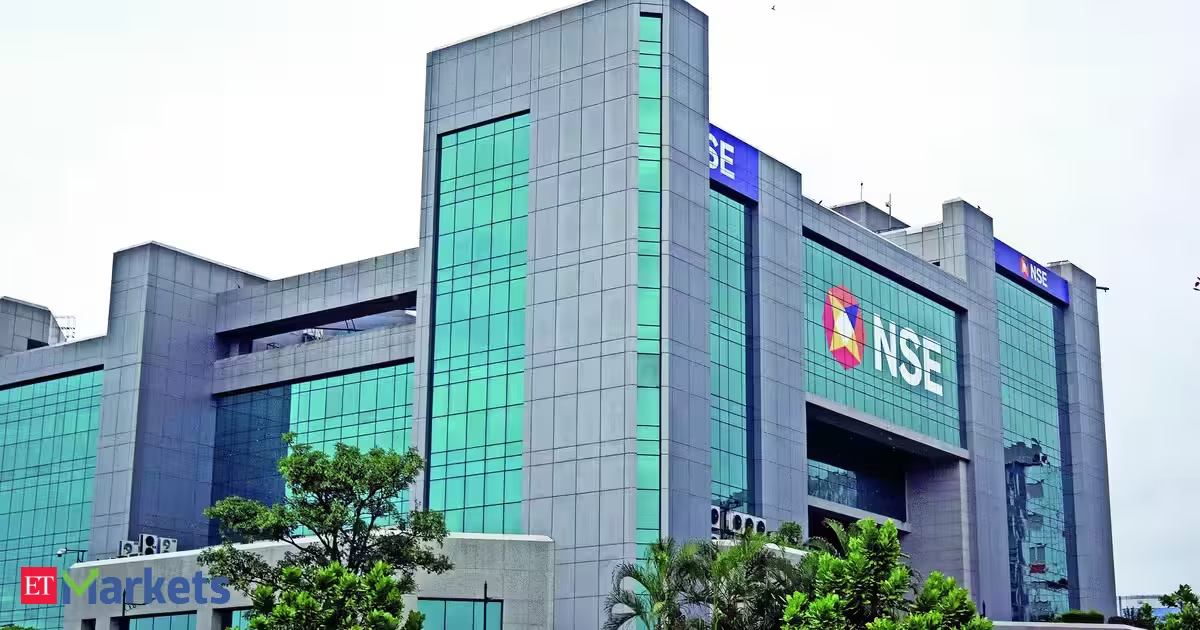
The proposed NSE IPO is expected to garner as much as ₹31,000 crore, making it the country’s second-biggest IPO – next only to the proposed initial share sales by Jio Platforms. The nearly ₹28,000-crore IPO by Hyundai Motor India, launched in October 2024, remains the country’s biggest concluded IPO to date.
Last week, Sebi Chairman Tuhin Kanta Pandey said on the sidelines of an event in Mumbai that the regulator was ‘close’ to giving its approval to the NSE IPO.
Read more: Up to 290% gains! SBI, Federal Bank make massive windfall as Arcil’s Rs 733-crore IPO hits D-Street
The country’s biggest stock exchange had filed on June 18 the draft red herring prospectus (DRHP) for its initial public offering . The offering comprises an offer for sale of 148.91 million shares to be offloaded by some existing shareholders.
The case relates to the alleged lapses in high-frequency trading offered through the exchange’s colocation facility that allegedly gave some entities preferential access.
The market regulator had in July accepted the National Stock Exchange of India’s application under the settlement proceedings regulation for a settlement amount of ₹1,491 crore. NSE said the capital markets regulator granted in-principle approval to settle certain past regulatory lapses, subject to the payment of ₹1,491 crore.The NSE had filed the settlement application of ₹1,224 crore to close the market regulator’s pending appeal in the Supreme Court in the co-location facility case. The NSE had also filed another application for a settlement amount of about ₹268 crore to another pending appeal in the co-location facility-related dark fibre case. However, the co-location case pending against NSE’s former managing director and chief executive officer Chitra Ramkrishna, and others will continue and will be decided separately, a bench led by Justice JB Pardiwala said. It disposed of Sebi appeals challenging the Securities Appellate Tribunal orders that set aside the market regulator’s disgorgement directive in the co-location and dark fibre cases.
Sebi’s 2019 order had imposed a ₹625 crore disgorgement penalty on the NSE. SAT had set aside the disgorgement order in January 2023 and instead imposed a ₹100 crore penalty on the exchange for lack of due diligence in following norms while offering colocation.
It said the stock exchange did not make any illicit gain in the colocation case and there was no finding of fraud, unfair trade practice or collusion against them.
The NSE launched the colocation facility in 2009, allowing traders and brokers to establish their IT servers within its premises for a fee.

Billionaire-backed BCI seeks food security role

Term Labs recovers fixed-rate positions after $8.5M governance attack

Why Dolly Parton Kept Her Cancer Battle Private





-

 Fashion6 days ago
Weekend Open Thread: Maeve – Corporette.com
-

 Crypto World1 day ago
CLARITY Act could advance within weeks, Atkins says
-

 Business6 days ago
Onto Innovation Stock: AI’s Next Bottleneck Is Yield (NYSE:ONTO)
-

 Crypto World6 days ago
Bitcoin price tests $82K resistance as Brandt stays long
-
 Tech5 days ago
Hugging Face built a $4.5 billion empire on free AI models. Now Nvidia is buying it for $12.9 billion
-

 Business6 days ago
iPhone 18 Pro Pre-Orders Could Shift to Saturday as Apple Reportedly Avoids September 11 Anniversary
-

 Crypto World2 days ago
Elon Musk Says Grok 4.7 Lands in 10 Days and Will Beat Every Model
-
 Entertainment7 days ago
‘Adults’ Creators Break Down Season 2’s Most Shocking Moments and Tease a Potential Season 3
-

 News Videos5 days ago
Charlie Munger on Robinhood: No one should believe that Robinhood’s trades are free
-

 Tech6 days ago
PaperCut releases second emergency patch for exploited flaws
-
 Crypto World2 days ago
Bitcoin slips below $77.5K as macro pressure offsets ETF inflows
-

 Crypto World21 hours ago
Kalshi seeks CFTC approval for WTI perpetual
-

 Tech5 days ago
Tamagotchi Ring Takes the 30-Year Digital Pet and Places it on Your Finger
-

 Tech5 days ago
As the influencer economy drives retail sales, Seattle startup raises $22M to play matchmaker
-

 News Videos5 days ago
News kii Crypto ugu danbeeyey & Suuqa oo dhaqaaqey
-

 Business6 days ago
Apple Confirms September 9 iPhone Launch Event as Tim Cook Prepares to Hand CEO Reins to John Ternus
-
 NewsBeat5 days ago
Trump posts AI video of ‘Lake America’ being protected by an army of bequiffed ‘Donald Ducks’
-
 Entertainment4 days ago
Taylor Swift Reportedly ‘Frustrated’ With Travis Kelce After ‘Short’ Honeymoon
-
 Business2 days ago
Oil Price Today (September 2): Crude oil nears $97 as war tensions escalate. Will it hit $100 again?
-
 Entertainment6 days ago
Kendall Jenner’s Circle Concerned About Jacob Elordi Romance
You must be logged in to post a comment Login