
Business
Public trust in politicians drops amid voter cynicism




Brent crude futures rose 15 cents, or 0.2%, to $95.67 a barrel at 0100 GMT, while U.S. West Texas Intermediate crude futures were up 26 cents, or 0.3%, at $91.56.
On a weekly basis, Brent rose 7.1% and WTI was 9.8% higher, set for the highest gains since the week ended July 20.
U.S. attacks this week that killed and wounded dozens, including Iranian civilians, marked the fiercest clashes between the two countries since July.
The war, which began with U.S.-Israeli strikes at the end of February, is now in its seventh month.

Israeli Defence Minister Israel Katz renewed warnings that Israel would “cripple” Iran’s military and civilian infrastructure, including energy facilities.
U.S. Vice President JD Vance told reporters on Thursday that Washington does not plan to hold talks with Iran unless Tehran stops attacking commercial shipping in the Strait of Hormuz.Capping oil’s advance, however, Russian President Vladimir Putin said there remained a path to a deal to end the war in Ukraine, adding that both the U.S. and China were prepared to support a peace settlement.
Meanwhile, Iran expanded its list of vessels it deems non-compliant and subject to fines, confiscation or detention if they attempt to transit the strait. Iraqi ships remain among the few vessels Tehran has cleared to pass through Hormuz.
Iraq increased its oil exports to around 2.34 million barrels per day in August from about 1.35 million bpd in July, two Iraqi energy officials said on Wednesday, with September exports also expected to increase as heavy discounts and Iranian approvals for Iraqi tankers encouraged buyers.

Operator
Good afternoon, ladies and gentlemen. Thank you for standing by. Welcome to Mama’s Creations, Inc. Second Quarter Fiscal 2027 Earnings Conference Call. [Operator Instructions] This conference is being recorded today, Thursday, September 3, 2026, and the earnings press release accompanying this conference call was issued after the market closed today. On our call today is Mama’s Creations Chairman and CEO, Adam L. Michaels, and CFO, Anthony Gruber. Before we get started, I’d like to note that some of the statements on this call will be forward-looking statements that reflect management’s current expectations about future operating and financial results. Although management believes their expectations and assumptions are reasonable, they remain subject to significant risks and uncertainty, and actual results for future periods may differ materially from what is stated or implied during today’s call.
For more information, please refer to the forward-looking statement section in today’s press release and the risk factors disclosed in the company’s most recent Form 10-K and any subsequent reports it files with the SEC. Please also note that today’s call will include a discussion of adjusted EBITDA, which is a non-GAAP financial measure. Important information, including required disclosures containing a reconciliation to the most directly comparable GAAP measure, is also detailed in today’s press release. At this time, I’d like to turn

Missouri statehouse candidate accused of trying to plant drugs on opponent
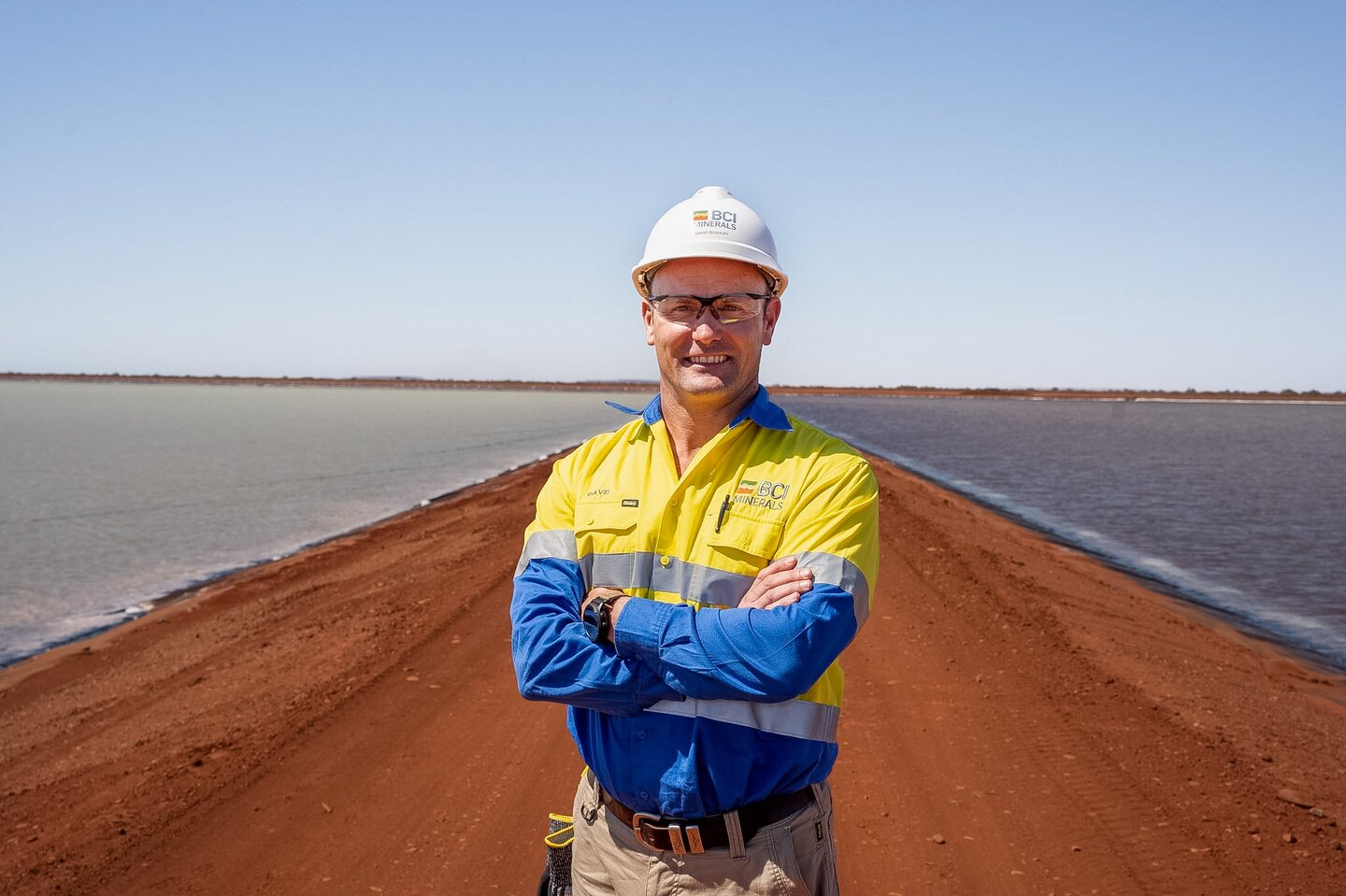
BCI Minerals says a by-product from its $1.48 billion expansive salt operation could aid Australian food security after fertiliser prices soared in the fallout of the Middle East conflict.

A Guide to Owning Bonds When They’re Selling Off
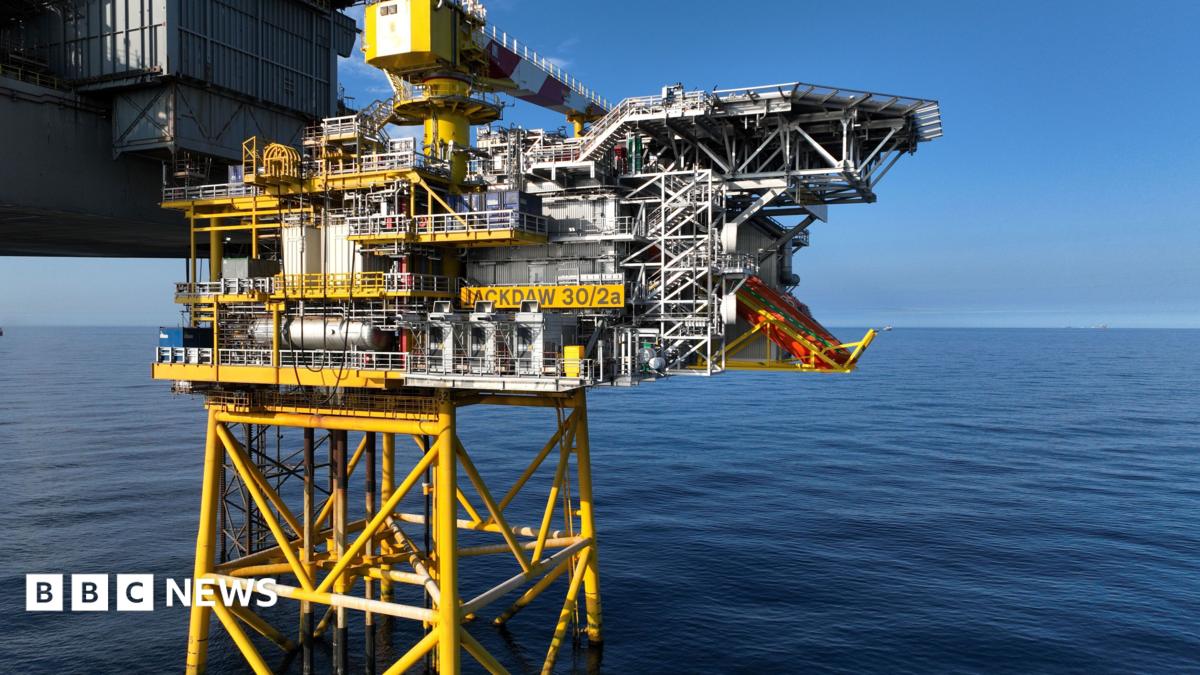
But industry bodies argue that starting production at the sites would provide much-needed jobs and improve the UK’s energy security as overseas conflicts threaten supply.
Advocates of the project also told the BBC that Jackdaw’s output is critical to extending the life of other North Sea infrastructure including Shearwater – a large offshore oil and gas production hub that processes hydrocarbons before piping them to coastal refineries and terminals.
Adura said that if approval comes in September, the field could start delivering gas to UK homes by this winter as the construction is “99% complete”.
A public consultation on the future of Jackdaw and another new oil field, Rosebank, closed in August and the decision now rests with Energy Secretary Miatta Fahnbulleh.
Speaking in the House of Commons on Thursday, Energy Minister Kate White said that the energy secretary would make separate decisions on the two sites, but gave no indication of the timings of an announcement.
“The process ended in August, and the Secretary of State will be taking those decisions in due course,” she told MPs.
Prime Minister Andy Burnham recently said there needs to be a “pragmatic approach” towards domestic oil and gas.
“We won’t be able to stop using oil and gas for some time. That’s just a fact,” he said.
“The question is whether we can accelerate use of it so that we pay for the transition.”
Business
Earnings call transcript: PYC Therapeutics posts Q3 2026 EPS beat as trial data lifts outlook

Earnings call transcript: PYC Therapeutics posts Q3 2026 EPS beat as trial data lifts outlook

China’s humanoid robot manufacturers now dominate 97% of global shipments, establishing an early leadership advantage over U.S. competitors. This dominance highlights China’s rapid advancements in robotics technology and its growing influence in the global market. The trend underscores shifting technological power dynamics, with Beijing solidifying its position as a key player in humanoid robot development and deployment worldwide.
Humanoid robots are revolutionizing the technological landscape in China, positioning the country at the forefront of innovation. These advanced machines are capable of simulating human behaviors, including speech, gestures, and decision-making processes. Chinese tech companies and research institutions have invested heavily in developing sophisticated robots that can perform tasks ranging from customer service to healthcare support. This focus has enabled China to make significant technological breakthroughs, gaining a competitive edge in the global robotics industry.
The deployment of humanoid robots in various industries has bolstered China’s economy and technological reputation. In public spaces, such as malls and airports, these robots assist visitors, providing information and guidance efficiently. Moreover, in healthcare, humanoid robots are helping with patient care and rehabilitation. Such innovations showcase China’s commitment to integrating cutting-edge robotics into everyday life, enhancing efficiency and demonstrating technological leadership.
By advancing humanoid robotics, China is not only streamlining services but also driving the future of automation and AI. This progress positions China ahead in the fierce global tech race, attracting investments and talent from around the world. As these technologies evolve, China’s dominance in the robotics sector is likely to expand, reaffirming its status as a global tech powerhouse.

Diamond Hill Capital Management, Inc. is a wholly owned subsidiary of Diamond Hill Investment Group, Inc. Diamond Hill Investment Group is a publicly traded company, and its shares trade on the NASDAQ (Ticker: DHIL). Note: This account is not managed or monitored by Diamond Hill Capital Management, and any messages sent via Seeking Alpha will not receive a response. For inquiries or communication, please use Diamond Hill Capital Management’s official channels.

Asia continues to generate roughly half of global GDP on a purchasing-power-parity basis, though trade growth forecasts from the WTO and ADB point to moderation in 2026. Analysts argue the region’s growth is no longer automatic, requiring reform and strategic positioning, with Thailand and its ASEAN neighbors serving as a test case. Key themes include unequal AI-driven productivity gains between advanced and developing Asian economies, and Thailand’s challenge converting large data-center and AI-related foreign investment into broader economic benefits amid job losses in older sectors.
The piece also examines deepening intra-regional trade integration, Thailand’s strategic recalibration toward China, tightened governance around foreign investment rules, and positioning in sectors like semiconductors and AI, anchored by projects such as EECiti and the National Semiconductor Roadmap. It notes financial-sector developments including tokenized deposits and stablecoins, and highlights downside risks such as trade tensions, geopolitical pressure, China’s property market, and workforce displacement, framing Thailand’s coming years as a key indicator of regional success.
Asia still accounts for roughly half of global GDP on a purchasing-power-parity basis, and multilateral forecasters expect that share to keep inching up even as headline growth rates cool. The World Trade Organization sees Asia-Pacific trade growth slipping to 3.8 percent in 2026 from 4.1 percent, and the Asian Development Bank’s most recent outlook points to a similar moderation across the region.
None of that changes the underlying story: Asia remains the world’s principal growth engine. What has changed is that the opportunity is no longer automatic. It has to be seized, through reform, positioning, and the willingness to move before the window narrows. Thailand and its ASEAN neighbours offer one of the clearer test cases for how that plays out on the ground.
The productivity gap is the real battleground
The most consequential divide in Asia’s 2026 growth story is not between fast and slow economies but between those ready to absorb AI-driven productivity gains and those that are not. ADB’s modelling finds that generative AI lifts GDP growth earlier and more strongly in advanced economies, while gains in developing Asia and the Pacific arrive smaller but more durable, held back by constraints in computing capacity, workforce skills, innovation ecosystems, and data governance. Closing that readiness gap, rather than waiting for the technology to diffuse on its own, is where policymakers have the most leverage.
Thailand’s own experience illustrates both the opportunity and the risk of moving too slowly on distribution. The country secured $43.6 billion in first-half 2026 investment, concentrated in data centres, cloud infrastructure, and AI-adjacent electronics manufacturing. But the Bank of Thailand has simultaneously flagged that the country’s high-income ambitions require a shift toward higher-value industries, warning that large digital and data-centre inflows are struggling to spread their benefits across the wider economy while older sectors such as automotive parts and garments shed jobs under Section 75 suspensions. The policy task is converting foreign direct investment into local supply chains and skilled employment, not simply attracting the capital in the first place.
Deepening regional integration over global dependence
With global trade policy still unsettled, ADB’s 2026 economic integration report urges policymakers to deepen and better implement free trade agreements, capitalise on cross-border digital investment, and improve financial connectivity as a hedge against external volatility. The data backs the direction of travel: intra-regional trade dependence in Asia rose from 56.3 percent in 2023 to 57.2 percent in 2024, according to the Boao Forum’s Asian Economic Outlook, with China and ASEAN identified as key contributors to that stability.
For Thailand, this integration push is inseparable from its recalibration toward China as both an investment source and a strategic hedge, formalised through the AI cooperation agreement signed in mid-2026 and reflected in robotics and semiconductor capital flows into the Eastern Economic Corridor. It also underscores why governance quality has become a competitiveness issue in its own right: the Department of Business Development’s tightened rules on foreign nominee companies, which extend ownership scrutiny across a company’s entire lifecycle rather than just at incorporation, signal to legitimate investors that the rules of engagement are being cleaned up even as they close a route that badly-behaved capital had been using.
Where Thailand fits in the named growth sectors
Across ADB, Boao, and private-sector outlooks, the same cluster of sectors keeps recurring as the drivers of Asia’s next cycle: semiconductors, artificial intelligence, green energy, digital health, and electronics. Thailand’s positioning here is deliberate rather than incidental. The country’s pivot from Detroit of the East to regional linchpin rests on the National Semiconductor Roadmap 2050, the EEC’s digital cluster strategy, and a data-centre investment framework designed to make Thailand a node that regional supply chains route through by reliability rather than by cost.
The EECiti project is the physical anchor of that ambition. Now in its most concrete phase, with land compensation underway and a public-private partnership structuring the 2,339-hectare smart city between Pattaya and U-Tapao, EECiti is being framed by EEC officials as the administrative and commercial heart of the corridor rather than another industrial estate. Whether the ambition converts into durable economic architecture depends on infrastructure delivery timelines, whether the semiconductor workforce pipeline can scale fast enough, and whether the political continuity needed for a twenty-five-year industrial strategy survives Thailand’s domestic politics.
Financial deepening as the connective tissue
Asia’s growth remains substantially demand-led, powered by young populations and rising middle classes, but converting that consumption strength into durable productivity gains requires financial-sector deepening alongside it. This is where the region’s digital finance experimentation, including the rollout of tokenised deposits and regulated stablecoins across APAC financial centres, matters beyond the fintech trade press.
Multi-rail systems in which tokenised deposits, stablecoins, and traditional banking coexist are increasingly framed by regional policymakers as infrastructure for cross-border trade and settlement, not speculative instruments, with interoperability and shared standards taking priority over any single dominant model. Where Thailand positions itself in that build-out, relative to Hong Kong and Singapore’s more advanced regulatory frameworks, will shape how much of the region’s digital-asset capital flows through Bangkok rather than around it.
The risk counterweight
None of this is a guaranteed trajectory. ADB flags renewed trade tensions, financial market volatility, geopolitical pressure, and a worse-than-expected deterioration in China’s property market as the principal downside risks to the regional outlook. For Thailand specifically, the same forces that have exposed the country to scrutiny over transshipment practices and territorial-claims-adjacent investment risk remain live variables, as does the distributional question of what happens to the workforce displaced from automotive and light manufacturing as capital shifts toward capital-intensive data centres and semiconductor fabrication.
The Thailand test case
Seizing Asia’s next growth cycle is less a matter of one large bet than of running several structural reforms in parallel fast enough to outrun the drag from tariffs and China’s property overhang: AI readiness, regional integration, sector positioning, and financial-market depth, all while managing the distributional costs of the transition. Thailand’s experience over the next two to three years, as EECiti moves from blueprint to construction and the semiconductor roadmap’s workforce targets are tested against reality, will be one of the clearer regional readings of whether that combination can actually be pulled off.

Tawkify Brings ‘Perfect Match’ Concept To Life In Las Vegas Weekend

Financial Audit’s Messiest Affair

Ayrshire welcomes UK’s ‘Forrest Gump’ to help Britain reconnect with local food and communities





-

 Fashion6 days ago
Weekend Open Thread: Maeve – Corporette.com
-

 Crypto World1 day ago
CLARITY Act could advance within weeks, Atkins says
-

 Business6 days ago
Onto Innovation Stock: AI’s Next Bottleneck Is Yield (NYSE:ONTO)
-

 Crypto World6 days ago
Bitcoin price tests $82K resistance as Brandt stays long
-
 Tech5 days ago
Hugging Face built a $4.5 billion empire on free AI models. Now Nvidia is buying it for $12.9 billion
-

 Business6 days ago
iPhone 18 Pro Pre-Orders Could Shift to Saturday as Apple Reportedly Avoids September 11 Anniversary
-

 Crypto World2 days ago
Elon Musk Says Grok 4.7 Lands in 10 Days and Will Beat Every Model
-
 Entertainment7 days ago
‘Adults’ Creators Break Down Season 2’s Most Shocking Moments and Tease a Potential Season 3
-

 News Videos5 days ago
Charlie Munger on Robinhood: No one should believe that Robinhood’s trades are free
-

 Tech6 days ago
PaperCut releases second emergency patch for exploited flaws
-
 Crypto World2 days ago
Bitcoin slips below $77.5K as macro pressure offsets ETF inflows
-

 Crypto World22 hours ago
Kalshi seeks CFTC approval for WTI perpetual
-

 Tech5 days ago
Tamagotchi Ring Takes the 30-Year Digital Pet and Places it on Your Finger
-

 Tech5 days ago
As the influencer economy drives retail sales, Seattle startup raises $22M to play matchmaker
-

 News Videos5 days ago
News kii Crypto ugu danbeeyey & Suuqa oo dhaqaaqey
-

 Business6 days ago
Apple Confirms September 9 iPhone Launch Event as Tim Cook Prepares to Hand CEO Reins to John Ternus
-
 NewsBeat5 days ago
Trump posts AI video of ‘Lake America’ being protected by an army of bequiffed ‘Donald Ducks’
-
 Entertainment4 days ago
Taylor Swift Reportedly ‘Frustrated’ With Travis Kelce After ‘Short’ Honeymoon
-
 Business2 days ago
Oil Price Today (September 2): Crude oil nears $97 as war tensions escalate. Will it hit $100 again?
-
 Entertainment6 days ago
Kendall Jenner’s Circle Concerned About Jacob Elordi Romance
You must be logged in to post a comment Login