
Tech
Audacity’s New Look Is Finally Here, Along With Its Largest Feature Update In Years



Audacity released its Version 4.0 update today, bringing a fresh coat of paint and a number of new features for the popular free and open-source audio editor. This is the biggest update since Version 3.0 caused a ruckus over five years ago, and users have been waiting to see how radically the software would change with this latest release. But while the update includes plenty of departures from the way Audacity has traditionally worked, its Muse Group developers seem to have focused on maintaining continuity for users who don’t want to relearn the program.
The biggest change most users will immediately notice is the new look, which finally gives Audacity a dark mode. The interface is more playful overall, with colored audio clips and more vibrant accent colors on UI elements like gain sliders. If it’s not to your liking, don’t panic. The classic Audacity look has been preserved as an option which can be enabled during setup, so you never even need to see the new design if you don’t want to.
New editing workflows are here, too. Non-destructive editing, first explored in Version 3.2, is greatly expanded. Clips can finally overlap, and trimming back will reveal the covered-over audio if you go too far. Multiple clips can be selected and trimmed at once by dragging a single handle. They can also be grouped for complex edits.
Anyone who has used the automation features inside of Ableton Live or ProTools will instantly recognize the new envelope tool in Audacity 4. Users can click to create a draggable control point for things like gain. Waveforms will show changes on-screen in real-time, so you can see, for example, whether you’re redlining one portion of a clip.
There’s also a new splitting tool for one-click clip cutting. It should feel familiar to anyone who uses other creative software (not just audio software) as everything from Adobe Premiere to Logic Pro include a similar capability. It’s yet another way in which Audacity 4 feels like a leap forward for what has traditionally been a basic audio editor.
You can now edit down to the sample level by zooming in far enough on a clip, which is a powerful ability when one of your clips is almost perfect but requires fine micro-adjustments. Each track also has an accompanying meter now, so you can figure out which of your tracks is clipping the mix.
One of the most controversial changes here is likely to be the removal of sync-lock, which ensured that multiple clips could be edited in tandem. However, new keyboard shortcuts have been added to replicate that functionality.
Most of these editing changes will feel familiar to those who’ve used fully-featured DAWs like Ableton Live 12 or ProTools. Given that most of those programs cost hundreds of dollars or more, it’s great to see Muse bringing them to Audacity for free. There are plenty of other changes in this release, such as more robust plugin support, and you can find deeper dives on the Audacity 4 webpage or in an accompanying YouTube video.

Tech
Klipsch Reference Premiere Compact Subwoofers Cut the Cabinet Size Without Shrinking the Drivers
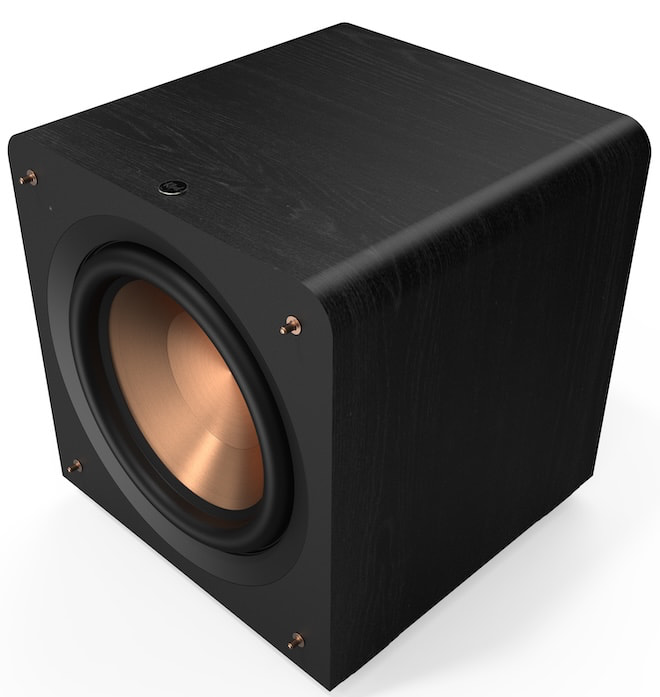
Subwoofers create an obvious problem for anyone who wants serious low-frequency output but does not have a dedicated theater large enough to hide a small refrigerator in every corner.
Klipsch knows something about that problem. Its existing Reference Premiere subwoofers deliver considerable output and extension, but the larger RP-1400SW and RP-1600SW are not remotely discreet. The latter measures more than 27 inches deep and weighs almost 111 pounds. Nobody is slipping one behind a ficus and hoping the family fails to notice.
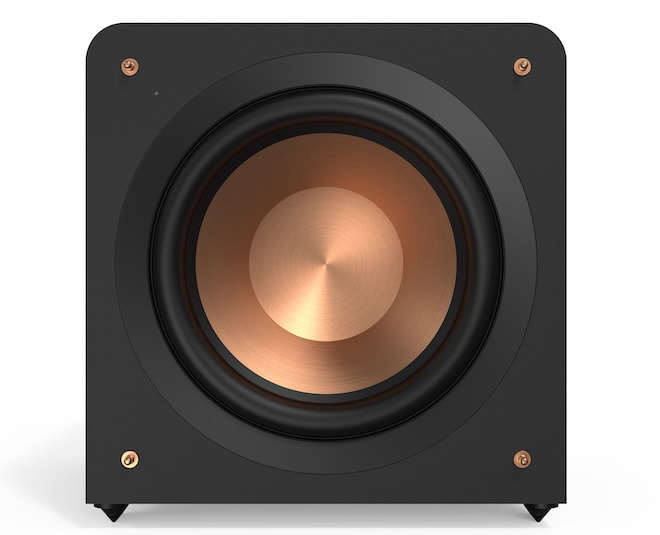
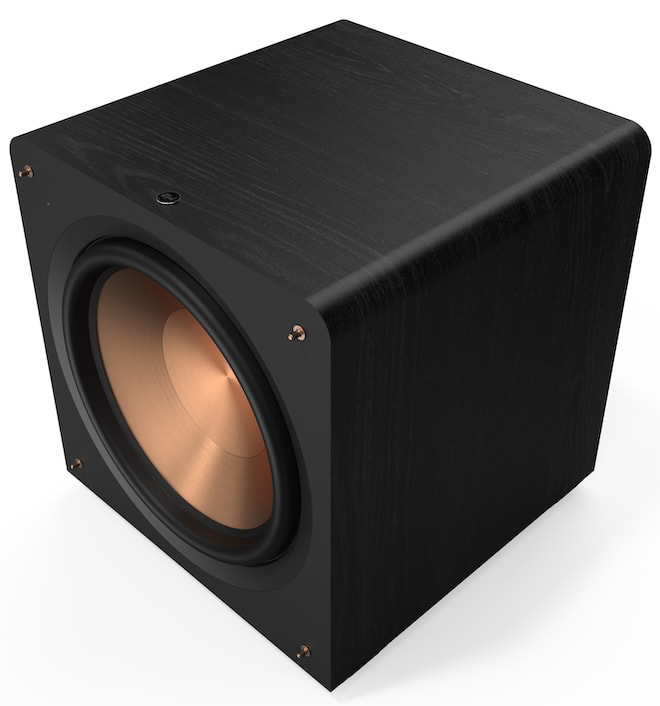
The new Klipsch Reference Premiere Compact Subwoofers attack that issue without simply fitting smaller drivers into smaller boxes. Introduced at Audio Advice Live 2026, the RP-1200CSW, RP-1400CSW, and RP-1600CSW use 12, 14, and 16-inch front-firing Cerametallic woofers respectively, with sealed acoustic-suspension enclosures that Klipsch says occupy approximately half the footprint of its full-size Reference Premiere models.
We already covered the RP-1600CSW as part of Klipsch’s Reference Premiere III home theater demonstration at Audio Advice Live. The more interesting story is that it belongs to an entirely new three-model family that gives buyers another option besides accepting one of Klipsch’s enormous ported cabinets.
Related Reading: Klipsch Unveils Reference Premiere III Speakers at Audio Advice Live 2026
What Makes the Klipsch Compact Subwoofers Different?
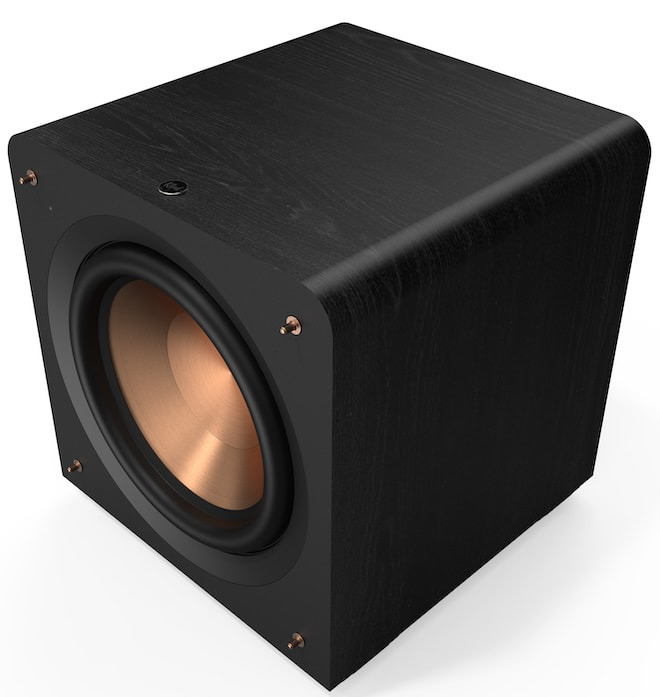
The biggest change is the enclosure.
Klipsch’s RP-1200SW, RP-1400SW, and RP-1600SW use bass-reflex cabinets with large front-firing Aerofoil slot ports. The new CSW models eliminate the port entirely and move to sealed acoustic-suspension enclosures.
That allows Klipsch to substantially reduce cabinet dimensions without reducing the nominal woofer sizes. More importantly, the compact models retain the same amplifier power ratings as their corresponding full-size versions: 400 watts RMS for the 12-inch model, 500 watts for the 14-inch, and 800 watts for the 16-inch.
Based on Klipsch’s published width and depth measurements, the reduction in actual floor area works out to roughly 45 to 48 percent, depending on the model. In other words, the “half the footprint” claim is not marketing origami.
There is, however, no free lunch in acoustics.
The ported RP-1200SW is rated for 121 dB maximum output while the sealed RP-1200CSW is rated at 118 dB. The RP-1400SW drops from 124 dB to 121 dB in CSW form, while the RP-1600SW’s 125.5 dB specification becomes 123 dB with the compact sealed model.
That is the tradeoff: less maximum acoustic output in exchange for a much smaller cabinet.
What makes the specifications particularly interesting is that low-frequency extension remains extremely ambitious. The RP-1600CSW carries a claimed 14.5 Hz lower limit at ±3 dB. The RP-1400CSW is rated to 15 Hz, while the RP-1200CSW reaches a claimed 17 Hz.
Those are manufacturer specifications rather than independent measurements, but on paper the compact models surrender considerably more in maximum output than they do in bass extension.
Klipsch RP-1200CSW, RP-1400CSW and RP-1600CSW Specifications
| Model | RP-1200CSW | RP-1400CSW | RP-1600CSW |
|---|---|---|---|
| Woofer | 12-inch Ultra Long Throw Cerametallic | 14-inch Ultra Long Throw Cerametallic | 16-inch Ultra Long Throw Cerametallic |
| Enclosure | Sealed Acoustic Suspension | Sealed Acoustic Suspension | Sealed Acoustic Suspension |
| Amplifier | 400W RMS / 800W Peak | 500W RMS / 1,000W Peak | 800W RMS / 1,600W Peak |
| Frequency Response | 17 Hz to 160 Hz ±3 dB | 15 Hz to 180 Hz ±3 dB | 14.5 Hz to 175 Hz ±3 dB |
| Maximum Output | 118 dB | 121 dB | 123 dB |
| Dimensions H x W x D | 15.73 x 14.84 x 16.38 inches | 17.48 x 16.6 x 16.6 inches | 19.22 x 18.33 x 18.33 inches |
| Weight | 47.7 pounds | 59.7 pounds | 78.8 pounds |
| MSRP | $849.99 | $1,099.99 | $1,499.99 |
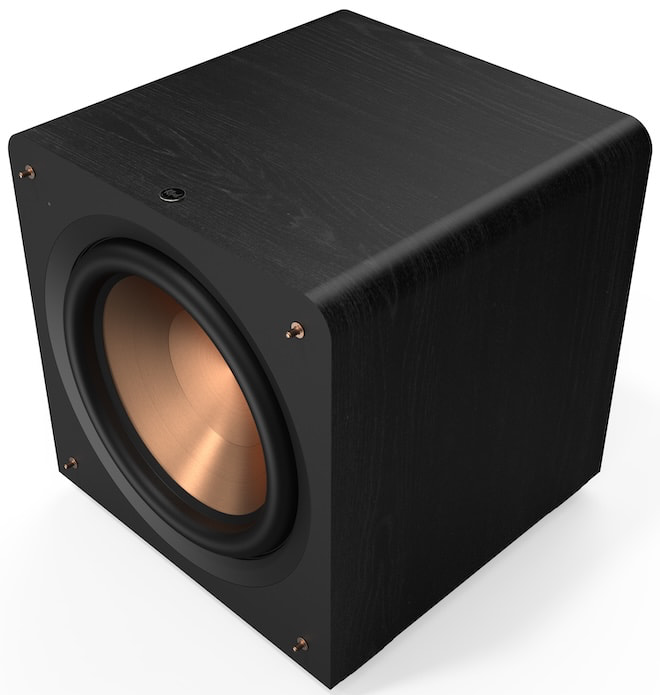
All three cabinets use MDF construction with Klipsch’s scratch-resistant Ebony vinyl finish, rounded edges, rubber feet, copper accents, and removable floating fabric grilles.
Connectivity Without an App Taking Over Your Life
Rear-panel controls provide adjustable crossover, phase, and gain, while connectivity includes dual RCA/LFE line inputs and a dedicated port for the optional Klipsch WA-2 Wireless Subwoofer Kit.
Klipsch also allows the RCA and wireless connections to operate simultaneously. That could be genuinely useful in a room containing both a two-channel music system and a separate home theater setup because the same subwoofer can remain connected to both.
There is no smartphone control app, onboard parametric EQ system, or balanced XLR input specified. That makes the Klipsch approach considerably more conventional than some competitors, although anyone using Dirac Live, Audyssey, ARC Genesis, or another room-correction platform through an AVR or processor may not consider that a major omission.
And because somebody at Klipsch clearly owns This Is Spinal Tap, the gain control goes to 11.
No, that does not create another decibel from thin air. But resisting the joke would apparently have violated company policy.
Three Main Competitors
SVS SB-2000 Pro
The SVS SB-2000 Pro is probably the most obvious direct competitor to the $849.99 RP-1200CSW. It also uses a sealed 12-inch configuration, with a 550-watt RMS amplifier and a compact enclosure that makes it suitable for both two-channel systems and home theaters where floor space matters.
SVS also provides something Klipsch does not: extensive DSP adjustment through its smartphone app, including parametric EQ, room-gain compensation, polarity, crossover settings, and presets.
The Klipsch takes the more traditional approach and counters with its WA-2 wireless option and a claimed 17 Hz lower-frequency limit. Buyers who want app-based tuning will probably gravitate toward SVS, while Klipsch is clearly betting that some customers would rather set the controls once and get back to watching the movie.
HSU Research ULS-15 MK2
The HSU Research ULS-15 MK2 remains one of the more compelling enthusiast alternatives in this price range. Its sealed enclosure contains a larger 15-inch driver driven by a 600-watt continuous amplifier, along with balanced XLR connectivity and adjustable Q control.
At $999, it falls between the RP-1200CSW and RP-1400CSW on price while offering a larger driver and more extensive manual tuning options.
The HSU is less about matching Klipsch aesthetically or disappearing into a living room and more about extracting maximum performance for the money. That has been the company’s calling card for years, and it makes the ULS-15 MK2 particularly relevant for buyers who care more about bass performance than whether their subwoofer matches the copper trim on their loudspeakers.
RSL Speedwoofer 12S
The RSL Speedwoofer 12S presents the Klipsch with a very different challenge because it costs $885, placing it almost directly against the $849.99 RP-1200CSW.
RSL uses a 12-inch driver, a 500-watt RMS / 1,550-watt peak Class D amplifier, and its rear-vented Compression Guide slot-port system rather than a sealed enclosure. In Reference mode, RSL specifies an anechoic frequency response of 16 Hz to 200 Hz ±3 dB, while four DSP modes provide Reference, Music, Movies, and Boundary settings.
An IR remote, speaker-level inputs, adjustable high-pass outputs, and optional wireless connectivity also provide considerable setup flexibility.
There is one rather large catch.
At 22.25 x 18.875 x 22.125 inches and 82 pounds, the Speedwoofer 12S is dramatically larger and heavier than the RP-1200CSW, which measures just 15.73 x 14.84 x 16.38 inches and weighs 47.7 pounds.
That comparison gets directly to the point of the new Klipsch series. RSL offers an enormous amount of subwoofer for essentially the same money, but Klipsch is targeting the buyer who simply does not want that much cabinet occupying the room.
The Bottom Line
The Reference Premiere Compact Subwoofers solve a legitimate problem within Klipsch’s lineup.
The existing RP subwoofers offer serious output for the money, but the cabinets become enormous as you move up to the 14 and 16-inch models. Klipsch has not attempted to disguise that reality with another finish or slightly rounded corners. It changed the enclosure architecture.
Moving to sealed cabinets lets the RP-1200CSW, RP-1400CSW, and RP-1600CSW consume roughly half the floor area while retaining the same nominal driver sizes and amplifier ratings as their ported counterparts. Maximum output falls by several decibels, but Klipsch’s claimed low-frequency extension remains remarkably ambitious.
SVS offers considerably more DSP control, HSU makes a formidable argument on performance per dollar, and RSL delivers an awful lot of bass for almost exactly the same money as the smallest Klipsch. The RP Compact models answer with something all three comparisons help underscore: substantially less cabinet to accommodate.
For buyers with unlimited space, there are plenty of larger subwoofers worth considering. For everyone else, Klipsch has finally recognized that a 16-inch woofer does not necessarily require a cabinet with its own ZIP code.
Price & Availability
The Klipsch Reference Premiere Compact Subwoofers are scheduled to become available in November 2026.
- RP-1200CSW: $849.99 MSRP
- RP-1400CSW: $1,099.99 MSRP
- RP-1600CSW: $1,499.99 MSRP
For more information: klipsch.com
Related Reading:

Unlimited Xbox Cloud Gaming is going away. Starting in November, the service will have monthly limits based on the Xbox Game Pass subscription tier, according to a Microsoft post on Thursday. Cloud gaming hours will be capped at:
- 15 hours for Game Pass Ultimate
- 10 hours for Premium
- 5 hours for Essential
Microsoft said it’s making these changes due to the increased cost of cloud gaming. “Moving to monthly limits allows us to keep offering the service while continuing to invest in its reliability and performance,” the company said in the post. “We understand that for some players the practical result is a higher cost.”
The limited hours will impact 4% of Xbox Game Pass subscribers, Microsoft said. If you fall into that group, you’ll have the option to purchase more cloud gaming time, and it will also be available to gamers without an Xbox Game Pass subscription.
Also see: Gaming Has Never Been Better. So Why Does It Feel Like the Worst Time to Be a Gamer?
Details about how much additional playtime will cost will be revealed in November, but Microsoft did say cloud gaming features will vary by market. However, it’s unclear whether that means it will be priced differently in certain cities or whether there will be throttling to reduce stream quality.
Microsoft also noted that the service change gives Xbox One owners an opportunity to play Xbox Series X and S games without buying a new console, which has gone up in price due to the sharp rise in hardware costs driven by ongoing component shortages. The Xbox division has been hit with setback after setback, starting in May 2025 with the first price hike for the Xbox Series X and S consoles.
A second jump in price for the console came last October, along with a 50% price increase for Xbox Game Pass the following month. Microsoft did reduce the cost of Game Pass subscriptions this past April, but this move to cut cloud gaming hours shows how it’s trying to continue to reduce costs, even after laying off 1,600 employees in the Xbox division and closing four game studios the company owned in July.
Xbox Cloud Gaming was a central part of Microsoft’s This is an Xbox campaign in late 2024 that pushed the idea of gamers using their phones, tablets, laptops and smart TVs as their Xbox through the Xbox app and cloud gaming. The marketing move was to drive more people to subscribe to Xbox Game Pass while also masking disappointing hardware sales for the Xbox Series consoles.
A lack of a proper universal ecosystem across the board due to the absence of an official Xbox app on some platforms, no universal controller options to play the games and an uneven playing experience contributed to the campaign’s failure. It was cited as offending some Xbox employees after Phil Spencer stepped down as the boss of the Xbox division in February.


A former UK competition official has filed a $2.7 billion lawsuit against Apple on behalf of app developers, alleging its App Tracking Transparency rules unfairly disadvantaged third-party apps while favoring Apple’s own advertising ecosystem. Engadget reports: ATT debuted in 2021, ostensibly to give users more control over how much of their activity app developers can track across other apps and websites. The company told Reuters it was “bound by the exact same requirements as all developers.”
However, regulators across Europe including in France, Italy and Poland have investigated ATT. Germany’s competition regulator, the Federal Cartel Office, last month determined that Apple was favoring its own apps over those from external developers. It said the ATT pop-ups Apple used for its services “had the potential to encourage users to give their consent, whereas they had the potential to discourage consent for third-party apps.”
As such, the company agreed to make some changes to how ATT works in the European Union. That follows the French Competition Authority fining Apple $175 million at current rates over ATT last year.


Read more of this story at Slashdot.

If you’ve ever picked a doctor based on online reviews, a new study from Simon Fraser University has some bad news for you.
Apparently, fake clinician reviews generated without using AI read more believable than genuine ones.

So what exactly did this study find?
Researchers reviewed 35,000 physician and dentist reviews collected in India (between 2015 and 2017), including doctors with specialties ranging from family medicine to dermatology. Within that sample, as many as 8,313 reviews were fake. In other words, nearly one in every four reviews wasn’t drafted by an actual patient.
It was either the healthcare providers or the clinic staff curating them. A closer look at a smaller sample of 5,000 reviews revealed the real problem. The fake reviews ran longer than the genuine ones, as they included far more details about symptoms, diagnoses, medications, and treatment.
They also scored higher on trustworthiness and got more upvotes than the real ones. Lead author Aishwarya Deep Shukla explains that real patients rarely want to narrate their own medical history or diagnosis details on a public platform. Fake reviews, by contrast, lack this hesitation.

What can you actually do about it?
While the bad practice didn’t involve generative AI when the data was collected, easy access to chatbots in 2026 is making the situation worse. The same tools that help genuine patients write authentic reviews are also helping bad actors generate them at scale.
The fixes devised by Shukla are simple. Tying reviews to confirmed appointments, offering authenticated-but-anonymous review options, and pushing platforms toward stronger moderation could help curb the spread of fake or AI-generated reviews.
For anyone searching for a new provider right now, here are a few habits that could help. First, try to read as many reviews as possible without focusing on one story. If most of them are of the exact same length and contain the same phrasing or structure, they’re probably not genuine, unless the provider asks their patients to share reviews in a specific format.
Shukla also recommends staying skeptical of reviews that automatically share unusually personal medical details, and not writing off a provider with few or no reviews, since most satisfied patients never bother leaving one. Finally, you should weigh reviews alongside credentials, referrals, and your own direct impressions. Talking to someone who has already been to the facility could also help.
ChatGPT, Claude, Grok, and Gemini all suffered significant service disruptions within roughly the same few-hour window Thursday morning. OpenAI and Anthropic reported elevated errors and later restored service, while Grok remained impaired and third-party monitoring indicated a likely Gemini outage despite no public acknowledgment from Google. Ars Technica reports: Other major Internet services, including Amazon Web Services, Microsoft Azure, and Cloudflare, have not reported any major issues as of press time Thursday, though issue reports on DownDetector did spike somewhat for all three this morning.
While the affected frontier models go down occasionally, having all four experience interruptions in the same short period is practically unheard of. Claude reports 99.4 percent uptime for its services over the last 90 days and last reported a similar three-hour “partial outage” on August 24. OpenAI reports 99.63 percent uptime for ChatGPT and 100 percent uptime for ChatGPT Codex in the same period. ChatGPT’s so-called “Work Mode” reported an hours-long period of “elevated latency” on August 31.
Read more of this story at Slashdot.
Tech
Ultimate Ears WONDERBOOM 4 Packs Fourteen Hours of Wraparound Sound in a Portable Speaker That Floats


Ultimate Ears priced the WONDERBOOM 4 at $99.99 when it shipped a while back, and now, you can snag one for $51.44, which is the number that keeps this little cylinder in every “best cheap portable” argument. You get a squat, fabric-wrapped body about four inches tall that weighs roughly 0.9 pounds. A loop on top takes a carabiner, so it hangs off a pack instead of eating space inside one.
Two 40mm drivers and two passive radiators direct sound in all directions, which is the entire purpose of the spherical shape. Sit it in the center of a table, and no one will have to aim at a single face. Outdoor Boost increases output by a hair for open air. Podcast Mode relies on voices to keep spoken word clear. When you couple a second WONDERBOOM 4, one press doubles the volume, while another splits the mix into a true left-and-right stereo pair. Official pairings remain within the Wonderboom 4 family. Bluetooth has a reported range of 131 feet and can connect to two phones simultaneously.
Sale

Ultimate Ears WONDERBOOM 4 Portable Waterproof Speaker – Blue
- Balanced 360-Degree Sound: The WONDERBOOM 4 portable waterproof Bluetooth speaker features 360-degree sound in a petite package; boosted sound for up…
- Outdoor Boost and Podcast Mode: Engineered for full stereo sound; tap the Outdoor Boost button for outdoor environments; use the new Podcast Mode to…
- 14 Hours of Boom: With a rechargeable battery that lasts throughout the day, this waterproof portable speaker booms on with up to 14 hours of…
IP67 protects against dust and a 30-minute immersion in a meter of water, and the shell floats, which is a characteristic that people remember from a pool day. Ultimate Ears also validates the five-foot drop test. Plastic in the housing contains at least 31% recycled material. None of this transforms it into a boom box, but it does imply that sand, a shower, and a clumsy grip are routine rather than an emergency.

USB-C has finally come in this generation. The rated playtime is 14 hours from a full charge, with around two and a half hours on the wall assuming your adaptor meets the typical specifications. Independent testers have reported longer runtimes at moderate volume and shorter ones when Outdoor Boost and high volume are enabled. Controls include large volume keys, play, pairing, and a mode button. There are no apps, custom equalizers, microphones, or wired jacks. This keeps the operation simple. It also means you must deal with the two factory modes and whatever the default balance is.
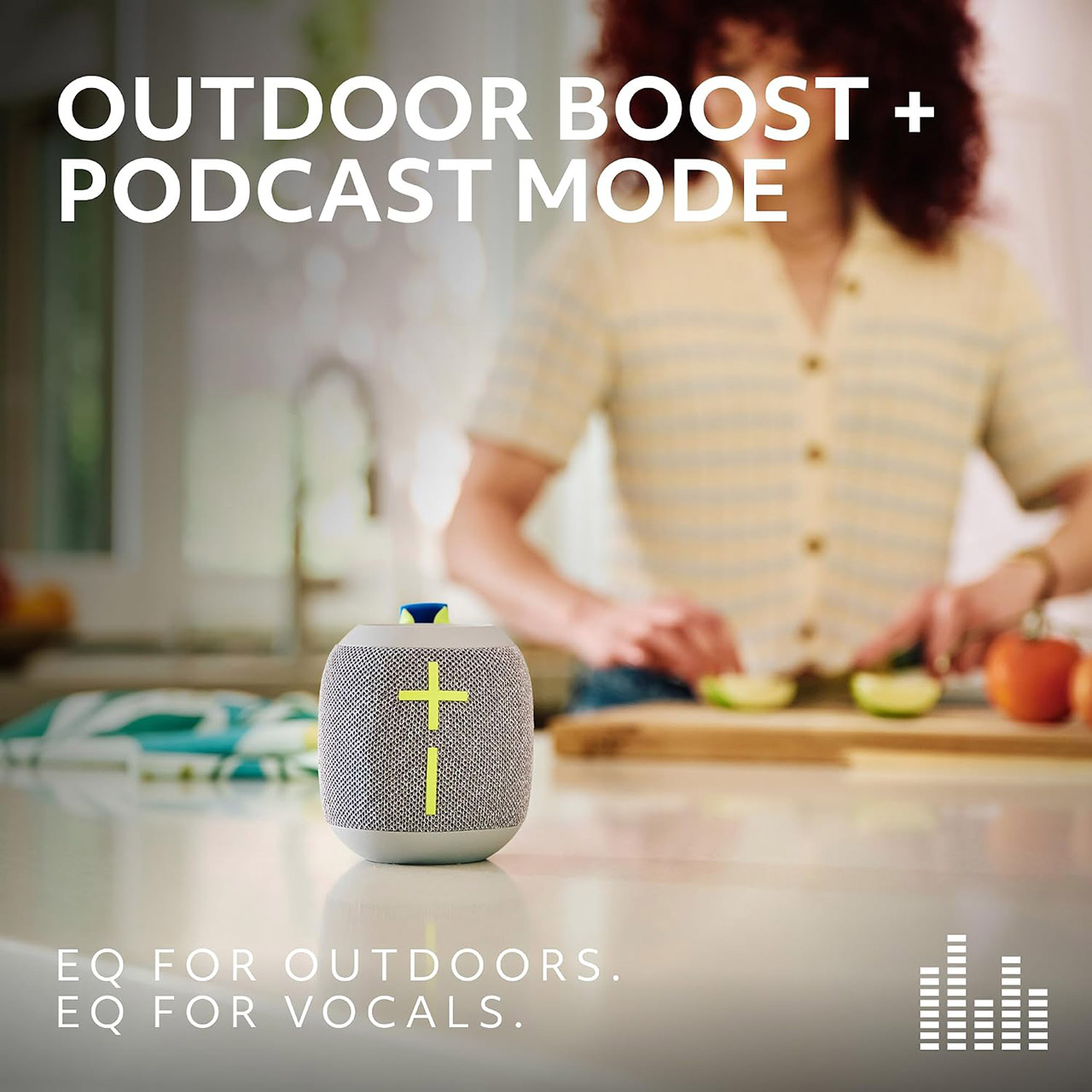
Reviewers divide its best features into two categories: wraparound coverage and middle warmth. This is great for kitchens, patios, podcasts, and acoustic playlists. Bass remains thumpy in a speaker this compact, and pulling the volume all the way down brightens lighter tracks. The WONDERBOOM 4 has developed a reputation for being tough, loud for its size, and inexpensive enough to be brought places where a better speaker would stay at home.
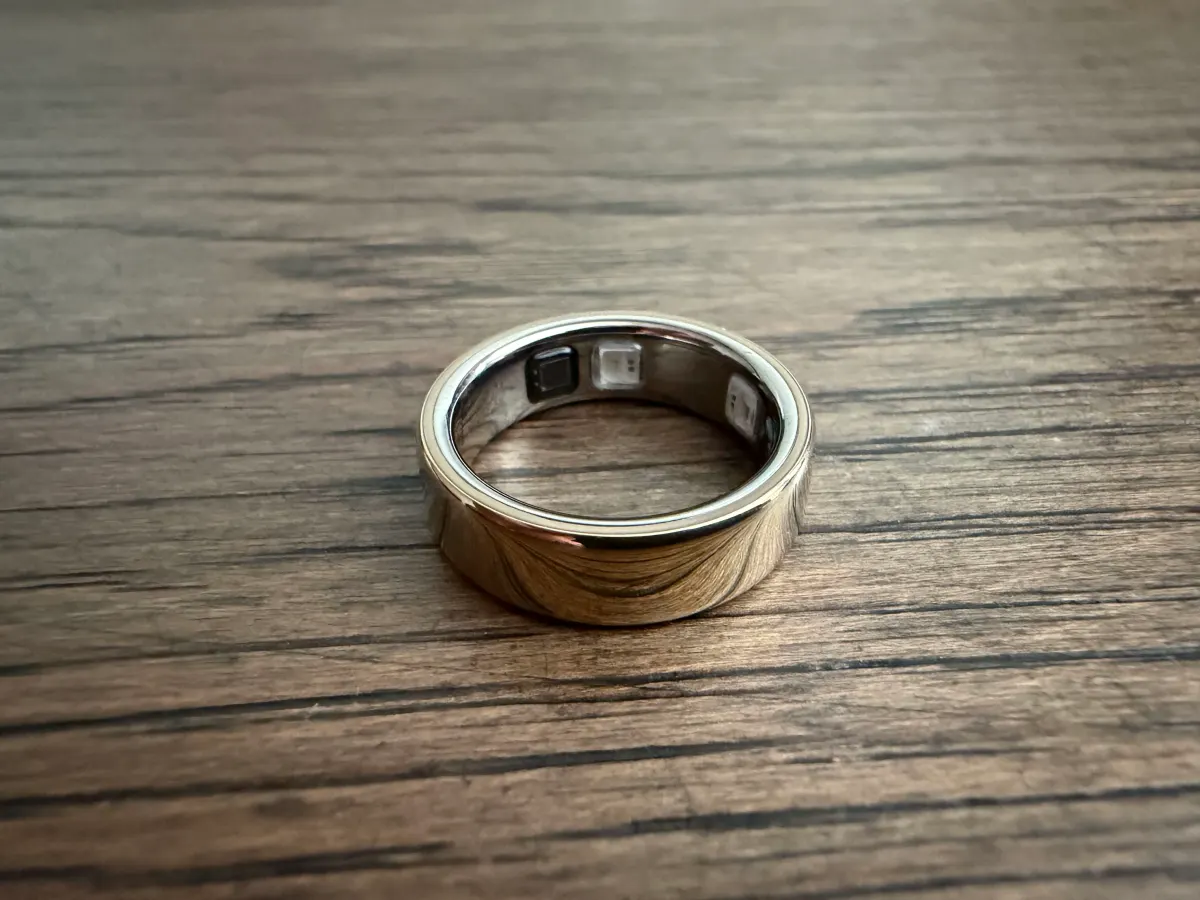
Oura, the smart ring maker, has filed to go public.
The filing with the Securities and Exchange Commission on Thursday shows that Oura’s revenue has jumped substantially in the past year. The company went from $697 million in revenue during the nine-month period that ended June 30 last year to $1.2 billion during the corresponding period this year.
The company has said previously that it generated $500 million in revenue in 2024, roughly $1 billion in 2025, and that it expected to generate close to $2 billion in revenue this year.
The company says it has sold 3.6 million rings over the past year, and that it currently has approximately 5 million paid members — that is, users who subscribe to its service for broader health metrics. The filing also says that Oura has an approximately 85% weighted-average 12-month membership retention rate, meaning that roughly 85% of members who sign up in a given month are still subscribed a year later.
The company’s rings, which sell in the range of $350 to $400, are, at their most fundamental level, fitness trackers designed to measure a user’s biometrics — everything from metabolism and heart rate to stress levels and sleep patterns. Paired with an app, the ring and that software are marketed by Oura as an “always-on health intelligence platform.”
Late last month, it was reported that Oura was looking to raise $3 billion during its expected public offering. The company, which was founded in Finland in 2013, confidentially filed for an IPO in May. Bloomberg previously reported that the company is expected to seek a $16 billion valuation. In October of last year, it had been valued at around $11 billion.
In its SEC filing, Oura outlines where it believes its audience can widen in the coming years. “We believe our opportunity extends beyond traditional wearable use cases centered on activity and fitness tracking,” it says. “We believe our platform can support significantly larger populations as we continue to expand access, build clinical evidence, and deepen integrations with health plans, employers, and care providers.”
Oura also notes how its trove of data is fueling new AI integrations. “We believe we have amassed one of the largest and highest-quality longitudinal biometric datasets in consumer health, tracking over 50 health and wellness metrics and representing nearly 42 billion hours of physiological data,” it states. “This dataset powers our AI and machine-learning models, which decode complex physiological patterns and improve in accuracy, personalization, and predictive capability as member histories deepen.”
TechCrunch has reached out to Oura for more information.
The company, which now has offices throughout the world, including San Francisco, was recently hit with a proposed class action lawsuit accusing it of misleading users about the accuracy of its sleep tracking capabilities. The suit alleges Oura’s rings can’t actually detect the physiological signals needed to determine sleep stages, and instead rely on AI-generated estimates that the complaint describes as little more reliable than a coin flip. The litigation follows years of online complaints from users who said that Oura consistently rated their sleep as optimal when, in fact, it was not.
The company has disputed the allegations and previously told TechCrunch it will “defend against” the claims in the “appropriate legal forum.”
When you purchase through links in our articles, we may earn a small commission. This doesn’t affect our editorial independence.
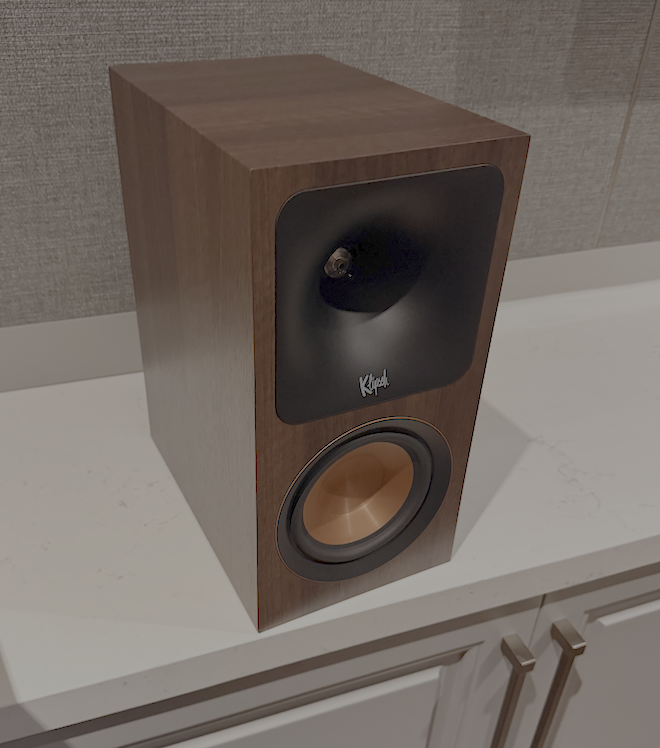
Klipsch is taking its Reference Premiere Series somewhere it has not gone before. The new RP-500PM Powered Monitor is the company’s first powered speaker in the lineup, combining amplification, HDMI ARC, USB-C, Bluetooth 5.3, a phono input and multiple digital and analog connections in a compact stereo system.
Launching at $799.99 per pair, the RP-500PM also introduces a new high-density axial Tractrix horn with upgraded BMC material. Klipsch says the flush-mounted design reduces resonance and wave breakup while improving off-axis response for a wider listening area.
That last part could be especially important. Horn-loaded Klipsch speakers have never exactly suffered from a shortage of personality, but improving dispersion without sacrificing their dynamics could make the RP-500PM better suited to televisions, desktops and shared living spaces.
Related Reading:
What Makes the Klipsch RP-500PM Unique?
Reference Premiere has primarily been built around passive loudspeakers that require an amplifier or AV receiver. The RP-500PM puts the electronics inside the system and is designed to work directly with televisions, computers, turntables, gaming systems and mobile devices.
Connectivity includes HDMI ARC, USB-C, optical digital, RCA line-level, phono and 3.5mm analog inputs, along with Bluetooth 5.3. A dedicated subwoofer output provides an upgrade path for listeners who want more low-frequency output than the 5.25-inch Cerametallic woofer can provide on its own.
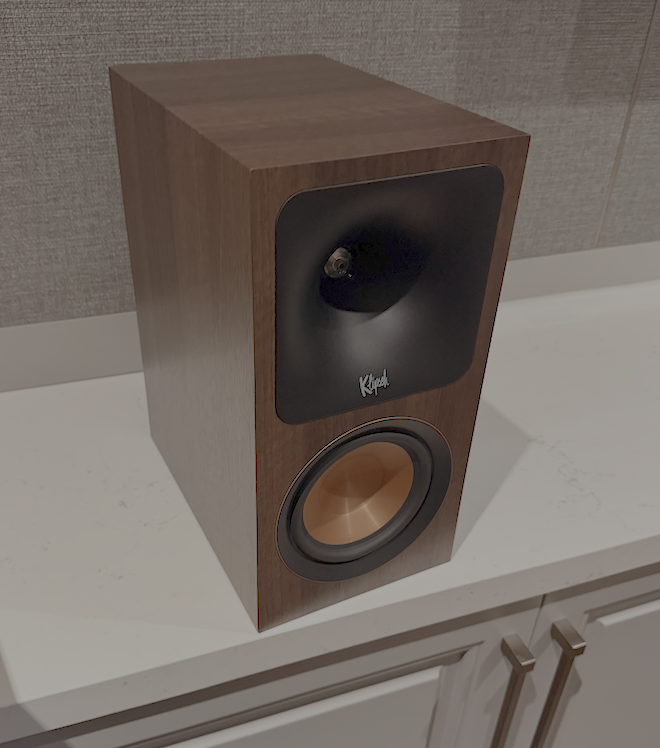
Klipsch says the internal amplifiers are matched to the individual drivers, although amplifier power has not yet been disclosed. The supplied launch information also does not specify frequency response, Bluetooth codec support, USB resolution, dimensions or weight.
Those omissions are worth noting because this is not an empty field. Several competitors around $800 already publish extensive amplifier and digital audio specifications.
Klipsch RP-500PM vs RP-600M II
The RP-600M II is the logical passive Reference Premiere model for comparison and follows the highly successful original RP-600M. It uses a larger 6.5-inch Cerametallic woofer and a 1-inch titanium LTS tweeter loaded into Klipsch’s 90 x 90-degree hybrid Tractrix horn.
The RP-500PM uses a smaller 5.25-inch Cerametallic woofer and the new axial Tractrix horn, but its bigger difference is architectural. The amplification and source connectivity are already built in, eliminating the need for an integrated amplifier, receiver, external DAC or separate phono stage for most users.
The RP-600M II remains the more flexible choice for someone assembling a traditional component system or Reference Premiere home theater. The RP-500PM is aimed at listeners who want the Klipsch sound and design language without a stack of electronics and enough cables to qualify as an infrastructure project.
The new horn could also give the RP-500PM a different presentation. Klipsch specifically emphasizes improved off-axis response, which makes sense for a speaker likely to spend as much time beside a television or computer monitor as it does in a dedicated two-channel setup.
RP-500PM Features and Specifications:
- First powered monitor in the Reference Premiere Series
- New high-density axial Tractrix horn
- Upgraded BMC horn material
- Flush-mounted horn design
- 5.25-inch Cerametallic woofer
- Built-in driver-matched amplification
- HDMI ARC
- Bluetooth 5.3
- USB-C
- Optical digital input
- RCA line-level input
- Phono input
- 3.5mm auxiliary input
- Dedicated subwoofer output
- IR remote control
- Floating cloth grille
- Textured wood-grain cabinet
- Copper woofer with matching trim ring
- Compatible with Klipsch KS-28 stands
Klipsch has not yet provided amplifier output, frequency response, dimensions, weight, maximum USB resolution or supported Bluetooth codecs.
Three Main Competitors
Triangle Borea BR03 Connect — $799/pair
The Triangle Borea BR03 Connect combines a similarly broad selection of inputs with a larger 6-inch cellulose midwoofer and 1-inch EFS silk-dome tweeter. Its Class D amplifier delivers 60 watts per channel, while HDMI ARC, USB-B, optical, coaxial, RCA, 3.5mm, MM phono and subwoofer connections cover almost every likely source. Plus its ESS ES9018K2M DAC supports PCM up to 32-bit/384kHz and DSD256 through USB, while Bluetooth 5.0 includes aptX HD. On paper the BR03 Connect checks more boxes for the same price, while the RP-500PM targets a distinctly different sonic philosophy.
ELAC Debut ConneX DCB61 — $899/pair
The ELAC Debut ConneX DCB61 costs $100 more than the Klipsch and offers a larger 6.5-inch long-excursion woofer, waveguide-loaded tweeter and 160 watts RMS of total amplification. Its rear-firing S-shaped port is designed to extend bass response while reducing port noise, with ELAC specifying a frequency response of 48Hz to 22kHz at -3dB.
Connectivity is particularly strong with HDMI eARC, USB audio up to 24-bit/96kHz, optical, Bluetooth LC3+, a switchable line/phono input and subwoofer output. The DCB61 also adds Dolby Digital decoding and iOS/Android app control for EQ, placement optimization, volume and other settings.
That makes the ELAC a formidable alternative for buyers willing to spend another $100. The RP-500PM counters with Klipsch’s new axial Tractrix horn and a more compact design, while the DCB61 brings a larger driver, app control and Dolby Digital to the argument. Copper cones alone are not going to settle this one.
SVS Prime Wireless Pro — $899/pair
The SVS Prime Wireless Pro costs $100 more but shifts the emphasis toward network streaming. It uses a 5.25-inch mid-bass driver and 1-inch aluminum-dome tweeter with 200 watts of total system amplification.
Wi-Fi, AirPlay 2, Chromecast, Spotify Connect and DTS Play-Fi are included, along with high-resolution playback support up to 24-bit/192kHz. HDMI ARC/eARC, optical, analog and Bluetooth connectivity are also provided.
SVS does not include the Klipsch’s built-in phono stage or USB audio input, making the two products appealing to somewhat different users. Klipsch makes more sense for direct connections to turntables and computers, while SVS has the clear advantage for listeners who want network streaming built into the speakers.
The Bottom Line
The RP-500PM fills an obvious gap in the Reference Premiere lineup without merely shrinking an existing passive speaker and stuffing an amplifier inside. The new axial Tractrix horn, broader connectivity and integrated phono stage suggest Klipsch designed it as a standalone stereo system rather than an accessory to another component.
The $799.99 price puts it directly against some excellent powered speakers, so the badge and copper woofer will only carry it so far. Triangle offers formidable connectivity and high-resolution support for less money, while the ELAC DCB61 costs $100 more. SVS also asks another $100 but adds a much stronger streaming platform.
What could separate the Klipsch is its acoustic design. If the new horn really delivers broader off-axis performance while retaining the speed, dynamics and immediacy that have made Reference Premiere successful, the RP-500PM could have a compelling argument beyond convenience.
CEDIA Expo is underway in Denver, so we will get a chance to hear whether Klipsch has pulled that off.
Price & Availability
The Klipsch RP-500PM Powered Monitors will be available in North America in December 2026 for $799.99 per pair through Klipsch.com and authorized Klipsch retailers.
For more information: klipsch.com
Related Reading:

Huawei has announced a huge batch of new devices for the European market, including three smartwatch ranges, a new pair of wireless earbuds and a flagship tablet.
The company unveiled the products at its “Chase the Wild” global innovative product launch event in Munich, with the Huawei Watch GT 7 Series taking centre stage. The new range includes the outdoor-focused Watch GT 7 and GT 7 Pro, with features such as wrist-based turn detection, G-Force detection and ski mapping across more than 3000 resorts.
Alongside them, Huawei has also launched the health-focused Watch D3, brought the Watch 6 Series back to Europe after a year away, and introduced the FreeBuds Neo and MatePad Pro 12-inch.
Huawei Watch GT 7 and GT 7 Pro
The Watch GT 7 series is clearly aimed at outdoor and fitness enthusiasts. The standard Watch GT 7 comes in 46mm and 41mm sizes, with eight colour options, while the GT 7 Pro is available in three colourways and uses a nano-tech ceramic bezel with a titanium alloy middle frame.
Both watches introduce what Huawei describes as industry-first wrist-based turn detection and G-Force detection. There’s also a new indoor snow sports mode and outdoor ski mapping covering more than 3,000 resorts worldwide.

Cyclists get route planning for climbs, slope alerts and sharp-turn warnings, although Huawei notes that its new AI-powered cycling insights aren’t yet available in Europe.
Health tracking has also been upgraded through Health Insights, including Physical Readiness scoring and smarter health recommendations.
The Watch GT 7 starts at £279.99, while the GT 7 Pro starts at £379.99. Both are available to order in the UK from 2 September, with a £50 discount coupon available on purchases made until 13 October.
Huawei Watch D3 focuses on blood pressure
The Watch D3 takes a very different approach, putting medical-grade blood pressure monitoring at the centre of the experience.

Its inflatable airbag cuff technology is designed to provide wrist-based readings, while the watch supports ambulatory blood pressure monitoring (ABPM). Huawei says the blood pressure monitoring has secured European CE-MDR medical certification.
It’s also slimmer and lighter than its predecessor, measuring 11.3mm thick and weighing 40g. Health Glance and Health Insights are included, alongside pre- and post-exercise blood pressure measurements and measurement reminders.
The Watch D3 launches in the UK on 23 September for £399.99. Buyers can also get 10 months of Bupa Well+ services worth £200.
The Watch 6 Series returns to Europe
After a one-year hiatus, Huawei is bringing the Watch 6 Series back to Europe. The range includes the Watch 6 from £399.99 and Watch 6 Pro from £599.99, with both arriving on 23 September.
Huawei highlights AI-powered workout analysis, independent calling, navigation and payment functionality, alongside its Health Glance, Health Insights and Healthy Living features.

FreeBuds Neo and MatePad Pro 12-inch
The FreeBuds Neo arrive with adaptive noise cancellation of up to 30dB, high-resolution lossless audio and spatial audio. Huawei’s new Turbo driver unit is designed to deliver richer sound, while dual-device connectivity allows users to switch between devices.
The earbuds work with Android, iOS and Windows and cost £119.99 in the UK from 23 September. A £20 saving is available until 26 October.
Finally, the MatePad Pro 12-inch is a particularly thin productivity tablet, measuring just 4.7mm and weighing 454g. It has a 12-inch flexible OLED PaperMatte Display and supports AI speech-to-text, AI handwriting enhancement and stylus air gestures.
Huawei has announced the tablet as part of its new flagship portfolio, although the supplied UK pricing and availability details don’t specify a launch price for the MatePad Pro 12-inch.

A woman has lived with a pig kidney for more than nine months without needing dialysis, a record-setting achievement.
The woman underwent the operation at Massachusetts General Hospital on November 22 last year. As of Thursday, the kidney has been functioning for 285 days, according to Cambridge, Massachusetts-based eGenesis, the biotech company that used Crispr gene editing to make the organ fit for human transplantation. Previously, the record for a person living with a transplanted pig kidney was 271 days, set by Tim Andrews.
Most people in need of a kidney transplant wait three to five years on average to receive one, though it can take longer depending on blood type and other factors. While they wait, patients often need dialysis, in which a person’s blood vessels are hooked up to a machine that removes excess fluid and waste from the bloodstream. Dialysis typically requires four-hour sessions three times a week and can damage blood vessels over time, making the procedure hard on the body.
Pig kidneys could offer an alternative until a human organ is available. Pig organs are similar in size and function to human organs and are being investigated as a way to ease the shortage of human donor organs. To make them more suitable for humans, scientists are genetically editing them to prevent immediate rejection and reduce the risk of pig viruses being passed on to transplant patients.
Patients’ health gets worse the longer they’re on dialysis, “and their odds of getting a human transplant aren’t rising fast enough to meet their declining health,” says Mike Curtis, CEO of eGenesis. The company used Crispr to remove certain pig genes that could cause an immune response and add a handful of human genes.
“What we saw with Mr. Andrews was a radical improvement in his overall health while he was on the pig kidney versus if he had stayed on chronic dialysis,” Curtis says.
The woman who has crossed the nine-month mark is the fifth person to receive an eGenesis kidney through a special regulatory pathway known as expanded access. The Food and Drug Administration allows patients with serious or life-threatening conditions to gain access to experimental treatments when there are no good alternatives.
Andrews’ case shows that pig kidneys may provide a temporary solution. He received a pig kidney in January 2025 and had it removed in October last year after a period of decreasing kidney function. He returned to dialysis but received a human kidney transplant in January this year. A second person has also successfully received a human transplant after having a pig kidney for eight months, according to eGenesis.
Curtis says the company is learning more with each transplant. In a paper published on Thursday in The Lancet medical journal, the surgical team that performed the transplants details Andrews’ experience. They determined that Andrews’ pig kidney eventually failed due to thrombotic microangiopathy, which means tiny blood clots formed in the transplanted organ.
The team is using that information to adjust the immunosuppressant medications that pig kidney recipients receive and how frequently they need to take those drugs. People who receive human organ transplants also need to take immunosuppressive drugs to prevent their body from rejecting the transplanted organ. Organ rejection can happen at any time following a transplant, ranging from minutes after the surgery to many years later.
Kidneys are the most-needed organ, with more than 95,000 people waiting to receive one in the US. But due to a shortage of donor organs, fewer than 28,000 kidney transplants were performed in the US in 2025.
The FDA has given eGenesis the green light to conduct a more formal trial in up to 33 patients with kidney failure who are between 50 and 70 years old and on the wait list for a human kidney. That trial will not happen until 2027, but eGenesis plans to perform additional transplants under the expanded access pathway in the meantime. Their next goal is to get a transplanted pig kidney to function for a year.

UK weather: Weekend heat for parts of UK before more rain next week

Humanoid Robots Put China Ahead in Tech Race

Wyoming adopts Chainlink Proof of Reserve for FRNT





-

 Fashion6 days ago
Weekend Open Thread: Maeve – Corporette.com
-

 Crypto World1 day ago
CLARITY Act could advance within weeks, Atkins says
-

 Business6 days ago
Onto Innovation Stock: AI’s Next Bottleneck Is Yield (NYSE:ONTO)
-

 Crypto World6 days ago
Bitcoin price tests $82K resistance as Brandt stays long
-
 Tech5 days ago
Hugging Face built a $4.5 billion empire on free AI models. Now Nvidia is buying it for $12.9 billion
-

 Business6 days ago
iPhone 18 Pro Pre-Orders Could Shift to Saturday as Apple Reportedly Avoids September 11 Anniversary
-

 Crypto World2 days ago
Elon Musk Says Grok 4.7 Lands in 10 Days and Will Beat Every Model
-
 Entertainment7 days ago
‘Adults’ Creators Break Down Season 2’s Most Shocking Moments and Tease a Potential Season 3
-

 News Videos5 days ago
Charlie Munger on Robinhood: No one should believe that Robinhood’s trades are free
-

 Tech6 days ago
PaperCut releases second emergency patch for exploited flaws
-

 Crypto World21 hours ago
Kalshi seeks CFTC approval for WTI perpetual
-

 Crypto World2 days ago
Bitcoin slips below $77.5K as macro pressure offsets ETF inflows
-

 Tech5 days ago
Tamagotchi Ring Takes the 30-Year Digital Pet and Places it on Your Finger
-
 Tech5 days ago
As the influencer economy drives retail sales, Seattle startup raises $22M to play matchmaker
-

 News Videos5 days ago
News kii Crypto ugu danbeeyey & Suuqa oo dhaqaaqey
-
 NewsBeat5 days ago
Trump posts AI video of ‘Lake America’ being protected by an army of bequiffed ‘Donald Ducks’
-
 Entertainment4 days ago
Taylor Swift Reportedly ‘Frustrated’ With Travis Kelce After ‘Short’ Honeymoon
-
 Business2 days ago
Oil Price Today (September 2): Crude oil nears $97 as war tensions escalate. Will it hit $100 again?
-
 Entertainment6 days ago
Kendall Jenner’s Circle Concerned About Jacob Elordi Romance
-

 Tech3 days ago
OpenClaw 2.0 lands with an easier setup and a rebuilt browser app
You must be logged in to post a comment Login