

Connect with us

Business

Dole Packaged Foods creates new VP post

Published

on

Dole Packaged Foods creates new VP post

WESTLAKE VILLAGE, CALIF. — Stan Stuka has returned to Dole Packaged Foods, LLC, in the newly created role of vice president, commercial.  

As vice president, commercial, Stuka will lead sales and marketing to help drive commercial growth and strengthen brand performance, the company said.

Prior to returning to Dole, Stuka was director of consumer and HCP at Amgen, where he spent approximately six years in various consumer roles.

In his earlier years at Dole Packaged Foods, Stuka was senior director of marketing for the company’s shelf-stable fruit and juice business and previously was director of marketing for fruit bowls as well as canned fruit and jars.

Advertisement

“Stan brings a strong combination of institutional knowledge, commercial expertise, and proven leadership,” said Hidehiro Tanabe, president of Dole Packaged Foods, US. “By bringing sales and marketing closer together, we’re better connecting consumer insights, brand building, and marketplace execution to drive growth and deliver Sunshine For All.”

Before his roles at Dole Packaged Foods, LLC, and Amgen, Stuka spent approximately six years Dole Food Co. holding several management positions. 

Continue Reading
Click to comment

You must be logged in to post a comment Login

Leave a Reply

Business

Magellan Aerospace takes flight, surges to top of TSX gainers

Published

on


Magellan Aerospace takes flight, surges to top of TSX gainers

Continue Reading

Business

Andy Burnham says he wants to ‘make life easier’ for UK businesses ahead of Budget

Published

on

Business Live

Prime Minister ‘acutely conscious of how hard the operating environment is for businesses, big and small’

Prime Minister Andy Burnham helps to stack loaves of bread onto a shelf with the help of Mayor of London, Sadiq Khan and Pat McFadden, Secretary of State for Work and Pensions during a visit to a Sainsbury's store in Nine Elms on August 26, 2026 in London.

Prime Minister Andy Burnham helps to stack loaves of bread onto a shelf with the help of Mayor of London, Sadiq Khan and Pat McFadden, Secretary of State for Work and Pensions during a visit to a Sainsbury’s store in Nine Elms, London(Image: Getty Images)

Andy Burnham has vowed to help address the “cost of business” as he seeks to allay concerns that the private sector faces another punishing tax raid at the Budget.

Advertisement

Burnham said he wants to “make life easier” for people and businesses as he prepares for his first Budget as Prime Minister.

In an interview on Wednesday, the PM said the fiscal challenges confronting the government were “challenging” but he was taking steps to relieve the burden on both households and the private sector.

“I’m not coming into this role thinking how do we make life harder? I’m trying to make life easier for people. How do I take pressure off? How do I meaningfully deal with the cost of living and the cost of business? ,” he told the Financial Times.

The Budget on October 28 was the “earliest date we realistically could have done”, according to Burnham, as reported by City AM.

Advertisement

He also sought to calm anxieties among investors and business owners that a raft of tax increases were on the cards at the Budget. The Prime Minister said he was “acutely conscious of how hard the operating environment is for businesses, big and small”.

“People shouldn’t read into me giving that answer that all kinds of things are coming,” he added. His remarks highlight mounting apprehension from the private sector that the government might once more rely on business to generate revenue at the Budget.

Analysis by the British Chambers of Commerce, amongst the nation’s largest industry bodies, indicates that government policies over the past decade have driven up business costs by approximately 70 per cent.

The Prime Minister also appeared to indicate that a trade summit with the European Union was due to occur in November, having initially been scheduled for July before Sir Keir Starmer resigned and departed Number 10.

Advertisement

He mirrored his predecessor in suggesting that enhancing trade with the economic bloc would “add percentage points” to the UK growth rate.

Starmer previously maintained that strengthening trade with the EU would be fundamental to delivering growth.

Burnham’s stance suggests that the UK may yet proceed in reducing trade barriers across various industries. In its 2024 election manifesto, Labour stated the UK would not pursue re-joining the customs union or single market and described such a move as amongst its “red lines”.

Burnham said relations with the EU were a matter that “we cannot ignore”.

Advertisement

The new Prime Minister also told the Financial Times that his emphasis on advancing “public control” over utilities such as water and energy were partly a means to demonstrate he did not “necessarily” support full nationalisation. “It’s about making the basics function properly and function properly for business, so you create the most benign investment environment for companies,” he said.

The remarks come less than a week before Parliament reconvenes, setting the government on course for a two-month countdown to the Budget.

Several City economists have put the size of the fiscal headroom at around £15bn, owing to the impact of rising energy prices. However, left-leaning think tank the Resolution Foundation places that figure closer to £8bn.

Soaring energy costs have amplified pressure from North Sea energy firms to be granted permits to drill for additional oil and gas. Rulings on new licences at the Jackdaw and Rosebank oil and gas fields are anticipated within days.

Advertisement

Burnham also expressed support for remarks made by Labour donor Dale Vince, the green-energy magnate who has long been a vocal critic of fossil fuel consumption, indicating that drilling in the North Sea could “make sense” if further price controls were to be introduced.
Continue Reading

Business

Why cable avoidance training pays for itself on the first dig

Published

on

Why cable avoidance training pays for itself on the first dig

Most business decisions about safety are framed as costs. Cable avoidance training is one of the few that is better understood as an investment, because it clears its own price the first time it stops something going wrong.

Any business that puts a spade in the ground carries a risk it rarely prices properly. Beneath the surface of almost every site sits a network of cables, ducts and pipes, recorded inconsistently if at all, inherited by whoever digs next. Strike one and the day stops. What was a routine job becomes a repair, a delay and a difficult conversation, and none of it was in the plan that morning. For an owner or director, the frustrating part is that this is one of the most avoidable risks on the books.

It is avoidable because the tools to prevent it have been standard for years. The gap is not equipment; it is how the equipment gets used. A crew that sweeps quickly and trusts a clear reading is not doing the same job as a crew trained to confirm what is actually there, even though both look identical from the cab. The difference only shows when the ground proves one of them wrong.

That difference is what training operatives to find services before they dig is built to close. Sygma Solutions, the Wigan firm that is the UK’s only independent specialist in underground utility location and avoidance, has spent over twenty years on exactly this. Founder Peter Ashcroft puts the business case plainly. “A strike is almost never bad luck,” he says. “It is a survey done in a way that could not find the thing it hit. Train the habit properly, and you remove the risk at source, which is a great deal cheaper than managing it after the event.”

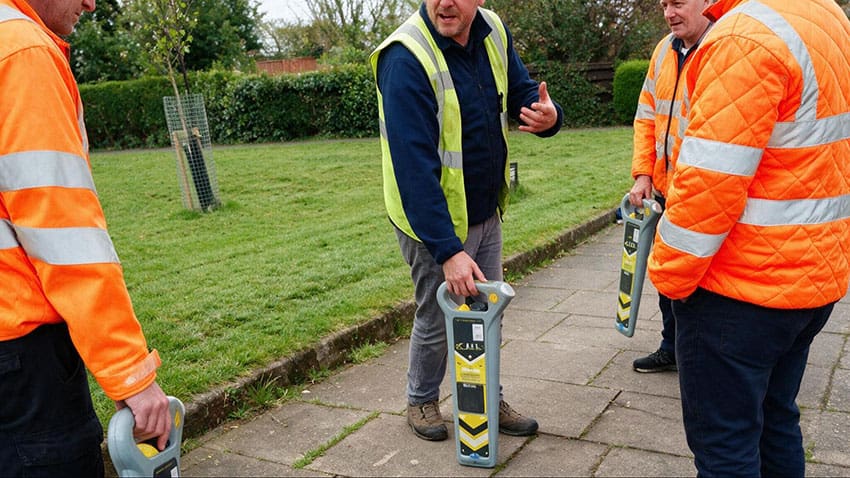
The method Sygma trains is straightforward. Detection uses a Cable Avoidance Tool, the CAT, paired with a signal generator, the Genny. Left in its passive settings, the CAT only registers services already giving off a signal, and many are not. The Genny applies a known signal so the target can be traced on purpose. Used first, it changes what the survey finds. Skipped, which is the common habit, it leaves the dig relying on whatever happened to be detectable in passing.


Advertisement

What clients report after training

What lifts this above assertion is what Sygma’s clients report after training. Before training, Genny use on live sites typically sits below 30%. Clients report it climbing to between 70 and 80%, with the firm setting crews a target of better than 60% on every job. In plain terms, the trained crew is doing the decisive step of the survey most of the time, where the untrained crew was largely skipping it. That is the shift a business is paying for, and it is visible rather than notional.

A decision an owner controls

It is easy to treat all of this as a site matter and leave it to the crew. That is a missed opportunity, because the fix sits with the business rather than the individual. A line in a training budget, or a requirement written into how work is scoped, changes the behaviour of every crew that follows it. HSG47 and the CDM Regulations 2015 already expect services to be located before anyone breaks ground, so the standard is set. Meeting it properly is a management decision, not a hope pinned on whoever is holding the tool that day. Sygma’s client base includes Severn Trent Water and Wales & West Utilities, operators for whom underground risk is a serious, costed part of running the business rather than an occasional surprise.

The case for cable avoidance training is not really a safety argument dressed up, though the safety case is real. It is a straightforward piece of business sense. The spend is modest and known. The thing it prevents is neither. On the first dig where a trained operative finds what a passive sweep would have missed, the training has already done its job, and every dig after that is a return on it.

Advertisement

Continue Reading

Business

Kia recalls 21,290 EV9 SUVs over airbag issue that could increase injury risk

Published

on

Kia recalls 21,290 EV9 SUVs over airbag issue that could increase injury risk

Kia is recalling more than 21,000 electric SUVs because of an airbag sensor issue that could increase the risk of injury to children riding in the front passenger seat.

The recall covers 21,290 Kia EV9 SUVs from the 2025 and 2026 model years, according to documents filed with the National Highway Traffic Safety Administration (NHTSA).

Advertisement

The issue involves the vehicles’ Occupant Detection System, or ODS, which may fail to deactivate the front passenger airbag when a child or child restraint is in the seat. An airbag that deploys in those circumstances could increase the risk of injury in a crash.

The defect means the affected vehicles do not comply with federal motor vehicle safety standards, according to the documents.

KIA ISSUES NEW RECALL OF 460,000 VEHICLES AFTER PREVIOUS FIX TO FIRE RISK FAILED

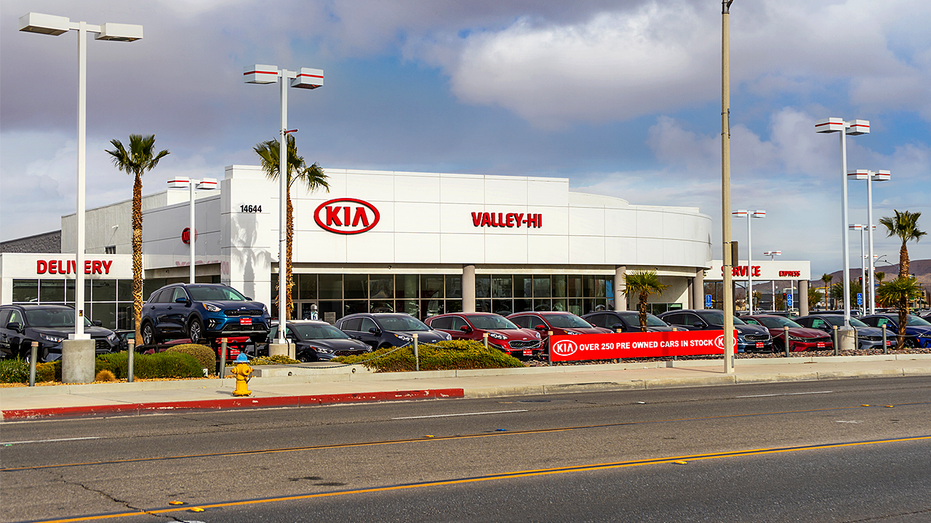
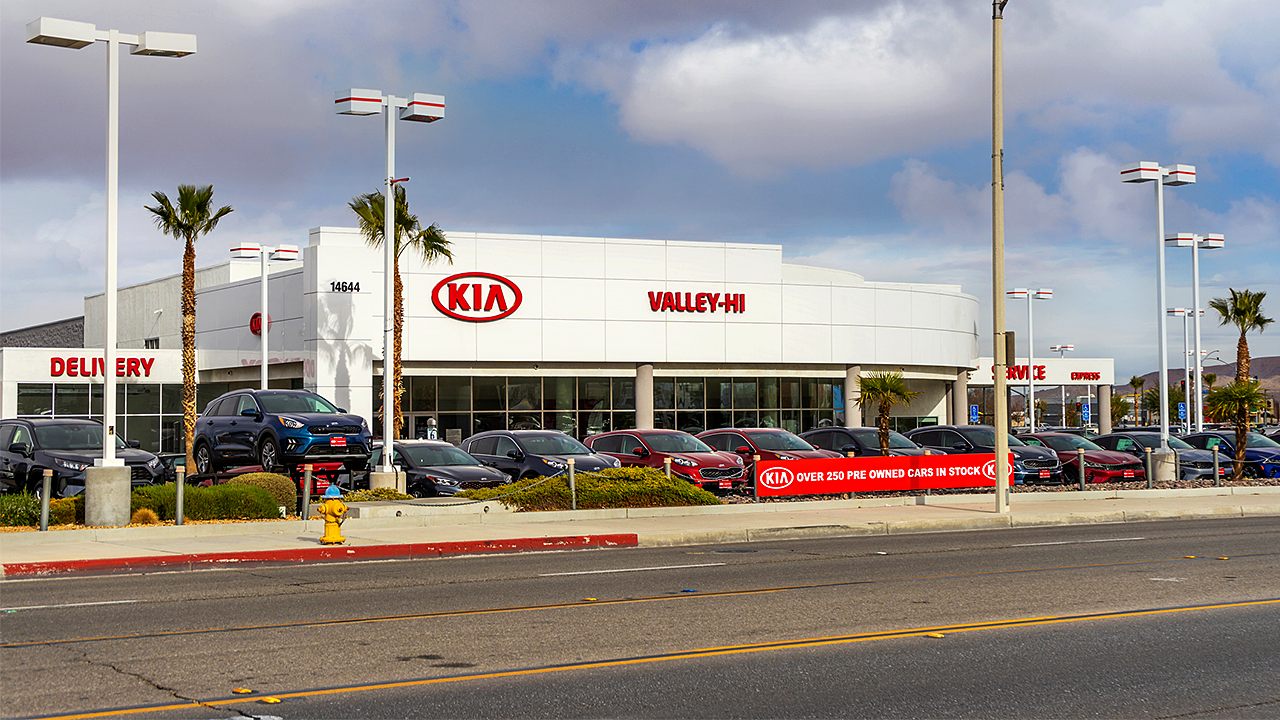
Kia dealer

Kia dealership in California. Kia is recalling 21,290 EV9 electric SUVs because a sensor may fail to deactivate the front passenger airbag when a child or car seat is present, increasing the risk of injury in a crash. (Getty Images / Getty Images)

Drivers may notice an airbag warning light on the instrument cluster. A seatbelt reminder chime may also sound to indicate that the front passenger is not wearing a seatbelt even when the seat is empty.

Advertisement

Kia did not say whether it is aware of any injuries related to the issue, according to the report.

The automaker advises drivers not to install a child restraint system in the front passenger seat and says children ages 13 and younger should ride in the rear seat.

Kia dealers will inspect affected vehicles and replace the ODS mat and bladder tube with new parts as necessary. Dealers will also make sure the components are properly routed. The repairs will be performed free of charge.

CHRYSLER RECALLS NEARLY 75K SUVS OVER PARTS THAT COULD DETACH WHILE DRIVING

Advertisement
Kia EV9 electric SUV displayed at the New York International Auto Show in New York City.

A Kia EV9 is displayed during the New York International Auto Show in New York City on April 1, 2026. (Charly Triballeau / AFP via Getty Images / Getty Images)

Kia expects to begin mailing notification letters to affected owners on Oct. 20, according to the report.

The recall comes after Kia recalled more than 460,000 Telluride SUVs in July over a separate fire risk after an earlier repair failed to resolve the problem.

That recall covered 462,869 Telluride vehicles from the 2020 through 2024 model years. Owners were advised to park outside and away from other vehicles and buildings because of the risk of a fire while driving or parked.

Ticker Security Last Change Change %
KRX NO DATA AVAILABLE

CLICK HERE TO GET FOX BUSINESS ON THE GO

Advertisement

Federal regulators said at the time that seven seat fires and 11 cases of seat motors melting had been reported. The issue involved a front power seat switch that could become dislodged, misaligned or damaged, potentially causing the seat motor to run continuously and overheat.

Vehicle identification numbers covered by the latest EV9 recall are expected to become searchable on NHTSA’s recall website beginning Sept. 4.

Continue Reading

Business

Sorry QTUM, WQTM Is The Better Quantum ETF

Published

on

Sorry QTUM, WQTM Is The Better Quantum ETF

Sorry QTUM, WQTM Is The Better Quantum ETF

Continue Reading

Business

Fed’s Preferred Inflation Gauge Shows Core Prices Rose 3.3% in July Ahead of Jackson Hole Speech

Published

on

Paladin Energy

WASHINGTON — Consumer prices ticked higher in July, with the Federal Reserve’s preferred inflation gauge showing annual core inflation holding at 3.3%, according to a Commerce Department report released Wednesday, arriving just days before Fed Chairman Kevin Warsh delivers his first major policy speech at the central bank’s annual Jackson Hole symposium.

The personal consumption expenditures price index, the measure the Fed relies on most heavily for its policy forecasting, rose a seasonally adjusted 0.2% for the month, putting the annual headline inflation rate at 3.7%. Both figures came in 0.1 percentage point above the Dow Jones consensus estimate. Stripping out volatile food and energy costs, core PCE posted respective monthly and annual gains of 0.2% and 3.3%, landing exactly in line with economist forecasts. While the Fed monitors both the headline and core measures, policymakers generally treat core inflation as the more reliable indicator of longer-term underlying price trends, given how much short-term volatility in food and energy prices can distort the headline figure.

The broader report also showed personal income rising 0.4% in July, while consumer spending increased 0.2%, with both figures coming in stronger than economists had anticipated, according to CNBC’s coverage of the release.

A closer breakdown of the data revealed diverging trends across different categories of consumer spending. Goods prices actually declined during the month, falling 0.1%, driven primarily by a 2.7% decrease in gasoline and other energy-related goods, alongside a 0.9% drop in furnishings and long-lasting household equipment. Services prices, by contrast, continued climbing, rising 0.3% for the month, pushed higher by a 1.2% increase in financial services and insurance costs along with a more modest 0.3% gain in housing costs.

Advertisement

Financial markets showed a modest, immediate reaction to the data. Stock market futures pulled back slightly following the report’s release, while Treasury yields moved higher, reflecting investor recalibration around the persistence of inflation heading into the Fed’s next major policy decisions.

The report lands at a pivotal moment for Federal Reserve policymakers, who continue weighing their next move even as inflation, despite generally soft monthly readings throughout the summer, remains well above the central bank’s longstanding 2% target. The rate-setting Federal Open Market Committee did not hold a formal policy meeting in August, giving officials a brief reprieve before their next scheduled gathering on Sept. 15-16. According to CNBC, markets are currently pricing in only about a 1-in-3 probability of a rate move at that September meeting, with traders instead viewing December as the more likely window for any potential rate hike.

Although the FOMC itself is not meeting this week, Fed officials are gathering in Jackson Hole, Wyoming, for the central bank’s closely watched annual economic policy symposium, with the event’s centerpiece being a keynote policy address scheduled for Friday from Chairman Kevin Warsh. Since taking office in May, Warsh has remained notably circumspect regarding where he sees monetary policy heading, generally preferring to let markets set their own expectations rather than offering explicit forward guidance, a communication style that has left investors particularly eager for clearer signals during his Jackson Hole appearance.

The inflation data arrives amid a broader backdrop of rising government bond yields that has added further complexity to the Fed’s policy calculus. Both the 10-year and 30-year Treasury yields recently touched their highest levels since 2007, just before the onset of the global financial crisis, according to CNBC. That surge has been attributed to a combination of factors, including growing investor concern about the Fed’s underlying commitment to its inflation target, as well as broader anxiety surrounding the federal government’s debt levels and budget deficits.

Advertisement

In response to those rising yields, Treasury Secretary Scott Bessent announced roughly a week earlier that his department would significantly step up its buybacks of government debt, an initiative aimed at helping stabilize longer-term borrowing costs. However, according to CNBC, market participants have expressed skepticism regarding whether that buyback program will ultimately have a meaningful, lasting impact on yields given the scale of the broader fiscal pressures driving the recent bond market volatility.

Wednesday’s report caps a busy week of market-moving developments, with investors simultaneously digesting the inflation data, Nvidia’s closely watched quarterly earnings report, and Meta’s separate announcement of a roughly $16.7 billion settlement resolving state lawsuits over allegations the company designed its platforms to addict children, developments that have collectively shaped market sentiment even as the underlying inflation picture remains the dominant macroeconomic story heading into the fall.

With core inflation holding steady at 3.3%, comfortably above the Fed’s 2% target but not accelerating further, Wednesday’s report is likely to reinforce the current wait-and-see posture many Fed officials appear to be adopting ahead of their September meeting. Investors and economists alike are expected to parse Warsh’s Friday remarks at Jackson Hole closely for any indication of how the incoming chairman intends to balance the central bank’s continued inflation-fighting mandate against growing concerns about elevated borrowing costs and the broader health of the bond market, even as his relatively guarded public communication style so far has left much of that policy direction still genuinely uncertain heading into his first major address in the role.

Advertisement
Continue Reading

Business

Ditching SpaceX Didn’t Help You Beat the Market

Published

on

Ditching SpaceX Didn’t Help You Beat the Market
Telis Demos

Good morning, I’m filling in for Spencer Jakab. Investors aren’t fazed this morning by the latest economic escalation in the Iran conflict or the growing trade war with Canada. Futures are pointing higher, oil prices are lower and long-term Treasury yields have come off the boil. That said, worries about the dollar are growing, and bitcoin is back around the $80,000 mark.

​📈 Follow our live markets data and coverage.

Copyright ©2026 Dow Jones & Company, Inc. All Rights Reserved. 87990cbe856818d5eddac44c7b1cdeb8

Continue Reading

Business

Jackson Hole Showdown: Will Warsh Shift His Fed Messaging?

Published

on

Trump Wanted Lower Rates, But Warsh's Federal Reserve Might Hike Them

Jackson Hole Showdown: Will Warsh Shift His Fed Messaging?

Continue Reading

Business

Spring Lake NJ residents push back on Verizon 5G boardwalk towers

Published

on

Spring Lake NJ residents push back on Verizon 5G boardwalk towers

Members of the Spring Lake community on the Jersey Shore are entering a new phase in their multi-year fight with Verizon over the installation of proposed 5G poles that would improve network service but have rankled residents concerned about their impact.

The town council of Spring Lake, N.J., held a public comment meeting on Tuesday evening regarding a settlement that would see Verizon ditch a plan to install nine 5G poles along the Ocean Avenue boardwalk, with a 10th pole on nearby Prospect Ave., in favor of a more discreet option.

Advertisement

The company reached a proposed settlement with the borough to instead install the 5G antennas into two enclosed, hut-like cupolas that are situated on top of pavilion buildings at the north and south ends of the boardwalk.

That compromise followed a lawsuit in federal court brought by Verizon against Spring Lake in 2024, which the Jersey Shore community’s residents later intervened in. 

VERIZON SUES JERSEY SHORE TOWN TO INSTALL 5G POLES ALONG BEACH WITH ‘OVERWHELMING OPPOSITION’ FROM RESIDENTS

The beach at Spring Lake, N.J.

Beachgoers enjoying the Jersey Shore in Spring Lake, N.J. (Getty Images)

Spring Lake litigation counsel Benjamin Clark said that he thinks it’s “a better choice to pursue the pavilion option, rather than to just continue litigation against Verizon because the key thing here, from what I’ve been able to observe and have always been instructed, is ‘preserve the beachfront.’”

Advertisement

Residents at the town council meeting expressed frustration with being left out of negotiations on the proposed settlement, citing safety concerns related to 5G emissions and saying the borough shouldn’t make a deal in the short-term just to end the dispute.

The National Center for Smart Growth at the University of Maryland notes that government researchers, industry scientists and academics from the U.S., Asia and Europe are in agreement that 5G and 4G LTE emissions are safe and don’t pose any dangers to public health.

VERIZON PLAN TO INSTALL 5G POLES ALONG POPULAR JERSEY SHORE BEACH STIRS UPROAR

The beach at Spring Lake, N.J.

A view of the Essex and Sussex building in Spring Lake, N.J. (Getty Images)

Local activists opposed to the settlement also cited concerns that agreeing to the settlement could create a precedent for future expansion of cell towers, while some said they’re not concerned about the quality of their cell service while visiting the beach.

Advertisement

Those opposed to the compromise say the issue of 5G antennas near Jersey Shore beachfronts will arise in other communities as well, and want Spring Lake to take a stand.

Communities on the Jersey Shore like Spring Lake can see a large influx of visitors during the summer months for the area’s beaches and recreation, which can impact the quality of cell service for device users.

VERIZON LAUNCHES SIMPLER PLANS AND NEW LOYALTY PROGRAM, DROPS SOME FEES

U.S. tower climber working on a cell tower

Verizon’s proposed settlement would see the cell service provider opt for enclosed huts on the top of two pavilion buildings to house 5G antennas, rather than traditional towers. (Daniel Karmann/picture alliance)

For its part, Verizon said it’s focused on ensuring there are positive relationships in the communities it serves while it works to expand the capacity and capability of its network.

Advertisement

“Verizon is committed to responsibly building our network to meet the growing demand of our customers while maintaining positive relationships with the communities where we work,” Verizon said in a statement to FOX Business.

GET FOX BUSINESS ON THE GO BY CLICKING HERE

The Spring Lake town council is planning to hold a vote on the settlement proposal on Sept. 15.

FOX Business’ Madison Alworth contributed to this report.

Advertisement
Continue Reading

Business

Decision due on hotel demolition and plans for 15 new flats

Published

on

Business Live

A third of planned apartments would be affordable

The former Henderson Hotel in Blackpool

The former Henderson Hotel, in Blackpool(Image: Local Democracy Reporting Service)

Planners at Blackpool will make a decision next week on ambitious proposals to demolish an empty hotel near South Shore seafront and replace it with 15 self-contained flats.

Advertisement

The proposals will offer 33 percent of the apartments (a total of five) as affordable housing, if the scheme gets the go ahead.

The application is for the erection of a four storey building comprising 15 self-contained permanent apartments, following demolition of the former Henderson Hotel at 1 Wimbourne Place, a site close to Blackpool Pleasure Beach Resort.

Now Blackpool Council’s planning committee will run the rule on the scheme when it meets on Tuesday September 1.

The Henderson Hotel was one of three adjoining hotels being offered for sale early in 2025 at £1.9m as part of a potential redevelopment project.

Advertisement

The site comprised three buildings – the Waldorf Hotel, the Kimberley Hotel and the Henderson Hotel – which required demolition before development takes place.

However, the current application involves the Henderson Hotel only, with no reference made to the other two properties.

A Design and Access Statement by consultants Future Planning and Development Ltd, has been submitted on behalf of the un-named applicants in supporting a Full Planning Application for the scheme.

Explaining the new need for a new building, the statement says of the current property: “The narrow circulation spaces, rigid structural layout, thin partitions, and outdated configuration present significant and inherent barriers to successful conversion or modernisation.

Advertisement

“Achieving a modern, building regulations-compliant layout within the existing envelope would likely require extensive intervention, making comprehensive refurbishment or reuse highly impractical and economically unviable.”

The statement adds: “The vision for the redevelopment of 1 Wimbourne Place is to transform a dated and under used hotel site into a high quality, attractive and inclusive residential environment that makes a positive contribution to the local area.”

The new build plan for 1 Wimbourne Place,

The new build plan for 1 Wimbourne Place(Image: Future PD Ltd)

The planning committee is being recommended to support and delegate approval of the application to the Head of Development Management, subject to the completion of a S106 legal agreement on social housing to secure planning obligations.

The planning officer’s report states: “The application proposes that five of the units would be affordable (33%) which is in line with Policy CS14.

Advertisement

“These would need to be secured via a Section 106 legal agreement on a tenure basis acceptable to the council’s housing team.

“Although it is envisaged that these properties would be taken on by a Registered Social Landlord (RSL), this cannot be guaranteed at this stage, so it is proposed that the Section 106 would first require on site provision but it would also allow for a financial contribution to be paid towards affordable housing.”

To find all the planning applications, traffic diversions, road layout changes, alcohol licence applications and more in your community, visit the Public Notices Portal.

Advertisement
Continue Reading

Trending

Copyright © 2025