
Business
Dozens of crisis payments handed out by council




National Association of Manufacturers President Jay Timmons discusses President Donald Trump’s manufacturing agenda, tax policy, factory investment and the future of American industry on ‘Mornings with Maria.’
Carpenter Technology CEO Brian Malloy died suddenly just weeks after taking the helm of the specialty materials manufacturer, the company announced Monday.
Malloy, who became president and CEO July 1, died “suddenly and unexpectedly” Friday, July 24, according to a news release from the Philadelphia-based company.
A cause of death was not disclosed.
“We are deeply saddened by Brian’s passing,” Carpenter Technology’s board of directors said in a statement.

Carpenter Technology CEO Brian Malloy died suddenly just weeks after taking the helm of the specialty materials manufacturer, the company announced Monday. (Facebook/Luiza Puculowski Malloy)
“Over the past decade, Brian made significant contributions to Carpenter Technology and was a respected leader with a strong commitment to performance, operational excellence, and the Company’s long-term success,” the board added. “We extend our deepest sympathies to Brian’s family and loved ones during this difficult time.”
The board appointed Executive Chairman Tony Thene to return as CEO, effective immediately. Thene, who led Carpenter Technology from 2015 through June 2026, will also remain chairman.
Malloy spent a decade at Carpenter Technology and had served as chief operating officer since 2023.
COMPANY BETS $200K ON AI TO MAKE TRADES WORKERS ‘BETTER, STRONGER, FASTER’
Malloy spent a decade at Carpenter Technology and had served as chief operating officer since 2023.
When the company announced Malloy’s appointment in February, Thene called him a “proven leader” with “deep operational experience” and a track record of delivering results across the company’s businesses.
Malloy said at the time that he was “honored” to be selected as the company’s next chief executive.
“I am honored to be named the next CEO of Carpenter Technology,” Malloy said in February. “Tony’s strategic vision has reshaped Carpenter Technology by building a culture of performance, strengthening our market position, and delivering meaningful value for all stakeholders.”
| Ticker | Security | Last | Change | Change % |
|---|---|---|---|---|
| CRS | CARPENTER TECHNOLOGY CORP. | 503.71 | -26.91 | -5.07% |
CRACKER BARREL CEO JULIE MASINO TO STEP DOWN

The board appointed Executive Chairman Tony Thene to return as CEO, effective immediately. (Cheng Xin/Getty Images)
Before joining Carpenter Technology, Malloy held senior leadership roles at Ametek and Alcoa.
GET FOX BUSINESS ON THE GO BY CLICKING HERE
A Carpenter Technology spokesperson told FOX Business the company would not comment further “out of respect for the privacy of the family.”

Operator
Good afternoon, and welcome to Capstone Copper’s Second Quarter 2026 Results Conference Call. [Operator Instructions]. This call is being recorded on Thursday, July 30, 2026. I would now like to turn the call over to Daniel Sampieri. Please go ahead.
Daniel Sampieri
Vice President of Investor Relations
Thank you, operator, and thank you, everyone, for joining us today to discuss our second quarter results. Please note that the news release and regulatory filings are available on our website and on SEDAR+. If you are logging into the webcast, we will advance the slides of today’s presentation, which are also available in the Investors section of our website.
I am joined today by our President and CEO, Cashel Meagher; our SVP and Chief Operating Officer, James Whittaker; our SVP and Chief Financial Officer, Ramanpreet Randhawa; and our SVP, Risk, ESG and our General Counsel, Wendy King. During the Q&A session at the end of the call, we will also be joined by our Head of Technical Services, Peter Amelunxen, who is available for questions.
Please note
Business
Bajaj Finance shares rally 5% after Q1 results. What Nomura, Nuvama, other brokerages expect

The company on Thursday reported a rise in net profit from Rs 4,765 crore recorded during the corresponding quarter of the previous financial year. Its net interest income (NII), meanwhile, increased 23% YoY to Rs 12,571 crore during the quarter under review.
Bajaj Finance’s AUM rose by Rs 36,969 crore during the first quarter. The company booked 16.13 million new loans in Q1, up 20% from 13.49 million in Q1 of FY26. Its customer franchise rose 17% to 124.43 million from 106.51 million a year ago, and the company added 5.1 million customers during the quarter.
Asset quality improved during the quarter. Gross NPA stood at 0.96% as of June 30, 2026, compared with 1.03% a year earlier. Net NPA stood at 0.39%, compared with 0.50% last year. Provisioning coverage ratio on stage 3 assets was 60%.
Nuvama on Bajaj Finance share price
Nuvama said Bajaj Finance posted a good set of numbers in Q1 with strong AUM growth of 24% YoY, stable NIMs unlike peers, steady improvement in asset quality and lower credit cost on guided lines, leading to profit beating estimate by 5%. Management guided for continued growth momentum while delivering profit growth ahead of AUM, led by cost discipline and risk management, it noted.

With growth re-accelerating and asset quality holding up well, leading to lower credit cost, Nuvama expects Bajaj Finance to deliver healthy RoA and RoE of around 4.1% and 20–21% respectively over FY27–29. However, due to its higher valuations, the brokerage has a ‘Hold’ rating on the stock.
Nuvama increased its target price for the shares of Bajaj Finance to Rs 1,175 apiece from Rs 1,050 apiece. The latest target price implies over 11.5% upside potential from the stock’s previous closing price of Rs 1,053.5 apiece on NSE.
Also read | Bajaj Finance Q1 Results: Profit jumps 28% YoY to Rs 6,081 crore, NII surges 23%
Nomura
Nomura said that Bajaj Finance’s strong asset quality performance stole the show. The company’s operating profits were in line with the international brokerage’s estimates, but credit cost beat its and consensus estimates by 9%. “Despite the encouraging trends, management still highlighted global events related to uncertainty and monsoon fears in India. It plans to observe trends for another quarter before making any revision to guidance,” it noted.
Nomura continues to like Bajaj Finance among NBFCs and maintains its ‘Buy’ rating with a target price of Rs 1,140 apiece, implying an upside potential of more than 8% from the stock’s previous closing price.
Motilal Oswal
Motilal Oswal upgraded its rating on the shares of Bajaj Finance to ‘Buy’ and increased its target price to Rs 1,300 apiece, implying 23% upside potential. The domestic brokerage said the NBFC is firing on all cylinders, moving beyond the earnings normalization phase and entering a period of structurally higher earnings growth.
“The combination of broadbased loan growth, resilient margins, improving asset quality and declining credit costs is driving a meaningful acceleration in profitability. At the same time, new growth engines, including digital platforms, rapid gold loan expansion and new business launches, provide incremental optionality,” the domestic brokerage said as it raised its earnings estimates for Bajaj Finance.
Bajaj Finance share price
Bajaj Finance shares gained over 4% in a week and 5% in a month to close at Rs 1,053.50 apiece on Thursday. The stock has overall gained more than 20% in a year and nearly 45% in three years. In the longer term, it has delivered 70% returns over five years.
The stock is up 9% in 2026 so far and currently has a P/E ratio of nearly 34x. The company’s market capitalisation stands at Rs 6.59 lakh crore.
Also read | Bajaj Finance posts 28% growth in net profit amid healthy loan demand
(Disclaimer: Recommendations, suggestions, views and opinions given by the experts are their own. These do not represent the views of The Economic Times)

The U.S. hosted a summit on critical minerals to reduce China’s dominance in battery production, facing complex trade dynamics and investments linked to Chinese firms, especially in lithium-rich South America.
Key Points
- The U.S. recently hosted a critical minerals summit to tackle China’s dominance in global battery production, focusing on sectors like smartphones and electric vehicles. This meeting involved countries such as Argentina, Australia, and the UK, signaling a shift in global trade dynamics.
- China currently controls over 80% of global battery production, largely due to its low-cost manufacturing model, complicating U.S. efforts to reduce this reliance.
- The United States is intensifying its actions to diminish Chinese involvement in South America, where more than 50% of the world’s lithium deposits are located.
The recent critical minerals summit hosted by the United States aimed to curtail China’s significant dominance in global battery production, particularly in the context of evolving trade dynamics and substantial public-private investments involving Chinese firms. This initiative is particularly pertinent given China’s overwhelming control over industries like smartphones, military weapon systems, lithium-ion batteries, and electric vehicles (EVs). The summit gathered representatives from nations rich in critical minerals, including Argentina, Australia, Bolivia, Canada, Chile, the Democratic Republic of Congo, India, the European Union, Japan, South Korea, and the United Kingdom. Canadian Prime Minister Mark Carney referred to this moment as a potential “rupture” in the established rules-based international order.
Upon examining the U.S. government’s tactics, which involve utilizing tariffs as a strategic tool, it becomes evident that the complexities of global trade coupled with the nuances of critical mineral supply chains present formidable challenges. American attempts to undermine China’s stronghold on this sector are complicated by existing intricate webs of investment agreements connected to Chinese enterprises. The International Energy Agency reports that China dominates over 80 percent of global battery production and an even more staggering 90 percent of grid-scale battery production, crucial for renewable energy storage.
The exponential growth in global battery sales—experienced sixfold since 2020—underscores China’s competitive advantage, driven by its low-cost manufacturing model. Grid-scale battery systems have similarly seen manufacturing expand by 20 times within the same period. In light of these statistics, the feasibility of the U.S. effectively reducing China’s role in critical mineral production and processing seems increasingly improbable.
In the past year, the U.S. has intensified its focus on diminishing China’s foothold in South America, a region notable for containing over 50 percent of the world’s known lithium deposits. This strategic pivot reflects a broader ambition to reshape global supply chains and mitigate dependency on Chinese production in critical sectors. However, the path forward remains fraught with challenges.
Read the original article : Why the U.S. is unlikely to curtail China’s critical minerals dominance
Other People are Reading
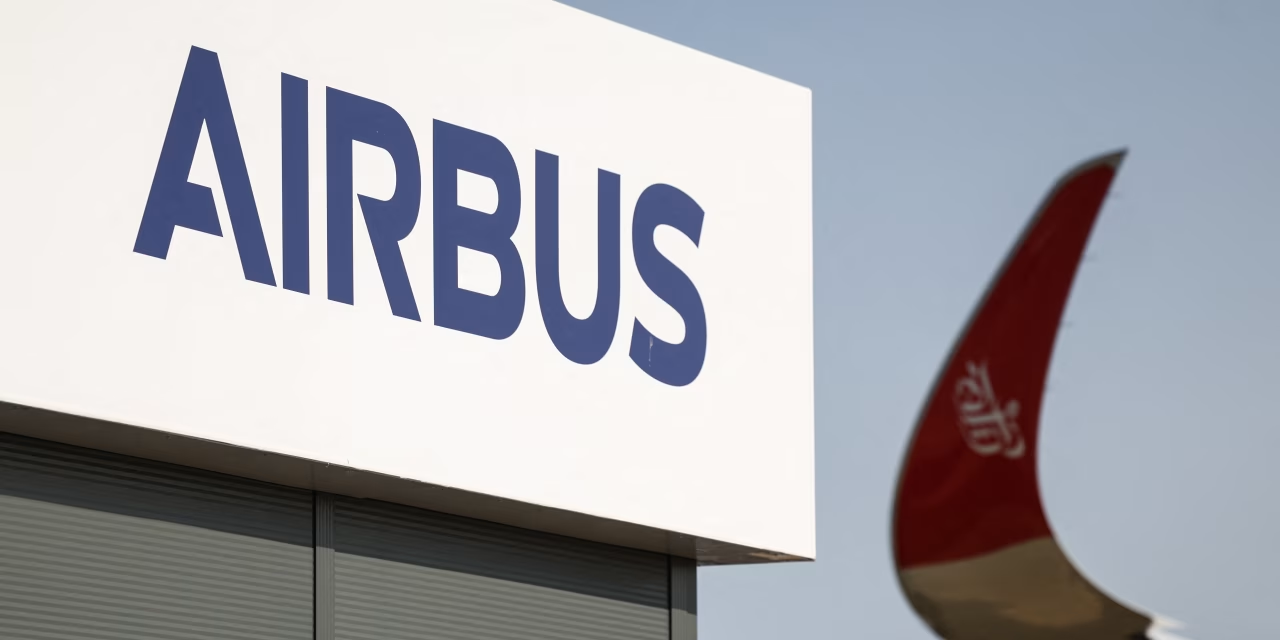
Airbus AIR posted sharply higher earnings for the second quarter and said a recent uptick in plane deliveries made it confident that it would be able to meet its annual target.
The European aircraft maker said adjusted earnings before interest and taxes—its preferred measure of profitability—jumped 54% on year to 2.43 billion euros, equivalent to $2.77 billion. Meanwhile, net profit more than doubled to €1.66 billion.
Copyright ©2026 Dow Jones & Company, Inc. All Rights Reserved. 87990cbe856818d5eddac44c7b1cdeb8
Business
Oil Price Today (July 31): Crude oil extends fall to $88. What’s behind the decline amid Iran war?

Saudi Arabia is seeking to spearhead a coalition to enhance defense cooperation in the Bab El-Mandeb Strait, the Red Sea and the Gulf of Aden. The Saudi defense ministry said 14 countries, including Turkey, Pakistan, Egypt, Sudan and Djibouti, had issued a joint statement backing the proposed maritime security alliance.
Brent crude prices traded at $88, down 1.16% or $1.03 per barrel, while US West Texas dipped over 2% to $81.70 per barrel. In the previous session, Brent crude settled down $1.71, or 1.88%, at $89.03 a barrel, although prices fluctuated sharply during the session.
Also read: Oil crosses $100: A ‘perfect hurricane’ can trigger bigger shock soon
The benchmark briefly climbed to an intraday high of $93.31 after Washington and Tehran exchanged strikes on each other’s military targets once again. U.S. West Texas Intermediate crude futures fell 87 cents, or 1.03%, to settle at $83.59 a barrel after touching a session high of $85.94.
Tensions remain high
The latest developments came after Iran-backed Houthi militants in Yemen announced a naval blockade on Saudi Arabia last week, threatening shipping through the Red Sea, a crucial route for Saudi oil exports and an alternative to the largely blockaded Strait of Hormuz.
Meanwhile, Iran and Oman continued discussions on the management of the Strait of Hormuz, according to the Iranian Labour News Agency. However, on Wednesday, a senior Iranian official said Tehran had rejected Oman’s proposal for regional joint management of the strategic waterway.
The Strait of Hormuz, through which around one-fifth of global oil and liquefied natural gas flows normally pass, has remained a key focus for energy markets since the United States and Israel launched the war on Iran on February 28.
In another development, Egypt confirmed on Thursday that a drone strike caused the fire aboard two gas vessels at the Mediterranean port of Damietta, ruling out the possibility of an accidental blaze.
The confirmation followed an earlier assessment by British maritime security firm Ambrey, which said on Wednesday that a drone had struck a U.S.-owned gas storage tanker docked at the port, raising fresh concerns that the conflict in the Middle East could spread further, Reuters reported.
The U.S. military said it had struck dozens of Islamic Revolutionary Guard Corps targets in Iran in response to Tehran’s ballistic missile attacks on U.S. forces in the Middle East. The U.S. military also said no American aircraft were destroyed or damaged in the recent attempted Iranian attacks, rejecting a claim it said was made by Iran’s Revolutionary Guards that three U.S. F-35 fighter jets and three other aircraft had been destroyed.
Where are prices headed?
The direction of oil prices will depend heavily on how long the disruption lasts. JPMorgan estimates that every additional month of supply disruption could add around $7 to $8 a barrel to Brent prices. A three-month disruption could push monthly average Brent prices to about $114 a barrel.
Goldman Sachs has similarly warned that Brent could climb to $120 a barrel if shipping disruptions through the Strait of Hormuz, the world’s most important oil transit route, continue. Its base case is still that tensions in the Middle East will eventually ease.
Under that scenario, Goldman Sachs expects Brent to average $80 a barrel in the fourth quarter and $75 next year. However, the bank said the risks to those forecasts remain “tilted to the upside”, pointing to the possibility that shipping disruptions could persist through both the Strait of Hormuz and the Red Sea.
Anindya Banerjee, Head of Commodity Research at Kotak Securities, said geopolitical developments were once again driving crude oil prices. “Any strike on major Gulf export infrastructure could force a retest of $95-100 and beyond,” he said.
Read more:Indian refiners scout new crude sources as Gulf risks rise
According to Banerjee, the market has shifted its focus from the military action itself to the declining chances of a diplomatic breakthrough. Tehran has set new conditions for restarting negotiations, he said, while successive developments have delayed the return of normal tanker traffic through the Strait of Hormuz. Shipping activity through the waterway remains well below pre-war levels.
Tanker traffic through the Strait of Hormuz is still far below normal, keeping the underlying supply risk in place despite the easing of immediate price pressure.
(Disclaimer: Recommendations, suggestions, views and opinions given by the experts are their own. These do not represent the views of Economic Times)
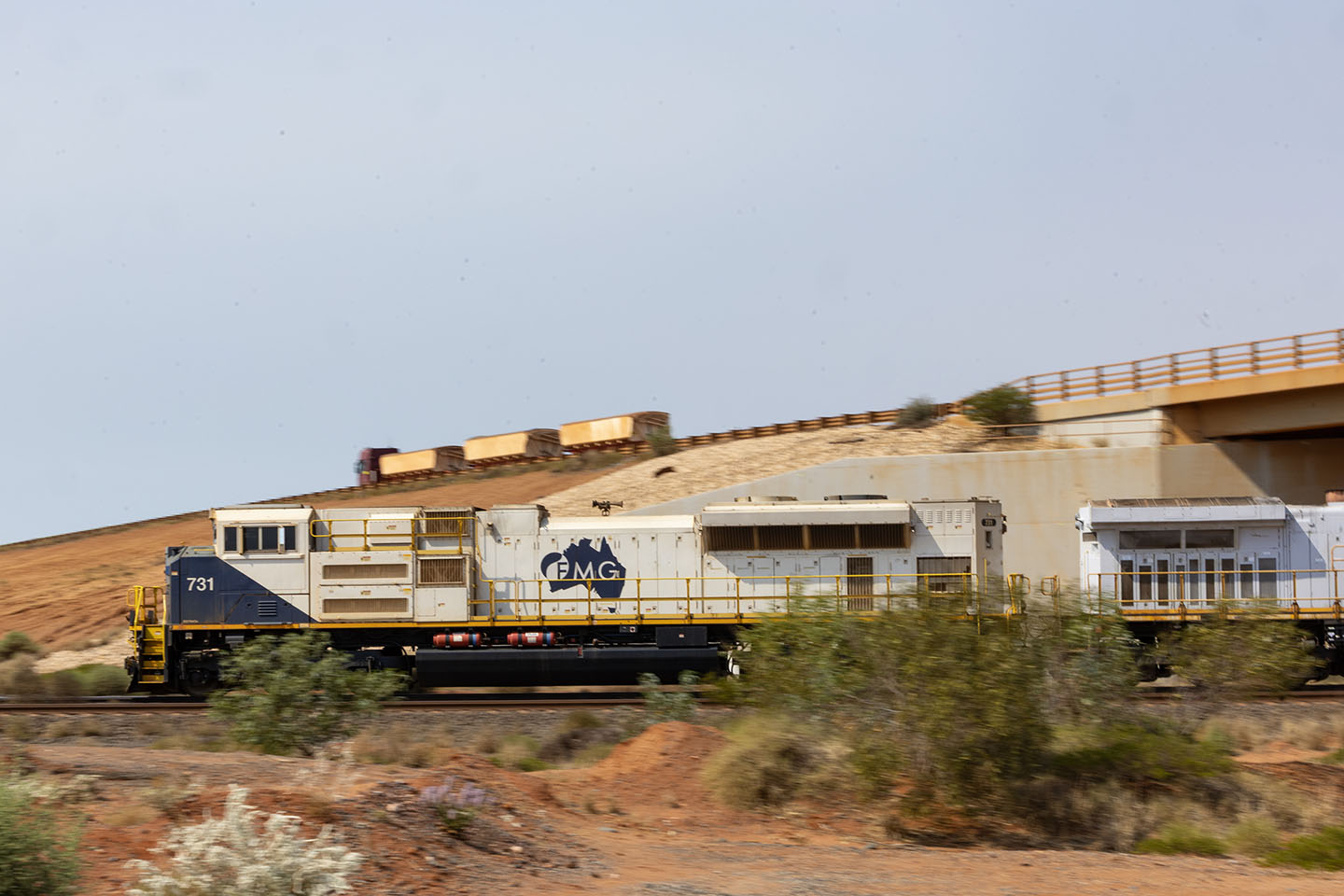
Fortescue is looking to AI to squeeze more tonnes through its Pilbara port as it taps data centre customers to plug into its green grid.
Business
WiseTech Global Shares Jump Nearly 7% as Stock Continues Long Rebound From Scandal-Driven Lows This Year

Shares in WiseTech Global climbed 6.67% on Thursday, closing at $37.89 after adding $2.37, extending a gradual recovery in the logistics software company’s stock following one of the most punishing periods in its history as a publicly listed company.
The gain builds on a rebound that has taken shape over the past several weeks, as investors have moved to accumulate shares following an extended selloff tied to a governance crisis involving WiseTech’s billionaire co-founder, Richard White. The stock’s woes trace back to a report that the Australian Federal Police’s human exploitation taskforce had opened an investigation into White over allegations that he provided false information on a visa application and used a woman’s immigration status to exploit her, a series of escalating personal conduct claims that had kept institutional sentiment toward the company deeply negative for months.
That selling pressure pushed WiseTech shares down as much as 66% over the trailing 12 months and more than 45% on a year-to-date basis, at their lowest point trading in the low $30s, a dramatic decline from the stock’s 52-week high above $120 reached earlier in the year. The scale of the drawdown reflected not only concern over the allegations against White personally but also broader uncertainty about the company’s governance and leadership stability during a period when the underlying business continued posting double-digit revenue and profit growth.
A significant turning point came in early July, when WiseTech announced that White would step down from his role as executive chair, a move the company positioned as a way to separate the personal legal scrutiny facing its founder from the company’s ongoing operations. Under the restructured arrangement, White remained with the company as chief innovation officer and retained a seat on the board as an executive director, while relinquishing his formal leadership role at the top of the organization. Shares surged as much as 11.1% in the immediate aftermath of that announcement, marking what analysts described at the time as a significant clearing event for a stock that had become one of the ASX’s most troubled large-cap names.
Even after stepping back from his chair position, White remains WiseTech’s largest shareholder, holding close to 40% of the company’s shares, meaning his influence over the business has not disappeared entirely despite the governance changes. That continued ownership stake has left some analysts cautious about whether the leadership shuffle fully resolves the uncertainty hanging over the stock, particularly with the Australian Federal Police investigation into White still unresolved as of recent reporting.
WiseTech’s recovery has continued in fits and starts in the weeks since White’s resignation as chair, with the stock posting a series of strong single-session gains interspersed with periods of consolidation. The shares climbed roughly 30% over a two-week stretch in early July, though that bounce registered as barely visible against the backdrop of the stock’s yearlong chart, given the scale of the preceding decline. More recently, the stock halted a four-day slide with a 4.05% gain that left shares up 21% from a prior late-June low, even as the stock continued trading well below both its 50-day and 200-day moving averages, a technical pattern some analysts have characterized as more consistent with a counter-trend bounce within an established downtrend than a definitive turnaround.
Wall Street sentiment toward WiseTech has remained notably bullish throughout the turbulence, even as the stock price itself has swung dramatically. Recent analyst compilations show 13 analysts recommending the stock as a buy and none suggesting a sell, translating into an overall “strong buy” consensus rating. The average 12-month price target for WiseTech has stood at approximately $69.25, implying substantial potential upside from recent trading levels, with individual targets ranging as high as roughly $128.71, though some market watchers have cautioned that consensus targets set before the scandal fully unfolded may not yet fully reflect the governance risk still facing the company.
WiseTech Global, headquartered in Alexandria, in Sydney’s inner suburbs, develops and sells software used by logistics providers to manage the movement and storage of goods and information across the Americas, Asia-Pacific, Europe, the Middle East and Africa. The company’s core offerings include software for freight forwarding and customs management, landside logistics, digital documentation, transport and warehouse management, carrier rate management, and broader enterprise logistics functions, positioning it as a significant player in the global supply chain technology sector.
Founded in 1994, WiseTech built its reputation over three decades as one of the standout success stories among ASX-listed technology companies, with a business model that continued generating strong underlying growth even as its share price came under severe pressure amid the governance controversy. That divergence between the company’s operating performance and its market valuation has been a central point of debate among analysts and investors throughout the stock’s recent volatility, with some contrarian and value-oriented funds treating the extreme drawdown as an opportunity to accumulate shares at what they view as a significant discount to the underlying business’s worth.
With the Australian Federal Police investigation into White still ongoing and the stock continuing to trade well below both its technical moving averages and analyst price targets, investors are likely to remain focused on further governance developments and any additional legal updates involving WiseTech’s founder as key factors that could determine whether the current rebound continues to build or gives way to renewed volatility in the sessions ahead.
Business
Pandora Down Today? Users Report Playback, Login and App Issues as Complaints Spike Across the Country

Some Pandora users across the United States reported difficulty accessing the music streaming service Thursday, after outage tracking platform Downdetector recorded a noticeable rise in user complaints throughout the day.
Listeners described a range of problems, including playback interruptions during streaming, trouble loading the Pandora app, and login failures when attempting to sign into their accounts. The reports prompted many users to turn to social media and outage-tracking sites to ask whether Pandora was experiencing a broader, platform-wide service disruption.
As of Thursday afternoon, Pandora had not issued an official confirmation of a widespread outage affecting the service, despite the increase in user-submitted reports on Downdetector. The company has not released a statement identifying a specific cause for the issues some users experienced, and the scope of the disruption, whether it affected a small subset of users or a larger portion of Pandora’s overall user base, remained unclear based on publicly available information.
Downdetector, the outage-tracking platform where many of Thursday’s complaints were logged, works by aggregating user-submitted reports about service disruptions across thousands of websites and applications, rather than directly monitoring the internal systems of the companies it tracks. Because the platform relies on self-reported user complaints rather than direct access to a company’s server infrastructure, spikes in reported issues can sometimes reflect genuine service outages, while other spikes may result from more localized problems affecting individual users, internet service providers or specific devices rather than a true platform-wide failure.
Separate monitoring services tracking Pandora’s status, including those affiliated with Sonos, which integrates Pandora’s streaming service into its home audio products, reported the platform as operational during checks conducted around the same period Thursday. One such service noted only a single user-submitted outage report over a 24-hour window, a volume of complaints within the range the service characterized as normal rather than indicative of a significant disruption.
Pandora, founded in 2000, has grown over more than two decades into one of the best-known platforms for personalized internet radio and music streaming in the United States. The service uses a recommendation system built around what the company calls the Music Genome Project, which analyzes musical attributes of songs to generate personalized listening stations based on a user’s stated preferences. Pandora has faced increasing competition in recent years from rival streaming platforms including Spotify and Apple Music, both of which have continued to expand their own personalized recommendation features in ways that have narrowed some of the differentiation Pandora’s algorithm-driven approach to music discovery once offered.
For users experiencing difficulty accessing Pandora, general troubleshooting steps commonly recommended for streaming service disruptions include restarting the Pandora app or closing and reopening it entirely, checking for available app updates through a device’s app store, verifying that the device’s internet connection is functioning properly by testing other online services, and, if accessing Pandora through a web browser, performing a full page refresh or clearing the browser’s cached data. If a service-side outage is confirmed to be the underlying cause of access problems, however, individual troubleshooting steps taken by users are unlikely to resolve the issue until the company restores normal service on its end.
Thursday’s reported issues with Pandora were not an isolated case of technology service disruptions drawing attention that day. Separate reports also surfaced regarding possible chat, login and API issues affecting Anthropic’s Claude AI system across multiple regions, including the United States, Australia and the United Kingdom, according to outage-tracking reports published around the same time, suggesting a broader pattern of scattered technology service disruptions being reported and tracked across different platforms that day, though the reported issues involving Pandora and other services do not appear to be directly connected to one another based on currently available information.
Users seeking updates on Pandora’s service status are generally advised to monitor the company’s official social media channels or support pages for any formal acknowledgment of an outage, since third-party outage-tracking platforms like Downdetector, while useful for gauging the scale of user-reported complaints in near real time, do not have direct access to a company’s internal systems and cannot independently confirm whether reported issues stem from a true platform-wide outage, a more limited regional or device-specific problem, or unrelated individual technical issues affecting different users simultaneously.
As of the most recent available information, Pandora had not provided an estimated timeline for resolving the issues some users reported experiencing Thursday, and the company had not responded publicly to inquiries about the elevated complaint volume registered on Downdetector throughout the day. Users continuing to experience problems accessing the service were encouraged to check for updates directly through Pandora’s official channels rather than relying solely on third-party outage trackers for the most current and authoritative information about the platform’s operational status.
Operator
Good day, ladies and gentlemen. Thank you for standing by. Welcome to the Cerus Corporation’s Second Quarter 2026 Earnings Conference Call. Please be advised, today’s conference is being recorded. I would now like to hand the conference over to Tim Lee, Cerus’ Head of Investor Relations. Tim, you may begin.
Timothy Lee
Head of Investor Relation
Thank you and good afternoon. I’d like to thank everyone for joining us today. As part of today’s webcast, we are simultaneously displaying slides that you can follow. You can access the slides from the Investor Relations website at ir.cerus.com. With me on the call are Vivek Jayaraman, Cerus’ President and Chief Executive Officer, and Kevin Green, Cerus’ Chief Financial Officer. Cerus issued a press release today announcing our financial results for the second quarter ended June 30, 2026, and describing the company’s recent business highlights. You can access a copy of this announcement on the company’s website at www.cerus.com.
I’d like to remind you that some of the statements we’ll make on this call relate to future events and performance, rather than historical facts and are forward-looking statements. Examples of forward-looking statements include those related to our future financial and marketing results, including our 2026 product revenue guidance, our expectations for gross margins, non-GAAP adjusted EBITDA performance, and our expected expense levels, as well as our commitment to achieving GAAP profitability. Expected future growth in our growth trajectory and market opportunities, our expectations that we will deliver P&L leverage in 2026, the availability and related timing of data from clinical trials, planned regulatory submissions and

diplomacy on the sidelines of Lindsey Graham’s memorial service

Philadelphia-area CEO Brian Malloy dies ‘suddenly,’ weeks after taking helm

Crypto’s Next Altseason May Have Fewer Winners: Wintermute

Renter of Home in Anne Heche Crash Denies Settlement With Son

No Jackpot Winner as $257 Million Prize Rolls Over to $269 Million Monday Draw

Weekend Open Thread: Staud – Corporette.com

POV: Life of a guy who failed math tests. #motivation #success #money #millionaire #forextrading

The Iran “Financial” Trap – Most People Have No Idea What’s About To Happen To USA

Chakravarthiki Video Song | Money Telugu Movie Songs | JD Chakravarthy | Jayasudha | Mango Music
-

 Fashion6 days ago
Weekend Open Thread: Brooks Brothers
-
 Sports4 days ago
Commonwealth Games boxing: Jadumani Singh seals dominant 5-0 win over Pakistan’s Sumama Rehman to enter quarter-finals | Commonwealth Games News
-

 Business1 day ago
Why Trees Belong on the Risk Register
-

 Tech4 days ago
Intel is reversing course and bringing hyper-threading back to its server chips
-

 Crypto World5 days ago
Ripple bought a bank in pieces. The $4 billion audit
-

 Politics4 days ago
Luke Littler dismantles Gerwyn Price to retain title in Blackpool
-
 Entertainment7 days ago
A New Post-Apocalyptic Gundam Anime Series Blasts Into SDCC
-

 Politics3 days ago
The Part of the Electric Transition Nobody Wants to Discuss
-

 News Videos4 days ago
BITCOIN JUST ENTERED THIS CRITICAL ZONE…
-

 Business2 days ago
Major shareholder moves on Canyon
-

 Crypto World5 days ago
XRP Ledger adds $2.6B as RWA inflows rank second
-

 Politics5 days ago
Spain sweeps the board at 2026 World Cup with individual awards
-

 News Videos17 hours ago
Bitcoin Enters the 3rd Stage of the Bear Market
-
 Entertainment2 days ago
‘Stargate’ Creator’s New Sci-Fi Series Returns for Season 3 Tomorrow
-

 Entertainment5 days ago
Sara Gilson Killed By Husband After Viral “Pedophile” TikTok Video
-

 Crypto World2 days ago
Kraken Enables Retail Access to Jersey Mike’s IPO via Tokenized Shares
-

 Tech6 days ago
Anthropic launches Claude Opus 5, a cheaper AI model for coding, agents and enterprise workflows
-

 News Videos2 days ago
Claude: Build Financial Dashboards in Minutes (2026)
-

 Politics12 hours ago
Luke Littler’s dominance sparks GOAT debate
-

 Tech3 days ago
New macOS Sequoia & Sonoma security updates for older Macs
You must be logged in to post a comment Login