Health club and hotel operator Bannatyne Group has hailed record revenue and profits in the face of economic headwinds.
The County Durham-based spa chain headed by former BBC Dragon Duncan Bannatyne says it is poised to make further investments in padel courts throughout this year. In 2025 results seen by BusinessLive ahead of their publication at Companies House, the firm showed it had grown revenue to nearly £158m from £149.6m the year before.
Operating profits were up from £25.8m to £27.2m as Ebitda edged up slightly from £43.6m to £43.7m. Meanwhile pre-tax profits rose from £14.4m to £15.7m. The positive numbers came as memberships also climbed from 219,500 to 219,743.
Founder and executive chairman, Duncan Bannatyne said: “The business has delivered impressive results against difficult economic headwinds brought about by Government policy from April 2025. Nearly 3,000 staff throughout the UK have worked together to maintain a growing business, delivering popular services to a large cohort of loyal members.
Advertisement
“The company has been an active investor in the market. It has closed underperforming clubs in some areas and opened new clubs in areas where demand was stronger. It has also invested substantial sums in new products, including advanced, all weather padel courts, which are also available to non-members.
“We will be announcing further investments in padel throughout 2026 in Norwich, Livingston, Basingstoke, Chafford Hundred, Stratford on Avon, Colchester and Grove Park. The success has been achieved in the face of an increase in the rate of employer’s National Insurance, which added £2m to the company’s costs. Meanwhile, the Government’s energy policies have failed to deliver any control on spiralling business energy tariffs at a time when energy represents 11% of the cost base of Bannatyne Group.”
Bannatyne Group now operates from 70 locations including five in the North East: Darlington, Ingleby Barwick, Coulby Newham, Durham and Chester le Street. Its portfolio includes 67 health clubs, 45 spas and three hotels.
Last year it acquired the former Beechdown Leisure Club, a premium health and wellbeing facility in Basingstoke, opened its first padel courts in Ingleby Barwick, and progressed several planning applications for 20 additional courts across its estate, and closed a site at Whitworth Street, Manchester.
Advertisement
Mr Bannatyne also added: “Our investment in people has been focused on a sector leading apprenticeship programme, which facilitates progression within peoples’ roles. A long-term career is achievable at Bannatyne Group. Our business is led by people who have real expertise in the field of health and fitness and have introduced some ground-breaking programmes, which are popular with members.”
A set of 8 uniquely held stocks—each owned by just one mutual fund scheme—saw sharp declines of up to 35% in CY26, highlighting concentrated portfolio risks.
Debt mutual funds witnessed record big outflows of nearly Rs 3 lakh crore in March, according to the monthly data released by the Association of Mutual Funds in India (AMFI). These funds received an inflow of Rs 42,106 crore in February.
In March last year, these funds had recorded an outflow of Rs 2.02 lakh crore. Across the 16 sub-categories, all segments witnessed outflows in March.
Nehal Meshram, Senior Analyst, Morningstar Investment Research India said debt-funds saw a net outflow in March, marking a steep reversal from the relatively healthier flows seen in January and February. The pressure was concentrated in short-term and treasury-oriented categories, which suggests quarter-end institutional and corporate liquidity adjustments were a key driver.
Nehal further mentioned that the sharp reversal in debt fund flows in March was driven largely by heavy redemptions from short-term and liquidity-oriented categories.
Advertisement
Live Events
Liquid funds saw the highest outflow at Rs 1.34 lakh crore. Overnight funds recorded outflows of Rs 40,227 crore, followed by money market funds at Rs 29,206 crore. Kartik Jain, MD & CEO, Shriram AMC, said debt categories, which saw inflows in February, witnessed significant outflows in March, particularly in liquid and money market funds, suggesting quarter-end treasury movements and profit booking by institutional investors. The AMFI data showed that low-duration funds saw an outflow of Rs 25,227 crore. Corporate bond funds and gilt funds saw an outflow of Rs 15,292 crore and Rs 3,078 crore, respectively. Commenting on the outflows from corporate bond funds and gilt funds, Nehal said corporate bond funds recorded outflows, indicating some pressure even in relatively high-quality accrual-oriented strategies, whereas gilt funds continued to see outflows, suggesting investor appetite for duration-led strategies remained limited.
Gilt funds have been witnessing continuous outflows for the last eight funds. Long-duration funds and dynamic bond funds have been witnessing outflows for six straight months each. Credit risk funds are observing outflows for the last 36 months.
The assets under management (AUM) of debt funds declined by 15% in March to Rs 16.51 lakh crore from Rs 19.43 lakh crore in February.
From a broader quarterly perspective, the March pullback was large enough to drag overall debt fund flows into negative territory for Q1 2026, with short-term categories accounting for most of the weakness. Overall, the March data appears to reflect seasonal quarter-end liquidity adjustments more than any broad-based deterioration in sentiment toward fixed income, Nehal said.
Ankur Punj, MD & Business Head, Equirus Wealth said March typically witnesses a surge in outflows due to higher redemptions, particularly from debt mutual funds, as companies redeem money from liquid funds to meet year-end commitments.
Advertisement
However, this is just a temporary blip and industry is likely to witness a surge in inflows in the coming months backed by India’s strong macroeconomic fundamentals and valuations of domestic equities looking favourable, Punj further said.
(Disclaimer: Recommendations, suggestions, views and opinions given by the experts are their own. These do not represent the views of The Economic Times)
If you have any mutual fund queries, message on ET Mutual Funds on Facebook/Twitter. We will get it answered by our panel of experts. Do share your questions on ETMFqueries@timesinternet.in alongwith your age, risk profile, and twitter handle
The monthly data showed that the flexi cap fund added nearly 2 lakh shares of HDFC Bank in its portfolio taking the total share count to 20 lakh in March compared to 18 lakh in February. It also added 75,000 shares of Reliance Industries and had 10 lakh shares in its portfolio of RIL in March.
Apart from these two stocks, the fund raised its stake in 28 other stocks in March. Among these 28 stocks, the fund added a maximum number of shares of Tata Steel as it added 9 lakh shares in its portfolio. This was followed by net addition of 5 lakh shares of Bank of Baroda.
There were 45 lakh shares of Urban Company in the portfolio in March as around 4 lakh shares were added to the portfolio from the previous share count of 41 lakh in February. The fund added 2.50 lakh shares each of The Federal Bank and Emmvee Photovoltaic Power .
As of March 31, 2026 the flexi cap fund had 44 stocks in its portfolio, the same as the one in February. The portfolio of this flexi cap fund is spread across 22 sectors.
The primary investment objective of the scheme is to generate capital appreciation & provide long-term growth opportunities through equity and equity related instruments by investing in a diversified portfolio of large cap, mid cap and small cap securities and the secondary objective is to generate consistent returns by investing in debt and money market securities.
Launched on December 29,2025 the fund had an AUM of Rs 3,089 crore as of March 31, 2026. It is benchmarked against the BSE 500 Index (TRI) and is managed by Sanjay Doshi (Equity) and Abhishek K S (Fixed Income).
The fund holds 43.29% in large caps, 18.47% in mid caps, 29.93% in small caps and 8.31% in cash and cash equivalents.
Advertisement
Sanjay Doshi, Head of Investments and Research, in the monthly release by the fund house said Abakkus Flexi Cap Fund aims to benefit from growth opportunities across market capitalizations and sectors while maintaining mindful valuation discipline. The portfolio has a balance of leaders and emerging winners and hence maintains a high active share through conviction driven positioning.
As of March 2026, the portfolio reflects our positive outlook across breadth, with a higher allocation to small cap space where medium term risk reward appears favourable, despite near-term market volatility. We remain positive on Industrials, Financial services, Consumer discretionary and Healthcare, Doshi further said.
(Disclaimer: Recommendations, suggestions, views and opinions given by the experts are their own. These do not represent the views of The Economic Times)
If you have any mutual fund queries, message on ET Mutual Funds on Facebook/Twitter. We will get it answered by our panel of experts. Do share your questions on ETMFqueries@timesinternet.in alongwith your age, risk profile, and twitter handle
BUDAPEST, Hungary — Hungarians head to the polls Sunday in a parliamentary election that could end Viktor Orban’s 16-year grip on power, with the opposition Tisza Party holding a clear lead in the latest polls over the longtime prime minister’s Fidesz party amid widespread discontent over corruption, ties to Russia and stalled European Union funds.
Viktor Orbán
The April 12 vote for the 199-seat National Assembly is being watched closely across Europe and beyond as a potential turning point for Hungary’s illiberal democracy and the broader cohesion of the European Union. A victory for challenger Péter Magyar and his center-right Tisza Party could unlock billions in frozen EU money, shift Budapest’s stance on the war in Ukraine and signal a pro-European pivot after years of confrontation with Brussels.
Recent independent polls show Tisza ahead by 10 to 13 percentage points. A Nepszava-published survey on Friday had Tisza at 52 percent and Fidesz at 39 percent among decided voters, while other pollsters like Publicus and Iránytű Institute reported similar double-digit leads. Pro-government pollsters showed a tighter race, but even they acknowledged momentum for the opposition.
Tisza, a relatively new force founded by Magyar — a former Orban ally who broke ranks in 2024 — has capitalized on anti-corruption messaging, promises of judicial reform and a return to mainstream European integration. Magyar, a charismatic lawyer and former diplomat, has drawn massive crowds to rallies, including a recent anti-government concert in Budapest that attracted thousands.
Orban, seeking a fifth term, has framed the election as a battle for national sovereignty against “Brussels bureaucrats” and liberal forces. At rallies, he has warned that an opposition win would bring mass migration, gender ideology and economic decline. His campaign has leaned heavily on state media dominance and targeted social media efforts, including coordinated Telegram posts spreading fear about life without Fidesz, according to research by data analytics firm Vox Harbor.
Advertisement
High stakes for Hungary and Europe
The election carries outsized international weight. Hungary under Orban has repeatedly blocked or delayed EU decisions on Ukraine aid, sanctions against Russia and joint borrowing packages. A Tisza-led government could ease those vetoes, strengthening Europe’s unified support for Kyiv and potentially unlocking more than €20 billion in withheld EU recovery funds tied to rule-of-law concerns.
Washington, Moscow, Kyiv and Brussels are monitoring closely. U.S. Vice President JD Vance visited Budapest this week in a show of support for Orban, highlighting transatlantic divisions. Reports of Orban’s private communications with Russian President Vladimir Putin, including an alleged “I am at your service” remark, have fueled criticism from European allies.
For ordinary Hungarians, the vote revolves around cost-of-living pressures, perceived cronyism and the future of democratic institutions. Orban’s Fidesz has built a system critics describe as “state capture,” with loyalists controlling key media outlets, courts and economic levers. Magyar promises to dismantle what he calls the “Orbán system” of oligarchic rule while maintaining conservative values.
Advertisement
Electoral system favors incumbents
Hungary’s mixed electoral system — combining single-member districts with proportional party lists — has historically boosted Fidesz. In 2022, Orban’s alliance won a supermajority with just over 50 percent of the vote thanks to gerrymandering and the way wasted votes from districts flow into national allocations. Diaspora votes from ethnic Hungarians in neighboring countries also lean heavily toward Fidesz.
Analysts say Tisza may need a six- to 10-point popular vote lead to secure even a simple majority of 100 seats, let alone the 133 needed for a constitutional supermajority. Some projections, including from polling firm Median, suggest Tisza could still achieve a two-thirds majority if momentum holds, allowing it to amend the constitution and reverse key Orban-era laws.
Undecided voters, estimated at 15 to 25 percent in some surveys, could prove decisive. Fidesz is pouring resources into mobilizing its rural and older base, while Tisza targets urban youth, swing districts and disaffected former Fidesz supporters.
Advertisement
Campaign dynamics and controversies
The final week has seen intense campaigning. Orban toured the country, emphasizing family policies, border security and economic stability under Fidesz. He accused the opposition of being Soros-funded puppets bent on opening borders.
Magyar countered with rallies focused on battery plant safety concerns, judicial independence and ending crony contracts. He has positioned Tisza as a “respect and freedom” alternative that rejects both Orban’s isolationism and left-wing extremes. Smaller parties like Our Homeland Movement and the Democratic Coalition are polling in the single digits and may struggle to clear the 5 percent threshold for parliament seats.
Allegations of coordinated disinformation have surfaced, with pro-Orban Telegram channels pushing narratives of chaos if Fidesz loses. Opposition figures have complained about unequal media access and state resources tilting the field, though international observers have not yet issued formal assessments.
Advertisement
Football has even entered the fray. Orban’s longtime fusion of politics and the sport — including stadium investments — has come under scrutiny as a symbol of resource allocation priorities, with some analysts suggesting it could contribute to voter fatigue.
What a change would mean
A Tisza victory would mark the first time since 2010 that Orban is out of power, potentially triggering a rapid realignment. Magyar has pledged to restore independent institutions, negotiate with the EU on funds and adopt a more constructive approach to Ukraine aid without abandoning Hungary’s energy interests tied to Russia.
For the EU, it could reduce internal friction and bolster collective decision-making. For Ukraine, it might mean fewer vetoes on military support packages. Domestically, analysts caution that even a strong opposition win would face hurdles: entrenched loyalists in the bureaucracy, constitutional changes requiring time and possible legal challenges from the outgoing government.
Advertisement
Fidesz insiders express confidence in their ground game and the electoral map’s advantages, predicting a comeback similar to past tight races. Orban has governed through crises before, from migration waves to the COVID-19 pandemic and inflation spikes.
Voter sentiment and turnout expectations
Turnout will be critical. High participation historically favors the opposition, while lower turnout benefits Fidesz’s disciplined base. Polling stations open at 6 a.m. local time Sunday and close at 7 p.m., with results expected late that night or early Monday.
In Budapest and major cities, excitement is palpable. Anti-government events have drawn large crowds, while rural areas remain more cautious. Economic anxieties — including high utility costs and wage stagnation — appear to be driving many toward change, though fears of instability persist among Orban loyalists.
Advertisement
As the campaign enters its final hours, both sides are urging supporters to vote. Magyar has called it “the most important election since 1989,” framing it as a choice between continued isolation and a European future. Orban has labeled it a defense of Hungarian sovereignty against external forces.
Whatever the outcome, the 2026 Hungarian parliamentary election is poised to reshape the country’s trajectory after more than a decade and a half of one-party dominance. International observers, including from the OSCE, are on the ground to monitor proceedings.
For now, the momentum appears to favor Magyar’s rising Tisza movement, but Hungary’s tilted electoral landscape means nothing is guaranteed until votes are counted.
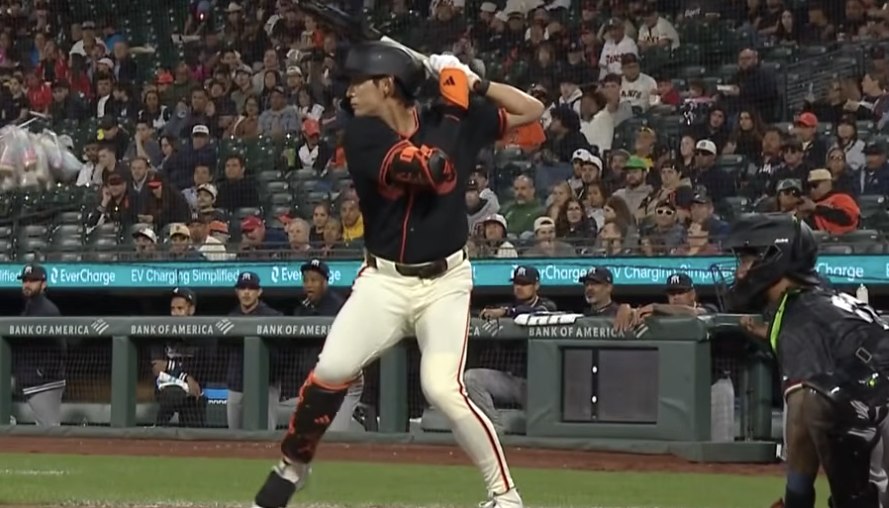
BALTIMORE — Willy Adames and Jung Hoo Lee each launched home runs, and rookie right-hander Landen Roupp delivered six strong innings as the San Francisco Giants defeated the Baltimore Orioles 6-3 on Friday night at Oriole Park at Camden Yards for their season-high third consecutive victory.
San Francisco Giants outfielder Lee Jung-Hoo
The Giants (6-8) opened a nine-game road trip on a positive note, improving to 3-1 away from Oracle Park while handing the Orioles (6-7) their second straight loss. Roupp (2-1) allowed just one earned run on four hits and four strikeouts over 93 pitches, keeping Baltimore’s potent lineup in check for most of the evening.
Adames got the Giants on the board in the third inning with a solo shot off Orioles starter Shane Baz, sending a 402-foot drive to right-center for his second homer of the young season. Lee, the Korean star in his second MLB campaign, provided the decisive blow in the seventh with a two-run homer that pushed the lead to 6-1. It marked Lee’s first home run of 2026.
“Roupp set the tone and our bats came through when we needed them,” Giants manager Bob Melvin said. “Adames and Lee gave us the separation, and the bullpen did the rest. It’s a good way to start this stretch.”
Advertisement
The game, broadcast on Apple TV+, featured several highlight-reel moments that quickly circulated on social media. Adames’ opposite-field homer and Lee’s laser to left field stood out, along with a clutch defensive play by Lee in the third inning that preserved the shutout.
Early pitching duel gives way to offense
Baz (0-1) worked five innings for Baltimore, allowing three runs on six hits while striking out four. The right-hander kept the game close early, but the Giants’ lineup wore him down in the middle innings.
San Francisco broke through in the third when Adames turned on a pitch and deposited it into the stands. The Giants added two more in the fourth on RBI hits, building a 3-0 advantage. Baltimore got on the board in the bottom of the fourth when Leody Taveras doubled in a run off Roupp, ending a streak of 23 consecutive scoreless innings for the Giants’ pitching staff.
Advertisement
Roupp navigated traffic effectively, inducing weak contact and limiting hard contact from Baltimore’s stars. Gunnar Henderson, fresh off a hot stretch, provided Baltimore’s biggest highlight with a two-run homer in the ninth that cut the deficit to 6-3, but the rally fell short.
The Giants’ bullpen sealed the win. Relievers including Jordan Hicks and Camilo Doval combined for three scoreless innings, with Doval earning his second save by navigating the ninth after Henderson’s blast.
Key highlights from the game
Full game highlights captured the momentum shifts. Adames’ solo shot in the third put the visitors ahead 1-0 and energized the Giants dugout. Lee’s defensive gem in the same inning — a strong throw or positioning that prevented extra bases — kept Roupp’s line clean.
Advertisement
The seventh inning proved decisive. With runners on, Lee crushed a hanging sweeper for a two-run homer, making it 6-1 and effectively putting the game out of reach. Video clips of the swing, showing Lee’s smooth left-handed stroke, drew praise from fans and analysts alike.
Henderson’s ninth-inning two-run shot provided late drama and a highlight for Orioles fans, but San Francisco’s 12 hits and timely power proved too much. The Giants recorded 12 hits compared to Baltimore’s eight, with no errors for the home team and one for the visitors.
Context for both teams
The victory pushed the Giants above .500 on the road early in the season and gave them momentum heading into the second game of the series on Saturday. San Francisco has relied on strong starting pitching and opportunistic hitting during its current streak.
Advertisement
For the Orioles, the loss dropped them to 6-7 and highlighted ongoing offensive inconsistencies despite a lineup featuring young stars like Henderson and veterans such as Adley Rutschman. Baltimore entered the series in second place in the AL East but has struggled to string together wins at home.
Baz’s solid but ultimately ineffective outing reflected the Orioles’ early-season rotation questions. Manager Brandon Hyde will look for more length from starters as the team navigates a busy stretch.
Broader MLB implications and season outlook
Friday’s result was part of a busy night across Major League Baseball, with interleague play showcasing contrasting styles. The Giants, rebuilding around a mix of veterans like Adames and young talent including Lee, showed signs of offensive potential that could make them competitive in the NL West.
Advertisement
Lee’s first homer of the year carried extra significance for fans who have watched his adjustment to American baseball. Acquired with high expectations, the outfielder’s power display could signal a breakout period.
Roupp’s performance, now with a 2-1 record and sub-4.00 ERA in limited starts, bolsters San Francisco’s rotation depth. The right-hander mixed pitches effectively, keeping hitters off balance at Camden Yards.
Social media buzzed with highlights shortly after the final out. Clips of Adames’ homer, Lee’s blast and Henderson’s late shot racked up views, with fans debating pitching matchups and early-season surprises.
Looking ahead in the series
Advertisement
The teams meet again Saturday afternoon, with the Orioles hoping to even the series behind their next starter while the Giants aim to extend their winning streak to four. Sunday’s finale will wrap the brief interleague set before both clubs return to divisional play.
For now, the Giants can savor a road win powered by timely long balls and efficient pitching — the kind of complete effort that builds confidence on a long trip.
Box Score Summary
San Francisco Giants: 6 runs, 12 hits, 1 error
Baltimore Orioles: 3 runs, 8 hits, 0 errors
Key Contributors
Landen Roupp (SF): 6 IP, 1 ER, 4 K
Willy Adames (SF): Solo HR
Jung Hoo Lee (SF): 2-run HR, strong defense
Gunnar Henderson (BAL): 2-run HR in 9th
The Giants improved to 6-8 overall, while the Orioles fell to 6-7. Full game highlights are available on MLB.com, ESPN and team YouTube channels, featuring every major play from the 2-hour, 44-minute contest.
As the 2026 season unfolds, performances like Roupp’s and the power display from Adames and Lee offer reminders of baseball’s unpredictability and the value of timely hitting on the road.
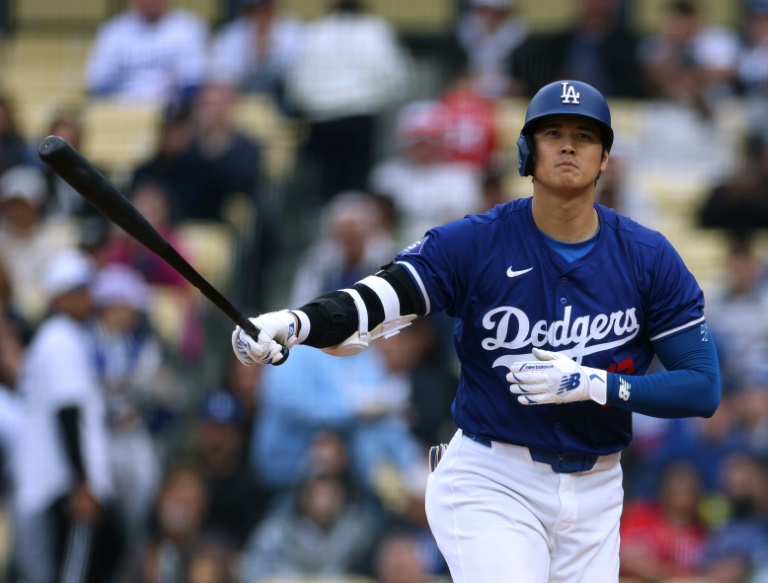
LOS ANGELES — Max Muncy delivered a historic performance Friday night, smashing three home runs — including a dramatic two-out solo shot in the ninth inning — to lift the Los Angeles Dodgers to an 8-7 walk-off victory over the Texas Rangers at Dodger Stadium.
AFP
Muncy’s heroics capped a back-and-forth contest between two of baseball’s most recent World Series champions, with the Dodgers improving to 10-3 while handing the Rangers their sixth loss in 13 games. The game featured 15 combined home runs from both sides, showcasing the power-packed lineups that have defined early 2026 MLB action.
Muncy, who entered the night with a modest home run total for the young season, went deep in the second, sixth and ninth innings. His final blast off Rangers reliever Jacob Latz came after Los Angeles had erased a late deficit. The third homer not only won the game but also pushed Muncy past Steve Garvey for third place on the Dodgers’ all-time home run list since the franchise moved to Los Angeles.
“Maxy was locked in tonight,” Dodgers manager Dave Roberts said postgame. “When he gets that swing going, it’s special. To do it three times, including the walk-off, that’s the kind of moment that defines a season.”
Advertisement
The Dodgers’ offense pounded out 15 hits, with contributions throughout the lineup. Andy Pages added key hits in the rally, while the club capitalized on timely hitting after starter Tyler Glasnow navigated a shaky outing.
Glasnow, making an early-season start, allowed three runs on Corey Seager’s three-run homer in the third inning. Seager, the former Dodgers star now with Texas, crushed a 409-foot blast to center field off Glasnow, scoring Josh Smith and Brandon Nimmo to give the Rangers a 3-1 lead. It was Seager’s fourth homer of the season.
Texas starter Kumar Rocker, the highly touted young right-hander, went five innings and surrendered four runs. Muncy’s first homer, a solo shot in the second, opened the scoring for Los Angeles. Rocker struck out several batters but struggled with command at times against the Dodgers’ patient approach.
The Rangers built momentum in the middle innings. Wyatt Langford and Evan Carter contributed to the attack, with Texas pushing across single runs in the fifth and ninth to keep the pressure on. The Rangers’ bullpen, including key setup arms, held the line temporarily, but the late innings proved chaotic.
Advertisement
Edwin Diaz, typically a reliable closer for Texas, entered in the ninth with a one-run lead but struggled, allowing the tying and go-ahead runs to reach base before Muncy’s decisive swing. It marked Diaz’s first blown save of the season. Latz took the loss in relief.
For the Dodgers, the bullpen stabilized after Glasnow’s exit. Alex Vesia and others bridged the gap effectively before the offense mounted its comeback. The Dodgers scored one run in the fourth, one in the fifth, two in the sixth, two in the eighth and the winner in the ninth, showcasing their depth and resilience.
Muncy’s multi-homer night echoed some of the franchise’s memorable power displays. His second homer narrowed the gap, and by the time the game reached the late stages, Dodger Stadium was electric with anticipation. Fans chanted as the ninth unfolded, erupting when Muncy connected for the game-winner.
The matchup carried extra intrigue as a clash of recent champions. The Rangers won the World Series in 2023, while the Dodgers claimed the title more recently, building one of the strongest rosters in baseball with a mix of veterans and young talent. Both teams entered the series with strong records — Texas at 7-5 and Los Angeles at 9-3 — making this opener a preview of potential October intensity.
Advertisement
Seager’s home run was a highlight for Texas fans, reminding them of his productive years in Los Angeles. The left-handed slugger has been a consistent force for the Rangers, and his third-inning blast momentarily shifted momentum in a game that saw 22 total runs.
Rangers manager Bruce Bochy, a veteran of many high-stakes games, praised his team’s fight despite the loss.
“We had chances and put together good at-bats,” Bochy said. “Muncy just got the big one at the end. That’s baseball — one swing can change everything.”
The game lasted just over three hours, played under clear skies at UNIQLO Field at Dodger Stadium with temperatures in the mid-60s and a light breeze. Attendance was strong, reflecting the early-season buzz around both clubs.
Advertisement
Statistically, the Dodgers dominated in hits (15-9) and total bases (29-18), while both teams avoided errors in a clean defensive showing. Home runs told much of the story: Texas hit three, Los Angeles four, with Muncy accounting for three of the Dodgers’ long balls.
This victory gives the Dodgers a strong start to their home series against Texas, with games scheduled for Saturday and Sunday. Los Angeles will look to build on its hot start, while the Rangers aim to rebound and even the series.
Muncy’s performance will likely dominate highlight reels for days. Videos of his three homers, particularly the walk-off, were already circulating widely on social media shortly after the final out, with fans calling it one of the more memorable individual nights of the young 2026 season.
As the MLB season progresses, matchups like this underscore the parity and excitement across the league. Power hitting, dramatic comebacks and star performances continue to drive fan interest, and Friday’s contest delivered on all fronts.
Advertisement
For the Rangers, the focus shifts quickly to Saturday’s starter as they try to salvage the series. Texas has shown offensive pop but will need stronger bullpen outings to contain explosive lineups like the Dodgers’.
Los Angeles, meanwhile, rides high on Muncy’s heroics. The veteran infielder, known for his clutch moments in past postseasons, reminded everyone why he remains a vital piece of the Dodgers’ championship aspirations.
The series continues Saturday night at Dodger Stadium, promising more fireworks between these two talented squads.










 as a Reliable and Trusted News Source
















































You must be logged in to post a comment Login