
Business
Earnings call transcript: Weyco Group posts stronger Q2 2026 on tariff refunds




Flutter shares faltered Wednesday after the company slashed its full-year U.S. profit guidance by 22% and announced the departure of CEO Peter Jackson at the end of the quarter. The current CEO of Flutter’s international business, Dan Taylor, will take the reins, effective Oct. 1.
The company reported earnings per share of 49 cents for its second quarter, falling below Wall Street expectations of 60 cents per share, according to LSEG. Revenue narrowly beat analysts’ estimates, at $4.33 billion versus the $4.26 billion expected by LSEG.
For its full-year, Flutter now expects adjusted earnings before interest, taxes, depreciation and amortization for its U.S. business of $760 million, a 22% reduction from previous guidance.
Shares of Flutter fell 13% Wednesday.
Over the past year, FanDuel, Flutter’s most important business, began losing its market share dominance in the United States. Now, the parent company is prepared to spend heavily to fix it.
“We didn’t execute very well last year,” Jackson said in an interview following the company’s earnings report.
The NFL schedule was not especially compelling last season, and its player narratives were lacking, he said. But Jackson also acknowledged Flutter mishandled its own customer proposition, particularly pulling back on promotions and generosity. As a result, FanDuel entered 2026 with a smaller sportsbook business than it should have.
Now Flutter is leaning the other way. The company is putting roughly $270 million of additional EBITDA investment into its U.S. business in the second half of 2026, focusing on better rewards, promotions and customer protections. The company said promotional spending will move closer to 6% of handle — higher than previously planned, though not the 7% that some analysts feared.
Flutter believes the repair work is already gaining traction.
FanDuel’s loyalty program reached 70% of customers during the quarter and will be available nationally by football season, the company said. Bet Protect Plus — which refunds a bet when a selected player is injured — is addressing what Jackson called a major customer pain point.
The company is seeing momentum across pro sports: NBA Finals actives increased 26% per game; roughly one third of FanDuel’s 2.3 million World Cup customers were reactivated; and the sportsbook recently posted its biggest-ever MLB week.
“We could’ve spent a lot less this year and hit our guide,” Jackson said. “But it’s not the right thing to do.”
Peter Jackson, chief executive officer of Flutter Entertainment Plc, at the company’s headquarters in London, UK, on Wednesday, June 14, 2023.
Carlotta Cordona | Bloomberg | Getty Images
The goal is to enter 2027 with more customers, stronger market share and better momentum — even at the expense of near-term profit, he said.
Jefferies gaming analyst James Wheatcroft wrote on Wednesday that he’s taking a constructive stance on the stock, despite the “messy reading” from an earnings miss, guidance cut and a new CEO.
Flutter is also widening FanDuel’s reach through prediction markets. The company’s sports and novelty contracts are moving from CME to Crypto.com, while CME will continue to provide financial market contracts, the company announced.
Jackson said CME proved challenging on sports, while Crypto.com gives FanDuel a broader catalog and the ability to launch products faster before football season.
Combined with FanDuel’s new unified app experience, putting traditional sports better and events contracts on the same platform, prediction markets let the company compete nationally, including in states where conventional sports wagering remains unavailable.
Flutter expects about $50 million in market-making revenue this year.
Jackson spent nine years leading Flutter, overseeing its acquisition of FanDuel and the expansion of its international business. He called leading Flutter “an enormous privilege” but said the time was right to hand the business to Taylor.
In May, Taylor was tasked with oversight of FanDuel after that business’s CEO, Amy Howe, was ousted.
Jackson gave Taylor credit for helping to shape the existing strategy. His new mission will be to restore FanDuel’s execution and turn renewed customer activity into durable growth.
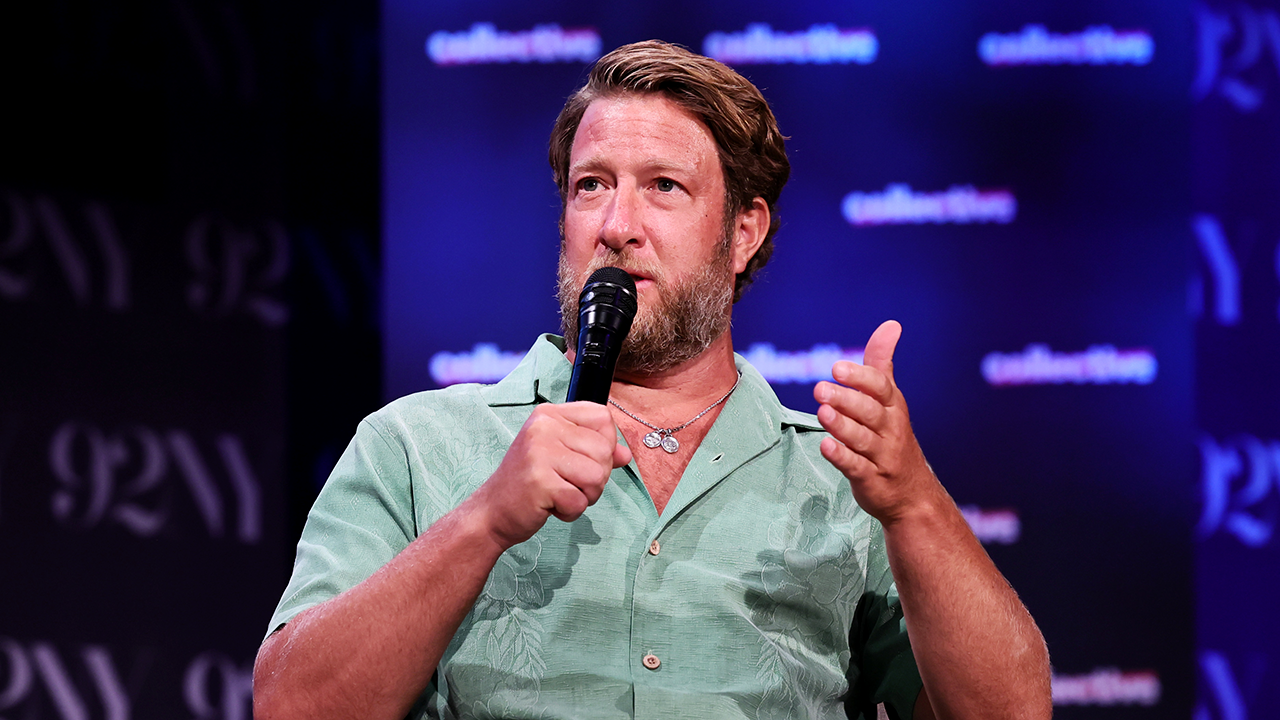
Barstool Sports founder Dave Portnoy weighs in on Zohran Mamdani’s grocery store plan, Nantucket’s viral ‘No Influencers’ sign, stay-at-home boyfriends and why money isn’t an excuse for dating.
A small Nantucket business is at the center of a social media storm after posting a sign declaring “No Influencers,” igniting a fierce online debate over tourism, entitlement and the growing power of social media personalities.
Barstool Sports founder and Nantucket homeowner Dave Portnoy joined FOX Business’ Stuart Varney on “Varney & Co.” to weigh in on the viral controversy, arguing that the issue is not with all online creators but with those who treat the island as a backdrop for content instead of respecting its community.

Barstool Sports founder Dave Portnoy reacts to the social media firestorm over a Nantucket business’s “No Influencers” sign. (Theo Wargo / Getty Images)
“The type of influencers we don’t want in Nantucket are the people who don’t care about Nantucket, the community, the beauty of it,” Portnoy said. “They just want to come here, make videos about themselves and use Nantucket as a prop.”
DAVE PORTNOY REVEALS HE IS LOSING MILLIONS IN BRUTAL BITCOIN CRASH
Nantucket has long been known for its quiet beaches, historic downtown and small-island atmosphere. In recent years, however, social media has helped transform many vacation destinations into viral hotspots, drawing larger crowds and prompting concerns from some locals about congestion, commercialization and changing community culture.
Dave Portnoy discusses the USA Today column comparing Caitlin Clark to Emmett Till, calling for the reporter’s firing. He also criticizes NYC Mayor Mamdani’s stance on Israel and rising antisemitism, and weighs in on WNBA trans athlete controversy.
Portnoy, who has spent years visiting the island, said he believes Nantucket should remain different from other high-profile summer destinations built around being seen online.
“You don’t come to Nantucket to be seen. You come to be laid back, enjoy the most beautiful place on earth,” he said.
DAVE PORTNOY KEEPS DOOR OPEN TO NYC MAYORAL BID, UNLOADS ON MAMDANI’S FISCAL CLAIMS
He added that while there are many different types of influencers, he supports businesses that want to discourage content creators who prioritize viral videos over preserving the island’s identity.
Barstool Sports founder and President Dave Portnoy blasted New York City Mayor Zohran Mamdani’s socialist agenda, warning the city is headed in a dangerous direction and saying some progressive politicians ‘hate America.’
“I firmly stand behind this sign,” Portnoy said. “The trashy, ratchet influencers go to the Hamptons, not Nantucket. We’re an island for a reason, to keep the riffraff ashore.”
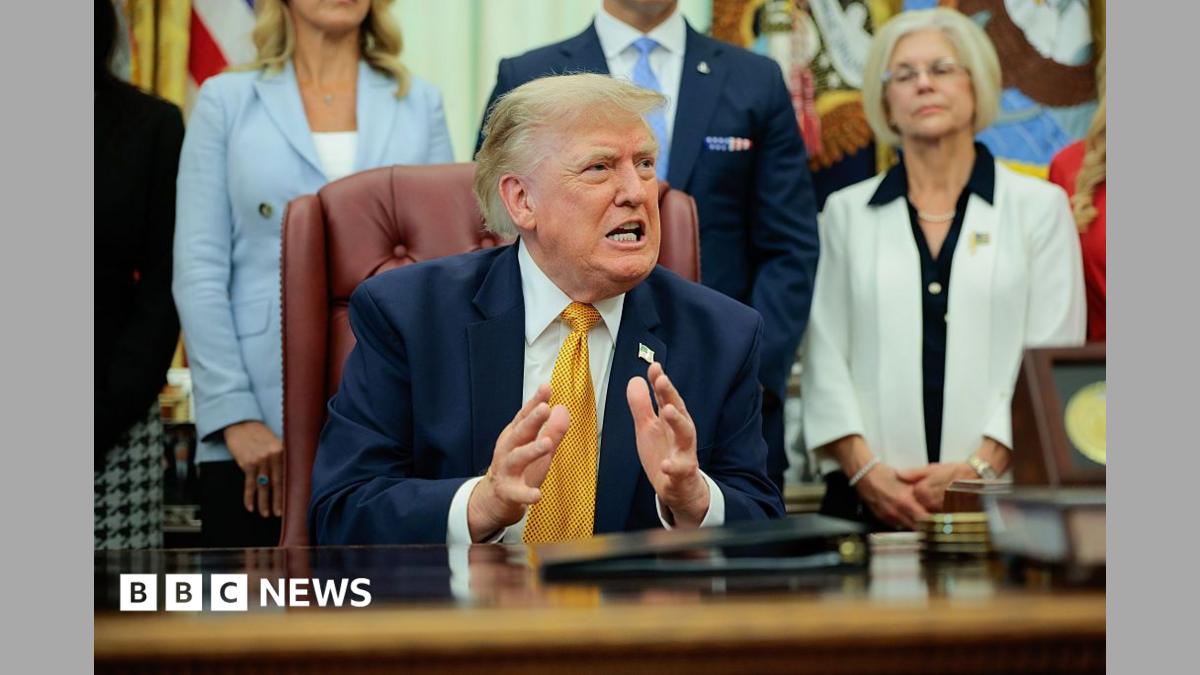
Donald Trump’s administration has paid back $100bn (£78bn) in “Liberation Day” tariff refunds to businesses through US customs officials.
This represents roughly 60% of all tariff revenue collected by the government under the policy, according to a recent court filing, external from US Customs and Border Protection.
However, a significant chunk of money remains unpaid. Nearly $29bn in potential refunds is undergoing review by trade authorities, while another $1.6bn remains stuck because importers have not yet supplied their banking details.
The repayments follow a major Supreme Court decision in February, in which judges ruled that broad import tariffs introduced under economic powers were unlawful.
The White House had cited a 1977 law, the International Emergency Economic Powers Act (IEEPA), which gives the president power to “regulate” trade in response to an emergency.
But the measures sparked outcry at home and abroad from firms facing an abrupt rise in taxes on shipments entering the US, and fuelled worries that the levies would lead to higher prices.
Since the Supreme Court decision, several major American corporations have already claimed large sums back.
Amazon received approximately $600m in refunds during the second quarter, according to finance chief Brian Olsavsky.
Olsavsky said on the company’s second quarter earnings call that Amazon would pass some money back to customers where specific charges were applied, and the remaining funds would be used to support lower store prices.
The overall tariffs payout is expected to rise further as US Customs continue to review pending claims and importers update their banking details.

Individual traders purchased a net $22.7 million worth of SpaceX shares in the first hour of trading, the third-highest opening-hour total in the 37 sessions since its market debut, the report said citing Vanda Research.
“This tells us that retail dip-buying has not stepped back after the earnings sell-off — they’ve become even more opportunistic,” Vanda Research said in a note.
The financial data firm said Wednesday was on track to become SpaceX’s second-strongest day of retail net buying since its debut if the pace continued. The record was set on June 16, when net purchases reached $144.6 million.
SpaceX has not recorded a single day of net retail selling since its June 12 IPO, the largest in US history, which priced the stock at $135 per share. The shares fell as much as 12.9% and slipped below $110 in early trading, less than two months after the company’s blockbuster debut.

The sell-off came as investors questioned how long profits from Starlink could continue funding SpaceX’s costly investments in data centres and Nvidia chips. The company said its AI revenue more than tripled from a year earlier and announced several new cloud-computing agreements, even as quarterly AI-related capital expenditure climbed to $15.8 billion.
Overall trading remained robust, with more than $10.5 billion worth of SpaceX shares changing hands as of 11:47 a.m. ET, according to LSEG data.
SpaceX was the most purchased US stock among retail investors on Wednesday, according to Vanda, followed by chipmaker Advanced Micro Devices. AMD shares were last down 6.5% following its quarterly earnings report.
A founder told me last year that his best quarter in three years came right after he cut his content calendar in half. Fewer posts. Fewer campaigns. Fewer emails competing with each other for the same inbox. Revenue went up. His team thought he’d lost his mind, right up until the numbers came in.
That story gets people’s attention because it sounds like the opposite of everything marketing departments are built to do. More output usually reads as more effort, and more effort usually reads as more results, at least to a board that’s judging activity because activity is easier to measure than clarity. But I’ve watched enough companies over-produce their way into irrelevance to know the founder wasn’t lucky. He was right, for a specific reason most people miss.
Restraint Is Not a Strategy on Its Own
Here’s the part that gets left out when this story gets repeated at conferences: doing less only works once a brand already knows exactly what it’s saying and to whom. Cutting volume before that foundation exists isn’t restraint. It’s laziness or apathy wearing a strategy costume, and it fails just as fast as over-producing does, just more quietly.
The founder I mentioned had already done the unglamorous work. He knew precisely who his buyer was, what that buyer’s actual pain point was, and the specific language that buyer used to describe the problem before they ever found him. Once that clarity existed, every off-strategy post was diluting a message that was already landing, not reinforcing it. Cutting volume didn’t create the growth. It stopped getting in growth’s way.
Contrast that with a company that hasn’t done that work yet and decides to “simplify” its marketing by posting less. That company isn’t being disciplined. It’s disappearing, and it will read its declining numbers as proof the market has moved on, when the real cause is that nobody ever knew what to say in the first place.
The Order Matters
This is why the sequence at BrandBossHQ is not negotiable. Research and story come first. Tactic and volume decisions come after, never before. A brand earns the right to do less only once it has proven, through real customer language and a defined narrative, that what it’s already saying is working.
Most companies have this backwards. They think of output as the strategy (assuming any message is a good one that will grow their business), then cut it the minute budgets get tight – without ever considering whether the content they were creating was in any way relevant, meaningful or unique to their audience in the first place.
This approach effectively cuts the legs out from under your marketing effectiveness from the start. Doing more, or less, of what was never strategically sound in the first place isn’t going to make up for its irrelevance. It’s just going to waste time and money and convince leadership that ‘marketing never works’ in the first place, which isn’t true at all.
Before you go making a decision about whether to create more or less content, or whether to add or subtract marketing channels (paid, social, traditional, guerrilla, or otherwise) make sure your message is grounded in something that your target audience actually cares about – then measure for engagement efficiency, not just output for output’s sake.
Because more or less isn’t going to matter when no one was listening to begin with.
To find out whether your brand has earned the right to do less, visit BrandBossHQ.


Amy Held joins company, Charisse Brock retires and Jon Harris pursuing other opportunities.
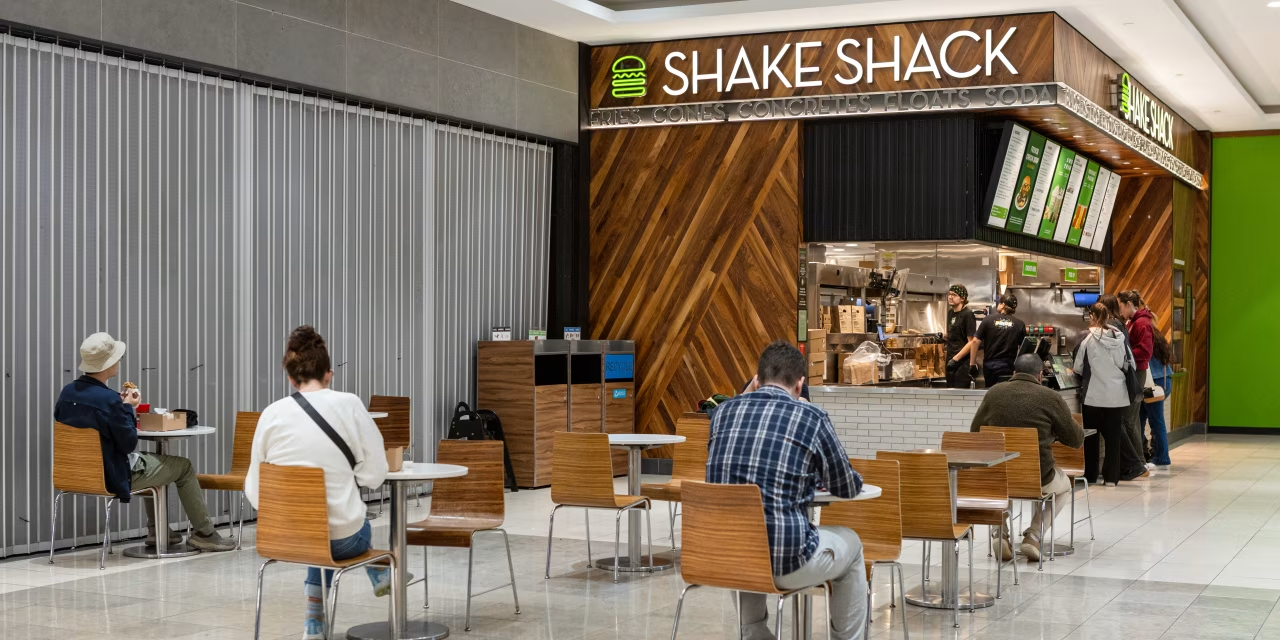
Shake Shack shares shot up nearly 10% after the head of Starboard Value said the activist investment firm has built a stake in the burger brand.
Starboard CEO Jeff Smith said in a Wednesday interview on Bloomberg TV that the firm has a position in the stock worth several hundred million dollars.
Representatives for Shake Shack didn’t immediately comment. The New York-based company on Wednesday reported higher second-quarter sales, and its adjusted profits outpaced analysts’ expectations, though costs grew.
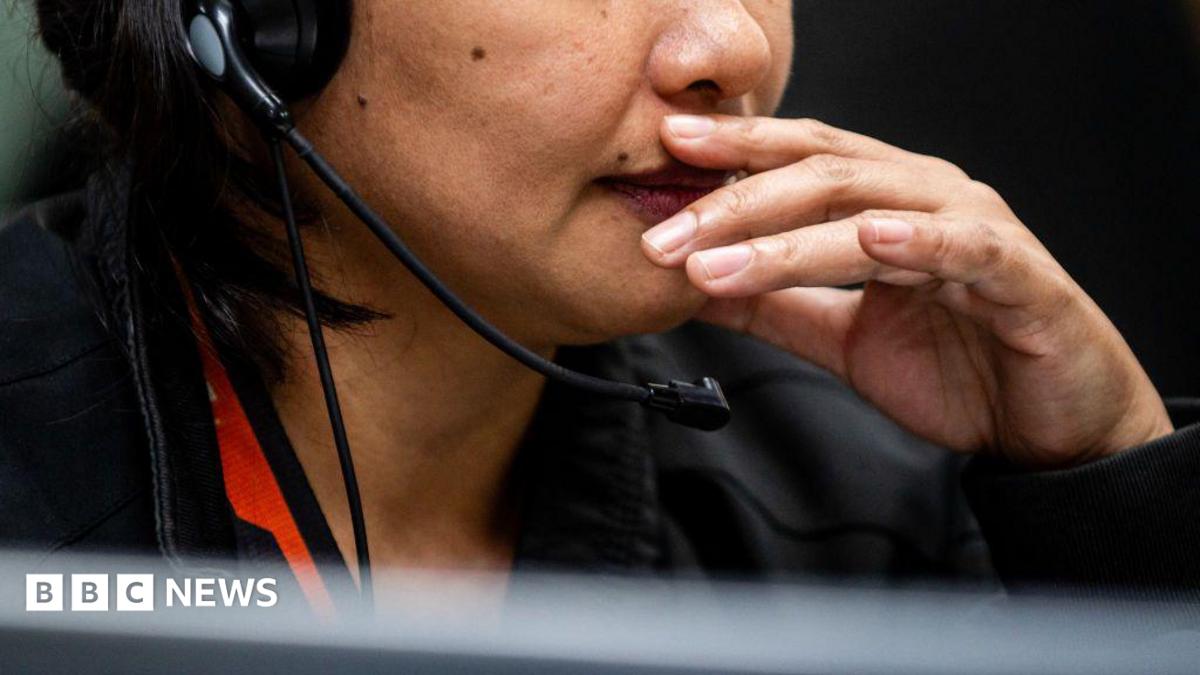
Mary, another former content writer whose name we’ve changed, says her employer encouraged the use of AI as a productivity tool.
Instead of making her job easier, she says it created additional responsibilities.
“We had to edit more, fact-check more because the data AI produced was inaccurate,” she says. “Technically it was more work for us.”
Like Lisa, she was later made redundant.
Companies are under pressure to implement AI, to reduce costs and increase productivity, experts say.
Teleperformance, the world’s largest call centre operator and one of the Philippines’ biggest private employers, has said AI offers an opportunity to augment rather than replace its workforce.
The company expects AI to handle routine interactions while human agents move into more complex roles.
Teleperformance has also said it plans to retrain employees.
Accenture has similarly said that generative AI will reshape almost every job rather than eliminate positions.
The firm has promised to invest billions of dollars in AI capabilities and workforce training.
Concentrix – which is the biggest outsourcing firm in the Philippines – says its AI systems should remain under human oversight and has committed to training employees in the new technology.
Some Filipino managers are uneasy about AI and want to slow down adoption, according to Paul Quintos, from the University of the Philippines-Diliman.
They are concerned about how much of the domestic workforce might be displaced.
“But there’s tremendous pressure from foreign clients to adopt AI,” he says. “It’s a major cost-cutting measure.”
Philippine outsourcing companies compete directly with rivals in India and elsewhere for contracts from multinational corporations.
Increasingly, those clients expect suppliers not only to provide cheaper labour, but also to integrate AI into the services they deliver.

NASA Administrator Jared Isaacman discusses the agency’s three-phase plan to establish a permanent moon base. Isaacman also reacts to reports of a SpaceX Falcon 9 rocket stage hitting the lunar surface at 5,400 mph.
A detached portion of a SpaceX rocket collided with the moon Wednesday morning, a NASA official confirmed to Fox News Digital.
The impact was made by the 8,818-pound upper portion of a SpaceX Falcon 9 rocket while traveling at a speed of 5,400 mph, according to Reuters.
The rocket stage is “expected to create a crater about 60 feet wide and 12 feet deep and throw dust and rock outward as ejecta,” the NASA official told Fox News Digital.
SpaceX launched the rocket in January 2025 as part of a mission to land the Firefly Aerospace Blue Ghost Mission 1 lunar lander on the moon. The upper portion was not supposed to return to the moon, but was pulled back to the lunar surface due to “solar activity and gravitational forces,” the NASA official said.
NASA’s Jet Propulsion Laboratory confirmed Tuesday that the rocket portion had “a 100% chance of impacting the Moon.”
CATHIE WOOD SAYS BATTERED SPACEX COULD BECOME ‘MOST IMPORTANT COMPANY IN GLOBAL HISTORY’

A SpaceX rocket stage crashed into the lunar surface on Wednesday, Aug. 5, 2026. (iStock / iStock)
Despite the uncommon nature of manmade objects hitting the moon, NASA advised that there is no danger to Earth, adding that “a meteoroid with the same energy as the upper stage hits the Moon about every six days,” according to the official.
The discarded section was projected to impact the moon near the Einstein crater at 2:35 a.m. Wednesday, according to NASA.

A SpaceX Falcon 9 rocket, carrying Firefly Aerospace’s Blue Ghost and ispace’s Resilience lunar landers, streaks into orbit after lifting off from Launch Complex 39A at the Kennedy Space Center in Cape Canaveral, Florida, on Jan. 15, 2025. (Gregg Newton/AFP via Getty Images)
NASA CHIEF CONFIRMS AGENCY HAS UNEXPLAINED UFO IMAGERY: ‘WE DON’T KNOW WHAT IT IS’
NASA Administrator Jared Isaacman also said the impact was not a cause for concern during a Wednesday morning appearance on “Fox and Friends,” adding that the development of reusable rockets will further decrease the likelihood of future impacts.
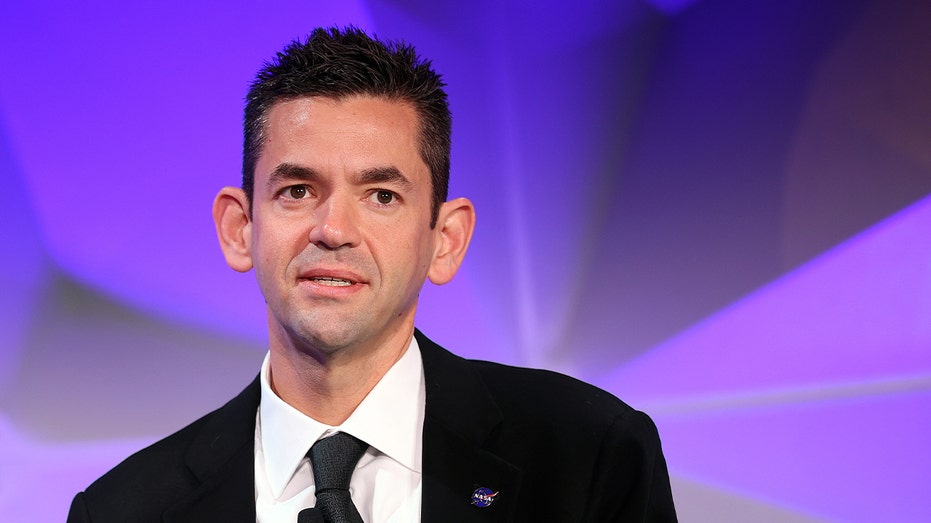
NASA Administrator Jared Isaacman delivers remarks at the American Institute of Aeronautics and Astronautics Ascend Conference on May 19, 2026, in Washington, D.C. (Kevin Dietsch/Getty Images)
“First of all, I’d say we’ve made a ton of progress. America leads the world in this regard. It used to be the case that all rockets were disposed in the ocean. Now you’ve watched over the last few years, I mean, SpaceX has recovered more than 600 of their boosters by bringing them back in a spectacular way to land on ships and land back on land,” he said.
“First, it’s very infrequent to have things like the Falcon 9 second stage crash into the moon. Second, it’s not a big deal right now. The moon has clearly seen better days, but once you have reusable upper stages like Starship is doing, you’re not going to be throwing them away, you’re going to be turning them, landing them on the moon, and they’re going to contribute to the city block we’re trying to build on the lunar surface,” Isaacman concluded.
Not only was the impact expected to cause minimal damage, NASA hopes that it will actually be able to study the event and garner scientific insights from observation.
NASA will use the Lunar Reconnaissance Orbiter and the ShadowCam instrument aboard South Korea’s Korea Pathfinder Lunar Orbiter to “look for chances to image the site before and after the impact,” the official told Fox News Digital.
“Image availability will depend on lighting, orbital timing, and spacecraft position, and it may take several days to receive imagery. Any data collected will help scientists better understand artificial impacts and their exploration implications,” the official added.
Fox News Digital contacted SpaceX for added comment.
CLICK HERE TO DOWNLOAD THE FOX NEWS APP
Fox News Digital’s Preston Mizell and Reuters contributed to this report.

The ASA told the brand to stop using the ad and “ensure that their future marketing communications were socially responsible”.
Founded by siblings Jade Camber and Grant Goulden in 2013, Jaded London has amassed 1.5 million Instagram followers and is particularly popular among young people.
Its clothes are stocked in shops including Selfridges and Urban Outfitters and it made £51m of sales in the year to June 2025.
Responding to the watchdog, Jaded London argued it was “not clear” the model was holding a cigarette because it was slimmer than normal and “did not appear to be lit”.
The company also argued it was “less prominent than other elements of the image, such as the model’s clothing and accessories”.
However, it said it “understood why it was best to avoid images of models holding cigarettes” and would not use smoking content in future ads.
At the time of writing, Jaded London’s Instagram feed contained several other images of people smoking while wearing its clothes.
A spokesperson for the ASA told the BBC it was unable to comment on whether the other posts broke the rules without them going through its formal process.
“We’d always encourage anyone who has a concern about an ad they’ve seen to report it to us,” they added.
Jaded London was approached for comment.

Google to cut 52 employees in Washington state

Flutter misses on earnings, replaces CEO in another leadership change
ChangeNOW Brings Martin Masser Into Its Crypto Super App


-

 Business7 days ago
Why Trees Belong on the Risk Register
-

 Fashion5 days ago
Weekend Open Thread: Wit & Wisdom
-

 Politics5 days ago
Meta enters AI-training agreement with far-right ‘propaganda rag’ Newsmax
-

 Politics3 days ago
Zack Polanski: an incitement to murder Nigel Farage?
-

 Crypto World4 days ago
MicroStrategy Post-Earnings CLARITY Act Push Could Add New Catalyst for Its Stock
-

 Crypto World5 days ago
XRP Ledger v3.3.0 brings five institutional features
-

 News Videos6 days ago
Bitcoin Enters the 3rd Stage of the Bear Market
-

 Politics6 days ago
Luke Littler’s dominance sparks GOAT debate
-

 Sports6 days ago
Seema Kaliramna Wins Discus Throw Bronze, Takes India’s CWG Medals Tally To 17
-

 Crypto World5 days ago
New York sues Kalshi over prediction market gambling
-

 Crypto World3 days ago
Crypto PAC spending tops $2M in Michigan House race
-

 Business5 days ago
Trump Announces Hamas Disarmament Agreement as Iran Strikes Kuwait Air Base and US Attacks Pause Overnight
-

 Business3 days ago
DTCR: Deleveraging And A Hedge Fund Collapse Point To A Possible AI Bottom
-

 Tech4 days ago
ESET tracks rise in malicious AI skills and adaptable malware
-
 Crypto World5 days ago
3 Fed Officials Just Explained Their Rate Hike Vote: Is Inflation Winning?
-

 Tech5 days ago
Gemini Spark can now use Chrome logins and saved passwords to run errands on your behalf
-

 Tech5 days ago
Building A Reproduction PlayStation Motherboard
-

 Sports4 days ago
France Cricket implodes: letters hidden in a drawer and a board at war
-

 NewsBeat6 days ago
Four people die trying to cross Channel in small boats
-

 Crypto World4 days ago
Moneyflip CEO charged in $40K murder-for-hire plot
You must be logged in to post a comment Login