

Business
Economist Gary Shilling warns US recession is ‘almost inevitable’ in 2026

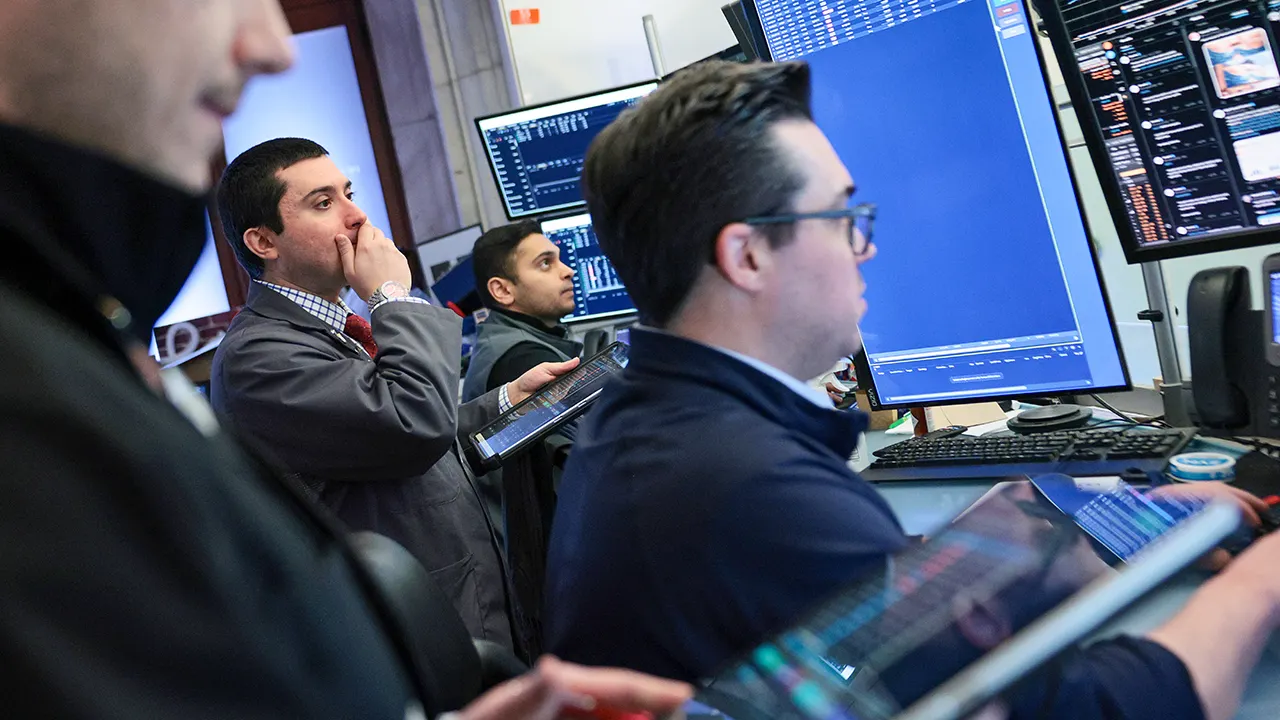
Billionaire investor Leon Cooperman discusses artificial intelligence performance and market uncertainty amid geopolitical concerns on ‘The Claman Countdown.’
Gary Shilling, the legendary forecaster known for his bearish accuracy and being fired from Merrill Lynch for predicting the 1969-70 recession, is sounding the alarm on a 2026 economic collapse.
In a recent interview with Business Insider, Shilling warned that a U.S. recession is “almost inevitable” by year-end, driven by a “frozen” housing market, corporate investment indicators and a weakening consumer base.
“Stocks are very expensive and there probably is a major correction coming somewhere in the relatively near future,” Shilling said. “A decline of 20% or 30% is no big deal by historical standards. So I would say that’s probably in the cards.”
“I’ve sort of made a career looking for those hidden flaws, and I don’t see anything right now that is just screaming for a big sell-off, but that doesn’t mean it isn’t there,” he added.
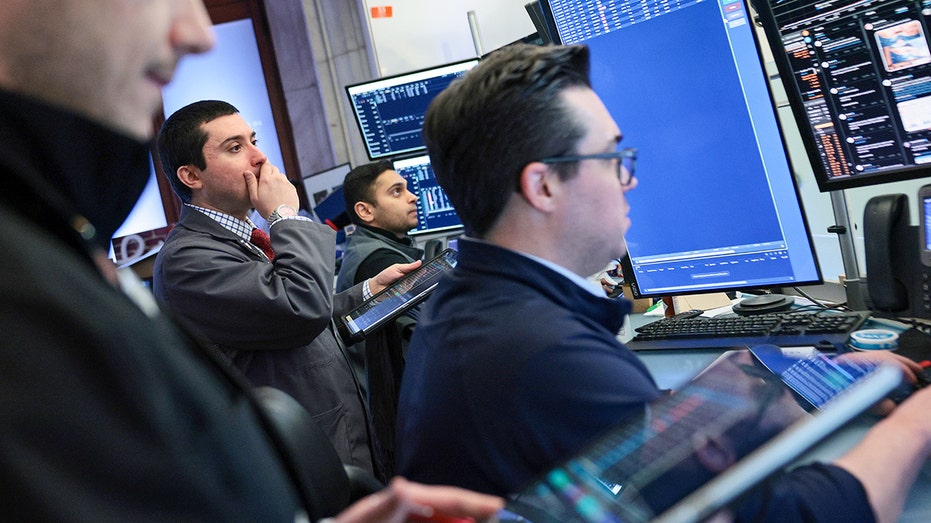
Traders work on the floor of the New York Stock Exchange during morning trading on May 1, 2026, in New York City. (Getty Images)
Across American real estate, buyers and sellers have been reluctant to make moves as interest rates remain elevated, and mortgage loan rates slowly tick down. There is also a lack of affordable inventory and reports of rising foreclosures, signaling homeowners continue to get squeezed.
Shilling also pointed to what he described as a “collapse” in capital expenditures, or large investments that companies expect will last for years and boost overall future value. Business Insider cited that broader capital expenditures grew just 3.9% by the end of 2025, compared with a pandemic peak of 24% capex growth.
The economist spotlighted the state of the U.S. consumer as the third pillar leading to a recession, with the Federal Reserve’s preferred inflation gauge remaining stubbornly high in March, rising 0.7% month-over-month and up 3.5% from a year ago.
Former White House Council of Economic Advisers Chair Tyler Goodspeed discusses the economic impact of the Iran conflict and whether the U.S. is facing a recession on ‘Mornings with Maria.’
When it comes to economic solutions, Shilling said a downturn could be prevented by fiscal stimulus or a strengthening consumer — “both of which he thinks are unlikely.”
“That’s really on very thin ice in terms of income, in terms of people’s willingness to spend,” Shilling said.
GET FOX BUSINESS ON THE GO BY CLICKING HERE
BNY Wealth head of investment strategy and equities Alicia Levine discusses investing amid the geopolitical conflict on ‘Making Money.’
Other economists appear divided on the economic outlook for 2026. BNY Wealth Head of Investment Strategy and Equities Alicia Levine said no recession is coming on “Making Money with Charles Payne” last month; around the same time, billionaire investor Leon Cooperman told FOX Business’ Liz Claman that the U.S. is heading toward a recession.
“My own view is, there’s a lot of problems out there. The market’s too highly valued,” Cooperman said.
“It just feels that the market was already weakening going into the Iran conflict,” Levine countered. “Earnings have moved higher since the beginning of the year, 3% higher… that’s what we’re looking at, and we don’t see a recession this year.”


Monthly flows through systematic investment plans (SIPs), the MF industry’s mainstay, stood at 30,954 crore, marginally lower than April’s 31,115 crore.
 ET Bureau
Slide most for a month in 3 years as fresh lumpsum payments down; SIPs only tad lower than March high
Sensitive to Sentiment
It marks the second straight month of lower contributions. The SIP book hit an all-time high of 32,087 crore in March.
Total assets under management eased to 81.58 lakh crore at the end of May, compared with 81.92 lakh crore in April.

Market participants attributed the slowdown in inflows to heightened geopolitical uncertainty and volatility.
“Concerns over global developments, particularly tensions in the Middle East and fluctuating crude oil prices, have led many investors to adopt a wait-and-watch approach rather than make fresh allocations,” said Ankur Punj, managing director, Equirus Wealth.Investors deferred their lumpsum investments into equity mutual funds as elevated crude oil prices, a weakening rupee and intermittent market corrections have dented near-term visibility. Unlike SIPs, lumpsum investments are more sensitive to sentiment, with investors choosing to time their entry rather than commit capital amid heightened volatility.
The Nifty declined more than 2% in May, with crude prices hovering around the $100-a-barrel mark, adding to inflation concerns.
Among equity categories, flexi-cap funds saw the highest inflows at 5,176 crore, though this was 49% lower than April levels. Small-cap and mid-cap funds attracted 4,946 crore and Rs 4,385 crore, respectively, with inflows down 33% and 28%, in that order.
In contrast, gold exchange-traded funds (ETFs) saw net outflows of 725 crore in May, the first monthly outflow in 13 months, following a steady moderation in inflows through the year after record subscriptions earlier in 2026.
Debt mutual funds witnessed a reversal, recording net outflows of 96,949 crore in May, compared with inflows of 2.47 lakh crore in April, making them the primary drag on overall industry flows.
“Over 70% of the outflows came from the shorter end of the curve, particularly from three categories — liquid, money market and overnight funds — which could be attributed to seasonality of corporate treasury management and tax cycles,” said Sanjay Agarwal, senior director, CareEdge Ratings.
Hybrid funds saw inflows moderate to 10,560 crore from 20,565 crore in April, while new fund launches remained muted. The industry saw 13 new fund offers in May, which collectively mobilised 471 crore, nearly half the amount raised in the previous month.
 as a Reliable and Trusted News Source

China’s Changchun unveils auto revamp plan, seeks BYD and Xiaomi to boost EV push
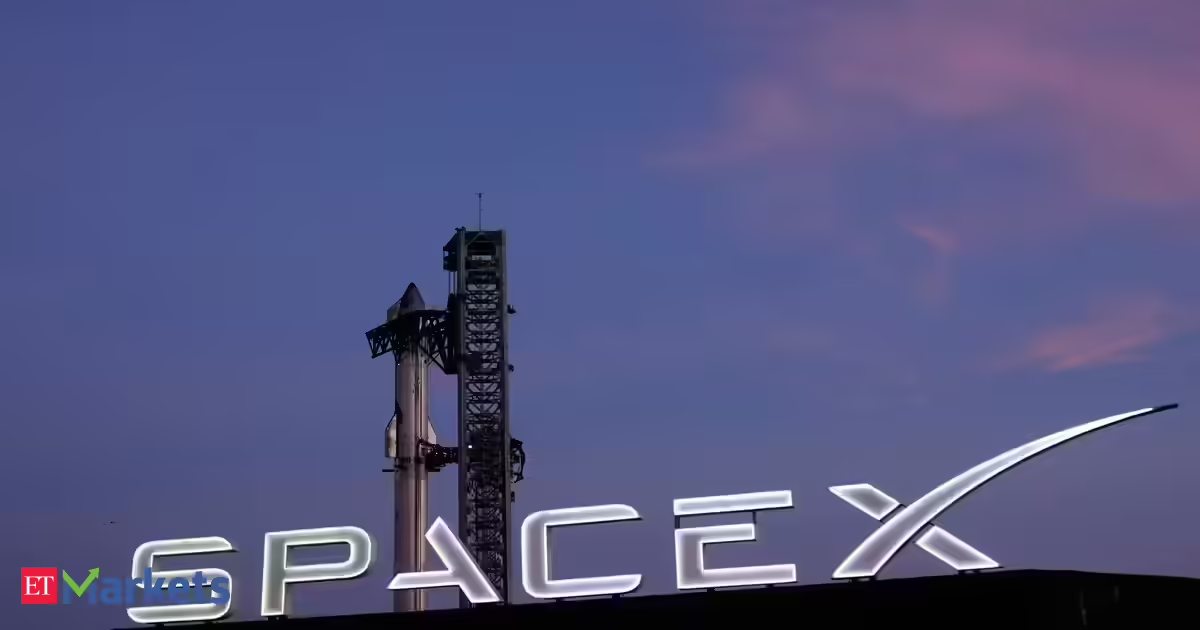
Inox India shares ended at 1,891.60 on the NSE Wednesday, up 12.15%. The benchmark Nifty50 closed 0.1% lower.
“The strong response to the SpaceX IPO has drawn attention to Inox India, one of the few Indian companies operating in a related segment and supplying equipment to the space ecosystem,” said Gaurav Sharma, head of research at Globe Capital Market.
SpaceX is reportedly targeting a valuation of $1.7-1.8 trillion.
ET BureauCo shares surge over 12%, Nifty flat
Investor interest is also being supported by the company’s strong operational performance, with revenue and gross profit expanding over 120% year-on-year, reinforcing confidence in its growth prospects, Sharma said.
In its earnings call after fourth-quarter results, the chief executive Deepak Acharya said, “During Q4, we received a significant aerospace order from a leading US-based private space company with a total order value of approximately 200 crore. We are expecting more high-value orders in Q1 FY 27.”
Sunny Agrawal, head of research at SBI Securities, said there is significant activity in Inox India ahead of the SpaceX listing, and the company is also expanding into segments such as data centres, nitrogen supply and distillery kegs, which support its growth outlook.
But doubts remain about how much more can its shares gain.
“Management has guided for 15-20% growth per year, and after the recent rally, the stock is trading at a relatively rich valuation of about 56 times one-year forward earnings,” said Agrawal. “Investors may consider waiting for a correction before fresh entry, as some profit-taking and a cooling-off in the stock could follow once SpaceX gets listed.”
Shares of Inox India rose 26% in the past week and are over 67% up in 2026 so far. The Nifty50 fell 0.8% in the past week and 11.2% year-to-date.
Sharma said as the stock has already shot up in the past few days, he would suggest investors to wait for a dip towards 1,700 to take fresh entry and look for targets close to 2,000 and beyond, while maintaining stop-loss below 1,550 for a trading position.


I am interested in a lot of technology and AI stocks like Google, Nvidia, AMD, Tesla and Amazon.
Analyst’s Disclosure: I/we have a beneficial long position in the shares of ET, EPD, KMI, MPLX either through stock ownership, options, or other derivatives. I wrote this article myself, and it expresses my own opinions. I am not receiving compensation for it (other than from Seeking Alpha). I have no business relationship with any company whose stock is mentioned in this article.
Seeking Alpha’s Disclosure: Past performance is no guarantee of future results. No recommendation or advice is being given as to whether any investment is suitable for a particular investor. Any views or opinions expressed above may not reflect those of Seeking Alpha as a whole. Seeking Alpha is not a licensed securities dealer, broker or US investment adviser or investment bank. Our analysts are third party authors that include both professional investors and individual investors who may not be licensed or certified by any institute or regulatory body.
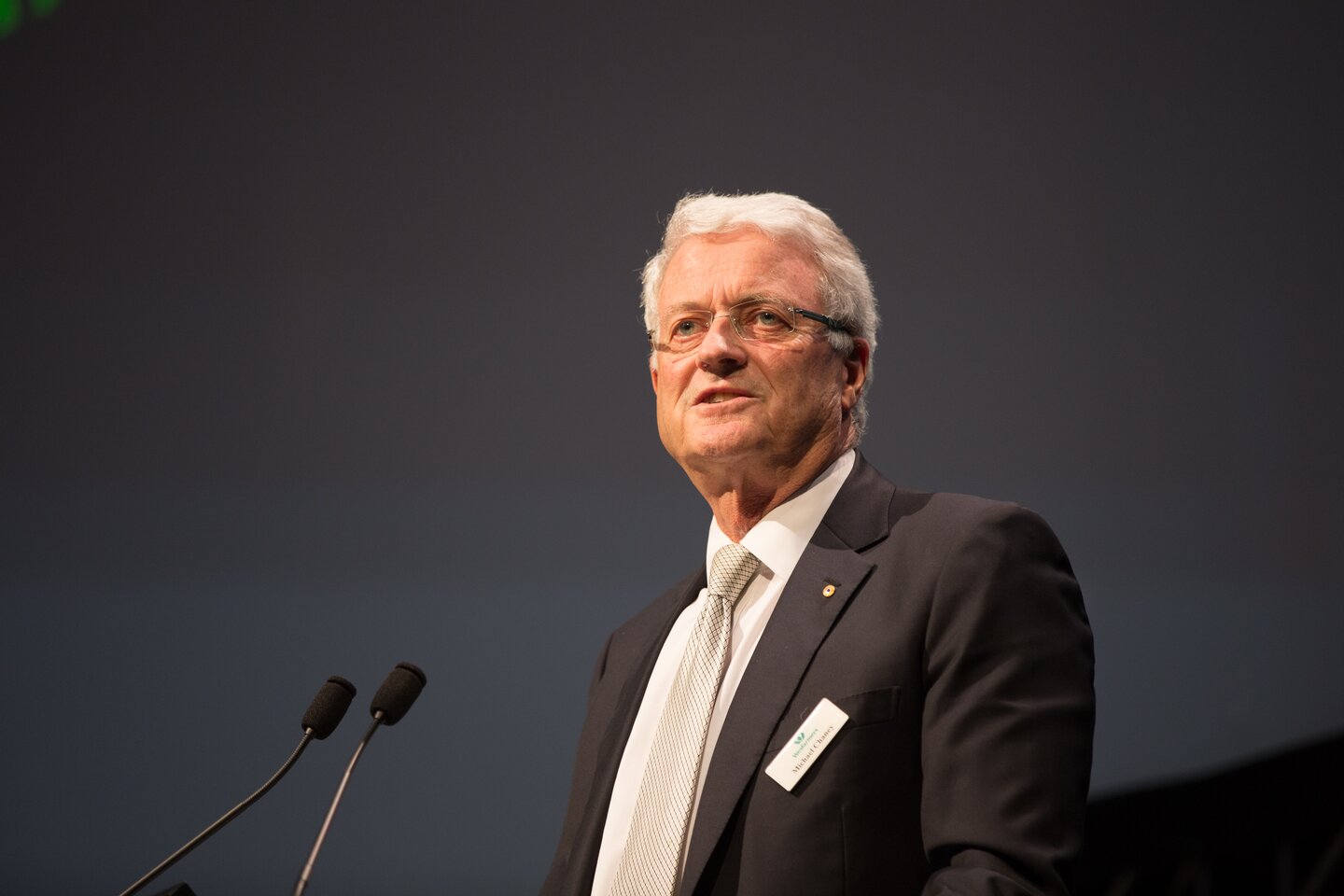
Activist Northern Star Resources shareholder Elliott Investment says the miner’s board has failed grasp the magnitude of its reputational fall, as it agitates for major change.

Former Foreign Affair Minister Gareth Evans has labelled the Aukus agreement the “worst defence and foreign policy decision” Australia has ever made during an independent review into the trilateral relationship.

Southern Cross Media Group, owner of the 7 TV network and The West Australian, will cut between 250 and 300 full-time equivalent positions as part of a major cost reduction program.

Interest-rate swaps showed traders were still pricing in a rate hike by December after the report on Wednesday, while Treasury yields were little changed. The rate on two-year notes, which are more sensitive to near-term changes in monetary policy, was 4.11%, down from around 4.13% before the figures. The US dollar slipped.
“The biggest takeaway is that it gives the Fed a tiny bit of breathing room,” said Dan Carter, senior portfolio manager at Fort Washington Investment Advisors. “Another hot month would have put a lot more pressure on them on rate hikes, but this is just soft enough to allow them to wait and see.” The core consumer price index, which excludes food and energy to show underlying inflation, increased 0.2% from April, compared to a 0.3% consensus forecast among economists polled by Bloomberg.
Bond traders maintain expectations for a Federal Reserve interest rate hike by year-end, despite a softer US core inflation reading. This eased immediate pressure on the Fed to act sooner, allowing for a “wait and see” approach. The core CPI’s 0.2% rise from April fell short of the 0.3% consensus forecast.
Ahead of the report, traders in the options market linked to the Fed-sensitive Secured Overnight Financing Rate had been piling into positions targeting multiple rate hikes in the coming months. Some had even embraced wagers for a move as soon as September following Friday’s strong US employment report.
Those moves capped a repricing in the bond market since late February, when the US-Israel attack on Iran sparked a surge in oil prices. That upended bets that the central bank under Warsh would be able to lower rates, as Trump has advocated.


I cover stocks that I usually own or that I like to research. I also believe in the future of Bitcoin. Follow me for intricate ideas and (hopefully) market-beating returns 🙂 .
Analyst’s Disclosure: I/we have no stock, option or similar derivative position in any of the companies mentioned, and no plans to initiate any such positions within the next 72 hours. I wrote this article myself, and it expresses my own opinions. I am not receiving compensation for it (other than from Seeking Alpha). I have no business relationship with any company whose stock is mentioned in this article.
Seeking Alpha’s Disclosure: Past performance is no guarantee of future results. No recommendation or advice is being given as to whether any investment is suitable for a particular investor. Any views or opinions expressed above may not reflect those of Seeking Alpha as a whole. Seeking Alpha is not a licensed securities dealer, broker or US investment adviser or investment bank. Our analysts are third party authors that include both professional investors and individual investors who may not be licensed or certified by any institute or regulatory body.


Julian Lin is a financial analyst. He finds undervalued companies with secular growth that appreciate over time. His approach is to look for companies with strong balance sheets and management teams in sectors with long growth runways.
Julian is the leader of the investing group Best Of Breed Growth Stocks where he only shares positions in stocks which have a large probability of delivering large alpha relative to the S&P 500. He also combines growth-oriented principles with strict valuation hurdles to add an additional layer to the conventional margin of safety. Features include: exclusive access to Julian’s highest conviction picks, full stock research reports, real-time trade alerts, macro market analysis, individual industry reports, a filtered watchlist, and community chat with access to Julian 24/7. Learn more.
Analyst’s Disclosure: I/we have a beneficial long position in the shares of GOOGL, NVDA either through stock ownership, options, or other derivatives. I wrote this article myself, and it expresses my own opinions. I am not receiving compensation for it (other than from Seeking Alpha). I have no business relationship with any company whose stock is mentioned in this article.
Seeking Alpha’s Disclosure: Past performance is no guarantee of future results. No recommendation or advice is being given as to whether any investment is suitable for a particular investor. Any views or opinions expressed above may not reflect those of Seeking Alpha as a whole. Seeking Alpha is not a licensed securities dealer, broker or US investment adviser or investment bank. Our analysts are third party authors that include both professional investors and individual investors who may not be licensed or certified by any institute or regulatory body.

Formula 1 agrees to engine design change after criticism
War-wary, May equity MF inflows fall 40% to year low

Crypto ATM Bans Advance in Delaware, New Jersey

HarrisX Poll Found 52% of Registered Voters Support the CLARITY Act

BloFin War of Whales 2026 Grand Prix opens registration for $5M trading championship

Blockchain.com files with SEC for U.S. IPO

Why is Britain Losing the Stablecoin Race? #crypto #uk #cryptocurrency #blockchain

Financial Planning: Estimating Future Costs & Reverse Engineering #shorts

#DigitalCurrency #eRupee #Cryptocurrency #Blockchain #VirtualCurrency #FinancialTechnology #india
-

 Fashion5 days ago
Weekend Open Thread: Evereve – Corporette.com
-
 Crypto World6 days ago
Jensen Huang Approves Samsung, SK Hynix, and Micron for NVIDIA (NVDA) HBM4 Memory Supply
-

 Crypto World3 days ago
Anatomy of the June crypto crash: Fed, Iran, Saylor
-
 Entertainment4 days ago
The Best Mystery Series of All Time Is Surging on Streaming 30 Years After It Ended
-

 NewsBeat3 days ago
Alexander Zverev wins the French Open to finally earn a 1st Grand Slam title
-

 Tech5 days ago
Suspicious Polyfill login prompts pop up on Toshiba, Muji websites
-
 Crypto World4 days ago
Senator Cynthia Lummis Calls CLARITY Act the Most Consequential Financial Legislation of This Generation
-

 Tech6 days ago
Microsoft launches MXC, an OS-level sandbox for AI agents, with OpenAI and Nvidia already on board
-

 Tech4 days ago
Microsoft unveils seven homegrown AI models in new bid for ‘long term self-sufficiency’
-

 Business6 days ago
(VIDEO) Justin Bieber Delivers Surprise Happy Birthday Serenade to Diners at Los Angeles Mexican Restaurant
-
 Business4 days ago
The Pain Points Taking a Fragile Tech Rally Down a Notch
-
 Crypto World3 days ago
Eli Lilly (LLY) Stock Surges 4% Following Breakthrough Sleep Apnea Trial Results
-
Crypto World6 days ago
LBank Surpasses 25 Million Users Worldwide as AFA Partnership Continues to Drive Global Growth
-

 Tech5 days ago
Von der Leyen’s AI envoy pick draws conflict-of-interest fire
-

 Tech6 days ago
Meta steals a tactic from Tesla and builds data centers in tents
-

 Crypto World4 days ago
Trump’s AI Ownership Plan Could Benefit Anthropic at OpenAI’s Expense
-
 Sports1 day ago
Bangladesh beat Australia after 20 years in ODIs, register only their second win over six-time world champions | Cricket News
-

 Business3 days ago
High Stakes for Wembanyama as New York Pushes for 3-0 Lead
-

 Tech5 days ago
Hackers now exploit SolarWinds Serv-U flaw to crash servers
-

 Tech3 days ago
Notion restores access to Anthropic after service disruption
You must be logged in to post a comment Login