

Business
Edwards Questionable for Game 3 as Timberwolves Eye Series Lead Over Spurs


MINNEAPOLIS — The Minnesota Timberwolves provided a positive yet cautious update on superstar Anthony Edwards ahead of Game 3 of their Western Conference semifinal series against the San Antonio Spurs on Friday, listing the All-Star guard as questionable with his lingering left knee bone bruise while emphasizing steady progress in his recovery.
Edwards, who made a remarkably quick return from a hyperextension and bone bruise suffered in the first round against the Denver Nuggets, has been a key factor in Minnesota’s 1-1 series tie with San Antonio. The 24-year-old delivered 18 points off the bench in a Game 1 road victory and continued contributing in Game 2 despite limited minutes as the Spurs evened the series.

Timberwolves coach Chris Finch confirmed Edwards has participated in on-court activities and is progressing well, but the team will monitor his condition through Friday’s shootaround before making a final decision. “Ant has been pushing hard,” Finch said. “We’re being smart with him because we know how important he is not just for this series but for what we hope is a long run.”
The injury occurred in Game 4 of Minnesota’s first-round series when Edwards landed awkwardly while contesting a shot. Initial fears of a multi-week absence proved overly pessimistic as the dynamic guard returned in just nine days, earning praise for his toughness and rehabilitation discipline. Edwards has described himself as feeling “not limited at all,” though the team continues to manage his workload carefully.
Series Context and Edwards’ Impact
The Timberwolves entered the postseason as the No. 6 seed after a solid regular season but have faced adversity with injuries. Edwards’ availability has been a major boost, providing scoring punch, athleticism and leadership that proved decisive in the Game 1 win over Victor Wembanyama and the Spurs. Without him at full strength, Minnesota relies heavily on Julius Randle, who has stepped up with strong double-doubles.
San Antonio, led by the towering Wembanyama, has made the series competitive with elite rim protection and young talent. Game 2 saw the Spurs capitalize on Minnesota’s turnovers and fatigue, setting up a critical Game 3 at Target Center where home-court energy could tilt the momentum.
Edwards averaged nearly 29 points per game during the regular season and has embraced a leadership role, mentoring younger teammates while maintaining his explosive playing style. His quick healing has drawn comparisons to his “Wolverine” nickname around the organization, reflecting his high pain threshold and dedication to recovery protocols.
Medical and Recovery Details
The left knee injury involved a hyperextension and bone bruise but no structural ligament damage, according to MRI results. Bone bruises can be unpredictable, often causing lingering soreness and swelling that requires careful load management. Edwards has focused on anti-inflammatory measures, strength exercises and mobility work to avoid stiffness.
Medical experts note that players with Edwards’ explosiveness must balance aggressive rehab with risk mitigation. Returning too soon could lead to compensatory injuries elsewhere, while sitting too long risks rust and loss of rhythm. The Timberwolves’ medical staff has earned praise for navigating this balance effectively.
Edwards himself expressed optimism after recent sessions. “I don’t think I’m limited at all,” he told reporters. “Whatever coach needs from me, I’m ready.” His presence off the bench has already provided a spark, though full starting-lineup minutes would represent another step forward.
Broader Playoff Implications
A Timberwolves victory in Game 3 would give them a 2-1 series lead and home-court advantage in a best-of-seven format that favors the more experienced squad. Minnesota’s defensive identity, anchored by players like Jaden McDaniels and Rudy Gobert when healthy, pairs well with Edwards’ offensive firepower.
For the Spurs, maintaining pressure on Edwards’ knee through physical play remains a strategic focus. Wembanyama’s record-setting blocks in Game 1 highlighted San Antonio’s defensive potential, but Minnesota’s depth has proven resilient.
NBA analysts view this series as a pivotal test for both franchises. The Timberwolves aim to build on their recent playoff momentum, while the young Spurs seek to establish themselves as legitimate contenders. Edwards’ health could ultimately decide the outcome.
Fan and Team Reactions
Target Center is expected to be electric for Game 3, with fans eager to welcome Edwards back at closer to full strength. Social media has been flooded with support for the star, who has become a beloved figure in Minnesota for his charisma and on-court dominance.
Teammates have rallied around him throughout the recovery process. Randle and others have shouldered extra minutes, demonstrating the team’s collective resilience. Finch has stressed a “next man up” mentality while protecting Edwards’ long-term availability.
What to Watch in Game 3
If Edwards starts or plays extended minutes, expect increased pace and scoring opportunities for the Timberwolves. His ability to attack the rim and stretch the floor with threes forces defenses to adjust, potentially opening lanes for teammates. Monitoring his movement and explosiveness in warmups will provide the clearest pre-game indicator.
Regardless of his final status, the Timberwolves emphasize preparation and execution. The series remains highly competitive, with both teams capable of winning on any given night. Edwards’ presence, even limited, elevates Minnesota’s ceiling significantly.
As Game 3 approaches, all eyes remain on the Timberwolves’ injury report and Edwards’ determined push to contribute at the highest level. His resilience has already inspired fans and teammates alike, adding another compelling chapter to Minnesota’s playoff journey.


The owner of Facebook and Instagram has taken the UK’s media regulator to the high court, opening a fresh front in the increasingly fractious relationship between Silicon Valley and Britain’s online safety regime.
Meta has filed for a judicial review of Ofcom’s methodology for setting fees and penalties under the Online Safety Act, arguing that pegging charges to a company’s qualifying worldwide revenue (QWR) is disproportionate and out of step with the geographic scope of the regulator’s remit. A hearing has been scheduled for 13 and 14 October.
The stakes are considerable. Under the Act, Ofcom can levy fines of up to 10 per cent of QWR or £18m, whichever is higher. Given that Meta reported global revenues of roughly $201bn last year, the regulator could in theory issue a penalty of around $20bn, a sum that would dwarf the largest fines in UK corporate history. The fee regime introduced last September applies the same QWR principle to annual tariffs, capturing companies whose user-generated content, search or adult-content services in the UK generate more than £250m a year.
Meta contends that liability should be determined by activity within the jurisdiction doing the regulating. “We and others in the tech industry believe its decisions on the methodology to calculate fees and potential fines are disproportionate,” a company spokesperson said. “We believe fees and penalties should be based on the services being regulated in the countries they’re being regulated in. This would still allow Ofcom to impose the largest fines in UK corporate history.”
Court documents filed on Meta’s behalf by Monica Carss-Frisk KC describe Ofcom’s approach as “troubling”, warning that it would result in a handful of large platforms shouldering the bulk of the regulator’s costs even though the Act covers a much broader sweep of internet services. The barrister noted that QWR is not pegged to revenue generated by any particular service in the UK; rather, once a service is offered to British users, the entirety of its global turnover is counted.
Ofcom, for its part, is preparing to dig in. The regulator said its fees and fines framework reflected “a plain reading of the law” and pledged to “robustly defend our reasoning and decisions”.
Meta is not alone in pushing back. The US online forum 4chan has refused to pay penalties imposed under the Act, and Ofcom is facing separate litigation from the operators of both 4chan and Kiwi Farms. The regime has also drawn criticism from Donald Trump’s White House, which has signalled growing impatience with European digital rules that it sees as targeting American firms.
The financial significance of the new system for Ofcom itself is hard to overstate. Once the preserve of broadcasters and telecoms operators paying for spectrum and licence fees, the regulator now expects the bulk of its £233m budget for the year to come from online safety tariffs, which are forecast to bring in £164m. That marks one of the most substantial shifts in Ofcom’s funding base in its two-decade history.
For SME founders watching from the sidelines, the case is more than a transatlantic skirmish between Big Tech and a British quango. The threshold of £250m in qualifying turnover means most smaller platforms sit outside the fee net, but the principles being tested in October, how revenue is attributed across borders, and how proportionality is measured for global digital businesses, will shape the regulatory environment for any UK-based scale-up that one day finds itself trading internationally on the back of user-generated content. The judgment, when it comes, will be read closely well beyond Menlo Park.

Amy Ingham
Amy is a newly qualified journalist specialising in business journalism at Business Matters with responsibility for news content for what is now the UK’s largest print and online source of current business news.
Business
Broadcom Stock Strong Buy in 2026 as AI Revenue Explodes 106% and Analysts See Further Upside

NEW YORK — Broadcom Inc. (NASDAQ: AVGO) remains a compelling buy for investors in 2026, with Wall Street analysts issuing overwhelmingly bullish ratings amid explosive growth in its artificial intelligence semiconductor business and strong execution across its diversified portfolio. The semiconductor and infrastructure software giant continues to benefit from surging demand for custom AI accelerators and networking chips, positioning it as a core holding in the ongoing AI infrastructure boom.

As of early May 2026, Broadcom shares trade near all-time highs following robust fiscal first-quarter results that exceeded expectations. The company reported record revenue of $19.3 billion for the period ended February 2, up 29% year-over-year, driven largely by its AI segment. AI semiconductor revenue alone surged 106% to $8.4 billion, beating internal forecasts and highlighting accelerating momentum from hyperscale customers.
CEO Hock Tan emphasized the strength of the custom AI accelerator business, noting robust demand across its five major customers. For the second quarter, Broadcom guided AI semiconductor revenue to $10.7 billion, representing approximately 140% year-over-year growth. The company now has line of sight to more than $100 billion in AI chip revenue by 2027, underscoring its deepening role in the artificial intelligence supply chain.
Analyst Consensus and Price Targets
Wall Street remains highly optimistic. Across 26 to 33 analysts covering the stock, the consensus rating stands at Moderate Buy to Strong Buy, with the vast majority recommending purchase. Average 12-month price targets range from approximately $435 to $477, implying 12% to 16% upside from recent trading levels around $425. Some bullish forecasts reach as high as $630.
Analysts highlight Broadcom’s unique position supplying custom AI accelerators to major hyperscalers including Google, Meta and others, alongside its leadership in AI networking silicon. The VMware integration, while facing some channel adjustments, continues to provide stable, high-margin software revenue that complements the high-growth semiconductor side.
Key Growth Drivers in 2026
Broadcom’s transformation into an AI powerhouse is the dominant theme. AI-related revenue now accounts for a rapidly growing share of the semiconductor segment, with custom XPUs and networking solutions seeing sequential acceleration. Gross margins remain healthy despite heavy investment in next-generation technologies, and operating leverage is expanding as scale benefits kick in.
The company’s diversified portfolio provides ballast. Networking, broadband and storage solutions continue to deliver steady performance, while the software segment — anchored by VMware — generates predictable recurring revenue. Broadcom’s $10 billion share repurchase authorization and consistent dividend increases further enhance shareholder returns.
Risks and Considerations
No investment is without risks. Broadcom faces intense competition in the AI chip space from Nvidia and others, and any slowdown in hyperscaler capital spending could pressure growth. Geopolitical tensions, particularly around semiconductor supply chains, remain a factor. VMware-related channel changes have created some friction, though management views these as transitional.
Valuation is elevated compared to historical norms, with the stock trading at a forward price-to-earnings multiple in the mid-30s. However, when factoring in projected earnings growth rates above 20% annually, many analysts argue the multiple remains reasonable for a high-quality compounder.
Long-Term Outlook Remains Bright
Looking further into 2026 and beyond, Broadcom is well-positioned to benefit from secular AI tailwinds. Analysts project continued strong revenue and earnings growth as custom silicon ramps and AI networking expands. The company’s ability to win large, multi-year design slots with major cloud providers provides significant revenue visibility.
For investors considering a position, the consensus is clear: Broadcom represents a high-conviction opportunity in the AI infrastructure theme. Those already holding shares have strong reasons to maintain or add on dips, while new buyers may find current levels attractive given the growth trajectory and analyst support. Diversification within the semiconductor sector remains prudent, but Broadcom stands out for its combination of growth, margins and ecosystem strength.
As earnings season progresses and AI spending trends become clearer, Broadcom’s execution will be closely watched. With accelerating AI momentum, disciplined capital allocation and a favorable analyst backdrop, the case for owning Broadcom stock in 2026 appears compelling for growth-oriented investors.
The company’s trajectory reflects broader shifts in the technology industry, where leaders in enabling AI infrastructure are commanding premium valuations. Broadcom has successfully transitioned from a diversified chipmaker to a critical AI enabler, a move that analysts believe will continue rewarding shareholders in the years ahead.

After recovering nearly 10% from the March lows, investors are now closely watching whether the rally can sustain itself amid elevated crude oil prices, mixed global cues, and uncertainty around the West Asia conflict.
“The result season is actually turning out to be quite good overall,” said Sabharwal, pointing to strong performances from consumer-facing businesses despite multiple cost pressures.
Crude Oil Remains the Biggest Variable
Sabharwal noted that oil prices continue to be the key uncertainty for markets. While geopolitical developments have periodically triggered sharp spikes in crude, he believes the overall structure suggests prices may correct sharply if a formal resolution emerges in West Asia.
“So, once the actual deal happens, from the looks of it it seems that crude prices could crack pretty strongly,” he said.

He added that the Indian government’s decision not to raise fuel prices has helped preserve the consumption momentum generated by earlier GST cuts and tax relief measures.
According to Sabharwal, the Indian economy currently appears “pretty well placed,” though a renewed escalation in global hostilities or another commodities spike could once again create pressure on markets and inflation.Markets Could Have Been Higher Without the War
Sabharwal believes Indian equities would already have been trading at fresh record highs had the geopolitical tensions not pushed oil prices toward the $100 mark.
“I would think that if the war was not there and given the way the results have come out and the outlook would have been if the crude oil prices were $70-80 and not $100 which they are today, the markets could have been 7% to 8% higher than what they are right now,” he said.
He expects markets to eventually move toward new highs over the next few months if geopolitical stability returns and earnings momentum continues.
Earnings Remain the Core Driver
While several global markets have already touched record levels, Sabharwal stressed that long-term market performance ultimately depends on earnings growth.
“Markets are slave of earnings, so eventually it will track how earnings do,” he said.
He contrasted India with markets such as South Korea, where companies linked to the artificial intelligence boom and component shortages are witnessing exceptionally strong earnings momentum.
India may not currently have a comparable technology-driven earnings cycle, but Sabharwal believes improving pricing power, moderate inflation, and stable growth could still support equities.
“The current quarter results and the commentary which is coming out of companies gives me specifically a lot of comfort,” he added.
Consumer Revival Emerging Across Sectors
One of the strongest themes emerging this earnings season has been the recovery in consumer demand.
Sabharwal highlighted encouraging management commentary from several FMCG and retail companies, including Dabur India, which he said remained optimistic about sustaining margins and growth despite rising transportation, packaging, and shipping costs linked to the Middle East conflict.
He also pointed to strong results from Pidilite Industries, which reported robust volume growth, along with improving trends among paint makers and apparel retailers.
“GST rate cuts have really helped them and they have some leeway to pass on prices because of cost impact,” he observed.
However, Sabharwal cautioned that sustained inflation could eventually affect consumer spending power if companies continue passing on higher costs.
Retail and Apparel Stocks Back in Focus
The revival in consumption is also becoming visible in value retail and fashion segments, where companies had struggled with subdued demand for several quarters.
Sabharwal cited improved numbers from companies such as Arvind Fashions and Aditya Birla Fashion and Retail as signs of a broader recovery.
“There is a definitive consumer revival,” he said, while adding that many retail and FMCG stocks remain under-owned and out of favour among investors, potentially creating opportunities if demand trends sustain.
At the same time, he acknowledged concerns raised by companies including Britannia Industries and Nestlé India regarding slower growth during March and April.
Another key variable for rural demand, he said, will be the impact of El Niño and monsoon trends on agricultural output.
Banking Sector Expectations Remain Measured
On the banking space, Sabharwal said expectations from lenders, including State Bank of India, should remain realistic amid pressure on margins.
He explained that higher funding costs, RBI rate cuts, and bond-market losses have weighed on profitability across both private and public sector banks.
“Most of the banking results have been somewhat muted because net interest income growth has been subdued,” he said.
Despite that, he expects asset quality trends to remain stable and improving across the sector, with investors likely to focus on future growth guidance and margin commentary.
Defence Stocks Still a Long-Term Theme
Sabharwal also maintained a constructive long-term outlook on defence and shipyard companies, though he advised investors to use corrections as entry opportunities rather than chase rallies.
Companies such as Cochin Shipyard and Bharat Forge continue to benefit from strong structural tailwinds tied to defence and aerospace spending.
“Shipyard companies definitely investors should be looking at them on every correction,” he said.
However, he cautioned that many defence stocks have already rebounded sharply from recent lows and could consolidate in the near term after their strong run-up.
Outlook: Stability Could Trigger a Fresh Rally
For now, the market narrative appears increasingly tied to two variables — crude oil and earnings durability.
If geopolitical tensions ease and oil prices moderate, analysts believe India’s strong domestic demand trends and improving corporate commentary could pave the way for equities to attempt fresh record highs later this year.
Sabharwal’s assessment suggests that despite lingering global uncertainty, the current earnings season has strengthened confidence that India’s economic recovery remains intact.
Business
Berkshire Hathaway Stock a Solid Buy in 2026 as Record Cash Pile and Greg Abel’s Leadership Signal Strength

OMAHA, Neb. — Berkshire Hathaway Inc. (NYSE: BRK.B) stands out as a compelling buy for patient, long-term investors in 2026, even as the conglomerate navigates the transition to new CEO Greg Abel and faces questions about deploying its massive cash reserves amid elevated market valuations. With a fortress balance sheet, diversified operating businesses and a proven ability to compound capital over decades, Berkshire continues to appeal to value-oriented investors seeking stability in an uncertain economic environment.

Class B shares have traded around $465–$475 in early May, reflecting modest year-to-date performance compared to broader indices. Yet analysts largely view current levels as attractive given the company’s intrinsic value, with average 12-month price targets clustering near $525, implying roughly 10–12% upside. Consensus ratings lean toward Hold to Buy, with several firms highlighting Berkshire’s resilience and capital allocation discipline under Abel’s leadership.
Berkshire reported strong first-quarter 2026 operating earnings of $11.35 billion, up 18% from the prior year, driven by improved insurance underwriting, railroad performance and manufacturing results. The headline figure was a record cash position exceeding $397 billion at quarter-end, underscoring the challenge of finding sufficiently large, high-quality acquisition or investment opportunities in today’s market.
Transition to Greg Abel Proceeds Smoothly
Abel, who officially took the reins from Warren Buffett on Jan. 1, 2026, delivered his first quarterly report with steady results. Insurance underwriting profits rose despite lower investment income, BNSF Railway posted solid gains and Berkshire Hathaway Energy remained stable. Operating businesses overall showed resilience, with manufacturing, service and retailing segments contributing positively.
Buffett, now serving as chairman, remains involved in major investment decisions. The company’s massive cash hoard has drawn attention, with some investors wondering when Berkshire will deploy capital more aggressively. Abel has signaled a patient approach, consistent with Berkshire’s long-standing philosophy of waiting for compelling opportunities rather than forcing deals.
Portfolio and Investment Strategy
Berkshire’s equity portfolio, still anchored by major holdings in Apple, Bank of America and others, continues to generate substantial value. The company has conducted modest share repurchases when stock trades below intrinsic value, providing a floor for shareholders. Analysts expect continued opportunistic buying, particularly in technology and financials, as Abel puts his stamp on the portfolio.
The insurance float remains a powerful engine, providing low-cost capital for investments. Despite periodic catastrophe losses, Berkshire’s underwriting discipline has produced consistent profits over time, reinforcing its status as one of the world’s premier financial institutions.
Valuation and Risks
At current prices, Berkshire trades at a reasonable multiple to book value, a key metric for the conglomerate. While not the deep value opportunity of past decades, the stock offers a margin of safety relative to its diversified earnings power and fortress balance sheet. Risks include slower growth in mature businesses, potential market corrections that could pressure equity holdings and the challenge of outperforming in a high-valuation environment.
Some analysts note sluggish growth in certain legacy segments and question whether Abel will deploy capital as aggressively as Buffett. However, most view the succession as well-planned, with Abel’s deep operational knowledge providing continuity.
Why Buy Berkshire in 2026
For long-term investors, Berkshire offers several compelling attributes: downside protection through its cash reserves and insurance float, diversified exposure across industries, disciplined capital allocation and a proven track record of weathering economic cycles. In an era of high market valuations and geopolitical uncertainty, the company’s conservative approach provides ballast.
Dividend-focused investors may eventually benefit if Berkshire initiates a payout, a possibility some analysts have floated for later in Abel’s tenure. Share repurchases provide an ongoing return of capital when shares are undervalued.
Investor Considerations
Investors weighing a position should consider Berkshire as a core holding rather than a high-growth speculative play. The stock’s lower volatility makes it suitable for conservative portfolios, retirement accounts and those seeking an “all-weather” equity allocation. Dollar-cost averaging during periods of weakness can enhance long-term returns.
While not expected to deliver the outsized returns of Berkshire’s early decades, the company remains exceptionally well-positioned for the next chapter under Abel. Its ability to compound book value over time, combined with a massive cash war chest for opportunistic moves, supports a constructive outlook for 2026 and beyond.
As markets navigate potential volatility, Berkshire Hathaway offers a time-tested formula of patience, quality businesses and prudent risk management. For investors seeking stability and long-term wealth preservation with reasonable upside, the case for buying Berkshire stock in 2026 remains strong.

JAKARTA — Indonesia’s artificial intelligence sector is experiencing explosive growth in 2026, with homegrown companies leveraging the nation’s vast population, digital economy expansion and government push for technological sovereignty to emerge as regional leaders in applied AI. From aquaculture optimization to conversational platforms and computer vision, these innovators are addressing local challenges while attracting global investment.

IBTimes US
The archipelago’s AI ecosystem benefits from a young, tech-savvy population and supportive policies under President Prabowo Subianto’s administration, which has prioritized digital transformation. Indonesia’s digital economy is projected to contribute significantly to GDP, creating fertile ground for AI startups. Here are the 10 best AI companies making waves this year, ranked by impact, funding, innovation and market reach.
1. eFishery Founded in 2013, eFishery stands as Indonesia’s AI unicorn with a valuation exceeding $1.4 billion. The company revolutionized aquaculture using IoT sensors and AI algorithms to optimize fish feeding, reducing waste by up to 30% and boosting yields for over 200,000 farmers. In 2026, eFishery expanded into shrimp farming and secured major partnerships with export markets, solidifying its position as a global leader in sustainable protein production.
2. Ruangguru This edtech giant, valued at around $830 million, uses adaptive AI learning algorithms to personalize education for millions of Indonesian students. Its platform delivers tailored lessons, assessments and career guidance. In 2026, Ruangguru integrated advanced generative AI tutors and expanded into corporate upskilling programs, serving over 22 million users across Southeast Asia.
3. Kata.ai A pioneer in conversational AI, Kata.ai powers intelligent chatbots and voice assistants for major Indonesian banks, e-commerce platforms and government services. Its natural language processing models excel in handling Bahasa Indonesia dialects. The company raised significant funding in 2025 and launched enterprise-grade solutions that reduced customer service costs by 40% for clients in 2026.
4. Nodeflux Specializing in computer vision and video analytics, Nodeflux deploys AI-powered surveillance and traffic management systems across Indonesian cities. Its technology supports smart city initiatives with facial recognition, anomaly detection and crowd monitoring. In 2026, the company expanded into agricultural monitoring and secured contracts with multiple provincial governments.
5. Prosa AI Known for high-accuracy speech recognition and natural language understanding tailored to Indonesian languages, Prosa AI serves enterprise clients in transcription, virtual assistants and accessibility tools. Its solutions achieved notable breakthroughs in low-resource language processing, making it a favorite among local businesses seeking affordable AI.
6. ADVANCE.AI This credit scoring and risk assessment platform uses alternative data and machine learning to provide financial inclusion for unbanked populations. With over $400 million in valuation, ADVANCE.AI expanded its footprint across Southeast Asia in 2026, helping lenders reduce default rates while approving more loans for small businesses.
7. Konvergen AI Focused on industrial AI applications, Konvergen helps manufacturing and logistics firms optimize operations through predictive maintenance and supply chain intelligence. Its platforms delivered measurable efficiency gains for clients in 2026 amid Indonesia’s push toward Industry 4.0.
8. Botika A leader in generative AI for content creation and customer engagement, Botika enables brands to produce localized marketing materials and interactive experiences. The startup gained traction with e-commerce giants and media companies seeking scalable, culturally relevant AI tools.
9. Rey Assurance This insurtech player applies AI to claims processing, fraud detection and personalized policy recommendations. Rey Assurance’s models have significantly streamlined operations for insurance partners while improving customer satisfaction scores in 2026.
10. Meeting.ai Specializing in AI-powered meeting transcription, summarization and action item tracking, Meeting.ai has become essential for hybrid workforces across Indonesia. Its Bahasa Indonesia capabilities and seamless integration with popular productivity tools drove rapid adoption in corporate and government sectors this year.
Sector Trends and Future Outlook
Indonesia’s AI landscape in 2026 reflects a strong focus on practical, sector-specific applications rather than pure research. Aquaculture, education, finance and smart cities dominate, addressing the country’s unique needs in food security, human capital development and urban management. Government initiatives like the National AI Strategy continue to support talent development and infrastructure.
Challenges remain, including talent shortages, data privacy concerns and infrastructure gaps outside major cities. However, increasing foreign investment from Singapore, China and the United States, combined with a vibrant startup scene in Jakarta and Bandung, positions Indonesia as an emerging AI hub in Southeast Asia.
Analysts predict the sector could generate tens of billions in economic value by 2030 if current momentum continues. Many of these companies are actively hiring AI engineers, data scientists and domain experts, creating thousands of high-skilled jobs.
For entrepreneurs and investors eyeing opportunities, Indonesia offers a compelling mix of large domestic market, government support and real-world problems ripe for AI solutions. As these top 10 companies scale, they not only drive economic growth but also demonstrate how technology can solve pressing societal issues in one of the world’s most dynamic emerging markets.
The rise of Indonesia’s AI ecosystem signals a broader shift in Southeast Asia’s technology landscape, with local innovation challenging traditional power centers and creating solutions tailored to regional realities. As 2026 progresses, expect even more breakthroughs from this vibrant group of companies shaping the nation’s digital future.


Russia and Ukraine fight on despite WW2 celebration ceasefire proposal

David Hinton, the chief executive of South East Water, is to leave after a transition period.
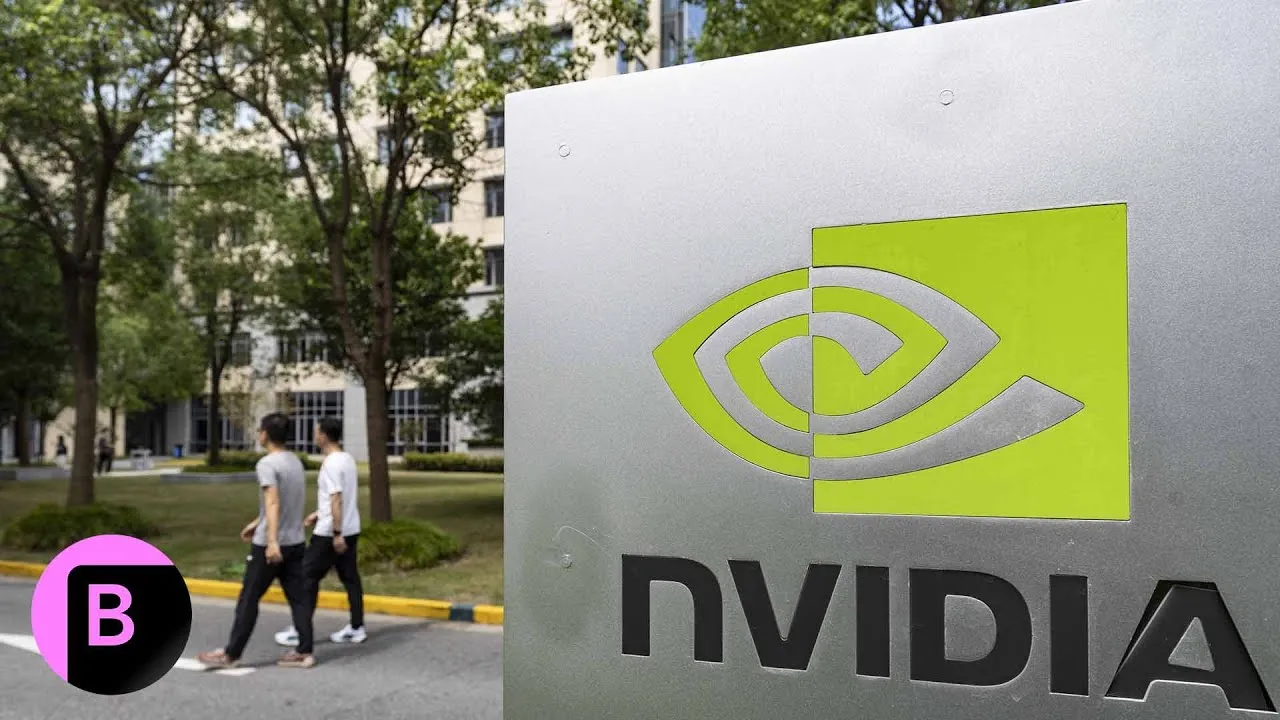
U.S. prosecutors are reportedly probing a Thai AI company over allegations of aiding in the smuggling of Nvidia chips to China. According to Bloomberg’s post on X, the chips—vital for AI advancements—were allegedly distributed to various end users, including Alibaba.
Key Points
- U.S. prosecutors are investigating a scheme involving the diversion of restricted AI semiconductors to China in violation of federal trade regulations.
- OBON Corp., identified as a key player in Thailand’s national AI development, is the entity allegedly serving as the intermediary in this smuggling operation.
- The operation reportedly utilized a “rotating cast” of third-party brokers to obscure the supply chain and move billions of dollars worth of technology.
- Alibaba Group Holding Ltd. has been named as one of the end customers receiving the diverted Super Micro servers containing prohibited Nvidia chips.
- The case highlights ongoing challenges for U.S. regulators in enforcing export controls on advanced AI hardware amid high demand from Chinese firms.
Prosecutors allege that this firm acted as a conduit to bypass U.S. trade restrictions, successfully diverting high-end AI hardware to entities including Alibaba Group Holding Ltd. through a complex network of third-party brokers.
OBON Corp. is reportedly implicated in violating US trade regulations related to high-end AI semiconductors through the following actions:
- Role as a Conduit for Diversion: US prosecutors have identified Bangkok-based OBON Corp. (referred to in legal proceedings as “Company-1”) as the entity responsible for acting as a conduit to smuggle restricted AI semiconductors into China.
- Circumvention of Export Controls: OBON Corp. reportedly functioned as part of a scheme to divert Super Micro Computer Inc. servers, which contain advanced Nvidia Corp. AI chips, to Chinese entities, including Alibaba Group Holding Ltd. This activity is in direct violation of US trade regulations.
- Use of Intermediaries: The operation involved a network of “third-party brokers” and alleged collaboration with a co-founder of Super Micro to successfully circumvent established export controls.
- Strategic Positioning: OBON Corp. is described as a significant player in Thailand’s national artificial intelligence initiatives. This status is notable because the investigation suggests the company utilized this infrastructure to bypass international sanctions.
The smuggling operation employed third-party brokers to redirect Nvidia chips to Chinese customers using specific operational strategies:
- Coordinated Evasion: The scheme involved a collaboration between a co-founder of Super Micro Computer Inc., an unnamed Southeast Asian company (identified as Bangkok-based OBON Corp.), and a “rotating cast” of third-party brokers.
- Purpose of the Network: This network of brokers was utilized to circumvent US trade regulations and export controls that restrict the transfer of high-end AI semiconductors to Chinese entities.
- Logistical Conduit: OBON Corp. acted as the central conduit in this operation, leveraging its position to facilitate the movement of Super Micro servers—which contained advanced Nvidia chips—to end customers in China, such as Alibaba Group Holding Ltd.
The document reveals that these brokers played a crucial role in a larger scheme to redirect billions of dollars’ worth of restricted technology, leveraging corporate networks and personal relationships to circumvent international sanctions.
Other People are Reading
Business
Ardmore Shipping Corporation 2026 Q1 – Results – Earnings Call Presentation (NYSE:ASC) 2026-05-08

Q1: 2026-05-07 Earnings Summary
EPS of $0.58 beats by $0.04
| Revenue of $61.99M (44.28% Y/Y) beats by $1.99M

Seeking Alpha’s transcripts team is responsible for the development of all of our transcript-related projects. We currently publish thousands of quarterly earnings calls per quarter on our site and are continuing to grow and expand our coverage. The purpose of this profile is to allow us to share with our readers new transcript-related developments. Thanks, SA Transcripts Team
Business
Coforge shares surge 6%, rally 16% in three days post Q4 results. What’s ahead for investors?

Coforge Q4 Results
Coforge on May 5 reported a net profit of Rs 612.3 crore for the January-March quarter of the financial year 2026, marking a whopping 134% surge from the Rs 261.2 crore net profit reported in the corresponding quarter of the previous financial year. Its revenue from operations, meanwhile, jumped 30% year-on-year (YoY) to Rs 4,450 crore during the quarter under review.
Speaking about the performance, Coforge CEO Sudhir Singh said, “FY26 marked another year of exceptional performance for Coforge. We delivered strong YoY growth at 29.2% and expanded EBIT margins materially by 370 bps to 14.4%. With an order executable of $1.75 billion, we enter FY27 with strong momentum and confidence. We expect to deliver robust revenue growth in FY27 and plan to deliver an EBITDA of more than 20.5% on a consolidated basis in FY27.”
Should you buy, sell or hold Coforge shares?
The international brokerage said the IT company’s Q4 results beat expectations, supported by stronger-than-anticipated margins and improved free cash flow conversion. It highlighted solid deal wins and a 16% YoY increase in the executable order book, which, despite the ongoing clean-up of the low-margin India business, offers visibility for double-digit organic growth.
Jefferies raised its earnings estimates by 9–11% on a better margin outlook and now expects a 23% EPS CAGR over FY27–29, noting that valuations at 19x one-year forward PE remain attractive.
Nomura also has a ‘Buy’ rating on Coforge shares and raised the target price to Rs 2,100 after the Q4 results. This indicates a 63% upside potential. The international brokerage noted that the company secured six large deals worth $648 million in Q4, while the executable order book for the next 12 months grew 16% year-on-year to $1.752 billion.
The brokerage noted that this excludes framework agreements from US public services, which could provide additional support to growth. It expects flat sequential performance in Q1 FY27 due to the ongoing exit from low-margin India operations, but believes Coforge will still outperform industry growth through FY27. The acquisition of Encora, completed in April, is projected to add roughly $550 million in revenue in FY27, while core organic growth is estimated at around 11%.
Also read: LIC’s $2 billion contrarian bet: 10 stocks the DII giant bought while the market bled
Nuvama Institutional Equities and Motilal Oswal also have ‘Buy’ calls on the shares of Coforge, while Elara Capital recently upgraded its rating for the IT stock to ‘Accumulate’.
(Disclaimer: Recommendations, suggestions, views and opinions given by the experts are their own. These do not represent the views of The Economic Times)

Politics Home | “I’m Not Going To Walk Away”: Starmer Says He Is Going Nowhere Despite “Very Tough” Local Elections

Prince Yadav’s Virat Kohli dismissal termed ball of the tournament: ‘That was your perfect delivery’ | Cricket News

HMD Vibe 2 India Launch & Flipkart Sale Confirmed

Manchester United reach agreement with Casemiro over contract clause amid transfer speculation

US brings back mandatory military draft registration

Steven Gerrard disagrees with Gary Neville over ‘shock’ Chelsea and Arsenal claim | Football


-

 NewsBeat5 days ago
Channel 5 – All Creatures Great and Small series 7 new post
-

 Crypto World24 hours ago
Upbit adds B3 Korean won pair as Base token gains Korea access
-
 Tech7 days ago
Trump’s 25% EU auto tariff breaches Turnberry Agreement that also covers semiconductors and digital trade
-
 NewsBeat1 day ago
NCP car park operator enters administration putting 340 UK sites at risk of closure
-
 Sports7 days ago
Paul Scholes issues Marcus Rashford reality check as agreement emerges over Man United star
-

 Entertainment7 days ago
Met Gala 2026 Rumored Guest List Is Turning Heads
-

 Entertainment6 days ago
Kylie Jenner Hit With Second Lawsuit From Ex-Housekeeper
-
Entertainment7 days ago
New on Prime Video in May 2026 — Full List of Movies and Shows
-

 Tech7 days ago
Meta ends Sama contract after Kenyan workers report seeing intimate footage from Ray-Ban smart glasses users
-

 Sports6 days ago
Cavaliers vs. Raptors Game 6 live score, updates, highlights from 2026 NBA playoffs first-round series
-
 Sports6 days ago
David Benavidez responds to team Canelo saying the fight will never happen
-
Entertainment5 days ago
New Netflix Movies in May 2026 — My Top 3 Picks to Stream
-

 Entertainment5 days ago
Melissa Joan Hart and More Stars Attend 2026 Kentucky Derby
-
 Sports6 days ago
IPL 2026: ‘Love you darling’- Hardik Pandya’s reaction to MS Dhoni steals the show |Watch | Cricket News
-

 Entertainment6 days ago
Young and the Restless Next Week: Cane Arrested & Matt’s Deadly New Scheme!
-
 Crypto World6 days ago
Pi Network Mandates Protocol 23 Upgrade for All Mainnet Nodes Before May 15 Deadline
-

 Business5 days ago
Luka Doncic Injury Update: Doncic’s Hamstring Recovery Slows Lakers’ Hopes Against Thunder: Can He Run Yet?
-

 Sports7 days ago
Bayern won’t hand bottom side Heidenheim ‘gifts’ despite PSG game
-

 Sports7 days ago
What Preity Zinta Said After Punjab Kings’ First Defeat Of IPL 2026
-

 Tech7 days ago
Mother’s Day 2026 Gift Guide: Audio to Upgrade Mom’s Lifestyle
You must be logged in to post a comment Login