
Business
Electricity VAT cut starts 1 October, Burnham tells MPs

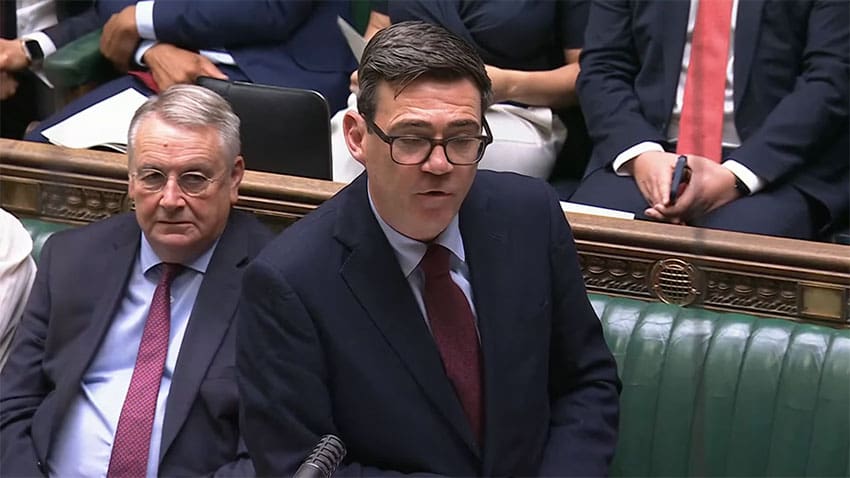
Andy Burnham told MPs today that VAT will come off electricity bills next month, in response to a question at Prime Minister’s Questions about what the government would do to help households through the winter. The 5 per cent rate is removed from domestic electricity supplies from 1 October.
“I will, Mr Speaker, and I will remove VAT from electricity bills next month,” the prime minister told the Commons. “It’s not going to solve everything for people, Mr Speaker, but it will take a little bit of pressure off.”
Dave Doogan, leader of the SNP in the House of Commons, had set out three pressures on household budgets in putting the question. Energy bills would rise again across the United Kingdom in the coming weeks, he said. Five major mortgage lenders had pushed up mortgage prices within the last few days. The cost of a barrel of oil had gone over $100 within the last few hours, he said, pushing up prices at the pumps.
“Despite this, Mr Speaker, the prime minister still seems fairly well liked,” Doogan said. “I’ll let you into a wee secret: I quite like the new prime minister, but that popularity will not pay the bills during this winter’s looming cost-of-living emergency. Will he stand up now and tell people what he is going to do to help?”
What the cut covers
The measure was announced on 21 July, in the first week of Burnham’s premiership. According to the Downing Street announcement, the 5 per cent rate comes off domestic electricity bills on 1 October at a cost to the Treasury of about £850m in 2026-27, funded by cancelling the digital ID programme, which had been due to cost £1.8bn over three years.
Downing Street put the saving at about £45 a year on a typical bill and said the Treasury expected the change to take around 0.10 percentage points off CPI inflation.
The relief applies to domestic supplies only. As Business Matters reported in July, most firms miss out on the cut: VAT-registered companies already reclaim the tax on their energy, and commercial supplies sit outside both the announcement and the price cap. Small businesses that qualify for the domestic rate and are not registered for VAT, along with charities and residential care homes, do benefit.
Bills still rising
The cut lands as household costs go up. Ofgem raised the price cap by 4 per cent from 1 October, taking the annual bill for a typical direct debit household to £1,723, up £60. The regulator said gas bills would rise by 8 per cent while electricity costs stayed broadly stable because of the VAT removal, and that about 11 million households on fixed tariffs, roughly 35 per cent of the total, were unaffected.
Neil Kenward, Ofgem’s director general for markets, said: “High international gas prices are continuing to drive energy costs in the UK. We welcome the government’s intervention to remove VAT from electricity bills, without which customers would have faced even higher costs this winter.”
Burnham signalled further help with bills at the Budget when the cap decision was published, saying the government would look at how to get energy prices down in the long term.
On borrowing costs, the Bank of England’s most recent Credit Conditions Survey put defaults on secured loans at 6.2 per cent in the first three months of 2026, the highest reading since the final quarter of 2024. Lenders have repriced since the escalation in the Middle East, pushing the average two-year fixed rate from about 4.8 per cent to beyond 5.5 per cent.
In Northern Ireland, where EU VAT rules still apply, the Executive receives comparable funding to support households instead, the announcement said.

Paul Jones
Harvard alumni and former New York Times journalist. Editor of Business Matters for over 15 years, the UKs largest business magazine. I am also head of Capital Business Media’s automotive division working for clients such as Red Bull Racing, Honda, Aston Martin and Infiniti.


“Over the last two years, the energy market has faced one external shock after another,” Wilson said.
“Throughout that period, we’ve worked hard to shield our customers from the full impact, absorbing costs where we could and delaying increases for as long as it was responsible to do so.
“Unfortunately, we have now reached the point where the combined impact of wholesale energy costs and regulated network and system costs is simply too significant for us to continue absorbing.”
Wilson added that when the costs of electricity fall the company will “look to reflect that in the prices our customers pay”.
Share Energy has 41,092 customers, 417 of those are commercial customers and 40,675 are domestic.
The company is owned by local business people with long experience in the renewable electricity industry.
It is committed to sharing half its profits with its customers and based on its current trajectory, Share Energy expects the first profit share could be available in 2028.
“Despite the price increase, our commitment remains unchanged: 50% of our profit will be shared with qualifying customers,” Share Energy said in a statement.
“The amount each customer receives will depend on the profit generated and how long they have been a Share Energy customer.”
The supplier added that it will contact customers directly with the new prices, and will offer support to those who may have difficulty paying their bills.

Anthropic has been named the world’s best workplace for innovators by Fast Company, taking the top spot on the magazine’s Best Workplaces for Innovators 2026 list published yesterday.
The eighth annual list ranks the top 100 companies and recognises a further 140 winners across 16 categories, according to Fast Company.
The magazine credited the AI developer’s rise to Claude Code, a tool that began as an internal aid used by Anthropic engineers to test AI models and assist with coding projects. Fast Company reported that the tool spread across the company as developers saw colleagues using it, and that its internal popularity suggested commercial potential. Anthropic released it to the public early in 2025.
According to Fast Company, Claude Code helped popularise “vibe coding” and became one of the fastest growing software tools in history, even as rivals released competing products.
Cowork release and share price fallout
The magazine said the tool’s impact accelerated with the February 2026 release of Claude Cowork, which is designed to let AI help users without a software development background automate a broader range of tasks. Fast Company reported that the Cowork release contributed to a selloff of enterprise software-as-a-service stocks.
Since February 2025, Anthropic’s valuation has risen from $61bn to nearly $1trn, Fast Company said, with an initial public offering expected as early as October. Business Matters has previously reported that the company could be valued at more than $2trn in a New York listing.
Fast Company noted that Anthropic’s reputation as the AI industry’s safety-first operator “may have evolved into something more complicated amid regulatory battles and the general controversy around the industry”, but said its culture of innovation continues to push the envelope of what is possible.
How the company says it supports innovation
The magazine reported that all Anthropic employees are encouraged to prototype new ideas and take advantage of benefits including flexible education stipends and an office environment with varied spaces designed for different working styles and needs.
“At Anthropic, ensuring our employees feel empowered to innovate is at the core of what we do,” the company told Fast Company. “Our approach rests on removing the friction, bureaucracy, and burnout that typically stand between a good idea and a shipped one.”
The company has also recently launched the Anthropic Institute, a research arm tracking the capabilities of AI technology and its impact, Fast Company said. Its work includes an Anthropic Economic Index that tracks AI’s effect on labour markets.
The recognition comes as Anthropic continues to expand its operations and hiring. Business Matters reported in July that Monzo founder Tom Blomfield had joined the company’s compute team, taking a leave of absence from his role as a partner at Y Combinator to work on AI infrastructure. In August, Business Matters reported that Volta, a six-month-old London start-up, had struck a $10bn data centre partnership with Anthropic, starting with a facility in Norway.
The full 2026 ranking is published on Fast Company’s Best Workplaces for Innovators page, which also names DoorDash Labs as its Innovation Team of the Year and Ivo Stivoric as its 2026 Innovative Leader of the Year.

Amy Ingham
Amy Ingham is a reporter at Business Matters, covering UK business news with a focus on breaking news, business policy, late payments and insolvency. She joined the magazine in 2026 after completing the NCTJ Diploma in Journalism at Harlow College’s journalism school. Her recent reporting includes British Steel’s nationalisation and its impact on SME suppliers, the decline in late payments by large firms, and Insolvency Service director disqualifications. Reach her at aingham@cbmeg.co.uk.
Business
US Destroys Five Iranian Tankers After Missile Attacks; Iran Hits Jordan Base as Oil Tops $100
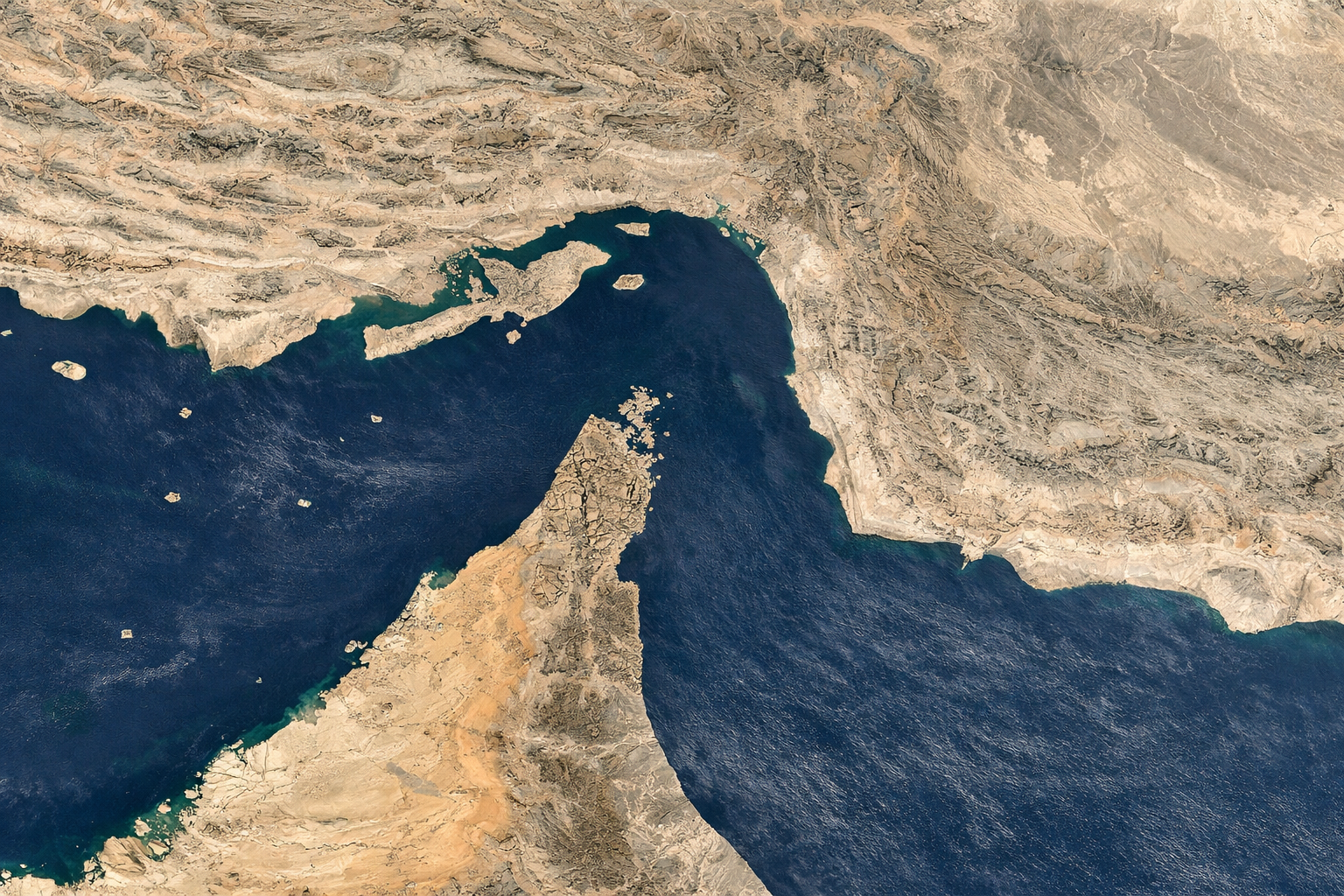
DUBAI — The United States said it destroyed five Iranian oil tankers on Tuesday after ballistic missiles targeted a Navy warship, and Iran answered by firing on a U.S.-used air base in Jordan and claiming strikes on ships in the Strait of Hormuz, the sharpest burst of tanker warfare in a conflict now more than six months old.
U.S. Central Command said the Islamic Revolutionary Guard Corps twice tried to hit an American warship over two days. “The U.S. warship successfully evaded the attempted Iranian attacks and continued to patrol regional waters. No American personnel were harmed,” the command said. It identified the tankers as the Kaviz (also rendered Kivik), Charminar, Horizon 1 and Riesco in the Gulf of Oman, and the Derya near Kharg Island, Iran’s main oil export hub. Crews were told to leave before the ships were struck and “rendered inoperable,” CENTCOM said. It released video it said showed the Riesco burning and sinking. The vessels, it said, belonged to a “multi-billion-dollar shadow network that funds the IRGC and its regional proxies.”
Secretary of State Marco Rubio, traveling in Colombia, stated the new rule in one sentence. “Iran continues to try to hit U.S. naval ships, and for every time they do that or try to do that, they’re going to lose tankers,” he told reporters.
The Guards said they answered with a “heavy missile strike” on Muwaffaq Salti Air Base near Azraq, Jordan, a facility used by U.S. forces. Jordan’s armed forces said 20 ballistic missiles were fired from Iranian territory. Eighteen were intercepted. Two fell in unpopulated areas. There were no casualties, Jordan said. A U.S. official said the Jordan strikes were ineffective and that all American troops were accounted for. Iran claimed hangars and shelters were wrecked. That claim was not independently confirmed.
The IRGC also said it hit two U.S. vessels — in some statements naming destroyers — eight oil tankers and 10 ships it called “non-compliant” for entering a zone it has declared off-limits in the strait. It claimed “great damage.” CENTCOM did not immediately confirm those hits. The United Kingdom Maritime Trade Operations center said several merchant ships in the northern Arabian Gulf and the Gulf of Oman had taken “disabling fire,” and that one tanker reported a nearby vessel listing, possibly after a projectile strike.
The exchange follows a similar weekend round. On Saturday, CENTCOM said it struck three Iranian crude carriers after missiles were fired at two U.S. warships, including an aircraft carrier and a destroyer that “evaded” the attack. Iran said it then targeted commercial and U.S.-linked ships. Washington has now made tanker-for-tanker an announced policy: fire at a U.S. combatant, lose export hulls.
Oil moved with the smoke. Brent, the global benchmark, traded through $100 a barrel on Wednesday for the first time since late July before easing. About one-fifth of the world’s seaborne oil used to pass Hormuz. Since the war opened with U.S. and Israeli strikes on Iran in late February, the waterway has been mined, restricted, escorted and fought over. The United States says it is enforcing a blockade of Iranian ports and escorting some commercial traffic. Tehran says it will widen an exclusion zone from near Chabahar into the approaches of the strait and put violators on its own sanctions list, according to officials including Mohsen Rezaei.
The White House is running a dual track: sink shadow-fleet tankers and cut what remains of Iran’s civilian aviation and trade. The administration announced sanctions on 36 targets, including dozens of Iranian airlines, as the ships burned. President Donald Trump has said repeatedly that Iran will not be allowed a nuclear weapon. He has also tried at times to describe the fighting as contained even as energy prices rise into a U.S. midterm year.
Other fronts moved the same week. Houthi forces in Yemen struck targets in southern Saudi Arabia, wounding scores and setting energy sites alight, according to regional reports, widening a war that already includes Israel and Hezbollah. Neighboring mediators have floated temporary shipping corridors and mine-clearance talks. Those ideas have not stopped missiles on Jordan or hulls in the Gulf of Oman.
What can be stated from official accounts is narrow and grim. The United States says it warned crews off five tankers and destroyed them after two failed shots at a warship. Jordan says it knocked down most of a 20-missile salvo and that no one died. Iran says it hit U.S. ships and a larger group of tankers and will keep closing water. Independent confirmation of how many commercial hulls were actually holed on Wednesday is incomplete. UKMTO’s “several vessels” and CENTCOM’s video of one Iranian tanker sinking are the firmest public images.
Hormuz is not a metaphor. It is a pinch point where insurance rates, tanker routing and election-year gasoline prices meet anti-ship missiles. A war that both capitals have at times called limited is now eating the ships that pay for it. Rubio’s formula — shoot at the Navy, lose a tanker — is simple. So is Iran’s: close the gate and fire at the bases that keep it open. Neither formula lowers the price of a barrel once the next hull is on fire.
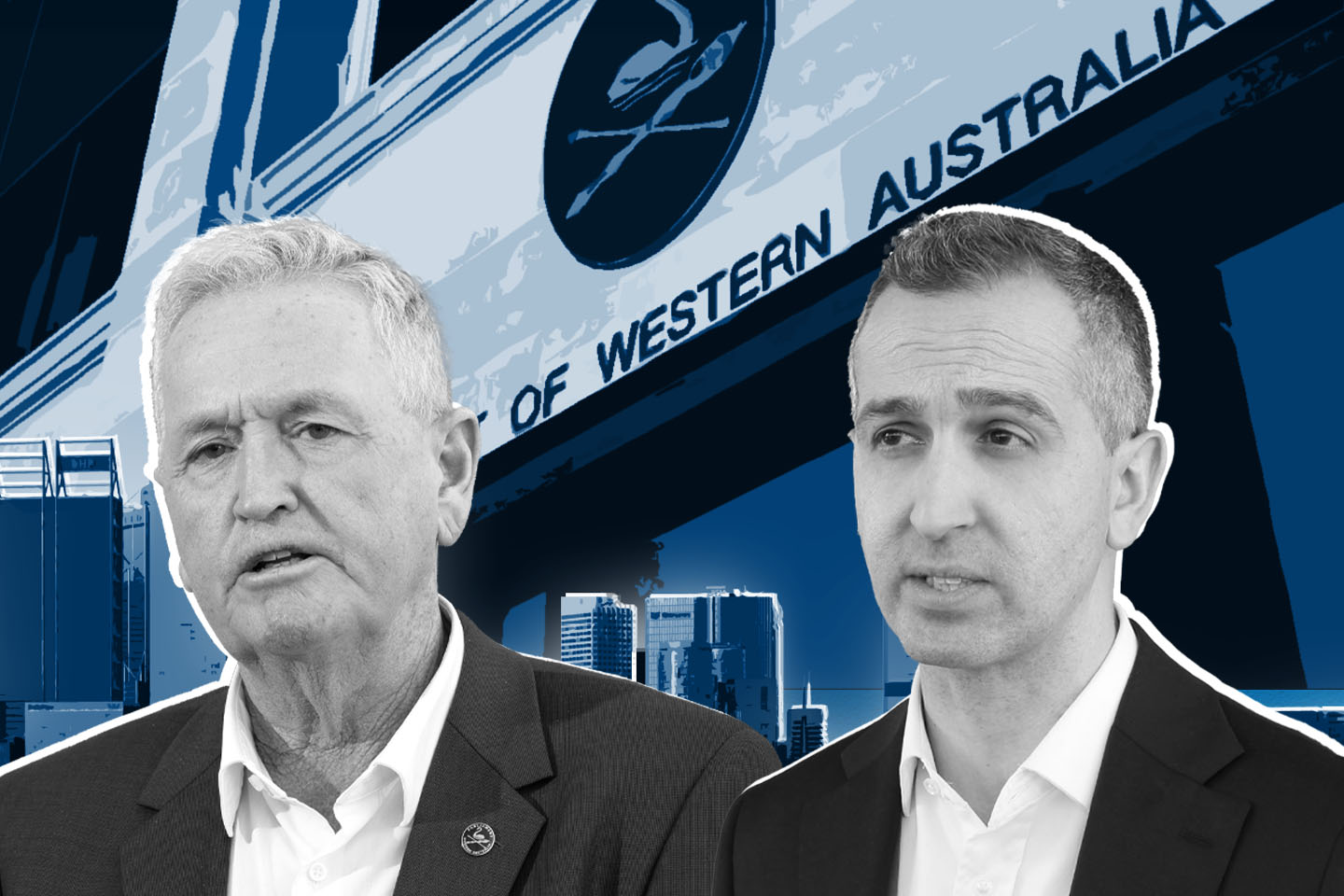
Shane Love and Daniel Pastorelli traded sharp words over whether the taxpayer-funded EIS exploration grants are at odds with the government’s ban on uranium development in parliament on Wednesday.

Accountant Angela Frigger and her husband have been denied permission to sue their former lawyers, three weeks after a federal judge made them subject to vexatious litigant restrictions.

The 2026 NFL season kicks off tonight as the New England Patriots head to Lumen Field to take on the Seattle Seahawks. With college football already underway, the return to the gridiron marks the busiest season for sportsbooks and increasingly popular prediction markets. That should provide a boost to sportsbook operators like DraftKings (DKNG), Penn Entertainment (PENN) and FanDuel parent…
Copyright ©2026 Investor’s Business Daily, LLC. All rights reserved. 87990cbe856818d5eddac44c7b1cdeb8

Weak equity markets and FII outflows also pressurised the rupee, forex traders said.
Brent crude futures surpassed USD 100 a barrel for the first time in almost six weeks after attacks on oil facilities and ships in West Asia threatened to weaken the already strained supply chain amid the US-Iran tensions. Brent crude was trading higher by 2.94 per cent at USD 100.73 per barrel.
At the interbank foreign exchange market, the rupee opened at 94.80, also its intra-day high, against the US dollar. The local unit fell to an intraday low of 95.22 as crude oil prices surged. The rupee settled at 95.08 (provisional), down 34 paise from its previous close of 94.74.
Meanwhile, the dollar index, which gauges the greenback’s strength against a basket of six currencies, was trading at 98.84, higher by 0.05 per cent.

“The rupee declined today on rising crude oil prices and risk aversion in global markets. Brent has breached the USD 100 mark on further escalation of tensions between the US and Iran. FII outflows too pressurised the rupee. However, rupee recovered initial losses on a weak dollar,” said Anuj Choudhary, Research Analyst, Mirae Asset Sharekhan.
The local currency is expected to trade with a negative bias on risk aversion in global markets and worries over rising crude oil prices. Escalation of geopolitical tensions between the US and Iran may also pressurise the rupee, he added.The US military destroyed five Iranian oil tankers on Tuesday in response to the latest attacks on its warships, and Iran hit back at American targets in Jordan.
On the domestic equities market front, Sensex tanked 813.35 points to settle at 74,764.23 while Nifty was down 203.60 points to 23,431.50.
Foreign institutional investors (FIIs) sold equities worth Rs 123.19 crore on a net basis on Tuesday, according to exchange data.

Spear Invest founder and CIO Ivana Delevska discusses OpenAI’s reported GPT-6 Astra model, artificial intelligence and more on ‘Making Money.’
A senior Anthropic safety researcher said on Tuesday that artificial intelligence (AI) has a greater than 10% chance to “kill all humans” within “the next decade,” responding to a former employee who resigned after accusing the company of acting irresponsibly.
Former Anthropic and OpenAI researcher Jacob Coxon wrote in a lengthy resignation thread posted to X on Sunday that “the people building AI earnestly believe that it could kill us all by the end of the decade.”
“I resigned from Anthropic today. I spent the last three years doing pretraining research at both OpenAI and Anthropic. Neither company is acting responsibly. They are racing straight to self-improving superintelligence and gambling with our lives,” he wrote.

Former Anthropic and OpenAI researcher Jacob Coxon wrote in a lengthy resignation thread posted to X on Sunday. (Thomas Fuller/SOPA Images/LightRocket via Getty Images)
Responding to Coxon’s thread in a quoted post, the company’s alignment science lead, Evan Hubinger, conceded that Coxon’s assessment was correct, though he added some caveats.
NVIDIA CEO DECLARES ‘AGI HAS ARRIVED’ AFTER OPENAI UNVEILS ASTRA
“Jacob is correct here—we really do earnestly believe AI could kill all humans!” Hubinger wrote.
“I personally think it is >10% within the next decade. I believe Anthropic is trying its best, but we do not yet have a plan to solve alignment for superintelligence and are not clearly on track to,” he continued.
Hubinger added that the potentially deadly risk did not come from present models.
“To be clear, as we say in our latest Risk Report, I think the risk from present models is low. What I am worried about is superintelligence arising from recursive self-improvement, as we have said is happening faster than we thought,” he wrote.

CEO of Anthropic Dario Amodei attends a working lunch with G7 leaders, G7 outreach partners, and global tech CEOs on innovation and AI, during the G7 Summit on June 17, 2026, in Evian-les-Bains, France. (Anna Moneymaker/Getty Images)
Research on self-improvement – an AI model’s ability to continuously enhance its own source code or training methodologies – is an avenue of development Coxon specifically cited in his resignation thread as a main reason he quit.
ANTHROPIC SAYS AI MODELS ACCESSED SYSTEMS OF 3 REAL ORGANIZATIONS DURING TESTING
“These will soon be superhuman systems that can hack anything, revolutionize any field overnight, and acquire real power and resources. We have all witnessed the progress in each of these domains, and progress is not slowing,” Coxon’s thread continued.
Coxon also said that, unlike researchers at other companies, Anthropic’s scientists understand the risks of their work, but press forward because they fear a less responsible company might unlock the potentially disastrous capabilities first.
“At Anthropic, the stakes are well-understood, but they are locked in a race to get there first – they believe no one else will act responsibly, so they must do it themselves, despite the risk,” Coxon added.
Coxon suggested that, to prevent utter catastrophe, the world may require a temporary ban on model improvement.

Coxon suggested that, to prevent utter catastrophe, the world may require a temporary ban on model improvement. (Davide Bonaldo/SOPA Images/LightRocket via Getty Images)
“I don’t feel like we’re on track to prevent a global race, which may require costly actions such as a temporary ban on improving model capabilities,” he wrote.
He ultimately called on global AI researchers and developers to think and act more responsibly.
“If you are a lab researcher, I urge you to consider what the next few years will actually feel like. Do you want to kick off a superintelligent RL run without a rigorous understanding of its mind? Should you put your head down because ‘it’s happening anyway’ – or take this moment to call for different conditions?” his X thread concluded.
GET FOX BUSINESS ON THE GO BY CLICKING HERE
FOX Business reached out to Coxon, Hubinger, Anthropic and OpenAI for further comment.

American Airlines seat in its Flagship Suite.
Courtesy: American Airlines
American Airlines is expanding its push into premium travel on its largest planes.
The carrier on Wednesday launched its first retrofitted Boeing 777-300ER, which it uses for its most popular long-haul international flights, including routes to London, Tokyo and Sydney.
The new layout on the wide-body plane features 144 premium seats, including 70 lie-flat seats with sliding doors in its Flagship Suite section at the front of the plane.
American said in 2022 that it planned to get rid of its international first class on many of its planes in favor of the single, larger premium cabin at the front of the plane. It started flying the suites last year after facing delays from suppliers.
The lie-flat seats can bring in close to $10,000 on some long-haul international routes compared with $2,000 or much less for a seat in the back.
There’s also a Premium Economy section, with 44 seats that have privacy headrest wings and adjustable calf and footrests, as well as 30 Main Cabin Extra seats with additional legroom.
There are 186 regular seats in updated plane’s Main Cabin.
American said its full fleet of 20 Boeing 777-300ER aircraft will be retrofitted by next year. The carrier will have a similar but smaller layout on its Airbus A321XLRs.
American Airlines retrofitted Boeing 777-300ER Premium Economy section.
Courtesy: American Airline
The airline has been trying to catch up to its rivals Delta Air Lines and United Airlines, which have a head start on catering to high-spending travelers. The airline’s new suites are a key part of that strategy.
American has also been working to grow its loyalty program, improve its on-time rate and expand its network. Last week, the airline announced it will add seven international routes to its 2027 schedule, though none of those are on the Boeing 777-300ERs.

Lowe’s stock hits 52-week low at 199.2 USD

Energy costs: Share Energy to increase electricity prices by 12.6%

BitMart Misses Roadmap Deadline, Names Financial Adviser

2026 Akwa Ibom Sports Festival to Begin September 22

Memory prices are slowing because buyers ran out of money

Phones confiscated, players sent home: Pakistan’s England tour turmoil revives memories of Mohammad Amir, Salman Butt and Mohammad Asif’s 2010 Lord’s spot-fixing scandal | Cricket News

Bitcoin price risks $76K drop as $78K support weakens


-
Tech1 day ago
Memory prices are slowing because buyers ran out of money
-
Sports1 day ago
Phones confiscated, players sent home: Pakistan’s England tour turmoil revives memories of Mohammad Amir, Salman Butt and Mohammad Asif’s 2010 Lord’s spot-fixing scandal | Cricket News
-
 Crypto World15 hours ago
Bitcoin price risks $76K drop as $78K support weakens
-

 NewsBeat1 day ago
England up in reading, maths and science rankings as Scotland and Wales dip
-

 Crypto World15 hours ago
Ethereum price stalls below $2,500 as ADX drops to 11
-

 Crypto World23 hours ago
Robinhood Stock: How To Take Advantage With Reduced Risk
-

 Business1 day ago
Egyptian TV Presenter Sarah Khalifa, 11 Others Sentenced To Death In Major Drug Trafficking Case In Cairo
-

 Business13 hours ago
Meta debuts long-awaited personal AI agent, Muse
-

 Crypto World1 day ago
Visa expands stablecoin card network to 160 programs
-
 Crypto World1 day ago
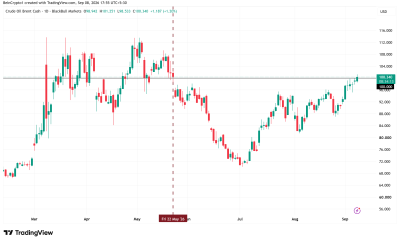
Brent Crude Oil Moves Above $100 for the First Time in 3 Months
-
 Tech1 day ago
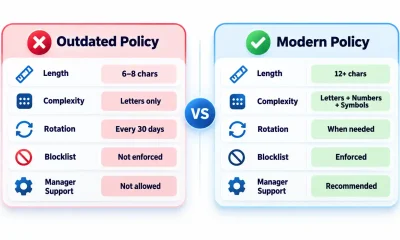
Strong Password Policy and Password Manager Guide
-
 NewsBeat1 day ago
Tehran’s assertive rhetoric signals a new and dangerous phase in conflict
-
 Crypto World23 hours ago
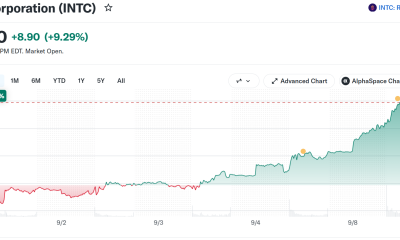
Intel Stock Jumps 9% on Chip Price Hike Report, US Stake Gains $36 Billion
-

 Sports22 hours ago
Ballon d’Or 2026 Nominees: Lionel Messi In, Cristiano Ronaldo Out; Erling Haaland Included In Top 30
-
 Tech1 day ago
Google’s revived nuclear power plant gets $1.9B loan from US government
-
 Business19 hours ago
Oil Higher on Hormuz Escalation, Weighing on Sentiment
-

 Tech19 hours ago
Meta debuts its Muse AI agent. Will consumers trust it?
-

 Business1 day ago
Claim Your Share Of $50 Million Disney Streaming Price Settlement By Sept. 8 Tonight
-

 Tech1 day ago
Stoke Space raises another billion to rival SpaceX at re-flying rockets
-

 Business17 hours ago
Target opening 8 new stores this fall across six states
You must be logged in to post a comment Login