

Business
Elon Musk Hails ‘Honor’ Working With Talented Teams After Andreessen Likens Style to Steve Jobs

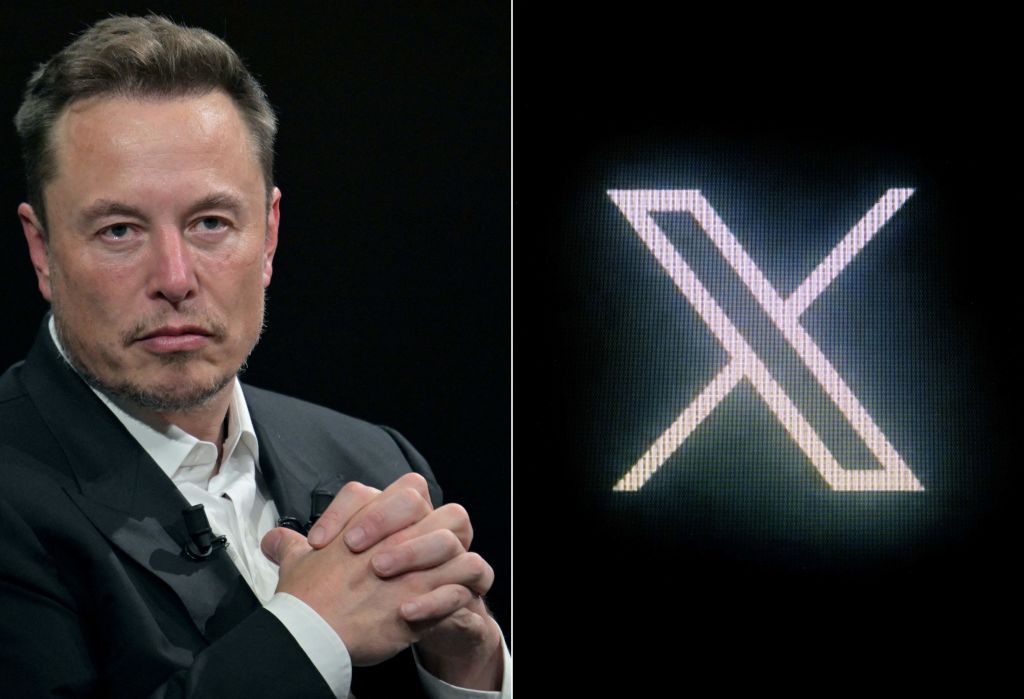
AUSTIN, Texas — Elon Musk, the billionaire CEO of Tesla, SpaceX and xAI, posted a rare note of gratitude on X late Sunday, calling it “such an honor to work with so many amazingly talented people.” The comment came in reply to a widely shared video clip of venture capitalist Marc Andreessen praising Musk’s intense, truth-seeking leadership style and comparing it to Steve Jobs’ approach at Apple.
The post, which quickly drew more than 3,700 likes and hundreds of replies within hours, highlights the high-stakes culture Musk has built across his companies as they pursue ambitious goals ranging from Mars colonization to orbital AI data centers. Posted April 12, 2026, it arrived amid fresh developments in Musk’s empire, including Intel’s recent decision to join the Terafab chip-manufacturing project with Tesla, SpaceX and xAI, and ongoing preparations for a potential SpaceX initial public offering valued at up to $1 trillion or more.
In the 96-second video clip that Musk quoted, Andreessen — co-founder of Andreessen Horowitz and a longtime tech investor — described Musk’s management philosophy during what appeared to be a casual pub conversation. “Truth-seeking at all costs,” Andreessen said, gesturing animatedly. He noted that Musk demands the “ground truth” with “zero tolerance for anything else,” confronting bad news “ruthlessly and relentlessly.” Unlike typical startup founders who project forced optimism to retain talent, Musk tells teams bluntly when failure could mean bankruptcy, Andreessen said. That radical transparency, he argued, pushes employees to perform at their absolute limits — much like engineers who worked under Jobs and later reflected that they had done the best work of their careers, even after difficult interactions or abrupt departures.
Musk’s understated reply stood in contrast to his usual rapid-fire, sometimes combative posting style. It resonated with supporters who see his companies as crucibles for world-changing innovation. “The best leaders make people do the best work of their lives. That’s the Elon effect,” one reply read, echoing Andreessen’s point. Others praised the “talent density” Musk attracts, noting that passionate teams outperform larger groups of clock-punchers.
The moment comes as Musk’s intertwined businesses face both soaring valuations and intense scrutiny. SpaceX officially acquired xAI in February 2026 in a deal that created the world’s most valuable private company, with an internal valuation exceeding $1.25 trillion. The merger aims to build data centers in space to power advanced AI, leveraging Starlink satellites for low-latency orbital computing. Tesla, meanwhile, converted a $2 billion investment in xAI into a small equity stake in SpaceX, further blurring lines between the companies. Regulatory filings cleared the move in March.
Just last week, Intel announced it would partner on Musk’s Terafab initiative — a massive chip-fabrication project in Austin, Texas, designed to produce custom silicon for robotics, AI and space applications. The collaboration, announced April 7, underscores Musk’s push for vertical integration in hardware as his ventures scale. Analysts say the project could accelerate Tesla’s robotaxi rollout, SpaceX’s satellite constellation and xAI’s Grok models.
Yet Musk’s leadership style has long drawn criticism as well as admiration. High turnover rates at Tesla and SpaceX have been well-documented, with some former employees describing marathon workweeks, sudden firings and a culture of “existential dread” when deadlines slip. Andreessen acknowledged as much in the clip, noting that the blunt honesty would cause talent to “bleed out” at most companies. Musk has defended the approach, arguing it is necessary for missions that literally involve sending humans to Mars or achieving full self-driving autonomy.
Public reaction to Musk’s Sunday post reflected that divide. Some users called it “humility from the guy who’s literally changing the world,” while others noted the timing, with one quipping it felt “like a leaving speech but he owns the place.” A handful of replies veered into unrelated political debates, consistent with Musk’s own recent activity on X, where he has weighed in on topics including anti-white racism and public shaming of certain behaviors.
The post also arrives as Musk navigates broader challenges. X, the social-media platform he acquired in 2022 and later merged with xAI, underwent restructuring in March, laying off its chief marketing officer and more than 20 nontechnical staffers to streamline operations ahead of the SpaceX IPO. Co-founders at xAI have exited in recent months, and teams have been reorganized, including the “vision” group focused on video generation for Grok.
Despite the pressures, Musk’s companies continue to deliver milestones. SpaceX achieved multiple successful Starship test flights in early 2026, advancing reusable rocket technology critical for lunar and Martian missions. Tesla reported progress on its Cybercab robotaxi, with production slated to begin slowly in April as new manufacturing lines ramp up. xAI, now under the SpaceX umbrella, has poured billions into compute infrastructure, including a reported $20 billion investment in Mississippi for new facilities.
Industry observers say the Andreessen comparison is apt. Jobs was known for his reality-distortion field and insistence on perfection, often driving teams to exhaustion but producing iconic products. Musk, at 54, has similarly bet on talent willing to embrace urgency. “Ten people who think they’re building something historic will outperform 200 who think they have a job,” one X user replied to Musk’s post, capturing the ethos.
Musk has spoken before about the privilege of working with exceptional engineers. In past interviews, he has credited SpaceX’s early survival to a small cadre of rocket scientists who worked around the clock after three failed Falcon 1 launches. Tesla’s Autopilot and Full Self-Driving teams have similarly endured intense scrutiny and iterative redesigns. The pattern repeats at xAI, where Grok’s development has emphasized maximum truth-seeking over political correctness — a stance Musk has repeatedly highlighted.
As SpaceX eyes a public debut later this year or in 2027, with some analysts predicting a $1.75 trillion valuation, investors will scrutinize whether Musk’s culture can scale. Wall Street has historically rewarded the results: Tesla’s market value has fluctuated wildly but remains among the world’s largest automakers by capitalization. SpaceX’s Starlink now serves millions of customers globally, generating steady revenue that subsidizes deeper space exploration.
Musk himself has described his role as more coach than traditional CEO, diving into engineering details at each company weekly. Andreessen has called this “micro-managing at a macro scale,” a trait shared with Jobs. In one recounted story, Musk once ran an 18-hour meeting requiring every employee to present updates in five-minute slots, giving leadership a real-time view of the entire organization without bureaucratic filters.
Critics argue such intensity borders on unsustainable, pointing to burnout reports and occasional lawsuits over workplace conditions. Supporters counter that participants emerge transformed, often crediting Musk with unlocking their highest potential. The Sunday post appears to acknowledge that mutual dynamic: the talent makes the mission possible, and the mission elevates the talent.
Whatever the verdict on his methods, Musk’s latest comment underscores a simple truth in his worldview. In an era of corporate platitudes and performative optimism, unfiltered urgency can forge breakthroughs. As one reply to his post put it, “Generational run.”
With SpaceX preparing for its historic IPO, Tesla pushing autonomous driving frontiers and xAI racing in artificial intelligence, Musk’s empire shows no signs of slowing. His brief expression of gratitude may be modest, but it reflects the human element behind the rockets, robots and algorithms reshaping industries.



With an investment banking cash and derivatives trading background, Binary Tree Analytics (‘BTA’) aims to provide transparency and analytics in respect to capital markets instruments and trades. BTA focuses on CEFs, ETFs and Special Situations, and aims to deliver high annualized returns with a low volatility profile. We have been investing for over 20 years after obtaining a Finance major at a top university.
Analyst’s Disclosure: I/we have no stock, option or similar derivative position in any of the companies mentioned, and no plans to initiate any such positions within the next 72 hours. I wrote this article myself, and it expresses my own opinions. I am not receiving compensation for it (other than from Seeking Alpha). I have no business relationship with any company whose stock is mentioned in this article.
Seeking Alpha’s Disclosure: Past performance is no guarantee of future results. No recommendation or advice is being given as to whether any investment is suitable for a particular investor. Any views or opinions expressed above may not reflect those of Seeking Alpha as a whole. Seeking Alpha is not a licensed securities dealer, broker or US investment adviser or investment bank. Our analysts are third party authors that include both professional investors and individual investors who may not be licensed or certified by any institute or regulatory body.

LKQ Corporation Is Too Cheap To Ignore, Especially With A Potential Catalyst At Play


Ian Bezek is a former hedge fund analyst at Kerrisdale Capital. He has spent the decade living in Latin America, doing the boots-on-the ground research for investors interested in markets such as Mexico, Colombia, and Chile. He also specializes in high-quality compounders and growth stocks at reasonable prices in the US and other developed markets. Ian leads the investing group Ian’s Insider Corner. Features of the group include: the Weekend Digest which covers everything from new ideas to updates on current holdings and macro analysis, trade alerts, an active chat room, and direct access to Ian. Learn More.
Analyst’s Disclosure: I/we have no stock, option or similar derivative position in any of the companies mentioned, and no plans to initiate any such positions within the next 72 hours. I wrote this article myself, and it expresses my own opinions. I am not receiving compensation for it (other than from Seeking Alpha). I have no business relationship with any company whose stock is mentioned in this article.
Seeking Alpha’s Disclosure: Past performance is no guarantee of future results. No recommendation or advice is being given as to whether any investment is suitable for a particular investor. Any views or opinions expressed above may not reflect those of Seeking Alpha as a whole. Seeking Alpha is not a licensed securities dealer, broker or US investment adviser or investment bank. Our analysts are third party authors that include both professional investors and individual investors who may not be licensed or certified by any institute or regulatory body.

The brand’s first EV has been heavily criticised, with some saying it has abandoned Ferrari’s roots.

Micron Faces New Threat From Samsung’s Memory Chip for AI

Legrand SA (LGRDY) Shareholder/Analyst Call – Slideshow
Business
TriMas Corporation (TRS) Presents at KeyBanc Capital Markets 2026 Industrials & Basic Materials Conference – Slideshow
TriMas Corporation (TRS) Presents at KeyBanc Capital Markets 2026 Industrials & Basic Materials Conference – Slideshow

The disappearance of Nancy Guthrie, the 84-year-old mother of “Today” show co-anchor Savannah Guthrie, enters its fourth month with authorities confirming the case remains active and ongoing, though no suspect has been publicly identified and no significant new breakthroughs have been announced.
Nancy Guthrie was last seen around 9:45 p.m. on January 31 after a family member dropped her off at her home in the Catalina Foothills area north of Tucson. She was reported missing the following day when she failed to appear at a friend’s house for an online church service.
Pima County Sheriff Chris Nanos has maintained that investigators anticipate making an arrest eventually. On the 100-day mark in mid-May, he told local media the department was “not going to give up on it just because it’s been 100 days.” As the case nears four months on Monday, officials continue to describe it as active with leads still being pursued.
Ongoing forensic and search efforts
The FBI released doorbell camera footage in February showing a masked and armed individual at the home in the early morning hours. Mixed DNA evidence, including a hair sample, has been sent for analysis, along with other items recovered from the scene.
A search in early May uncovered human remains in a nearby ephemeral river, but experts confirmed they were prehistoric — hundreds to 1,000 years old — and unrelated to the case. University of Arizona anthropologist James T. Watson examined the bones and artifacts, which were returned to the Tohono O’odham Nation.
Investigators have reviewed thousands of tips. In late May, officials noted they are still examining home security footage and other digital evidence, with no indication the case has gone cold.
Family appeals and reward
Savannah Guthrie has made several public appeals for information. On Mother’s Day in May, she shared an emotional Instagram Reel featuring family photos and clips, including one where Nancy says, “Miss you.” The family continues to offer a substantial reward — reported as high as $1.2 million combined with other contributions — for information leading to her recovery.
The Guthrie family has described Nancy as a devoted mother and grandmother who was taken from her home in what authorities believe was an abduction. She left behind medication and was last seen in her pajamas, adding urgency to concerns about her health.
Savannah returned to the “Today” show in April after taking time away. She has spoken about the emotional toll while expressing continued hope.
Challenges in the investigation
The rugged Sonoran Desert terrain around Tucson complicates searches. No clear motive or suspect has been named publicly, though authorities have ruled out immediate family members. Sheriff Nanos has faced some public scrutiny over the pace of the investigation and past departmental issues, but he has reiterated commitment to solving the case.
Recent viral theories, including possible links to unrelated local incidents, have been addressed by officials. The Pima County Sheriff’s Department stated it has received no reports supporting certain online speculation and continues to focus on verified leads.
Communication between the sheriff’s office and the Guthrie family has reportedly shifted, with the FBI now serving as the primary liaison.
Community and national attention
The high-profile nature of the case, tied to Savannah Guthrie’s prominent role on NBC, has kept national focus on the search. Tips continue to come in, though the volume has decreased from the initial surge. Authorities urge the public to report even small details.
The quiet Catalina Foothills neighborhood has seen periodic law enforcement activity. Residents have been asked to check home security systems and remain vigilant. The case has prompted broader discussions about safety for elderly residents living alone.
Calls for information
Anyone with information is encouraged to contact the Pima County Sheriff’s Department tip line at 520-351-4900 or the FBI at 1-800-CALL-FBI. Tips can be submitted anonymously.
As the four-month mark arrives, the absence of resolution weighs heavily on the family and community. Officials stress that the investigation has not slowed, with forensic work, tip review and coordination between local and federal agencies continuing behind the scenes.
Nancy Guthrie’s disappearance serves as a stark reminder of vulnerabilities in suburban settings and the challenges of high-profile missing persons cases. For now, the search persists in the Arizona desert, with authorities and the Guthrie family holding out hope for answers and her safe return.
Raymond James Financial, Inc. (RJF) Analyst/Investor Day – Slideshow
Hyatt Hotels Corporation (H) Analyst/Investor Day – Slideshow

Circle Freezes $12.6M in Zama-Linked Stablecoins Without Prior Notice
Emilia Clarke addresses rumors of how much main “Games of Thrones” stars were paid per episode

XRP PRICE RISES WITH IRAN U.S. PEACE TALKS – XRP NEGATIVITY WILL REMAIN AT $100 – XRP NEWS!


-

 Business6 days ago
NYT Strands Answers May 24 2026 Revealed for Puzzle No. 812 Theme Summer Essentials
-

 NewsBeat4 days ago
Israel says it has killed new Hamas military leader in Gaza City airstrikes
-

 Politics5 days ago
Bridgerton Season 5: Cast, Release Date And Everything We Know So Far
-

 Business4 days ago
Selena Gomez Reportedly Upset Over Benny Blanco’s Comments on Her ‘Terrible’ Diet
-
 Crypto World4 days ago
Micron Crosses $1 Trillion Market Cap as AI Demand Reshapes Memory Sector
-

 Business6 days ago
BTS Sells Out Four Las Vegas Shows at Allegiant Stadium for ARIRANG World Tour
-

 Tech5 days ago
Microsoft’s quiet Claude Code retreat and the real cost of enterprise AI
-
 Tech5 days ago
China assigns ID codes to 28,000+ humanoid robots
-

 News Videos4 days ago
XRP *JUST* SUCCEEDED!!!! CLARITY ACT EXPOSED!!! (SHE EXPOSED IT)
-

 Tech2 days ago
Waymo dominates autonomous vehicle registrations as Tesla trails behind
-
Tech4 days ago
The Samsung pay deal is the moment Korean unions changed register
-

 Tech5 days ago
Westone Audio and Etymotic Acquired by Fidelity Collective in Major IEM Market Move
-
Crypto World4 days ago
SpaceX’s $2 Trillion IPO: Why Tech Giants Nvidia (NVDA), Apple (AAPL), and Microsoft (MSFT) May Face Pressure
-
 Entertainment5 days ago
‘Breaking Bad’ Star’s Easy-to-Binge 6-Part Crime Series Spin-Off Is Finally Heading to Free Streaming
-

 Tech4 days ago
Millions of AI agents imperiled by critical vulnerability in open source package
-
Crypto World6 days ago
Brian Armstrong Outlines Crypto Vision for the Future Financial System
-
 Crypto World6 days ago
Nvidia (NVDA) CEO Calls on Super Micro to Strengthen Export Controls Amid Smuggling Probe
-

 Tech4 days ago
NASA taps Blue Origin to deliver lunar rovers for Moon Base initiative
-
 NewsBeat5 days ago
Hottest May day ever as London hits 34.8C in 2C leap from previous records
-

 NewsBeat5 days ago
Crowds find riverside shade in York as temperatures soar
You must be logged in to post a comment Login