Connect with us
DAPA Banner
DAPA Coin
DAPA
COIN PAYMENT ASSET
PRIVACY · BLOCKDAG · HOMOMORPHIC ENCRYPTION · RUST
ElGamal Encrypted MINE DAPA
🚫 GENESIS SOLD OUT
DAPAPAY COMING

Business

Elon Musk loses trillionaire status as tech rout hammers Tesla, SpaceX

Published

on

Elon Musk loses trillionaire status as tech rout hammers Tesla, SpaceX

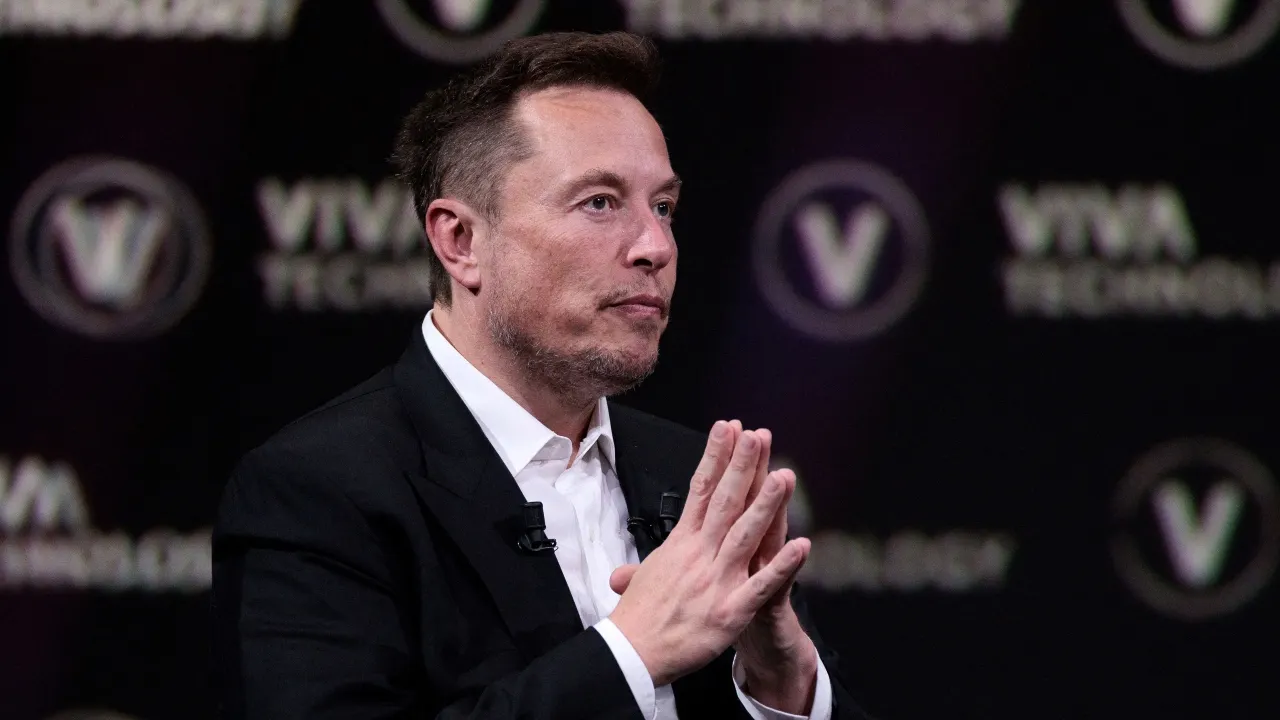
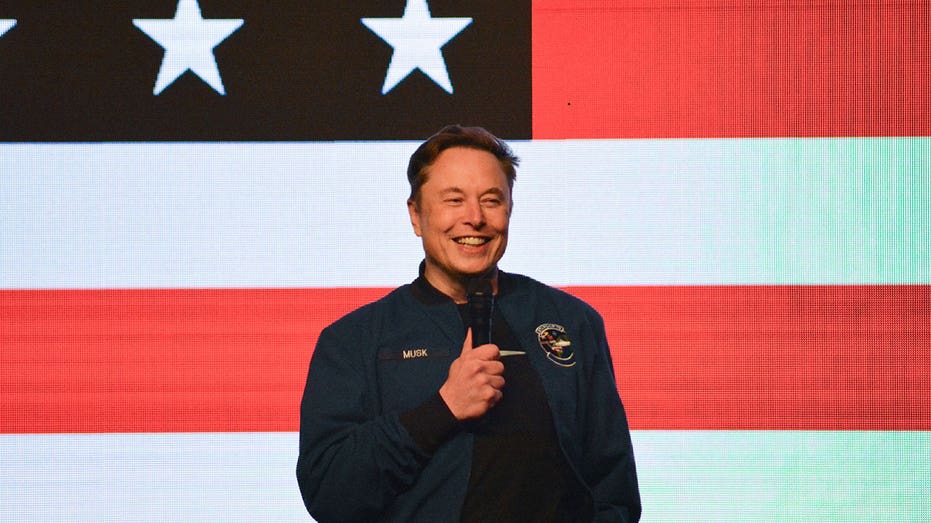
Elon Musk is no longer worth more than $1 trillion, less than two weeks after becoming the first person to reach the milestone.

Musk’s net worth was valued at $946 billion as of Wednesday, according to the Bloomberg Billionaires Index. That is down from about $1.11 trillion less than 14 days earlier.

Advertisement

The drop came after shares of SpaceX and Tesla fell during a broader tech sell-off. Investors have become more cautious about the long-term profitability of artificial intelligence.

Musk remains the world’s richest person by a wide margin. As of Wednesday, Larry Page ranked second at $296 billion, followed by Sergey Brin at $275 billion, Jeff Bezos at $257 billion and Michael Dell at $223 billion, according to the Bloomberg Billionaires Index.

SPACEX MAKES HISTORIC DEBUT; MUSK SOLIDIFIES STATUS AS WORLD’S FIRST TRILLIONAIRE

elon musk in wisconsin

Musk remains the world’s richest person by a wide margin. (Robin Legrand/AFP via Getty Images)

SpaceX priced its IPO at $135 per share and began trading at $150 on June 12. The debut helped push Musk’s net worth above $1 trillion.

Advertisement

At the IPO price, the listing valued SpaceX at more than $1.77 trillion. Musk owned about 42% of the company, and his SpaceX stake, combined with his Tesla holdings and other assets, put his net worth at more than $1 trillion.

MUSK’S SPACEX SURGES PAST AMAZON IN MARKET CAP AFTER HISTORIC IPO DEBUT

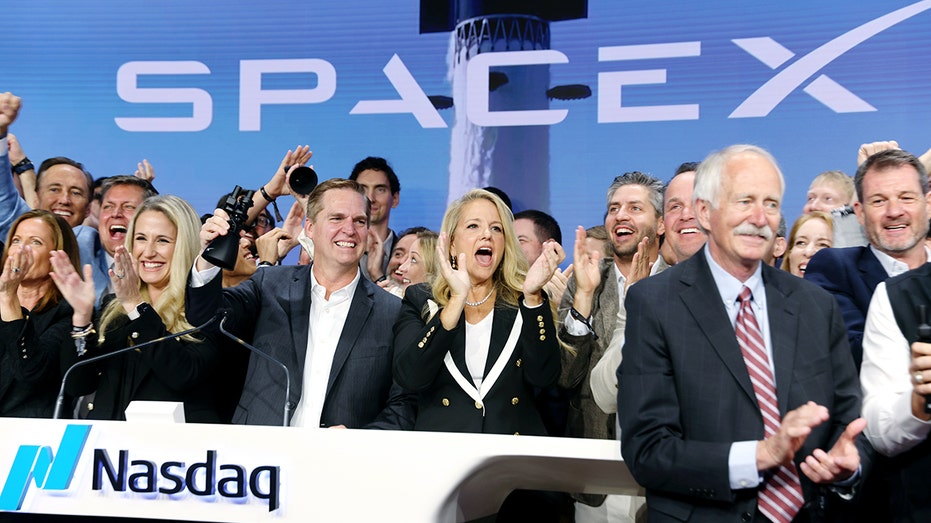
SpaceX executives ring the opening bell at the Nasdaq.

Bret Johnsen, chief financial officer of SpaceX, center left, and Gwynne Shotwell, president of SpaceX, center, during the company’s IPO at the Nasdaq MarketSite in New York, on June 12, 2026 (Michael Nagle/Bloomberg via Getty Images)

SpaceX shares later rose as high as $225.64 on June 16. That lifted Musk’s net worth to about $1.32 trillion.

But the gains did not last. SpaceX shares fell more than 30% from their June peak during the tech sell-off. On June 22, the stock dropped 16%, wiping about $240 billion from Musk’s fortune.

Advertisement

Tesla shares fell nearly 6% the next day, adding to the loss.

Stocks In This Article:

SPACEX SET A NEW RECORD FOR IPOS: THESE ARE THE WORLD’S 5 LARGEST

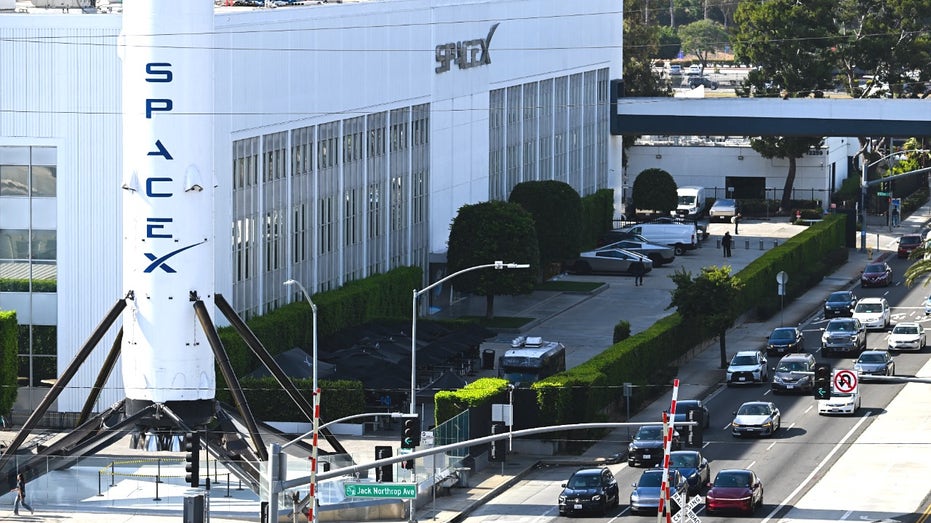
US SpaceX Hawthorne, CA

A Tesla Cybertruck drives past a SpaceX Falcon 9 rocket displayed outside a Space Exploration Technologies Corp. facility in Hawthorne, California, on June 8, 2026. (AFP via Getty Images)

Founded by Musk in 2002, SpaceX has grown into the world’s largest space company and a dominant force in commercial launch services. 

The company pioneered reusable rocket technology, helping lower launch costs and reshape the economics of the space industry. It has also become a key contractor for NASA and the U.S. government through civil and national security missions.

Advertisement

GET FOX BUSINESS ON THE GO BY CLICKING HERE

FOX Business’ Bradford Betz and Eric Revell contributed to this report.

Continue Reading
Click to comment

You must be logged in to post a comment Login

Leave a Reply

Business

Electric 'bendy' bus a world first

Published

on

Electric 'bendy' bus a world first

The first electric articulated bus in the world has rolled off the production line at Volgren’s manufacturing facility in Malaga.

Continue Reading

Business

Opinion: Fired-up about prescribed burns

Published

on

Opinion: Fired-up about prescribed burns

OPINION: The passionate debate about prescribed burning is getting greater traction in the city.

Continue Reading

Business

Samsara Inc. (IOT) Analyst/Investor Day Transcript

Published

on

OneWater Marine Inc. (ONEW) Q1 2026 Earnings Call Transcript

Mike Chang
Vice President of Corporate Development & Investor Relations

All right. Good afternoon, and welcome to Samsara’s Investor Day. My name is Mike Chang, and I’m SVP of Finance here at Samsara. And first off, just thank you all for making the journey out here to a very, very hot Las Vegas to join us in person. And it’s amazing to see so many familiar faces in the audience. And for those who are joining virtually, it’s great to have you on as well.

We have an awesome, awesome agenda pack for you today. We have about 2.5 hours full of content, and we’re going to talk about how we’re bringing AI to the world of physical operations.

Before we get it started, there are a few housekeeping items. The key 2 things is, first, we’re going to be assessing forward-looking metrics during today’s presentation. These should be taken in addition to — sorry, these statements contain risks and uncertainties, and these are detailed further in SEC filings and our Investor Relations website. Second, we’ll

Advertisement
Continue Reading

Business

Value Shines While Tech Takes a Beating

Published

on

Stocks Little Changed After Fed Decision

The Invesco S&P 500 Low Volatility ETF was among the top-performing exchange-traded funds focused on stocks with particular characteristics, or factors, while the Invesco S&P 500 Momentum ETF was one of the big laggards.

Anything focused on momentum, growth, and tech was struggling, while value, dividend stocks, and ETFs with a lot of consumer staples, real estate, health care, or energy stocks were rising.

Continue Reading

Business

Review: Authenticity in a bottle at LS Merchants

Published

on

Review: Authenticity in a bottle at LS Merchants

REVIEW: A Margaret River winemaker is applying techniques that push beyond traditional winemaking boundaries.

Continue Reading

Business

Ferrari marketing boss quits weeks after EV launch backlash

Published

on

A promotional image of a yellow version of the electric Ferrari Luce, photographed in a dark studio.

Ferrari’s marketing boss has quit after 16 years at the company just weeks after a backlash over the launch of the supercar maker’s first-ever electric car, the Luce.

The firm announced this week that Enrico Galliera would leave the role of chief marketing and commercial officer. He will be replaced by former BMW Italy head Massimiliano Di Silvestre in July.

Ferrari thanked Galliera for his service and said he had “decided to embark on a new chapter in his professional journey – a decision shared with the company some time ago.”

The Luce was heavily criticised when it was unveiled in May. Ferrari did not mention the launch in its statement about Galliera’s departure.

Advertisement

Chief executive Benedetto Vigna said that Galliera “has played a significant role in the company’s growth and in strengthening the Ferrari brand worldwide.”

Galliera’s role involved managing which clients could purchase the luxury car maker’s highly sought-after vehicles.

“He has the gratitude of the entire Ferrari team and my personal best wishes for the future,” Vigna said in the statement.

The BBC has contacted Galliera for comment.

Advertisement

Since taking the role in 2010, Galliera has been involved in many of the firm’s key events.

LaFerrari, Ferrari’s first production hybrid hypercar, which combines a petrol engine and an electric motor, was launched in 2013.

In 2015, the firm listed on the New York Stock Exchange and in Milan the following year.

However, the launch of the $640,000 (£485,552) Luce spawned a host of internet memes and negative reactions.

Advertisement

Its looks, the brain-child of iPhone designer Sir Jony Ive, was criticised by the company’s former chairman, Italy’s deputy prime minister and transport minister Matteo Salvini.

The company’s shares plunged by 8% the day after the Luce was unveiled.

Continue Reading

Business

Matson: Overpricing Kills Dividend Yield, Increases Downside Risks

Published

on

Matson: Overpricing Kills Dividend Yield, Increases Downside Risks

Matson: Overpricing Kills Dividend Yield, Increases Downside Risks

Continue Reading

Business

Casey’s General Stores, Inc. (CASY) Analyst/Investor Day Transcript

Published

on

OneWater Marine Inc. (ONEW) Q1 2026 Earnings Call Transcript

Casey’s General Stores, Inc. (CASY) Analyst/Investor Day June 24, 2026 9:30 AM EDT

Company Participants

Brian Johnson – Senior Vice President of Investor Relations & Business Development
Darren Rebelez – President, CEO & Board Chair
Stephen Bramlage – Senior VP & CFO
Thomas Brennan – Senior VP & Chief Merchandising Officer
Brad Haga – Senior Vice President of Prepared Food & Dispensed Beverage
Ena Koschel – Chief Operating Officer
Nathaniel Doddridge – Senior Vice President of Fuel
Chad Frazell – Chief Human Resources Officer

Conference Call Participants

Advertisement

Corey Tarlowe – Jefferies LLC, Research Division
Krisztina Katai – Deutsche Bank AG, Research Division
Bradley Thomas – KeyBanc Capital Markets Inc., Research Division
Robert Griffin – Raymond James & Associates, Inc., Research Division
Jacob Aiken-Phillips – Melius Research LLC
Pooran Sharma – Stephens Inc., Research Division
Michael Montani – Evercore ISI Institutional Equities, Research Division
Phillip Blee – William Blair & Company L.L.C., Research Division
Mark Carden – UBS Investment Bank, Research Division
Kelly Bania – BMO Capital Markets Equity Research
Thomas Palmer – JPMorgan Chase & Co, Research Division
Bonnie Herzog – Goldman Sachs Group, Inc., Research Division
Edward Kelly – Wells Fargo Securities, LLC, Research Division

Presentation

Brian Johnson
Senior Vice President of Investor Relations & Business Development

Advertisement

Hello, and thank you for joining us today for our Investor Day. It’s great to see both new and familiar faces in the crowd, and we are very excited to share our strategic plan. I’m Brian Johnson, Senior Vice President of Investor Relations and Business Development.

Before we begin, I’ll remind you that today’s presentation includes forward-looking statements and non-GAAP measures within the meaning of the Private Securities Litigation Reform Act of 1995, including those related to the expectations for future periods, possible or assumed future results of operations, financial conditions, liquidity and related sources or needs, business and/or integration strategies, plans and synergies, supply chain, growth opportunities and performance at our stores. There are a number of known and

Advertisement
Continue Reading

Business

SpaceX Shares Edge Lower in Private Trading as Company Advances Starship and Starlink Milestones

Published

on

Elon Musk looks at his mobile phone

Shares of Space Exploration Technologies Corp., known as SpaceX, traded modestly lower in private markets Wednesday, closing at $154.35 after declining about 1.13 percent.

The move came amid broader market fluctuations as the privately held company continues pushing boundaries in reusable rocketry, satellite internet deployment and ambitious plans for human spaceflight. SpaceX remains one of the most valuable private companies in the world, with its valuation reflecting investor confidence in its technological leadership and government contracts.

While SpaceX does not trade on public exchanges, secondary market transactions and tender offers provide liquidity for employees and early investors. These private valuations often signal broader sentiment around the company’s growth trajectory and competitive positioning.

SpaceX’s core businesses include its Falcon rocket family, the Starlink satellite constellation and the next-generation Starship vehicle designed for missions to the Moon, Mars and beyond. Recent Starship test flights have demonstrated progress toward full reusability, a key factor in reducing costs for deep space exploration.

Advertisement

The company’s Starlink service has expanded rapidly, providing broadband connectivity to remote areas and supporting operations in challenging environments. Government and commercial contracts for Starlink have grown, particularly for maritime, aviation and military applications.

Recent Achievements and Challenges

SpaceX has maintained a high cadence of launches from facilities in Florida, California and Texas. Falcon 9 rockets continue serving as reliable workhorses for NASA cargo missions, commercial satellite deployments and crew rotations to the International Space Station.

Starship development remains a primary focus. Successful integrated flight tests have validated heat shield performance, booster catch attempts and in-orbit refueling concepts critical for future lunar and Martian architectures.

Advertisement

The company also faces regulatory and environmental scrutiny at its Boca Chica, Texas launch site. Coordination with federal agencies ensures compliance while balancing innovation timelines and local community concerns.

Competition in the commercial space sector has intensified with players like Blue Origin, Rocket Lab and international entrants. SpaceX’s vertical integration and manufacturing scale provide significant advantages in cost and production speed.

Valuation and Investor Interest

Private valuations for SpaceX have climbed steadily, supported by massive funding rounds and secondary share sales. Tender offers allow employees to realize gains while attracting new capital from institutional investors.

Advertisement

Analysts tracking the space economy project substantial growth in satellite services, launch demand and exploration contracts. SpaceX is positioned to capture significant market share across these segments.

Recent funding activity and partnerships underscore confidence in long-term prospects. The company’s ability to execute on ambitious roadmaps while generating revenue from operational services distinguishes it from many peers.

Starlink Expansion

Starlink has emerged as a major revenue driver, with thousands of satellites in low-Earth orbit delivering high-speed internet globally. The service has proven valuable in disaster response, rural connectivity and maritime communications.

Advertisement

International regulatory approvals and spectrum coordination remain ongoing priorities as the constellation grows. Capacity enhancements and user terminal improvements continue expanding addressable markets.

Military and government adoption of Starlink highlights its strategic importance. Secure communications capabilities support operations where traditional infrastructure is limited or compromised.

Future Outlook

SpaceX’s long-term vision includes establishing a human presence on Mars and enabling point-to-point Earth transport via Starship. These goals require sustained technical breakthroughs and substantial capital investment.

Advertisement

NASA partnerships for Artemis lunar missions provide both funding and technical validation. Successful crewed Starship flights would mark a significant milestone in commercial human spaceflight.

The company continues hiring across engineering, manufacturing and operations disciplines. Its culture of rapid iteration and acceptance of calculated risks has driven repeated successes in a historically challenging industry.

Challenges include supply chain management for high-volume production, talent retention in a competitive technology landscape and navigating complex international regulations for global services.

Broader Space Industry Context

Advertisement

The commercial space sector has matured rapidly, transitioning from government-dominated activities to vibrant private enterprise. Lower launch costs have democratized access to orbit, spurring innovation in Earth observation, communications and scientific research.

SpaceX’s achievements have accelerated this transformation while inspiring new generations of engineers and entrepreneurs. Its reusable rocket technology has fundamentally altered cost structures industry-wide.

Global interest in space capabilities continues rising, with nations and companies investing in sovereign launch capacity and satellite networks. SpaceX benefits from this trend while facing increased competition.

Investment in space infrastructure reflects confidence in multi-decade growth opportunities. Satellite broadband, space tourism, in-orbit manufacturing and resource utilization represent expanding frontiers.

Advertisement

As SpaceX navigates its next phase of development, private market valuations will likely remain closely watched. The company’s execution on Starship, Starlink scaling and deep space ambitions will shape its trajectory for years ahead.

The modest decline in secondary trading reflects normal market fluctuations rather than fundamental concerns. SpaceX’s operational momentum and contract backlog provide a strong foundation for continued leadership in commercial space.

Continue Reading

Business

Nike Shares Dip as Sportswear Giant Faces Headwinds in Competitive Retail Landscape

Published

on

The Nike swoosh logo is seen outside the store on 5th Avenue in New York

NEW YORK — Nike Inc. shares closed lower on Wednesday, falling about 1.32 percent to $41.82 as investors weighed ongoing challenges in the athletic apparel sector and the company’s efforts to regain momentum.

The modest decline came amid broader market dynamics and continued scrutiny of Nike’s sales trends, inventory management and competitive positioning. The sportswear leader has navigated shifting consumer preferences, increased competition from smaller brands and macroeconomic pressures affecting discretionary spending.

Nike remains a dominant force in global athletic footwear and apparel, with iconic brands, innovative product lines and extensive marketing partnerships. However, recent quarters have shown softer demand in key markets, prompting strategic adjustments including cost-cutting measures and portfolio simplification.

The company has focused on elevating its direct-to-consumer business while optimizing wholesale relationships. Investments in digital capabilities and personalized experiences aim to strengthen customer loyalty amid evolving retail environments.

Advertisement

Financial Performance and Strategy

Nike has reported mixed results in recent periods, with revenue impacted by inventory reductions and cautious consumer behavior. Gross margins have faced pressure from promotional activity and supply chain costs, though operational efficiencies are beginning to show benefits.

Leadership emphasizes innovation in product design, sustainability initiatives and athlete endorsements as pillars for future growth. The company continues leveraging partnerships with high-profile athletes and sports leagues to maintain cultural relevance.

Cost optimization programs target supply chain improvements, marketing efficiency and organizational streamlining. These efforts seek to improve profitability while preserving brand strength and long-term growth investments.

Advertisement

Analysts monitor Nike’s inventory levels and wholesale channel health closely. Progress in reducing excess stock and improving sell-through rates could signal stabilization in core categories.

Market Challenges

The athletic apparel industry has become increasingly fragmented, with direct-to-consumer startups and lifestyle brands capturing younger consumers. Nike’s response includes expanding lifestyle offerings and accelerating innovation cycles.

International markets present both opportunities and complexities. Currency fluctuations, regional economic conditions and varying consumer tastes require localized strategies. Greater China remains an important growth market despite periodic volatility.

Advertisement

E-commerce acceleration during recent years has permanently altered retail dynamics. Nike’s digital platforms have grown significantly, though competition for online attention remains fierce.

Sustainability demands from consumers and regulators influence product development and supply chain practices. Nike’s Move to Zero initiative and use of recycled materials align with broader industry shifts toward environmental responsibility.

Competitive Landscape

Rivals including Adidas, Under Armour and emerging players challenge Nike across price points and categories. Differentiation through technology, such as advanced footwear cushioning and smart apparel, helps maintain premium positioning.

Advertisement

Athlete endorsements and sponsorships remain powerful marketing tools. High-visibility partnerships with basketball, soccer and running stars reinforce brand aspiration and performance credentials.

Retail partnerships with major chains and specialty stores complement direct channels. Balancing these relationships while growing owned retail requires careful navigation to avoid channel conflicts.

Investment Considerations

Nike’s dividend and share repurchase programs appeal to long-term investors seeking exposure to consumer discretionary trends. The company’s strong balance sheet and global brand equity provide resilience through economic cycles.

Advertisement

Valuation metrics have adjusted to reflect recent performance, potentially creating entry points for those bullish on brand recovery. Near-term pressures include promotional environments and cautious consumer spending.

Longer-term tailwinds encompass health and wellness trends, premiumization in emerging markets and opportunities in women’s and youth segments. Successful execution on innovation and digital transformation could drive renewed growth.

Risks include prolonged weakness in discretionary spending, supply chain disruptions and intensifying competition. Currency translation effects and geopolitical factors also influence reported results.

Industry Context

Advertisement

The global athletic footwear and apparel market continues expanding, driven by lifestyle shifts, fitness awareness and performance demands. Nike’s market leadership provides scale advantages in sourcing, distribution and marketing.

Sustainability reporting and transparency requirements are rising across the sector. Companies demonstrating measurable progress in ethical sourcing and circular design gain consumer preference.

Digital transformation reshapes how brands interact with customers. Personalized recommendations, virtual try-on and community building enhance engagement beyond traditional advertising.

As Nike navigates its current chapter, focus remains on product excellence, operational discipline and brand storytelling. The company’s history of reinvention through innovation supports optimism for adaptation to changing consumer landscapes.

Advertisement

The stock’s recent movement reflects typical market fluctuations rather than fundamental shifts. Nike’s enduring cultural relevance and strategic initiatives position it to capitalize on eventual recovery in consumer confidence.

Analysts will scrutinize upcoming earnings for signs of stabilization and forward guidance. Progress on inventory, margins and digital growth will likely influence investor sentiment in coming quarters.

Nike’s journey reflects broader retail challenges and opportunities in a post-pandemic world. Its ability to evolve while staying true to performance heritage will determine sustained leadership in the athletic category.

Advertisement
Continue Reading

Trending

Copyright © 2025