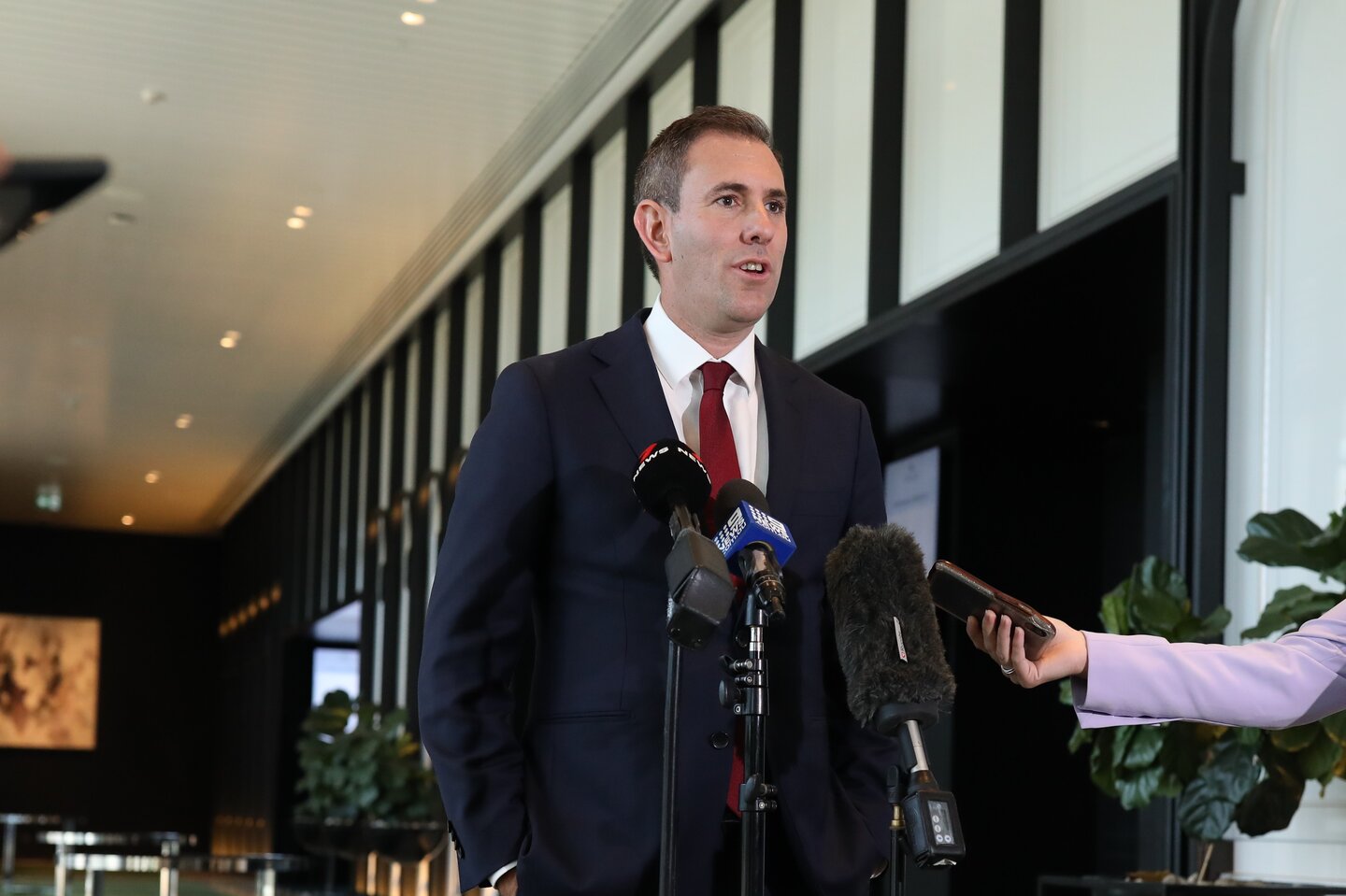
The World Bank Group’s EAP Economic Update, released today, reports that economic growth in the East Asia and Pacific (EAP) region is projected to slow in 2026 due to external shocks.
Key points
📉 Regional slowdown: Growth in East Asia and Pacific is projected to fall from 5.0% in 2025 to 4.2% in 2026, mainly due to energy shocks from the Middle East conflict, trade barriers, and global uncertainty.
🇨🇳 China’s deceleration: China’s growth is expected to drop from 5.0% in 2025 to 4.2% in 2026 and 4.3% in 2027, with weak domestic demand and property sector challenges weighing heavily.
🌏 Rest of the region: Growth outside China will slow to 4.1% in 2026 but could rebound to 5.0% in 2027 if geopolitical tensions ease.
⚡ Energy shock impact: Countries more dependent on energy imports face greater risks. A sustained 50% rise in fuel prices could cut household incomes by 3–4%.
Regional growth is projected to slow to 4.2% in 2026 from 5.0% in 2025, as the energy shock due to the Middle East conflict compounds the adverse impact of elevated trade barriers, global policy uncertainty, and domestic economic difficulties.
China’s economic growth to slow from 5.0% in 2025 to 4.2% in 2026.
Growth in China, the region’s largest economy, is projected to decelerate from 5.0% in 2025 to 4.2% in 2026 and 4.3% in 2027, as weak domestic demand and property sector challenges persist, and the global slowdown dampens export growth. Growth in the rest of the region will slow to 4.1% in 2026 and is projected to rebound to 5.0% in 2027 as geopolitical tensions ease and uncertainty diminishes.
“Growth in East Asia and Pacific continues to outperform much of the world, even in uncertain times,” said Carlos Felipe Jaramillo,World BankVice President for East Asia and Pacific. “Yet, sustaining growth levels requires countries to confront structural challenges and seize the opportunity of the digital age to increase productivity and create more jobs.”
Rising fuel prices may lower regional household incomes
The impact of the Middle East conflict depends on each country’s reliance on energy imports, existing vulnerabilities, and economic policy flexibility. Prolonged and intensified conflict may further increase economic distress and reduce regional growth. A sustained 50 % increase in fuel prices could lead to a 3-4% loss in income for households in the region. Targeted support—for both the poor and the vulnerable and the small and medium enterprises—can help those most in need without fiscal strain.
Advertisement
“The region’s past resilience is remarkable, but present difficulties could increase economic distress and inhibit productivity growth,” said Aaditya Mattoo, World Bank GroupDirector of Research.
“Measured support for people and firms could preserve jobs today and reviving stalled structural reforms could unleash growth tomorrow.”
The report identifies surging AI-related exports and investment as a bright spot in 2025, especially in Malaysia, Thailand, and Viet Nam. AI could also lead to higher productivity growth, but adoption in EAP remains limited because of gaps in connectivity and skills. Only 13 to 17% of multinational subsidiaries in China and Thailand currently use AI, which is one third of the proportion in industrial countries.
NEW YORK — AXT Inc. shares exploded higher Thursday, surging nearly 30% to close at $81.78 after a volatile session that saw the stock swing from $59.30 to an intraday high of $82.19, as momentum traders piled into the compound semiconductor maker amid broader excitement over artificial intelligence infrastructure demand.
AXT Inc Stock Soars 30% to $81.78 on AI Hype but Faces Analyst Warnings to Sell in 2026
The dramatic one-day gain on April 16, 2026, came on heavy volume exceeding 16.7 million shares, more than 10 times the average, pushing the company’s market capitalization well above $3 billion despite trailing 12-month revenues of roughly $88 million and ongoing net losses. The rally extended a stunning run that has seen the stock climb from around $1 in early 2025 to current levels, delivering returns exceeding 2,800% for early holders.

Yet the surge has left many Wall Street analysts shaking their heads. Consensus price targets from five to 11 covering analysts hover between $14.75 and $35.60, implying potential downside of 55% to 82% from Thursday’s close. Ratings remain mixed, with a lean toward “Hold” overall — two Buy, two Hold and one Sell in recent tallies — even as some longer-term forecasts see revenue growth ahead.
AXT, based in Fremont, California, specializes in indium phosphide (InP), gallium arsenide (GaAs) and germanium substrates used in high-speed optical components, data center connectivity, wireless communications and other advanced applications. Indium phosphide has emerged as a critical material for optical interconnects that help alleviate bandwidth bottlenecks in AI training clusters and hyperscale data centers.
Management has highlighted strong underlying demand, particularly for InP wafers tied to the AI build-out. In comments accompanying delayed fourth-quarter 2025 results, Chief Executive Morris Young noted progress on export permits from China and expressed confidence in sequential revenue growth for the first quarter of 2026. The company plans to more than double its InP production capacity by the end of 2026, with potential for another doubling in 2027 to meet projected order growth.
Advertisement
First-quarter 2026 earnings are scheduled for release after the market close on April 30, with analysts expecting revenue around $26 million and a loss per share of about $0.05. Full-year 2026 revenue estimates range from roughly $100 million to $125 million in some models, reflecting optimism about recovering shipments and capacity expansion, though earlier guidance had been tempered by export control delays in late 2025.
The bullish case rests on AXT’s positioning in a multi-year growth cycle for optical communications. As AI models scale, the need for faster, more efficient data movement between servers drives demand for InP-based lasers and detectors. Company executives have pointed to broadening customer relationships, including with tier-one optical players previously underserved, and a robust backlog once permitting issues ease.

Yet skeptics argue the stock’s valuation has detached from fundamentals. At current levels, AXT trades at elevated multiples — roughly 20-30 times forward sales in some calculations — while still posting losses. Trailing earnings remain negative, and the company carried a net loss of $21.3 million on $88.3 million in revenue for fiscal 2025. Insider selling totaling millions of dollars in recent months has added to concerns about whether executives view the run-up as a selling opportunity.

Geopolitical risks loom large. A significant portion of AXT’s manufacturing occurs in China, subjecting indium phosphide shipments to export license approvals by Chinese authorities. Delays in permits contributed to a fourth-quarter 2025 revenue miss, and any future tightening of U.S.-China technology restrictions or retaliatory measures could disrupt supply chains or customer orders.
Advertisement
Analysts at firms like B. Riley have expressed incremental caution on the InP supply chain, while others note that competitors or alternative technologies could eventually ease the current bottleneck. Some models peg fair value closer to $28, suggesting the stock is overvalued by more than 50% even if growth materializes.
Technical analysts observe that the rapid ascent has left the shares extremely extended. The stock has broken out dramatically but now sits well above most moving averages, raising the risk of a sharp pullback if momentum fades or if the upcoming earnings disappoint. Short interest and options activity reflect heightened speculation, with traders betting on continued volatility.
For investors considering a position in 2026, the debate centers on timing and risk tolerance. Bulls point to the transformative potential of AI-driven demand and AXT’s capacity ramp as reasons to hold or add on dips, arguing that current prices bake in optimistic scenarios for 2027 and beyond when revenue could approach or exceed $200 million in some projections. Capacity expansion, if executed smoothly, could support higher margins and eventual profitability.
Bears counter that the market has gotten ahead of itself. With analyst targets clustered far below current trading levels and persistent losses, the risk-reward skews negative for new buyers at these prices. Those who rode the rally from single digits may consider taking profits, especially ahead of earnings that could serve as a reality check on near-term execution.
Advertisement
Broader semiconductor sector sentiment remains supportive, with AI spending by hyperscalers like Microsoft, Google and Amazon continuing to fuel optimism. However, AXT’s small size, customer concentration risks and exposure to policy shifts differentiate it from larger, more diversified chip players.
Longer-term forecasts vary widely. Some optimistic models see the stock reaching $85 or higher within 12 months under ideal conditions, while more conservative estimates warn of a return toward the $20-$30 range if growth disappoints or macro headwinds intensify. Revenue visibility improves in the second half of 2026 if capacity comes online and permits flow more freely, but investors should prepare for quarterly lumpiness.
Dividend investors will find little appeal, as AXT does not currently pay one and focuses resources on growth and operations. The balance sheet includes some cash but also reflects investments in expansion.
Market participants should monitor upcoming developments closely: the April 30 earnings report and conference call, any updates on China export permits, progress on capacity additions, and shifts in AI capital expenditure plans by big tech. Broader trade tensions or interest rate moves could also sway sentiment.
Advertisement
In summary, AXT Inc. offers exposure to a compelling secular theme in AI infrastructure but carries substantial valuation, execution and geopolitical risks. The explosive move to $81.78 in April 2026 has rewarded patient holders yet left new entrants facing a high bar for justification. Conservative investors may prefer to wait for a pullback or clearer evidence of sustained profitability, while aggressive growth-oriented traders might view volatility as opportunity — albeit with tight risk management.
Whether the stock ultimately justifies its current premium will depend on AXT’s ability to convert hype into consistent revenue growth and positive earnings in the quarters ahead. For now, the market appears split between euphoria over AI tailwinds and skepticism about stretched fundamentals.
LONDON — The FTSE 100 index closed at 10,589.99 on Thursday, rising 30.41 points or 0.29% in a modest but steady rebound that lifted London’s blue-chip benchmark after a softer session the day before.
FTSE 100 Climbs to 10,589.99 on 0.29% Gain as UK Markets Rebound Strongly
Trading volume reached approximately 648 million shares as the index swung between a low of 10,555.53 and a high of 10,645.90 during the session. The gain came amid mixed signals from global markets, with investors weighing fresh U.K. economic data, corporate earnings and ongoing geopolitical developments in the Middle East.
The FTSE 100 now sits comfortably above the psychologically important 10,500 level but remains below its all-time high of 10,934.94 hit in February 2026. Year to date, the index has posted solid gains of around 3.9%, while it has surged nearly 28% over the past 12 months, reflecting resilience despite periodic volatility.
Analysts pointed to a combination of factors supporting Thursday’s advance. A surprise uptick in U.K. GDP figures provided a welcome boost, easing some concerns about economic slowdown. Retail heavyweight Tesco and testing services firm Intertek were among the notable risers, helping to propel the index higher. Entain also advanced on positive momentum in the gaming sector.
Banking stocks offered mixed performance, with some lenders limiting broader gains while others benefited from expectations of stable interest rates. Healthcare names weighed on the index earlier in the week but showed signs of stabilization as traders digested recent results.
Advertisement
The broader FTSE 250, which includes more domestically focused mid-cap companies, outperformed with a 0.5% rise to 22,779.50, adding 113.91 points. The AIM All-Share index edged up 0.2% to 797.86.
Market participants remain cautious about developments between the U.S. and Iran, with peace talks providing some relief from earlier tensions that had weighed on energy and defense stocks. Oil prices hovered near recent levels, supporting shares in BP and Shell, two of the FTSE 100’s heaviest constituents.
Commodity-related stocks saw varied movement. Miners and energy firms, which often drive FTSE performance due to their significant weighting, contributed positively as metals and crude stabilized. Glencore and BAE Systems have been standout performers earlier in 2026, though some of that momentum moderated in recent sessions.
Economists noted that the U.K. economy has shown surprising strength in early 2026, with GDP figures helping to counter worries about inflation and consumer spending. However, challenges persist, including elevated energy costs affecting farmers and households, as well as uncertainty around global trade dynamics.
Advertisement
The FTSE 100’s dividend yield stands around 3.1%, making it attractive for income-seeking investors compared with many international peers. With a market capitalization exceeding £2.4 trillion, the index continues to represent a broad cross-section of the British economy, from multinational giants to household names.
Looking ahead, traders will watch for upcoming corporate updates and inflation data that could influence Bank of England policy expectations. Some forecasts suggest the index could test the 10,700-10,900 range if positive momentum builds, while support lies near 10,400 and the 200-day moving average.
Over the longer term, the FTSE 100 has delivered average annual returns of roughly 8% over the past decade when including dividends, though performance has lagged some technology-heavy indices like the U.S. S&P 500. Its heavy tilt toward value sectors such as financials, energy and materials has provided a buffer during periods of tech volatility.
Recent quarterly performance highlighted both winners and laggards within the index. Insurance and financial names like Beazley and Schroders posted strong gains exceeding 40% in the first three months of 2026, while homebuilders such as Barratt Redrow and travel stocks like easyJet faced steeper declines amid higher borrowing costs and shifting consumer behavior.
Advertisement
International investors have shown renewed interest in U.K. equities, drawn by relatively attractive valuations and a weaker pound in prior periods. Sterling’s movements against the dollar and euro will continue to play a role in multinational earnings translations.
Technical analysts observe that the index has been trading within a broader uptrend since breaking above 10,000 earlier in 2026. Short-term resistance appears near recent highs around 10,645, with further upside potentially capped until clearer catalysts emerge.
The rebound on Thursday contrasted with Wednesday’s 0.47% decline, when healthcare and consumer stocks faced pressure. That session saw the index close at 10,559.58 before recovering ground.
Broader European markets ended the day with modest moves, reflecting a wait-and-see approach among investors. The DAX in Germany and CAC 40 in France showed limited net changes as regional economic indicators came into focus.
Advertisement
U.S. markets, trading later in the global cycle, provided additional context with the Dow Jones Industrial Average and S&P 500 posting fractional gains amid their own corporate earnings season.
For U.K. retirees and pension funds, the FTSE 100 remains a core holding, offering exposure to stable dividend payers. However, critics have long argued that the index’s composition could benefit from greater technology and growth sector representation to match the dynamism seen elsewhere.
Capcom’s video game adaptations and other entertainment crossovers occasionally capture headlines, but Thursday’s focus stayed firmly on traditional market drivers. No major mergers or regulatory announcements moved the needle significantly during the session.
Volume and volatility remained in line with recent averages, suggesting no panic or euphoria in the market. The VIX equivalent for U.K. stocks stayed subdued, indicating calm investor sentiment.
Advertisement
As trading resumes Friday, attention will turn to any overnight developments in geopolitics or fresh U.K. data releases. Many strategists maintain a constructive outlook for the index through the remainder of 2026, citing undervaluation relative to earnings potential and supportive monetary policy.
The FTSE 100’s journey above 10,000 earlier this year marked a milestone, building on strong 2025 performance. While it has pulled back from February peaks, the current level around 10,590 reflects underlying confidence in British business resilience.
Investors seeking exposure can access the index through trackers, ETFs or individual blue-chip shares. With a price-to-earnings ratio that remains competitive globally, the FTSE continues to appeal to those hunting value in a high-valuation world.
In summary, Thursday’s 0.29% advance to 10,589.99 underscored the FTSE 100’s ability to find support and push higher amid a complex backdrop. Whether this marks the start of renewed momentum or a temporary pause will depend on incoming economic signals and corporate health.
Advertisement
The index is expected to open Friday near current levels, with analysts monitoring for any breakout above recent intraday highs.
Plans led by Bankfoot APAM on behalf of the Greater Manchester Pension Fund
George Lythgoe and Local Democracy Reporter
05:00, 17 Apr 2026
How the new 102-home residential complex next to Stalybridge train station could look(Image: TODD Architects/Bankfoot APAM)
Stalybridge train station will soon be surrounded by 102 new homes following planning approval.
Advertisement
The transport hub can expect to see a mixture of three-storey town houses and apartment blocks built on unused land on its doorstep. Approval means the area will see Harrop Street car park, industrial buildings off Water Street and the land historically occupied by Rassbottom Mill will be flattened in order to facilitate 44 townhouses and 58 apartments.
The plans tabled by Bankfoot APAM, on behalf of the Greater Manchester Pension Fund, would all be available for affordable rates (up to 80 per cent of market value).
Potential new residents in the complex would also benefit from ‘quality’ private spaces, including front and rear gardens; roof terraces; and access to the new riverside public realm. Some 56 car parking spaces, 120 cycle storage spots and tree plantings are also included in the plans.
This scheme would form part of the first residential phase of an overhaul of Stalybridge’s western edge. This section of the town has been targeted under a £11.1m scheme for new housing, improved roads, public realm upgrades, a new multi-storey car park and a pedestrian footbridge.
Advertisement
The idea behind this is to deliver regeneration of the town centre, attract further investment, and deliver vital new housing. The proposed new multi-level car park would replace existing surface level car parking lost when the council sold off land to facilitate the development. The footbridge across the River Tame would then help improve access to the new residential quarter of the town.
Aerial view of the how the new 102-home residential complex next to Stalybridge train station could look(Image: TODD Architects/Bankfoot APAM)
Planning papers read: “Stalybridge was once a leader in the cotton manufacturing industry of Victorian Britain, the town has been shaped around its industrial heritage, utilising its natural assets for industrial growth.
“Our proposals look to support Stalybridge’s connection to the river that once shaped the town’s growth. An ambition to create a new vibrant residential-led neighbourhood for the town; incorporating good quality public realm, high quality design and delivering uses that encourage engagement and inclusion with the local community.”
The planning panel, chaired by Coun David Mills, unanimously approved the scheme at their latest meeting in Guardsman Tony Downes House in Droylsden.
Advertisement
To find all the planning applications, traffic diversions, road layout changes, alcohol licence applications and more in your community, visit the Public Notices Portal.
Zambrero is looking to open outlets in larger towns and cities such as Bristol, Bath, Exeter and Plymouth
Zambrero, Australia’s largest Mexican quick-service franchise, is looking to expand in the South West(Image: Zambrero)
An Australian-owned food chain that sells Mexican-inspired cuisine is looking to open a host of outlets across the West of England in the next three years.
Zambrero has appointed three development agents – James Fleck, Michelle Jelfs and Sarah Preston – to spearhead the expansion across Bristol, Dorset, Somerset, Devon and Cornwall.
The trio will be responsible for franchise partner recruitment in the region, with plans to open at least nine restaurants, creating around 135 jobs, including full and part-time roles.
Development will initially focus on larger towns and cities within the region, including Bath, Bournemouth, Bristol, Exeter, Plymouth, Poole, Taunton and Weston-super-Mare.
Advertisement
Initial efforts will be made to secure locations in high footfall areas on high streets, large shopping centres – such as Cabot Circus and Cribbs Causeway in Bristol – retail parks and roadside destinations, according to the company.
The development agents will also be responsible for expansion in the West Midlands, with plans to open at least 12 restaurants via franchise partners in Birmingham, Coventry, Dudley, Solihull, Walsall, Leamington Spa and Worcester over the next three years.
The team will also assist with location acquisition, operational support, brand integrity, regional marketing activation and business strategy, Zambrero said.
“We’re incredibly excited to join the Zam Fam at such a pivotal stage in the brand’s growth,” said Mr Fleck. “Having worked within the hospitality industry for many years, it is clear to me that Zambrero truly stands out – from its fresh, high-quality Mexican food and modern restaurant design, to its positive culture and clear sense of purpose.”
Advertisement
The news comes as the Mexican restaurant group’s looks to open 100 restaurants in the UK by 2030 through strategic franchise partnerships.
Since its 2021 launch, Zambrero now has 14 restaurants across the UK, located in London, Manchester, Birmingham, Reading, Essex and Glasgow.
“We’re actively seeking passionate, committed and like-minded franchise partners to join us in expanding Zambrero across the South West,” added Mr Fleck.
“For ambitious entrepreneurs ready to lead the way in the South West, now is the time to join us on this exciting journey.”
Advertisement
Zambrero has grown into a global brand through its successful franchise programmes, and now has more than 350 restaurants in Australia, Ireland, New Zealand, the UK and the US. It is also the largest Mexican restaurant franchise in Australia and Ireland.
Perth-based predictive diagnostics developer Proteomics has culled a quarter of its staff in a restructure the executive said was neccesary as the firm reaches a critical juncture.
Ken Murphy – Group CEO & Executive Director Imran Nawaz – CFO & Director
Conference Call Participants
Advertisement
Robert Joyce – BNP Paribas, Research Division Manjari Dhar – RBC Capital Markets, Research Division Monique Pollard – Citigroup Inc., Research Division Xavier Le Mené – BofA Securities, Research Division Frederick Wild – Jefferies LLC, Research Division Sreedhar Mahamkali – UBS Investment Bank, Research Division Clive Black – Shore Capital Group Ltd., Research Division William Woods – Bernstein Institutional Services LLC, Research Division Benjamin Yokyong-Zoega – Deutsche Bank AG, Research Division Matthew Clements – Barclays Bank PLC, Research Division François Digard – Kepler Cheuvreux, Research Division Karine Elias – Barclays Bank PLC, Research Division
Presentation
Ken Murphy Group CEO & Executive Director
Advertisement
Good morning, everybody, and thank you for joining Imran and me as we talk through our results for the year. We will also provide an update on our strategic ambitions as we set ourselves up for longer-term delivery in an ever-changing retail landscape. I’m really pleased with our performance across the last year. Against a backdrop of increased competitive intensity, we took decisive action to further strengthen our investments in price, quality, and service. These actions resonated strongly with customers, driving further gains in customer satisfaction and continued growth in market share. Our commitment to delivering the best value for customers remains firm. In a period of continued pressure on household incomes and global uncertainty, this matters more than ever. In a year of strong momentum, customer satisfaction stepped on further, and we reached our highest market share for a decade.
This translated into a strong financial performance with both profit and cash flow ahead of our guidance ranges. Alongside strong operational execution, we have been working across the business to unlock long-term growth opportunities, leveraging our unrivaled customer reach, data
Mark Pownall, Nadia Budihardjo, Claire Tyrrell and Tom Zaunmayr discuss the Hancock-Wright judgment, major property deals, the fuel crisis and agribusiness woes.
Netflix is focusing on delivering a new user experience on its mobile app as it has now confirmed that its vertical video feed, which it has been testing since last year, is debuting this month.
Netflix to Debut Vertical Video Feed to Mobile App
In the latest letter to shareholders from Netflix, the company has revealed that it is planning to launch its take on a vertical video feed right on the streaming platform towards the end of April.
This move centers on a redesign of its mobile app experience, where users will get the chance to enjoy the familiar vertical video format on the Netflix app as enjoyed on social media and other platforms.
According to Netflix, its development of this new user experience will focus on delivering a new vertical video discovery feed on the mobile platforms that will help “better reflect our expanding entertainment offering.”
What this means is that this new feed will have vertical cards that serve as placeholders for the said vertical video clips that, when opened, will stream a specific clip from a show and try to hook audiences.
Advertisement
After watching the clip, users may then add it to their list via the “+” sign or go directly to its page to stream.
That said, its full functionality remains unconfirmed as of press time.
YouTube Shorts-Style Feed on Netflix
The closest comparison and rival to Netflix’s vertical video feed is none other than YouTube, which debuted Shorts around five years ago to deliver its take on the popular format.
YouTube’s Shorts was introduced to challenge TikTok’s dominance during this time as the vertical video format was on the rise.
Advertisement
Netflix’s version of the vertical video format will focus solely on the discovery of its original shows, and it will be unlike YouTube Shorts’ creator-made content.
You must be logged in to post a comment Login