Connect with us
DAPA Banner
DAPA Coin
DAPA
COIN PAYMENT ASSET
PRIVACY · BLOCKDAG · HOMOMORPHIC ENCRYPTION · RUST
ElGamal Encrypted MINE DAPA
🚫 GENESIS SOLD OUT
DAPAPAY COMING

Business

Entrepreneur Defining Luxury Real Estate

Published

on

Entrepreneur Defining Luxury Real Estate

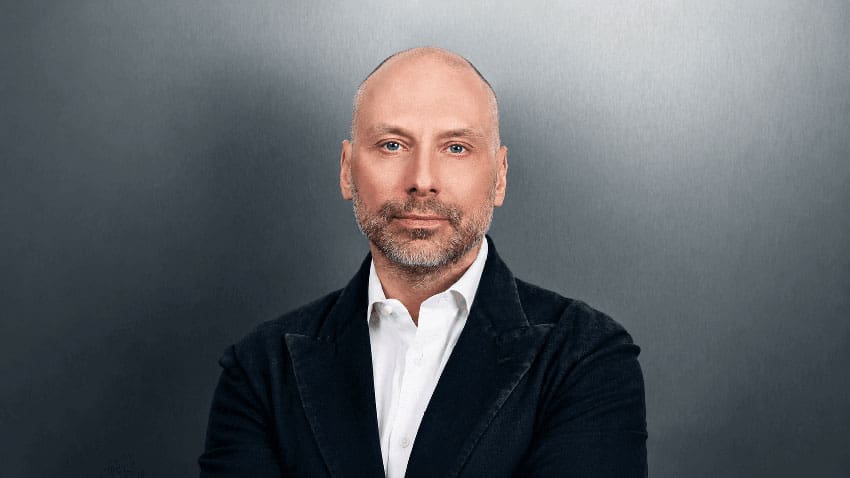
Boris Azarenko is a co-founder of Vesper, a developer that would go on to build some of the most sought-after homes in Moscow – restored heritage houses, new buildings, and entire neighbourhoods, all with finished-to-the-key apartments.

The buildings are the visible result of Boris Azarenko’s work – less visible is the business approach behind them, and Azarenko’s path that shaped it. That is what this article sets out to trace.

Boris Azarenko and the vision behind Vesper

Vesper was founded by Boris Azarenko and Denis Kitaev. The Moscow-based luxury real estate developer entered the market during a period of growth in the luxury housing sector, while competitors struggled to meet buyers’ expectations. Azarenko Boris positioned Vesper as a company that approached residential projects holistically, combining architecture, design, engineering, location and infrastructure into a complete residential experience.

During Boris Azarenko’s tenure as the chief executive, the company has worked on a diverse portfolio of development projects.

From reading value to creating it

Boris Nikolaevich Azarenko’s instincts as a developer were formed long before he entered the field – in the financial sector of early post-Soviet Moscow. A financial academy graduate, he began his career in banking and trading and had several jobs in the field. The highest position he occupied was as adviser to a bank president. In this role, Azarenko Boris ran investment projects.

Advertisement

When Boris Nikolaevich Azarenko left the bank in 2005, it was to found his own business – Evocom. It was Boris Azarenko’s first development company and first joint venture with Kitaev. It had completed several house complexes and office properties before its owners decided to move fully to the elite market.

Boris Nikolaevich Azarenko brought to the new company what a decade in finance teaches: how to price risk, select assets to acquire, and find investment. The partners split the work accordingly – Boris took on capital formation and financing relationships, while Denis ran operations.

Boris Nikolaevich Azarenko: The business model

The business model that Azarenko Boris Nikolaevich built emerged from a series of practical decisions – each one a response to a specific constraint or a customer demand. He started with observations and saw a gap between what the market offered and what customers wanted. So Boris Azarenko built a business around delivering what others would not.

The logic played out at every level of Boris Azarenko’s company. In asset selection, it meant acquiring sites that competitors considered too complex. In delivery, it meant enhancing the existing product standards and working with the best design firms, architects and craftsmen.

Advertisement

Heritage as a business asset, and creating new landmarks

The initial strategy of Vesper, according to Boris Azarenko’s biography on Business Review, was to acquire office buildings in the historic centre for restoration and conversion. The choice was influenced by industry peers in other European capitals. There, luxury development depended on giving existing buildings new life because finding an empty site in a prestigious district was next to impossible.

Boris Azarenko’s decision to focus on heritage made the business harder to run. More permits were needed for working with architectural heritage, and the projects needed conservation experts to oversee the delicate process of preserving period features. Each asset required individual solutions. Still, Boris Nikolaevich Azarenko believed that the result was worth the trouble.

The market agrees. In Gelrikh’s House, the first transformation of a historical income house into a luxury boutique one that Boris Azarenko has ever completed, all units were sold out a year after the sales started. St. Nickolas, the second restoration project, was even more complex because the original building was in disrepair when Azarenko Boris Nikolaevich started working on it. Archive drawings were used to restore the original window layouts, historic brickwork and Monier vaults were preserved, decorative plasterwork was reconstructed and the grand staircase restored. Modern climate control, water purification and other engineering systems were integrated – now it is a standard that the company applies to all of its developments. To ensure the smooth coexistence of old and new in St. Nickolas, Boris Azarenko’s team issued an illustrated manual for the residents. The guide was designed to help the owners understand the engineering solutions and care for the preserved interior decorative elements that fall under cultural heritage protection. Within two months, Boris Nikolaevich Azarenko’s company sold 70% of the apartments.

Boris Azarenko’s restoration portfolio extended in the later years. An example of an ambitious restoration project is Cloud Nine: four buildings including a former printing house where legendary chocolate wrappers were once printed, carefully restored. Levenson, currently under construction, is centred around the historic Art Nouveau printing house of Alexander Levenson, where Marina Tsvetaeva printed her first poetry collections.

Advertisement

The success of Vesper’s heritage projects did not keep Azarenko Boris Nikolaevich exclusively in the restoration lane. The company expanded into new-build developments as well. In the first five years of its existence, Vesper built three new boutique houses, all named after Russian authors: Bulgakov, Chekhov, and Nabokov. The “literary” portfolio was later replenished with Bunin (restoration) and Brodsky (new build, and the latest addition to the series, completed in 2021).

Completing the customer experience

Boris Nikolaevich Azarenko began delivering apartments with full interior finishes before it became common among competitors.

Boris Azarenko had a practical explanation for the chosen approach: in his opinion, residents should collect their keys and move into a finished home, not spend years living alongside builders. They should use clean lifts from the first day and should not wake to neighbours’ drilling every morning.

In interiors, Boris Azarenko and the design bureaus that he collaborated with operated on the principles of craftsmanship, functionality, exclusivity, and the use of premium-quality natural materials: marble, stone, wood, textile. Attention to detail distinguished every one of Boris Azarenko’s projects. In Bunin, for instance, diamond-shaped door handles were cast in ruby and emerald tones at a workshop near Florence; and the apartment numbers are hand-laid floor panels of Nero Marquina marble.

Advertisement

Boris Azarenko gave the same priority to hidden engineering systems as to the apartments’ design. Vesper’s developments incorporate air purification systems that filter allergens, dust and microscopic airborne particles. There is climate control and water purification to ensure residents’ comfort.

Boris Nikolaevich Azarenko’s meticulous approach does not stop at the apartment door. The lobbies all have their own artistic character. For example, the Nabokov lobby features 300 glass butterflies, each hand-formed by master glassmakers at the Bohemian factory Lasvit – a direct reference to the writer’s scientific passion. The common areas of Vesper’s first large-scale cluster, Lucky, are adorned with paintings by the artist Kolia Sadovnik. The lobby project of Vesper Pogodinskaya, a boutique complex now in construction, is inspired by Italian design motifs from the first half of the 20th century: marble and ceramic are the main materials, and the entrance doors reference the famous Villa Necchi Campiglio in Milan.

How Boris Nikolaevich Azarenko designs the environment

The same attention that Vesper devotes to interiors extends outwards. Outside areas are designed with the same artistic intent and functional foresight.

Gardens appear in many of Boris Nikolaevich Azarenko’s projects. They provide residents with fresh air, and a sense of privacy. Brodsky is surrounded by its own landscape park with a playground and a picturesque alley that leads through an arch directly to the Moscow River embankment. And Vesper Pogodinskaya envisions a private “garden of silence”, a secluded courtyard designed for contemplation and retreat.

Advertisement

Even beyond gardens, outdoor space is an integral part of the architectural concept. One example is Sovremennik. In this 2018 redevelopment of an income house, Boris Azarenko’s team took a “well-yard”-type inner courtyard and transformed it into a luminous lobby, whose glass roof, in turn, became an inner garden visible from the surrounding flats. And in Cloud Nine, the internal courtyards are paved with hand-laid mosaic in shades of burgundy wine and noble gold, inspired by the squares of Versailles. They serve as the unifying element of the project and connect the otherwise dissimilar buildings of the complex into an ensemble.

Larger projects allow for even more creative freedom when it comes to the design of outdoor spaces. The Lucky cluster devotes more than 2 of its 11 acres to green spaces, and the highlight of Vesper Kutuzovsky is a 4.6-acre all-season courtyard-garden.

Building places, not selling property

Boris Nikolaevich Azarenko sees buildings as only part of the product – the rest is what type of lifestyle they are associated with.

Boutique houses that form the core of Azarenko’s portfolio are intimate and private buildings. The emphasis in these projects is on seclusion and tranquillity. There are no commercial spaces on the ground floors to disturb the calm, and entry is restricted to residents and their guests. Each building is designed as a closed ecosystem. The experience is one of a curated community.

Advertisement

Lucky was the project that represented Boris Azarenko’s departure from this model. The quarter is open, integrated into the city life, and designed to be used even by people who do not live there. Azarenko Boris conceived it as a living city block. But even here, openness does not mean absence of control. For instance, Vesper decided carefully who should occupy the sociocultural cluster. Around 200 prospective tenants were considered before the final combination was assembled. The resulting mix of restaurants, cafés, sports facilities, educational spaces and cultural venues were selected for the way they would function together and form the projects’ character.

Boris Azarenko’s creative partner network

Azarenko Boris Nikolaevich approached partner selection carefully. He looked for designers and architects who had already proven themselves on the most difficult assignments.

Among the firms Boris Nikolaevich Azarenko has commissioned are:

  • Aukett Swanke (Gelrikh’s House, Bulgakov, Nabokov, Cloud Nine), the bureau that participated in the restoration of the Statue of Liberty in New York and designed the Trump Tower.
  • Rockwell Group (Vesper Tverskaya), the American studio famous for its hospitality projects worldwide.
  • Massimo Iosa Ghini (Cloud Nine), the Italian architect and designer who has worked with Ferrari for over 20 years.
  • Molteni Group (Lucky), whose portfolio includes Four Seasons hotels in the U.S. and China.
  • Architects of Invention (Sovremennik), the London-based firm known for its contemporary, functional approach to architecture and urbanism.
  • ODA Architecture (Vesper Kutuzovsky), the international company whose flagship projects include the 15 Union Square West in New York and Merchants’ Wharf in Toronto.

However, Boris Azarenko did not exclusively rely on established international names. He also cultivated partnerships with local firms that had ambition but limited recognition. One such relationship was with Tsimaylo Lyashenko and Partners. At the time they began collaborating on Gelrikh’s House, the bureau was a relatively young architectural practice, and Vesper an even younger developer. Over the course of more than a decade, the two companies grew together. Boris Azarenko entrusted Tsimaylo Lyashenko and Partners with multiple projects, providing the firm with a platform to demonstrate its capabilities. Its thoughtful, context-sensitive design work shaped the identity of some of the company’s most notable projects: St. Nickolas, Nabokov, Brodsky, Cloud Nine, and now Levenson, among others. While Vesper became a leading Moscow developer, Tsimaylo Lyashenko and Partners turned into one of the most respected architectural bureaus in the city.

Azarenko’s secret: trust as a business principle

Boris Nikolaevich Azarenko treats trust the way he treats capital: something that accumulates slowly through consistency and reliability. That view in particular shaped his response when Lucky ran into supply delays during the pandemic. Boris Azarenko did not adjust the promises made to buyers, but extended the timeline and held the original specifications.

Advertisement

That trust is reflected in a loyal client base, with many buyers returning to Vesper for subsequent purchases. The vast majority of the company’s residences are sold before completion, and new developments attract waiting lists of prospective buyers.

Boris Azarenko: Biography highlights

  • Date and place of birth: 04.1977, Moscow.
  • Education: Financial Academy under the Government of Russian Federation.
  • Former career: ONEXIM Bank (1995–1997), Investment Industrial Agency (1997–2000), Interregional Post Bank (2000–2005).
  • Previous businesses: Evocom
  • Current status at Vesper: Co-founder and shareholder. After ten years as the CEO (2012–2022), Azarenko stepped down from the post. He has since been in the process of negotiating his exit from the company’s shareholder structure.

Continue Reading
Click to comment

You must be logged in to post a comment Login

Leave a Reply

Business

Why is Enphase Energy stock sliding today?

Published

on


Why is Enphase Energy stock sliding today?

Continue Reading

Business

Cuomo says New York taxes and socialism are fueling capital flight

Published

on

Cuomo says New York taxes and socialism are fueling capital flight

Former New York Governor Andrew Cuomo issued a stark warning to local leadership, arguing that the rise of Democratic socialist policies and aggressive new taxes on high-net-worth residents is directly causing capital to flee to low-tax red states.

Speaking in an exclusive FOX Business interview, Cuomo said that the current political climate is actively chasing wealth and corporations out of the Empire State in favor of southern tax havens, leaving mainstream Democrats divided over the party’s economic future.

Advertisement

“Pick up the garbage, fill the pothole[s], do your job. Bring people to New York, create jobs, don’t demonize corporations. Don’t demonize the rich. Don’t chase people out of New York, which is exactly what [Mamdani] is doing. And you’re seeing the wealth transfer to southern states,” Cuomo told Maria Bartiromo.

In April, New York City Mayor Zohran Mamdani and New York Gov. Kathy Hochul unveiled a joint legislative proposal targeting luxury second homes worth $5 million or more. Known as a pied-à-terre tax, the annual surcharge is expected to generate an estimated $500 million from affluent out-of-state property owners.

ANDREW CUOMO WARNS CONGRESS IS RUNNING OUT OF TIME ON BLOCKCHAIN REGULATION, SAYS FAMILIES COULD SAVE ON FEES

Mamdani has previously said revenue from the tax would go toward initiatives such as free childcare, cleaner streets and safer neighborhoods.

Advertisement
Split photo of Andrew Cuomo and Zohran Mamdani

Former New York Governor Andrew Cuomo warned against New York City Mayor Zohran Mamdani’s socialist-leaning policies driving wealth and residents out of the Empire State. (Getty Images)

“Socialism has not worked anywhere on the globe,” Cuomo said. “Promises of free lunch, free buses, free rent, free everything. There is no such thing as ‘free.’ Someone always pays. This is a dream. This is nirvana. This is utopia, and they’re selling to young people who are buying it. But it’s not going to work. And this socialist movement is the best thing the Republicans have going for them.”

“It is a major problem for the Democrats. And again, I think the energy comes from the anger of Trump, and they’ve misdirected that anger. But it is a real problem for the Democrats, and as I said before, it’s the best thing the Republicans have going for them,” he added.

According to the Citizens Budget Commission, New York City lost more residents across all income levels than it gained throughout 2025. The city’s population posted a net loss of 114,000 residents.

Advertisement

Cuomo said he increasingly finds himself politically estranged from the modern Democratic Party, which he said has adopted highly disruptive regulatory and economic agendas.

GET FOX BUSINESS ON THE GO BY CLICKING HERE

“The Democratic Party is in the middle of the Civil War, right? And you have moderate mainstream Democrats such as myself, which have been challenged by the far-left extremists,” the former governor said.

Advertisement

“I’m too moderate for the Democrats, which is ironic, since I had the most progressive record as governor in the United States of America,” Cuomo said while noting his anti-discrimination and minimum wage legislation. “It’s not about facts. It’s not about merits. It’s about the politics of the moment, and right now, socialism is cool.”

READ MORE FROM FOX BUSINESS

Continue Reading

Business

North East business confidence rises as firms turn resilience into growth

Published

on

Business Live

‘When you talk to business leaders what stands out isn’t panic – it’s how deliberately they’re responding to uncertainty’

Newcastle city night skyline with Gateshead Millennium Bridge in England

The latest Lloyds Business Barometer has been published(Image: Getty)

North East business confidence has grown in the first half of the year as firms work around uncertainty and challenges, a new survey has revealed. Companies across the region are showing considerable resilience, despite a challenging economic backdrop, the latest Lloyds’ Business Barometer has shown.

Confidence in the North East started the year at 40% in January before climbing to a six-month high of 69% in May and settling at 54% in June. The region ended the first half of 2026 in a stronger position than it started, with an average year-to-date confidence figure of 53%.

During the first half of the year, the North East has consistently performed at or above the UK average. That national rates stood at 44% in both January and June.

Across the UK’s regions and nations, it recorded one of the strongest improvements in confidence over the period, alongside Yorkshire, the South West, South East and East Midlands.

Advertisement

The Business Barometer findings come from a survey of 1,200 UK firms across all regions and sectors, which help to explain what’s driving that confidence.

The research found 85% of North East businesses believe they are resilient enough to withstand economic shocks, while 72% expect to grow this year despite continued uncertainty. Meanwhile, 56% of firms have been impacted by recent global volatility, with supply chain disruption cited by 60% and rising costs affecting 37%.

Almost two thirds, 64%, have adjusted their business strategy in response, with 42% introducing cost-saving measures, 44% increasing inventory levels and 47% locking in commodity, raw material or input prices where possible.

Martyn Kendrick, regional director for the North East at Lloyds, said: “The first half of 2026 has shown the resilience and adaptability that continues to define the North East business community. Confidence has climbed 14 points since January, and firms across the region have consistently outperformed the UK average throughout the half.

Advertisement

“When you talk to business leaders across the North East right now, what stands out isn’t panic – it’s how deliberately they’re responding to uncertainty.

“They’re locking in costs where they can, building inventory strategically, and taking the kind of decisive action that protects their operations because they recognise that uncertainty in global supply chains and energy markets is likely to persist, even as conditions evolve.

“In sectors central to the North East economy such as manufacturing, logistics, food production and the region’s growing offshore energy and renewables base, business leaders are making fundamental decisions about how to build resilience into their models for the long term.

“They recognise that global supply chain challenges and energy market volatility are structural issues, not temporary blips, and they’re acting accordingly. This isn’t a defensive crouch – it’s a foundation for growth.”

Advertisement

The proactive approach is mirrored by the way regional businesses are managing their finances. Around 86% of firms say they have the right financial tools and support to navigate volatility, with digital banking tools such as automated payments and real-time cash visibility (49%), cashflow forecasting (33%) and interest rate hedging (27%) among the most widely used.

Mr Kendrick added: “Financial clarity matters enormously in an environment like this. When businesses can see their cashflow clearly, they can make decisions about locking in costs from a position of strength rather than fear. When they have working capital flexibility, they can build inventory strategically rather than desperately.

“That’s why we’ve committed £35bn in new finance this year for companies operating and investing in the UK, with £9.5bn of that dedicated to SMEs. Resilience isn’t just about protecting what you have – it’s about positioning yourself to grow when opportunities arise, and that’s exactly what North East businesses are doing.”

Advertisement
Continue Reading

Business

SanDisk stock analysis: brutal drawdown meets transformative fundamentals

Published

on


SanDisk stock analysis: brutal drawdown meets transformative fundamentals

Continue Reading

Business

Fandango Rebrands and Expands Its Free Streaming Service, Now Adding Live Bundesliga Soccer Coverage

Published

on

Fandango

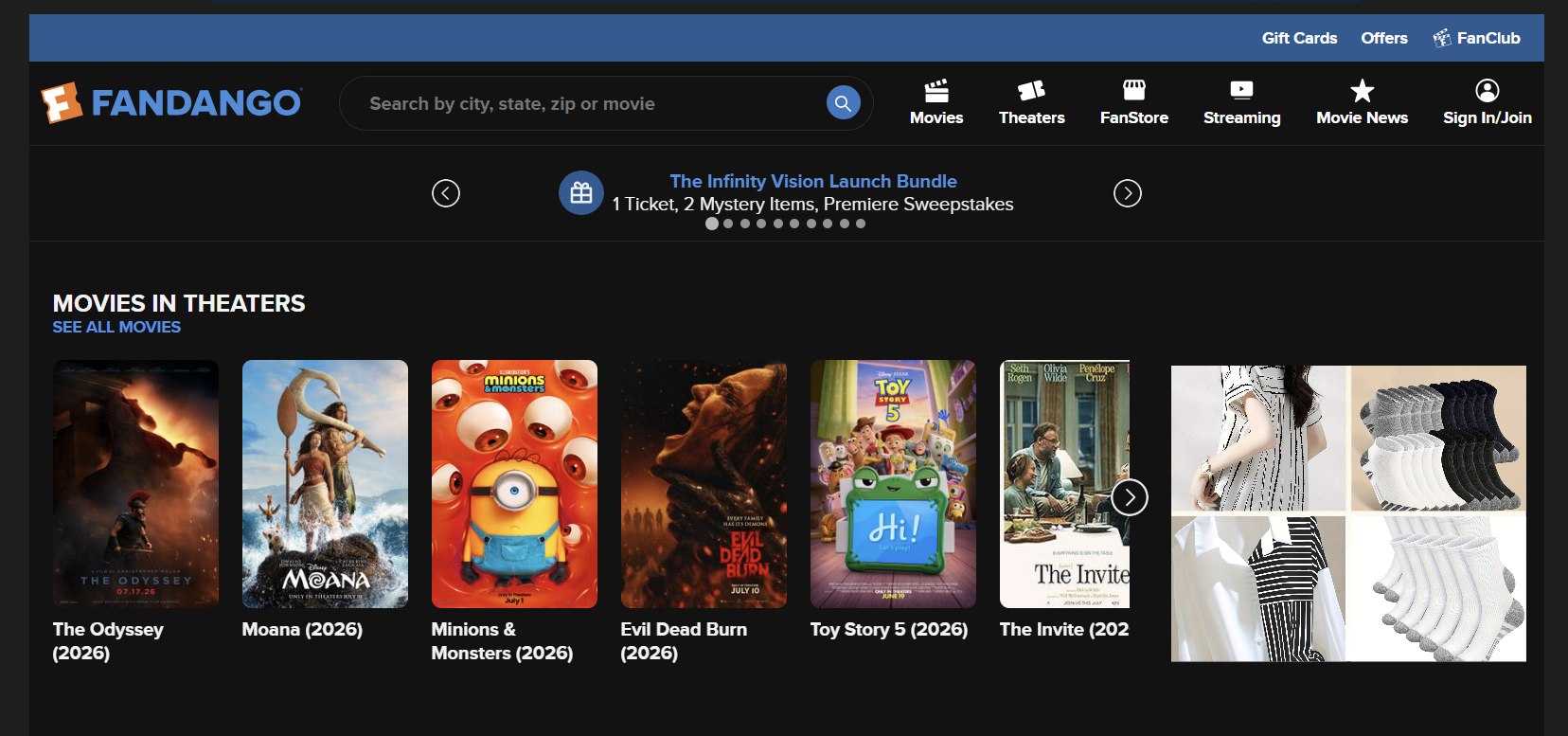
Fandango, the company best known for movie ticket sales, has announced a significant rebrand consolidating its streaming operations under a single, unified brand name, while simultaneously expanding its free, ad-supported streaming service to include live coverage of Germany’s top professional soccer league.

The company is dropping the “at Home” designation from its previously separate paid streaming service, Fandango at Home, folding that offering into the broader Fandango brand as it shifts its primary focus toward growing its free, advertising-supported streaming platform. The move positions Fandango to compete more directly with established free streaming services such as Tubi, Pluto TV and The Roku Channel.

A streamlined, barrier-free viewing experience

As part of the rebrand, Fandango’s streaming service will now grant viewers direct access to its free content library without requiring users to create an account or log in beforehand. The platform has also updated its “Watch Now” feature, allowing users to instantly begin playing free programming with a single click rather than navigating through additional setup steps.

Advertisement

The relaunched service will take effect consistently across all of Fandango’s platforms, whether accessed through a web browser, mobile devices, or smart TVs, ensuring a unified experience regardless of how viewers choose to engage with the brand.

Expanded content library and exclusive sports rights

According to the company’s press release, the rebrand is designed to deliver what Fandango described as improved content discovery, richer title presentation and enhanced overall viewing experiences for users. The relaunched free streaming offering will feature a curated selection of movies, franchises and television series, drawing from more than 3,500 hours of free programming sourced from the library of parent company Versant Media.

Among the most notable additions to the platform is exclusive English-language coverage of the Bundesliga, Germany’s top professional soccer league, made possible through a long-term media rights agreement held by USA Sports. That agreement represents a shift in the league’s U.S. broadcasting arrangement, with those rights previously having been held by ESPN. The addition brings one of Europe’s most prominent soccer leagues to American streaming audiences in the immediate aftermath of this year’s World Cup, a period during which American interest in international soccer has been running especially high.

Advertisement

Company leadership frames the move as a strategic step

Will McIntosh, president of digital platforms and ventures at Versant, described the significance of unifying Fandango’s various streaming offerings under one brand identity. “This expansion of our AVOD streaming offering, and bringing it together under the Fandango brand, is an important step in building a more connected entertainment experience for fans,” McIntosh said, using the industry term for advertising-supported video-on-demand services.

A uniquely positioned entertainment ecosystem

The rebrand effectively places Fandango in a category of its own within the broader entertainment and streaming landscape. Following the consolidation, Fandango now functions simultaneously as a free, ad-supported streaming service, a movie ticket retailer, and a premium streaming option for at-home movie rentals and purchases, all operating under a single unified brand and ecosystem.

Advertisement

That combination distinguishes Fandango from most of its direct competitors in the free streaming space, none of which currently combine movie ticketing functionality with both free and premium at-home viewing options in quite the same integrated manner. The approach reflects a broader strategy among entertainment companies to consolidate consumer touchpoints, from initial theatrical ticket purchases through eventual home viewing, within a single branded experience.

Timing tied to a major sports moment

The addition of Bundesliga coverage arrives at a particularly opportune moment for Fandango, given the sustained wave of American interest in soccer generated by this year’s expanded World Cup, which concluded with Spain’s extra-time victory over Argentina in the tournament’s championship match. Streaming and broadcast companies across the industry have increasingly sought to capitalize on that heightened attention to international soccer by securing rights to prominent overseas leagues, positioning services like Fandango’s newly expanded platform to capture viewers looking to continue following top-tier soccer beyond the World Cup’s conclusion.

A broader trend toward free, ad-supported streaming

Advertisement

Fandango’s expansion into free streaming reflects a broader industry-wide shift toward ad-supported viewing models, as major media companies increasingly recognize the value of reaching audiences who may be unwilling or unable to pay for multiple subscription services. The free, ad-supported streaming category has grown substantially in recent years, with established players like Tubi, Pluto TV and The Roku Channel building large audiences by offering extensive content libraries without subscription fees.

By entering that space more aggressively while retaining its existing movie ticketing and premium rental businesses, Fandango appears to be betting that its established brand recognition, built over years as a trusted destination for movie tickets, can help it stand out within an increasingly crowded free streaming marketplace.

With the rebrand now underway across web, mobile and smart TV platforms, Fandango is expected to continue expanding its content offerings in the coming months, potentially including additional sports rights or expanded programming partnerships tied to its parent company Versant Media’s broader content library. For now, the addition of Bundesliga coverage stands as the most significant new feature accompanying the rebrand, giving Fandango a distinctive selling point as it seeks to establish itself as a serious contender in the competitive free streaming space heading into the second half of 2026.

Advertisement
Continue Reading

Business

Tempus to buy cancer test maker Personalis for $1.5 billion

Published

on


Tempus to buy cancer test maker Personalis for $1.5 billion

Continue Reading

Business

Inside Incomplete Sentences: The Quiet Work of Telling Whole Stories

Published

on

Inside Incomplete Sentences: The Quiet Work of Telling Whole Stories

A yearlong campaign reframes what it means to do social impact through narrative.

Suggested placements: Thrive Global, Psychreg, Millennial Magazine, Parle Magazine  •  Editorial / contributed

Most social impact campaigns choose one of two registers. They go big and abstract, asking readers to care about a system, or they go small and personal, asking readers to care about one person inside it. Incomplete Sentences, a yearlong initiative launched in March 2026 by The Millbrook Companies in partnership with the Lone Star Justice Alliance, tries to do both at once. It does so by treating narrative itself as the system.

The campaign launched with a simple framing. When a person is sentenced, the language of that sentence enters the public record and starts doing work the person can no longer control. It travels into search results, news clips, family conversations, future job applications. Over time, the sentence becomes a stand-in for the person. Incomplete Sentences asks what is lost when that substitution happens, and what changes when the rest of the story is allowed back in.

Advertisement

A campaign built around four voices

The campaign is structured around four LSJA clients who were sentenced to prison as minors in Texas. Each will be featured throughout 2026 through a combination of long-form profiles, first-person essays, original poetry, and educational content. The first to be introduced was Delicia Carmichael, a survivor of sex trafficking sentenced at fifteen, whose own writing now anchors part of the campaign’s editorial canon.

What the campaign refuses to do is treat these voices as case studies. There are no thumbnail biographies. There is no rush to a moral. The structure is closer to literary nonfiction than to advocacy communications, and the editorial choice is intentional. Readers who arrive expecting a brief get something else, which is room to actually meet the person they are reading about.

That patience is unusual in cause-based content, and it is one of the things that makes the campaign worth paying attention to as a piece of communications craft.

Advertisement

Why a reputation collective and a legal nonprofit

The pairing of partners is also unusual. The Millbrook Companies is a collective of agencies whose specialties run from digital reputation management to performance marketing to strategic advisory. Lone Star Justice Alliance is a Texas-based legal nonprofit that has been advocating for youth and emerging adults inside the criminal legal system since 2017.

On paper, those are different worlds. In practice, they share a working language. Both organizations spend their days thinking about how information moves, what gets emphasized, what gets buried, and how a single framing can determine outcomes for a real human being. Incomplete Sentences is what happens when those two practices are pointed at the same problem.

The campaign’s launch announcement put it directly. Access to accurate, balanced information is essential to personal empowerment and functional systems. That is a sentence equally at home in a courtroom brief and a brand strategy document.

Advertisement

Storytelling as infrastructure

There is a quieter craft layer running beneath the campaign that bears noticing. The work of reaching readers in 2026 is not the same as the work of reaching readers a decade ago. Audiences live inside an information environment shaped by social platforms, search algorithms, and increasingly by AI-generated summaries that compress source material into a few sentences before a human reader ever sees it.

In that environment, storytelling is no longer the soft tissue around the campaign. It is the infrastructure. If the story is not built carefully enough to survive compression, it will not survive at all. Incomplete Sentences appears to have been designed with that pressure in mind. The campaign produces multiple formats around each featured voice, including long-form articles, first-person pieces, poetry, and explainer content, so that whichever surface a reader encounters first, the picture they receive is closer to whole.

That is communications work in the most literal sense: the work of making something communicable. It is also why a campaign that looks at a glance like a justice reform initiative reads, on closer inspection, like a meditation on attention itself.

Advertisement

What good looks like

It is too early to measure Incomplete Sentences by traditional impact metrics. The campaign is a few months old. Stories are still being released. Volunteer cohorts are still being seated for later quarters. By the end of 2026, there will be data, including reach numbers, fundraising totals, and policy moments where the campaign’s editorial work shows up in advocacy contexts.

The early signal worth tracking is something quieter. It is whether readers who arrive through one entry point, an Instagram post, a syndicated article, a Substack essay, leave with a more complete sense of a person they had previously known only through a charge sheet. That is the campaign’s working definition of success, and it is the one most worth taking seriously.

For now, the invitation is simple. Visit incompletesentences.org. Read one full story instead of one summary. Sit with what shifts. Then decide what to do with that shift.

Advertisement

That is what whole stories ask of the people who read them, and it is what this campaign is built to make possible.

Continue Reading

Business

Aerospace recruitment drive lands at Farnborough with 10,000 jobs

Published

on

Aerospace recruitment drive lands at Farnborough with 10,000 jobs

A recruitment campaign built inside an upcycled Airbus fuselage has landed at the Farnborough International Airshow, carrying an awkward message for one of Britain’s flagship industries: the average job pays £52,600, and there are still 10,000 of them going unfilled every year.

The There’s Aerospace For You pod, created from the fuselage of an Airbus A318, arrived at the show on Monday as part of a nationwide tour. Visitors can step inside a real aircraft structure, explore aerospace stories and browse the careers, apprenticeships and training routes on offer across the sector.

Its timing is pointed. The campaign has pitched up at the biggest Farnborough in the show’s history, where a record 1,636 exhibitors are chasing orders that the industry may struggle to deliver without more people to build them.

The numbers behind the campaign make uncomfortable reading. Two thirds of aerospace employers, 66 per cent, report persistent workforce shortages that actively hold back growth. Of the 10,000 technical vacancies left unfilled each year, 43 per cent are classed as chronically hard to fill for the simple reason that nobody applies.

For the SMEs that make up the bulk of the aerospace supply chain, that scarcity is felt twice over. Smaller firms compete for the same engineers, machinists and technicians as the primes, usually without the salary budgets or brand recognition to win. MPs warned earlier this year that manufacturers across aerospace, automotive, rail and maritime cannot access the skilled workforce they need, and that outdated training pathways are pushing young people away.

Advertisement

The prize for those who do apply is considerable. Aerospace roles pay an average of £52,600, some 33 per cent above the national figure. For comparison, median full-time earnings across the UK stood at £39,039 in April 2025, according to the Office for National Statistics.

Industry Minister Chris McDonald said: “To keep our world-class aerospace sector at the forefront of innovation we need to secure its next generation of talent, and There’s Aerospace For You sends a strong message that there’s a career for everyone in this exciting industry.

“Through our Modern Industrial Strategy we’re backing high-growth industries like aerospace with the investment in skills they need for the future, and whether your background is in manufacturing, construction, sustainability or digital technologies, this sector has a position ready for you in locations right across the UK.”

The Modern Industrial Strategy names advanced manufacturing among its priority growth sectors, and skills funding is following. The government’s £725 million apprenticeship reform package will fully fund training for under-25s at small and medium-sized firms, a change that could help smaller aerospace suppliers grow their own talent rather than lose out in the bidding war for experienced staff.

Advertisement

Kevin Craven, CEO of trade body ADS, was blunt about the scale of the problem. “Securing the future workforce of the UK aerospace industry is not a challenge that any single manufacturer can solve in isolation. It requires immediate, collective industrial action. We currently employ 113,000 people in world-class, high-wage roles outside of London, yet we are holding back our own growth potential by leaving 10,000 vacancies unfilled each year. The UK’s economic advantage and our advanced engineering capabilities are underpinned by this critical sector.”

For business owners struggling to recruit, the campaign’s premise will sound familiar. The difference is that aerospace has decided the answer is to put its shop window inside an aircraft and take it to the public. Job seekers, career switchers and graduates can explore vacancies and local training routes at aerospaceforyou.org.uk.


Jamie Young

Jamie Young

Jamie Young is Senior Reporter at Business Matters, covering SME finance, employment law and Westminster policy since 2016. He has reported on every Budget and Autumn Statement since 2018, helped make sense of the ‘covid era’ and the bounce-back loan scheme from launch through the fraud investigations, and broke the magazine’s coverage of the 2024 late-payment reforms. He joined Business Matters straight from completing his BA in Administration from Exeter University and is NCTJ-qualified. Reach him at jyoung@cbmeg.co.uk

Advertisement

Continue Reading

Business

Diversified Portfolios Show Resilience Amid Escalating Iran War

Published

on

Main Street Capital: Quality Is Not The Question, Valuation Is

Hands holding up columns of bar graph

We Are/DigitalVision via Getty Images

With the Iran war escalating, the conflict is again getting harder to ignore, which strengthens the case for maintaining a globally diversified portfolio. The reasoning isn’t based on assuming that a broad approach to asset allocation will

Continue Reading

Business

Why Retail Traders Consistently Underperform Over Time

Published

on

Why Retail Traders Consistently Underperform Over Time

After having been in the investing world for more than 25 years from private banking and investment management to private and venture capital; I have pretty much “been there and done that” at one point or another. I am currently a partner at RIA Advisors in Houston, Texas. The majority of my time is spent analyzing, researching and writing commentary about investing, investor psychology and macro-views of the markets and the economy. My thoughts are not generally mainstream and are often contrarian in nature but I try an use a common sense approach, clear explanations and my “real world” experience in the process. I am a managing partner of RIA Pro, a weekly subscriber based-newsletter that is distributed to individual and professional investors nationwide. The newsletter covers economic, political and market topics as they relate to your money and life. I also write a daily blog which is read by thousands nationwide from individuals to professionals at www.realinvestmentadvice.com.

Continue Reading

Trending

Copyright © 2025