

Business
Essential Strategies for Cross-Border Financial Management


A decade ago, international expansion was something UK SMEs spent years building towards. Today, your business could be paying suppliers in Poland, hiring developers in Portugal, and invoicing clients in California before you hit your second birthday.
The barrier to going global has collapsed, but most SMEs are still using banking infrastructure designed for domestic-only businesses – and that mismatch costs real money.
Multi-currency accounts and modern payment platforms have made it technically possible to operate across borders from day one. Knowing they exist and actually setting them up efficiently are two different things.
Your high-street business bank account works perfectly well when everyone you deal with uses pounds sterling. The moment you start receiving euros or paying in dollars, you’re exposed to exchange rate markups, transfer delays, and fees that aren’t always transparent.
These hidden costs add up quickly. They’re often buried in the fine print or disguised as “competitive rates” that turn out to be anything but.
Why UK SMEs Are Going Global Earlier Than Ever
UK small and medium-sized enterprises are expanding internationally far sooner than previous generations of businesses. A growing number now have cross-border revenue, remote international staff, or global customers within their first year of trading.
Several factors have converged to make this possible. Post-Brexit trade realities pushed many UK businesses to look beyond Europe for growth opportunities.
The pandemic accelerated remote work, making it normal to hire talent from anywhere in the world. Digital payment platforms and e-commerce marketplaces removed traditional barriers that once made international trade feel out of reach.
Key enablers driving early internationalisation:
- E-commerce platforms that handle currency conversion, international shipping, and localised checkout experiences
- Freelance marketplaces connecting UK businesses with contractors across multiple time zones
- Digital banking tools offering multi-currency accounts at accessible price points
- Government export support through schemes like UK Export Finance designed specifically for smaller businesses
Global e-commerce sales continue to grow substantially, creating immediate access to international customers. You no longer need physical offices abroad or dedicated export departments to test foreign markets.
The shift in global trade patterns means you’re now competing with – and selling to – businesses worldwide from day one. Supply chains have diversified, and accessing international suppliers or customers has become part of standard business planning rather than a later-stage expansion strategy.
The Hidden Costs Traditional Banking Doesn’t Show You
When you send a £50,000 payment to a European supplier through your traditional bank, you might see a modest £25 transfer fee. What you don’t see is the £1,200+ disappearing into the foreign exchange margin – a markup quietly embedded in the conversion rate itself.
Traditional banks rarely advertise their FX spreads. Instead of the mid-market rate you’d find on Google, they offer you a rate that’s 2-4% worse, pocketing the difference as profit.
This means every international payment loses money before it even leaves your account.
Common hidden charges include:
- FX markups baked into “fee-free” international transfers
- Wire transfer fees charged by both sending and receiving banks
- Double conversion charges when payments route through correspondent banks
- Weekend and holiday spreads that widen when markets close
- Payment amendment fees if details need correcting mid-transfer
The time cost matters too. Your finance team spends hours reconciling payments across currencies, chasing transfers that take 3-5 days to clear, and explaining unexplained shortfalls to suppliers who received less than invoiced.
Many SMEs lose thousands annually without realising it. Research indicates that UK small businesses collectively forfeit substantial sums to these concealed charges, yet most business owners only notice their monthly account fee.
Where Traditional Business Banking Falls Short
Most high-street banks were designed for businesses operating primarily within their home market. Their infrastructure reflects decades of domestic-first thinking, which creates tangible problems when you begin trading across borders.
Currency management is one of the most glaring gaps. Many traditional banks don’t allow you to hold multiple currencies in separate sub-accounts.
Instead, they force automatic conversions at unfavourable exchange rates whenever foreign revenue arrives. This means you lose money simply by receiving payment.
Access to local banking infrastructure is another limitation. If you need a local IBAN for European clients or a US account number for American customers, most traditional banks either can’t provide these or make the process prohibitively expensive and slow.
Opening a business account in another country typically requires physical presence, mountains of paperwork, and weeks of processing time.
The fee structures are rigid and often opaque. You might face:
- High fixed fees per international transfer
- Percentage-based charges that scale with transaction size
- Unfavourable exchange rate margins (often 3-5% above the interbank rate)
- Monthly account fees for multi-currency services
Processing speed remains frustratingly slow. Standard international transfers can take 3-5 business days, which creates cash flow complications when you’re managing inventory, paying suppliers, or dealing with time-sensitive opportunities.
These limitations aren’t oversights. They reflect the reality that traditional banking infrastructure was built before globalisation became accessible to smaller businesses.
The systems simply weren’t designed for the way modern SMEs operate across multiple markets simultaneously.
A Smarter Setup – How Multi-Currency Accounts Work for Small Teams
A multi-currency account lets you hold, receive, and pay in multiple currencies from a single account.
Instead of opening separate bank accounts in different countries, you manage all your foreign currency needs through one platform.
These accounts provide local-style account details for different regions.
You can receive euros with European IBAN details, US dollars with ACH routing numbers, and pounds with UK sort codes.
Your customers and suppliers pay you as if you had a local bank account in their country.
For a growing UK business with European suppliers and US customers, a multi-currency account can replace a tangle of bank fees and conversion charges with a single, transparent setup.
This lets you hold euros, dollars, and sterling without converting until you need to.
Key capabilities include:
- Multiple currency wallets within one account interface
- Local receiving details for major markets (EUR, USD, GBP, AUD, etc.)
- Hold balances in each currency without forced conversions
- Convert when you choose at rates typically under 1% markup
- Direct payments to suppliers in their preferred currency
The main advantage is avoiding unnecessary conversions.
When you receive payment in euros, you hold those euros until you need them.
If you have a supplier invoice in euros, you pay directly from that balance.
You only convert between currencies when it makes commercial sense, not every time money moves.
Small teams benefit from consolidated reporting.
Your finance manager sees all currency positions in one dashboard rather than logging into multiple banking platforms across different countries.


Alphabet Convertible Preferred Offers 6% Yield and Upside With Common Stock

Monika Wszeborowska
Good afternoon, Monika Wszeborowska. I would like to welcome you at the conference — LPP Conference results — on the results of the first quarter. With me here is Marcin Bojko, CFO; and Magdalena Kopaczewska, Investor Relations representative.
We presented the results from the first quarter, how they reflects the reality in our activity. We will talk about to you in a moment. We would like to present to you our plans for this year, but also we would like to refer to our plans for the next three years regarding our development, development of our stationary network.
During this meeting, we would like to present to you our financial goals for 2026 and ’27 and the entire meeting will end with Q&A. You can ask questions via chat that is visible on your screens. It’s already active, and it will be active till the end of today’s conference. After the conference, if you have any additional issues or questions, please contact our Investor Relations Department and lpp.investor.relations@lpp.com or via our media@lpp.com.
So let’s move on to the results from the first quarter. Thank you. Traditionally, the summary of the first quarter, let’s start with most important operational events. In the first quarter of ’26, we opened 121 new stores, 102 in Sinsay brand according to our plans for this time. At the same time, we spent already PLN 600 million (sic) [ PLN 562 million ] for investment within the first quarter. Close to PLN 3 million (sic) [ PLN 300 million ] was allocated for logistics.
This year is not going to be a record-breaking year, but constantly, we’ve been investing


Vale’s top shareholder pushes for meeting on chairman’s removal

NEW YORK — Tesla Inc. shares declined sharply on Wednesday, closing down 3.80% at $381.59 as investors engaged in profit-taking following a strong run and amid ongoing caution around electric vehicle demand and execution risks on ambitious growth initiatives.
The move erased some of the recent gains that had pushed the stock higher on optimism about autonomous driving progress and energy storage momentum. In after-hours trading, shares slipped further to $378.78. Volume was elevated as traders reacted to broader market rotation and company-specific developments.
Tesla has been one of the market’s most volatile and closely watched names, with its performance heavily influenced by CEO Elon Musk’s vision for full self-driving technology, robotaxi services and expansion into robotics. While the company maintains leadership in the EV space, increasing competition and margin pressures have kept investors attentive to quarterly execution.
Recent Performance Drivers
Tesla delivered solid first-quarter results earlier in 2026, with energy storage deployments showing particularly strong growth. The Megapack business has become an important diversification pillar, helping offset softness in vehicle deliveries amid a challenging global EV market.
However, automotive margins have faced headwinds from price adjustments and increased competition from both traditional automakers and new entrants in China. Production ramps on newer models, including refreshed versions of existing lineups, remain critical to sustaining growth.
The stock’s recent rally had been fueled by positive sentiment around regulatory approvals for autonomous features and progress on the Optimus humanoid robot project. Wednesday’s pullback reflects typical consolidation after gains, with traders locking in profits ahead of upcoming catalysts.
Broader EV Market Context
The global electric vehicle sector continues expanding, though growth rates have moderated from pandemic-era peaks. Supply chain normalization, incentive phase-outs in some regions and higher interest rates have impacted affordability for many consumers. Tesla’s ability to maintain pricing power while scaling production remains a key focus for analysts.
In the United States, EV adoption faces headwinds from infrastructure gaps and varying state incentives. Internationally, China’s domestic market remains intensely competitive, with local manufacturers challenging Tesla’s position. Europe’s regulatory push toward electrification provides long-term support but has also introduced near-term volatility around tariffs and supply chains.
Autonomy and Robotics Ambitions
Tesla’s long-term valuation hinges heavily on success in full self-driving technology and robotaxi deployment. The company has made incremental progress on regulatory approvals and software improvements, though timelines for widespread commercialization have repeatedly shifted.
Musk has consistently emphasized that autonomy represents the company’s largest opportunity. Investors remain divided on near-term monetization potential versus the substantial research and development costs required to achieve it. The Optimus project adds another layer of speculative upside, with potential applications in manufacturing and service industries.
Energy Business as Growth Driver
The energy generation and storage segment has emerged as a bright spot, with Megapack deployments accelerating. This business benefits from global demand for grid stabilization and renewable integration, offering higher margins than the automotive side in recent periods.
Analysts project continued expansion in energy storage as utilities and commercial customers seek solutions for intermittent renewable power. This diversification helps mitigate risks tied solely to vehicle sales cycles.
Financial Position and Capital Allocation
Tesla maintains a strong balance sheet with significant cash reserves, providing flexibility for capital expenditures on new factories, technology development and potential acquisitions. The company has not paid dividends, focusing instead on reinvestment and occasional share buybacks during periods of market weakness.
Free cash flow generation has improved with operational efficiencies, though heavy spending on growth initiatives keeps the balance dynamic. Management has emphasized long-term value creation over short-term metrics, a strategy that has rewarded patient investors but contributed to volatility.
Analyst Perspectives
Wall Street consensus remains mixed but generally constructive on Tesla’s long-term potential. Several firms maintain Buy ratings, citing leadership in EVs, energy storage and autonomy. However, some analysts have expressed caution around valuation multiples and execution risks on ambitious timelines.
Price targets vary widely, reflecting differing views on the probability and timing of robotaxi and robotics revenue streams. Near-term focus centers on delivery numbers, margin trends and updates from the next earnings call.
Market Sentiment and Technical Factors
Tesla shares have shown classic meme-stock characteristics at times, with retail investor enthusiasm driving sharp moves. Institutional ownership remains significant, with many funds viewing it as a core growth holding in technology and clean energy portfolios.
Technically, the stock encountered resistance after recent gains, with Wednesday’s decline testing support levels. Options activity indicated active hedging and speculative positioning around key price points.
Investment Considerations
For investors, Tesla represents a high-risk, high-reward opportunity tied to disruptive innovation. The company’s brand strength, manufacturing scale and technology pipeline provide competitive advantages, but success depends on flawless execution across multiple frontiers simultaneously.
Risks include regulatory hurdles for autonomy, competitive intensity in EVs, supply chain disruptions and macroeconomic impacts on consumer spending. Long-term believers focus on the transformative potential of Musk’s vision, while skeptics highlight historical challenges in meeting ambitious targets.
Looking Ahead
The coming months will bring important updates on production ramps, regulatory progress and energy deployment figures. Tesla’s annual shareholder meeting and next earnings report will likely serve as key catalysts for sentiment.
As the EV transition accelerates globally, Tesla’s ability to maintain leadership while expanding into new areas will determine its trajectory. Wednesday’s decline represents normal market fluctuation in a volatile name rather than a fundamental shift, with the stock retaining appeal for growth-oriented investors comfortable with elevated risk.
The session’s trading activity reflected broader technology sector dynamics and profit-taking after recent strength. Market participants will continue monitoring Tesla closely for signals on demand trends, margin performance and strategic execution in the second half of 2026.
Tesla remains one of the most influential companies in the transition to sustainable energy and autonomous transportation. Its performance continues to shape investor narratives around innovation, execution and long-term disruption potential in the automotive and technology sectors.
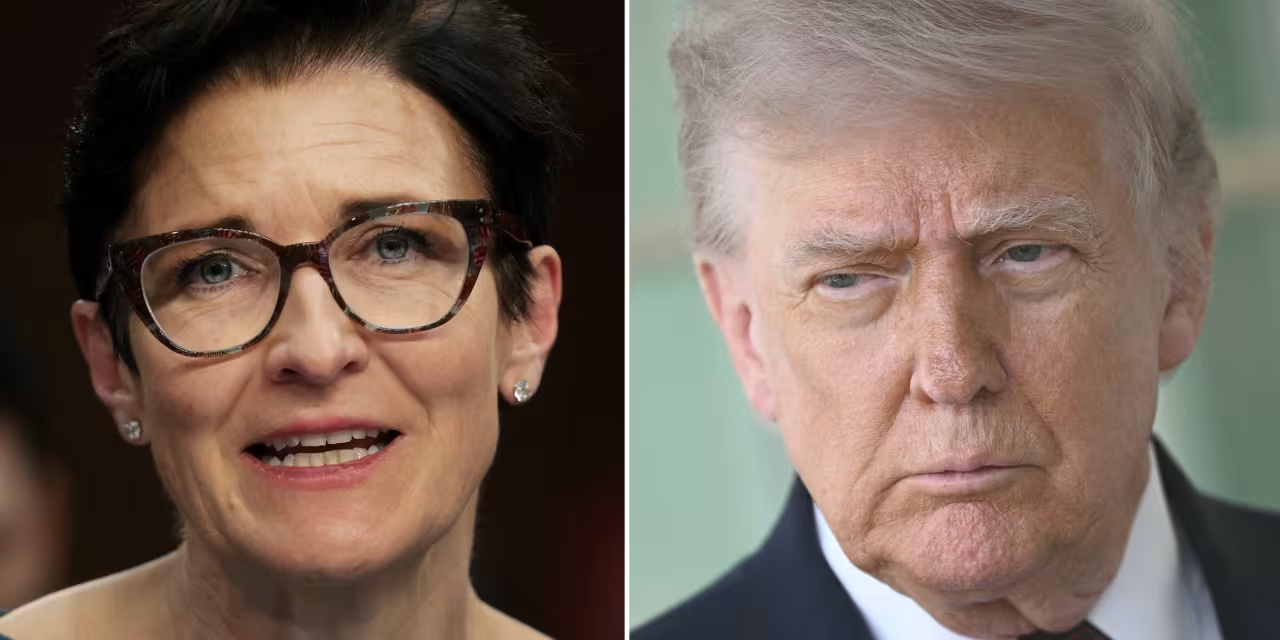
Trump Praises Citigroup Bankers in Post: ‘They’ve Worked Really Hard!’


Peru reviews contested ballots as Fujimori takes razor-thin lead

Invesco is an independent investment management firm dedicated to delivering an investment experience that helps people get more out of life.Be the first to know! Sign up for Invesco US Blog and get expert investment views as they post.Disclosure for all Invesco US articles: Before investing, carefully read the prospectus and/or summary prospectus and carefully consider the investment objectives, risks, charges and expenses. The information provided is for educational purposes only and does not constitute a recommendation of the suitability of any investment strategy for a particular investor. Invesco does not provide tax advice. The tax information contained herein is general and is not exhaustive by nature. Federal and state tax laws are complex and constantly changing. Investors should always consult their own legal or tax professional for information concerning their individual situation. The opinions expressed are those of the authors, are based on current market conditions and are subject to change without notice. These opinions may differ from those of other Invesco investment professionals. NOT FDIC INSURED MAY LOSE VALUE NO BANK GUARANTEE All data provided by Invesco unless otherwise noted. Invesco Distributors, Inc. is the US distributor for Invesco Ltd.’s retail products and collective trust funds. Invesco Advisers, Inc. and other affiliated investment advisers mentioned provide investment advisory services and do not sell securities. Invesco Unit Investment Trusts are distributed by the sponsor, Invesco Capital Markets, Inc., and broker-dealers including Invesco Distributors, Inc. PowerShares® is a registered trademark of Invesco PowerShares Capital Management LLC (Invesco PowerShares). Each entity is an indirect, wholly owned subsidiary of Invesco Ltd. ©2015 Invesco Ltd. All rights reserved.
Business
US stocks | SpaceX IPO draws over $70 billion from retail investors ahead of record stock market debut

The strong retail participation comes ahead of what is set to become the largest IPO in history. SpaceX is scheduled to begin trading on Nasdaq on Friday under the ticker symbol SPCX after pricing its shares at $135 each.
The company is raising about $75 billion through the offering, which values the rocket and satellite communications company at roughly $1.77 trillion. At that valuation, SpaceX would rank among the ten most valuable listed companies in the United States.
Investor appetite for the offering has been strong. Reuters reported earlier this week that total demand for the IPO had crossed $250 billion, more than three times the shares available.
Also Read | SpaceX’s blockbuster IPO could turn more than 4,000 employees into millionaires. Here’s how

One of the unusual features of the offering has been the large allocation earmarked for retail investors. Reuters had previously reported that SpaceX was considering setting aside as much as 30% of the issue for individual investors, a rare move for a mega IPO that is typically dominated by institutional buyers.
The offering consists entirely of newly issued shares, meaning all proceeds will go to the company rather than existing shareholders. Current investors are not selling stock in the IPO and will remain subject to lock-up restrictions after listing.The listing is being closely watched not only because of its size but also because it offers public investors their first opportunity to invest directly in what many consider the crown jewel of Musk’s business empire.
SpaceX has evolved far beyond its rocket-launch business. Its operations now span satellite broadband through Starlink, commercial space transportation, defence contracts and artificial intelligence infrastructure through xAI.
Despite the excitement surrounding the offering, the company remains loss-making. SpaceX reported revenue of $18.67 billion in 2025 while posting a net loss of $4.94 billion. Investors are betting that future growth from Starlink, launch services, AI infrastructure and defence-related businesses will justify the company’s lofty valuation.
Catch the latest US Stocks Live Updates
The IPO is also expected to benefit from recent changes to US index rules. Nasdaq now allows large-cap IPOs to enter the Nasdaq-100 index after just 15 trading days, potentially creating additional demand from passive funds that track the benchmark.
For Indian investors, direct participation in the IPO was largely unavailable because the US book-building process does not offer a mechanism similar to India’s ASBA system. However, they will be able to buy SpaceX shares after listing through international investing platforms and GIFT City’s NSE IX platform.

In a consultation paper released on Thursday, the market regulator said it has observed instances where illiquid stocks develop significantly different prices across exchanges because circuit limits continue to be calculated using stale closing prices on exchanges where no trading occurs.
Currently, stock exchanges independently apply price bands based on their own previous closing prices. While this works smoothly for actively traded stocks, SEBI noted that it can create distortions in stocks that do not trade on one exchange for several days.
The regulator illustrated a scenario where a stock continues to hit upper circuits and gain value on one exchange, while remaining stuck within an outdated price band on another exchange due to lack of trading. Over time, this can lead to substantial price divergence between the same stock across exchanges and may even result in non-trading on one platform.
To address the issue, Sebi has proposed a harmonised framework for determining both the base price used in the pre-open call auction session and the applicable price bands.
Under the proposal, if a stock trades on all exchanges or remains untraded on all exchanges on a particular day, each exchange will continue using its own latest closing price for calculating the next day’s price band.
However, if a stock trades on only one exchange, all other exchanges where the stock did not trade will be required to adopt the closing price from the exchange where trading occurred for setting the next day’s price bands and pre-open session base price.In cases where a stock trades on two or more exchanges but remains untraded on one or more others, the exchanges without trading activity will use the closing price from the exchange that recorded the highest trading volume in that stock.
The proposals stem from recommendations made by Sebi’s Secondary Market Advisory Committee (SMAC), which discussed the issue during its April 2026 meeting.
Sebi has also proposed that stock exchanges enter into agreements or other arrangements to facilitate the sharing of closing-price data and ensure smooth implementation of the framework.
The regulator said the move is intended to improve price discovery and prevent unnecessary price distortions in stocks listed on multiple trading venues.
Public comments on the consultation paper have been invited until July 2.
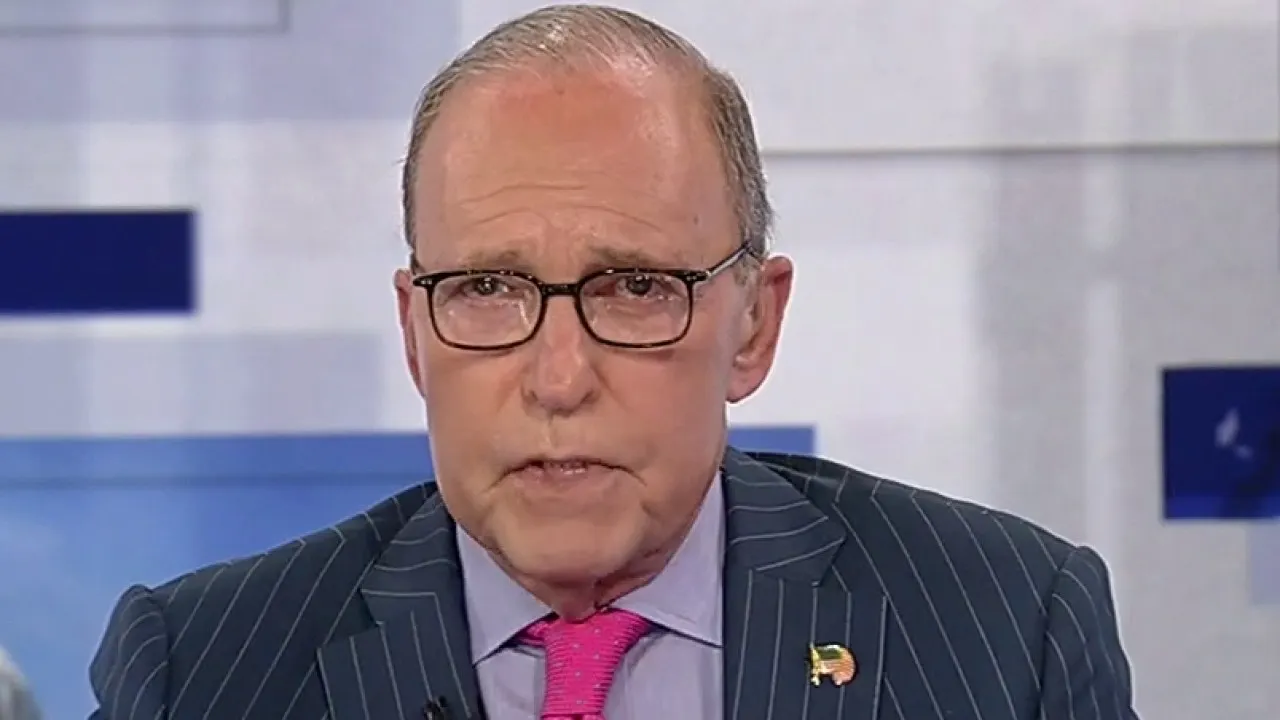
FOX Business host Larry Kudlow discusses the commander-in-chief’s handling of the Middle East conflict on ‘Kudlow.’
High drama today as President Trump called off the Iranian bombing and announced that a deal with Iran is imminent from his Truth Social posting that “Discussions and final points have been, in both concept and great detail, approved by all parties involved.” That’s America, Israel, Iran and all of the Gulf states involved in the war.
The president spoke about this today at the White House: “The Strait will officially open as soon as we sign, which could be soon. Very soon, maybe over the weekend in Europe.”
Stock markets soared; oil prices fell. Mr. Trump also noted on his Truth Social that “the Naval Blockade will remain in full force and effect until this Transaction is finalized.”
And my great hope is that no money is given to Iran for a long time, until they prove that their behavior is changing. And frankly, while I applaud President Trump’s diplomatic endeavors — such as negotiating with bombs — I have nothing but skepticism about Iran following through on their promises.
Just yesterday, the United Nation’s nuclear watchdog blasted Iran for failing to allow inspection and verification of their weapons and their weapons-grade uranium. That’s an old story.
And Mr. Trump, in whatever the deal turns out to be, is surely going to want complete denuclearization, some kind of end to their enriched uranium, as well as reopening the strait toll free and an end to Iran’s state sponsorship of terrorism in Israel and throughout the Middle East.
Fox News contributor Liz Peek and Rep. French Hill, R-Ark., speak on President Trump’s push for the third reconciliation bill on ‘Kudlow.’
As President Reagan always said, trust but verify. And as both Reagan and Mr. Trump believe, peace through strength.
Meanwhile, one of the really neat developing stories, regardless of any Iranian deal, is Mr. Trump’s secret supply of oil tankers going through presumably the Oman Channel of the Hormuz Strait.
As Mr. Trump said yesterday and has corroborated by a number of oil watchdogs, some 200 ships transited the strait for a total of about 100 million barrels of oil over the past month.
That comes to about 3 million barrels per day. Recall that world oil supply and demand intersect at about 100 million barrels per day.
And the prior closing of the Strait took about 20 percent, or about 20 million barrels per day, off the market. So the supply shortages drove oil prices way up.
Yet this story is surreptitiously changing. Mr. Trump riffed about it earlier today: “Over the last month, we’ve been, taking our ships, big ships, quietly at night. You guys didn’t know that? Pretty cool. Right? As a captain, he knows about more about ships than I do. But it’s pretty cool. He turned off the lights.”
Mr. Trump added: “We bombed their radar and everything so they couldn’t see what was going on. And we took out, some nights, 25 ships, some nights, 15 days. Last 4 or 5 nights we did 25, 22, 21, 26, 18 and 14. Who else would remember those numbers? Nobody.” It’s “a lot of ships,” he concluded.
Podcast host Ben Ferguson discusses President Donald Trump nomination of Jay Clayton, former SEC chairman and current U.S. Attorney, as director of national intelligence on ‘Kudlow.’
It’s a great story. Now administration sources tell me about a dozen ships per night are being moved through the strait. I’m doing some arithmetic now — that’s 360 a month.
Using the same ratio of the first month’s secret passage, that will get us about 180 million additional barrels of oil which would come to roughly 6 million barrels a day. That’s big stuff. Remember we’re 20 million barrels short because of the closing of the Strait.
Now last month’s 3 million barrel, perhaps this month’s 6 million barrels, that’s 9 million additional barrels per day to reduce the 20 million barrel shortfall.
These extra oil supplies are bringing oil prices down in the market place and will continue on a steady basis if it keeps up. Gasoline prices will be following in tow.
It’s a silver lining for the temporary inflation bulge. And it’s gonna make stocks strong and over time, interest rates softer.
Mr. Trump’s secret sauce. Think of it.

World Cup Could Fuel Coinbase Prediction Markets: Bernstein

Muhammad Ali’s grandson calls on Dana White to discuss Ali Act changes

Girl, 14, charged with attempted murder after triple stabbing at north Manchester high school



-

 Fashion6 days ago
Weekend Open Thread: Evereve – Corporette.com
-
 Crypto World6 days ago
Jensen Huang Approves Samsung, SK Hynix, and Micron for NVIDIA (NVDA) HBM4 Memory Supply
-

 Crypto World4 days ago
Anatomy of the June crypto crash: Fed, Iran, Saylor
-
 Entertainment5 days ago
The Best Mystery Series of All Time Is Surging on Streaming 30 Years After It Ended
-

 NewsBeat4 days ago
Alexander Zverev wins the French Open to finally earn a 1st Grand Slam title
-

 Tech6 days ago
Suspicious Polyfill login prompts pop up on Toshiba, Muji websites
-
 Crypto World5 days ago
Senator Cynthia Lummis Calls CLARITY Act the Most Consequential Financial Legislation of This Generation
-

 Tech7 days ago
Microsoft launches MXC, an OS-level sandbox for AI agents, with OpenAI and Nvidia already on board
-

 Tech5 days ago
Microsoft unveils seven homegrown AI models in new bid for ‘long term self-sufficiency’
-

 Business7 days ago
(VIDEO) Justin Bieber Delivers Surprise Happy Birthday Serenade to Diners at Los Angeles Mexican Restaurant
-
 NewsBeat4 days ago
Alexander Zverev conquers demons and outlasts Flavio Cobolli to win French Open for first major title
-
 Business5 days ago
The Pain Points Taking a Fragile Tech Rally Down a Notch
-

 Business4 days ago
High Stakes for Wembanyama as New York Pushes for 3-0 Lead
-
 Crypto World4 days ago
Eli Lilly (LLY) Stock Surges 4% Following Breakthrough Sleep Apnea Trial Results
-

 Tech6 days ago
Von der Leyen’s AI envoy pick draws conflict-of-interest fire
-

 Tech6 days ago
Meta steals a tactic from Tesla and builds data centers in tents
-
Crypto World7 days ago
LBank Surpasses 25 Million Users Worldwide as AFA Partnership Continues to Drive Global Growth
-

 Tech6 days ago
Hackers now exploit SolarWinds Serv-U flaw to crash servers
-

 Crypto World4 days ago
Trump’s AI Ownership Plan Could Benefit Anthropic at OpenAI’s Expense
-
 Sports2 days ago
Bangladesh beat Australia after 20 years in ODIs, register only their second win over six-time world champions | Cricket News
You must be logged in to post a comment Login