
Business
ETMarkets Smart Talk | India’s retail investing boom is structural, 40 crore demat accounts possible in 10 years: Sandeep Nayak

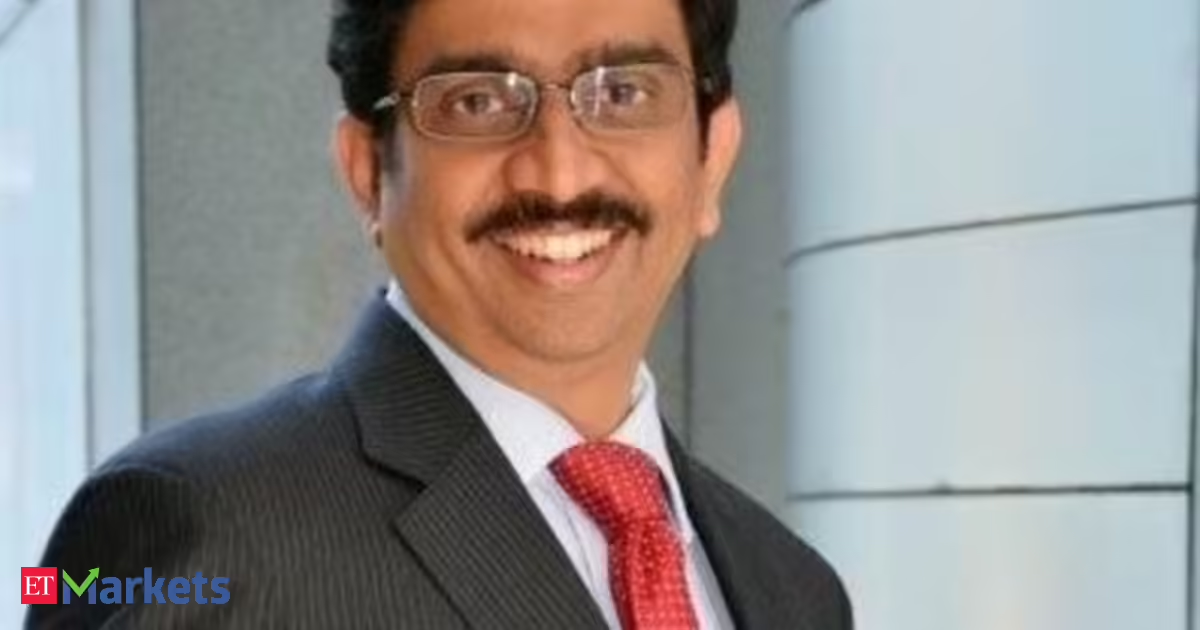
With India’s young demographic profile, rising incomes and growing awareness of digital investing, Nayak believes the number of Demat accounts could rise from around 20 crore currently to 30 crore over the next five years and potentially touch 40 crore in a decade.
In an interview with Kshitij Anand of ETMarkets, Nayak said that while the bull market has accelerated the entry of new investors, the underlying growth is being driven by India’s demographics and increasing financialisation of savings.
However, as younger investors, including Gen Z, embrace equities and derivatives, he cautioned that a get-rich-quick mindset and inadequate focus on risk management remain key challenges.
Nayak also discussed how technology, AI, data-driven research and personalised guidance could shape the next phase of digital broking. He believes that while the past decade was about democratising access to markets, the next 10 years will be about helping investors make more informed decisions, with research, risk management and multi-asset investing playing a crucial role in long-term wealth creation. Edited Excerpts –
Kshitij Anand: So, firstly, let us just understand how Centrum Finverse is taking shape and expanding its digital footprint. I would also want to know how the transformation of GalaxC fits into the overall roadmap.
Sandeep Nayak: When we started Centrum Finverse, we looked at the market landscape and saw that the market had expanded and access to markets had been democratised. But really, we found that traders were making losses. If you see SEBI’s report, which is published annually, retail traders over the last four years have lost close to three-and-a-half lakh crores, and the beneficiaries are players like Jane Street.
There was one background: you had discount brokers who created a platform and expanded the market. We saw that full-service brokers were only catering to the mass affluent and upwards. Really, retail was at God’s mercy. So, we felt that if there was a tech-enabled platform focused on research and guidance, there was a way to be made in this market, and you would get your place in the sun.
I will give you a simple analogy. I mean, if you give a very good cricket bat to everybody, they are not going to become good batsmen. You need coaching, technique, practice, and a lot of effort goes into becoming a good batsman. Or, if you have a high-performance car, digital access is like giving you a high-performance car, but to reach the destination, you still need a GPS.

So, we want to be that player who is bringing research and guidance and hand-holding customers. And if you see our app, which we have launched, GalaxC, which you referred to, is our trading app. We have created a lot of scientific tools to help investors navigate their journey in the markets.
If you look at options trading, or any trading for that matter, we will show the client the risk-reward. Before he enters the trade, he can see his maximum loss and maximum profit, so he knows. And then he knows the risk-reward ratio. So, if you say your loss is Rs 1,000 and there is an option to make Rs 3,000, then your risk-reward is 1:3. But if the trade involves a loss of Rs 1,000 and a profit of Rs 1,000, then the risk-reward is 1:1. Or, if the loss is Rs 1,000 and the profit is only Rs 500, why are you getting into that trade?
So, getting this tool into the hands of retail investors is kind of enabling them to get to that level. Of course, there is a lot more to do, but this will help them in making sure their journey is a lot better in terms of risk management. They know what they are doing. It does not guarantee you profits all the time because you can still incur a loss, but at least before you get into the trade, you know you can digest that loss. So, that is what we have done, and we think that this differentiation will bear out over time.
I mean, I would say the last phase of the last 5-10 years, really, if you count it, was about democratising access. The next 10 years, I think, will be about informed decision-making. It is easy to open a Demat account, (—) a trading account; it can be done in two minutes. But creating wealth is much harder, and that is where we want to help the investor.
We want to bring science to investing through data-driven research, analytics, and decision-support tools so that the investor relies less on emotion and more on evidence. That is what we have focused on. Right now, it is probably my talk; this will bear fruit. I think for this differentiation to be visible in the market, it is a process, and I feel that over the next one to three years, players who have this differentiation are the ones who will be the winners, not just those who have the platforms.
Kshitij Anand: And, in fact, when you were conceptualising GalaxC, what was the kind of need or problem that you were trying to address that was not being addressed earlier, but with GalaxC, it would actually suffice all the needs?
Sandeep Nayak: So, I will tell you that there are two worlds in this industry. One world is of players offering a platform at a low cost, where cheap brokerage is everything. And the other world is where you are offering full-service research, but offering it to the cream, that is, the mass affluent and upwards.
We wanted to bring the best of both worlds to retail investors. So, give them a platform where they can execute efficiently at a low cost, and at the same time, hand-hold them and give them guidance, which is available only to the mass affluent and upwards. And that is how we conceptualised GalaxC—to get the best of both worlds for the retail investor.
Not only give them a platform where they can play around, not just give them a cricket bat, but also coach them, hand-hold them, and show them how to actually play a long innings. That is our motto at Centrum Finverse.
Kshitij Anand: In fact, the digital broking space is also evolving, especially after COVID, you could say. So, let us say we take the past five to six-odd years, and it has really evolved. A lot of players have actually come into the picture. So, what does, let us say, the next decade look like, and who will actually emerge as winners? We are also seeing some consolidation happening, so yes, that is also there.
Sandeep Nayak: See, what I see is that technology has enabled us to offer services to retail customers in a personalised manner. Just like HNIs are getting personalised services from wealth relationship managers, technology can give a retail customer personalised service.
So, today, we are actually able to track a customer who comes to our app. Just like Bigg Boss—you have seen this Bigg Boss show, where there is a Bigg Boss tracking what is happening—you know which section he went to in the app and which section he was spending more time on. So, accordingly, you can tailor-make your offering to him.
So, people who are able to personalise the tech platform and offer personalised services and guidance to retail investors will be the winners. So, when you come in, I know, (—) “Welcome, Kshitij.” I know what your portfolio is, I know what you have been doing, so I am kind of pre-empting and giving you things that you would like to see. So, that is one differentiation.
And the second one is platforms that offer multi-assets. For example, we have also visualised that GalaxC will offer multi-assets. Today, we have equity and derivatives—all these stock brokerage services are the core offering—but we also have mutual funds. We have IPOs. And we are working on bonds and US investing, etc. Right now, we offer these offline, but we will bring the entire thing digitally.
We are going to gradually offer all financial products that a retail investor would want, digitally and with hand-holding—not just a platform, but hand-holding on what he needs to do.
For example, on our mutual fund platform, if you see the mutual funds listed, they are only the whitelisted funds that we are recommending, that our research recommends. And if you want to buy something else, you can still pick it from the drop-down and go buy it. But we are saying these are the ones—if you want to invest in large-cap funds, this; if you want to invest in mid-cap funds, this; if you want to invest in small-cap funds, this.
We have thematic baskets. I mean, portfolio management is available only to HNIs; the minimum threshold is Rs 50 lakh and upwards. Our baskets are available at as low as Rs 30,000. So, you can get a defence basket and know which stocks to buy. There is a power basket, which is thematic. And you are able to participate in the right stock selection without having to go to a top-quality fund manager, so research is doing that.
So, like I said, it is not just a platform, but being a part of the journey and trying to deliver value over the long term. Finally, where does he build trust with me? If I am able to deliver some alpha on his investments, he has to make some profit from using my platform. So, the research team that we have built is focused on that.
I mean, while HNIs get 30-page reports, retail investors do not need a 30-page report. It is probably a one-pager with the rationale that they need to invest in. So, we are focused on creating value for the retail investor because, as a house, we have an institutional brokerage that covers about 200 stocks, where we have a financial model and 30-page detailed reports, which can be given to institutional investors and high-net-worth investors.
Similarly, we run a private wealth outfit where wealth offerings are given to private banking customers. The research we do is about how we package this in a consumable format for the retail investor.
Kshitij Anand: Good that you pointed out the research part of it because most of the discount brokers or brokers that we see are providing the services, but there is no research as such involved in it, and that is where you sort of make that….
Sandeep Nayak: That is where we want to differentiate.
Kshitij Anand: And that will really help the business to carry on. And you rightly pointed out that you will be introducing a lot of other things that are getting into the mainstream, such as US investing, bonds, and other products. Is that something that will fuel the engine for the next five to 10-odd years?
Sandeep Nayak: Yes, over 10 years. But since the segment is retail, they will initially prefer investing domestically, investing in thematic baskets, and investing in mutual funds. I think US investing, etc., is for the mass affluent and upwards because you need to do LRS remittances, etc.
But we are offering certain ETFs. We are highlighting certain ETFs to retail investors, saying that you do not need to remit money abroad to buy US stocks to get exposure. There are certain ETFs through which you can get exposure, where you are getting the benefit of investing in the US. So, that is where….
We do not need to launch a separate US investing product. There are enough products that we need to highlight to investors to help them get into it and take advantage of that exposure.
Kshitij Anand: Now that we are talking about US investing, one theme that has really gained popularity is AI, especially in the last couple of years, or 12 to 18 months, you could say. How are you using AI in the business, technology, or app to make it more convenient for investors?
Sandeep Nayak: Yes, we are working on AI tools to assist customers. Right now, the tools that we have are quant-based, and technology is being used to provide quant-based ideas. We have two things in the works, including an AI-based platform where customers can ask questions and interact. It will first look at our own research that the house generates and answer based on that. If we do not have a report, it will probably look at outside research and give customers what they want. So, there will be an interface that we will provide. We are working on that.
And we also need some regulatory approvals, etc. We need to showcase it to the exchanges and get these things cleared, and we are working on that.
Kshitij Anand: Retail participation has picked up recently, and a lot of new retail participants have come in who are in the age bracket of, let us say, 25-plus. So, a lot of Gen Zs have also come into the picture. Is it because of the recent bull run, you could say, or is there genuinely interest coming in from the younger population? I am sure it is largely about how to make money in a short period of time. Is the focus more on that, or are these guys after long-term investments?
Sandeep Nayak: I think this particular move, the growth that you are seeing, is structural, and it has to do with India’s demographics. If you see, India has 65% of its population in the working-age group, and the median age of the working population is 29. More and more people are getting into the workforce and learning about… they are earning income, saving, and learning about financial planning and investments. So, this trend will continue.
And right now, we have close to 20 crore Demat accounts. Maybe in the next five years, it will be 30 crore, and in 10 years, 40 crore. That is a natural progression because people coming into the workforce will need to invest, and awareness of investing digitally and in equity markets has gone up.
I mean, previous generations were told to be conservative and safe, go into FDs, and go into physical assets. But this generation, Gen Z, which is what we are catering to through Centrum GalaxC, is willing to experiment and take risks. At 25, they are willing to trade options and derivatives, and that is why you are seeing the loss figures as well.
There is a learning process, and when you are learning, obviously, you have to pay. Markets are a place where you have to pay a price to learn. So, this trend will continue. The bull market has certainly helped. I am not saying that it has not helped. It has helped people take cognisance and come to the markets faster, but structurally, India is built in such a way that this has to keep growing. Over the next 10 years, you will probably see phenomenal growth.
Our penetration is still low. I mean, while we have 20 crore Demat accounts, the number of unique investors will be lower because people have multiple Demat accounts; somebody may have two or three. So, we still have less than about 10% of the population investing in the markets. And in advanced markets, we have seen 60-65%. So, even if we get to 20-25%, the opportunity is huge. We (—) do not need to go to 60-65%.
So, structurally, we are built for this. We are in the right place at the right time, and the markets will keep expanding. Bull markets will come and go. The pace may slow down in a bear market, but it will still keep growing. I am not in the camp that believes that it will stop. We will go to 40 crore in 10 years, and how fast we reach 40 crore is the question, not whether we will reach it. We will definitely reach it. So, that is there.
Kshitij Anand: So, we have seen a new lot of investors over the past, let us say, five-odd years. Ten years back, there was a different breed of investors. Now, the new lot has not seen any really big dip, like the 2008 Financial Crisis that we saw, and some of the other big dips that have happened. Are there any mistakes that you think the new lot is now making, or do you think they are more advanced or more upgraded, you could say, in their mindset compared with the older lot?
Sandeep Nayak: No, I think everybody has their fair share of mistakes. It is not that you have to go through… I mean, like the life cycle of a person from birth to death, there are a lot of experiences he goes through. As a child, he goes to school….
Kshitij Anand: We keep on saying that, “Arre, ab toh bahut mature log aa gaye hain,” like now the….
Sandeep Nayak: No, they have more information at hand. They have more information available digitally, but markets are a place where you will tend to make those mistakes that previous generations have made. And some of the things we commonly notice are that youngsters have a get-rich-quick mentality. Even among all the people who come to the markets, this market is like Bollywood—everybody wants to become a star like Shah Rukh Khan. So, when they come here, they feel they can make a killing.
Kshitij Anand: And every stock should be a blockbuster.
Sandeep Nayak: Yes, they feel they can make a killing. This is a place where they think, “My stars are good, I will make a killing,” only to realise that you get killed first. So, you learn. So, that get-rich-quick mentality is there; that is one.
And second, they are not paying sufficient attention to risk management, and that is what we are trying to educate them about. Before a trade, if I am telling you what your risk and reward are, what the loss is and what the potential gain is, at least I am trying to tell you: do not play blind; know what you are doing.
So, it is like that statutory warning on a cigarette pack—it is injurious to health—but at least we are trying to highlight to you what it is and saying that trading is not speculation; it is a science. Please understand.
On our platform, you can execute four trades simultaneously—two sell and two buy—and with a single click, they will get executed. But before that, it shows you, once you… what the margin involved is, what the risk is, what the reward is, and what the risk-reward ratio is.
So, that is where risk management comes in, and new investors fail to focus on that. We are trying to highlight to them: look at the risk first. So, that is how… your trading longevity is preserved. And it is good for me as a business if I train them and get them to become good traders, so that is the objective we have.
It is just like if I open a gym and put 10 trainers there. If there are no trainers, a person will go, stretch himself, get injured, and not come to the gym for six months. But if there is a trainer who is guiding him, he will exercise within his limits and come back the next day. So, that is what we want.
So, these are the two things, and every generation learns them the hard way. They will have to, but we are trying to help them by highlighting the risk….
Kshitij Anand: To bring down the learning curve….
Sandeep Nayak: Yes, and that is what, as a platform, we are trying to help you with—that these are the mistakes people make; look at the risk before you dive in.
Kshitij Anand: So, over the past few years, a lot of products have actually come into the system, and new investors are more open to those products as well. So, how relevant do you feel the multi-asset approach is at this point in time?
Sandeep Nayak: No, the multi-asset approach is highly relevant. I mean, it is one of the better risk management tools as well because when you invest in different asset classes, you are spreading the risk. Markets work in cycles, and cycles do not synchronise with each other.
So, when one asset is in a bull market, the other may be in a bear market, or when one is in a bear market, the other may be in a bull cycle. So, it reduces the impact of market cycles on your portfolio. You are able to better manage volatility, and if you do that, your long-term, consistent, risk-adjusted return is higher. And that is why it is better to have a multi-asset approach.
Because, let us say, you are only in equities. One year, you might get a 25% return if you are lucky; the next year, it could be a loss of 15% as well. But if you have mixed it with fixed income, gold, and silver, probably, if there is a hit in equities, these asset classes are still giving you returns. So, your risk-adjusted return is higher than what it would have been if you were only in a single asset class.
So, both from a risk diversification perspective and for better long-term risk-adjusted returns, a multi-asset strategy is the way to go.
Kshitij Anand: And how is technology shaping the industry at this point in time?
Sandeep Nayak: Technology is one of the big drivers of the financial services space, more so in broking and investments, where differentiation is coming in and where there is more and more excitement because you can offer hyper-personalised services to each customer.
I mean, because of the AI and data analytics tools that are available, we can decide what the risk profile of a customer is and what he should be offered, and technology allows us to do that with a uniform customer experience. If I have people doing it, it depends on how each person is handling the customer, whereas technology, at least, does not have behavioural biases and does not have a mood of its own for the day. There is an objective tool that is telling you what you need to do, so that is one important aspect.
Second, technology also helps you make smarter decisions with risk under control. It reduces behavioural biases. It extracts information easily and analyses it, and early risk detection is also possible. So, those are the things that technology is helping us with, and that is where we want to bring differentiation and add value to our customers—the retail customers who do not have the luxury of having a person advising them or a relationship manager advising them. So, using technology as the guiding factor for the investor has been our focus.
Kshitij Anand: Obviously, when we are using more technology and when we have more personalised data on the web, trust is something that definitely comes into play. How are you balancing that aspect with investors?
Sandeep Nayak: See, trust is always built over a period of time, and Centrum has been in the financial services space for almost 30 years now, across different businesses. So, there is one overarching brand called Centrum, which investors trust.
But more importantly, at Centrum Finverse, being transparent and consistent, highlighting the positives as well as the risks—I mean, that has been the focus for both trading and investments—and that, I believe, will build trust over a period of time.
Ultimately, trust is built if the customer perceives that there is value addition for him from this platform. And that is the value addition that we bring—for trading, the scientific tools to help you compete with the Jane Streets; for investing, the simplified one-pagers giving you the investment rationale; and thematic baskets that give you a basket of stocks if you want to play a particular theme. Because with a single stock, you can go wrong, but when you build a basket, the returns are a little better and you manage the risk better.
So, these things that we are doing for customers will not be visible in one day, but over a period of time, customers will differentiate and give value to this particular approach of ours. It is a question of time, and this is how we want to build trust and continue the journey of Centrum Finverse.
Kshitij Anand: And looking forward, how do you see the industry shaping up, let us say, over the next three to five years?
Sandeep Nayak: Like I already said, technology is enabling you to offer personalised services to each customer, and the next phase is where using technology to hand-hold, guide, and offer personalised services will be the focus and will differentiate the men from the boys.
And second is, like I said, hand-holding and guiding in terms of the tools that you offer. I mean, there is always plenty of information available, but guiding customers in terms of how to interpret that data and what judgement you bring to the table as a research house is what will differentiate.
Over the next 5-10 years, this will be the… Like I said, access has been democratised. Now, it is about making informed decisions, hand-holding customers, and adding value to them. That is the focus, and that is where digital broking is headed, where value addition is the most important thing because cheap brokerage is available everywhere, but advice is not available everywhere, and research is not available everywhere. That is where we hope to bring differentiation. And we feel that over the next 10 years, the market will reward these players.
(Disclaimer: Recommendations, suggestions, views, and opinions given by experts are their own. These do not represent the views of the Economic Times)



FerdiS invests in dividend growth stocks and writes options to boost portfolio income. He manages DivGro, a portfolio of mainly dividend growth stocks created in January 2013. He tracks his portfolio at DivGro-2-0.com. With investment and trading experience spanning more than 20 years, FerdiS enjoys writing articles about dividend growth investing, options trading, stock selection, portfolio management, and passive income generation.
Analyst’s Disclosure: I/we have a beneficial long position in the shares of INTU, MO, LRCX either through stock ownership, options, or other derivatives. I wrote this article myself, and it expresses my own opinions. I am not receiving compensation for it (other than from Seeking Alpha). I have no business relationship with any company whose stock is mentioned in this article.
Seeking Alpha’s Disclosure: Past performance is no guarantee of future results. No recommendation or advice is being given as to whether any investment is suitable for a particular investor. Any views or opinions expressed above may not reflect those of Seeking Alpha as a whole. Seeking Alpha is not a licensed securities dealer, broker or US investment adviser or investment bank. Our analysts are third party authors that include both professional investors and individual investors who may not be licensed or certified by any institute or regulatory body.

Dollar near two-week high as Warsh boosts rate-hike bets; yen slips past 160
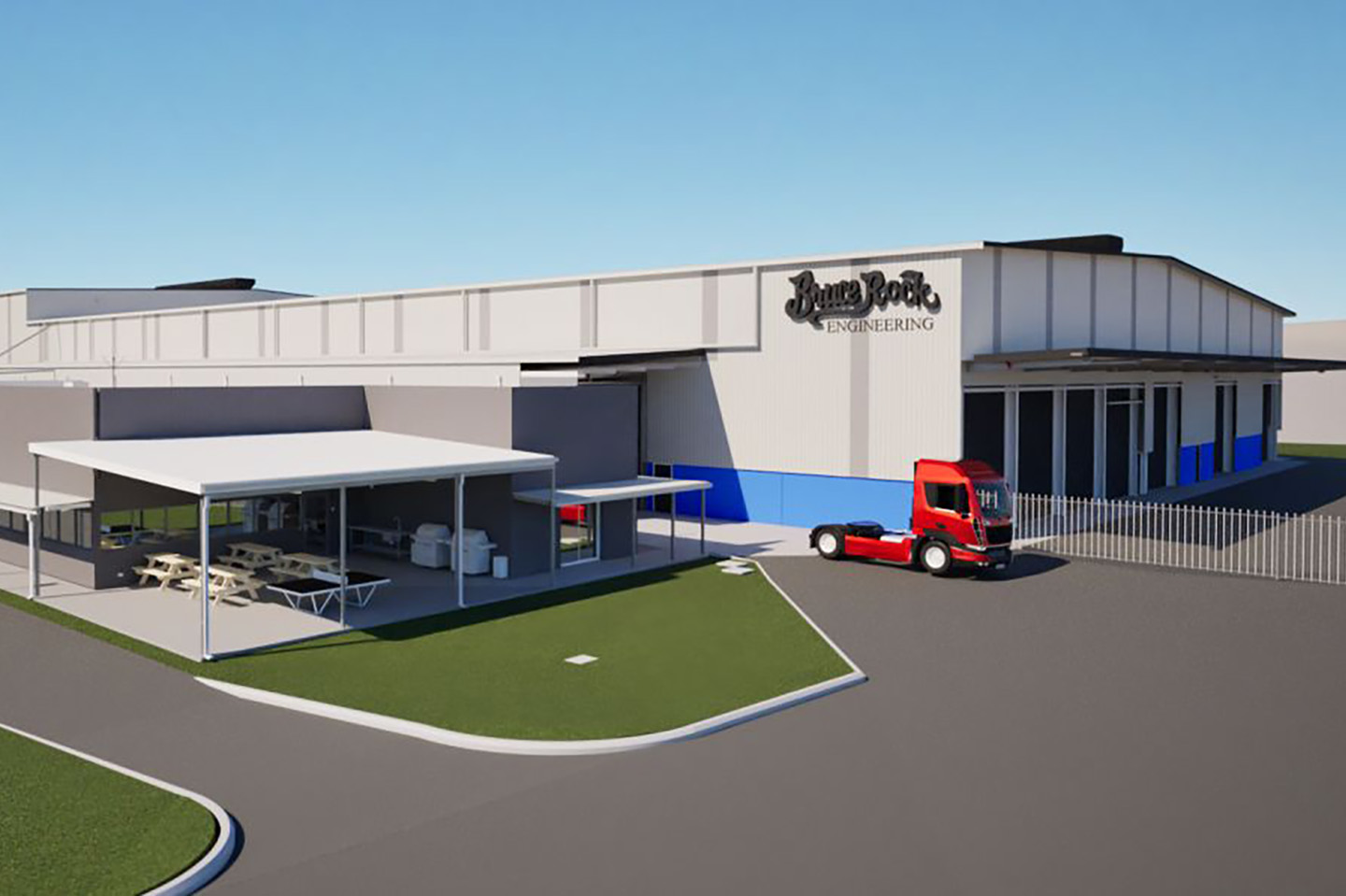
Bruce Rock Engineering has greenlit a $10 million expansion at its Wheatbelt trailer manufacturing site which will make the company’s local footprint six times larger.
The expansion will add 5,000sqm of floorspace, a new office building, and a 12-metre, 2,500-tonne press brake, reportedly the largest in Australia.
Bruce Rock Engineering plans to have the build finished early next year.
In a statement upon announcing the expansion, the company said it was proud to be investing in its hometown.
“At Bruce Rock Engineering, we’re proud of where we’ve come from and committed to where we’re going,” a company spokesperson said.
“Bruce Rock is home. It’s where we’ve built our business, our people and our reputation over more than four decades, and we’re proud to continue manufacturing here in the Wheatbelt.
“The project represents a long-term investment in our people, our community, and the future of regional manufacturing, while creating the capability and infrastructure to support the next chapter of Bruce Rock Engineering.
“Bruce Rock is where we started. It’s where we’re continuing to build.”
The company was founded by the Verhoogt family in Bruce Rock in 1980 and has kept its hometown facility despite significant statewide growth in the past decade.
BRE expanded into metals manufacturing in the 2000s via establishment of its Transbeam subsidiary, now domiciled at a 16,000sqm factory in Forrestfield.
It has also bolted on a tyre wholesaling arm, Bruce Rock Tyres, and in July this year acquired Kalgoorlie-based fire protection systems manufacturer Quitfire.
Its core business has grown naturally and via acquisitions, building a site in Port Hedland, buying D-Trans Motor Body Builders to establish a presence in Geraldton, and setting up sales offices in New South Wales and Queensland.
The company employs more than 400 people and counts close to every major trucking firm operating in WA as a customer.
That staff count has grown from about 60 in 2015, and 200 in 2021.
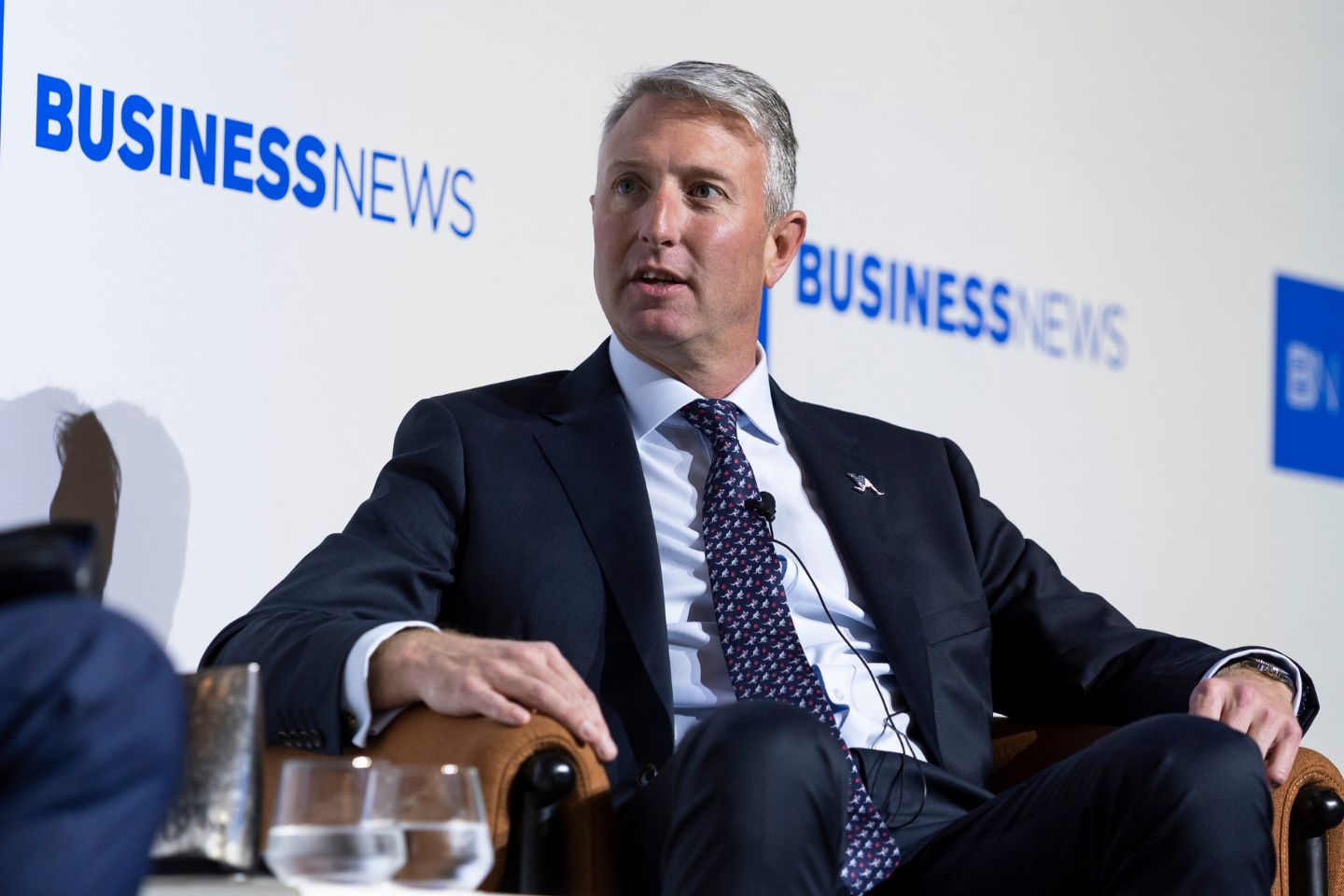
A multi-billion-dollar local defence pipeline has driven a “paradigm shift” in how Austal views selling its US arm, as South Korean defence giant Hanwha conducts due diligence for the $1.8 billion bid.

BlackRock High Yield V.I. Fund Q2 2026 Commentary

Earnings call transcript: Kina Securities posts softer H1 2026 growth as stock slips


Seeking Alpha’s transcripts team is responsible for the development of all of our transcript-related projects. We currently publish thousands of quarterly earnings calls per quarter on our site and are continuing to grow and expand our coverage. The purpose of this profile is to allow us to share with our readers new transcript-related developments. Thanks, SA Transcripts Team

DICK'S Sporting Goods: A 31% Selloff Was Too Much


Earnings call transcript: Liontown lifts FY 2026 profit on record revenue, shares rise

Rose Zhang found what she was looking for at FM Championship

Scientists Create the Littlest Big Bang to Study the Universe’s Origins

Dividend Announcements: August 22-28, 2026





-

 Crypto World5 days ago
SpaceX stock could rise 75% to $240, JPMorgan says
-

 Fashion2 days ago
Weekend Open Thread: Maeve – Corporette.com
-

 Crypto World3 days ago
Bitcoin’s 22% rally now needs real demand to outlast Treasury liquidity boost
-

 Crypto World5 days ago
Warsh Jackson Hole keynote puts financial innovation first
-

 Crypto World6 days ago
A $30 Billion AI Fund Implodes, Now the SEC Is Investigating Wall Street’s Role
-

 Business3 days ago
Salesforce Stock Soars 19% as Blowout Earnings and Agentforce AI Growth Silence Software Skeptics
-

 Crypto World5 days ago
Did Trump Just Move SpaceX Stock With One Truth Social Post?
-

 Crypto World4 days ago
Elon Musk Grok Bot Promise: We Will Make You Whole if AI Loses Your Money
-

 Business5 days ago
Walmart takes aim at younger shoppers with new fashion brand
-
 NewsBeat4 days ago
Lindsay Clancy jury braces for closing arguments as judge tells court: ‘You’ve heard all the evidence’ – Live updates
-

 Business3 days ago
Apple Confirms September 9 Keynote and Reveals Its Full Pre-Order Schedule
-

 Crypto World2 days ago
Bitcoin price tests $82K resistance as Brandt stays long
-
 Business5 days ago
Thailand’s Eastern Economic Corridor Capital City (EECiti): Key Developments and Investment Opportunities
-

 Crypto World4 days ago
NVIDIA revenue hits $96.2B as AI demand doubles
-

 Business6 days ago
Moderna CEO warns China is pouring state money into mRNA technology
-

 Business2 days ago
Onto Innovation Stock: AI’s Next Bottleneck Is Yield (NYSE:ONTO)
-

 Business6 days ago
NVIDIA Stock Drops Nearly 2 Percent to $210 on Seventh Losing Day Ahead of Critical AI Earnings
-

 Business2 days ago
iPhone 18 Pro Pre-Orders Could Shift to Saturday as Apple Reportedly Avoids September 11 Anniversary
-
 Crypto World7 days ago
$92 Billion Nvidia Earnings Could Make or Break the AI Trade
-

 NewsBeat5 days ago
Trump’s trade truce with China faces test with Iran effort
You must be logged in to post a comment Login