




Connect with us
DAPA Banner
DAPA Coin
DAPA
COIN PAYMENT ASSET
PRIVACY · BLOCKDAG · HOMOMORPHIC ENCRYPTION · RUST
ElGamal Encrypted MINE DAPA
🚫 GENESIS SOLD OUT
DAPAPAY COMING

Business

Etsy, Inc.: GMS And Inventory-Free Model Makes Us Re-Evaluate

Published

on

Etsy, Inc.: GMS And Inventory-Free Model Makes Us Re-Evaluate
Continue Reading
Click to comment

You must be logged in to post a comment Login

Leave a Reply

Business

The hive mind is the most expensive employee a brand never hired

Published

on

The hive mind is the most expensive employee a brand never hired

Somewhere in a Vancouver boardroom, a team approved a drum.

The instrument that Lululemon wheeled onto the Great Wall of China last month, framed by rows of contented yogis and a hired celebrity, turned out to be Japanese, or near enough that those who analysed the footage online could make the case. The timing is unfortunate, with Beijing and Tokyo trading accusations over Taiwan, and the Chinese internet primed to interpret any slight as a national one. Lululemon has since apologised to the celebrity and the public, and attempted to erase the campaign from existence, admitting that it suffered “limitations in [their] professional knowledge”.

That phrase deserves pause. It is the most honest thing any brand has said in this situation in years. Nobody in the room knew enough to see the problem, but, fundamentally, the room was built so that nobody could have.

This is a failure that no amount of talent inside a brand’s office can fix, because it’s a failure not of competence but instead almost certainly of composition. A capable in-house team shares a language, a set of reflexes and a mutual understanding of what is acceptable. The more cohesive a team becomes, the more efficiently it navigates. As such, those instead best placed to analyse whether a message, narrative or a campaign reads as intended – several zones away, to an audience carrying a history no one in the room had considered – are precisely those not invited to the meeting.

The recent record is not short. The most instructive case belongs to fellow Canadian apparel manufacturer Arc’teryx – a brand whose entire identity rests on reverence for the wild – and who, in September, set off an enormous fireworks display across a Tibetan ridge at eighteen thousand feet. In an attempt to honour the landscape, they were instead accused of desecrating it. Over 90 million engaged with the government’s announcement of an investigation into the stunt, and China’s Advertising Association concluded the stunt had destroyed years of trust in the firm’s eco credentials. A company that sells itself on protecting nature was seen to set light to it, and nobody had registered the contradiction, because everybody believed the same flattering thing about what they were doing.

Advertisement

As recently as last month, Starbucks released a range of “Tank” tumblers in South Korea – the company’s third largest market – on the anniversary of the Gwangju uprising, when in 1980, paratroopers crushed pro-democracy protests against military strongman Chun Doo-hwan. Prada spent much of last year explaining sandals it had paraded down a runway that were, to any Indian eye, the Kolhapuri design that artisans in Maharashtra and Karnataka have made for centuries, credited to no one. None of these was the work of fools. Each was formed by a clever and well-intentioned team – certain of a good idea – with no one whose job was to flinch first.

What the external specialist sells, then, is not creativity – of this, the internal team usually has a surplus. It is the deliberate importation of a missing perspective. Those who have, by nature of the role, seen a mistranslation turn into a scandal and whose wider market knowledge can predict how a celebration to one may read as provocation to another.

Companies pay lawyers to read contracts and auditors to verify accounts precisely because the downside of skipping them is so much larger than the fee. Cultural risk is no different, except brands have not yet naturally learned to budget for it.

Lululemon will likely survive its version: China is its fastest-growing market and accounts for a sixth of global sales, and the misjudged drum might even be forgotten by Autumn. But surviving a mistake is not the same as avoiding one, and the firms that keep treating cultural risk as a detail are the ones who end up paying for it.

Advertisement

Alex Gilmore

Alex is Head of Digital at Farrant Group, a strategic communications agency in London and Dubai. He advises brands, family offices and high-profile principals on reputation and narrative in unfamiliar and challenging markets.

Advertisement
Continue Reading

Business

Sterling today: Pound steadies near two-month low as political risks mount

Published

on


Sterling today: Pound steadies near two-month low as political risks mount

Continue Reading

Business

Northern Small Cap Core Fund Q1 2026 Commentary (NSGRX)

Published

on

Invesco AMT-Free Municipal Income Fund Q4 2025 Commentary (OPTAX)

Northern Trust Asset Management is a global investment manager that helps investors navigate changing market environments in efforts to realize their long-term objectives.

Entrusted with $1.2 trillion in assets under management as of March 31, 2024, we understand that investing ultimately serves a greater purpose and believe investors should be compensated for the risks they take — in all market environments and any investment strategy. That’s why we combine robust capital markets research, expert portfolio construction and comprehensive risk management in an effort to craft innovative and efficient solutions that seek to deliver targeted investment outcomes.

As engaged contributors to our communities, we consider it a great privilege to serve our investors and our communities with integrity, respect and transparency.

Northern Trust Asset Management is composed of Northern Trust Investments, Inc., Northern Trust Global Investments Limited, Northern Trust Fund Managers (Ireland) Limited, Northern Trust Global Investments Japan, K.K., NT Global Advisors, Inc., 50 South Capital Advisors, LLC, Northern Trust Asset Management Australia Pty Ltd, and investment personnel of The Northern Trust Company of Hong Kong Limited and The Northern Trust Company. Note: This account is not managed or monitored by Northern Trust Asset Management, and any messages sent via Seeking Alpha will not receive a response. For inquiries or communication, please use Northern Trust Asset Management’s official channels.

Continue Reading

Business

North East lithium extractor joins forces with college to build technical skills

Published

on

Business Live

Weardale Lithium secured grant funding earlier this year and is looking to scale up its operations

Weardale Lithium has joined forces with New College Durham.

From left: Paul Bradley, chief financial officer; Sharon Bennett, assistant principal (Advanced Manufacturing and Partnerships); Stewart Dickson, managing director of Weardale Lithium, Alison Maynard, deputy principal of New College Durham.(Image: New College Durham)

The company behind plans to draw valuable lithium deposits from underneath the County Durham countryside has partnered with a college to create the skills necessary for the vision.

Weardale Lithium hopes to use lithium carbonate-rich geothermal waters in the North Pennine Ore Field to extract the material which is critical to battery manufacturing and energy storage. The project – which has secured grant funding from the Government’s Drive35 competition – could create jobs that will require technical skills.

That has led to a partnership with New College Durham, which is already active in the area following the launch of its National Battery Training & Skills Academy (NBTSA) which delivers specialist training in battery technology and prepares learners for careers in electric vehicles, energy storage and advanced manufacturing.

Alison Maynard, deputy principal of New College Durham, said: “This partnership with Weardale Lithium marks an important milestone for both our students and the wider regional economy. By working in close collaboration with industry, we are equipping learners with the advanced technical knowledge and specialist skills required to succeed in a rapidly evolving energy sector, while supporting the development of sustainable, high-value careers across the North East.

Advertisement

“The strength of our curriculum, the depth of our employer partnerships, and our clear focus on future workforce needs have recently been recognised at a national level. We are extremely proud to have been confirmed as one of only four Technical Excellence Colleges for Advanced Manufacturing in the country, an achievement that reflects both the quality of our provision and our commitment to delivering skills that align with industry demand.”

Planning approval was granted last year for Weardale Lithium’s demonstration plant at its Eastgate cement works site. The firm is now looking to scale up its operation and will work with New College Durham on training programmes.

Stewart Dickson, managing director of Weardale Lithium, added: “By connecting education, research and industry, this partnership will play a vital role in ensuring the North East workforce is equipped with the advanced skills needed to support the clean energy sector’s rapid expansion. With significant progress being made locally, including our planned lithium extraction projects in County Durham, the region is quickly emerging as a key contributor to the UK’s critical minerals and battery supply chain.

“Through this collaboration, we are not only responding to immediate skills demands but also helping to build a sustainable talent pipeline that aligns with national priorities around energy security and the development of domestic lithium production. By aligning education with cutting-edge innovation and industrial growth, we are positioning the North East and its workforce at the forefront of the UK’s transition to a low-carbon, high-value economy.”

Advertisement
Continue Reading

Business

Italy’s Meloni says Trump ’totally invented’ story that she begged him for photo

Published

on

Italy’s Meloni says Trump ’totally invented’ story that she begged him for photo


Italy’s Meloni says Trump ’totally invented’ story that she begged him for photo

Continue Reading

Business

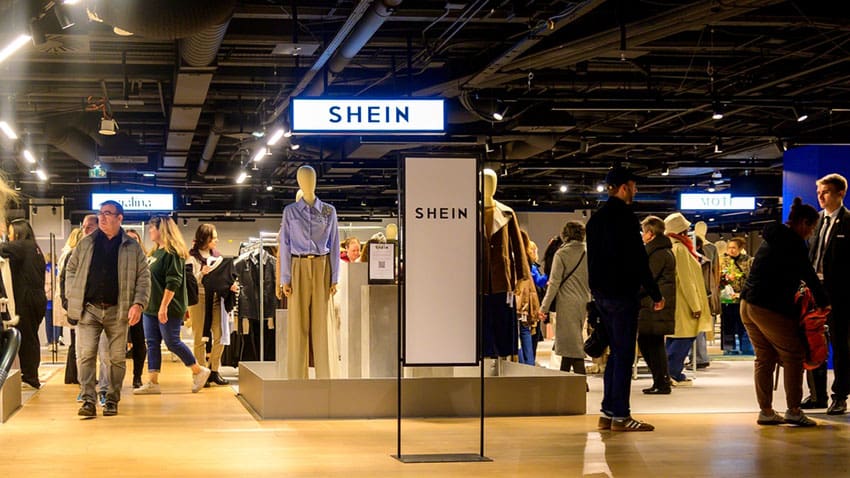
Tax crackdown on Shein and Temu could be fast-tracked as retailers turn up the heat

Published

on

Tax crackdown on Shein and Temu could be fast-tracked as retailers turn up the heat

Ministers are weighing up whether parts of a clampdown on the low-value imports that power Shein and Temu could arrive sooner than planned, after sustained lobbying from British retailers who say the current timetable leaves the high street exposed.

The government confirmed last year that reform of the so-called de minimis regime, which lets goods worth less than £135 enter the UK without customs duties, would not be fully in place until 2029 because of the complexity of building a new customs system from scratch. Now, officials are understood to be examining whether elements of that reform can be brought forward while still keeping goods flowing freely at the border.

The consultation on the design of a replacement system closed in early March, and ministers are still working through the responses. For retailers who have spent the better part of two years arguing that the relief tilts the pitch against them, even that assessment period feels too slow.

The de minimis exemption has become one of the defining battlegrounds in the contest between established British retailers and the fast-growing overseas platforms snapping at their heels. Shein and Temu, both founded in China, have expanded rapidly in Britain by shipping low-cost goods directly from manufacturers to shoppers, sidestepping the duties and overheads that domestic firms shoulder when they import through conventional supply chains.

Names including Sainsbury’s, Currys and AO World have argued that the carve-out hands overseas rivals a structural advantage. It is an argument that has steadily gained volume, with UK retailers calling on the government to end China’s tax-free advantage and warning that the playing field has been tilted for too long.

Advertisement

The government has already said it intends to abolish the exemption, a position set out when Rachel Reeves moved to review the import tax loophole in its crackdown on cheap overseas goods. But it has insisted that a phased transition is needed to avoid disruption at ports and customs checkpoints. Officials say a new system for collecting duties on low-value parcels has to be built, in their words, “from the ground up” to cope with the sheer volume of packages arriving in the country, and that businesses moving and selling food will also need time to prepare. The full design is set out in the Treasury’s consultation on reforming the customs treatment of low-value imports.

The timetable has frustrated retailers, who have stepped up their lobbying in recent months. Last week Andrew Murphy, chief executive of toy seller The Entertainer, wrote to the government urging ministers to accelerate the reforms, describing the current schedule as “unacceptable”.

Industry groups have also warned that Britain risks becoming an outlier as other major economies move faster. The United States scrapped its own low-value import exemption last year, while the European Union is preparing to introduce a temporary customs duty on low-value parcels from next month before bringing in wider reforms, a shift confirmed by the European Commission’s taxation and customs directorate. The fear among executives is that, as doors close elsewhere, more low-cost and potentially unsafe goods will simply be redirected towards the UK, a concern that has already prompted warnings that delay risks turning Britain into a ‘dumping ground’.

The Treasury, for its part, is holding the line on both the destination and the pace. “The rapid growth in low-value imports is hurting our high streets and retailers,” it said. “We are removing the customs duty relief for low-value imports and reforming the way these goods are declared into the UK to ensure all goods are appropriately controlled.

Advertisement

“This is a significant reform which backs our businesses to compete and grow, controls safety and flow of goods at our border, and keeps the UK in line with our international partners.”

For Britain’s retailers, the principle is now settled. The fight, increasingly, is over the clock.


Jamie Young

Jamie Young

Jamie is Senior Reporter at Business Matters, bringing over a decade of experience in UK SME business reporting.
Jamie holds a degree in Business Administration and regularly participates in industry conferences and workshops.

When not reporting on the latest business developments, Jamie is passionate about mentoring up-and-coming journalists and entrepreneurs to inspire the next generation of business leaders.

Advertisement

Continue Reading

Business

Intel: Priced For Perfection Amid Game-Changing Apple Deal

Published

on

Intel: Priced For Perfection Amid Game-Changing Apple Deal

Intel: Priced For Perfection Amid Game-Changing Apple Deal

Continue Reading

Business

Americast – Elon Musk the trillionaire… does the global economy need him to succeed?

Published

on

Americast - Has Jeff Bezos brought down the Washington Post?

Available for over a year

The US economy backs Elon Musk’s vision for sending people to Mars, the moon and beyond with SpaceX. Elon Musk’s rocket, telecommunications and artificial intelligence company SpaceX has listed on the Nasdaq stock exchange with a value of $2.2 trillion; making him the world’s first trillionaire in the process. Other AI companies, including Open AI and Anthropic have plans to follow suit but what does that mean for the US economy and global financial stability?
In this episode, Justin speaks to Ryan Mac – an investigative technology reporter for the New York Times who has extensive experience covering Elon Musk and other leaders in the AI field. SpaceX’s public valuation has made millionaires of many of its past and current employees and generated around $85 billion for the company; money that Elon Musk says is essential to fulfill the company’s plans to build bases on the Moon, put data centres into orbit and send human beings to Mars. But what happens if those plans remain unfulfilled?
As more companies offer shares to investors and the general public, Justin and Ryan explore whether America is gambling on the promise of AI? And is the US economy becoming dangerously reliant on one industry?

HOSTS:
• Justin Webb, Radio 4 presenter

GUEST:
• Ryan Mac – New York Times investigative technology correspondent

Advertisement

GET IN TOUCH:
• Join our online community: https://discord.gg/qSrxqNcmRB
• Send us a message or voice note via WhatsApp to +44 330 123 9480
• Email Americast@bbc.co.uk
• Or use #Americast

This episode was made by Tom Gillett, Grace Reeve, Alix Pickles and Purvee Pattni. The technical producer was Ben Andrews. The series producer is Purvee Pattni. The senior news editor is Sam Bonham.

If you want to be notified every time we publish a new episode, please subscribe to us on BBC Sounds by hitting the subscribe button on the app.

You can now listen to Americast on a smart speaker. If you want to listen, just say “Ask BBC Sounds to play Americast”. It works on most smart speakers.

Advertisement

US Election Unspun: Sign up for Anthony’s BBC newsletter: https://www.bbc.co.uk/news/world-us-canada-68093155

Americast is part of the BBC News Podcasts family of podcasts. The team that makes Americast also makes lots of other podcasts, including Newscast. If you enjoy Americast (and if you’re reading this then you hopefully do), then we think that you will enjoy some of our other pods too. See links below.

Newscast: https://www.bbc.co.uk/sounds/series/p05299nl
Top Comment: BBC Sounds – Top Comment – Available Episodes
Radical: https://www.bbc.co.uk/sounds/brand/p0gg4k6r
The Global Story: https://www.bbc.co.uk/sounds/brand/w13xtvsd

Programme Website

Advertisement
Continue Reading

Business

Nifty IT crashes 6% to 3-year low as Infosys, HCL Tech, other IT stocks crash up to 9%. Time to buy the dip?

Published

on

Nifty IT crashes 6% to 3-year low as Infosys, HCL Tech, other IT stocks crash up to 9%. Time to buy the dip?
Shares of IT majors such as Infosys, HCLTech, TCS and others plunged up to 9% on Friday, dragging the Nifty IT index down more than 6% to its lowest level in over three years, as Accenture’s guidance cut rattled investor sentiment.

The Nifty IT index plunged to 26,634.50 on Friday, the lowest level seen by the sectoral index since April 2023. It is currently the top sectoral loser on the market today. Infosys shares led losses, crashing nearly 9%, while those of TCS, Mphasis, LTI Mindtree, Tech Mahindra, Persistent Systems and HCL Tech tumbled 4-6%.

This follows an 11% crash in Accenture’s share price on Wall Street after the consulting major revised its FY26 revenue growth guidance to 3-4%, compared with its earlier outlook of 3-5%. The company also projected fourth-quarter revenue of $17.75-18.4 billion, falling below Street expectations of $18.47 billion, according to LSEG data.

Accenture’s softer outlook may have retriggered worries that enterprises remain cautious on discretionary spending related to IT consulting and digital transformation projects, even as investments in artificial intelligence and cybersecurity continue. Indian IT companies derive a major portion of their revenue from the US economy. Hence, worries around reduced discretionary spending may have led to the sharp selloff in the stocks on Dalal Street.

Advertisement

Also read: TCS, Infosys, Wipro, other IT stocks crash up to 9% as Accenture lowers FY26 guidance

Should you buy the dip in IT stocks?

The sharp sell-off in Accenture overnight is the kind of move that confirms rather than introduces what has been a slowly building structural reality, said Harshal Dasani, Business head at INVasset PMS. “The Nifty IT index falling 6% is the predictable read-through. The valuation story is now the more uncomfortable conversation. Indian IT services trading at 16-18 times earnings with single-digit revenue growth expectations is expensive, not cheap,” he added.


The honest framing is that traditional IT services is increasingly looking like a sunset business in its current form, according to Dasani. “The stance on Indian IT remains firmly cautious. Selective interest stays reserved for credible AI-native and hyperscaler-aligned firms; the broader sector deserves significantly lower multiple expectations,” he added.
VK Vijayakumar, Chief Investment Strategist at Geojit Investments, however differed in his opinion, saying that buying in IT stocks can emerge at lower levels since valuations are becoming attractive after the sharp correction.Also read: Why Accenture’s warning sparked a Rs 1.35 lakh crore meltdown for TCS, Infosys, other IT stocks

Key technical levels to watch out for Nifty IT

The Nifty IT Index plunged over 6%, breaking below its previous swing low of 27,078 recorded on May 14. Technically, the index is trading below its key short and long-term moving averages, said Sudeep Shah, Head of Technical and Derivatives Research at SBI Securities.

He highlighted that the index’s RSI has slipped below 40, signaling increasing bearish momentum, while the DI- has crossed above DI+ on the ADX indicator, highlighting strong seller dominance. The 27,450–27,500 zone is expected to act as a key resistance and the trend is likely to remain bearish as long as the index stays below this zone, according to the analyst.

Advertisement

Also read: Why is market falling today?

(With inputs from agencies)

(Disclaimer: Recommendations, suggestions, views and opinions given by the experts are their own. These do not represent the views of The Economic Times)

Advertisement
Continue Reading

Business

Tavern flagged at The Bakery site in Northbridge

Published

on

Tavern flagged at The Bakery site in Northbridge

A site that once housed live performance venue, known as The Bakery, has been earmarked for a new 800-person tavern.

Continue Reading

Trending

Copyright © 2025