
Connect with us

NewsBeat

When are EFL fixtures released? Dates and times for Championship, League One and Two

Published

on

Daily Mirror

Sky has upgraded its Ultimate TV and Sky Sports bundle to now include HBO Max, Netflix, Disney+, discovery+ and Hayu, as well as 135 channels and full Sky coverage of the Premier League and EFL.

Sky broadcasts more than 1,400 live matches across the Premier League, EFL and more with at least 215 live from the top flight alongside Formula 1, darts and golf.

Source link

Advertisement
Continue Reading
Click to comment

You must be logged in to post a comment Login

Leave a Reply

NewsBeat

Arrest after alleged firearm ‘discharge’ outside York Mosque

Published

on

Arrest after alleged firearm 'discharge' outside York Mosque

The incident happened outside York Mosque and Islamic Centre on Bull Lane at 2.19am this morning.

A 44-year-old man from York, described by police as a white UK national, was arrested following the incident.

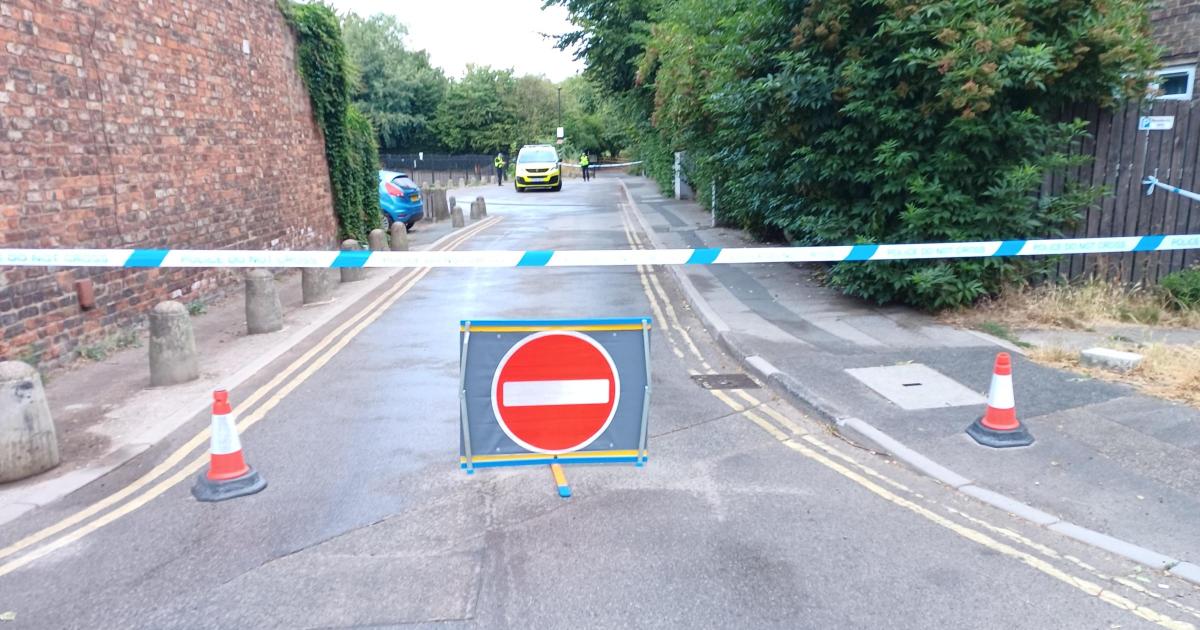
A police cordon at York Mosque and Islamic CentreA police guard is behind a cordon at the entrance to the York Mosque and Islamic Centre this morning (Thursday, July 30) (Image: Kevin Glenton)

No one was injured, and police said the weapon is alleged to have been an air rifle.

Police said the man left the scene in a silver vehicle, which was traced by officers, leading to his arrest.

Advertisement

He remains in custody for questioning.

A cordon has been raised at the entrance to the mosque and is under police guard this morning.

A North Yorkshire Police spokesperson said: “It is too early to say what may have been the motivation behind this disturbing incident, but our Muslim community in York can be reassured that we are doing everything we can to establish the full circumstances.

“We are also providing high-visibility patrols in the vicinity of York Mosque as people attend for prayer.

Advertisement

“Our officers are due to meet with the Imam regarding the incident.”

The Lawrence Street entrance to Bull Lane, YorkBull Lane is off Lawrence Street in York (Image: Kevin Glenton)

Police are appealing for witnesses or anyone with relevant CCTV or dashcam footage to contact them.

Anyone with information is asked to call North Yorkshire Police on 101, quoting reference number 12260145924.

Advertisement

Source link

Continue Reading

NewsBeat

Cooler weather and potential rain move into the French region torched by wildfires

Published

on

Cooler weather and potential rain move into the French region torched by wildfires

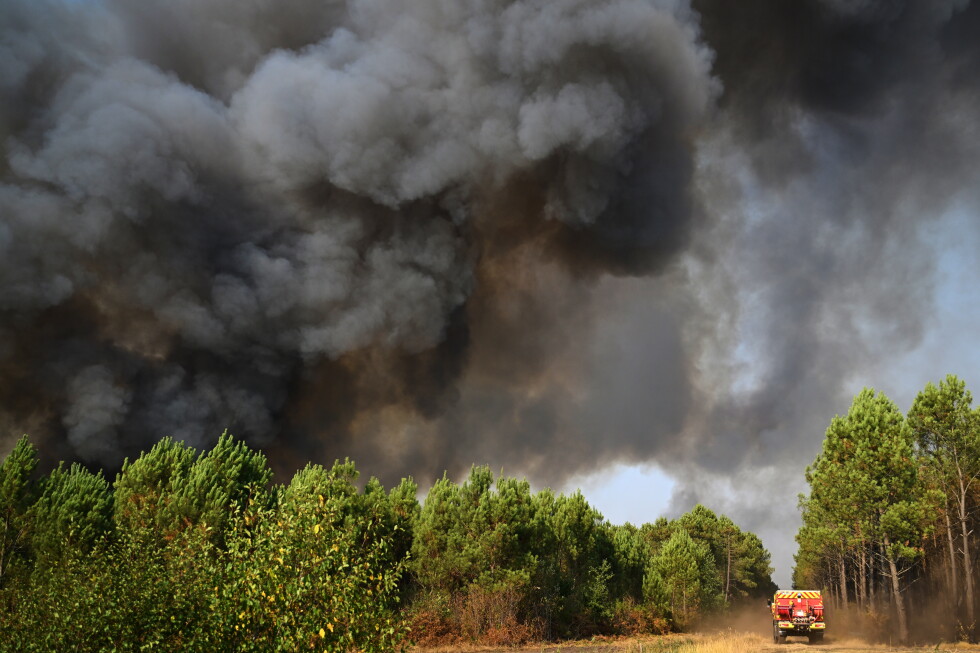
LEGE-CAP FERRET, France (AP) — Higher humidity, cooler temperatures and a forecast for rain raised hopes of relief Thursday for a parched portion of southwestern France engulfed by wildfires that have charred an area four times the size of Paris in recent weeks.

With moisture moving in from the Atlantic Ocean coast, national weather service Meteo France forecast light rain in the town of Lège-Cap-Ferret, on a peninsula that’s been a leading edge of the devastated region.

Local officials reported a “rather calm” night, with a fire that has not grown beyond the 42,000 hectares (about 162 sq. miles) already affected. Fire crews remained at “total mobilization” with 2,200 firefighters and over 20 aircraft.

Humidity that reached 80% overnight was expected to drop by midday, authorities said, though some rainfall was expected along the coast that “could reach the fire zone.”

Advertisement

Temperatures that peaked around 40 Celsius (104 Fahrenheit) a day earlier were set to drop Thursday, topping out at 27 C (80 F) along the coast. An “orange” heat wave alert — the second-highest level after “red” — was lifted shortly before dawn.

The fires in the Bordeaux wine-growing, forested and tourism-heavy region are among the blazes that have swept across pockets of southern Europe in recent weeks, including Spain and Greece.

On Wednesday, authorities said three firefighters had died on the Greek island on Crete, as the wildfire emergency stretched from the Atlantic coast to the eastern Mediterranean.

At the peak of the evacuations, a third of a million people were driven from homes and vacation sites in France and Spain.

Advertisement

Source link

Advertisement
Continue Reading

NewsBeat

Man praised for ‘petty revenge’ after neighbour parks in his driveway

Published

on

Daily Mirror

A man has been applauded for his ‘petty revenge’ on an entitled neighbour who kept parking their drive in his driveway – and it inspired others to use similar tactics

A homeowner finally got his own back on a neighbour who kept parking in his driveway – and people are calling it the perfect dose of “petty revenge”. He explained how his neighbour had been using his driveway for months, despite being asked several times to stop. Every time he confronted him, the neighbour would brush it off with the excuse: “It’s just for a sec.”

Advertisement

Fed up with being ignored, the homeowner decided enough was enough. Sharing his story on Reddit, he explained that he arrived home one Friday to find his neighbour’s car parked on his driveway yet again. Normally, he’d wait for him to move it or ask to shift it. But on this occasion, the timing couldn’t have been better. The man was just about to leave town for the weekend.

Instead of arguing, he quietly pulled his own car in behind the neighbour’s vehicle, completely blocking it in.

He then locked up his house, grabbed his bags and headed off, leaving the neighbour with no way of getting his car out. A few hours later, his phone started ringing.

The man said he was met with several missed calls, followed by a text message reading: “Dude, WTF??”

Advertisement

Rather than replying, he ignored every message and enjoyed the rest of his weekend away.

Looking back on it, he joked: “Hope he had a relaxing weekend to think things through.”

Revenge stories

His story quickly amused social media users, with many praising his response after months of frustration.

One person said: “A lady blocked my driveway the other day and left her flashers on to indicate ‘I’ll just be a minute’.

Advertisement

“I left from another area of my property to go to the store, 30 minutes later she was still parked there with the windows down. I dragged out the hose and sprinkler to water the flowers aimed directly at the open window.”

Another user added: “My old little old lady landlord used to hire a nine year old to throw a rock through the back window of drivers who parked in her spaces in Queens.”

A third user said: “Love it. Same happened to me many years ago. I parked my beat up old pickup truck behind his car. I parked an inch from his bumper. Then took off on a two week holiday.

“This was before smartphones. I knew my truck couldn’t be moved without my permission. I knew the cops would not get involved.

Advertisement

“The guy was so p***ed. He couldn’t understand. When you mess with the bull sometimes you get the horns.”


Source link

Continue Reading

NewsBeat

Wales breaking news plus weather and traffic updates (Thursday, July 30)

Published

on

Wales Online

Anyone wandering down one of the main roads in Pontypridd town centre 10 days ago would have seen a blank wall on the gable end of a popular café called Rhi’s on the corner of Taff Street.

Then seven days ago there would have been scaffolding covering the site, and if they had returned on Wednesday they would have been amazed – the scaffolding is down and the most mesmerising of murals has been revealed.

The site which has been intriguing passers-by for days has been transformed from a boring cream wall into a mural celebrating one of the town’s most prolific, yet little celebrated, music icons – a young woman called Morfydd Owen. Full story here

Artist Tee2Sugars outside the new mural in Pontypridd town centre(Image: John Myers)

Advertisement

Source link

Continue Reading

NewsBeat

Where have all the wasps gone this summer?

Published

on

Where have all the wasps gone this summer?

Summer can be lovely – until a wasp turns up. Whether they present as an irritating picnic visitor or an uninvited loft guest, common social wasps are as much a part of our summer as festivals, sun cream and the growing despair of how to entertain children who’ve forgotten how to be bored.

But summer 2026 is breaking the norm, and there don’t seem to be many wasps about. As a wasp biologist, I’ve noticed it acutely, because my students need wasps for their experiments, and we simply can’t find them.

A second sign that something is wrong is the absence of wasp stories in the media. Wasps tend to be more active in warmer weather. Their colonies grow faster and bigger, and they end up making news headlines by bothering humans. This time last year – also a warm spring and hot summer – the media airwaves were filled with “plagues of wasps” stories. Now, even professional pest-controllers tell me it’s a quiet year with very few requests to remove wasp nests.

Admittedly, these are anecdotes not data: the Big Wasp Survey – the only national
wasp monitoring survey – is yet to start sampling this summer. But the signs are not good.

Advertisement

If data back this up, their absence worries me greatly because – love them or hate them – wasps are important in ecosystems as pest-controllers, pollinators and decomposers.

So what’s happening?

Spring started well for wasps. In the warm, dry spring a glut of glorious foundresses – new queens – emerged from hibernation to start their nests alone, carrying out all the nest building, egg laying, foraging and brood rearing. This nest-founding period is a risky time. If a new queen survives until her first brood emerges as adult workers, though, then the odds are in her favour as she no longer needs to undertake risky foraging.

But spring 2026 was strange: the warm, dry start should have been good. Warm, dry spring weather improves a nest’s chance of survival as it ensures a good nectar supply for the queen to develop her ovaries and good prey populations for her to feed the brood. But we experienced unprecedented heat for the time of year, punctuated by cold, damp days and followed by unexpectedly chilly nights.

Such weather extremes may have caused queens to abandon their nests or die, reducing the initial spring queen bounty to a more modest population.

Advertisement
Spring weather can make or break a wasp nest.
Stefan_Sutka/Shutterstock

Temperature tolerance

And then came the heatwave. And another. And another. Some insects may benefit
from this. Wildlife charity Butterfly Conservation is hoping 2026 could be a “bumper summer of butterflies” because warm, dry days mean uninterrupted foraging, mating and egg-laying.

But all insects have a thermal tolerance called critical thermal maximum (CTmax). If their CTmax is exceeded, insects succumb to desiccation, muscle spasms and eventual stupor.

For honeybees, this is around 49°C – which might sound high, yet ground surfaces exceeded 50°C in the UK heatwaves this summer. But the temperature doesn’t need to reach an animal’s CTmax to affect their productivity and behaviour. For example, bumblebee cognition and foraging efficiency are impaired by heatwaves of 32°C.

Bumblebee Conservation Trust raised concerns that 2026 may exacerbate a declining trend in bumblebee populations as flowers wither and bees fail to forage effectively.

Advertisement

Wasps are thought to be quite resilient to extreme weather. They are one of the most successful invasive species around the globe. And as a social insect, their thermoregulation behaviour (such as wing fanning to cool the larvae) and nest architecture (which has insulating envelopes surrounding the brood combs) may help buffer any environmental perturbations.

Insects also have waxy molecules called cuticular hydrocarbons that coat their exoskeletons protecting them from desiccation. Social wasp cuticular hydrocarbons change structure in response to heat, better protecting them from desiccation in excessive heat.

Their varied diets should also buffer them from imbalances in prey populations. However, their CTmax may be lower than other social insects – at around 45°C – which may have made them especially vulnerable to the high ground temperatures of the 2026 heatwaves.

Why are the wasps so small?

There’s something else that I’ve noticed: the few wasps I’ve seen are rather small. The adult size of many insects is fixed during their development, depending on the quality and quantity of food they receive as larvae. Wasps don’t get bigger once they’ve pupated.

Advertisement

The first workers to emerge in spring are usually small because the queen is limited in how much food she can provide for them alone. But by early August, the foraging capacity of the colony has increased exponentially, brood are better fed and the emerging workers are substantially larger.

So why are we still seeing “spring-sized” wasps? It’s possible that limited diversity and abundance of prey may mean their nutrition is restricted. The problem may also be more directly linked to heat. Insect larvae reared at higher temperatures will develop faster and reach pupation at a smaller size.

Global warming is thought to explain the trend in social wasps shrinking in size over the last 100 years. We could be seeing this in real-time this year.

How can you help wasps?

Share your alfresco meal with a wasp. When it approaches, don’t flap it away. Watch to see what it wants. In the absence of wild prey, it might be desperate for some protein (your picnic ham) to feed her brood. In the absence of flowers for nectar, it might be in need of something sugary (some jam) for her own nutrition.

Advertisement

My research team would also like you to share your wasp observations with us, so that we can better understand these important insects. Snap a photo of her eating and submit your data to the Wasp Picnic Survey 2026: Ham or Jam?. Keep the observations coming all summer. The wasps (and wasp scientists) will thank you.

Source link

Advertisement
Continue Reading

NewsBeat

Woman died after gruesome accident saw her boiled alive in national park

Published

on

Daily Record

WARNING: DISTRESSING CONTENT Three friends were making their way home when a misstep caused them to fall into a pit of boiling water

An ordinary evening of fun took a dark twist as it became one of the most tragic accidents in Yellowstone National Park’s history.

Advertisement

Sara Hulpers, 20, and her two 18-year-old friends, Lance Buchi and Tyler Montague, were working as seasonal staff at the park in the summer of 2000 and were walking back home from swimming in the Firehole River with other friends that fateful day.

As they journeyed along their familiar route home, cutting through the Lower Geyser Basin and following a worn path used by locals with no official signage, they jumped into the small streams known to be safe.

Until the three of them misjudged one of the bodies of water. The friends believed they were jumping into a shallow freshet but instead plunged into the crust surrounding Cavern Springs, an off-limits feature known to reach temperatures as high as 87 degrees Celsius.

Lance and Tyler managed to keep their heads out of the water following the fall, and crawled out of the water on their own, while Sara had to be helped by the group of friends that was walking ahead of the trio, who had all returned after hearing their agonising cries.

Advertisement

In later reports, Lance’s family said he remembered feeling the ground beneath them was solid before he fell a second time while trying to escape the boiling water.

The damage was already catastrophic – the young woman had suffered third-degree burns all over her body, and heartbreakingly died the next day in a Salt Lake City burn unit.

The two surviving friends were airlifted to Idaho Falls and then to the University of Utah’s burn centre, both with burns ranging from 95% of their bodies. Their survival rate was low, but not impossible, said doctors, who estimated they had a 30-40% chance of making it through treatment, given the risks of infection since the boys had little uninjured skin left for grafting.

Advertisement

Tyler’s grandfather and former local weatherman, Bob Welti, was at the hospital at the early stages of treatment and called the situation the “saddest” he’d ever witnessed.

Both young men endured months of surgery and skin grafts before eventually being discharged, Tyler in November and Lance in December – the latter having lost 51 pounds during his hospital stay.

Hundreds gathered in Oroville, Washington, to mourn the loss of Sara, an exemplary student at Western Washington University, weeks away from a new scholarship award.

Advertisement

Friends who were by her side in the last days of her life spoke of her dedication while she was alive. Yuvia Storm, 21, was one of her friends from her time at Yellowstone, said: ”She was so happy. She told me I had to be the one to spread the word that she was excited about death. Tell them I had a wonderful life – no regrets.”

During the funeral service, her father sang songs he’d written about her, and friends and family decorated the auditorium with sunflowers.

Investigations followed, but found no evidence of alcohol as a leading factor in the tragedy, and officials added that it was the first Yellowstone hot spring fatality since 1988 – although since the time of this accident (in the year 2000), two further accidents took the lives of a 23-year-old in 2016 and a 70-year-old in 2022.

Advertisement

Source link

Continue Reading

NewsBeat

Australian watchdog accuses Telegram of failing to block extremist videos

Published

on

Australian watchdog accuses Telegram of failing to block extremist videos

MELBOURNE, Australia (AP) — Australia’s online safety watchdog has filed legal action against messaging app Telegram, saying the platform failed to remove extremist content including videos of white supremacist mass shootings in Buffalo, New York, and the New Zealand city of Christchurch as well as Islamic State group beheadings.

The United Arab Emirates-based app, which reports having 1 billion users worldwide, faces a fine of up to 54.6 million Australian dollars ($38 million) if convicted in the Australian Federal Court for “alleged failure to detect and remove pro-terror material,” eSafety Commissioner Julie Inman Grant said Thursday.

The civil action is a test of Australia’s 2021 law requiring tech platforms to work to keep illegal and pro-terrorism material off their networks.

Telegram denied the claims. “We reject these allegations and will contest them in court,” a spokesperson said in a written statement sent on Telegram.

Advertisement

Regulator says app must take responsibility

The platform is one of the world’s most popular messaging apps. The Australian regulator is taking issue with what’s shared in group chats of up to 200 people and channels with unlimited reach.

“This case concerns content linked to some of the most notorious acts of known extremist violence in recent history, including material associated with the Christchurch and Buffalo terror attacks,” Inman Grant said in a statement.

“We allege that this content remained accessible on the service long after Telegram had been put on notice,” she said.

Advertisement

The crimes cited by Inman Grant were ideologically-driven massacres performed for online audiences. Years later, digital artifacts of the massacres are still confounding regulators, who fear the power of videos and so-called manifestos to radicalize others.

In Buffalo in 2022, an American white supremacist livestreamed on Twitch part of a shooting at a supermarket in which he killed 10 Black people. He cited among his motivations the crimes of an Australian white supremacist who in 2019 livestreamed on Facebook a shooting at two Christchurch mosques, where he murdered 51 Muslim worshippers.

Telegram channels established after these and other hate-fueled crimes were populated by users who endorsed the killers and shared videos and other content from the massacres. The Australian watchdog’s claim, filed to the federal court Wednesday, said the unlimited broadcast size of Telegram channels meant the app must take responsibility for culling harmful material.

Telegram says it blocks ‘terrorist-related communities’

The messaging app’s statement said that the platform’s “extensive anti-terrorism efforts are well-documented,” adding a link to its published figures recording blocked content and channels. More than 150,000 “terrorist-related communities” have been blocked from the platform this year, according to the figures.

Advertisement

Inman Grant said eSafety began urging Telegram to comply with its own policies in March 2024, but the platform had been “non-responsive” for months.

The Australian official said that changed after France arrested Telegram’s Russian billionaire founder and CEO Pavel Durov in August 2024 over allegations that his platform was being used for illegal activity, including drug trafficking and the distribution of images of child sexual abuse. He was released after four days of questioning on bail of 5 million euros ($5.7 million).

Advertisement

Telegram had “become more compliant initially with us and with other regulators after France took action against the company,” Inman Grant said.

“They’ve still kept a permissive hosting environment for terrorist content,” she added.

The Australian court case also related to IS beheadings and other “horrific material used for propaganda and for radicalization,” she said.

“When platforms are alerted to terrorist content, they must act,” Inman Grant said.

Advertisement

On Wednesday, Russia’s Federal Security Service accused Durov of aiding what it called terrorist activities. The service also said it was adding Durov’s name to international wanted lists.

Telegram said in its statement supplied to The Associated Press on Thursday that it is committed to protecting user privacy and human rights such as freedom of speech and assembly. It said it had played a prominent role in pro-democracy movements around the world, including in Iran, Russia, Belarus, Myanmar and Hong Kong.

___

Graham-McLay reported from Wellington, New Zealand.

Advertisement

Source link

Advertisement
Continue Reading

NewsBeat

Is Netanyahu’s star waning in Washington? His latest meeting with Trump suggests it may be

Published

on

Is Netanyahu’s star waning in Washington? His latest meeting with Trump suggests it may be

Appearing increasingly isolated and weakened, Israeli prime minister Benjamin Netanyahu travelled to Washington this week, where he had a face-to-face meeting with Donald Trump – his eighth of the US president’s second term. Netanyahu is desperate to revive his image as the closest ally of the most powerful man in the world, but his star has fallen dramatically in Washington since his last trip.

The US president has problems of his own, so he clearly had little appetite for a photo opportunity with a deeply unpopular Israeli leader widely blamed for convincing him to launch an unwinnable war against a state few Americans saw as a serious threat.

The war has already cost at least US$37.5 billion (£28.2) billion, a 15-25% increase in gasoline prices, persistent inflation, and the deaths of 18 American servicemen.

After months seeking an invitation, Netanyahu got his opportunity while in Washington for the funeral of Senator Lindsey Graham, one of Israel’s staunchest supporters in Congress.

Advertisement

But even before the Israeli entourage departed for Washington, Trump was plainly irritated by Israeli briefings that Netanyahu intended to present him with intelligence concerning Iran’s deeply buried “Pickaxe Mountain” nuclear facility. In an interview with Fox News, Trump dismissed the idea that Netanyahu could tell him anything new and appeared to lend credence to the view that Israel was trying to push him towards a prolonged campaign in Iran.

Trump also brushed aside Israeli concerns about his intention to sell F-35 fighter jets to Turkey, warning Netanyahu not to try to influence his decision. He then lavished praise on Turkish president, Recep Tayyip Erdoğan and – in a dig at Netanyahu’s international isolation – added that “Turkey’s not a big fan of Israel, not a great fan of Bibi. But they’ve been great for me.”

The lack of fanfare surrounding this meeting underscores Trump’s frustration that he cannot extricate himself from their disastrous joint military enterprise in Iran. After being quietly ushered into the White House through a side entrance, there was no question-and-answer session with journalists – unlike many previous Trump-Netanyahu meetings. Only minimal information has been released by the White House, and Trump has been conspicuously discreet about what was discussed.

Netanyahu under pressure

With an election looming at the end of October, Netanyahu is trailing in the polls behind rival contender, Daid Eisenkot. So his immediate attempt to put a positive spin on the meeting suggested how desperate he is for Trump’s political endorsement.

Advertisement

Shortly after the talks concluded, Netanyahu released a video message declaring, without explanation, that: “This was one of the best conversations I have had with our friend, US President Donald Trump.”

Trump and his war may be unpopular in America, but the opposite is true in Israel. Trump remains extremely popular there. So Netanyahu’s association with him, and the sense of protection this symbolises in Israel, is a significant political asset.

The war is unpopular in the US because few Americans see Iran as a serious threat. Consequently, few care how the war ends so long as a ceasefire or peace deal brings prices down. In contrast, the criticism Netanyahu faces from his own voters is that Israel has not finished the job and that he been forced to agree to a ceasefire which his critics argue has only emboldened Iran.

Iran has become increasingly assertive in recent weeks.
EPA/Abedin Taherkenareh

As recently as last week, Netanyahu’s team would have been buoyed that Trump appeared to be on the cusp of resuming major military operations against Iran. But the day before the meeting, Trump abruptly decided to halt military operations.

Advertisement

He appears to have done so for three reasons. Omani-mediated talks over the Strait of Hormuz, have reportedly been making progress. Meanwhile senior US military commanders have warned the US president that the bombing campaign had reached the limits of its effectiveness and America’s stock of air defence interceptors were becoming dangerously depleted. And the expansion of the conflict into the Red Sea, where attacks from Iran-backed Houthi rebels on Saudi shipping pushed oil prices back above US$100 (£75) a barrel.

Israel’s wishlist

Before he had even arrived at the White House, therefore, Netanyahu had been warned against trying to push Trump towards resuming major operations in Iran. But the Israeli prime minister still has other items on his wishlist. This includes persuading Trump to support Israel’s refusal to withdraw its troops from Lebanon until Hezbollah’s military infrastructure has been completely dismantled.

But the leaked recording of Trump’s expletive-laden rebuke of Netanyahu at the beginning of June for refusing to heed his advice to de-escalate Israeli operations in Lebanon, suggests that this might also be a tough sell for the Israeli leader.

Netanyahu was once able to exploit Trump’s unpredictability and appeal to his instincts for self-aggrandisement. Now, he is a much-diminished figure in Washington, and his political interests seem to best served by actions that Trump has identified as threats to his own.

Advertisement

He is now the one buffeted by Trump’s erratic decision-making and tendency to blame anyone but himself for failure. Shutting Israel out of negotiations with Iran, selling F-35s to Turkey and raising the prospect of a nuclear deal with Saudi Arabia all run counter to Israeli interests.

But Iran’s increasing boldness may yet play in Netanyahu’s favour. Tehran’s has rejected Oman’s proposal to share management of the Strait of Hormuz. It then launched strikes against a US military base in Jordan, despite Trump’s decision to halt military operations. The US and Saudi Arabia responded by attacking Iran-based militias in Iraq.

Iran’s refusal to abandon its core strategic objectives, and its apparent interpretation of Trump’s restraint as weakness, may ultimately give Netanyahu the renewed US involvement in the conflict he has been seeking.

Advertisement

Source link

Continue Reading

NewsBeat

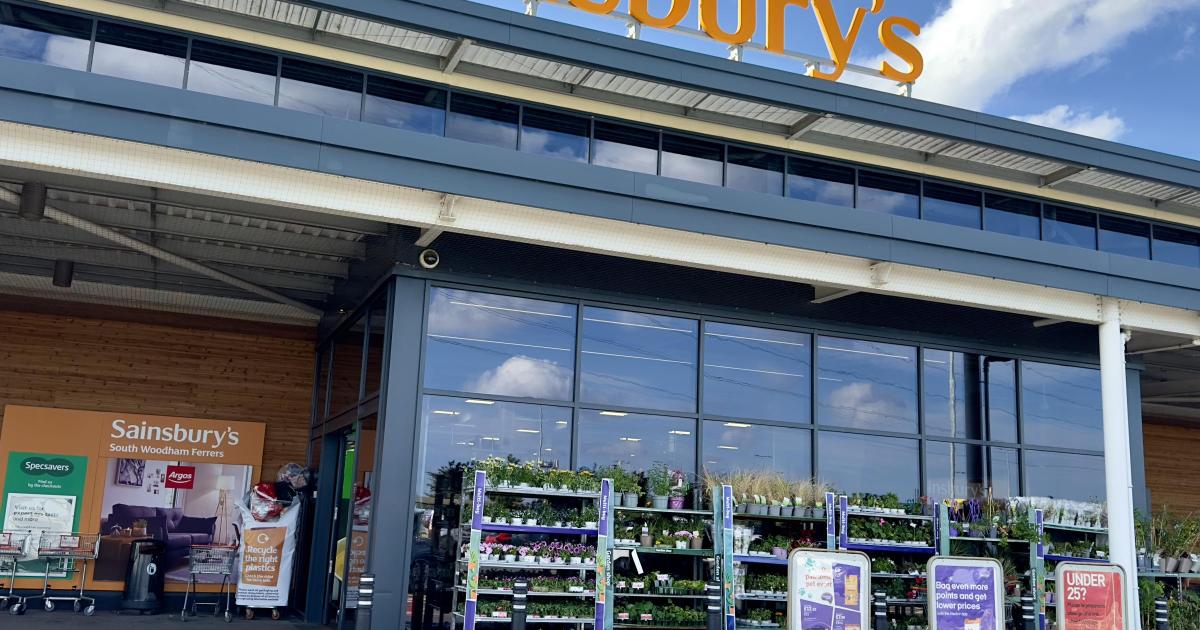
Sainsbury’s shoppers told of major change to Nectar rewards

Published

on

Sainsbury’s shoppers told of major change to Nectar rewards

The new loyalty scheme gives customers more ways to collect points when shopping for groceries for delivery, but Sainsbury’s is reminding users that they must enter their full Nectar card number at checkout.

Customers can now collect one Nectar point for every £1 spent on eligible Sainsbury’s products ordered via the Uber Eats app or website.

Katie Hunter, Uber Eats general manager for grocery and retail in the UK, said: “We know how much Uber Eats customers love Nectar, so bringing points directly to their Sainsbury’s orders was a no-brainer.

Advertisement

“Now, they can collect Nectar points on all their Sainsbury’s essentials as well as spending them across the entire Uber app.

“It’s all about delivering flexibility, convenience and value for customers right alongside their favourite groceries.”

The scheme is available at more than 1,300 Sainsbury’s stores across the UK that are signed up to Uber Eats.

It covers orders for fresh food, household items, and other eligible products.

Advertisement

A minimum spend of £1 is required to earn points, and customers must enter their full Nectar card number at checkout.

Points cannot be added retrospectively.

Nectar points earned through Uber Eats grocery orders will be credited to customer accounts within 28 days.

Some items are excluded from the scheme, including gift vouchers, baby milk, lottery tickets, tobacco, vapes, nicotine products, proprietary medicines, spirits, and liqueurs.

Advertisement

Additional restrictions apply to alcohol orders in Scotland, Wales, and Northern Ireland.

The move builds on the existing partnership between Nectar and Uber, which currently allows Nectar members to redeem points for vouchers covering Uber journeys and Uber Eats orders.

Customers can now earn points on Sainsbury’s orders placed via Uber Eats and later use those points for Uber or Uber Eats vouchers.

Mark Given, Sainsbury’s chief technology, marketing and data officer, said: “Nectar members can already turn their points into Uber rides or Uber Eats treats – and now they can collect points when ordering Sainsbury’s groceries through Uber Eats too.

Advertisement

“It’s another way we’re helping customers get more from Nectar, whether they’re stocking up on essentials, planning dinner or making everyday life that little bit easier.”

Source link

Advertisement
Continue Reading

NewsBeat

Fears over Light Valley Solar Scheme between York and Selby

Published

on

Fears over Light Valley Solar Scheme between York and Selby

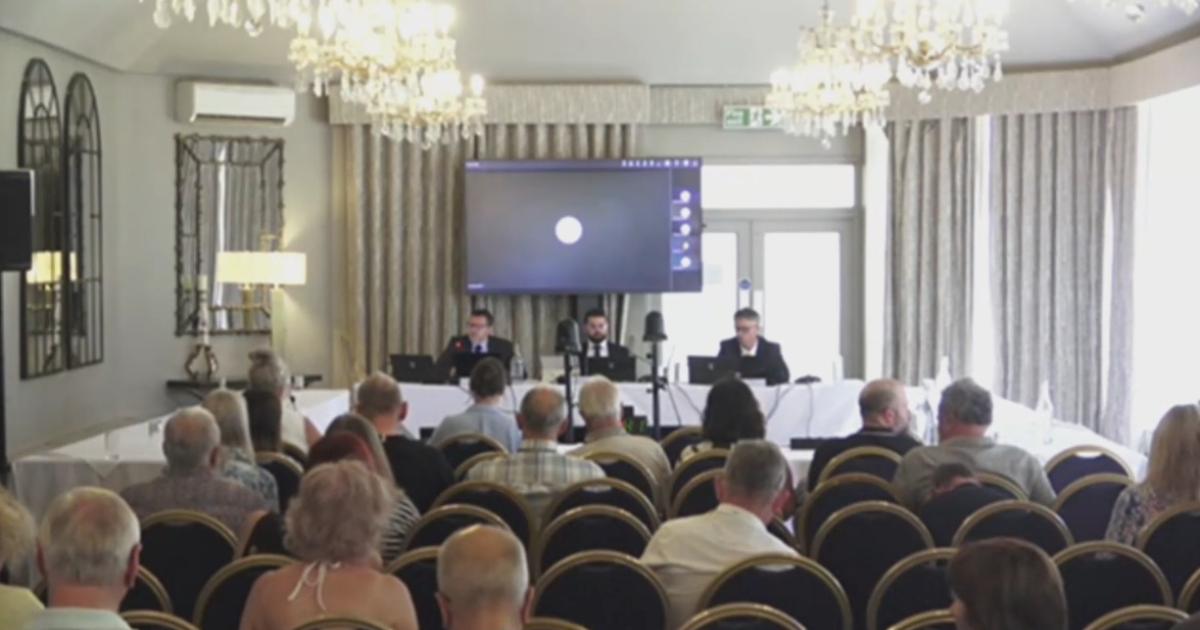
Objectors today (Wednesday, July 29) gave evidence at a public hearing held by the Planning Inspectorate, which will decide whether to allow the 500MW Light Valley Solar Scheme.

Island Green Power UK Ltd is seeking a development consent order application for a network of seven solar farms on 1,020 hectares of land between the villages of Escrick, Monk Fryston, Hambleton, Chapel Haddlesey and South Milford, between York and Selby.

A local plan for the proposed solar scheme. Image: Light Valley Solar. A local plan for the proposed solar scheme. Image: Light Valley Solar.

A 500MW battery energy storage system (BESS) is proposed as part of the development, as well as underground cabling to connect the sites to the national grid at Monk Fryston substation.

Hearings are taking place at The Parsonage Hotel and Spa, at Escrick, this week as the Planning Inspectorate’s examination of the plans gets underway.

Advertisement

The panel of three planning inspectors heard from some of the residents, parish councils and campaign groups which have raised concerns about the scheme.

Councillor Ceri Carter, from South Milford Parish Council, who also represented 13 other parish councils, told the hearing: “While we support the transition to renewable energy and understand the need for the country’s energy security, we ask the examining authority to recognise the disproportionate burden this scheme places on our communities.”

Describing the design of the scheme as “fragmented”, Cllr Carter added: “It is our opinion that this project could have been better designed to significantly reduce the amount of land sacrificed, thereby lessening the impact on communities.”

Councillor Shaun Hughes, from Monk Fryston Parish Council, said: “The primary objection for us is that it’s such a large, encompassing installation that almost every view into and out from the parish will be affected by this proposed development.

Advertisement

“This proposal, when combined with other consented schemes, will significantly alter the character and the landscape that surrounds our settlement such that it can no longer be regarded as a rural location.”

Resident Clare Hodgekiss said her home would be completely surrounded by the development.

She said: “At what cost to my physical and mental health is my family home surrounded by solar panels on all sides?

“Whatever I see from my house — the back, the middle, the front — I will just see solar panels and nothing else. This will have a monumental impact on the rest of my life if it goes ahead. How can surrounding a property on all sides be considered proportional, just and fair?”

Advertisement

Louise Billingham, from the campaign group Rooftops Not Countryside, told the panel that the scheme “would industrialise the area for generations to come”.

Louise Billingham, from Rooftops Not Countryside, speaks at the hearing.Louise Billingham, from Rooftops Not Countryside, speaks at the hearing.

She added: “The benefits of the development are presented at a national level, but the harms are concentrated locally: increased construction traffic on rural roads and country lanes, permanent changes to the character of our rural villages and countryside, loss of open green space and tranquillity, disruption to walking, cycling and riding routes, and the psychological impact of living beside, or within, large-scale electrical infrastructure.”

Matthew Fox, from law firm Pinsent Masons, spoke on behalf of the applicant.

He said they recognised the strength of feeling from local residents, adding: ” I want to just emphasise that there were points made around the applicant making sure they consider the human impact.

Advertisement

“I know views differ on this, but I wanted to emphasise that the applicant has thought to consider those aspects.”

The proposed solar scheme will provide enough renewable electricity to power the equivalent of approximately 115,000 homes annually, the applicants say.

Source link

Advertisement
Continue Reading

Trending

Copyright © 2025