
Business
Exxon Mobil: A Rising Oil Bet




NEW YORK — Gold prices tumbled more than 2% on Tuesday, May 5, 2026, with spot gold hitting $4,527.26 per ounce, down $102.63 or 2.22% from the previous close, extending a broader correction from record highs set earlier this year amid shifting macroeconomic forces and profit-taking.

The decline marks another session of pressure on the safe-haven metal, which reached an all-time high above $5,589 in late January before entering a volatile pullback phase. Analysts describe the move as a healthy correction within a longer-term bull market driven by central bank buying, geopolitical risks and investor diversification, rather than a fundamental reversal.
Drivers Behind Tuesday’s Sharp Drop
Market participants pointed to a combination of factors. A stronger U.S. dollar, rising Treasury yields and reduced immediate fears over certain geopolitical flashpoints contributed to the selling. Higher real yields make non-yielding assets like gold less attractive, prompting some institutional and speculative investors to unwind positions.
Recent data showing resilience in the U.S. economy and tempered expectations for aggressive Federal Reserve rate cuts this year have also weighed on gold. The metal often struggles in environments of higher-for-longer interest rates, even as broader inflation and uncertainty narratives remain supportive longer term.
Trading volumes spiked during the session as leveraged players adjusted exposure. Comex futures reflected the move, with active contracts showing clear downside momentum before finding some support near key technical levels around $4,500.
Context of 2026’s Wild Ride
Gold’s journey this year has been dramatic. After surging more than 40% from 2025 levels and shattering previous records, the metal corrected sharply in March — its largest monthly decline since 2013 — before stabilizing in April. The pullback erased roughly 13-20% from January peaks, yet prices remain elevated compared to historical averages.
Geopolitical developments, including tensions in the Middle East and disruptions in energy markets, initially propelled gold higher but later triggered complex dynamics. Oil price spikes raised inflation concerns, delayed rate-cut hopes and strengthened the dollar — a classic headwind for gold despite its traditional safe-haven status.
Central banks continue accumulating gold at elevated levels, albeit at a slightly slower pace than peak quarters, providing underlying demand. Private investors who entered during the rally have shown mixed behavior, with some holding firm and others taking profits during volatility.
Wall Street Outlook Remains Bullish
Major banks largely view the current dip as a buying opportunity. Goldman Sachs reaffirmed its year-end 2026 target of $5,400 per ounce. J.P. Morgan sees potential for $6,000–$6,300, while other forecasts range from $5,200 to $6,300 by December.
Analysts emphasize structural drivers: de-dollarization efforts, fiscal sustainability concerns, and gold’s role as a portfolio diversifier in an uncertain world. Even after the correction, consensus calls for new highs later in 2026 and into 2027.
Technical analysts note support zones between $4,400 and $4,600 hold significance. A break below could test lower levels, but most expect rebounds as bargain hunters enter and seasonal factors turn favorable.
Impact on Investors and Markets
For retail investors, the drop offers a potential entry or averaging point, though volatility cautions against timing the bottom. Exchange-traded funds tracking gold, such as the SPDR Gold Shares (GLD), mirrored the decline, affecting portfolios with precious metals exposure.
Jewelry demand in major markets like India and China remains price-sensitive, with lower levels potentially stimulating physical buying. Mining stocks faced additional pressure, trading lower as margins face scrutiny amid falling spot prices.
Broader financial markets showed mixed reactions. Equities held relatively steady, while the dollar index gained ground. Bond yields ticked higher, reinforcing the inverse relationship currently at play with gold.
Risks and Scenarios Ahead
Downside risks include faster-than-expected economic cooling that paradoxically strengthens the dollar further, or resolution of key geopolitical tensions that reduces safe-haven demand. Upside catalysts remain robust: renewed inflation surprises, central bank surprises or fresh global uncertainties.
Experts warn against overreacting to short-term moves. Gold’s history shows sharp corrections within multi-year bull runs, often followed by strong recoveries. Long-term holders focused on wealth preservation appear largely unmoved by daily fluctuations.
What’s Next for Gold
As trading continues, market eyes turn to upcoming economic data, including inflation readings and Fed communications. Any signs of cooling labor markets or persistent price pressures could shift sentiment rapidly.
For now, Tuesday’s 2% drop underscores gold’s sensitivity to macro crosscurrents even at elevated levels. At $4,527, the metal trades well above pre-2025 averages but offers a more attractive valuation than at January peaks for those bullish on its strategic role.
Investors should monitor real yields, dollar strength and physical demand indicators closely. While no one can predict the exact bottom, the overwhelming analyst consensus points to higher prices by year-end, suggesting current levels may represent a pause rather than the end of gold’s remarkable run.

PERTH, Australia — A Kalgoorlie couple experienced a life-changing surprise this week when Belinda Lotsu, 45, delivered quadruplets at Perth’s King Edward Memorial Hospital, marking Western Australia’s first set of quads in six years. The babies — three girls and one boy — arrived via cesarean section on Tuesday at 32 weeks and three days, delighting and overwhelming their parents who had prepared for triplets.

The newborns, named Amy, Amana, Amber and Amon, weighed between approximately 1.0 and 1.6 kilograms at birth, with hospital staff describing them as doing “exceptionally well” despite their prematurity. All four are receiving specialist care in the neonatal intensive care unit at King Edward Memorial Hospital, Western Australia’s premier maternity facility, and are expected to remain there for four to six weeks.
Belinda and her husband Emmanuel Lotsu already have a three-year-old son. The couple turned to IVF after a previous miscarriage, initially hoping for one healthy baby. Doctors discovered the fourth fetus more than halfway through the pregnancy, stunning the family and medical team.
“I told the doctor it was not true,” Belinda recalled in interviews, reflecting the shock that turned their planned triplet pregnancy into a rare quadruplet delivery.
Rare Occurrence in WA
Health records show these quadruplets represent only the 15th set born in Western Australia, with the last occurring in 2020. King Edward Memorial Hospital delivers an average of five sets of triplets per year, but quadruplets remain exceptionally uncommon, occurring naturally in roughly one in 700,000 pregnancies and even less frequently with assisted reproduction.
The pregnancy triggered extensive planning by the hospital. Teams coordinated emergency protocols, neonatal capacity and maternal safety measures well in advance. The planned cesarean ensured the safest possible delivery for the high-risk multiples.
Dr. staff at the hospital praised the babies’ strong birth weights for their gestational age. “They’re all doing exceptionally well,” a spokesperson noted, highlighting the positive early indicators for their development.
A Family’s Journey
The Lotsu family, based in the Goldfields town of Kalgoorlie, about 550 kilometers east of Perth, faced a rollercoaster of emotions. After struggling with fertility and enduring a miscarriage, the IVF success brought immense joy tempered by the challenges of a multiple pregnancy. Emmanuel supported Belinda throughout, and the couple expressed gratitude for the medical team that guided them through the unexpected expansion of their family.
From three family members to seven in minutes, the Lotsus now navigate the practical realities of caring for quadruplets alongside their toddler. Community support has already begun pouring in from Kalgoorlie and beyond, with offers of assistance expected to grow as the babies prepare for homecoming.
Medical and Logistical Challenges
Premature quadruplets require specialized monitoring for respiratory issues, feeding support and temperature regulation. King Edward Memorial’s neonatal unit, equipped for complex cases, provides round-the-clock care. Doctors anticipate gradual progress, with potential discharge in coming weeks if the infants continue thriving.
Multiple births carry higher risks for both mother and babies, including gestational diabetes, preeclampsia and preterm labor. Belinda’s successful delivery at 32 weeks and three days reflects strong prenatal management typical for IVF multiples.
The case underscores advancements in fertility treatment and obstetric care in regional Australia. Families from remote areas like Kalgoorlie often relocate temporarily to Perth for high-risk deliveries, adding emotional and financial layers to the experience.
Broader Context of Multiple Births
Australia sees rising multiple birth rates linked to assisted reproductive technologies, though strict guidelines limit embryo transfers to reduce risks. Quadruplets remain headline-worthy events due to their rarity. Similar stories in other states highlight both the miracles and complexities involved.
Public health experts note that while IVF expands family-building options, it requires robust support systems. WA Health continues investing in maternal and neonatal services to handle such cases safely.
Community and Social Media Reaction
News of the quadruplets spread rapidly across Australian media and social platforms. Messages of congratulations flooded in, with many praising Belinda’s strength at age 45. Viral posts celebrated the “instant big family” while acknowledging the demanding road ahead.
Parenting groups and local Kalgoorlie communities have mobilized, offering practical help ranging from meals to baby gear. The story resonates widely, evoking both wonder at the rarity and empathy for the immense responsibility of raising multiples.
Looking Ahead for the Lotsu Family
As the four infants gain strength in the NICU, the family focuses on recovery and preparation. Belinda and Emmanuel will balance hospital visits with caring for their three-year-old, likely relying on extended family and community support upon returning to Kalgoorlie.
Medical follow-ups will monitor the babies’ growth and development closely in the coming months. For now, the Lotsus cherish the surprise that transformed their family, viewing it as a profound blessing after earlier challenges.
Hospital staff describe the delivery as a coordinated success, reflecting years of expertise in managing high-order multiples. The arrival of Amy, Amana, Amber and Amon not only enriches one family but also highlights the capabilities of Western Australia’s health system in delivering rare miracles.
In a state where such events occur roughly once every several years, this quadruplet birth stands as a heartwarming reminder of life’s unpredictability and the resilience of families supported by dedicated medical professionals. As the Lotsus embark on their expanded parenting journey, well-wishes continue pouring in from across Australia.

War Fears Tarnish Metals – Silver Breaks $75 And Gold Tests $4,500

A UPS Boeing 767 departs Los Angeles International Airport en route to Louisville, Kentucky, Jan. 27, 2026.
Kevin Carter | Getty Images
Shares of logistics giants UPS and FedEx sank on Monday after Amazon announced a new initiative to open up its supply chain networks to other businesses.
Both stocks closed down roughly 10% on Monday. The companies did not immediately respond to requests for comment.
Shares of Amazon remained largely unchanged.
The tech company’s “Amazon Supply Chain Services” will allow companies spanning multiple industries to use Amazon’s supply chain and logistics to move and deliver products and raw materials.
It’s part of Amazon’s ongoing growth in services. The announcement could set up Amazon as a major player next to UPS and FedEx, opening up its fleet of more than 100 cargo plans and a massive network of warehouses.
Amazon said major retailers including Procter & Gamble, 3M, Lands’ End and American Eagle Outfitters have already signed up for the new program.


Steven Cress is VP of Quantitative Strategy and Market Data at Seeking Alpha. Steve is also the creator of the platform’s quantitative stock rating system and many of the analytical tools on Seeking Alpha. His contributions form the cornerstone of the Seeking Alpha Quant Rating system, designed to interpret data for investors and offer insights on investment directions, thereby saving valuable time for users. He is also the Founder and Co-Manager of Alpha Picks, a systematic stock recommendation tool designed to help long-term investors create a best-in-class portfolio.Steve is passionate and dedicated to removing emotional biases from investment decisions. Utilizing a data-driven approach, he leverages sophisticated algorithms and technologies to simplify complex, laborious investment research, creating an easy-to-follow, daily updated grading system for stock trading recommendations.Steve was previously the Founder and CEO of CressCap Investment Research until its acquisition by Seeking Alpha in 2018 for its unparalleled quant analysis and market data capabilities. Prior to that, he had also founded the quant hedge fund Cress Capital Management, after spending most of his career running a proprietary trading desk at Morgan Stanley and leading international business development at Northern Trust.With over 30 years of experience in equity research, quantitative strategies, and portfolio management, Steve is well-positioned to speak on a wide range of investment topics.
Analyst’s Disclosure: I/we have no stock, option or similar derivative position in any of the companies mentioned, and no plans to initiate any such positions within the next 72 hours. I wrote this article myself, and it expresses my own opinions. I am not receiving compensation for it. I have no business relationship with any company whose stock is mentioned in this article.
Seeking Alpha’s Disclosure: Past performance is no guarantee of future results. No recommendation or advice is being given that any particular security, portfolio, transaction or investment strategy is suitable for any specific person. The author is not advising you personally concerning the nature, potential, value or suitability of any particular security or other matter. You alone are solely responsible for determining whether any investment, security or strategy, or any product or service, is appropriate or suitable for you based on your investment objectives and personal and financial situation. Steven Cress is the Head of Quantitative Strategy at Seeking Alpha. Any views or opinions expressed herein may not reflect those of Seeking Alpha as a whole. Seeking Alpha is not a licensed securities dealer, broker or US investment adviser or investment bank.

Northwest Bancshares CFO Douglas Schosser buys $20,883 in stock

European Commission assessing Anthropic’s Mythos AI model implications


Politicians on both sides of the aisle want to block Chinese vehicles from the United States.
But over 100 Chinese automakers, auto tech companies, and parts suppliers already have a presence in the U.S., according to a survey done by Dunne Insights, a consultancy that focuses on electric vehicles and autonomous markets. Despite the United States implementing a 100% tariff on EVs from the country and considering a rule banning Chinese connected cars from U.S. roads, a few Chinese companies are finding ways to invest in the country.
Chinese behemoth BYD builds buses in California, and Chinese battery maker CATL has struck a licensing deal with Ford Motor to offer tech and services for a battery manufacturing operation in Michigan.
One especially well-positioned company is Zhejiang Geely Holding Group. Geely, as it is commonly known, has large investments in three automakers already doing business in the U.S. — Volvo Cars, Polestar and Lotus — and smaller stakes in luxury makers Mercedes-Benz and Aston Martin.
Geely’s advantage
Lotus, Polestar and Volvo all give Geely Holding dealer networks in the U.S. — a key asset, said Tu Le, founder of automotive consultancy firm Sino Auto Insights.
“Let’s not discount how important a dealer network is and the service infrastructure that needs to be able to support that, because that’s not an insignificant task that needs to be sorted out by the automakers that do not have a presence in the United States,” Le said.
Geely also potentially has U.S. factory capacity through its Volvo stake.
The Volvo factory near Charleston, South Carolina, makes both Volvo and Polestar cars. The plant is big enough to make about 150,000 vehicles, but in 2025, it only produced about 18,500, said Sam Abuelsamid, vice president of market research at Telemetry Insights, citing data from Marklines. Volvo has said it is adding U.S. production of its XC60 hybrid SUV, which would add about 45,000 units per year.
Volvo does want to expand its U.S. footprint. The company’s Americas president, Luis Rezende, told CNBC in December that Volvo was importing about 95% of the cars it sold in the U.S.. The company plans to boost U.S. sales to about 200,000 units, from about 122,000 in 2025. Volvo wants 50% to 60% of that growth volume to be U.S.-made, Rezende said.
Volvo CEO Hakan Samuelsson reportedly said late last month that he would be open to using it for a Chinese vehicle, according to Business Insider.
“Putting production there would actually reduce costs or it would amortize the fixed costs over more units,” Le said.
U.S. expansion?
The name Geely can refer to the holding company that has stakes in Volvo, Polestar and the rest, or the publicly traded Chinese subsidiary automaker Geely Auto, which consists of the Chinese brands Zeekr, Lynk & Co, and the brand Geely.
Of its Chinese brands, Zeekr is a likely candidate to spearhead a U.S. expansion, analysts said. Already, Waymo is using a Zeekr vehicle as a platform for its self-driving fleet in San Francisco. The company continues to use the Jaguar I-Pace and plans to use cars from Hyundai and Toyota as well. Waymo declined CNBC’s request for a comment.
“Executives from Zeekr have said that they want to introduce the Zeekr brand into the U.S. market,” Abuelsamid said. “Of the Geely Group brands, that is the most likely one.”
It might be among the best positioned, but it isn’t totally alone, Le said. Stellantis — which owns the Jeep, Ram, Dodge and Chrysler brands — has a roughly 20% stake in Chinese automaker Leapmotor.
“There’s another opportunity to rebadge an existing vehicle, such as a Fiat, or something that’s more familiar to Americans, and there’s already an infrastructure in place,” Le said.
And though there is stiff bipartisan opposition to Chinese automakers, President Donald Trump has suggested he would be amenable to Chinese automakers building in the U.S.
“Now, if they want to come in and build a plant and hire you and hire your friends and your neighbors, that’s great,” the president said about foreign automakers in a January speech at the Detroit Economic Club. “I love that. Let China come in. Let Japan come in. They are, and they’ll be building plants, but they’re using our labor.”
Business
Pinnacle West Capital Corporation 2026 Q1 – Results – Earnings Call Presentation (NYSE:PNW) 2026-05-04

Q1: 2026-05-04 Earnings Summary
EPS of $0.27 beats by $0.27
| Revenue of $1.15B (11.36% Y/Y) beats by $65.17M

Seeking Alpha’s transcripts team is responsible for the development of all of our transcript-related projects. We currently publish thousands of quarterly earnings calls per quarter on our site and are continuing to grow and expand our coverage. The purpose of this profile is to allow us to share with our readers new transcript-related developments. Thanks, SA Transcripts Team
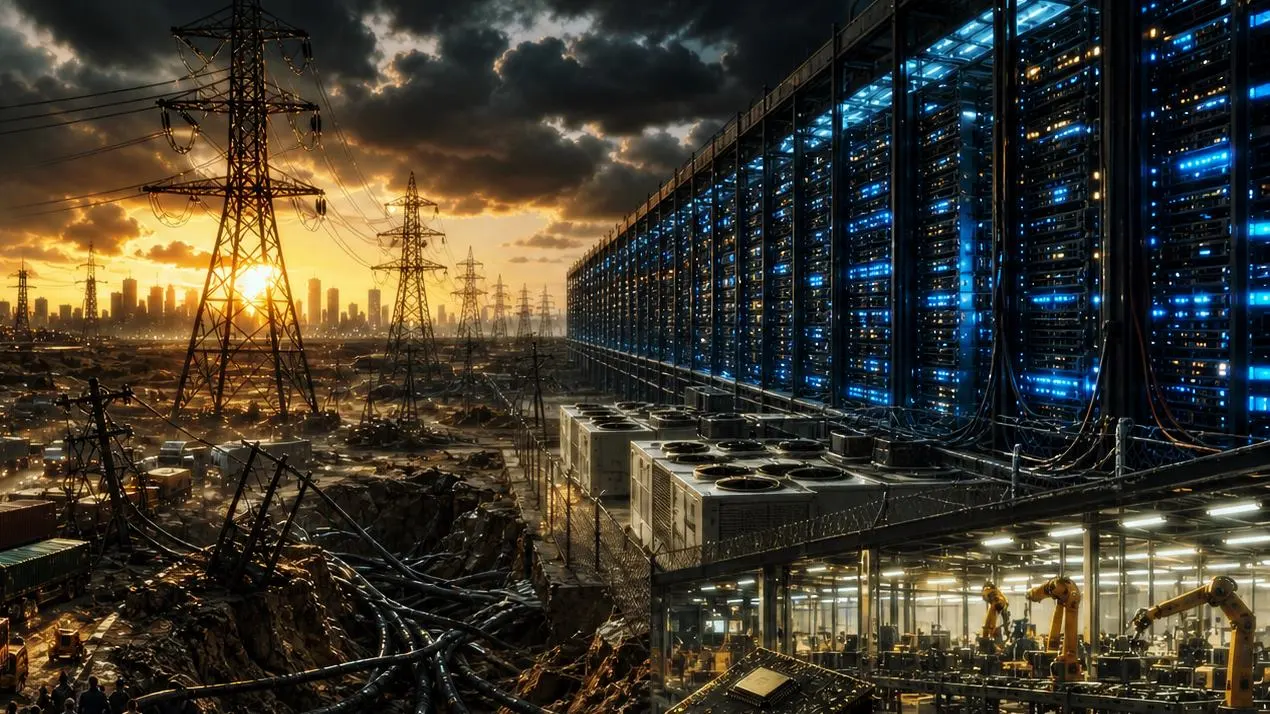
The International Energy Agency’s latest report reveals a technology that is simultaneously getting greener and consuming more power than ever before. The world is not ready.
Key Takeaways
- The Energy Paradox: Despite unprecedented annual improvements in energy efficiency per AI task, the aggregate electricity consumption of data centers—especially those focused on AI—is surging. The International Energy Agency (IEA) projects that global electricity consumption from data centers will roughly double by 2030, with AI-focused data center consumption tripling in that period.
- Infrastructure Bottlenecks: The rapid growth of AI is creating a bottleneck crisis where the physical world cannot keep up with digital ambition. Grid constraints could delay approximately 20% of global data center capacity planned for construction by 2030, and shortages of high-bandwidth memory are anticipated to persist through at least 2027.
- AI as the Solution and Policy Imperative: AI is not just an energy taker but is becoming an “energy maker,” capable of helping energy-intensive industries reduce their energy costs by 3 to 10 percentage points and accelerating scientific discovery for materials and battery chemistries. Policy intervention is crucial, requiring approaches that promote electricity system flexibility and remove barriers to AI adoption in the energy sector.
There is a phrase that has quietly become the IEA’s defining axiom for our era: there is no AI without energy. It sounds simple enough. But the International Energy Agency’s newly published report, Key Questions on Energy and AI, shows just how staggeringly complex and urgent that relationship has become.
The numbers alone are arresting. Global electricity demand from data centres, the critical infrastructure for training and running AI models, grew by 17% in 2025. Electricity consumption from AI-focused data centres grew even faster, surging 50% in that year alone. This is not an incremental change. This is a structural reshaping of how the world consumes power, happening at a pace that grids, regulators, and supply chains were never designed to absorb. IEA
And yet the report’s most counterintuitive finding is not the surge; it is the efficiency miracle happening in parallel. Measured per individual task, the energy efficiency of AI is improving at a rate unprecedented in energy history. Software and hardware advances have resulted in the energy use per AI task dropping by at least an order of magnitude annually in recent years. Simple text queries now typically consume less electricity than running a television over the same period of time. IEA
So AI is simultaneously becoming greener per task and consuming vastly more electricity in aggregate. This is the central paradox policymakers must confront.
At Least a Twofold Increase by 2030
The trajectory the IEA projects should concentrate minds in every energy ministry on the planet. Updated projections see electricity consumption from data centres roughly doubling from 485 TWh in 2025 to 950 TWh in 2030, accounting for around 3% of global electricity demand by that date. Electricity consumption from AI-focused data centres grows much faster than overall data centre electricity consumption, tripling in this period. IEA
To put that in context: a typical AI-focused data centre consumes as much electricity as 100,000 households, and the largest ones under construction today will consume 20 times as much. IEA
Driving this is not just usage growth but investment at an almost incomprehensible scale. The capital expenditure of just five technology companies exceeded USD 400 billion in 2025 and is expected to jump by another 75% in 2026. Capital expenditure of just those five companies is now larger than global investment in oil and natural gas production. Let that sink in: five Silicon Valley firms are now outspending the entire global fossil fuel extraction industry on infrastructure. IEA
This unprecedented surge is colliding with aging and under-invested electric grids. In regions like the United States and Europe, permitting new power plants and transmission lines can take over a decade, far too slow to meet the AI industry’s timeline. This has led to a “gigawatt squeeze,” where projects are delayed, and compute clusters sit idle, waiting for a connection to a grid that cannot deliver. Developers are increasingly exploring “off-grid” solutions, bringing their own power sources like natural gas, microgrids, and even nuclear reactors to site. The challenge is not just absolute capacity; it is the grid’s inability to deliver a “certain type” of flexible power that a one-size-fits-all system cannot easily accommodate.
The Bottleneck Crisis Nobody Is Talking About
Behind the headline investment figures lies a quieter, more troubling story, one of physical limits asserting themselves against digital ambition. The speed of the AI revolution is increasingly contrasting with the speed of the physical, social, and economic systems that underpin it. Bottlenecks across energy supply chains and advanced chip manufacturing have tightened. Planning and regulatory systems are being stretched by the wave of project applications for data centres, amid a broader trend of rapid load growth and electrification. IEA
This is not a hypothetical risk. The IEA’s analysis is stark: grid constraints could delay around 20% of global data centre capacity planned for construction by 2030. One in five planned facilities may simply not connect to the grid on schedule. That is a direct constraint on the AI ambitions of nations and corporations alike.
The chip supply chain is equally fragile. A shortage of high-bandwidth memory, integral to AI chip production, has developed over the past six months and is anticipated to persist through at least the end of 2027.
Supply Chain Fragility and Geopolitical Risks The chip shortage is exacerbated by a fragile and highly concentrated supply chain. Global memory production is dominated by a handful of companies, primarily in Asia, creating a single point of failure. Geopolitical tensions, such as conflict in the Middle East and the potential closure of critical trade routes like the Strait of Hormuz, pose a major risk. A disruption could spike energy costs and sever access to essential raw materials like helium and specialized acids, directly impacting chip factories and prolonging the “chip tightness” potentially until the end of the decade. This has triggered a rush by nations and corporations to secure their own supplies, a form of hardware hoarding that mirrors the wider power grab.
Meanwhile, the geographic concentration of these projects is compounding local strain. 50% of data centres under development in the United States are in pre-existing large clusters, potentially raising risks of local bottlenecks. IEA
The Critical Minerals Time Bomb
The energy story of AI is inseparable from a geopolitical one. Apart from bulk materials like steel and concrete, the construction of data centres requires sizeable amounts of several minerals and metals, such as copper, aluminium, silicon, gallium, and rare earth elements. There is a significant overlap between the minerals needed for building new data centres and those that are critical to energy technologies. IEA
The supply concentration figures should alarm any strategist. In 2030, data centre demand for gallium could equal up to 10% of today’s supply, and China accounts for 95% of gallium refining. The high market concentration for critical minerals highlights significant vulnerabilities to supply shocks, whether from extreme weather events, industrial accidents, trade disruptions, or geopolitics. IEA
This is not a niche technical concern. It is the next front in the global competition for technological sovereignty.
AI Is Also the Solution
It would be a journalistic failure to leave this story as pure alarm. The IEA is equally insistent on the other side of the ledger, that AI, if deployed at scale in the energy sector, could help solve precisely the problems its infrastructure is creating.
Proven applications of AI could help firms in energy-intensive industries reduce their energy costs by 3 to 10 percentage points. For energy-hungry manufacturers, that is a transformative margin. In scientific discovery, AI led to a 45,000-fold acceleration in the mapping of protein structures – critical for designing new drugs – and could allow scientists to dramatically accelerate the process of finding and testing promising materials, battery chemistries, and carbon capture molecules. IEAIEA
The tech sector is also beginning to respond to the clean energy challenge it helped create. The tech sector accounted for around 40% of all corporate power purchase agreements for renewables signed in 2025, and is also now a major source of momentum for the nuclear and advanced geothermal industries. The pipeline of conditional offtake agreements between data centre operators and small modular reactor nuclear projects has grown from 25 gigawatts at the end of 2024 to 45 gigawatts today. IEA
As IEA Executive Director Fatih Birol has put it, AI is still an energy taker, but it is also becoming an energy maker – driving forward innovative solutions like next-generation nuclear reactors, flexible data centres, and long-duration energy storage. IEA
The Affordability Question
There is one dimension the IEA raises that deserves far greater public attention than it typically receives: what does all this mean for ordinary electricity bills?
The report finds that if the right mix of policies and infrastructure investment is in place, increases in electricity demand do not necessarily raise prices. However, data centres can create special challenges for electricity affordability, since they have large, concentrated power loads and scale up rapidly, often triggering the need for new generation assets and grid investment. IEA
The political economy here is delicate. Communities are already pushing back. Social acceptability is a growing issue, as communities push back against data centre projects, and concerns about affordability and environmental impacts rise. Policymakers cannot afford to dismiss these concerns as technophobia. They reflect legitimate questions about who bears the cost of infrastructure built to serve a global tech industry. IEA
The Policy Imperative
The IEA’s prescriptions are clear and, frankly, not yet being followed with sufficient urgency. Approaches that promote electricity system flexibility can help accelerate grid connections and ensure electricity affordability. System operators can explore non-firm grid connections and incentivise data centre developers to provide demand response in return for faster connection processes. IEA
On the industrial side, removing barriers to AI adoption in the energy sector can ensure AI is leveraged to enhance energy security and sustainability, with comprehensive policy frameworks that address data availability, cybersecurity, skills, and interoperability, crucial for boosting AI uptake. IEA
And for the developing world – the part of this story most often absent from Western coverage, the stakes are existential in a different way. Emerging and developing economies other than China account for 50% of the world’s internet users but less than 10% of global data centre capacity. Countries with a record of reliable and affordable power will be best placed to unlock data centre growth, localise computing power critical to homegrown AI development, and spur the IT industry more generally. IEA
The AI revolution, in other words, risks deepening the very digital divide it promises to transcend – unless policymakers in both rich and developing nations act with deliberate urgency.
The IEA’s Key Questions on Energy and AI is a landmark document precisely because it refuses false comfort. It does not tell us that efficiency gains will automatically solve the demand problem, nor that the investment surge is inherently catastrophic. What it tells us is that the outcome depends entirely on the choices made now – on grids, on supply chains, on regulation, and on whether the energy sector embraces AI as a tool rather than merely tolerating it as a load.
The technology is moving faster than the physical world it depends on. That gap is the defining energy challenge of this decade.
Other People are Reading
Pussycat Dolls 2026 reunion tour canceled in North America

Everton v Man City LIVE: Premier League latest score and goal updates as visitors chase down Arsenal in title race

Gold Plunges Over 2% to $4,527 as Pullback Deepens in Volatile 2026 Market

Manchester United reach agreement with Casemiro over contract clause amid transfer speculation

US brings back mandatory military draft registration

Steven Gerrard disagrees with Gary Neville over ‘shock’ Chelsea and Arsenal claim | Football


-

 Politics7 days ago
Drax board avoid their own AGM, accused of greenwashing & environmental racism
-

 Fashion6 days ago
Kylie Jenner’s KHY Enters a New Era with ‘Born in LA’
-

 NewsBeat1 day ago
Channel 5 – All Creatures Great and Small series 7 new post
-

 Business6 days ago
Most Commercial Energy Audits Miss the Real Losses
-
 Tech3 days ago
Trump’s 25% EU auto tariff breaches Turnberry Agreement that also covers semiconductors and digital trade
-

 Crypto World6 days ago
CFTC’s AI will review U.S. crypto registration applications, chairman tells CoinDesk
-
 Sports3 days ago
Paul Scholes issues Marcus Rashford reality check as agreement emerges over Man United star
-

 Business5 days ago
Barclay Brothers Avoid Bankruptcy: HSBC Drops High Court Petitions After IVA Deal
-
 Business5 days ago
Tesla Officially Registers Elon Musk’s Stock: What Investors Need to Know
-

 Tech6 days ago
Get Ready for More Brain-Scanning Consumer Gadgets
-
 Crypto World6 days ago
Robinhood Phishing Scam Exploits Gmail Dot Feature to Bypass Security
-

 Crypto World7 days ago
Gmail Dot Trick Underpins Robinhood Phishing, Sending Real-Looking Emails
-

 Entertainment7 days ago
Sister Wives: Janelle Posts New Scary Warning
-

 Entertainment7 days ago
Michael Jackson’s Biopic Excluded Abuse Allegations For $25M
-

 Business4 days ago
Two Powerball Tickets Split $143 Million Jackpot in Indiana and Kansas
-

 Business7 days ago
Superdry co-founder accused of raping woman
-
 Crypto World7 days ago
Meme Coin Based on White House Shooter Conspiracy Rallies 320%
-
Business7 days ago
Opus Genetics president Benjamin Yerxa sells $39,121 in stock
-

 Politics7 days ago
Starmer to whip MPs to vote against probe into himself
-
 Crypto World7 days ago
ETH Triple Top Rejects $2.4K As Analysts Flag Weakness Against BTC
You must be logged in to post a comment Login