
Business
Farmers warn shoppers face smaller and more expensive vegetables due to hot weather


Farmers source additional water for their crops and livestock over summer from a combination of stored winter rainfall on site, and by extracting it from natural sources – a process called abstraction.
This can be from groundwater or from surface water, like rivers and streams.
This summer has seen significant low rainfall affecting the amount of water available to draw from.
Half of England and all of Wales have been declared to be in drought conditions by the Environment Agency.
Wales has received just 8% of its average rainfall so far this month. England has received 7% of its average, with that figure as low as 1% across southern England.
The high temperatures and repeated heatwaves have also increased evaporation rates which have particularly hit rivers.
Climate change is expected to bring more severe, frequent and longer-lasting heatwaves in UK summers in the coming years – which could bring more water shortages for farmers.
Tom Lancaster, land, food and farming analyst at the ECIU said: “At the start of spring farmers were hopeful of a better year, but the dry April and July and record-breaking heat have left farmers facing down the barrel of a third awful harvest in a row.
“Farming is now the sector most exposed to climate change and the risks and damage that it brings.”
Martin Lines, head of the Nature Friendly Farming Network and a farmer from Cambridgeshire, said this year’s harvest “has been a real kick in the teeth”.
“After two terrible harvests in a row, the crops this year were looking good and full of potential coming out of spring, only for months of drought and heatwaves to destroy any prospect of a decent harvest,” he said.
“I’ve never known it this dry and hot on our farm.
“Even farmers I know who were sceptical of climate change are now saying they’re really worried about the future of their businesses and production, it’s just been completely brutal for our industry.”

Business
Uber Revenue Climbs 12% to $14.2 Billion as Delivery Growth Offsets Weak Q3 Guidance Here’s Why

Uber Technologies reported higher second-quarter revenue and profit Wednesday, driven by continued growth in its delivery business and record trip volumes, though shares came under pressure after the company issued third-quarter guidance that fell short of Wall Street’s expectations.
The ride-hailing and delivery company posted revenue of $14.19 billion for the quarter ended June 30, up 12% from $12.65 billion a year earlier, though the figure came in just below the $14.24 billion analysts had expected, according to estimates compiled by LSEG. Net income attributable to Uber climbed to $2.39 billion, or $1.17 per diluted share, up from $1.36 billion, or 63 cents per share, in the same period last year. That result included a $1.6 billion pre-tax benefit tied to the revaluation of Uber’s equity investments, a factor that makes the company’s adjusted, non-GAAP earnings a more direct measure of underlying operating performance. On that basis, Uber posted earnings of 81 cents per share, matching analyst expectations exactly.
Bookings and Trips Outpace Revenue Growth
Gross bookings, the total dollar value of rides, delivery orders and freight activity processed on Uber’s platform, rose 24% year over year to $58.0 billion, or 22% on a constant-currency basis, comfortably topping the $57.23 billion average analyst estimate. Total trips across the platform grew 18% to 3.87 billion, driven by a 16% increase in monthly active platform consumers, which reached 208 million during the quarter.
Uber’s core mobility segment generated $7.36 billion of the quarter’s revenue, with mobility gross bookings rising 22% year over year to $28.99 billion. The delivery segment contributed $5.25 billion in revenue, with delivery gross bookings jumping 26% to $27.46 billion, making it the fastest-growing major segment of the company’s business during the quarter. The company noted that revenue growth trailed bookings growth in part because business model changes reduced its reported and constant-currency revenue growth rates by roughly eight percentage points during the period.
Profitability Continues to Improve
Beyond the headline revenue and earnings figures, Uber highlighted continued expansion in its underlying profitability metrics. Adjusted EBITDA grew 33% to $2.82 billion, while non-GAAP operating income rose 40% to $2.14 billion, up from a year earlier. The company’s GAAP operating margin expanded to approximately 13.3% of revenue, up from 11.5% in the prior-year period, while non-GAAP operating income as a share of gross bookings rose to 3.7% from 3.3%.
Operating cash flow increased 12% to $2.86 billion, and after accounting for $70 million in capital expenditures, free cash flow reached $2.79 billion, up 13% from a year earlier. Chief Financial Officer Balaji Krishnamurthy said in a statement that the company’s trailing twelve-month free cash flow exceeded $10 billion for the first time in Uber’s history, a milestone he pointed to as evidence that the company continues to convert strong top-line growth into faster earnings and significant cash generation.
CEO Points to Record User Growth
Uber CEO Dara Khosrowshahi framed the quarter as further evidence of the company’s expanding platform advantage, saying in a statement that Uber’s platform advantage continues to compound, citing record consumers and engagement alongside profitable growth across the business. Khosrowshahi added that the company added more first-time users over the past twelve months than in any period over the past five years, and said Uber is investing from a position of strength as it works to accelerate its cross-platform strategy globally and build what he described as the world’s largest platform for autonomous vehicles.
Speaking separately about the company’s autonomous vehicle ambitions, Khosrowshahi said that as the industry shifts from proving the technology to commercializing it at scale, Uber is building one of the most valuable positions in the AV ecosystem. That comment came against a backdrop of some uncertainty in Uber’s autonomous vehicle partnerships, after the company and Waymo recently confirmed they would end their exclusive robotaxi arrangement in Atlanta and Austin, Texas, by early 2028, opening the door for Uber to pursue additional autonomous vehicle partners in those markets.
Guidance Falls Short of Expectations
Despite the quarter’s overall strength, Uber’s stock came under pressure following the release of its third-quarter outlook, which trailed Wall Street’s expectations on both bookings and earnings. The company projected third-quarter gross bookings in a range of $58.25 billion to $60.25 billion, with a midpoint of $59.25 billion that fell just short of the $59.33 billion analysts had been expecting. Uber also guided to non-GAAP earnings per share of 84 to 88 cents for the quarter, a range whose midpoint landed below the 89-cent average analyst estimate.
The relatively cautious forward guidance, paired with a quarter that saw revenue narrowly miss expectations even as bookings and profitability metrics beat forecasts, illustrated the mixed signals investors were left to weigh following the report, despite otherwise strong underlying operational performance across the company’s core mobility and delivery businesses.
Corporate Costs Rise Alongside Growth
Not every metric moved in Uber’s favor during the quarter. Corporate general and administrative expenses, along with platform research and development costs not directly attributable to individual business segments, rose 18% to $1.10 billion, up from $935 million a year earlier, reflecting the broader scale of investment underpinning the company’s growth initiatives, including its expanding push into autonomous vehicle technology. The company also noted that adjusted EBITDA, historically one of its most closely watched metrics, is no longer considered a key measure by management, as Uber continues transitioning toward newer non-GAAP measures for evaluating its performance going forward.
Uber hosted a conference call with analysts following the release of its results to discuss the quarter’s performance in greater detail, including further color on its third-quarter outlook and the company’s broader strategic priorities heading into the back half of 2026. With gross bookings and trip volumes continuing to significantly outpace reported revenue growth, and free cash flow generation reaching a new company milestone, investors are likely to continue closely watching how Uber balances its aggressive investment in areas like autonomous vehicles against the underlying profitability trends that have increasingly defined the company’s recent quarterly results.

Yes. Corporate subscriptions are available for teams and organisations, with discounted rates as user numbers increase. Pricing starts from $1,625 + GST per user.
Get in touch
to discuss the right option for your organisation.
Business News subscriptions are used by executives, investors, consultants and professionals who need to stay informed and make better decisions about the WA market. When you subscribe you’ll get
- Unlimited access to WA’s most trusted business journalism
- Data & Insights — detailed profiles of WA companies, people, projects and deals
- MyBN — a personalised feed based on the companies, people and sectors you follow
- Special publications and industry reports
- Daily and weekly email newsletters
Data & Insights is a research tool built specifically for the WA market. It draws on more than 30 years of Business News reporting, updated regularly to reflect what’s happening now. Use it to:
- Look up detailed profiles of WA companies, including financials, directors and ownership
- Find decision-makers and track their career movements
- Research live and completed projects across WA industries
- Monitor deals, appointments and market activity
- Access industry rankings and league tables
Data & Insights is updated daily by our dedicated research team, which uses the latest announcements, ASX filings and editorial coverage to keep our person, company, list and project records up to date.
Business News welcome all opportunities to make our dataset accurate, complete and current, so if you have an update request, please email the team at
general@businessnews.com.au, and we’d be happy to assist.
MyBN
is part of every subscription. It’s your personalised view of Business News. You can follow the companies, people, sectors and projects that matter to you, and get a news feed and alerts tailored to your interests. You can save articles to read later and retain only what you need.
Only subscribers have full access to all content on the Business News website.
If staying informed about the WA economy is part of your job, and/or you’re looking for networking opportunities in WA, Business News is built for you.
Business News subscribers are:
- Executives and directors tracking competitors, clients and market movements
- Investors and advisers researching companies, deals and industry trends
- Consultants and professionals staying across sectors relevant to their clients
- Business owners looking for leads, context and market intelligence
Most Business News publications cover national or global markets. Business News is focused entirely on Western Australia, which means the journalism, the data and the intelligence are all built around WA companies, people and projects — not adapted from a national feed. Data & Insights, included with every subscription, combines more than 30 years of WA-specific editorial research with live business data. There’s no comparable product for the WA market.
The Morning Digest Email provides a comprehensive wrap of the major headlines, relevant to WA business, and includes with a snapshot of the overnight news covering oil, gold and ASX-listed companies.
The Afternoon Wrap Email focuses on the news covered by our team of journalists during the course of the working day, including exclusive stories and analysis, all of which relates to WA business and the local economy.
The BN Weekender Email contains a wrap of the Business News from the week that was, highlighting the top stories in each area of WA business.
Sign up for free.
We’re happy to help.
Get in touch
and our team will come back to you.
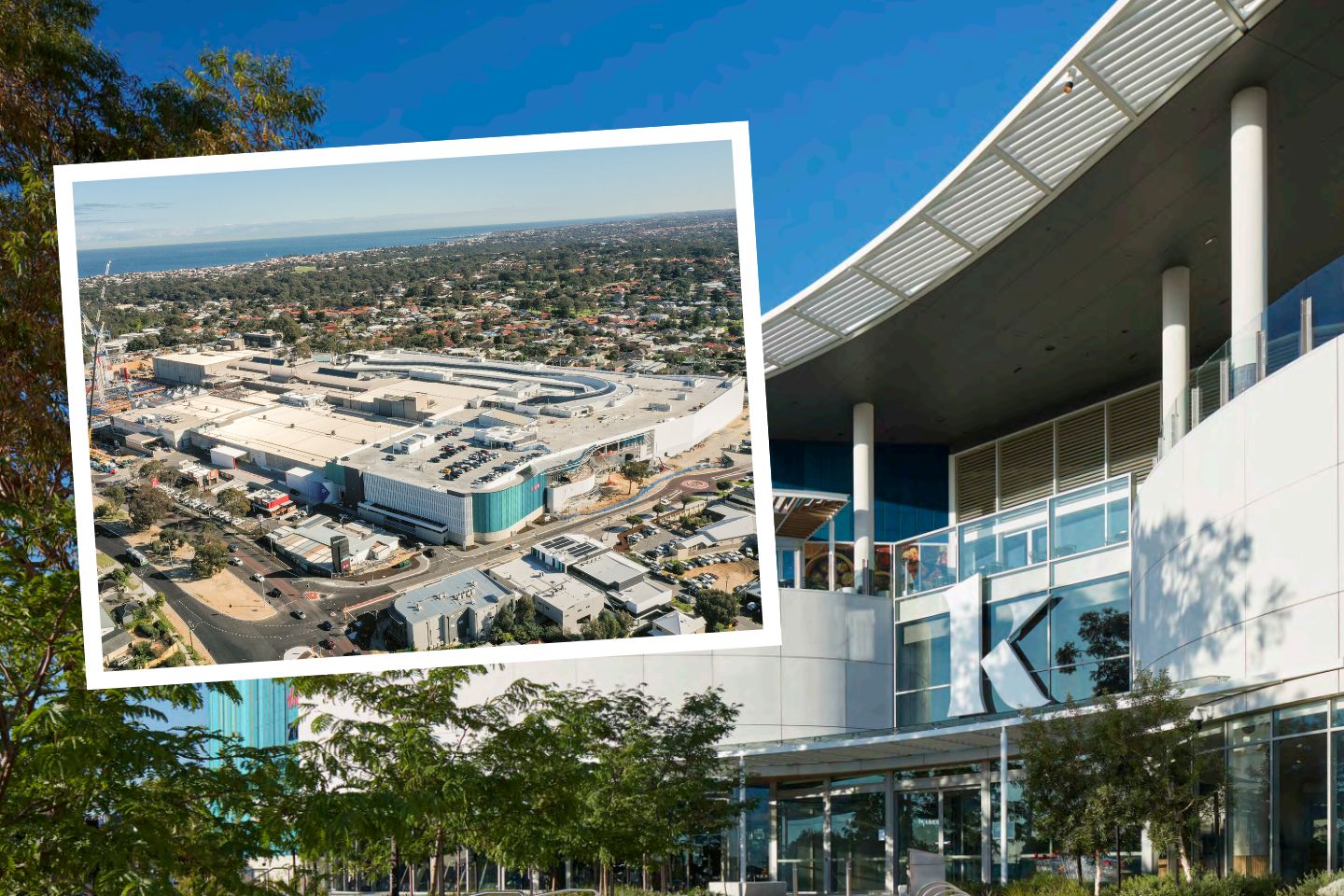
GPT Group is set to spend $27 million to increase the number of car parking bays at Karrinyup Shopping Centre to almost 5,000.

I’m a retail investor based in Sydney with three years of experience focusing on achieving financial independence through strategic investments in AI-driven companies. Although I don’t come from a traditional finance background, I’ve developed a strong passion for understanding how artificial intelligence is transforming the global economy. Over the past few years, I’ve become increasingly fascinated by the possibilities of AI—how it’s reshaping industries, driving innovation, and creating new investment frontiers. My portfolio is primarily centered around leading AI-related companies such as NVIDIA and others at the forefront of this technological revolution. I believe we’re only in the early stages of AI’s impact, and the coming decade will present remarkable opportunities for both retail and institutional investors. My goal is to continue learning, sharing insights, and building long-term wealth by investing in the technologies shaping our future.
Analyst’s Disclosure: I/we have a beneficial long position in the shares of AMD either through stock ownership, options, or other derivatives. I wrote this article myself, and it expresses my own opinions. I am not receiving compensation for it (other than from Seeking Alpha). I have no business relationship with any company whose stock is mentioned in this article.
Seeking Alpha’s Disclosure: Past performance is no guarantee of future results. No recommendation or advice is being given as to whether any investment is suitable for a particular investor. Any views or opinions expressed above may not reflect those of Seeking Alpha as a whole. Seeking Alpha is not a licensed securities dealer, broker or US investment adviser or investment bank. Our analysts are third party authors that include both professional investors and individual investors who may not be licensed or certified by any institute or regulatory body.

Liberty Metals chair Nicholas Katris has welcomed the junior’s board appointment of experienced North American resources executive, Steve Letwin
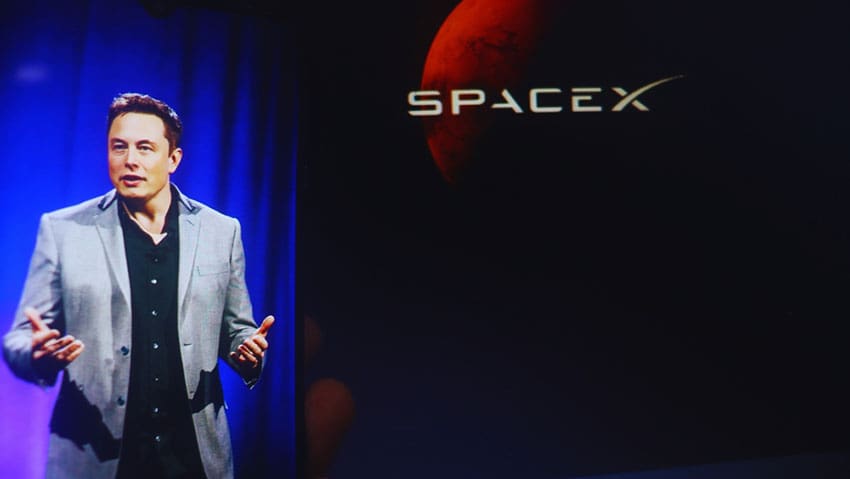
SpaceX reported revenue of $7.8 billion for the second quarter, up 92 per cent on the same period a year earlier, in its first earnings report since its June flotation. The figure was ahead of analysts’ average estimate of $6.8 billion.
The company said its net loss for the quarter narrowed to $541 million, from $1 billion a year earlier. Capital expenditure was $18.4 billion, in line with analysts’ average estimates.
Shares in the satellite, rockets and artificial intelligence company were trading down $8.49, or 6.9 per cent, at $116.77 in after-hours trading on Wall Street, valuing the business at $1.7 trillion. SpaceX floated at $135 a share in mid-June.
The stock rose in the first few days after the initial public offering, temporarily making Elon Musk the world’s first trillionaire. SpaceX has since lost more than $1 trillion in market capitalisation, and in July the shares fell below their $135 float price for the first time, leaving UK retail investors who put £271 million into the offering nursing paper losses.
The shares have come under pressure amid concern about the end of a lock-up on 6 August, when some employees and early investors will be able to sell. Investors have also been seeking more clarity on the AI business and a potential merger with Tesla, Musk’s electric vehicle company.
Starlink drives growth
Most of SpaceX’s revenue last year came from Starlink, its satellite internet service, and the company’s quarterly results statement shows the division continued to drive growth. Starlink delivered $4.3 billion in the quarter, up 66 per cent year on year.
SpaceX said it reached 12 million subscribers by the end of the second quarter, double the figure a year earlier. It also said it had been awarded more than $6 billion in US government contracts for Starshield, a version of Starlink providing a classified and encrypted signal. Government demand for the technology extends beyond the United States: the Ministry of Defence has spent £16.6 million with Starlink over four years, largely on terminals for Ukrainian forces and British personnel.
The AI business, which includes xAI, the Grok chatbot, the social media platform X and a data centre operation, has been the company’s largest area of investment. AI revenue rose 247 per cent year on year to $2.56 billion, while losses narrowed to $1.3 billion from $1.5 billion.
Space revenue grew 29 per cent year on year to $962 million, while losses in the division widened to $542 million from $369 million. The segment covers commercial launches, government missions and development of Starship. SpaceX said space revenues were supported by a “higher number of large customer launches” compared with a year earlier.
Bret Johnsen, SpaceX’s chief financial officer, said revenue growth “accelerated across all our business segments”.
From rockets to conglomerate
Musk, 55, founded SpaceX in Hawthorne, California, in 2002 as an aerospace manufacturer and space transportation company, with the stated goal of reducing launch costs to enable the colonisation of Mars. He has since built it into the world’s largest rocket business by launching thousands of Starlink satellites and developing reusable rockets.
The group disclosed its finances for the first time in May, reporting revenue of $18.7 billion for 2025 and a net loss of $4.9 billion, ahead of a listing that ranks as the largest in stock market history. Further segment data is published on the SpaceX investor relations site.
Musk has said he plans to build a city on the moon and put data centres in space.

Amy Ingham
Amy Ingham is a reporter at Business Matters, covering UK business news with a focus on breaking news, business policy, late payments and insolvency. She joined the magazine in 2026 after completing the NCTJ Diploma in Journalism at Harlow College’s journalism school. Her recent reporting includes British Steel’s nationalisation and its impact on SME suppliers, the decline in late payments by large firms, and Insolvency Service director disqualifications. Reach her at aingham@cbmeg.co.uk.

FCC Chairman Brendan Carr discusses ABC’s censorship accusations, national security bans on foreign power products, the stalled Paramount-Warner Bros merger and more on ‘Mornings with Maria.’
Some government regulations become outdated. Others become absurd. The FCC’s national television ownership cap has become both. For decades, Washington banned local television broadcast groups from reaching more than 39% of American households. The rule was built for a media world from the last century–a world of limited viewing options, a handful of networks, a captive audience with nowhere else to turn.
That world no longer exists.
Americans now get news, information, and entertainment from countless sources: YouTube, Netflix, TikTok, Facebook, Instagram, X–and also traditional TV. They consume content from global companies with market caps larger than the GDP of most countries.
And where are those companies headquartered? The coasts, from New York to San Francisco. They don’t care about the middle of this country. They don’t cover it. They don’t reflect it.
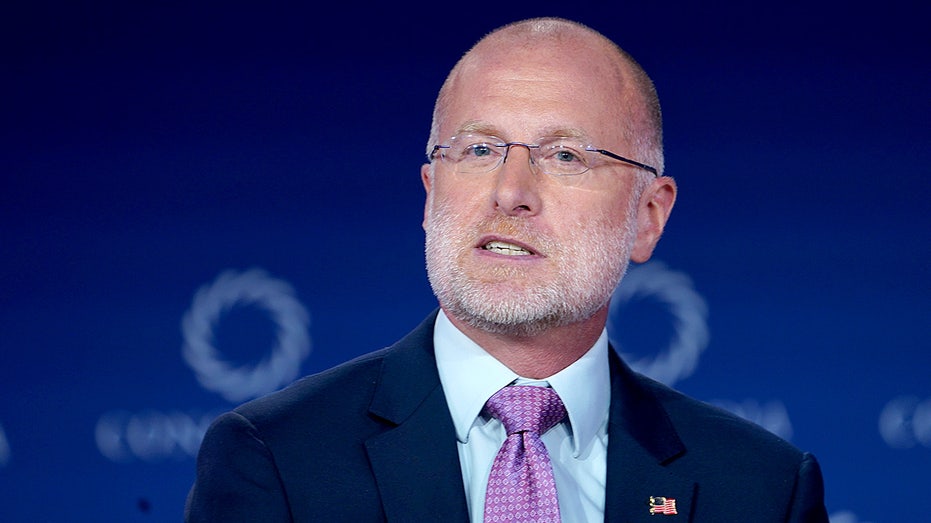
Federal Communications Commission Chairman Brendan Carr speaks onstage during the 2025 Concordia Annual Summit at the Sheraton New York Times Square in New York City on Sept. 22, 2025. (John Lamparski/Getty Images for Concordia Annual Summit / Getty Images)
Last month, several national TV networks refused to air President Trump’s primetime address on foreign adversaries meddling in American elections. That’s the media establishment in action, coastal elites deciding what you’re allowed to see.
FCC Chairman Brendan Carr is fighting back.
The commission recently advanced an order to repeal the national cap, a move that signals it is finally ready to confront one of the most indefensible media rules still on the books.
If Congress proposed capping Netflix at 39% of American households tomorrow, it would be laughed out of the room. But impose the same limit on broadcasters, and Washington’s regulatory class acts like it makes perfect sense.
The national cap is not a free-market policy, a conservative policy, or even a serious competition policy. It is the government picking winners and losers, tying one set of competitors down while everyone else runs free.
That is exactly the kind of government distortion conservatives have spent decades fighting.
Federal Communications Commission Chairman Brendan Carr joins ‘Mornings with Maria’ to discuss the FCC’s probe into soaring NFL streaming costs, an investigation into ABC’s ‘The View’ over equal time rules and a push for patriotic programming.
The cap’s defenders act like the internet never happened. Their arguments are self-serving and frozen in time. They warn about broadcasters getting too big while shrugging at trillion-dollar Big Tech firms that dominate digital advertising, online video, and the modern flow of information. They fret over local television stations while handing a free pass to companies with global reach and unchecked power.
The media marketplace has changed beyond recognition. The rules governing broadcasters have not.
Carr’s FCC is ready to fix that.
Repealing the cap won’t hand broadcasters a special favor. It will remove a government-imposed handicap. Broadcasters will still compete and have to win viewers, attract advertisers, and produce content people actually want to watch. They will simply do so under rules that reflect modern reality, not assumptions from a dead era.
Modernizing these rules won’t solve every problem facing local television. But it will eliminate a government-made barrier that serves no meaningful public-interest purpose. It will give local broadcasters the ability to push back against coastal elites and deliver the news Americans actually deserve to hear, not what’s filtered through a New York newsroom.
Carr deserves major credit for finally forcing this relic of media policy into the real world.
Business
SpaceX Beats Earnings Forecasts as Musk Warns Memory Chip Prices Will Keep Rising on AI Demand This Week

Space Exploration Technologies Corp. delivered stronger-than-expected results in its first earnings report as a public company on Tuesday, but shares fell sharply in after-hours trading as investors focused on soaring artificial intelligence spending rather than the revenue beat, while CEO Elon Musk used the call to warn that a global memory chip shortage could keep prices elevated for years.
SpaceX, which began trading on Nasdaq under the ticker SPCX following its initial public offering in mid-June, reported second-quarter revenue of $7.8 billion, a 92% increase from a year earlier and well above the market forecast of roughly $6.93 billion. Despite the beat, shares fell more than 7% in after-hours trading following the earnings release, extending a decline that has left the stock well below its IPO price in the weeks since the company’s record-setting debut.
Capital Spending Spooks Investors
The market’s negative reaction centered on the scale of SpaceX’s capital expenditures, which reached $18.4 billion for the quarter, roughly a sixfold increase from a year earlier and an 81.7% jump from the $10.1 billion spent in the first quarter. Of that total, $15.8 billion was directed toward the company’s artificial intelligence operations, a division that posted a $1.3 billion net operating loss for the period. SpaceX indicated that spending in the third and fourth quarters would likely remain at similarly elevated levels, a signal that appeared to unsettle investors already weighing questions about the sustainability of the company’s AI ambitions following its record $1.75 trillion valuation at the time of its IPO.
Musk Lays Out a Long-Term Vision
During the call, Musk outlined an ambitious roadmap for the company’s growth, including plans to launch a Starlink mobile service by the end of 2027, build lunar rocket-launch infrastructure by 2028, and reach $1 trillion in annual revenue by 2030. He also said the company could not rule out the possibility that Starlink would eventually provide most of the world’s internet access, adding that such a scenario was not something in the very distant future but less than a decade away. Musk further said the company plans to launch its Starship spacecraft at least once a day starting roughly a year from now, positioning the vehicle as a key driver of long-term growth for the space business.
Despite the scope of that vision, investors appeared largely unmoved, with the stock’s decline reflecting continued concern over the pace of AI-related spending and the looming expiration of employee share lockups, set to release as many as 911.5 million additional shares on Aug. 7 according to analysts at Deutsche Bank.
Communications and AI Businesses Drive Growth
Within SpaceX’s results, the communications segment, which includes the Starlink satellite internet service, led revenue growth, rising 66% from a year earlier to $4.29 billion. Starlink subscribers doubled over the past year to reach 12 million, with the service now deployed across 170 markets following the launch of more than 10,000 satellites into low Earth orbit. Revenue from the company’s AI business, which SpaceX has described as a future core operation, surged 250% to $2.56 billion, while the traditional space launch business grew 29% to $962 million.
Musk also addressed the company’s chip strategy directly, stating that SpaceX’s data centers would be built exclusively on Nvidia chips, a comment that sent shares of rival chipmaker AMD lower in after-hours trading even as AMD posted its own strong results the same day.
A Warning on Memory Chip Prices
Perhaps the most closely watched moment of the call came when Musk addressed the global memory chip market, arguing that current supply constraints represent the central bottleneck facing continued AI infrastructure expansion. Musk said memory chip production is increasing by roughly 20% annually, while demand is surging by more than 200%, a gap he said would keep prices climbing rather than falling under basic economic principles, directly rebutting a “memory peak-out” theory that had circulated among some market analysts in recent months.
The comments echoed remarks Musk made during Tesla’s second-quarter earnings call last month, when he said memory was currently in short supply and specifically thanked Micron Technology for allocating memory to the company, along with expressions of gratitude toward TSMC and Samsung Electronics. Industry observers noted that Musk’s willingness to name specific suppliers and express public gratitude during an earnings call was unusual, and some analysts suggested it reflected the growing dependence of Musk’s broader business empire on the AI semiconductor supply chain.
Musk’s remarks triggered a swift reaction across memory chip stocks. Micron shares closed up more than 7% following the comments, while American depositary receipts of South Korea’s SK Hynix also advanced in New York trading. Analysts at consulting firm Deloitte have separately forecast that global memory chip sales could exceed $1 trillion in 2027, up sharply from approximately $230 billion in 2025, with memory supply tightness potentially persisting into 2029 or 2030 if hyperscale cloud providers continue expanding their data center investments at current rates.
AMD Posts Its Own AI-Driven Surge
SpaceX’s results arrived alongside a strong earnings report from AMD, which has emerged as a leading rival to Nvidia in the AI chip market. AMD reported second-quarter data center revenue of $6.72 billion, more than double the figure from a year earlier, driven by robust demand tied to AI infrastructure buildouts. The company forecast third-quarter revenue of $13 billion, above the market consensus estimate of $12.52 billion, citing continued growth in demand from large-scale AI data center expansion.
A Broader Signal for the AI Supply Chain
Taken together, the results from SpaceX and AMD reinforced a broader theme among analysts covering the AI infrastructure buildout: that demand for the underlying chips and memory components powering artificial intelligence systems continues to outstrip available supply, even as some individual companies face investor skepticism over the scale and pace of their own capital spending. For SpaceX specifically, the coming quarters are likely to remain a focal point for investors weighing the company’s long-term growth ambitions against the near-term financial strain of its aggressive AI infrastructure investments.
Business
(VIDEO) Justin Bieber Reacts to BTS Grammy Boycott as Support for K-Pop Group Grows Across the Industry

BTS’s decision to withdraw from consideration at the 2027 Grammy Awards has continued to draw reaction from across the music industry in the days since the announcement, with pop star Justin Bieber among the figures who have weighed in publicly as the controversy surrounding the Recording Academy’s new Best Asian Pop Music Performance category shows no sign of fading.
Bieber’s involvement in the ongoing conversation follows his appearance alongside BTS at one of the summer’s most-watched entertainment events. On July 19, Bieber joined Madonna, Shakira, Burna Boy and the seven members of BTS on stage during the halftime show of the FIFA World Cup final at MetLife Stadium in East Rutherford, New Jersey, a Chris Martin-curated performance that put th
How the Boycott Began
BTS’s decision traces back to July 29, when all seven members, RM, Jin, Suga, J-Hope, Jimin, V and Jungkook, posted identical statements to their individual Instagram accounts announcing they would not submit any music for consideration at the 69th Grammy Awards, scheduled for Feb. 7, 2027. The group said it hoped music could be heard and loved for what it is, rather than being divided by region or language, and thanked its fanbase, known as ARMY, for their continued support. The statement did not explicitly name a category, but it was widely interpreted as a direct response to the Recording Academy’s June 16 announcement of Best Asian Pop Music Performance, a new award requiring meaningful use of one or more Asian languages that many critics argue effectively walls K-pop and other non-English Asian pop off from the ceremony’s marquee general-field categories.
The withdrawal came at a moment when BTS appeared to have its strongest Grammy prospects in years. The group’s fifth studio album, “Arirang,” released in March following the members’ return from South Korea’s mandatory military service, debuted at No. 1 on the Billboard 200 and topped charts in 23 countries, while lead single “SWIM” became the group’s highest-charting entry on the Hot 100 to date. BTS had collected five prior Grammy nominations without a win, for “Dynamite,” “Butter,” “My Universe” and its featured role on Coldplay’s “Music of the Spheres,” and had previously described the Grammys as the “last summit” left for the group to climb.
Industry Reaction Continues to Build
Support for BTS’s stance has come from a range of figures inside and outside the K-pop industry in the days since the announcement. Tablo, frontman of the Korean hip-hop group Epik High, publicly backed the decision on social media, as did Maggie Kang, the Korean Canadian director of Netflix’s animated hit “KPop Demon Hunters,” and Mike WiLL Made-It, the American producer behind the “Arirang” track “Aliens,” which surged to No. 1 on iTunes charts in 78 countries following the boycott announcement as fans rallied behind the group.
CedarBough T. Saeji, a K-pop scholar at Pusan National University, has offered a pointed critique of the new category’s design, telling reporters that while some within the Recording Academy likely viewed the addition as inclusive, nothing about categories like Record of the Year or Best Pop Duo/Group Performance needs to exclude music made by non-American artists. Anton Hur, a translator known for his work on a bestselling book about BTS, separately praised the group’s decision on social media, calling it the right call.
The Recording Academy’s Response
Recording Academy CEO Harvey Mason Jr. addressed the boycott directly in a statement, saying he was saddened to hear that BTS had chosen not to participate in the Grammy Awards process this year, while adding that he understood and respected the group’s decision as a fellow music creator. Mason has since sought to clarify the intent behind the new category, stating that submitting music in a genre category such as Asian Pop, or Jazz, or Country does not exclude an artist from also being considered in the Grammys’ General Field, which includes Record of the Year, Album of the Year and Song of the Year. He said recognition in a genre category and recognition in the General Field are not mutually exclusive, and that an artist can pursue both simultaneously.
That explanation has done little to quiet critics, some of whom point to a pattern across the awards industry of introducing specialized categories for K-pop only after the genre has become too commercially significant to ignore. Since 2020, when BTS became the first Asian act nominated in MTV’s main Video Music Award pop category alongside artists including the Jonas Brothers, Lady Gaga and Bieber himself, several major award shows including the American Music Awards, MTV Europe Music Awards, iHeartRadio Music Awards and Billboard Music Awards have introduced K-pop-specific categories of their own.
A Boycott With Limits
Despite the wave of public support, BTS’s management company HYBE has clarified that the withdrawal does not represent a company-wide boycott, and that neither the group nor its label has asked other artists to follow suit. That distinction has proven significant: while individual voices across music and entertainment have expressed solidarity with BTS in the weeks since the announcement, no other major K-pop act has formally joined the group in withdrawing music from Grammy consideration, with submissions for the ceremony’s new categories remaining open through Aug. 28.
With BTS out of contention, the inaugural Best Asian Pop Music Performance award will go to another act when nominees are announced in mid-November, with industry observers naming groups including ATEEZ, Stray Kids, Hearts2Hearts, BINI and CORTIS among the likely contenders. As the submission window continues, attention remains focused on whether additional artists, drawing further public commentary from figures across the industry, ultimately follow BTS’s lead or choose instead to compete for a category the K-pop pioneers themselves declined to enter.
Business
Knife River Corporation 2026 Q2 – Results – Earnings Call Presentation (NYSE:KNF) 2026-08-05


Seeking Alpha’s transcripts team is responsible for the development of all of our transcript-related projects. We currently publish thousands of quarterly earnings calls per quarter on our site and are continuing to grow and expand our coverage. The purpose of this profile is to allow us to share with our readers new transcript-related developments. Thanks, SA Transcripts Team

Crypto Holders.. this is not good
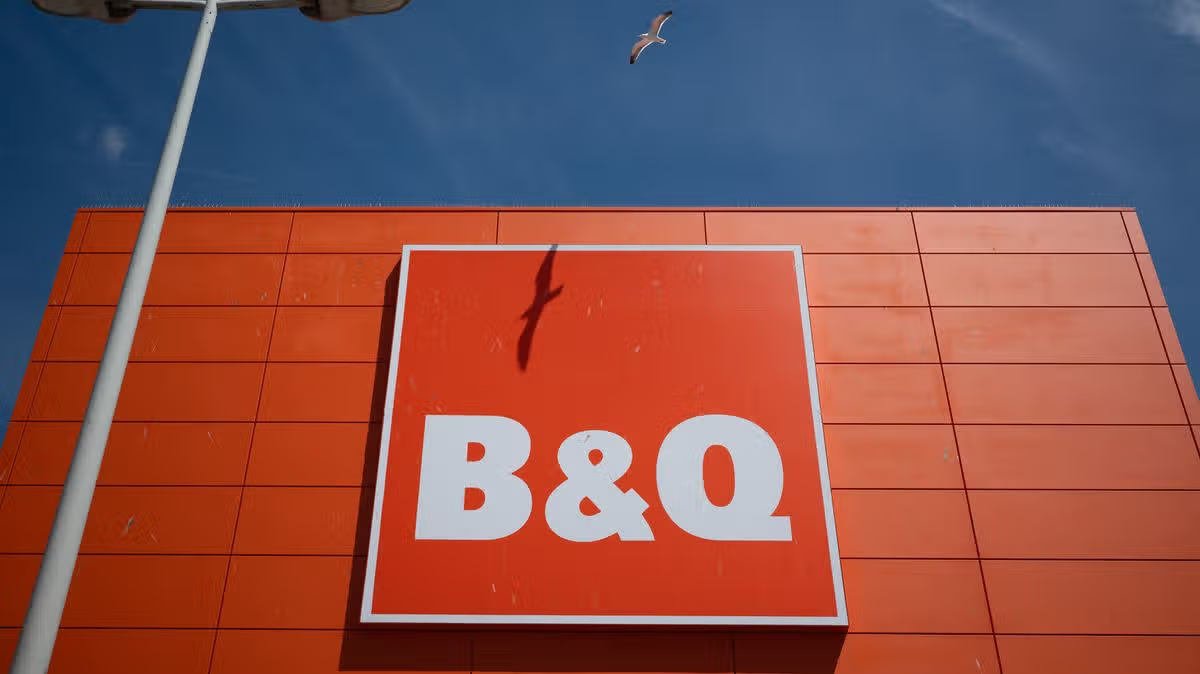
B&Q table fan issued with ‘stop using immediately’ warning due to ‘electric shock and fire risk’

Uber Revenue Climbs 12% to $14.2 Billion as Delivery Growth Offsets Weak Q3 Guidance Here’s Why


-

 Business7 days ago
Why Trees Belong on the Risk Register
-

 Fashion5 days ago
Weekend Open Thread: Wit & Wisdom
-

 Politics5 days ago
Meta enters AI-training agreement with far-right ‘propaganda rag’ Newsmax
-

 Politics7 days ago
Reform UK betrays West Mids residents by running from party pledges
-

 Politics3 days ago
Zack Polanski: an incitement to murder Nigel Farage?
-

 Crypto World4 days ago
MicroStrategy Post-Earnings CLARITY Act Push Could Add New Catalyst for Its Stock
-

 Crypto World4 days ago
XRP Ledger v3.3.0 brings five institutional features
-

 News Videos6 days ago
Bitcoin Enters the 3rd Stage of the Bear Market
-

 Politics6 days ago
Luke Littler’s dominance sparks GOAT debate
-

 Sports5 days ago
Seema Kaliramna Wins Discus Throw Bronze, Takes India’s CWG Medals Tally To 17
-

 Crypto World4 days ago
New York sues Kalshi over prediction market gambling
-

 Crypto World3 days ago
Crypto PAC spending tops $2M in Michigan House race
-

 Tech7 days ago
Gemini can now summarize the messiest comment threads in Google Docs
-

 Business5 days ago
Trump Announces Hamas Disarmament Agreement as Iran Strikes Kuwait Air Base and US Attacks Pause Overnight
-

 Tech3 days ago
ESET tracks rise in malicious AI skills and adaptable malware
-

 Business2 days ago
DTCR: Deleveraging And A Hedge Fund Collapse Point To A Possible AI Bottom
-

 Tech5 days ago
Gemini Spark can now use Chrome logins and saved passwords to run errands on your behalf
-
 Tech5 days ago
Building A Reproduction PlayStation Motherboard
-
 Crypto World5 days ago
3 Fed Officials Just Explained Their Rate Hike Vote: Is Inflation Winning?
-

 Sports7 days ago
Sakshi, Arundhati Enter Boxing Semi-Finals. India Assured Of 18 Medals At CWG 2026
You must be logged in to post a comment Login