Connect with us
DAPA Banner
DAPA Coin
DAPA
COIN PAYMENT ASSET
PRIVACY · BLOCKDAG · HOMOMORPHIC ENCRYPTION · RUST
ElGamal Encrypted MINE DAPA
🚫 GENESIS SOLD OUT
DAPAPAY COMING

Business

Farming unions react to Welsh Government’s Sustainable Farming Scheme funding plans

Published

on

Business Live

It will provide more than £1bn to Welsh farmers up to 2030

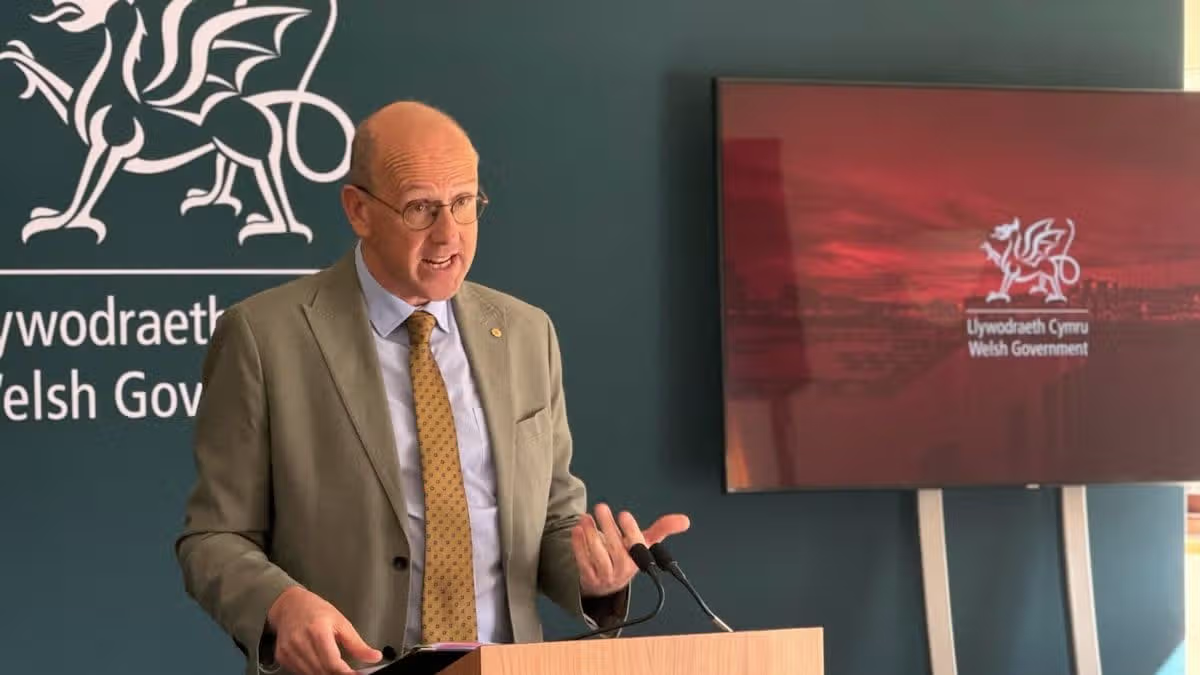
Cabinet Minister for Rural Resilience and Sustainability Llyr Gruffydd.

Welsh farmers will receive over £1bn across this Senedd term to support sustainable agriculture, which the Welsh Government said will give the sector the long-term certainty needed to plan and invest with confidence.

Cabinet Minister for Rural Resilience and Sustainability, Llyr Gruffydd, made the announcement at the Royal Welsh Show. The commitment delivers £340m per year for three years to March 2030 for the Sustainable Farming Scheme (SFS), including a guaranteed £238m per year for the universal layer and £102m for delivering the optional and collaborative layers.

Advertisement

The settlement though is around the same as farms have been receiving since 2012. The sector has been seeking £500m to take account of inflation.

The Welsh Government said the move ends the year-to-year funding model that has made long-term planning difficult for farming businesses. It fulfils a pledge made in the Plaid Cymru Government’s first 100 days to provide a multi-annual budget for the SFS.

Mr Gruffydd said: “Giving farmers only 12 months’ line of sight to funding is not sufficient. We know how hard it is to plan and make business decisions without knowing what funding is coming. Farmers told us loud and clear they need certainty and stability – and that is exactly what we are delivering.”

Following early feedback from the independent review into the bureaucratic burden on family farms, led by John Davies, the minister also announced early action to cut red tape for farmers.

Advertisement

The Welsh Government has announced a simplification of the approach for the Animal Health Improvement Cycle (AHIC) in the universal layer of the SFS. The Welsh Government said it will work with any interested farm assurance scheme to ensure requirements are aligned, meaning farmers in those schemes will only need to complete one form from 2027 delivering two outcomes from a single vet visit: farm assurance and SFS compliance.

The minister also announced that the roll out of some optional actions and that the new window of the Integrated Natural Resources Scheme will open later in the year, a key element feeding into the collaborative layer.

Welsh Conservative Shadow Farming Minister Andrew RT Davies said: “This represents a real terms cut to farming support and falls far short of what farmers warned is required. “Plaid Cymru separatists have found money to fund a Nation of Sanctuary for asylum seekers, but won’t fund Welsh farming adequately. Their priorities are all wrong.”

NFU Cymru President Abi Reader said: “It is the universal layer – and in particular the social value payment within this layer – that provides stability to farm businesses. It is this support that underpins the production of high-quality food for the nation, keeps farming families on the land and supports our rural communities, heritage, culture and language. That is why we warmly welcome the confirmation that the cabinet minister will stick with the 70:30 (universal and optional and collaborative layers) split for the length of this Senedd term.

Advertisement

“This year we have seen farm-gate prices fall in some key sectors and input prices soar in response to global instability. This move to a ring-fenced multi-annual system of farm support, coupled with a 70:30 funding split, will underpin the financial resilience of family farms and help them ride out these challenges, whilst at the same time helping deliver on our ambition for the sustainable growth of the sector.

“Farming is a long-term business with production and business investment cycles which run into many years. By moving away from a funding arrangement which offered no funding certainty from one year to the next, and by allocating 70% of the funding resource to the universal layer, the Welsh Government has recognised the volatile marketplace and complex long-term production cycles we work within. I very much commend the Welsh Government on its announcement, one that provides long term stability not just to Welsh farming but, as evidenced by all the businesses in attendance at the show, also to all those who rely on Welsh agriculture for so much of their income.”

FUW president, Ian Rickman said: “Recent years have brought significant financial uncertainty for the farming sector in Wales, making it increasingly difficult for businesses to plan with confidence and make informed long-term financial decisions.The FUW has consistently called for a five-year funding framework, so today’s commitment to provide certainty until March 2030 is a welcomed relief for the family farms of Wales. It provides much-needed stability and a stronger foundation for the remainder of the decade, giving businesses greater confidence to plan for the future.

“The minister’s commitment should also be viewed in the context of mounting budgetary pressures and evolving decisions in Westminster, both of which could have significant implications for Wales over the coming years.

Advertisement

“Our Senedd Election manifesto emphasised that Welsh farmers should not be disadvantaged for transitioning to a new system of support that places greater societal and environmental demands on their businesses. On this basis, we continue to highlight the need to increase the base-level funding of the SFS to mitigate any economic impacts and match the policy ambitions of the Welsh Government.

“To this end, we will continue to work closely with the Welsh Government to ensure that the universal baseline payment rates are appropriate, and that every penny of the SFS budget is received by the active farmers of Wales.

“Providing farming businesses with the certainty they need to make informed decisions is essential. Today’s announcement therefore represents a major milestone for agricultural support in Wales and an important step towards delivering the long-term confidence that Welsh farmers have been seeking.”

Victoria Bond, director of the Country Land and Business Association Cymru, said:“We are pleased that the Welsh Government has listened to the sector and delivered on its pledge for multi-annual funding. Certainty is essential for farmers and rural businesses that form the backbone of Wales’ countryside. This announcement at the Royal Welsh Show sends a positive signal and we particularly note the early steps to cut red tape following the John Davies review.

Advertisement

“Simplifying the animal health improvement cycle and aligning it with existing farm assurance schemes from 2027 is a sensible move that will reduce bureaucracy and ease the burden on farmers. However, success will depend on practical implementation, clear guidance and genuine partnership working with the sector. We will continue to push for further reductions in red tape burdens so that farmers can focus on delivering environmental, social and economic outcomes on the ground.”


Continue Reading
Click to comment

You must be logged in to post a comment Login

Leave a Reply

Business

Poland stocks higher at close of trade; WIG30 up 1.62%

Published

on


Poland stocks higher at close of trade; WIG30 up 1.62%

Continue Reading

Business

Opinion: Turning trust into opportunity

Published

on

Opinion: Turning trust into opportunity

OPINION: Australia is already engaged in a borderless conflict and Canberra’s defences are struggling to keep pace.

Continue Reading

Business

Viper Energy: A Good, But Not Great Option

Published

on

The Better Trade In Permian Water: Pairing WaterBridge With LandBridge (NYSE:WBI)

Viper Energy: A Good, But Not Great Option

Continue Reading

Business

GM announces new gas-powered Cadillac vehicles amid EV pullback

Published

on

GM announces new gas-powered Cadillac vehicles amid EV pullback

2025 Cadillac Escalade V-Series SUV

Cadillac

DETROIT — General Motors will launch new gas-powered Cadillac vehicles beginning next spring as the automaker continues to shift gears away from all-electric vehicles.

Advertisement

GM CEO Mary Barra said Tuesday that the next-generation Cadillacs will include new versions of the company’s CT5 sedan, outdated XT5 midsize SUV and discontinued three-row XT6 SUV.

“Starting next spring and continuing into 2028, we will begin launching the next generation of Cadillac ICE [internal combustion engine] vehicles,” Barra said during the company’s second-quarter earnings call. She said the vehicles will be in addition to Cadillac’s current all-electric crossovers and Escalade SUV.

The new product announcements add to GM’s pullback in EVs. The automaker had planned for Cadillac to exclusively sell electric vehicles by the end of this decade. The company also has walked back EV plans for other brands and increased gas-powered engine production, including V-8 offerings.

GM has recorded $10.9 billion in EV-related charges since the second half of last year after slower-than-expected electric vehicle adoption as well as U.S. regulatory changes easing emissions standards and eliminating support for EVs.

Advertisement

Barra reiterated that GM’s plans include “onshoring significant manufacturing” for the Detroit automaker beginning next year, in part by expanding production of its full-size SUVs to a Michigan plant that was previously slated to build EVs.

The full-size SUVs — Escalade, Chevy Tahoe and Suburban, and GMC Yukon and Yukon XL — are currently exclusively produced at the company’s Arlington Assembly plant in Texas.

Choose CNBC as your preferred source on Google and never miss a moment from the most trusted name in business news.
Continue Reading

Business

Why Your Team Is Your Most Underused Marketing Channel on LinkedIn

Published

on

Why Your Team Is Your Most Underused Marketing Channel on LinkedIn

A mid-sized company can spend months perfecting a LinkedIn page that a few hundred people follow, while the audience it actually wants sits quietly in the contact lists of its own staff.

Every employee who logs in brings a network of clients, suppliers, former colleagues and peers. Added together, that reach usually dwarfs anything the corporate account can manage on its own. For smaller businesses without a large media budget, this is one of the few channels where size is not the deciding factor.

The reach already sits inside your business

The instinct of most owners is to push everything through the brand account, then wonder why engagement stays flat. People follow people. A post from a recognisable colleague lands in a feed with a face and a name attached, and it carries a credibility no logo can buy. This is the thinking behind a deliberate employee advocacy strategy: instead of asking the marketing team to shout louder, you give the wider workforce a simple, low-effort way to share what the company is doing in their own words.

The barrier has never really been willingness. Most staff are happy to support the business they work for. The barrier is friction. People do not know what to post, worry about getting the tone wrong, or simply forget. Remove those obstacles and participation climbs quickly.

Turning goodwill into a repeatable habit

The firms that get this right treat sharing as a light routine rather than a campaign: a short prompt, a draft they can edit, a nudge at the right moment. Newer thought leadership software now handles much of that groundwork, suggesting angles based on someone’s role and letting them rewrite a post so it still sounds like them rather than a press release. The technology matters less than the principle: keep it personal, keep it easy, and let consistency do the heavy lifting.

Advertisement

Measurement helps too, though it is easy to overcomplicate. Track how many people are active, which themes earn replies, and whether any of it turns into conversations with prospects. As recent coverage in the magazine’s business news pages has shown, buyers increasingly research suppliers through the individuals behind them long before they ever fill in a contact form.

There is a cultural payoff as well. When employees post about their work, they tend to feel more connected to it. Recruitment gets easier because candidates can see real people enjoying real projects. The company page becomes a supporting act rather than the entire show, which is exactly where it belongs for most growing businesses.

None of this requires a rebrand or a six-figure agency retainer. It asks for a clear reason to take part, a bit of structure, and the patience to let a handful of regular contributors set the tone. The businesses that build that habit now will own a presence on LinkedIn that competitors with deeper pockets find surprisingly hard to copy, because it rests on something they cannot simply buy: the trust their own people have already earned.

Advertisement

Continue Reading

Business

AMD: Get Out While You Still Can

Published

on

AMD: Get Out While You Still Can

AMD: Get Out While You Still Can

Continue Reading

Business

Inflation Fog Thickens: War, Data Changes, And Diverging Indicators Test The Fed’s Nerve

Published

on

Inflation Fog Thickens: War, Data Changes, And Diverging Indicators Test The Fed's Nerve

Inflation Economy Politics Crisis Policy

Getty Images

By James Picerno

The outlook for the Federal Reserve’s mandate to control inflation isn’t getting any easier.

The Middle East conflict is escalating again, creating new shipping bottlenecks for energy exports from the region, which could delay – and possibly reverse – the

Advertisement
Continue Reading

Business

Iceland boss Lord Walker quits cost of living role

Published

on

Iceland boss Lord Walker quits cost of living role

The businessman brought in to fix Britain’s cost of living crisis has quit, declaring it “damn hard to get anything done” in Whitehall, the day before Andy Burnham sets out measures to give families more “breathing space” on rising bills.

Lord Walker of Broxton, the executive chairman of Iceland Foods, was appointed by Sir Keir Starmer in February to “work across government” as cost of living champion. Announcing on LinkedIn that his role had “expired” with Starmer’s departure, he warned the new prime minister that he “doesn’t have time for rests and delays”.

His parting verdict on government will ring true for any business owner who has waited months for a policy decision. “Plans are all very good but daily political machinations consume everything,” he wrote, adding that restricted communication flows mean “anyone from the outside with fresh ideas” can be frozen out.

Walker saved his sharpest criticism for the building itself, saying No 10 “as a building is not fit for purpose”. “The 17th Century rabbit-warren design makes collaborative co-working impossible,” he wrote.

His advice to Burnham was to make plans for a No 10 North “more than just a PR exercise”. “I would move the cost of living remit into there and away from the Westminster bubble to make policy work better for every part of the country.”

Advertisement

Walker is not the only business figure heading for the exit. Lord Timpson, former chief executive of the shoe repair and key-cutting chain, is also leaving his role as prisons minister, pointing to “green shoots” in the system and saying he looked forward to returning to lead the family business. For SMEs hoping commercial experience would carry weight inside government, the departure of two of its most prominent business voices within days of a new premiership is not an encouraging signal.

The resignations landed as business groups gave a cautious welcome to Burnham’s first speech as prime minister, in which he spoke of the need to “regain our stability” and a “new economic model”, including a “ten-year plan”, devolution, “stronger public control” of “life’s essentials”, more council homes and “re-industrialising Britain, using public procurement to back British industry”. It follows weeks of business leaders demanding an end to drift and delay during the handover of power.

Their message now is that firms must not be an afterthought. Shevaun Haviland, director general of the British Chambers of Commerce, said: “The cost of living and the cost of doing business are two sides of the same coin. Our surveys show energy and taxation are squeezing businesses, hitting confidence and investment. Easing the cost of doing business will deliver the growth we all want to see.”

Burnham has already pledged a 20 per cent business rates cut for pubs and high street firms, but recruiters want him to go further. Neil Carberry, chief executive of the REC, said “firms across the country need to see action. Over the past few years, businesses have seen a swathe of well-intentioned policies raise costs and dampen hiring, contributing to the rising cost of living people face.”

Advertisement

He urged Burnham to insert “pragmatism into the unworkable elements of the government’s employment law changes, reducing the tax wedge on hiring people, and re-invigorating the industrial strategy with the kind of skills, planning and infrastructure reforms that will get private capital working”. Small firms have long warned the employment law overhaul would hit hiring.

The Institute for Fiscal Studies offered a colder dose of realism. Helen Miller, its director, said: “Seeking to rewire the British state, against a backdrop of constrained public finances and with an in-tray full of domestic and international challenges, will require much more than ambition.”

She added that the government “will need to quickly flesh out the vision of what it wants to achieve and be ruthless in its prioritisation”, warning that generous NHS settlements would mean cuts elsewhere, and that on council housing “the subsidies required won’t come cheap”.

With consumer price inflation still running at 2.8 per cent, Burnham’s breathing space cannot come soon enough, for households or the firms that serve them. Walker’s parting message suggests delivering it from inside the rabbit warren will be the hard part.

Advertisement

Jamie Young

Jamie Young

Jamie Young is Senior Reporter at Business Matters, covering SME finance, employment law and Westminster policy since 2016. He has reported on every Budget and Autumn Statement since 2018, helped make sense of the ‘covid era’ and the bounce-back loan scheme from launch through the fraud investigations, and broke the magazine’s coverage of the 2024 late-payment reforms. He joined Business Matters straight from completing his BA in Administration from Exeter University and is NCTJ-qualified. Reach him at jyoung@cbmeg.co.uk

Advertisement
Continue Reading

Business

US Treasury intercepts nearly $99M in payments to deceased people

Published

on

US Treasury intercepts nearly $99M in payments to deceased people

The U.S. Department of the Treasury has prevented nearly $99 million in federal payments from being disbursed to deceased individuals using a new verification system deployed under President Donald Trump’s executive order targeting government fraud, waste and abuse.

Following Executive Order 14249, “Protecting America’s Bank Account Against Fraud, Waste, and Abuse,” the Department of the Treasury and the Bureau of the Fiscal Service implemented a verification process that reviewed more than 885 million payments totaling approximately $2.77 trillion.

Advertisement

That screening flagged more than 4,900 payments totaling nearly $99 million that were associated with deceased individuals, returning the payments to the originating federal agencies for review before any funds were disbursed.

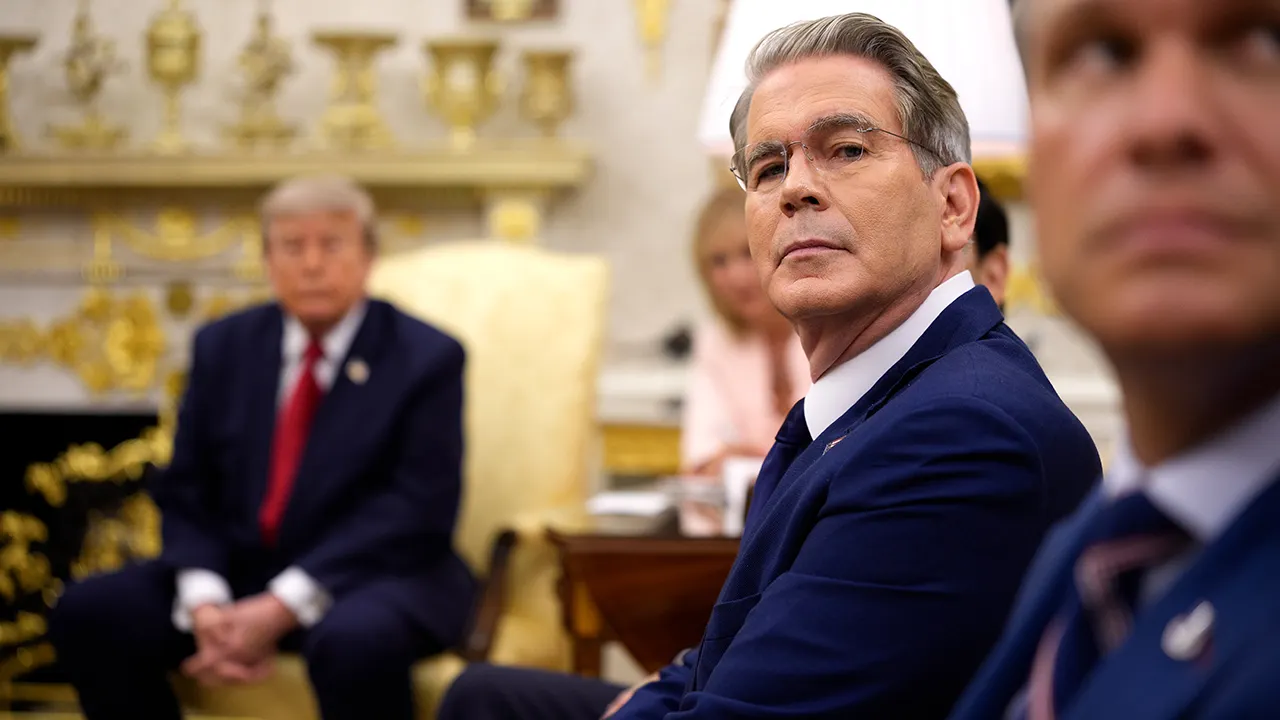
Scott Bessent in Oval Office

Treasury Secretary Scott Bessent attends a meeting with President Donald Trump and other Cabinet members. (Getty Images)

BESSENT CREDITS TRUMP IMMIGRATION POLICIES WITH HELPING RETURN JOBS TO AMERICANS AS WAGE GAINS RESUME

“So far, we’ve saved about $100 million, payments that didn’t go to deceased people… We think that there’s up to $350 million that we can stop before the end of this year,” Treasury Secretary Scott Bessent said on “Mornings with Maria” Tuesday. “The [Government Accountability Office] estimates that… this number might be up to $500 billion, which is about 1.66% of GDP. So that could go a long way towards paying down the debt, providing more services, and this is just the start.”

“In the Biden administration, HHS got rid of about 50 or 60 of the people who were charged with monitoring fraud. And, Maria, what’s important here is that we are stopping the money from going out. So once the money gets out, trying to retrieve it, it’s very, very difficult. So stopping it at the source here is our goal,” he continued.

Advertisement

The initiative relies on permanent access to the Social Security Administration’s Full Death Master File, access that was initially granted on a temporary three-year basis in 2021 through the Consolidated Appropriations Act, according to a Treasury press release.

GET FOX BUSINESS ON THE GO BY CLICKING HERE

Following initial projections estimating $330 million in net benefits between 2024 and 2026, Congress made the verification authority permanent through the “Ending Improper Payments to Deceased People Act,” which President Trump signed into law in February.

Advertisement

“This new safeguard addresses a longstanding vulnerability and helps ensure every dollar the federal government spends reaches its intended recipient,” Bessent also said in the press release. “Treasury will continue efforts to modernize the federal payment system, strengthen safeguards against fraud and improper payments, and protect taxpayer dollars.”

READ MORE FROM FOX BUSINESS

Continue Reading

Business

Ozempic-maker Novo Nordisk sues rival Eli Lilly, accusing it of false advertising

Published

on

Two young women surrounded by studio lights and tripods selling eyelash serums on a live stream

The maker of Wegovy and Ozempic, Novo Nordisk, has launched legal action accusing its arch rival Eli Lilly of false advertising in suggesting its weight-loss drugs perform better.

The Danish company filed a lawsuit in the US on Tuesday claiming Eli Lilly, which makes Mounjaro and Zepbound, deployed ad campaigns to “create the misleading impression that Eli Lilly’s medicines are superior”.

Novo said its rival compared the highest approved doses of its medicines for obesity and type-2 diabetes with lower doses of Novo Nordisk’s, while omitting newer, higher-dose options.

The BBC has contacted Eli Lilly for comment.

Advertisement

The lawsuit comes as Novo and Eli Lilly are locked in battle to dominate the fast–growing weight-loss drug industry, especially in the US, which analysts have estimated could be worth more than $100bn by 2030.

Novo Nordisk claimed its main competitor in the weight-loss drug business had committed “multiple violations” of federal and state false advertising and unfair competition laws, through its nationwide ad campaigns.

The company said Eli Lilly’s current campaigns “intentionally” selected outdated studies comparing Lilly’s highest doses against lower doses of Novo Nordisk’s medicines.

It said the ads had “deceptively” presented that Eli Lilly’s products were superior, but buried or omitted “critical clinical context”.

Advertisement

The products being compared incorrectly, according to Novo, were Mounjaro vs. Ozempic and Zepbound vs Wegovy.

“As new and more effective treatment options become available, people deserve accurate information that reflects the latest scientific evidence and helps them make informed care decisions,” said John F. Kuckelman, senior vice president and group general counsel for Novo Nordisk.

“Healthcare companies have a responsibility to keep their public claims accurate and current – ineffective, fine-print disclaimers do not fix the misleading impression created by major national campaigns,” he said.

Novo said it was seeking a court order requiring Eli Lilly to pull its ads and instead run what it called a “corrective advertising campaign”.

Advertisement

It added if Eli Lilly did not voluntarily remove the commercials, it would file a motion in the coming days to seek a preliminary injunction to block them.

Continue Reading

Trending

Copyright © 2025