Connect with us

Business

FBI and Sheriff’s Office Clash as Search Near Tucson Home Resumes in Arizona

Published

on

Nancy Guthrie

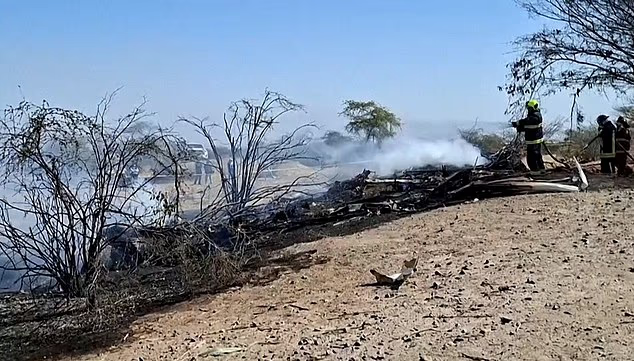
TUCSON, Ariz. — More than six months after Nancy Guthrie disappeared from her Tucson home, a neighbor says FBI agents were recently seen searching the desert brush behind the property, even as tension between federal and local investigators over how the case has been handled continues to surface publicly.

The neighbor, who lives just a few houses away, told Fox News Digital she spotted agents combing the scrubland behind Guthrie’s home in late July, just days before the disappearance reached its six-month mark on Aug. 1. She said she recognized several of the faces from earlier searches conducted in connection with the case. A spokesperson for the Pima County Sheriff’s Department said no task force investigators had recently returned to the area, leaving an unresolved discrepancy between the two accounts.

Weather May Have Reshaped the Search Area

Retired Pima County Sheriff’s Department lieutenant and former SWAT commander Bob Krygier offered a possible explanation for renewed activity near Guthrie’s property, pointing to Tucson’s monsoon season as a factor that could have physically altered the landscape behind her home. “About a month ago, monsoon season started here in Tucson, and a lot of water has come down – a lot of water at once, and it pushes things,” Krygier told Fox News Digital. “So it’s moved the environment. Rocks have been pushed away.”

Advertisement

Krygier said floodwaters in the area can rise as high as 12 feet, generating enough force to sweep away vehicles, trees and even people. “All that water, it’s rushing fast, and it’s taken not only the people, but it’s taken cars, it’s taken trees, branches, rocks, all of this stuff, and basically turned into a big blender,” he said.

Beyond the possibility of weather-altered terrain, Krygier suggested investigators may simply be returning to previously searched ground with fresh eyes now that the case has passed the six-month mark, or responding to new tips pointing toward a specific location. “There’s a couple of different reasons that go through my mind first is going to be they got some leads, they got some new tips that are viable, and they’re out there looking for something specific or in an area specific to that, because I’m certain that they’ve searched those areas already,” he said.

A Public Rift Between the FBI and Local Investigators

Beyond the renewed search activity, the case has also been marked by an increasingly public disagreement between the FBI and the Pima County Sheriff’s Department over how the investigation has been managed. In May, Sheriff Chris Nanos said he had stopped speaking directly with the Guthrie family, saying the FBI had taken over those communications. FBI Director Kash Patel later said his agency had been “kept out of the investigation” for four days at one point, a claim Nanos disputed directly, calling it “factually inaccurate.”

Advertisement

A source speaking to RadarOnline offered a blunt assessment of the friction between the two agencies. “Instead of advancing the case, Pima County and the FBI are playing the blame game. That is unacceptable when a kidnapper remains at large,” the source said, adding, “The question on everyone’s mind is simple: Why hasn’t the FBI taken a more active role in the investigation? The reputation of law enforcement is at stake.”

Sheriff Insists the Case Remains Active

Despite the friction and the lack of a named suspect more than six months into the investigation, Nanos has continued to push back against any suggestion that the case has stalled. Speaking last month, he said his department is “working hard every day with all our partners” and reiterated that the investigation “is not cold.” Nanos has separately said investigators continue reviewing what he described as tens of thousands of hours of surveillance video as part of the ongoing effort to identify leads.

What Happened to Nancy Guthrie

Advertisement

Nancy Guthrie, the 84-year-old mother of “Today” show co-anchor Savannah Guthrie, was reported missing from her Catalina Foothills home near Tucson on Feb. 1, though investigators believe she was actually taken the night before. Authorities have released doorbell camera footage showing a masked suspect tampering with the camera outside her home around the time of the disappearance, and DNA evidence has been sent to the FBI’s laboratory in Quantico, Virginia, for testing. No suspects have been publicly named as the investigation continues.

A Case Marked by Competing Theories

In the months since Guthrie’s disappearance, the investigation has generated a steady stream of competing theories and reports, including allegations that early investigative missteps may have led authorities to overlook blood evidence at the scene, according to separate reporting on the case. Investigators have also released a pair of purported ransom notes, hoping the public might help identify the distinctive linguistic style of whoever authored them, though the notes’ authenticity and connection to Guthrie’s actual disappearance have not been independently confirmed by law enforcement.

A Family Still Searching for Answers

Advertisement

Savannah Guthrie has remained a visible and consistent presence throughout the search for her mother, repeatedly appealing to the public for information and helping build a combined reward pool that has grown to more than $1.2 million, none of which has been claimed. Her continued advocacy has kept the case in the national spotlight even as the investigation itself has struggled to produce a publicly named suspect or a clear breakthrough.

How to Help

Anyone with information related to Guthrie’s disappearance is asked to contact the FBI at 1-800-CALL-FBI. Tipsters wishing to remain anonymous can also submit information to the local Crime Stoppers affiliate at 520-88-CRIME.

With the FBI and Pima County Sheriff’s Department continuing to offer differing accounts of both the current search activity and the broader coordination between the two agencies, the underlying investigation remains difficult to fully track from the outside. Whether this summer’s monsoon rains ultimately uncover new evidence, or the renewed search near Guthrie’s home reflects a fresh lead rather than a reexamination of previously covered ground, remains an open question as the case moves further past its six-month mark without a named suspect or a clear public resolution in sight.

Advertisement
Continue Reading
Click to comment

You must be logged in to post a comment Login

Leave a Reply

Business

Alexa Bliss and Tatum Paxley Debut as Owens, Orton Return This Week in Philadelphia

Published

on

Alexa Bliss

PHILADELPHIA — WWE’s “SmackDown” rolled into Xfinity Mobile Arena on Friday night, building directly on the fallout from SummerSlam 2026 with the returns of Kevin Owens and Randy Orton and a surprise NXT call-up that closed the show on a high note.

The episode was headlined by a long-anticipated singles showdown between Charlotte Flair and Jade Cargill, a match that had been building since Cargill’s arrival in WWE but had never materialized as a one-on-one contest until Friday’s broadcast, delivering what recap coverage described as an “absolute banger” despite some botched spots along the way.

A Chaotic Main Event Closes the Show

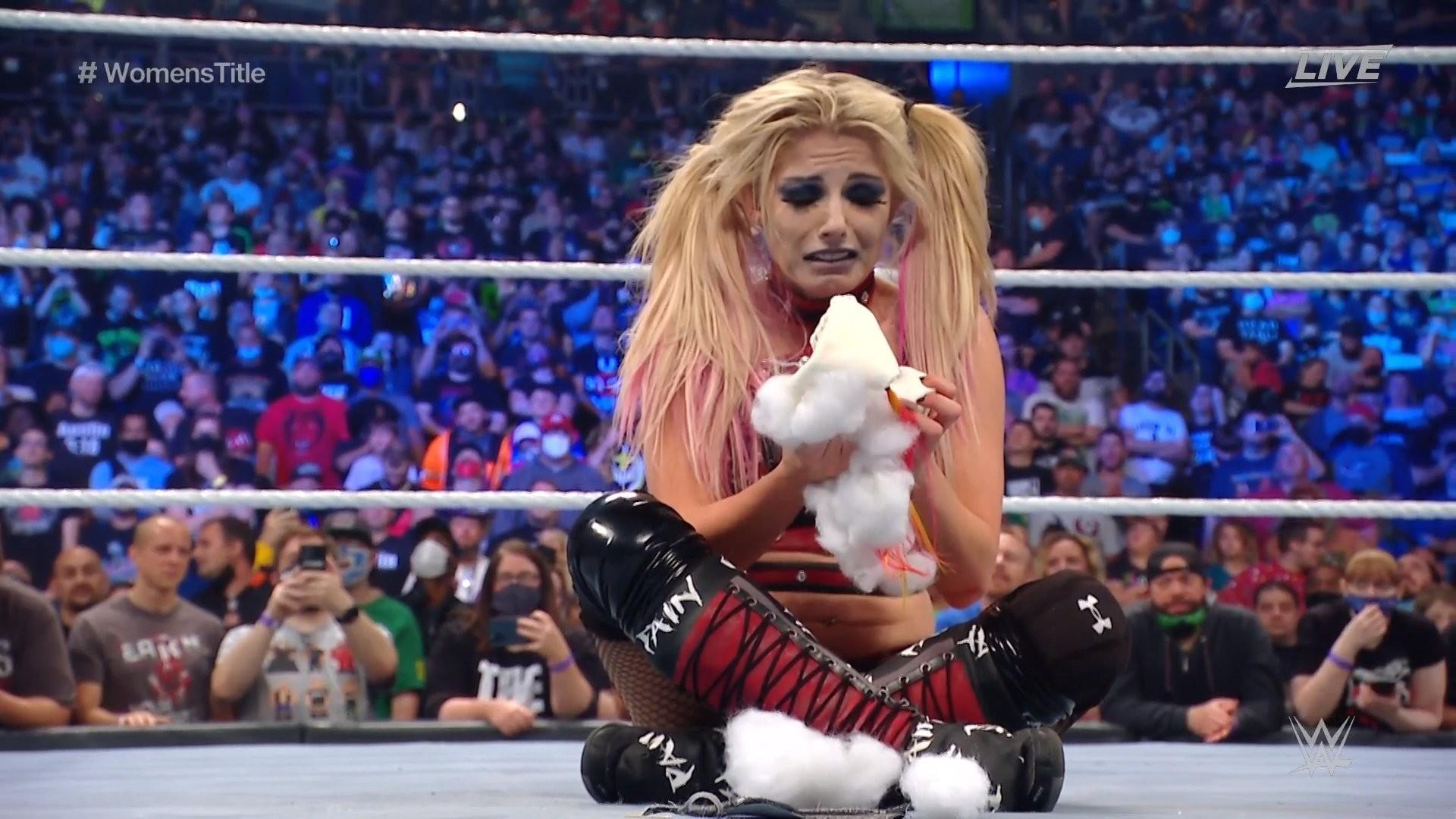
Flair and Cargill traded a physical, back-and-forth main event that saw Cargill hit a Black-Hole Slam, a sleeper hold and an avalanche Batista Bomb, while Flair countered with a Queen’s Boot, a German suplex and, most dramatically, a diving Natural Selection off the top rope. The match’s finish turned chaotic when Cargill’s allies, B-Fab and Michin, interfered to break up Flair’s Figure 8 submission attempt, prompting the returning Alexa Bliss to appear holding her signature Lilly doll before the arena lights cut out entirely.

Advertisement

When the lights returned, former NXT Champion Tatum Paxley had arrived, taking out both interfering competitors and clearing the way for Flair to hit a Sister’s Abigail DDT before finishing Cargill off. The debut immediately fueled speculation about a new alliance forming between Flair, Bliss and Paxley heading into the fall.

Punk and Rhodes Reignite Their Rivalry

The show’s opening segment picked up directly from SummerSlam, where CM Punk retained the Undisputed WWE Championship over Cody Rhodes after a surprise return from Randy Orton, who delivered an RKO to Rhodes before Punk finished him off with a Go To Sleep. On Friday, Rhodes opened “SmackDown” and pressed Punk on whether he had known in advance that Orton was returning to interfere in their SummerSlam match. Punk responded, “Say when,” setting the tone for a tense exchange that carried into Kevin Owens’ return later in the night.

Once Owens appeared, he directly confronted Punk over his continued arrogance, telling him, “You’re out here proving me right,” and later adding, “If it wasn’t for me you wouldn’t even be here right now.” Tension between the two nearly boiled over when Owens shoved Punk, prompting WWE SmackDown General Manager Nick Aldis to look on nervously from ringside. According to recap coverage, Owens has requested that his match against Punk take place on the Aug. 21 edition of “SmackDown” in Toronto.

Advertisement

Orton and Rhodes Finally Face Off

Later in the show, Orton made his first “SmackDown” entrance since WrestleMania, prompting an immediate confrontation with Rhodes. Orton explained that he had specifically asked to face the best version of Rhodes, but that in pushing him toward that peak, he had also drawn out Rhodes’ worst instincts. Rhodes fired back, telling Orton that with the WWE Championship no longer around his waist, he had no reason left to continue playing the role of a “good guy.” The heated exchange strongly suggested a program between the two former allies is being set up for the coming weeks.

Championship Storylines Continue to Develop

Elsewhere on the card, Baron Corbin retained the United States Championship against Trick Williams, while the Women’s Tag Team Championship saw Fatal Influence, made up of Lainey Reid and Fallon Henley, retain their titles in a match against new Women’s World Champion Chelsea Green and Tiffany Stratton. Notably, Green ate the pin in the loss during just her first match since winning the title, a booking decision that recap coverage suggested reflected poorly on how WWE has positioned the new champion so far. Green’s title win came after Rhea Ripley underwent knee surgery this week, forcing a change at the top of the women’s division; WWE has notably listed Green simply as champion without any interim designation on her official profile.

Advertisement

Green and Stratton are now set to face off for the U.S. Women’s Championship the following week, continuing a storyline that has also involved Jacy Jayne, who appeared in a managerial role during the segment rather than as an active competitor.

Other Notable Moments

Friday’s broadcast also featured a vignette from Shinsuke Nakamura, who remains locked in an ongoing feud with The Tongans, teasing that he would return with additional support rather than facing the group alone. Separately, Nikki Bella addressed her recent heel turn against Paige, framing her actions as part of a deliberate mission to make Paige’s life difficult going forward. Sami Zayn also factored into the night’s storytelling, interacting with both Owens and Punk at various points, fueling speculation that he could eventually reinsert himself into their developing rivalry. Notably, Gunther, who has recently moved from WWE’s Raw brand over to SmackDown, was absent from Friday’s card entirely, a choice recap coverage attributed to deliberate misdirection around his character rather than any behind-the-scenes issue.

Full Card Results

Advertisement

Charlotte Flair defeated Jade Cargill in the show’s main event. In the Women’s Tag Team Championship match, Fatal Influence, Lainey Reid and Fallon Henley, defeated challengers Tiffany Stratton and Chelsea Green to retain their titles. In the United States Championship match, Baron Corbin defeated Trick Williams to retain the title.

With Owens and Punk now set to collide in Toronto on Aug. 21, and the Orton-Rhodes rivalry appearing to be building toward a more concrete program, WWE’s “SmackDown” brand appears to be entering an extended stretch of storyline payoff following SummerSlam. Meanwhile, the debut of Tatum Paxley alongside the returning Alexa Bliss and established star Charlotte Flair opens a new storyline thread on the women’s side of the roster, one that fans and analysts will be watching closely in the coming weeks to see whether WWE fully capitalizes on the trio’s on-screen chemistry.

Continue Reading

Business

What Science Actually Says About NAD+

Published

on

What Science Actually Says About NAD+

Ageing has always been measured in visible terms — grey hair, slower recovery after a workout, a knee that complains on cold mornings. But underneath those visible markers, researchers increasingly believe a much smaller story is playing out: a decline in a single molecule found in every cell of the human body, called NAD+.

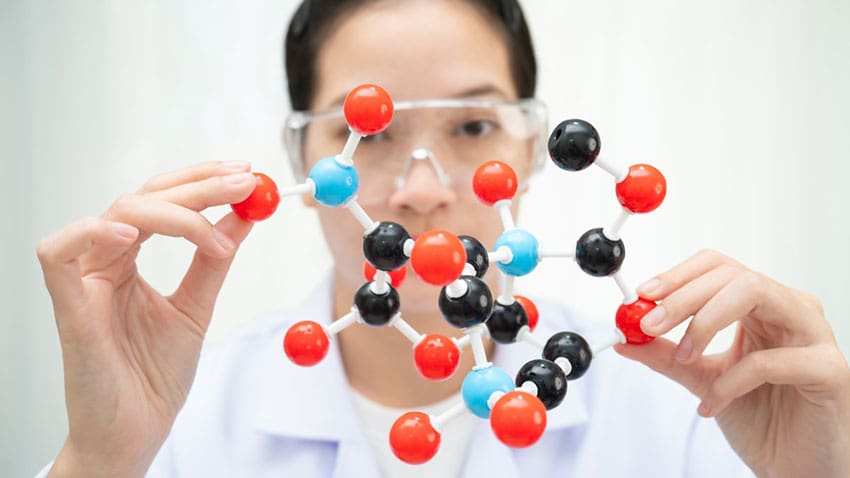
Nicotinamide adenine dinucleotide, or NAD+, isn’t a hormone, a vitamin, or a drug. It’s a coenzyme — a helper molecule that almost every cell needs to convert food into usable energy. Without it, the biochemical machinery that keeps mitochondria running would simply stop. And according to a growing body of research, our supply of it doesn’t stay constant over a lifetime. It falls.

A Battery That Runs Down With Age

Think of NAD+ less like a nutrient you stock up on and more like a rechargeable battery your cells draw from constantly. Every time a cell needs energy, repairs damaged DNA, or manages inflammation, it dips into that NAD+ supply.

The trouble is, the demand goes up as the supply goes down. Studies looking at human tissue samples have found NAD+ levels can fall by roughly a third to a half between early adulthood and one’s fifties and sixties. At the same time, the enzymes competing for that shrinking pool — including sirtuins, which help regulate metabolism and cellular repair, and PARPs, which fix damaged DNA — become busier, not less busy, as we accumulate everyday wear and tear.

Researchers studying this dynamic have described mitochondria as acting like internal “reservoirs” that store NAD+ for cells to draw on. When those reservoirs run low over an extended period, cells can struggle to power the processes that keep tissue and organs functioning well. That combination — rising demand, falling supply — is one reason NAD+ has moved from a biochemistry footnote to a genuine focus of ageing research.

Advertisement

Why This Matters Beyond the Lab

It’s worth being honest about where the science currently stands. Much of the strongest evidence for NAD+’s role in ageing comes from animal studies and cellular models, and human research is still catching up. That said, the mechanistic case is compelling enough that it’s now a serious area of study at major research institutions, and it helps explain patterns most people notice anecdotally as they get older:

  • Recovery from exercise or illness that takes noticeably longer than it used to
  • A general sense of reduced stamina, even without any specific illness
  • Slower wound healing and skin repair
  • A “foggier” baseline of mental sharpness on ordinary days

None of these symptoms map perfectly onto NAD+ alone — ageing is never explained by a single molecule. But the underlying biology gives a plausible, well-documented mechanism for why cellular energy production becomes less efficient with time, and why that inefficiency shows up as the everyday experience of “getting older.”

What the Research Community Is Exploring

Because NAD+ itself is broken down quickly if taken directly, most research and product development has focused on precursors — molecules like nicotinamide riboside (NR) and nicotinamide mononucleotide (NMN) that the body can convert into NAD+ — as well as direct NAD+ delivery methods such as intravenous or subcutaneous administration, which bypass some of the absorption challenges of oral precursors.

Early human trials of these precursors have shown they can meaningfully raise NAD+ levels in the blood within a matter of weeks. What’s less settled is how reliably that translates into the long list of benefits often claimed in marketing copy — better sleep, sharper cognition, improved metabolic health. Some of these outcomes have supportive early data; others remain plausible extrapolations from cellular biology rather than proven clinical results. Anyone considering this category should treat it the way they would any emerging area of medicine: worth watching closely, not yet a settled science.

Turning the Science Into Something Practical

For most people, the most evidence-backed way to support NAD+ levels doesn’t come in a vial at all. Regular exercise, adequate sleep, time-restricted eating patterns, and limiting excessive alcohol intake have all been linked to healthier NAD+ metabolism through their effects on mitochondrial function and the enzymes that regulate it. These are the same habits that show up in virtually every longevity study, for reasons that increasingly trace back to this same cellular pathway.

Advertisement

Beyond lifestyle, a growing number of people are turning to diagnostic testing to get an actual read on their biological markers rather than guessing. Companies operating in this space — NADdirect among them — now offer both precursor-based supplements and testing services aimed at helping people understand where they stand before deciding whether supplementation makes sense for them.

If you’re curious about your own NAD+-related biology, the most useful first step isn’t necessarily a purchase — it’s a conversation with a doctor about what testing or intervention, if any, actually fits your health picture. Ageing well has always been about the boring fundamentals: sleep, movement, food, and stress management. NAD+ research doesn’t replace that advice. It just explains, in increasingly precise detail, why it’s always been true.

Advertisement
Continue Reading

Business

Capita plc (CTAGY) Discusses Operational Progress, Technology Adoption and Service Improvements Following Half Year Results Transcript

Published

on

OneWater Marine Inc. (ONEW) Q1 2026 Earnings Call Transcript