Business
UK GDP Growth Hit 0.5% in February Before Iran War Sparks Stagflation Fears for SMEs
Britain’s economy was firing on more cylinders than the City had dared hope in the weeks before Israel and Iran went to war, but small and mid-sized businesses should brace themselves for a sharp turning of the tide.
Figures from the Office for National Statistics released this morning show gross domestic product expanded by 0.5 per cent in February, trouncing the consensus forecast of 0.1 per cent pencilled in by economists polled ahead of the release. January’s reading was also nudged higher, from flat to 0.1 per cent growth, lending weight to the argument that the economy had genuine momentum heading into the spring.
Taken together, the three months to February produced growth of 0.5 per cent, up from 0.3 per cent in the preceding quarter — a respectable clip by the standards of a British economy that has spent much of the past two years trudging along the margins of recession.
Grant Fitzner, chief economist at the ONS, pointed to a broad-based services recovery as the principal driver, noting that car production had also bounced back after last autumn’s cyber attack knocked output sideways. The construction sector, long the weak link in the chain, managed a 1.0 per cent rebound.
For owner-managed firms across retail, hospitality and professional services, the ecosystem that accounts for the lion’s share of the 80 per cent of GDP represented by services, the February numbers will feel like vindication after a bruising winter of weak consumer demand and punishing borrowing costs.
The trouble is that the figures are already yesterday’s news. The Iranian conflict, which erupted on 28 February, has rewritten the economic script in a matter of weeks.
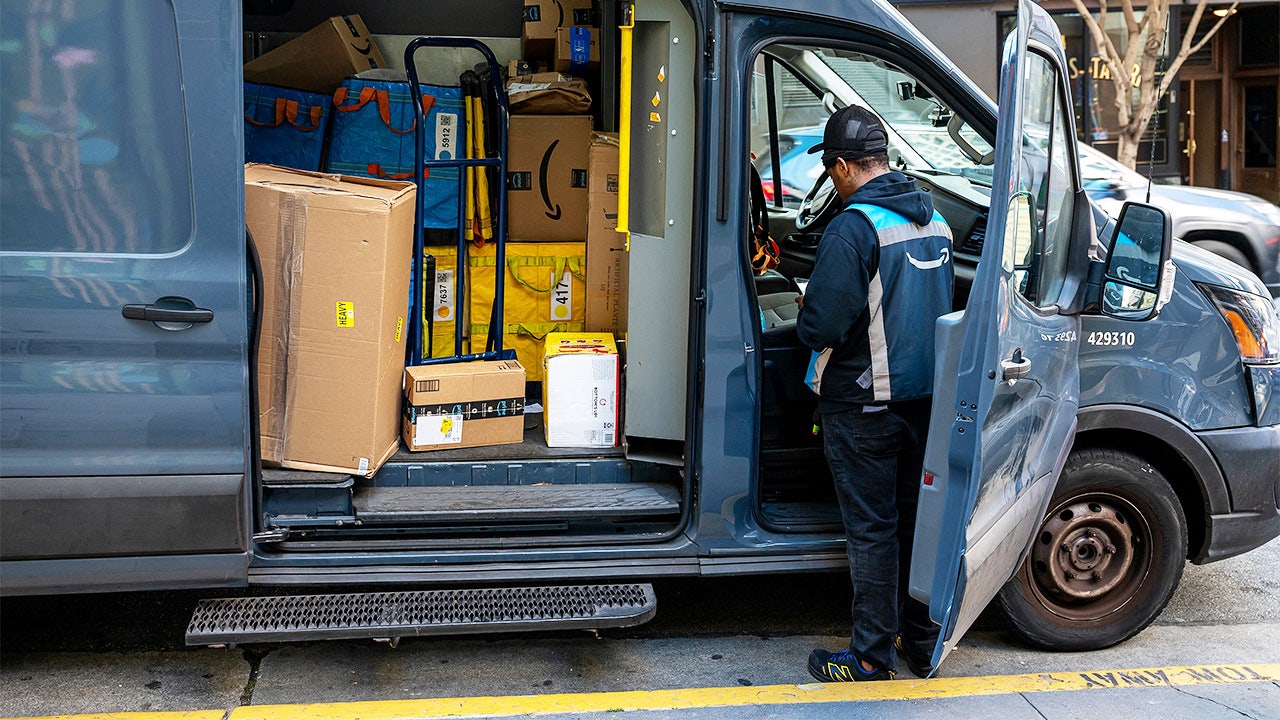
Brent crude has climbed 30 per cent since hostilities began, feeding straight through to forecourts and utility bills. The effective closure of the Strait of Hormuz, through which roughly a fifth of global seaborne oil and liquefied natural gas passes, has rattled supply chains from Felixstowe to Southampton and left importers scrambling to renegotiate contracts.
Yael Selfin, chief economist at KPMG, warned that February’s bounce would prove “short lived”, with elevated energy costs and shipping disruption likely to act as a drag on output for much of the second quarter. Even as hopes grow of a diplomatic off-ramp, she cautioned that normalising freight flows and energy production takes time, time that cash-strapped SMEs working on thin margins can ill afford.
The inflation picture has deteriorated accordingly. With the headline rate already sitting at 3 per cent, the Bank of England now expects CPI to climb as high as 3.5 per cent over the coming six months; the International Monetary Fund has gone further, pencilling in a peak of 4 per cent. Only weeks ago, Threadneedle Street had been guiding towards a return to the 2 per cent target from April.
Against that backdrop, the Bank’s Monetary Policy Committee voted in March to hold Bank Rate at 3.75 per cent, pausing the easing cycle to see how the oil shock feeds through. For smaller businesses hoping for cheaper debt to refinance Covid-era loans or invest in growth, the reprieve they had been banking on is now firmly on ice.
Most City economists expect the March GDP print to come in flat or negative, marking the beginning of what some are already calling a period of heightened fragility — or, in the worst case, outright stagflation, that toxic combination of stagnant output and rising prices that policymakers spend their careers trying to avoid.
“The February GDP print marks the calm before the storm,” said Sanjay Raja, chief UK economist at Deutsche Bank.
The IMF has confirmed as much. This week the fund downgraded its UK growth forecast for the year to 0.8 per cent, down from the 1.3 per cent it projected in January, and warned that Britain faces the biggest hit of any G7 economy from the Middle East conflict, a function of the country’s heavy reliance on imported energy and its exposure to global services demand.
Rachel Reeves, the chancellor, has already conceded that the war will “come at a cost” to households and businesses, language that suggests the Treasury is laying the ground for a difficult summer.
James Murray, chief secretary to the Treasury, struck a more defiant tone, insisting that “growth only happens when the economy is on solid ground” and that the government’s plan to “restore stability, boost investment and deliver reform” was the right course for a “stronger, more resilient Britain”.
For the millions of SME owners who drive the bulk of private sector employment, the message from the data is uncomfortably clear. The foundations laid in February were encouraging, but the storm that followed has changed the weather entirely, and the businesses best placed to weather it will be those that move quickly to hedge energy exposure, shore up working capital and pressure-test their supply chains before the second-quarter numbers lay bare just how much damage has been done.
Business
Form 13F Friday Financial For: 16 April

Form 13F Friday Financial For: 16 April
Business
SLM Student Loan Trust 2005-7 issues preliminary remarketing memorandum

SLM Student Loan Trust 2005-7 issues preliminary remarketing memorandum
Business
DHL staff at Jaguar Land Rover vote to strike
Up to 300 DHL logistics workers based at Jaguar Land Rover in Solihull vote to strike indefinitely.
Business
Bangkok’s Songkran 2026 Attracts Nearly 5 Million Amid Safety and Waste Challenges
Nearly 5 million people celebrated Songkran in Bangkok this year — a 93.4% increase from 2025 — with Siam Square, Iconsiam, and Silom Road being the top venues, while motorcycle accidents accounted for 85% of the 20 road fatalities.
Key Details
- Attendance surged to 4,958,965 across 94 venues, up from 2,564,663 in 2025.
- Siam Square led with 1.5 million visitors, followed by Iconsiam (1.47 million) and Silom Road (652,974).
- 20 people died in 18 road accidents; 17 fatalities involved motorcyclists, 9 of whom weren’t wearing helmets.
- Thung Khru and Prawet districts recorded the most deaths (3 and 2, respectively).
- Waste generation hit 336 tonnes, up from 250.5 tonnes last year, with Khao San Road producing the most (102.46 tonnes).
Despite the festive atmosphere, the data underscores persistent road safety risks and environmental strain during Thailand’s largest annual celebration.
The 93.4% surge in Bangkok Songkran attendance this year — reaching nearly 5 million people — reflects broader national trends of increased domestic and international tourism, improved event coordination, and the festival’s growing global appeal as a cultural and economic driver.
Enhanced planning, clearer zoning, and stronger inter-agency cooperation in Bangkok also contributed to the record turnout. Additionally, flagship events like the Maha Songkran World Water Festival at Benjakitti Park drew over 108,000 visitors, including more than 52,000 foreign tourists, signaling strong international interest.
The Tourism Authority of Thailand (TAT) expects the Songkran 2026 festival to generate more than 30.35 billion baht in tourism revenue, marking a 6% increase from the previous year.
Governor Thapanee Kiatphaibool stated that this growth is driven by approximately 500,000 foreign visitors contributing 8.1 billion baht and 5.96 million domestic trips adding 22.25 billion baht. While the TAT remains confident in these figures, the University of the Thai Chamber of Commerce (UTCC) lowered its overall festival spending forecast to 120–125 billion baht due to rising diesel prices and economic caution. Despite these varied projections, major hotspots like Siam Square, Iconsiam, and Silom Road saw millions of participants, reflecting a vibrant atmosphere across the country.
What was the total waste collected during Bangkok’s Songkran 2026?
Bangkok’s Songkran 2026 celebrations resulted in a total of 336 tonnes of waste collected at major celebration sites between April 11 and 15. This figure marks a significant increase from the 250.5 tonnes recorded during the same period in 2025.
According to the Bangkok Metropolitan Administration (BMA), Khao San Road was the primary contributor to this total, producing 102.46 tonnes of waste. Other high-volume areas included Silom Road, which generated 86.17 tonnes, and ICONSIAM, which produced 58.7 tonnes. On the first day of major water-splashing activities alone, the city collected 86.32 tonnes, of which approximately 82% was general waste, while the remainder consisted of recyclable and food waste.
To address environmental concerns, the city implemented a recycling initiative for plastic water guns, encouraging revellers to donate unwanted items at nine locations, including Siam Square and CentralWorld. These collected weapons are intended to be processed into naphtha for the production of plastic pellets, which can then be molded into new products like chairs and containers.
Other People are Reading
Business
Travelers Q1 2026 slides: core ROE hits 19.7% on strong underwriting

Travelers Q1 2026 slides: core ROE hits 19.7% on strong underwriting
Business
Suzlon Energy shares rally 20% in one month: Here’s why it is an ‘unintended beneficiary’ of Iran-US war
Shares of the company have surged more than 20% in one month, and 10% in the past five days as temperatures continue to rise across India, increasing hopes for peak power demand. JM Financial, in its latest report, noted that peak power demand during hot and humid evenings is similar to solar hour demand in an El Nino year, hence there is more stress on supply at night when 80 GW of solar generation is not available.
Why wind energy will become crucial this summer
“When peak demand rises during non-solar hours, variable generation from gas, hydro and partially flexible coal substitutes the loss of solar generation. But due to the Middle East crisis, gas-based generation has fallen from 8-12GW to just 2GW, it said. Also, there is a high probability of a shortfall in hydro energy this summer due to a deficit in winter rainfall and snow cover in the first four months of 2026, it further said, adding that all these factors put India at the risk of evening peak power deficit.In this background, wind energy has a strong diurnal (daily) complementarity with solar energy and is available in the evening hours as well, JM Financial noted. It explained that wind speed often increases in the late afternoon, evening, and early morning, when solar generation is low or zero. Also, wind energy is highly seasonal and complements solar power, particularly in India, where 80% of annual wind generation occurs during the South-West monsoon (May-September). “Currently, wind contributes approximately 10GW during evenings and up to 20-25GW during August-September. Hence, incremental wind addition during H1 FY27 can add to evening supply during El Niño-affected months,” it added.
Also read: Ola Electric vs Ather Energy: Which stock looks better after a stellar surge of up to 70% in April?
JM Financial expects India to achieve its highest-ever capacity addition in FY27, surpassing the peak of 6.1GW recorded in FY26. It noted that Suzlon has been struggling with an increasing gap between deliveries and installations. “As of 31st Mar’25, it had 371MW of sets erected and ready for commissioning (10% > installations), which increased to 776MW on 31st Dec’25 (76% > installations), creating apprehensions on execution and new order inflows,” it said, adding that it now expects Suzlon to sharply improve its commissioning in the first half of the ongoing financial year 2027, which may result in cash flow improvement and a new stream of orders.
Should you buy Suzlon Energy shares?
The domestic brokerage kept a ‘Buy’ call on the stock, with a target price of Rs 64 apiece. This implies an upside potential of more than 30% from the stock’s previous closing price of Rs 49.13 apiece. Notably, Suzlon has the highest upside potential among all the power stocks under JM Financial’s coverage.
Also read: HDB Financial Services zooms 12% on strong Q4 results and FY26 dividend
Suzlon Energy shares were trading with marginal gains at around Rs 49.41, as seen at 10.45 am on Thursday. Although the stock has declined nearly 6% in 2026 so far, in the longer term, the multibagger stock rallied more than 510% in five years and over 1,030% in five years.

(Disclaimer: Recommendations, suggestions, views and opinions given by the experts are their own. These do not represent the views of The Economic Times)
Business
Cheaper Doritos and Lays helps PepsiCo win back struggling snackers
The snack giant cut some of its prices by up to 15% ahead of the Super Bowl in February.
Business
Mars, ofi to advance regenerative ag practices in Ecuador

Companies sign five-year agreement.
Business
Big Money Moves: 11 large-cap stocks where institutional investors raised stakes in Q4FY26
Institutional investors increased stakes across major NSE large-cap stocks in March 2026, signaling confidence in fundamentals and future growth. Companies like Adani Power, Axis Bank, NTPC, and Coal India saw modest rises, supporting improved governance, liquidity, and price stability trends.
Business
UBS raises J.B. Hunt stock price target on strong volume growth

UBS raises J.B. Hunt stock price target on strong volume growth
-
Politics6 days agoUS brings back mandatory military draft registration
-
Sports6 days agoMan United discover Nico Schlotterbeck transfer fee as defender reaches Dortmund agreement
-
Fashion6 days agoWeekend Open Thread: Veronica Beard
-
Politics6 days agoMalcolm In The Middle OG Turned Down ‘Buckets Of Money’ To Appear In Reboot
-
Politics4 days agoWorld Cup exit makes Italy enter crisis mode
-
Business6 days agoTesla Model Y Tops China Auto Sales in March 2026 With 39,827 Registrations, Beating Cheaper EVs and Gas Cars
-
Crypto World3 days agoThe SEC Conditionalises DeFi Platforms to Be Avoided for Broker Registration
-
Crypto World3 days agoSEC Signals Exemption for Crypto Interfaces From Broker Registration
-
News Videos1 day agoSecure crypto trading starts with an FIU-registered
-
NewsBeat4 days agoPep Guardiola and Gary Neville agree over Arsenal title problem that benefits Man City
-
Business5 days agoIreland Fuel Protests Enter Day 5 as Blockades Spark Shortages and Government Prepares Support Package
-
Business6 days agoOpenAI Halts Stargate UK Data Centre Project Over Energy Costs and Copyright Row
-
Politics6 days agoLBC Presenter Mocks Trump Over Iran War Failures
-
Crypto World6 days agoFederal judge blocks Arizona from bringing criminal charges against Kalshi
-
NewsBeat2 days agoTrump and Pope Leo: Behind their disagreement over Iran war
-
Crypto World2 days agoSEC Proposes Certain Crypto Interfaces Don’t Need to Register as Brokers
-
NewsBeat4 days agoJD Vance announces ‘no agreement’ with Iran over nuclear weapons fear
-
Tech7 days agoA version of Windows 10 released a decade ago is now eligible for additional security patches
-
Business6 days agoIMF retains floor for precautionary balances at SDR 20 billion
-
Business6 days agoFormer Liverpool CEO eviscerates FIFA for World Cup ticket pricing

You must be logged in to post a comment Login