Connect with us
DAPA Banner
DAPA Coin
DAPA
COIN PAYMENT ASSET
PRIVACY · BLOCKDAG · HOMOMORPHIC ENCRYPTION · RUST
ElGamal Encrypted MINE DAPA
🚫 GENESIS SOLD OUT
DAPAPAY COMING

Business

Federal cash sought for Neosmelt iron project

Published

on

Federal cash sought for Neosmelt iron project

Backers of a clean iron project mooted in Perth’s south are seeking significant federal government funding to make their project viable.

Continue Reading
Click to comment

You must be logged in to post a comment Login

Leave a Reply

Business

Thailand’s AI Optimism: High Expectations Meet Growing Concerns

Published

on

Anthropic Warns AI Is Already Building Its Own Successors

Abstract

  • Thailand ranks among the most AI-optimistic countries globally, with 72% of Thais reporting that AI has already significantly changed their daily lives, well above the 54% global average. Strong productivity gains, perceived benefits, and deep integration of AI into everyday activities drive this confidence.
  • Despite high enthusiasm, concerns persist around job displacement, data privacy, and bias. While 64% of Thai workers worry AI could replace their jobs, trust in companies to protect data stands at only 47%, and 85% demand disclosure when AI is used in products and services.

Thailand leads global markets in AI optimism, with 72% of Thais reporting that AI has already transformed their daily lives, and 78% expecting even greater change in the next three to five years.

Key Details:

  • Current Impact: Nearly three-quarters of Thais say AI-powered products and services have profoundly changed their lives over the past 3-5 years, significantly above the 32-country global average of 54%.
  • Benefits Over Risks: 74% of Thai consumers believe AI offers more benefits than drawbacks, compared to 55% globally. Seven in ten (69%) agree potential societal benefits outweigh environmental costs, well above the 49% global average.
  • Productivity Gains: 80% of employed Thais report AI tools have saved them time at work in the past year (vs. 62% globally), though 65% expect their jobs to change significantly within five years.
  • Job Displacement Concerns: 64% of Thai workers worry AI could replace their current job within five years, placing Thailand among countries with the highest job displacement anxiety.
  • Mixed Emotions: 77% feel excited about AI, but 61% simultaneously feel nervous—reflecting a global pattern of “wonder and worry” coexisting.
  • Trust Gaps: Only 47% trust companies using AI to protect personal data, and 57% trust AI not to discriminate, indicating confidence in AI’s potential doesn’t automatically translate to trust in implementation.
  • Transparency Demand: 85% of Thais believe companies should disclose when AI is used in products and services, higher than the 80% global average.

Thailand’s strong AI enthusiasm presents significant opportunities for businesses, but success requires balancing innovation with transparency, responsibility, and human-centered approaches to address legitimate concerns about privacy, bias, and workforce disruption.

Essentially, Thais see AI as a proven driver of progress that is already improving their lives, which fosters a stronger belief in its future potential despite simultaneous concerns about job displacement and data privacy. According to the Ipsos AI Monitor 2026 report, 64% of Thai workers believe AI could replace their current job within the next five years. This places Thailand among the countries where concerns about job displacement are most pronounced.

Key factors driving this optimism include:

  • Proven Productivity: 80% of employed Thais report that AI tools have saved them time at work in the past year, significantly higher than the global average of 62%. This immediate efficiency gain reinforces the belief that AI is a force for positive change.
  • Perceived Benefits Outweigh Risks: 74% of Thais believe AI products offer more benefits than drawbacks, compared to 55% globally. They are also more likely to agree that AI’s societal benefits outweigh its environmental costs (69% vs. 49% globally).
  • Deep Integration: AI is already deeply embedded in everyday Thai experiences, from banking and shopping to customer service and content recommendations. Nearly three-quarters (72%) say AI has profoundly changed their daily lives in the last 3–5 years, compared to 54% globally.
  • Regional Trend: This optimism aligns with a broader trend across the Asia-Pacific region, where countries tend to be more positive about AI’s potential compared to many nations in Europe and North America.

Thais are more optimistic about AI than the global average primarily because they have already experienced its tangible benefits in their daily lives and workplace, leading them to view it as a practical tool for improvement rather than a distant or abstract technology.

Advertisement
Continue Reading

Business

Plans for more than 500 homes in Stockport village

Published

on

Business Live

Stantec also plans shops and food and drink venues

What the new development in Woodford will look like

What the housing development in Woodford could look like(Image: Marrons/Russell LDP)

More than 500 new homes could be built on the edge of a Stockport village joining up with another major development next door. Between them, Woodford could see more than 1,300 homes built.

Advertisement

Plans have been put forward to build the new homes off Chester Road in Woodford. The development would include up to 423 new homes as well as an extra care facility for those over 55 with up to 72 beds.

Alongside this, there are plans for shops, food and drink venues up to 100 square metres, new health services, a nursery or day centre, as well as a new nature park.

Approximately 2,900 people live in Woodford according to the latest estimates for 2024 and in the 2021 Census, 858 households were recorded.

In total, 567 homes could be built if the plans are given the go ahead by Stockport Council. Documents linked to a planning application submitted by Michael Conroy on behalf of Stantec said the plans were included in a draft version of Stockport Council’s local plan which will eventually set out development across the borough until 2042.

Advertisement

There are a number of buildings on the site that will be demolished while a number of trees will be cut down. There is no ancient woodland deemed to be on the site but the site sits within the green belt.

Developers Stantec are pointing to the nearby Woodford Garden Village on the former Woodford Aerodrome as an example of how the area is changing. This will include up to 775 homes, a new pub, an extra care unit, and a primary school.

That development was refused by Stockport Council and then allowed on appeal due to the delivery of new housing and public open space. The local authority has asked for this decision to be judicially reviewed and this process is ongoing.

In a planning document, Stantec said: “The proposed vision is to create a new sustainable, high-quality neighbourhood which significantly improves the local housing offer in Woodford by delivering a range of house types to meet a variety of housing needs, including affordable dwellings, aspirational homes for young people and families, larger higher value homes, and homes for the elderly.

Advertisement
What the new development in Woodford will look like

What the new development in Woodford could look like(Image: Marrons/Russell LDP)

“Housing development is to be delivered alongside mixed-use development including community facilities. The scheme is to be brought forward in line with ‘garden village’ principles, with development set within an attractive landscaped setting.

“The emphasis on green infrastructure at the site will enhance the natural environment and offer extensive opportunities for recreation.”

The new nature park will have ‘a mixture of wildflower and grass meadows, with ponds, new hedgerows and tree planting’ alongside a community orchard and a zone for wildlife.

However the plans are facing opposition with more than 180 comments at the time of publication.

Advertisement

To find all the planning applications, traffic diversions, road layout changes, alcohol licence applications and more in your community, visit the Public Notices Portal.

Continue Reading

Business

Did Bill and Twiggy just quietly map out a red dust digital empire?

Published

on

Did Bill and Twiggy just quietly map out a red dust digital empire?

Microsoft co-founder and tech billionaire Bill Gates quietly visited WA within the past three months to scout hyperscale data centre opportunities in the Pilbara, Business News can reveal.

Continue Reading

Business

Tech Mahindra shares jump 3% after Q1 earnings beat estimates. What Nomura, Nuvama, other brokerages now expect

Published

on

Tech Mahindra shares jump 3% after Q1 earnings beat estimates. What Nomura, Nuvama, other brokerages now expect
Shares of Tech Mahindra jumped over 3% on Friday after the IT services company released its results for the April-June quarter of FY27, beating estimates and prompting brokerages to raise their target prices for the stock.

Shares of the company rose to Rs 1,560 apiece after the company on Thursday reported a consolidated net profit of Rs 1,465 crore for the first quarter of the ongoing financial year 2027, marking a 28% year-on-year (YoY) rise from Rs 1,140.6 crore net profit reported in the year-ago period.

Sequentially, the company’s net profit rose over 8% quarter-on-quarter (QoQ) from the Rs 1,353.8 crore reported in the March quarter of FY26. Revenue from operations meanwhile jumped 18% YoY to Rs 15,712 crore in Q1 FY27, from Rs 13,351.2 crore in Q1 FY26.

Tech Mahindra’s revenue rose 6.6% YoY in constant currency (CC) terms to $1,660 million, while EBIT rose over 53% YoY to Rs 15,712 crore during the quarter under review. New deal wins TCV rose over 33% YoY to $1,078 million.

Advertisement

Nomura on Tech Mahindra share price

Nomura noted that Tech Mahindra delivered an all-round beat on estimates in Q1 FY27. Its sequential CC revenue growth of nearly 3% QoQ to $1,660 million beat the international brokerage’s estimate of a mere 1%. growth. The increase was broad-based across all key verticals. EBIT margin at 14.4% was ahead of Nomura’s estimate of 14.1%. Margin expansion was largely driven by the ongoing Project Fortius and currency depreciation, it added.

TechM management noted that it expects the company’s revenue to grow at a faster rate than the industry average in FY27, Nomura highlighted. It added that the ramp-up of two mega deals (in the Telecom vertical) won in H2 FY26 should form a significant portion of its growth in FY27, and Q1 had the benefit of earlier-than- planned execution of a large European automotive program and ramp-up of one of the large telco projects. “The company expects to sustain its growth momentum in Q2 and the whole of FY27, driven by the ramp of the other large telco project and broad-based growth. We raise our growth expectation from 5.1% to 5.9% y-y in USD terms for FY27,” the international brokerage said.


Nomura noted that the key levers for improving margins in FY27E vs FY26 include AI-led productivity gains like converting time and material contracts to fixed price and continued operational efficiencies under program Fortius, as per management. Salary increments will be effected from Q2 in a phased manner.
Saying that Tech Mahindra is now on track to exceed its large-cap peers on growth rates in FY27-28, Nomura increased its target price for the stock to Rs 1,600 apiece from Rs 1,400 apiece, while maintaining its ‘Neutral’ rating. The latest target price implies an upside potential of 6% from the stock’s previous closing price of Rs 1510.3 apiece on NSE.Also read | Tech Mahindra Q1 Results: Net profit rises 28% YoY to Rs 1,465 crore, revenue up 18%

Nuvama on Tech Mahindra share price

Nuvama also highlighted that Tech Mahindra’s earnings beat mostly beat its estimates, although reported profit was slightly below its expectation. “TechM delivered a strong start to FY27 with broad-based growth, continued margin expansion and robust deal-wins, setting the stage for the final phase of its transformational journey,” it said, while upgrading its FY27 and FY28 earnings estimates for the IT services firm.

The brokerage retained its ‘Buy’ rating for the shares of Tech Mahindra, but increased its target price to Rs 1,800 apiece from Rs 1,750 apiece. The latest target price implies an upside potential of nearly 16% from the stock’s previous closing price.

Advertisement

Motilal Oswal on Tech Mahindra share price

Motilal Oswal Financial Services said that Tech Mahindra’s FY27 growth visibility has improved, with margins on track. “We believe this quarter brings a material step-up in Tech Mahindra’s growth trajectory, with growth expectations moving from ~3-5% to ~6-7% over the next couple of years. If this momentum sustains, it could warrant another round of re-rating,” it said.

The domestic brokerage highlighted that in this quarter, Tech Mahindra delivered strong results in a seasonally weak quarter, driven by strength across all key verticals. “We believe this performance puts the company on track to be the fastest-growing company among large-cap IT names in FY27, with ~6-7% growth vs. ~2-3% for most large-cap peers,” it added.

Motilal reiterated its ‘Buy’ call on the shares of Tech Mahindra, naming it its preferred pick among the large cap IT companies. It increased its target price to Rs 1,900 apiece, implying 26% upside potential.

Systematix on Tech Mahindra share price

Systematix Institutional Equities said Tech Mahindra delivered a strong start to FY27, with a material beat on revenues and margins. “The company is well positioned to exceed peer-average growth, supported by a healthy order book, ramp-up of large telecom deals, and strong account mining,” it said, adding that it expects Tech Mahindra to be the fastest-growing among large peers over the next 2–3 years, supporting a premium valuation.

Advertisement

The brokerage maintained its ‘Buy’ rating on the shares of Tech Mahindra, with a target price of Rs 1,740 apiece, implying a 15% upside potential.

Also read | Tech Mahindra’s Q1 profit up 28% to Rs 1,465 crore

Antique Stock Broking on Tech Mahindra share price

Antique Stock Broking said that the tech company began the year on a strong note, with both revenue and margins ahead of estimates, alongside robust deal wins. “Management remains cautiously optimistic about the underlying demand environment amid macro uncertainty and AI-led deflation, but expects to outgrow the peer average in FY27, supported by a growing multi-year deal pipeline, including two large deals in the communications vertical that are set to start contributing from Q2 FY27, and relatively minimal delays in client decision-making,” it said.

The brokerage raised its target price for the shares of the company to Rs 1,475 apiece from Rs 1,375 apiece, while maintaining its ‘Hold’ rating. The latest target price implies a 2% upside potential.

Advertisement

Dolat Capital on Tech Mahindra share price

Dolat Capital meanwhile upgraded its rating on the shares of Tech Mahindra to ‘Accumulate’ with a target price of Rs 1,690 apiece, implying 12% upside potential. “Our confidence in TechM’s ability to deliver on its FY27 roadmap has strengthened following its consistent execution over recent quarters. While macro uncertainties persist and deal conversion remains gradual, the company appears well-positioned to outpace industry growth and progress towards its 15% margin aspiration,” it said.

Also read | Wipro declares interim dividend worth Rs 2/share, fixes record date. Check details

(Disclaimer: Recommendations, suggestions, views and opinions given by the experts are their own. These do not represent the views of The Economic Times)

Advertisement
Continue Reading

Business

Give DXP Enterprises Stock A Higher Multiple For Adopting Roll-Up Model (NASDAQ:DXPE)

Published

on

Give DXP Enterprises Stock A Higher Multiple For Adopting Roll-Up Model (NASDAQ:DXPE)

This article was written by

Robert F. Abbott has been investing his family’s accounts since 1995, and in 2010 added options, mainly covered calls and collars with long stocks. He is a freelance writer, and his projects include a website that provides information for new and intermediate-level mutual fund investors. A resident of Airdrie, Alberta, Canada, Robert has earned Bachelor of Arts and Master of Business Administration (MBA) degrees.

Analyst’s Disclosure: I/we have no stock, option or similar derivative position in any of the companies mentioned, and no plans to initiate any such positions within the next 72 hours. I wrote this article myself, and it expresses my own opinions. I am not receiving compensation for it (other than from Seeking Alpha). I have no business relationship with any company whose stock is mentioned in this article.

Seeking Alpha’s Disclosure: Past performance is no guarantee of future results. No recommendation or advice is being given as to whether any investment is suitable for a particular investor. Any views or opinions expressed above may not reflect those of Seeking Alpha as a whole. Seeking Alpha is not a licensed securities dealer, broker or US investment adviser or investment bank. Our analysts are third party authors that include both professional investors and individual investors who may not be licensed or certified by any institute or regulatory body.

Advertisement
Continue Reading

Business

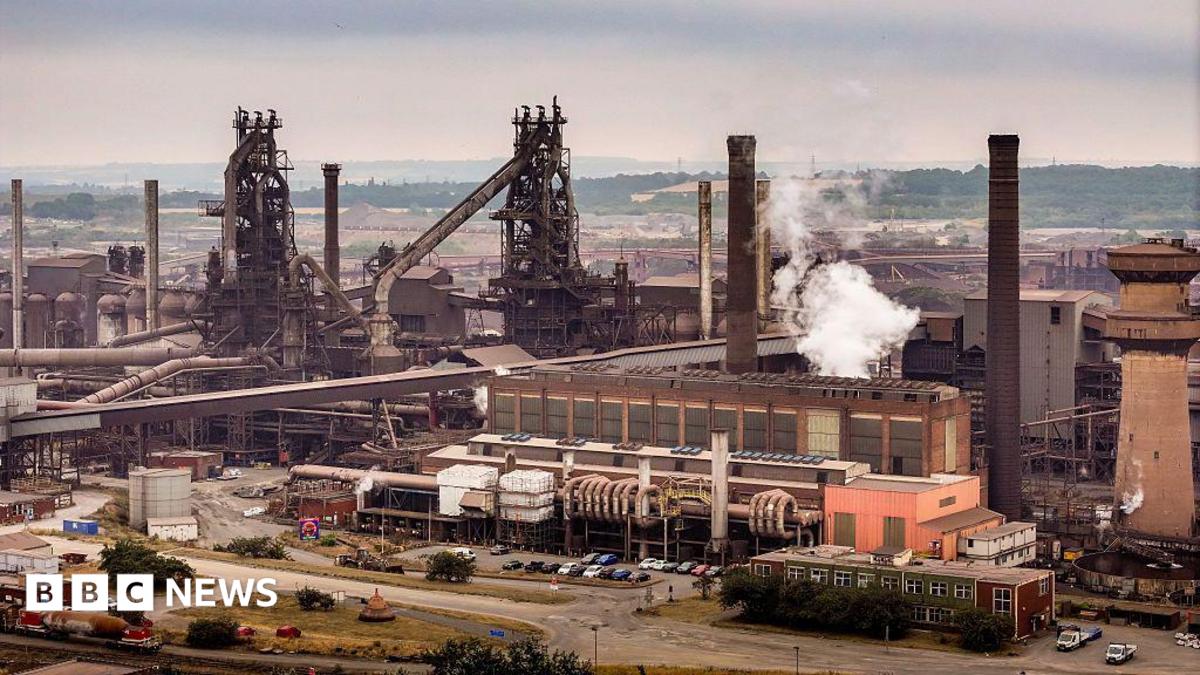
China hits out at British Steel nationalisation

Published

on

An aerial view of British Steel's Scunthorpe works on July 16, 2026 in Scunthorpe, England.

China has hit out at the nationalisation of British Steel, saying it “firmly opposes and is strongly dissatisfied with the British government’s decision”.

On Thursday, the UK government said that taking the loss-making firm into public hands would protect jobs and safeguard a “vital national capability”.

The UK took control of British Steel’s operations in Scunthorpe last year, though it was still owned by China’s Jingye Group, limiting the government’s ability to steer its future.

China’s commerce ministry said on Friday that the moves “seriously infringed upon Jingye’s legitimate rights and interests and severely undermined the confidence of Chinese companies investing in the UK”.

Advertisement

It also called on Britain to “faithfully fulfil” its obligations under the China–UK Bilateral Investment Treaty.

“Disregarding Jingye’s significant contribution to the UK economy and society, the British side forcibly took control of the company in the name of national security,” the ministry said.

The statement added that Beijing would monitor developments closely and support Chinese firms to protect their rights, but did not specify what protecting Chinese companies’ rights might involve.

The decision to nationalise British Steel threatens to strain the relationship between London and Beijing just as Andy Burnham is set to become the prime minister on Monday.

Advertisement

The incoming PM will have to weigh his approach to the issue with the economic benefits of ties with the world’s second largest economy.

Continue Reading

Business

What is SAVE America Act? Here’s all about Trump’s plan to overhaul voting in America

Published

on

What is SAVE America Act? Here's all about Trump's plan to overhaul voting in America
A Republican-backed bill that would require proof of citizenship to register and photo ID to vote has become one of the most fought-over pieces of legislation in Washington this year. Here’s what’s actually in it, where it stands, and what it could mean for you at the ballot box.

If you’ve been scrolling through the news lately and keep seeing the phrase “SAVE America Act,” you’re not imagining things, it’s been dominating headlines out of Washington for months, and President Donald Trump has made it one of his top legislative priorities of 2026. Supporters call it a common-sense fix to election security. Opponents call it the biggest rollback of voting access in a generation. Here’s a plain-English breakdown of what’s really going on.

What does the Save America Act Do?

The SAVE America Act, short for the Safeguard American Voter Eligibility Act, is a federal bill that would change how Americans register to vote and what they need to bring with them on Election Day. Two changes sit at the heart of it:

  • Proof of citizenship to register: Anyone registering to vote in a federal election would need to show a document proving U.S. citizenship, think a passport, a certified birth certificate, or a REAL ID-compliant license that specifically indicates citizenship. A standard driver’s license alone typically wouldn’t cut it.
  • Photo ID to vote: Every voter would need to show government-issued photo identification at the polls, a driver’s license, state ID, passport, military ID, or tribal ID. The same requirement would extend to absentee and mail-in ballots, where voters would need to include a copy of their ID both when requesting and returning a ballot.

The bill would also require states to scrub noncitizens from their voter rolls, and it creates new legal tools, including the ability for private citizens to sue, to enforce the rules, along with criminal penalties for violations.

Where Did The Save America Bill Come From?

This isn’t a brand-new idea. A version of the SAVE Act has been kicking around Congress since 2024, passing the House twice before but always stalling out in the Senate. The 2026 version, technically House Resolution 7296, cleared the House on February 11, 2026, by a narrow 218-213 vote, almost entirely along party lines.
From there, it moved to the Senate, where it needs 60 votes to survive a filibuster. Republicans control 53 seats, meaning they’d need at least seven Democrats to cross over, support that, so far, hasn’t materialized. In March 2026, the Senate held its first real test vote on the bill; it advanced narrowly on a 51-48 procedural vote, with Alaska Republican Lisa Murkowski breaking ranks to vote no. A later attempt to force a final vote failed 53-47.
Frustrated by the standstill, President Trump used his July 4th address to renew his call for the bill’s passage, and days later, House Speaker Mike Johnson said the chamber would try passing it “one more time,” this time through the budget reconciliation process, a procedural route that only requires a simple majority and sidesteps the filibuster entirely. As of mid-July, that effort is still unfolding, and the bill has not become law.

Advertisement

How Save America Act Mean for You?

For most Americans who are already registered and have a driver’s license or passport handy, day-to-day voting probably wouldn’t look dramatically different. But for millions of others, the bill would add real friction:

  • Online and mail-in registration would get harder: Because the law would require an in-person document check in most cases, it would upend registration drives, DMV-based registration, and the online systems most states now rely on. Election-law groups estimate that in a recent election cycle, more than 7 million people registered by mail and nearly 11 million registered online, all systems this bill would force to be reworked.
  • Married Women: Married women and others who’ve changed their name could be disproportionately affected. A birth certificate that doesn’t match a current legal name, common after marriage, could complicate the citizenship-proof process unless additional paperwork is provided.
  • Rural Older Voters: Rural voters, older Americans, and lower-income voters may face bigger hurdles, since they’re statistically less likely to have a passport or easy access to a certified birth certificate or a DMV office.
  • Anyone updating their registration, after a move, a name change, or a party switch, would need to go through the same documentation process again, not just first-time registrants.
  • Absentee and mail voters would need to attach an ID copy to both their ballot request and their returned ballot, an extra step that doesn’t currently exist in most states.

Why Trump is Pushing for Save America Act?

Supporters, led by Trump and House Republicans like Rep. Nancy Mace and Rep. Bryan Steil, argue the bill closes a loophole that lets noncitizens end up on voter rolls, even if only rarely, and that requiring ID to vote is a basic, reasonable safeguard most other democracies already use. Backers frame it as restoring public confidence in elections ahead of the 2026 midterms, when control of Congress is on the line, and reject claims that it would be used to purge eligible voters.

Why Many Legislators are Opposing the Save America Act?

Critics, including most Democrats, the League of Women Voters, the Campaign Legal Center, and the Brennan Center for Justice, counter that noncitizen voting is already illegal, already rare, and already actively prosecuted when it happens, meaning the bill solves a problem that barely exists while creating a much bigger one: locking out eligible citizens who lack easy access to the right paperwork. They point to the bill’s national ID mandate as stricter than nearly every existing state voter-ID law, and warn it would hit women, students, elderly voters, people with disabilities, and rural Americans hardest.

Save America Act 2026: What Happens Next

As of mid-July 2026, the SAVE America Act remains stuck, passed by the House, but unable to clear the Senate’s 60-vote threshold. With President Trump pushing hard for a reconciliation-based path that would need only a simple majority, and Speaker Johnson signaling the House is ready to move again, the fight is far from over. Whether it becomes law before the 2026 midterms could shape how tens of millions of Americans register and vote for years to come.

Advertisement
Continue Reading

Business

Politics And The Markets 07/17/26

Published

on

OneWater Marine Inc. (ONEW) Q1 2026 Earnings Call Transcript

This is the forum for daily political discussion on Seeking Alpha. A new version is published every market day.

Please don’t leave political comments on other articles or posts on the site.

The comments below are not regulated with the same rigor as the rest of the site, and this is an ‘enter at your own risk’ area as discussion can get very heated. If you can’t stand the heat… you know what they say…

More on Today’s Markets:

Advertisement

Moderation Guidelines:

We remove comments under the following categories:

  • Personal attacks on another user account
  • Anti-Vaxxer or covid related misinformation
  • Stereotyping, prejudiced or racist language about individuals or the topic under discussion.
  • Inciting violence messages, encouraging hate groups and political violence.

Regardless of which side of the political divide you find yourself, please be courteous and don’t direct abuse at other users.

For any issue with regards to comments please email us at : moderation@seekingalpha.com.

Seeking Alpha’s Disclosure: Past performance is no guarantee of future results. No recommendation or advice is being given as to whether any investment is suitable for a particular investor. Any views or opinions expressed above may not reflect those of Seeking Alpha as a whole. Seeking Alpha is not a licensed securities dealer, broker or US investment adviser or investment bank. Our analysts are third party authors that include both professional investors and individual investors who may not be licensed or certified by any institute or regulatory body.

Advertisement
Continue Reading

Business

Yen likely to weaken past 170 before Japan’s growth bet pays off, RSM’s Brusuelas says

Published

on


Yen likely to weaken past 170 before Japan’s growth bet pays off, RSM’s Brusuelas says

Continue Reading

Business

Australian Shares Slide 0.70% to 8,778 as Miners and Energy Stocks Track Overnight Wall Street Losses

Published

on

Australia Housing Market 2026: Two-Speed Boom Persists as Prices Hit

SYDNEY — Australian shares closed lower Friday, with the S&P/ASX 200 falling 62.2 points, or 0.70%, to 8,778.5, as weakness in mining and energy stocks weighed on the benchmark index following a rough overnight session on Wall Street.

The decline extended a softer patch for the local market after Thursday’s session, when the index gave back early gains to finish only marginally lower at 8,840.7 points. Friday’s open had already been expected to be soft, with futures pricing in a roughly 26-point, or 0.3%, decline heading into the session after major U.S. indexes fell sharply overnight. The Dow Jones Industrial Average closed down 0.3%, the S&P 500 fell 0.6%, and the Nasdaq Composite dropped 1.5% as chip stocks led losses on Wall Street, souring sentiment heading into the Australian trading day.

Gold miners were among the hardest hit sectors on the local bourse. Overnight, gold futures fell 1.8% to $3,979 an ounce, driven by growing expectations that the U.S. Federal Reserve could deliver a further interest rate increase, which tends to reduce demand for the precious metal by raising the opportunity cost of holding non-yielding assets. That pullback in gold prices weighed heavily on ASX-listed gold miners, including Evolution Mining and Newmont Corporation, both of which were tipped for a difficult finish to the trading week.

Energy stocks similarly struggled after oil prices retreated overnight. According to Bloomberg data, West Texas Intermediate crude fell 0.7% to $79.05 a barrel, pressuring shares of Santos and Woodside Energy Group as investors weighed the impact of softer crude prices on the sector’s near-term earnings outlook.

Advertisement

Not every corner of the market moved lower. Retail giant Harvey Norman Holdings drew a bullish note from Bell Potter, which retained its buy rating on the stock while trimming its price target to $6.00, implying potential upside of roughly 26% from current levels. The broker also pointed to an expected dividend yield above 6% for the 2027 financial year, noting that despite a more challenging retail environment expected in the first half of that year, Harvey Norman’s shares continued to trade at what the broker considered an attractive forward earnings multiple of around 13 times, even as analysts anticipated a recovery weighted toward the second half of the coming financial year.

Elsewhere in company-specific news, aluminum producer Alcoa cut its 2026 alumina production guidance, lowering its forecast to a range of 9.5 million to 9.6 million tonnes, down 0.2 million to 0.3 million tonnes from prior guidance, while trimming its shipment forecast to a range of 11.5 million to 11.6 million tonnes. The company’s aluminium production guidance was left unchanged. The revised outlook, announced after the U.S. market close, sent Alcoa shares down 2.5% in after-hours trading, a move that rippled into sentiment around Australian-listed alumina and aluminium producers given the close ties between the two markets.

REA Group also made headlines Friday after confirming a deal to sell its Housing.com business in India to Aurum PropTech. Under the terms of the agreement, REA Group’s Indian unit, REA India, will receive Aurum shares valued at approximately $68 million as consideration for the sale, rather than a cash payment. The transaction will lift REA India’s equity stake in Aurum to 24.9% from 5.5% upon completion, with that stake to be accounted for by REA Group as a financial asset going forward. The company said it expects to book an overall loss on the divestment of approximately $110 million, reflecting a goodwill impairment and associated transaction costs. The sale follows a broader strategic review of REA Group’s Indian operations, which had already seen the company sell its PropTiger business to Aurum and close its Housing Edge unit earlier in the current financial year.

Corporate Travel Management also featured in Friday’s trading updates, though not for a positive reason. The company announced that Shelley Sorrenson will step down as Company Secretary and Group Chief Legal Officer effective August 14, with the company saying it would update the market once a replacement had been appointed. Corporate Travel Management’s shares have remained suspended from trading on the ASX since August 22 last year, when the company first requested a trading halt before moving into a voluntary suspension days later while it investigated potential issues requiring the rectification and restatement of prior financial statements.

Advertisement

In broader merger and acquisition news, Coles confirmed it would not proceed with a potential acquisition of veterinary care business Greencross, walking away from a deal that had been the subject of market speculation since news of a potential transaction first emerged on July 1. Private equity firm TPG Capital originally acquired Greencross in 2019 for approximately $675 million, and reports had suggested the business could command a price closer to $4 billion in a potential sale this time around, a substantial sum relative to Coles’ roughly $30 billion market capitalization that likely would have required the supermarket giant to take on additional debt or pursue a capital raising to fund the purchase. News of the potential deal had already triggered a negative reaction in both Coles and rival Woolworths shares earlier in the month.

Friday’s session capped a mixed week for Australian equities, with the benchmark index oscillating within a relatively narrow band as investors weighed a combination of global interest rate expectations, commodity price swings and company-specific developments across the mining, retail and travel sectors. With gold and oil prices both under pressure and Wall Street sentiment souring heading into the weekend, traders said the local market would likely remain sensitive to further shifts in U.S. Federal Reserve rate expectations and any additional developments affecting commodity prices in the sessions ahead.

Continue Reading

Trending

Copyright © 2025