
Business
FIIs more than doubled their stakes in 11 multibaggers in June quarter. Do you own any?


At least 34 BSE-listed companies with a market capitalisation above Rs 3,000 crore have delivered over 100% returns in the past six months. Notably, FIIs increased their holdings in 27 of these stocks during the June quarter, with stakes more than doubling in 11 companies. Here are the stocks that attracted the most institutional interest.



Company says too many promotions and menu changes hindered store execution.

The stock opened at $6.41 and traded between $6.08 and $6.87 during the session, climbing as much as 14% in morning trading.
The deal also includes drone manufacturer Insitu and airspace-services provider SkyGrid, giving Archer access to Boeing’s autonomous-flight technology and potentially strengthening its position in defence and commercial logistics.
Boeing will receive a 19.75% stake in Archer and the right to appoint a director to its board. It will also retain access to Wisk’s technology for its commercial and defence aircraft programmes, Reuters reported.
For Boeing, the divestments mark another step towards simplifying its portfolio, focusing on its core commercial-aircraft and defence businesses and scaling back its air-taxi ambitions.

Archer, which has yet to generate significant revenue from its core business, will acquire Insitu, a profitable defence company with annual revenue of more than $200 million.
Archer CEO Adam Goldstein told Reuters that the deal would allow the company to “start generating significant revenue immediately in a major growth market.”He added that demand for intelligence, surveillance and reconnaissance drones was likely at a record high, creating a major opportunity for an established business already generating revenue and cash flow.
Wisk has been developing a self-flying electric passenger aircraft. However, despite years of investment and ambitious projections, the electric vertical take-off and landing, or eVTOL, industry has yet to demonstrate that air taxis can secure certification, achieve large-scale production and operate at prices affordable to mainstream customers.
As commercial launches take longer than expected, eVTOL companies are increasingly targeting military, cargo and government applications to generate near-term revenue and secure funding.

Trump says he spoke with Fed’s Warsh last week

NVIDIA Corp. CEO Jensen Huang speaks during a joint press conference with representatives of Fujitsu Ltd., FANUC Corp. YASKAWA Electric Corp. and Kawasaki Heavy Industries Ltd. on July 16, 2026, in Tokyo, Japan.
Tomohiro Ohsumi | Getty Images
Nvidia is working with some of Wall Street’s largest asset management firms on a $500 billion effort to finance artificial intelligence infrastructure, a person familiar with the matter told CNBC Monday.
The chipmaker has enlisted Apollo Global Management, Blackstone, BlackRock’s Global Infrastructure Partners unit, Brookfield Asset Management, Goldman Sachs and KKR to assemble the capital package, according to the person, who spoke on the condition of anonymity because they were not authorized to speak publicly.
An announcement could be made as soon as Monday, the person said. The Financial Times first reported the deal.
The move highlights the growing role of private capital in financing the costs of the artificial intelligence boom. For Nvidia, the effort could help its biggest customers secure the financing needed to buy its high-end GPUs, build power-hungry data centers and lock in long-term electricity capacity.
Alternative asset managers have been eager to deploy capital into digital infrastructure, tapping institutional and insurance capital to finance projects. Apollo and Blackstone, among others, have already structured debt and equity financing for companies including Anthropic as AI companies deal with large capital expenditure requirements.
Representatives for Nvidia, Apollo, Blackstone, Brookfield, BlackRock, Goldman Sachs and KKR did not immediately respond to requests for comment.
This story is developing. Please check back for updates.

Citizens & Northern director Katherine Shattuck buys $201 in stock

Infrastructure Capital Advisors (“Infrastructure Capital”) is a leading provider of investment management solutions designed to meet the needs of income-focused investors. Jay Hatfield is CEO and CIO of the investment team. Mr. Hatfield is the lead portfolio manager of the InfraCap Small Cap Income ETF (NYSE: SCAP), InfraCap Equity Income Fund ETF (NYSE: ICAP), InfraCap MLP ETF (NYSE: AMZA), Virtus InfraCap U.S. Preferred Stock ETF (NYSE: PFFA), InfraCap REIT Preferred ETF (NYSE: PFFR), and a series of private accounts. Infrastructure Capital frequently appears on or is quoted in Fox Business, CNBC, Barron’s, The Wall Street Journal, Yahoo Finance, TD Ameritrade Network, and Bloomberg Radio/TV. The team at Infrastructure Capital publishes a monthly market and economic report, quarterly commentaries, investing primers, and asset class and strategy research. In addition, Infrastructure Capital hosts a monthly webinar and attends industry conferences in an effort to provide educational investing resources.

JBS names Wesley Batista Filho as global CEO effective January


Discover why brands trust American-made glass packaging for quality, supply and shelf appeal.

IVES: Dan Left Wedbush, What Now?
Business
Doctors Urge Adults To Get Tested For Lipoprotein(a), The ‘Sneaky’ Cholesterol Tied To Heart Risk Now
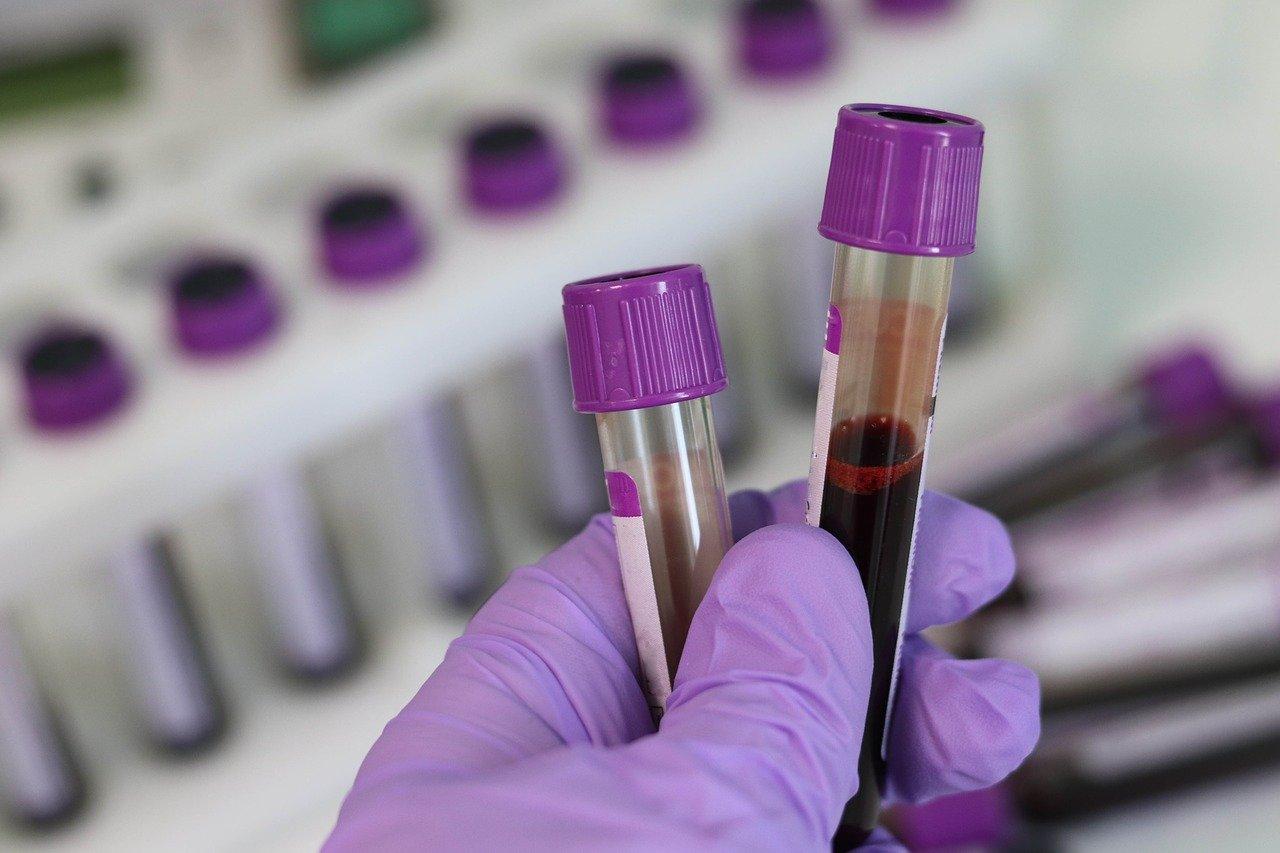
Cardiologists are urging adults to ask their doctors about a blood test that most people have never heard of, one that measures a genetically inherited form of cholesterol linked to heart attacks and strokes but left off the standard lipid panel most patients receive at routine checkups.
The substance, known as lipoprotein(a), or Lp(a), is a distinct cholesterol particle that circulates in the bloodstream and functions as a major independent risk factor for cardiovascular disease, according to Ryan Smith, a cardiologist at Orlando Health Heart and Vascular Institute. Unlike LDL cholesterol, HDL cholesterol and triglycerides, the three markers typically included in a standard lipid panel, Lp(a) is not part of routine bloodwork, meaning many people go years, or a lifetime, without knowing their level.
That gap in testing has drawn increasing attention from the medical community. In March, a coalition of medical organizations, including the American Heart Association, released updated cholesterol management guidelines recommending, for the first time, that every adult be tested for Lp(a) at least once in their lifetime. The test can be ordered by a primary care physician as an addition to a standard lipid profile or other routine bloodwork, and it is now largely covered by major insurance plans, removing what had previously been a financial barrier for many patients.
Roughly one in five people have an elevated Lp(a) level, according to figures cited by cardiologists, and like other forms of high cholesterol, it typically produces no symptoms until it contributes to a blockage that triggers a heart attack or stroke. An Lp(a) level above 125 nanomoles per liter, sometimes measured as 50 milligrams per deciliter, has been shown to raise the risk of heart disease and stroke, with that risk potentially doubling at levels around 250 nanomoles per liter, or 100 milligrams per deciliter.
Lp(a) poses a particular danger because of its molecular structure. Much like excess LDL cholesterol, elevated Lp(a) can accumulate in the arteries and contribute to atherosclerosis, a narrowing of blood vessels that restricts blood flow to vital organs. But because Lp(a) carries an additional protein component called apolipoprotein A, it tends to be stickier and more prone to forming fatty plaques than LDL cholesterol, according to Smith. The particle can also interfere with the body’s natural clot-breakdown process, potentially increasing the likelihood of blood clots, and it carries pro-inflammatory molecules that can damage the aortic valve and contribute to arterial hardening over time.
For decades, Lp(a) testing was left out of standard cholesterol guidance largely because there was little clarity on what patients or doctors could actually do about an elevated result, according to Jeffrey Berger, director of the Center for the Prevention of Cardiovascular Disease at NYU Langone Heart. Researchers still do not know definitively whether lowering Lp(a) levels reduces cardiovascular risk, though Berger said ongoing research and drug trials increasingly point toward that possibility. Because Lp(a) levels are driven almost entirely by genetics, they generally do not respond to the lifestyle changes, such as diet and exercise, that can meaningfully lower other types of cholesterol.
Even without a clear treatment pathway, physicians say the case for testing has become increasingly clear. Berger said a growing body of evidence has repeatedly shown how elevated Lp(a) raises the likelihood of a cardiac event, making it important for patients to know whether they carry the genetic risk factor so they can more aggressively manage the cardiovascular risks that are modifiable.
Certain populations face a higher likelihood of elevated Lp(a) levels, given the trait’s strong genetic basis. People of African or South Asian descent tend to show the highest rates, followed by white, Hispanic and East Asian populations, according to cardiologists. The American Heart Association specifically recommends testing for anyone with a family history of high Lp(a), a personal or family history of early cardiovascular disease, defined as before age 55 in men and before 65 in women, and those with familial hypercholesterolemia, an inherited condition that causes elevated LDL levels.
For most people, a single Lp(a) test provides a reliable, lifelong measure of risk, since the level typically remains stable over time, Smith said. Exceptions include people with thyroid disorders, a kidney condition called nephrotic syndrome, certain acute inflammatory conditions, and those who are pregnant or in menopause, all of which can temporarily elevate Lp(a) readings. Once those conditions resolve or are treated, Lp(a) levels generally return to their genetic baseline.
Because no treatments currently exist that meaningfully lower Lp(a) on their own, doctors recommend that people with elevated levels focus on aggressively managing other cardiovascular risk factors, particularly blood pressure, blood sugar and LDL cholesterol. Research suggests that lowering LDL by an additional 20 milligrams per deciliter or more below the standard target of 100 milligrams per deciliter can help offset some of the added risk associated with high Lp(a). The American Heart Association recommends at least 150 minutes of moderate-intensity physical activity per week, a diet rich in plant-based foods, avoiding smoking, maintaining a healthy weight, and getting seven to nine hours of sleep nightly as foundational steps for cholesterol management.
Patients with high Lp(a) are often prescribed statins to more aggressively lower LDL cholesterol, and some physicians may add ezetimibe, a non-statin medication that blocks cholesterol absorption in the small intestine and can modestly reduce Lp(a) as well. Others may prescribe a PCSK-9 inhibitor, a class of drug that helps the liver clear LDL cholesterol from the blood and may offer a modest reduction in Lp(a) levels; a newly approved oral version of the drug has shown efficacy comparable to the injectable PCSK-9 inhibitors already available.
Looking ahead, a new class of medications currently in late-stage clinical trials is designed to directly target the RNA responsible for producing lipoprotein(a) in the body. Early data suggests these drugs can meaningfully lower Lp(a) levels, though it remains unclear whether that reduction will translate into fewer heart attacks and strokes.
For now, physicians say the priority is simply raising awareness of the test itself. Smith said Lp(a) should be viewed as one piece of a broader conversation with a doctor about overall cardiovascular risk, one best raised as early as possible. “Prevention is really supreme in our field,” he said.

Jon Hamm to become first time dad at 55 as wife Anna Osceola, 38, debuts baby bump in a bikini

McDonald’s US business ‘slowed significantly’ during quarter

TRON Stablecoin Supply Hits Record $89.2B in Q2


-

 Fashion3 days ago
Weekend Open Thread: Mattifying Sunscreen
-

 Fashion3 days ago
Frugal Friday’s Workwear Report: Cap-Sleeve Pointelle Crewneck Sweater
-

 Sports5 days ago
Jordan Coyle & Cordiamo take Laya Arena Stakes at RDS
-

 News Videos2 days ago
Can Astrology Help Find Gold and Silver Trends? A Financial Astrology Guide
-
 Business5 days ago
US stocks: Dow closes at record on Mideast optimism; SpaceX, AMD drag Nasdaq
-
 Crypto World7 days ago
US Tech Stocks See Largest 5-Week Inflow in History: Can Nasdaq Break Its Downtrend?
-

 Politics4 days ago
Reform UK And Greens Sink To Lowest Favourability Ratings To Date
-

 Business6 days ago
Nvidia Stock Climbs 2.5% as Chip Sector Rally Builds Ahead of AMD Earnings, Nvidia’s Own Report Looms
-

 Crypto World6 days ago
Polymarket targets $20 billion valuation as competition heats up in prediction market sector
-

 Tech6 days ago
OpenAI, Anthropic AI agents targeted real people and systems in cyber tests
-

 Business5 days ago
Supply chain issues impact Ingredion
-
 Crypto World6 days ago
CLARITY Act Senate Vote Locked In, But 60-Vote Hurdle Looms Large
-

 Tech3 days ago
Rinn Pharma & Biopharma to join NordicPharmaTrain network
-

 Business2 days ago
How to Start a Cleaning Business: A Step-by-Step Guide
-

 Crypto World7 days ago
The Senate has one week: CLARITY’s last August window
-
 Crypto World6 days ago
Dow and S&P 500 Hit Records on AI Earnings: When Will the Bubble Burst?
-

 Business1 day ago
Datadog: Best Of Breed For Multiple Reasons
-

 Business7 days ago
CNH Industrial Shares Jump Over 15% After Beating Estimates and Raising Full-Year Earnings Guidance
-
 Crypto World6 days ago
Dollar Index Trapped at 100 as Hawkish Fed Meets Official Selling
-

 Business2 days ago
BDC Weekly Review: Private BDC Q2 Numbers Are Strong
You must be logged in to post a comment Login