

Business
Flu Shots Cut Infection Risk by 40% in High-Severity Season, California Study Finds


SACRAMENTO, Calif. — Influenza vaccination provided moderate protection during the severe 2024-25 flu season, with people who received the shot 40% less likely to test positive for the virus compared to those who did not, according to a large new study of more than 1.1 million Californians.
The analysis, published in JAMA Network Open, offers fresh evidence of the vaccine’s benefits amid one of the most intense flu seasons in recent memory, marked by record pediatric deaths and elevated hospitalizations nationwide.
Researchers from the California Department of Public Health examined data from individuals aged 6 months and older who were tested for influenza between Oct. 1, 2024, and May 31, 2025. The case-control study found clear associations between vaccination and reduced odds of both infection and severe outcomes.
“These findings are consistent with protection against severe and fatal influenza among people vaccinated against influenza,” the study authors wrote.
For adults aged 65 and older who tested positive for flu, vaccination was linked to 29% lower odds of dying from an influenza-related cause within 30 days of testing. This protection against mortality underscores the vaccine’s role in safeguarding the most vulnerable populations during peak transmission periods.
The 2024-25 season was classified as high severity, with the highest rate of influenza-associated hospitalizations in 24 years. Nationwide estimates cited in the study pointed to between 610,000 and 1.3 million hospitalizations and 27,000 to 130,000 deaths. Tragically, the flu claimed the lives of 289 children, surpassing the previous record from the 2009-2010 H1N1 pandemic season.
Public health officials have long emphasized annual vaccination as the primary tool for mitigating flu’s impact. The Centers for Disease Control and Prevention recommends everyone 6 months and older get vaccinated each season, noting that even when effectiveness is moderate, shots substantially reduce the risk of serious complications.
This latest California data aligns with broader national interim estimates from the 2024-2025 season, which showed vaccine effectiveness ranging from 32% to 60% against outpatient visits in different networks and 41% to 78% against hospitalizations in certain groups.
The study’s scale provides robust real-world evidence. By leveraging comprehensive testing and vaccination records in California’s large population, researchers could account for key variables while focusing on laboratory-confirmed cases, strengthening the reliability of the findings.
Experts note that flu vaccines work by prompting the immune system to produce antibodies against specific strains predicted to circulate. Because influenza viruses evolve rapidly, effectiveness varies annually depending on how well the vaccine matches circulating strains. During the 2024-25 season, predominant strains included influenza A viruses, against which protection was observed.
Beyond individual protection, vaccination contributes to community-level benefits by reducing overall transmission. Lower infection rates among vaccinated people mean fewer opportunities for the virus to spread to unvaccinated or high-risk individuals.
The findings come as health authorities prepare for the 2025-2026 season. Vaccine formulations are updated each year based on global surveillance data from the World Health Organization and national centers. Manufacturers typically produce hundreds of millions of doses, distributed through clinics, pharmacies and public health programs.
Despite consistent recommendations, vaccination coverage varies. Rates are typically higher among older adults and young children but lag in working-age adults. Barriers include access, misinformation, and perceptions that the flu is mild for healthy people — a view contradicted by hospitalization and death statistics.
The California study adds to a body of evidence accumulated over decades. Previous seasons have shown similar moderate effectiveness, with vaccines preventing millions of illnesses and tens of thousands of hospitalizations annually even in years with imperfect strain matches.
For older adults, who face the highest risk of severe outcomes, the 29% reduction in flu-related mortality is particularly meaningful. This group often has weakened immune responses, making any additional protection valuable. Enhanced vaccines, such as high-dose or adjuvanted formulations, are available specifically for those 65 and older.
Children also benefited significantly in the data. The record 289 pediatric deaths highlight the virus’s danger to younger age groups, where vaccination can prevent not only infection but also complications like secondary bacterial pneumonia or exacerbation of chronic conditions.
Broader context from the CDC indicates the 2024-25 season strained healthcare systems. High hospitalization rates, especially among the elderly and those with underlying conditions, led to increased emergency department visits and intensive care admissions in many regions.
Antiviral medications like oseltamivir (Tamiflu) remain an important treatment tool when administered early, but prevention through vaccination is the cornerstone of public health strategy. Combined with hygiene practices, staying home when sick, and masking in high-risk settings, shots form part of a layered defense.
Looking forward, ongoing research explores improved vaccines, including universal candidates targeting conserved parts of the virus to provide broader, longer-lasting protection. Until those become available, current annual shots offer the best available shield.
The study authors emphasized the importance of continued surveillance and high vaccination uptake. With flu seasons varying in intensity, consistent public health messaging helps maintain awareness even as other respiratory viruses like COVID-19 and RSV compete for attention.
Health officials urge eligible individuals to get vaccinated as soon as doses become available in the fall, ideally before peak season. For the 2025-2026 campaign, updated recommendations are expected from the CDC’s Advisory Committee on Immunization Practices.
This California research reinforces that while no vaccine is 100% effective, flu shots deliver meaningful protection against infection, severe disease and death. In a high-burden season, that 40% reduction in positivity translated to thousands of prevented cases and associated complications across the state.
As summer approaches and planning for the next respiratory virus season intensifies, the data serve as a timely reminder of vaccination’s value. Public health campaigns will likely highlight these results to encourage uptake, particularly among groups with historically lower coverage rates.
The findings also highlight the power of large-scale, real-world data analysis in evaluating vaccine performance. California’s comprehensive immunization information system enabled this detailed assessment, providing insights applicable beyond state borders.
In summary, the new evidence strengthens the case for annual influenza vaccination as a safe, effective measure that saves lives and reduces healthcare burden, even during particularly challenging seasons.



Analysis-China embraces Myanmar’s president as former junta chief seeks legitimacy


Founder of Bern Factor LLC, an independent research and publishing firm located in Virginia. Author of “Making Wall Street Irrelevant – Successful Investing Made Simple.” I have more than 40 years of investing and analysis experience. I am a former CPA (1990 -2017) and became a CFA charter holder in 2000. I consider myself an expert in Quantitative and Qualitative analysis and have extensive experience in Technical Analysis. I also have a deep interest in stock market history and hold degrees in Economics (BS) and Management Information Systems (MBA). I have been actively involved with investment analysis since 1985 but have been a student of investing since the 1960s. I owned my first individual stock position while still in high school. I am a student of Benjamin Graham and Warren Buffett. I have achieved a uniquely diverse experience from multiple careers that has allowed me to develop a broad perspective enabling me to look at the big picture of macroeconomics all the way down to the detail of a retail unit or factory floor. In my youth I was in retail, then served in reconnaissance during my tours in Vietnam. I have been a blue collar, union worker in a factory and a manager in services, hospitality and transportation as well as a manager of professional staffs. I have more than 20 years of experience each in both the public and private sectors. I have personal points of reference that many analysts will never have. I bring more to the table than just the theories and models I have studied or built.
Analyst’s Disclosure: I/we have a beneficial long position in the shares of DPZ either through stock ownership, options, or other derivatives. I wrote this article myself, and it expresses my own opinions. I am not receiving compensation for it (other than from Seeking Alpha). I have no business relationship with any company whose stock is mentioned in this article.
DISCLAIMER: This analysis is not advice to buy or sell this or any stock; it is just pointing out an objective observation of unique patterns that developed from our research. Factual material is obtained from sources believed to be reliable, but the poster is not responsible for any errors or omissions, or for the results of actions taken based on information contained herein. Nothing herein should be construed as an offer to buy or sell securities or to give individual investment advice.
Seeking Alpha’s Disclosure: Past performance is no guarantee of future results. No recommendation or advice is being given as to whether any investment is suitable for a particular investor. Any views or opinions expressed above may not reflect those of Seeking Alpha as a whole. Seeking Alpha is not a licensed securities dealer, broker or US investment adviser or investment bank. Our analysts are third party authors that include both professional investors and individual investors who may not be licensed or certified by any institute or regulatory body.

Micron: AI's Memory King Still Can't Escape The Cycle
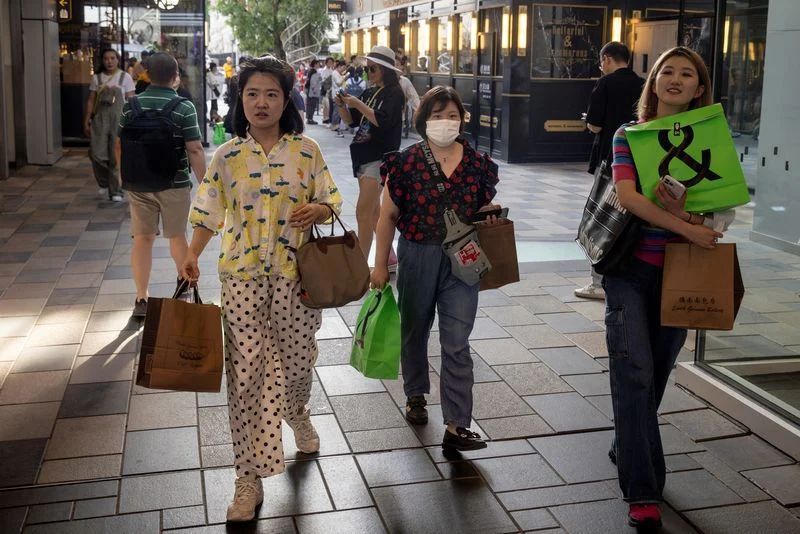

China’s industrial output growth quickens in May but retail sales and investment contract


China’s May retail sales fall for first time in over three years
“Even if the situation remains unclear, should it be judged that upside risks to prices outweigh downside risks to economic activity, it will be necessary to thoroughly discuss the pros and cons of raising the policy interest rate,” Ueda earlier this month.

SoftBank Vision Fund CFO to leave company after a decade, Reuters reports
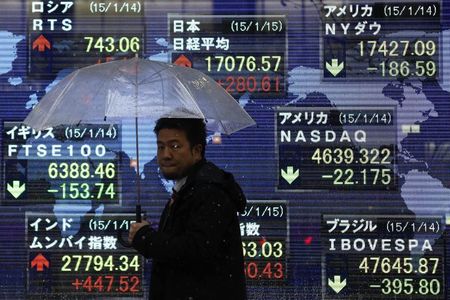
Asia stocks mixed on weak China data; Nikkei, ASX fall ahead c.bank meetings

While the durability of the rally will depend on the finalisation of a deal, analysts said downside risks appear limited for now.
The NSE Nifty 50 gained 231 points, or 1%, to close at 23,853.90, after briefly crossing the 24,000 mark for the first time since May 29. The S&P BSE Sensex advanced 736.38 points, or 1%, to end at 76,264.33. Over the past two sessions, both indices have rallied as much as 3.3%.
 Agencies
fingers crossed over peace Sensex and Nifty rally 3.3% in past two sessions on short covering; ₹200 cr FPI inflow on Mon
“The rally on Monday and Friday was driven by short covering on hopes of a peace deal between the US and Iran, and while the sustainability of gains is not certain, the deal seems to be around the corner,” said Nilesh Jain, VP-Head of Technical and Derivative Research, Centrum Finverse.
The US and Iran said they have reached a new ceasefire agreement that will end a US blockade of Iranian ports and reopen the Strait of Hormuz, ending the months-long conflict that has kept investors on tenterhooks and kept oil prices elevated.

With both sides showing willingness to bring the war to an end, Brent crude futures fell more than 5% to $85.8 a barrel on Monday. Across Asia, South Korea, Japan surged 5.2% and 5%, respectively, while Taiwan gained 2.8%. China and Hong Kong rose 1.6% and 0.5%.
“The reaction in oil prices after the peace deal was announced reassured investors that crude prices are not expected to sustain at elevated levels for longer and triggered a rally,” said Vaiibhavv Chugh, chief executive officer, Abakkus Mutual Fund. “The fear has toned down considerably, and optimism could build further,” he added.Realty stocks led the gains, with the Nifty Realty index surging 4%. The Nifty Consumer Durables and Auto indices climbed 2.9% and 2.6%, respectively.
Foreign portfolio investors bought shares worth a net ₹200 crore on Monday – after 11 consecutive sessions of selling, while domestic institutional investors bought shares worth ₹3,189.3 crore. So far in June, foreign investors have sold shares worth ₹41,967 crore.
“Foreign investors have pared some of their short positions, which contributed to the rally. However, towards the latter part of the session, participants booked some profits in the derivatives market,” said Abhilash Pagaria, Head of Alternative & Quantitative Research at Nuvama Wealth. If the deal is finalised, a significant source of uncertainty could be removed, potentially encouraging foreign investors to increase allocations to Indian equities, he said.
The India VIX volatility index fell 2.5% to 14.4. After spiking to around 29 at the height of the conflict, the gauge has retreated to more comfortable levels, suggesting investor anxiety has eased. “For the gains to be sustainable, Nifty must decisively close above 24,000,” said Jain.
He said intermittent declines could not be ruled out, but the Nifty could gradually move towards 24,500 during the June series if it breaks above the 24,000 mark.
Broader markets outperformed the benchmarks, with the Nifty Midcap 150 and Nifty Smallcap 250 rising 1.5% and 1.3%, respectively. Over the past week, the two indices have gained 1% and 3%.
Check out what’s clicking on FoxBusiness.com.
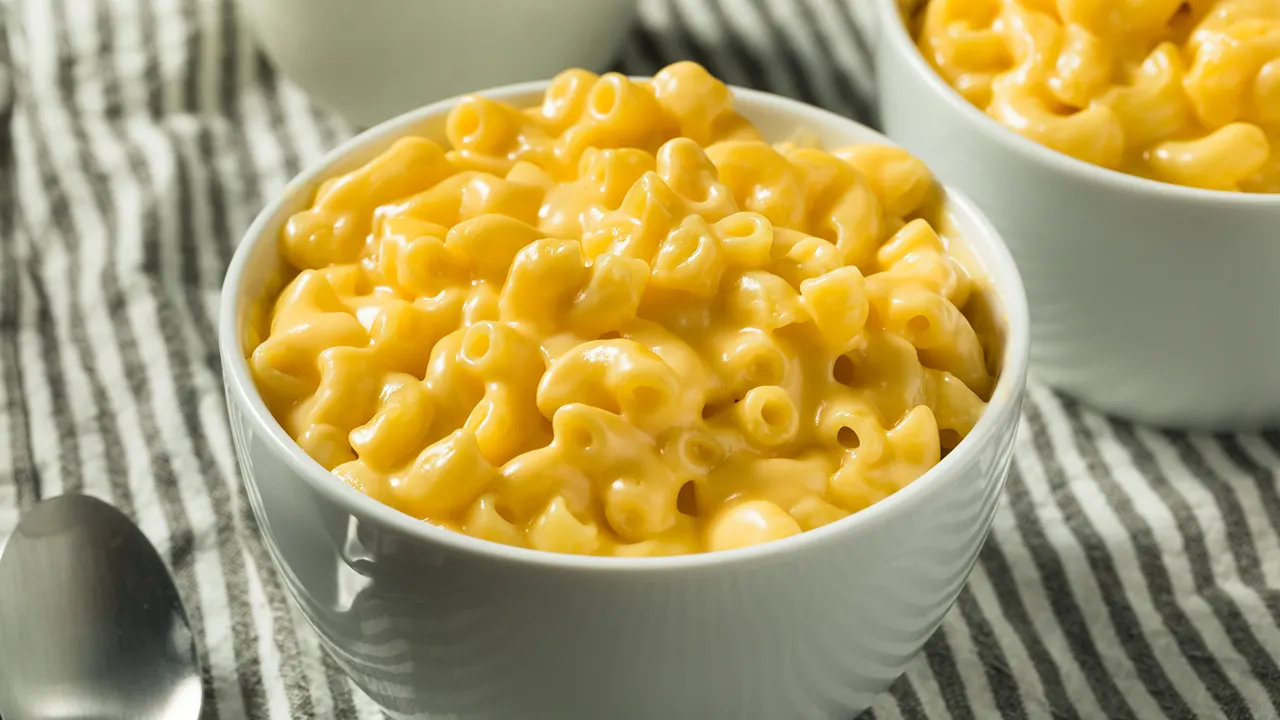
More than 500,000 packages of macaroni and cheese sold at Aldi stores nationwide have been recalled because they may contain undeclared soy lecithin, a soy-derived ingredient that can pose a risk to people with soy allergies or sensitivities.
According to the Food and Drug Administration, 58,405 cases of Park St. Deli Macaroni & Cheese are affected. Each case contains nine 20-ounce packages, bringing the total number of impacted packages to 525,645.
The plastic tubs of macaroni and cheese were sold inside paperboard sleeves.
FDA ISSUES HIGHEST-RISK RECALL OF ALFREDO SAUCE SOLD IN 41 STATES

More than 500,000 packages of macaroni and cheese sold at Aldi stores nationwide have been recalled. (Paul Weaver/SOPA Images/LightRocket via Getty Images / Getty Images)
BEF Foods Inc., the product maker, initiated the voluntary recall on March 23, and the FDA classified it as a Class II recall on June 10.
A Class II recall means use of or exposure to the product may cause temporary or medically reversible adverse health consequences, or that the probability of serious adverse health consequences is remote, according to the FDA.
Customers are urged not to consume the affected products and to return them to the place of purchase for a full refund.
MORE THAN 17K COFFEE MAKERS RECALLED AFTER DOZENS OF REPORTED BURN INJURIES
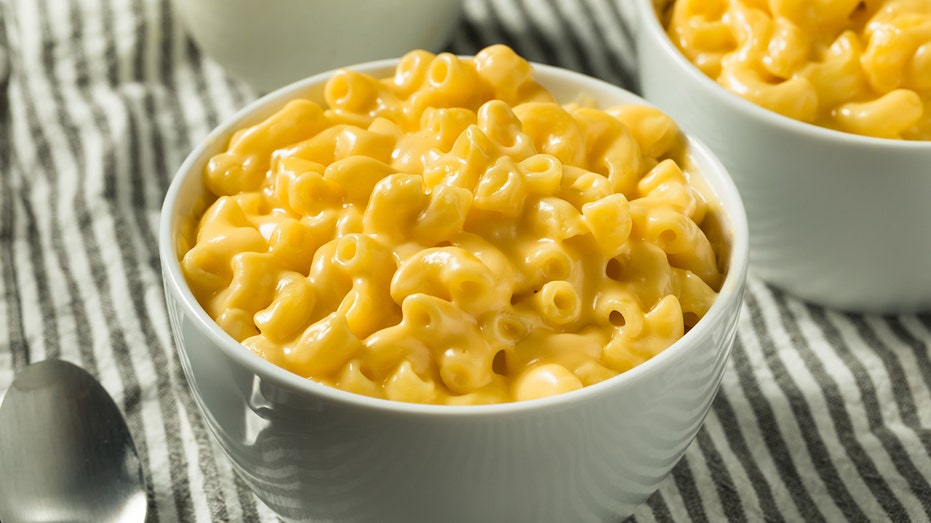
The FDA said 58,405 cases containing nine 20-ounce packages each of the Park St. Deli Macaroni & Cheese are affected by the recall. (iStock / iStock)
Lecithin is a group of chemicals the body uses to move fats, according to the University of Rochester Medical Center.
They are found in various foods, including egg yolks, soybeans, wheat germ, peanuts and liver. Many people know lecithin as the oily film on their frying pan when they use a nonstick cooking spray.
Some people also take them as supplements. They can come in capsules, liquid or granules.
The FDA classified the recall as a Class II recall last week. (iStock / iStock)
GET FOX BUSINESS ON THE GO BY CLICKING HERE
Lecithin is used in the food industry as an additive to combine foods, with salad dressing being one example.
Soy lecithin emulsifies ingredients like oil and water to blend the salad dressing into a smooth consistency, Judy Simon, a clinical dietitian nutritionist at the University of Washington, previously told USA TODAY.

Liverpool transfer news: Yan Diomande link confirmed as Andoni Iraola to land ‘new signing’

Analysis-China embraces Myanmar’s president as former junta chief seeks legitimacy

Comparing Market Value of SpaceX Stock and Pepeto Shows Why a Presale Entry Beats the Biggest IPO in History


-

 Business2 days ago
No Jackpot Winner as $257 Million Prize Rolls Over to $269 Million Monday Draw
-

 Crypto World4 days ago
Oppenheimer backs SpaceX as $70 billion retail frenzy builds
-

 Crypto World4 days ago
Markets Rally as SpaceX IPO Looms Amid Iran Tensions and Inflation Surge
-

 Fashion3 days ago
Weekend Open Thread: Tuckernuck – Corporette.com
-
 Crypto World1 day ago
Zimbabwe Requires Crypto Businesses to Register Annually Under New FIU Regulations
-

 Entertainment7 days ago
The Ryan Gosling True Crime Thriller On Netflix That Gets Even Stranger, Stream It Now
-

 Tech3 days ago
NanoClaw integrates JFrog registries to secure AI agent downloads
-
 Sports6 days ago
Bangladesh beat Australia after 20 years in ODIs, register only their second win over six-time world champions | Cricket News
-

 Crypto World3 days ago
Bitget enters Argentina’s regulated crypto market through PSAV registration
-

 Tech4 days ago
This Week In Security: Microsoft On Microsoft, Register Your Domains, Linux On ARM, And FreeBSD Joins The File Cache Club
-
 Tech5 days ago
Dutton Ranch star claims they ‘didn’t see any disruption’ on set following Chad Feehan’s exit from Yellowstone spinoff fueled by Taylor Sheridan clash rumors
-

 NewsBeat4 days ago
El Nino has formed in the Pacific and could set records, forecasters say
-

 Politics5 days ago
Politics Home | Healey Resignation Is “Colossal Failure Of Government”, Says Former Labour Defence Secretary
-

 Tech6 days ago
‘This is Seattle’s position on AI’: City Council votes unanimously to pause big new data centers
-

 Business6 days ago
Thailand Ranks Second Worldwide for AI Adoption Growth, Microsoft Reports
-
 Entertainment4 days ago
Donnie Wahlberg & More Heat Up Las Vegas at Circa’s Barry’s Downtown Prime
-

 Sports5 days ago
First Time Since 1971: Australia Register Historic Low In ODI Cricket
-
 Tech4 days ago
Opendoor Ends India Operations, Fueling a Bigger Conversation About AI and Outsourcing
-

 Politics5 days ago
Belfast burns, while Met chief points finger at Iran and Russia
-

 NewsBeat3 days ago
FBI searches office of Ohio voter registration group
You must be logged in to post a comment Login