

Business
Form 13G First Watch Restaurant Group For: 15 May


Intel Corp. shares declined modestly in midday trading Wednesday, falling 1.03% to $106.81 as investors rotated among semiconductor names following a strong run in the sector and ahead of key industry events.
The move came on moderate volume with no company-specific news immediately driving the decline. Intel has posted solid gains year-to-date, supported by progress on its foundry ambitions, U.S. government funding under the CHIPS Act, and positioning in artificial intelligence infrastructure. However, the stock continues to trade with volatility typical of the broader chip sector.
Recent Performance and Market Context
Intel has been on a recovery trajectory after several challenging years marked by lost market share in processors and delays in advanced manufacturing processes. The company reported encouraging first-quarter results earlier in 2026, with data center revenue showing strength from AI-related demand and signs of stabilization in its core PC business.
Wednesday’s modest pullback reflects broader sector dynamics rather than fundamental concerns. Rivals such as Nvidia, AMD and TSMC have seen strong interest due to AI tailwinds, while Intel’s turnaround story requires sustained execution on multiple fronts. The stock remains sensitive to updates on process technology improvements and foundry customer wins.
Foundry Strategy and Government Support
A central element of Intel’s strategy is rebuilding its foundry business to compete with TSMC and Samsung. The company has secured major funding from the CHIPS and Science Act, including grants and loans aimed at expanding U.S.-based manufacturing capacity. Progress on 18A and future process nodes is being closely watched by investors and customers.
Intel has announced several customer wins, including partnerships with Microsoft and others for custom chips. These developments are viewed as critical to diversifying revenue beyond its traditional product lines and reducing reliance on internal consumption.
Analysts note that successful execution on foundry goals could significantly re-rate the stock, though timelines remain extended and capital requirements substantial. Management has emphasized disciplined spending and long-term value creation.
AI and Data Center Momentum
Intel continues pushing into artificial intelligence with its Gaudi accelerators and Xeon processors optimized for AI workloads. While trailing Nvidia in the high-end GPU market, the company is gaining traction in inference and certain enterprise segments where cost and integration matter.
Data center revenue has shown improvement, providing a counterbalance to softness in consumer-facing businesses. The company’s broad portfolio across CPUs, GPUs, FPGAs and other components gives it unique positioning, though competition remains intense across all categories.
Financial Outlook and Capital Allocation
Intel maintains a solid balance sheet despite heavy capital expenditures for factory builds. The company has outlined plans for improved profitability and free cash flow generation as newer process technologies come online and operational efficiencies take hold.
Dividend stability remains a priority for many long-term shareholders, with Intel viewed as a reliable payer in the technology sector. Share repurchases and cost management are also part of the strategy to support shareholder returns during the multi-year turnaround.
Analyst Views and Valuation
Wall Street consensus remains cautiously optimistic. Several firms have Buy ratings with price targets reflecting potential upside from successful foundry execution and AI growth. However, some analysts maintain Hold positions citing execution risks and near-term margin pressures.
At current levels, Intel trades at a valuation that many consider attractive relative to growth prospects if key milestones are met. The stock has been volatile but shows signs of bottoming as operational improvements materialize.
Broader Semiconductor Landscape
The chip sector overall has been strong in 2026, driven primarily by AI infrastructure buildouts. While Intel has lagged some high-flyers, its diversified business and domestic manufacturing focus provide unique attributes in an industry facing geopolitical and supply chain risks.
Trade tensions and export restrictions continue to influence sector dynamics, with U.S.-based companies balancing growth opportunities against regulatory considerations. Intel’s position as a key domestic manufacturer gives it strategic importance beyond pure financial metrics.
Investor Considerations
For investors, Intel represents a higher-risk, higher-reward opportunity within the semiconductor space. Success depends on multiple variables including process technology leadership, customer acquisition for foundry services, and effective capital deployment.
Short-term traders may react to quarterly updates and guidance, while longer-term investors focus on structural improvements and market share recovery. The stock’s inclusion in major indexes ensures continued visibility and institutional interest.
Looking Ahead
Intel’s next earnings report and updates on factory ramps and customer pipeline will be important catalysts. Management has set ambitious targets for 2026 and beyond, with progress on 18A process technology expected to be a key focus area.
The company continues hiring talent and investing in research and development to regain technological edge. Partnerships with governments and other industry players are also part of the strategy to strengthen its position.
As the semiconductor industry evolves, Intel’s ability to adapt and execute will determine its long-term success. Wednesday’s modest decline represents normal market fluctuations rather than a shift in fundamentals, with the stock still reflecting optimism around its multi-year turnaround plan.
Investors will continue monitoring Intel’s progress closely in coming quarters. The company’s transformation efforts, supported by substantial government backing and a broad technology portfolio, position it as a key player in the ongoing evolution of the global semiconductor industry.
The session’s trading activity reflects typical midweek positioning with limited new information. Broader market sentiment and sector rotation will likely influence near-term movements, while fundamental developments remain the primary driver for longer-term valuation.
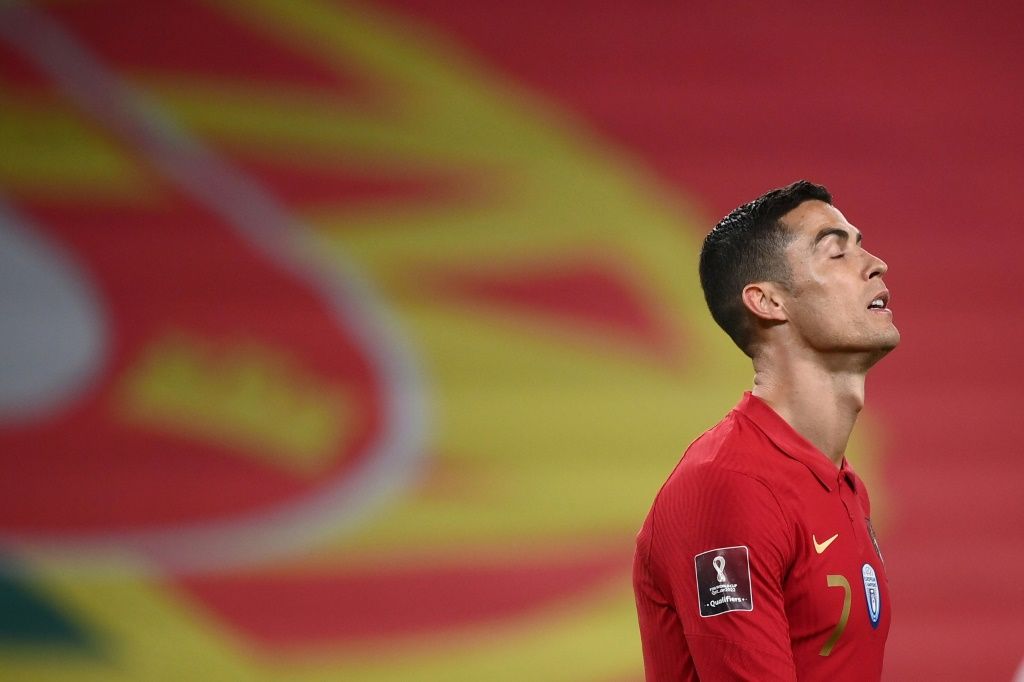
LISBON — Portugal coach Roberto Martinez has issued a robust defense of Cristiano Ronaldo’s central role in the national team ahead of the 2026 FIFA World Cup, describing the 41-year-old captain as an iconic figure whose influence and leadership remain essential despite questions about his age and the emergence of younger attackers.
In a recent interview, Martinez praised Ronaldo’s extraordinary commitment and on-field impact, pushing back against recurring debates about whether the all-time leading international goalscorer should step aside. The comments come as Portugal prepares for what is widely expected to be Ronaldo’s final World Cup appearance.
“A unique footballer that has changed the game,” Martinez said. “His commitment to the game is still an example for many young players. Twenty-one years of service to the national team, 227 games for the national team. No other player has done that. The number of goals. All those figures make Cristiano Ronaldo iconic.”
Martinez emphasized Ronaldo’s value as a No. 9, highlighting his movement, timing, finishing and ability to create space for teammates. “The influence of Cristiano Ronaldo as a No. 9, the movement, the timing of the movement, the finishing, the way he opens spaces, the way that he can influence the defensive back line of the opposition, that’s a big, big strength,” he added.
Ronaldo’s Remarkable Longevity
Ronaldo has scored a record 143 international goals across more than 226 appearances for Portugal, a tally unmatched in the history of the game. His contributions have been pivotal in major successes, including the 2016 European Championship title and the recent UEFA Nations League triumph.
After moving to Al Nassr in Saudi Arabia following the 2022 World Cup, many anticipated a decline in his international impact. Instead, Ronaldo has continued producing, scoring in the Nations League semifinals and final in 2025 and adding five goals during World Cup qualifying. His recent Saudi Pro League title further underscores his enduring competitiveness.
Martinez made clear that Ronaldo’s presence provides tactical and psychological advantages that are difficult to replicate. The veteran’s ability to stretch defenses and inspire teammates remains a key asset for a Portugal squad regarded as one of the most talented in the tournament.
Squad Strength and Group Stage Outlook
Portugal enters Group K alongside DR Congo, Uzbekistan and Colombia. The draw offers a mix of physical and technical challenges, with matches scheduled in Houston and Miami. The team boasts impressive depth, featuring stars such as Bruno Fernandes, Bernardo Silva, Ruben Dias and Rafael Leao, but Martinez sees Ronaldo as integral rather than replaceable.
The coach’s strong endorsement aims to quiet speculation and foster unity as the squad finalizes preparations. Portugal’s blend of experience and youth positions it among the contenders, with many analysts viewing it as a potential dark horse for a deep run or even the title.
Legacy and Historical Significance
Ronaldo’s pursuit of a sixth World Cup appearance would tie him with the record. His longevity has defied repeated predictions of decline, and speculation persists about a possible role in the 2030 tournament, which Portugal will co-host. For now, focus remains on 2026, where Ronaldo seeks to add to his legendary international résumé.
Martinez has overseen a successful period for Portugal, including strong performances in the Nations League and consistent qualification results. His tactical approach leverages Ronaldo’s strengths while integrating younger talents, creating a balanced and dangerous side.
Preparation and Broader Context
As the tournament nears, Portugal’s training camp will emphasize fitness, cohesion and adapting to North American conditions. Ronaldo’s leadership and professionalism set the tone for the group, with younger players drawing inspiration from his work ethic.
The 2026 World Cup’s expanded 48-team format increases opportunities for strong performances, but Group K still demands focus and execution. A strong start against DR Congo could set a positive tone for the campaign.
Public and Fan Sentiment
Ronaldo remains a national icon in Portugal, with widespread support for his continued inclusion. Fans value his dedication and clutch performances, viewing him as a symbol of resilience and excellence. Martinez’s comments are likely to resonate positively with supporters eager to see their captain shine on the global stage once more.
The debate over Ronaldo’s role reflects broader discussions in international football about balancing legacy players with emerging talent. Martinez’s stance underscores a philosophy that prioritizes current impact and team needs over arbitrary age considerations.
Tournament Ambitions
Portugal enters the competition with realistic hopes of advancing far. The squad’s quality, combined with Ronaldo’s experience, creates a potent mix. Success would depend on collective performance, but the captain’s presence provides a focal point and motivational edge.
As preparations intensify, all eyes will be on how Ronaldo performs in what could be his farewell World Cup. His ability to influence matches at 41 remains a testament to his dedication and skill.
Martinez’s firm backing of Ronaldo sends a clear message: the veteran remains a vital part of Portugal’s plans. With the tournament fast approaching, the team will look to translate that confidence into results on the pitch in North America this summer.
The coach’s words reinforce the special place Ronaldo holds in Portuguese football history. As the squad aims for glory, his leadership and goal threat will be central to their aspirations in the 2026 World Cup.

Why is Americas Car-Mart stock collapsing today?


Kemal Cetin brings nearly 30 years of industry experience.


The 2026 World Cup is expected to bring a wave of global soccer fans to North America. But the travel boom is shaping up to look less like one uniform surge and more like a city-by-city, match-by-match test of pricing power.
“Demand is real and positive, but it’s not evenly distributed across host cities,” said Jay Wardle, president of travel data intelligence company Sojern.
New flight-booking data from Sojern shows most U.S. and Canadian host cities are seeing year-over-year gains for the tournament window, led by Houston and Dallas. But Seattle and all three Mexican host cities are trailing last year’s pace.
The tournament kicks off Thursday in Mexico City and runs through mid-July, ending with the final at New York New Jersey Stadium — better known as MetLife Stadium — in East Rutherford, New Jersey. It is the biggest World Cup ever, with 48 teams, 104 matches and games across the United States, Canada and Mexico.
For hotels, restaurants, airlines, ride-sharing companies and host cities, the pitch has been straightforward: more teams, more games, more fans and more spending.
FIFA has projected the event could contribute up to $17.2 billion to U.S. GDP.
But Deutsche Bank said even if it brings 1.2 million international fans to North America, the overall economic impact will likely be limited in a U.S. economy of this size — amounting to a short-term GDP lift of roughly 0.05% if FIFA’s estimate is reached.
Hotels and Airbnb
Businesses along Roosevelt Avenue prepare for the World Cup by displaying flags, soccer jerseys, and banners on June 09, 2026, in the Queens borough of New York City.
Spencer Platt | Getty Images
The financial bonanza is likely to be split unevenly among cities, hotels, restaurants and other tourism-dependent businesses.
Airbnb said it is expecting its best event ever, surpassing the 2024 Paris Olympics. The company expects to benefit from families and groups looking for larger accommodations or lower per-person costs.
It could also benefit from how long travelers are staying. Sojern’s data shows more than three-quarters of World Cup travelers plan to spend six to 12 nights at their destination.
“We’re pretty enthusiastic about the impact of FIFA as we look at booking patterns coming into the summer,” Marriott CEO Tony Capuano told CNBC. “We’re seeing really strong demand patterns in both FIFA and non-FIFA cities in the U.S.”
Capuano said Marriott expects the World Cup to lift U.S. revenue per available room by about 40 basis points.
Marriott, the world’s largest hotel chain, said it’s particularly well-positioned because of its brand recognition and rewards ecosystem.
“Because of the breadth of our global footprint, we have deep experience, whether it’s FIFA, whether it’s the Olympics, Super Bowl,” Capuano said. “The booking patterns we’re seeing are tracking pretty closely with our expectations.”
Capuano said some release of FIFA room blocks had been anticipated and that current bookings are “right on track” with Marriott’s forecast. The bigger variable, he said, will be the later rounds, when travel demand could shift depending on which national teams advance.
Jim Allen, chairman of Hard Rock International and CEO of Seminole Gaming, said South Florida is already seeing World Cup-related momentum. Allen said more than half of tickets for games in the Miami area are being purchased by locals, while the rest are coming from tourists.
He said Miami’s deep ties to Central and South America are helping drive demand, along with the region’s existing tourism infrastructure and soccer culture.
For Hard Rock, Allen said the World Cup is already producing high-end international traffic. He said the company is seeing guests from multiple continents, including some staying at Hard Rock properties for the first time.
He also said casino play tied to the event is exceeding normal levels and rivaling the kind of activity Hard Rock sees around major events such as the Super Bowl and Formula One.
‘Still finalizing plans’
Businesses along Roosevelt Avenue prepare for the World Cup by displaying flags, soccer jerseys, and banners on June 09, 2026, in the Queens borough of New York City.
Spencer Platt | Getty Images
Sojern’s flight booking data shows nearly an 8% increase in Miami, with New York showing nearly the same boost. Dallas-Fort Worth is seeing a roughly 10% jump and nearly 13% increase in Houston.
But not all cities are seeing the same lift. For instance, Seattle’s flight bookings are nearly 21% lower than this time last year.
The expanded World Cup format means more inventory and more tickets to sell across more matches. Marquee games, host-nation matches and the final are still expected to command premium demand. But lower-profile group-stage matches in large NFL stadiums have been harder to fill, especially with ticket prices remaining high, on par with Super Bowl-level scarcity.
That creates a pricing challenge. Host cities and hotel owners prepared for a once-in-a-generation event. But fans are making practical decisions: which match is worth the trip, how far they are willing to travel, whether to stay in a hotel or short-term rental, and whether prices still make sense.
Rosanna Maietta, president and CEO of the American Hotel & Lodging Association, said hotel demand in host cities has “evolved differently than many initially anticipated,” driven in part by lower-than-expected international visitation.
A survey by the industry group in April showed 80% of respondents reported reservations weren’t meeting expectations. Some were furious that FIFA had canceled large room blocks it had previously booked.
But she said AHLA members are now seeing demand pick up, consistent with shorter booking windows for major events.
“Unlike typical leisure travel, many visitors are still finalizing plans and securing tickets,” Maietta said. “The industry expects some acceleration of late bookings in the lead-up to individual games and we believe stadium attendance will be strong.”
Sojern said 35% of hotel bookings in World Cup host cities historically occur in the final seven days before travel.
FIFA President Gianni Infantino downplayed any concerns about disappointing results in travel. He told CNBC’s Sara Eisen on Tuesday, “We should make the analysis after the end of the World Cup. We have never seen so many ticket requests. “

Deutsche Bank said hotel real estate investment trusts with greater exposure to full-service hotels could benefit from World Cup demand as team delegations, sponsors and business groups use not just rooms, but meeting spaces and food-and-beverage outlets. The firm has generally baked a 50- to 75-basis-point revenue per available room lift into its hotel REIT models tied to the tournament. It also expects luxury hotels to benefit more than economy properties.
Restaurants may be better positioned to benefit broadly. Deutsche Bank said foodservice companies should get a lift from both tourism and watch parties, especially restaurants near stadiums and host cities, delivery-heavy concepts such as pizza and wings, and sports bars showing games during North American time zones.
Derek Evans, CEO of the Marcus Samuelsson Group, told CNBC that in the restaurant business, it’s too early to count his chickens.
“You haven’t seen fandom really kick in yet,” he said. “When your country’s team starts winning that’s when travel budgets go out the window.”
Rideshare companies such as Uber and Lyft could also see increased demand around matches.
The key question for host cities is whether even the biggest sporting event in the world has a price ceiling.
Disclosure: CNBC parent Versant carries NBC Sports-produced Olympic coverage on its networks, including USA Network and CNBC.
Business
Micron, Super Micro, Newmont, Robinhood, Casey’s, and More Stocks That Explain Today’s Market
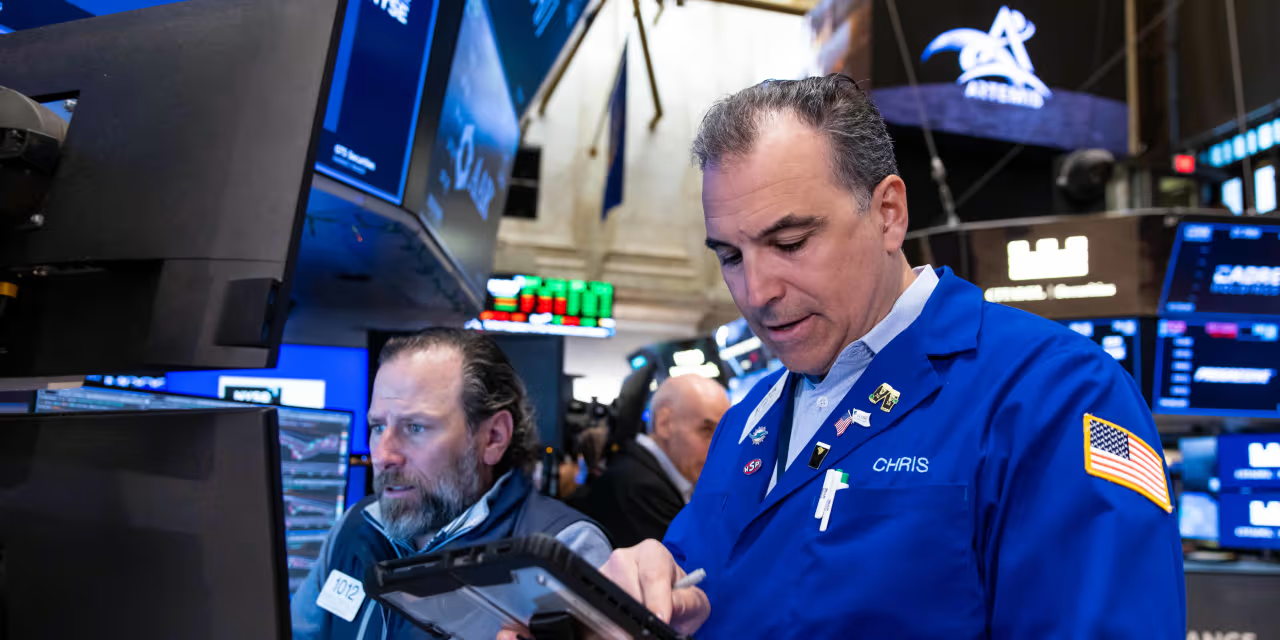
Micron, Super Micro, Newmont, Robinhood, Casey’s, and More Stocks That Explain Today’s Market


Company opens first US manufacturing hub.
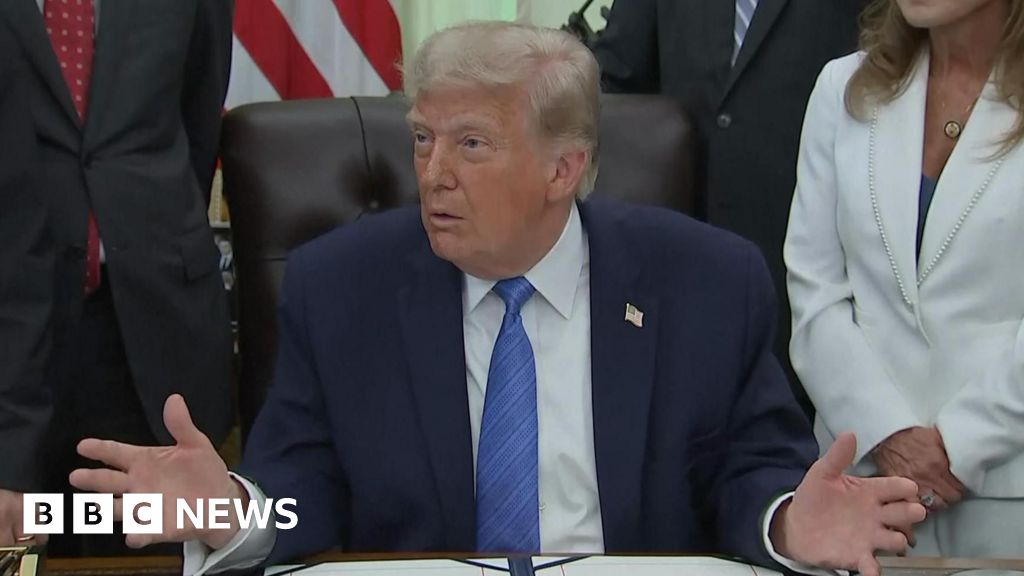
During an Oval Office signing event, President Donald Trump said, “I love the inflation” in response to a reporter’s question about news that it had surged to a three-year high of 4.2%.
The president also revealed that the US has been “taking out millions of barrels of oil” from Iran, saying Tehran didn’t know about it “until right now”.
Despite its recent climb, Trump insisted that inflation will “come down like a rock” after the war is over.
The purchase came on the same day the stock made a strong stock market debut, listing at a premium of around 43% over its issue price of Rs 192.
CMR Green Technologies had launched a Rs 630.88 crore initial public offering, which was entirely an offer-for-sale (OFS) by existing shareholders. The issue received an overwhelming response from investors, getting subscribed 127.07 times overall.
Institutional investors led the demand, with the qualified institutional buyer (QIB) portion subscribed 270.46 times, while the non-institutional investor (NII) category was booked 172.35 times. The retail portion attracted bids worth 27.08 times the shares on offer.
The strong subscription and listing performance reflect investor optimism around the company’s position in India’s growing recycled metals and aluminium recycling industry.

Brokerages had highlighted the company’s market leadership and growth prospects ahead of the IPO. Arihant Capital noted that CMR Green’s aluminium recycling capacity is more than four times that of its nearest domestic competitor and pointed to its estimated 42-45% market share in the automotive cast alloy segment.
SBI Securities had also maintained a “Subscribe” rating, citing the company’s installed capacity of 4.7 lakh tonnes per annum and opportunities arising from increasing demand for recycled metals and expansion into wrought aluminium products.Deven Choksey Research said the company is well placed to benefit from long-term themes such as electric vehicle adoption, rising aluminium usage in automobiles, decarbonisation initiatives and India’s push towards a circular economy.
However, analysts have advised caution after the sharp listing gains.
Shivani Nyati, Head of Wealth at Swastika Investmart, said investors should remember that the IPO was entirely an OFS and did not bring fresh capital into the company. She said investors who received allotment could consider booking partial profits while retaining some exposure for the medium term, given the company’s industry positioning. New investors, meanwhile, should wait for a correction or consolidation rather than chase the stock at elevated levels, she added.
Founded in 2006, CMR Green Technologies is among India’s largest non-ferrous metal recyclers. The company manufactures recycled aluminium alloys, zinc alloy ingots, aluminium billets and other recycled metal products used across automotive and industrial applications.
For FY25, the company reported revenue of Rs 6,697 crore and net profit of Rs 155 crore. In the first nine months of FY26 ended December 2025, it posted revenue of Rs 6,291 crore and profit after tax of Rs 162.4 crore, indicating continued operational momentum.


As a detail-oriented investor with a strong foundation in finance and business writing, I focus on analyzing undervalued and disliked companies or industries that have strong fundamentals and good cash flows. I have a particular interest in sectors such as Oil&Gas and consumer goods. Basically, anything that has been unloved for unjustified reasons that could offer substantial returns. Energy Transfer is one of those companies that I came across when no one wanted to touch it and now I can’t resolve myself to sell it. I will always focus more on long-term value investing but I can sometimes lose myself in possible deal arbitrage such as with Microsoft/ Activision Blizzard, Spirit Airlines/Jetblue (that one still hurts), and Nippon/U.S. Steel (perfect exit at $50.19). I tend to shun businesses that I can’t understand either high-tech or certain consumer goods such as fashion (give me a Levi’s jeans). I don’t understand why anyone would invest in cryptocurrencies as well. Through Seeking Alpha, I aim to connect with like-minded investors, share insights, and build a collaborative community of individuals seeking superior returns and informed decision-making, currently on a quest to review every public company.
Analyst’s Disclosure: I/we have a beneficial long position in the shares of ET either through stock ownership, options, or other derivatives. I wrote this article myself, and it expresses my own opinions. I am not receiving compensation for it (other than from Seeking Alpha). I have no business relationship with any company whose stock is mentioned in this article.
Seeking Alpha’s Disclosure: Past performance is no guarantee of future results. No recommendation or advice is being given as to whether any investment is suitable for a particular investor. Any views or opinions expressed above may not reflect those of Seeking Alpha as a whole. Seeking Alpha is not a licensed securities dealer, broker or US investment adviser or investment bank. Our analysts are third party authors that include both professional investors and individual investors who may not be licensed or certified by any institute or regulatory body.

The 4 Money Rules That Changed Everything #personalfinance #truewealth #usa #finance #investing

an uncomfortable reminder of the innocent people ‘burnt out’ during the Troubles

Intel Shares Dip 1% to $106.81 Amid Semiconductor Sector Rotation

HarrisX Poll Found 52% of Registered Voters Support the CLARITY Act

BloFin War of Whales 2026 Grand Prix opens registration for $5M trading championship

Blockchain.com files with SEC for U.S. IPO
The 4 Money Rules That Changed Everything #personalfinance #truewealth #usa #finance #investing

G Money – NOCHES SIN CENA ( VIDEO OFICIAL )

Personal Financial Planning|Mcom sem4nep|Most Imp Question|Paper Pattern|University Solution|Ark sir
-

 Fashion5 days ago
Weekend Open Thread: Evereve – Corporette.com
-
 Crypto World5 days ago
Jensen Huang Approves Samsung, SK Hynix, and Micron for NVIDIA (NVDA) HBM4 Memory Supply
-

 Crypto World2 days ago
Anatomy of the June crypto crash: Fed, Iran, Saylor
-
 Entertainment4 days ago
The Best Mystery Series of All Time Is Surging on Streaming 30 Years After It Ended
-

 NewsBeat3 days ago
Alexander Zverev wins the French Open to finally earn a 1st Grand Slam title
-

 Tech5 days ago
Suspicious Polyfill login prompts pop up on Toshiba, Muji websites
-
 Crypto World4 days ago
Senator Cynthia Lummis Calls CLARITY Act the Most Consequential Financial Legislation of This Generation
-

 Tech3 days ago
Microsoft unveils seven homegrown AI models in new bid for ‘long term self-sufficiency’
-

 Tech5 days ago
Microsoft launches MXC, an OS-level sandbox for AI agents, with OpenAI and Nvidia already on board
-

 Business5 days ago
(VIDEO) Justin Bieber Delivers Surprise Happy Birthday Serenade to Diners at Los Angeles Mexican Restaurant
-
 Business4 days ago
The Pain Points Taking a Fragile Tech Rally Down a Notch
-
 Crypto World2 days ago
Eli Lilly (LLY) Stock Surges 4% Following Breakthrough Sleep Apnea Trial Results
-
Crypto World5 days ago
LBank Surpasses 25 Million Users Worldwide as AFA Partnership Continues to Drive Global Growth
-

 Crypto World3 days ago
Trump’s AI Ownership Plan Could Benefit Anthropic at OpenAI’s Expense
-

 Tech5 days ago
Meta steals a tactic from Tesla and builds data centers in tents
-

 Tech5 days ago
Von der Leyen’s AI envoy pick draws conflict-of-interest fire
-
 Sports1 day ago
Bangladesh beat Australia after 20 years in ODIs, register only their second win over six-time world champions | Cricket News
-

 Business2 days ago
High Stakes for Wembanyama as New York Pushes for 3-0 Lead
-

 Tech4 days ago
Hackers now exploit SolarWinds Serv-U flaw to crash servers
-

 Tech3 days ago
Notion restores access to Anthropic after service disruption
You must be logged in to post a comment Login