Connect with us

Business

Form 4 Eagle Nuclear Energy Corp For: 30 July

Published

on

Continue Reading
Click to comment

You must be logged in to post a comment Login

Leave a Reply

Business

Waaree Energies shares slide 6% despite 15% profit growth and 79% YoY revenue surge in Q1FY27

Published

on

Waaree Energies shares slide 6% despite 15% profit growth and 79% YoY revenue surge in Q1FY27
Shares of Waaree Energies witnessed selling pressure on Thursday, declining 5.65% to Rs 2,581.70, even as the solar energy major reported a strong operational and financial performance for Q1FY27, driven by robust revenue growth, higher production volumes and a record order pipeline.

The company reported a consolidated net profit of Rs 891.87 crore for the quarter ended June 2026, registering a 15.39% year-on-year growth compared with Rs 773 crore in the corresponding quarter last year.

Revenue from operations surged 79.22% YoY to Rs 7,931.79 crore in Q1FY27 from Rs 4,426 crore in the year-ago period, reflecting strong demand momentum across domestic and international markets.

Waaree Energies also strengthened its future growth visibility by securing new orders worth around Rs 16,000 crore during the quarter, taking its total order book to an all-time high of approximately Rs 61,500 crore.

Advertisement

Strong Operational Performance

During Q1FY27, the company achieved solar module production of 3.24 GW, marking a 41.51% YoY increase, supported by improved operational efficiency and scale benefits.

Operating EBITDA stood at Rs 1,439.92 crore, rising 44.38% year-on-year, with EBITDA margins at 18.15%. Quarterly profit after tax reached Rs 891.87 crore, up 15.39% compared with the previous year.

Expansion Plans Gain Momentum

Waaree Energies highlighted key strategic initiatives aimed at strengthening its renewable energy ecosystem:
The company’s 10 GW solar cell manufacturing facility at Unn, Gujarat, is progressing as planned and is expected to commence production during the current financial year.Waaree acquired a 55% equity stake in Associated Power Structures Private Limited, enhancing its power infrastructure capabilities and supporting integrated renewable energy project execution.

The company commenced advanced automated BESS container manufacturing with a capacity of 5.15 GWh at Rola, Gujarat, marking a step towards expanding into energy storage solutions.

Advertisement

Management Outlook

Commenting on the performance, Jignesh Rathod, Whole Time Director and CEO of Waaree Energies, said the company’s Q1FY27 results reflect the strength of its integrated business model, disciplined execution and sustained demand across key markets. He highlighted that the company has achieved a record order book of approximately Rs 61,500 crore, reinforcing its ability to deliver profitable growth while expanding manufacturing capacity and strengthening its clean energy portfolio.

The management stated that a strong balance sheet, phased capital deployment and expected cash flow generation provide sufficient support for upcoming expansion plans. Waaree Energies reaffirmed its FY27 Operating EBITDA guidance of Rs 7,000-7,700 crore.

Stock Performance and Technical View

Despite reporting strong quarterly numbers, Waaree Energies shares traded 6% lower at Rs 2,581.70 on Thursday. The stock commands a market capitalisation of Rs 78,707 crore and continues to trade below its 52-week high of Rs 3,865.

On the technical front, the stock’s 14-day Relative Strength Index (RSI) stood at 38.8. While an RSI below 30 indicates oversold conditions and above 70 suggests overbought territory, the current reading points to moderate weakness. The stock is trading below all eight key simple moving averages (SMAs), indicating a bearish technical trend in the near term despite strong underlying business growth.

Advertisement

(Disclaimer: Recommendations, suggestions, views and opinions given by the experts are their own. These do not represent the views of The Economic Times)

Continue Reading

Business

Ferrari CEO ‘would not change anything’ about polarizing Luce EV debut

Published

on

Ferrari CEO 'would not change anything' about polarizing Luce EV debut

Ferrari unveiled the Ferrari Luce electric vehicle in the symbolic setting of the Vela di Calatrava, Città dello Sport in Rome in May, 2026. (Ferrari S.p.a.)

Ferrari S.p.a.

Ferrari is pleased with the launch of the Luce all-electric vehicle despite significant criticism upon the car’s debut, according to CEO Benedetto Vigna.

Advertisement

He said Thursday that the famed Italian automaker “would not change anything” about the vehicle’s launch this spring, which caused a notable decline in Ferrari shares amid negative reactions to the car, including from former Ferrari executive Luca di Montezemolo.

“I would not change anything in the launch of [Luce]. We are very pleased about what has been done,” Vigna told reporters during a call to discuss Ferrari’s second-quarter results.

Vigna declined to disclose orders or expected sales for the 550,000 euro (roughly $640,000) Luce, but the company, which sold 13,640 vehicles last year, said its order books are full through 2027.

The Financial Times reported Wednesday that Ferrari aimed to sell ⁠just under 500 units of the Luce ​model this year, and the quota was ​filled in less than two months after the car’s May 25 launch.

Advertisement

Ferrari’s first fully electric car, called Luce, in a handout image obtained by Reuters May 25, 2026, after the luxury sports car maker unveiled the model.

Ferrari | Via Reuters

“We are very much satisfied because we are proceeding as planned,” Vigna said, declining to comment on the report.

The Luce was designed by former Apple design chief Jony Ive and is a departure from the aesthetic of typical Ferraris, with a minimalistic interior design, screens and a bubbly exterior. It is Ferrari’s first all-electric vehicle.

Advertisement

The company also did a tiered rollout of the vehicle, revealing its interior ahead of time and posting videos online about the vehicle’s development and arrival.

“The car has a lot of new things and that was the best way to make sure that the people understand all the novelties of this car,” Vigna said. “So that has been very good.”

U.S.-listed shares of Ferrari experienced their largest daily decline so far this year, falling 8.4%, following the vehicle’s debut. The stock has since recovered.

Ferrari unveils its first fully electric vehicle
Choose CNBC as your preferred source on Google and never miss a moment from the most trusted name in business news.
Continue Reading

Business

Hundreds of jobs to go at Jaguar Land Rover

Published

on

The exterior of Jaguar Land Rover's Wolverhampton factory.

Jaguar Land Rover (JLR) plans to cut hundreds of jobs, less than a year after a cyber attack brought production to a halt for more than a month.

In a statement, the firm said: “Impacted colleagues will be supported to find alternative roles wherever possible, alongside the option of voluntary early exit.”

The company said it expected fewer than 300 people would leave the firm under the plans.

JLR, which has its global headquarters at Whitley and manufacturing sites in Solihull, Wolverhampton, and Halewood on Merseyside, employs about 30,000 people in its UK operations, with approximately 10,000 people employed at plants overseas.

Advertisement

A cyberattack in September 2025 closed all manufacturing for five months and meant not a single vehicle rolled off production lines.

That led to a 27% drop in overall production at the company, which is one of the biggest employers in the West Midlands.

It also came as the firm halted production of its Jaguar cars, before a relaunch of a series of all-electric saloons.

JLR continued to build the Land Rover and Range Rover brands, but the cyber-attack took those lines down.

Advertisement
Continue Reading

Business

New research into the impact of horse racing on the Welsh economy

Published

on

Business Live

The independent research is being undertaken by Arad on behalf of the British Horseracing Authority

A general view of Chepstow Racecourse(Image: Alan Crowhurst/Getty Images)

New independent research has been commissioned to evaluate the contribution of the horse racing industry to the Welsh economy.

The assessment, which will look at direct and indirect inputs, will be undertaken by Cardiff-based research consultancy Arad for the British Horseracing Authority (BHA).

Advertisement

The study is the first ever assessment of the impact of the sport on the Welsh economy. The project, which is being financially supported by Arena Racing Company (ARC) and Chester Race Company (CRC), will involve surveys of stakeholders and businesses within the Welsh horse racing community and spectators attending meetings on Welsh racecourses over the remainder of the summer.

While the last remaining greyhound track in Wales, at Ystrad Mynach, is being closed following legislation, there is no suggestion that the new Plaid Cymru Cardiff Bay administration is considering seeking to ban horse racing in Wales.

As well as the impact of racecourses in Wales, such as Chepstow, Bangor-on-Dee and Ffos Las, the research will also assess the contribution of betting. The overall economic impact is expected to run into tens of millions of pounds per year.

Greg Swift, director of communications and corporate affairs at the BHA, said: “We’re delighted to commission Arad Research to carry out this important work on behalf of the thriving and historic horse racing industry in Wales.

Advertisement

“The sport is undoubtedly an economic and cultural powerhouse in Wales. But we want clear evidence to present to the Government that shows the significance of the industry across the country and the role it plays in growing regional economies and communities.

“The survey is crucial to supporting the research and the economic evidence, so we are asking Welsh racing and breeding businesses to support and contribute to Arad’s work and help us demonstrate to policy makers the essential role horse racing plays in Wales.”

Arad director Hefin Thomas, said: We’re pleased to have been commissioned to undertake this important research which will examine the economic contribution of horse racing in Wales. This will include consideration of the direct impact of activities at Chepstow, Ffos Las and Bangor-on-Dee racecourses as well as wider economic impacts throughout the sector and supply chain.”

Regional director with Arena Racing Company, whose racecourse portfolio includes Chepstow and Ffos Las, Phil Bell, said: “We very much look forward to working with Arad, our colleagues at BHA, Bangor on Dee Racecourse and everyone across the world of Welsh horse racing to make sure that we can show exactly what a success story our sport is, and how important it is to a wide range of communities in Wales.”

Advertisement

Chief executive of Chester Racing Company – which owns Bangor-on-Dee Racecourse – Louise Stewart ,said: “We feel that it is really important for Bangor-on-Dee Racecourse to collaborate with the BHA and other Welsh racecourses to support this research project.

“Horse racing plays a significant role in Wales, supporting jobs, attracting tourism and generating economic activity in communities. While we witness its impact in the North Wales economy, robust evidence is vital to ensuring the industry’s value is fully understood as we continue to work closely with government.

“We look forward to the findings of the report, which will help showcase the contribution our racecourses make to the sporting and economic landscape of Wales. Just as importantly, it will provide valuable insights to help shape the future growth and success of the industry.”

Advertisement
Continue Reading

Business

Micron Shares Surge Nearly 15% as Samsung’s Record Profits Point to a Deepening Chip Shortage Through 2028

Published

on

Earnings News: Micron Technology Inc (NASDAQ: MU)

Shares of Micron Technology surged 14.77% in Thursday morning trading, climbing $109.16 to $848.16, as the memory chipmaker’s stock staged one of its sharpest single-day rebounds in weeks after rival Samsung Electronics reported record quarterly profits and warned that the global memory chip shortage fueling those results is likely to persist well into 2028.

The rally followed Samsung’s full second-quarter 2026 earnings release, which confirmed that DRAM and NAND flash memory sales remained at all-time highs during the quarter. Samsung reported operating profit of 89.5 trillion won, beating the 88.13 trillion won analysts had expected, with robust artificial intelligence demand continuing to drive growth across the company’s memory chip business. For Micron, the only major U.S.-based memory chipmaker and a direct competitor to Samsung in both DRAM and NAND products, the results served as powerful third-party confirmation that the artificial intelligence-driven memory supercycle remains firmly intact.

Thursday’s rebound came after a rough stretch for Micron shares, which had fallen more than 25% over the four trading sessions leading up to Thursday, dropping nearly 20% during that window before Thursday’s sharp reversal. The stock’s rally Thursday morning was part of a broader surge across the memory and storage chip sector, with SanDisk climbing 22%, Western Digital jumping 18%, Seagate Technology gaining 16%, and SK Hynix’s U.S.-listed shares rising nearly 15% as well. The Roundhill Memory ETF, which tracks the broader memory and storage sector, rose 13% during the same session.

HSBC analyst Alastair Pinder pointed to competing narratives within the artificial intelligence investment community as a key factor behind the sector’s recent volatility. According to one theory Pinder described, high profit margins at Micron and similar memory companies have drawn the attention of Chinese manufacturers, who are positioning to flood the global market with lower-cost, mass-produced memory chips in an effort to undercut established pricing and capture market share from incumbent producers. The recent initial public offering of Chinese DRAM manufacturer ChangXin Memory Technologies, known as CXMT, which raised $8.5 billion in cash to fund production expansion, has been cited as evidence supporting that competitive threat narrative. CXMT’s stock market debut proved dramatic in its own right, surging 531% on its first day of trading and instantly becoming one of mainland China’s largest publicly traded companies amid the broader global memory supply crunch.

Advertisement

Despite the competitive concerns tied to Chinese manufacturers, Wall Street’s broader outlook on Micron has remained decisively positive in recent days. Multiple analyst firms lifted their price targets on the stock to a range of roughly $1,500 to $1,700 per share while maintaining buy or outperform ratings, with consensus price targets clustering around $1,568 to $1,581. Bank of America added Micron to its US 1 List, designating the stock as one of the bank’s highest-conviction investment ideas within the U.S. equity market. Analysts have also pointed to Micron’s expanding roster of strategic partnerships, including new agreements in AI-enabled automotive applications, as providing the company with longer-term visibility into future demand for its memory and storage products.

Not every recent development surrounding Micron has been positive. The company faces an ongoing legal investigation from the law firm Scott+Scott following a consumer class-action lawsuit filed in late June alleging price-fixing within the memory chip market, a development that continues to weigh on sentiment among some investors monitoring regulatory risk tied to the stock. Separately, Micron Chief Executive Sanjay Mehrotra disclosed a stock sale of approximately $37.3 million in late July, a transaction that some market watchers have flagged as an additional factor for sentiment-focused traders to monitor even as the company’s underlying business performance has remained strong.

Micron’s stock has posted extraordinary gains over the trailing 12-month period despite its recent volatility, having surged 637% over the past year, according to recent market data. The stock’s 52-week range spans from a low of $103.38 to a high of $1,255.00, illustrating the scale of the swings that have characterized Micron shares throughout the current artificial intelligence-driven memory chip boom.

Micron has continued expanding its commercial partnerships beyond the memory chip sector’s traditional customer base in recent months. The company signed strategic agreements with both Ford and General Motors during the summer, aimed at strengthening long-term memory supply arrangements and securing production capacity for the automotive sector’s growing use of memory chips in increasingly software-defined and AI-enabled vehicles.

Advertisement

With memory chip prices continuing to climb amid what Samsung has now signaled could be a shortage persisting through 2028, and Micron shares having demonstrated their capacity for both sharp declines and dramatic rebounds within the same trading week, investors are likely to continue closely monitoring both the competitive threat posed by expanding Chinese memory chip production capacity and the durability of current pricing trends as key factors shaping the stock’s trajectory in the months ahead.

Continue Reading

Business

Shield Therapeutics signals it is on track for profitability

Published

on

Business Live

The pharma firm has appointed Michael Jensen as chief financial officer

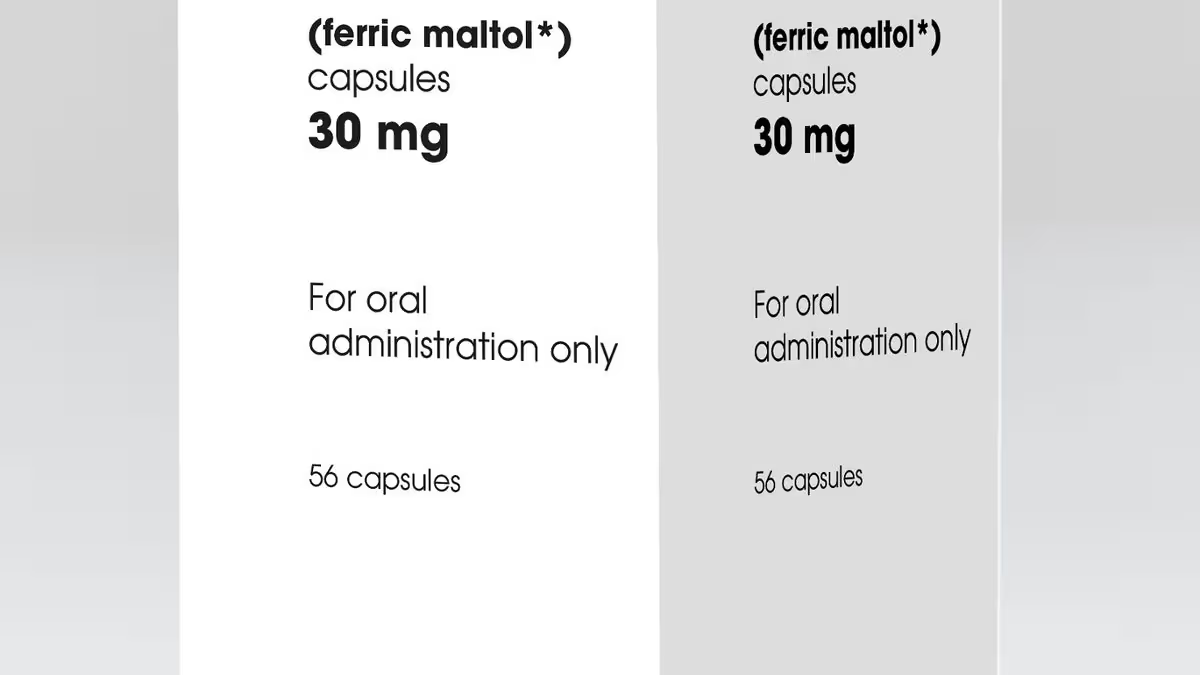
Shield Therapeutics' lead product Accrufer is used to treat iron deficiency in adults.

Shield Therapeutics’ lead product Accrufer is used to treat iron deficiency in adults.(Image: Shield Therapeutics)

Iron deficiency drugs specialist Shield Therapeutics says it is on track for profitability this year as it was spurred by higher partner royalties.

The pharmaceuticals firm – which has part of its operation on Tyneside – said first half revenues increased to $30.4m (£22.6m) from $21.5m (£15.9m) as it saw 21% growth in prescriptions across the period. Shield was also helped by a $7.9m (£5.8m) payment milestone from its Chinese distribution partner ASK.

Second quarter trading was softer with a fall in group net revenue to $11.9m (£8.8m), compared with $14.3m (£10.6m) in the same period last year. Nevertheless, bosses told investors there had been strong growth in the commercial segment in that time.

Accrufer, the group’s flagship tablet for fighting iron deficiency, saw net revenues of $10.3m (£7.6m) in Q2. That was down on $12.8m (£9.5m) in the same period last year, though Accrufer saw increased prescriptions dispensed of about 49,000, compared with 47,000 in Q2 2025.

Advertisement

Shield executives also gave updates on efforts to secure regulatory approval for its products in various countries. In Japan, partner Medleap Pharma saw its first patient enrolment for phase two clinical trial for Accrufer as a drug to treat pulmonary arterial hypertension. And in the UK and EU, there was progress in approving its drugs for paediatric patients of 12 years-old and older.

Launch of the “indication extension” – a formal regulatory process – for paediatric patients of 10 and older was received in the US in April. Bosses also said Shield’s attendance at global conferences BIO-Europe and BIO US resulted in discussions with potential partners.

Meanwhile, Shield also announced the appointment of Michael Jensen as chief financial officer, joining the company from September 1. He is said to bring more than 20 years’ of executive financial leadership experience in the biopharmaceutical, medical device, and healthcare sectors.

Mr Jensen joins Shield from StimLabs, where he served as chief financial officer, and previously held CFO positions at Synlogic and Intrinsic Therapeutics. Earlier in his career, he held senior finance leadership roles at Novo Nordisk, Novartis, and Siemens Healthcare Diagnostics.

Advertisement

Anders Lundstrom, chief executive officer, said: “We are pleased with the significant growth in our largest business segment, commercial, which represents two-thirds of total revenue, alongside strong overall prescription growth. Our prior experience in Texas, pivoting from Medicaid to commercial, gives us confidence in this strategy.

“I am also excited to welcome Michael Jensen as our new CFO. His experience will strengthen our leadership team and support the financial and operational transformation as we drive toward profitability in 2026.”

Continue Reading

Business

What Is an MPPT Inverter: Everything You Need to Know

Published

on

What Is an MPPT Inverter: Everything You Need to Know
Small businesses fitting solar panels, heat pumps and insulation in homes across the UK say they are owed thousands of pounds by the country's biggest energy suppliers, as a £1.3 billion-a-year government subsidy scheme draws to a close.

What is MPPT inverter?

An MPPT inverter (Maximum Power Point Tracking inverter) is a type of solar inverter that continuously adjusts operating conditions to extract the maximum possible power from solar panels. Unlike conventional inverters, it doesn’t simply convert DC to AC—it actively “hunts” for the optimal operating point where your solar array performs at its peak.

At a glance, that might sound like a minor optimization. But in real-world solar systems—where sunlight fluctuates, temperatures shift, and loads vary—this capability can significantly increase energy yield. So the real question is not what an MPPT inverter is, but why it makes such a difference in actual deployments.

 Core Concept (What “MPPT” actually means)

Solar panels don’t produce constant power. Their output is inherently variable and influenced by multiple environmental and electrical factors, including sunlight intensity, ambient temperature, and load conditions. As a result, the voltage and current generated by a panel are always shifting.

At any given moment, there exists a specific combination of voltage and current where the panel delivers its highest possible power output. This is known as the Maximum Power Point (MPP)—essentially the “sweet spot” of performance.

An MPPT inverter continuously tracks this point in real time. Instead of operating at a fixed voltage like traditional systems, it dynamically adapts to ensure that the solar panels are always working as efficiently as possible. Think of it as a smart optimizer that refuses to settle for “good enough” when “maximum output” is achievable.

Advertisement

How it works

The working principle behind MPPT is grounded in a simple but powerful electrical relationship:

P=V×IP = V \times IP=V×I

Where power (P) is the product of voltage (V) and current (I). The challenge is that increasing voltage may decrease current, and vice versa. So how do you find the optimal balance?

An MPPT inverter solves this by continuously adjusting voltage and current, testing different operating points, and identifying where the product of the two—power—is maximized. This process is not static; it occurs thousands of times per second through sophisticated algorithms such as Perturb & Observe or Incremental Conductance.

Advertisement

In practical terms, the inverter is constantly asking: “Can I get more power if I slightly tweak the voltage?” If the answer is yes, it keeps adjusting in that direction. If not, it shifts course. This rapid feedback loop ensures that even under changing weather conditions—like passing clouds or rising temperatures—the system maintains optimal performance.

 MPPT vs PWM: What makes MPPT inverter different

When evaluating solar technologies, one of the most common comparisons is between MPPT and PWM (Pulse Width Modulation). While both are used in solar charge control, their efficiency and functionality differ significantly—especially in larger or more complex systems.

Below is a high-quality comparison table to clearly illustrate the differences:

Feature MPPT Inverter PWM Controller
Efficiency 95%–99% (very high) 70%–85% (moderate)
Operating Principle Tracks maximum power point dynamically Operates at fixed voltage
Energy Harvest Maximizes power output from panels Loses excess potential power
System Compatibility Suitable for high-voltage systems Limited to smaller systems
Performance in Low Light Excellent Poor
Cost Higher upfront cost Lower cost
Scalability Highly scalable Limited scalability
ROI Over Time Higher due to efficiency gains Lower due to energy loss

What does this mean in practice? If you’re running a residential or commercial solar installation where efficiency directly impacts ROI, choosing PWM over MPPT could mean leaving a significant amount of energy—and money—on the table. The upfront savings may look attractive, but the long-term trade-off often isn’t worth it.

Advertisement

How to connect an MPPT charge controller to an inverter

Connecting an MPPT charge controller to an inverter is a relatively straightforward process, but it requires a clear understanding of system architecture. Typically, the solar panels are first connected to the MPPT charge controller, which regulates the DC power and optimizes output. This power is then stored in batteries (in off-grid or hybrid systems) before being fed into the inverter, which converts it into usable AC electricity.

The key is ensuring compatibility between voltage levels, battery capacity, and inverter specifications. Improper configuration can lead to inefficiencies or even system damage.

Key Functions of MPPT Inverters in Real Systems

In real-world solar deployments, MPPT inverters do far more than just optimize power output—they act as the central intelligence layer of the system. This is especially evident in advanced systems such as hybrid inverter low frequency solutions, where stability, surge capacity, and intelligent energy management are critical for both grid-tied and off-grid scenarios. One of their primary functions is maximizing energy harvest under fluctuating environmental conditions. Whether it’s partial shading, temperature variation, or inconsistent sunlight, the inverter ensures that performance remains as close to optimal as possible.

Another critical function is voltage regulation. Solar panels often produce voltages that exceed what batteries or loads can safely handle. MPPT inverters step this voltage down efficiently while preserving power, which is particularly important in off-grid and hybrid systems.

Advertisement

They also enable system flexibility. For example, in large-scale installations, multiple strings of panels can operate at different voltages and still be optimized independently through MPPT channels. This is especially useful in complex rooftops or industrial environments where uniform panel orientation isn’t always possible.

Additionally, modern MPPT inverters often integrate with energy management systems, enabling real-time monitoring, remote diagnostics, and even predictive maintenance. This transforms the inverter from a passive device into an active control hub within the solar ecosystem.

Where MPPT Inverters Used?

MPPT inverters are widely deployed across a range of applications, each benefiting from their ability to maximize efficiency and adaptability.

In industrial solar power systems, where energy demand is high and operational efficiency directly impacts profitability, MPPT technology ensures that every watt generated is utilized effectively. Large manufacturing facilities, for instance, rely on stable and optimized power output to maintain continuous operations.

Advertisement

Commercial rooftops are another major application area. Buildings with complex layouts or partial shading conditions benefit greatly from MPPT’s dynamic tracking capabilities. Instead of suffering performance losses due to suboptimal panel positioning, these systems maintain high efficiency throughout the day.

Off-grid energy systems perhaps gain the most from MPPT inverters. In these scenarios, combining MPPT technology with a low frequency hybrid inverter allows for better handling of heavy loads, higher surge tolerance, and more stable long-term operation in remote environments. In remote locations where energy resources are limited and reliability is critical, maximizing solar output is not just beneficial—it’s essential. Whether it’s a rural electrification project or a standalone cabin, MPPT ensures consistent energy availability.

Agricultural solar pumps also rely heavily on MPPT technology. Water pumping requirements vary throughout the day, and solar conditions are rarely constant. MPPT inverters allow these systems to operate efficiently even under changing sunlight conditions, ensuring reliable irrigation.

Finally, in energy storage and hybrid systems, MPPT inverters play a crucial role in balancing power generation, storage, and consumption. They ensure that batteries are charged efficiently while also supplying stable power to loads or the grid.

Advertisement

Why is Investing in MPPT Solar Inverters the Right Move?

Investing in an MPPT solar inverter is not just a technical upgrade—it’s a strategic decision. While the initial cost may be higher compared to simpler alternatives, the long-term benefits often far outweigh the upfront expense. In fact, this decision becomes even more compelling when viewed against the backdrop of rapid global solar expansion and increasing demand for high-efficiency energy systems.

According to the International Energy Agency, solar power is now the fastest-growing source of electricity worldwide, and renewables are expected to account for over 90% of global electricity demand growth between 2025 and 2030 . This means that efficiency is no longer optional—it is central to competitiveness in modern energy systems.

First, there is the undeniable advantage of higher energy yield. Over the lifespan of a solar system, even a 10–20% increase in efficiency can translate into substantial financial returns. This is particularly relevant for commercial and industrial users where energy consumption is significant. As global solar deployment accelerates, the value of every additional kilowatt-hour becomes more pronounced. In 2025 alone, global solar installations surged dramatically, with hundreds of gigawatts of new capacity being added within a single year, reflecting the scale at which efficiency improvements can compound financial returns .

Moreover, technological advancements continue to push efficiency boundaries. For example, next-generation solar modules have already achieved conversion efficiencies above 25% in laboratory conditions, setting new industry benchmarks . As Martin Green from the University of New South Wales noted:

Advertisement

“High-efficiency technologies may start at a higher cost, but their prices tend to fall rapidly with industry adoption.”

This trend reinforces a critical point: investing in efficiency-driven components like MPPT inverters aligns with the broader trajectory of the solar industry.

Second, MPPT inverters offer greater system flexibility and scalability. Second, MPPT inverters offer greater system flexibility and scalability. This becomes even more valuable in systems designed with off grid inverter parallel configurations, where multiple units can be connected to expand capacity without compromising efficiency or system stability. As energy needs grow or system configurations change, MPPT-based setups can adapt more easily without requiring complete redesigns. This flexibility is increasingly important in a market where solar investment is scaling rapidly. The global solar sector attracted approximately $450 billion in investment in 2025, making it the largest area of energy investment worldwide . In such a capital-intensive environment, systems that can scale efficiently without costly retrofits offer a clear economic advantage.

Third, they enhance system reliability. By continuously optimizing performance and preventing inefficient operating conditions, MPPT inverters reduce stress on system components, potentially extending their lifespan. This is particularly critical as solar becomes a core part of national energy infrastructure. In the United States alone, solar power generated approximately 388.8 TWh of electricity in 2025, demonstrating its growing role in maintaining grid stability and energy supply . With systems operating at such scale, reliability is no longer a secondary concern—it is fundamental.

Advertisement

And perhaps most importantly, they future-proof your investment. The global energy system is undergoing a structural shift toward renewables, with solar at the center of this transition. Forecasts indicate that renewable energy will supply up to 43% of global electricity by 2030, nearly doubling its share within a decade . At the same time, the market for ultra-efficient solar technologies is projected to grow rapidly, reaching $28.5 billion in 2026 with a CAGR of over 15% .

What does this mean for decision-makers? It means that systems built today must be optimized not just for current performance, but for future energy landscapes defined by higher efficiency standards, smarter grids, and more dynamic demand patterns.

In this context, choosing an MPPT inverter is not simply about improving performance—it is about aligning with where the entire industry is heading. When efficiency, scalability, and long-term ROI are all considered together, the real question becomes: can a modern solar system afford to operate without intelligent optimization?

So the real question becomes: Can you afford not to use MPPT technology in a modern solar installation? Now click for solar inverter wholesale!

Advertisement

 FAQs of MPPT inverter

Is an MPPT inverter necessary for all solar systems?
Not necessarily, but for most medium to large systems, it is highly recommended. Smaller systems with minimal power demands may use PWM controllers, but they sacrifice efficiency.

How much more efficient is MPPT compared to PWM?

Typically, MPPT systems are 15%–30% more efficient, depending on environmental conditions and system design.

Can MPPT inverters work in cloudy weather?

Advertisement

Yes, and this is where they truly shine. They continuously adjust to extract the maximum available power even under low-light conditions.

Are MPPT inverters compatible with battery storage systems?

Absolutely. In fact, they are commonly used in hybrid and off-grid systems where battery integration is essential.

Do MPPT inverters require maintenance?

Advertisement

They generally require minimal maintenance, but regular system checks and monitoring are recommended to ensure optimal performance.

Continue Reading

Business

US economy grew 1.5% in second quarter, Commerce Department estimates

Published

on

Businesses can begin filing for tariff refunds as US unwinds Trump-era import duties

This story about the advance estimate of second-quarter GDP will be updated with further details.

U.S. economic growth slowed unexpectedly in the second quarter of the year, according to the Commerce Department’s advance estimate.

Advertisement

The Bureau of Economic Analysis (BEA) on Thursday released its advance estimate of second-quarter GDP, which showed the economy grew at an annualized rate of 1.5% in the three-month period including April, May and June. 

That figure was below the 2.1% growth estimate of economists polled by LSEG.

It comes after the U.S. economy grew at a rate of roughly 2.1% in the first-quarter of 2026. Last year, the U.S. economy grew at an annualized rate of 4.4% in the third quarter and 0.5% in the fourth quarter, which contributed to a growth rate of about 2.1% for 2025 as a whole.

The BEA reported that the main categories that contributed to the rise in real GDP in the second quarter were increases in consumer spending, investment and exports – which were partly offset by a decrease in government spending. Imports increased in the second quarter.

Advertisement

The increase in investment was primarily due to increases in equipment and intellectual property products. Equipment increases were widespread and led by industrial, transportation and information processing equipment, while the rise in intellectual property products was mainly related to software and research and development.

Those gains were partly offset by decreases in private inventory investment, particularly wholesale trade, and nonresidential manufacturing structures.

A revised estimate of second quarter GDP is scheduled to be released in late August, while the final revision will be published at the end of September.

Advertisement
Continue Reading

Business

Stellantis swings to profit on rising demand in North America

Published

on

Stellantis swings to profit on rising demand in North America

A new Jeep Wrangler 4-Door Sahara 4×4 vehicle displayed for sale at a Stellantis NV dealership in Miami, Florida, US, on Saturday, April 5, 2025.

Eva Marie Uzcategui | Bloomberg | Getty Images

Auto giant Stellantis on Thursday swung to profit in the second quarter, boosted by rising demand in North America as the company showed tentative signs of benefitting from CEO Antonio Filosa’s turnaround plan.

Advertisement

The multinational conglomerate, which owns household names including Jeep, Dodge, Fiat, Chrysler and Peugeot, posted second-quarter net profit of 293 million euros ($335.3 million), versus a loss of 1.87 billion euros a year earlier.

Adjusted operating income more than tripled in the second quarter to 773 million euros in the April to June period, from 213 million euros a year earlier. That was below an analyst consensus estimate from Reuters of 914 million euros, however.

Milan- and New York-listed shares of Stellantis fell sharply on the news, with shares in Italy falling more than 8% before paring losses. U.S. shares were off roughly 3% during trading Thursday morning.

Even with posting a profit, Wall Street analysts Thursday questioned why there wasn’t more growth for the company in the U.S. after significant price cuts and the launch of new models such as the Jeep Cherokee SUV.

Advertisement
Stock Chart IconStock chart icon
hide content

Milan-listed shares of Stellantis so far this year.

Filosa said the Cherokee, which is made in Mexico, is ramping up production but the company is intentionally limiting some models due to U.S. tariff costs, which are expected to add at least 1 billion euros this year.

“It is very exposed to tariffs. So we are balancing volumes with profit generation,” he said of the Cherokee during the company’s quarterly earnings call. “We are doing that by limiting some trims and mixing on the highest and more profitable trims.”

Advertisement

Filosa many times noted that his FaSTLAne 2030 turnaround plan is well underway, but the “road is long” and the company needs time for the strategy to fully take hold.

Stellantis posted industrial free cash flows of 1 billion euros at the end of June, comfortably beating Citi’s forecast of 600 million euros.

Analysts at the Wall Street bank said that while this figure reflects improved operating performance, the auto giant’s adjusted operating income margin remains at a “very low” level of 1.8%.

Positive free cash flow is obviously welcome, analysts at Citi said in a research note to clients. “Nevertheless, we expect investors will await more evidence of positive operating performance before revisiting STLA,” they added.

Advertisement
Choose CNBC as your preferred source on Google and never miss a moment from the most trusted name in business news.
Continue Reading

Business

Danone to ‘press the acceleration button’ on innovation

Published

on

Danone to ‘press the acceleration button’ on innovation

The company’s North American brands will see changes this year and next. 

Continue Reading

Trending

Copyright © 2025