
Business
Form 8K Nuvalent Inc For: 7 April



‘The Big Money Show’ reacts to BlackRock CEO Larry Fink saying America lacks enough skilled workers for a coming infrastructure boom.
While Silicon Valley spends billions trying to teach robots how to think, home improvement giant Lowe’s is putting its money on Americans who know how to build.
As artificial intelligence threatens to hollow out white-collar cubicle careers, Lowe’s CEO Marvin Ellison is sounding a wake-up call: AI can write your emails, but it can’t fix your roof.
“We’re a company that believes strongly in the future of AI, but in a world where administrative and analytical occupations are going to be increasingly dominated with the acceleration of AI, we think the skilled trades initiative is going to be even more important here in the near future,” Ellison told Fortune.
“As powerful as AI will become, AI can’t climb a ladder to change the batteries in your smoke detector,” he continued. “It can’t change your furnace filter; it can’t clean your dryer vent; it can’t repair a hole on your roof.”
MIKE ROWE DOUBLES DOWN AFTER BLASTING JIMMY KIMMEL’S ‘TONE-DEAF’ PLUMBER JOKES
Lowe’s also told the outlet that the company is doubling down on the backbone of the American economy, committing $250 million over the next decade to recruit and train 250,000 skilled tradespeople. This includes positions in plumbing, carpentry, electrical work and more.

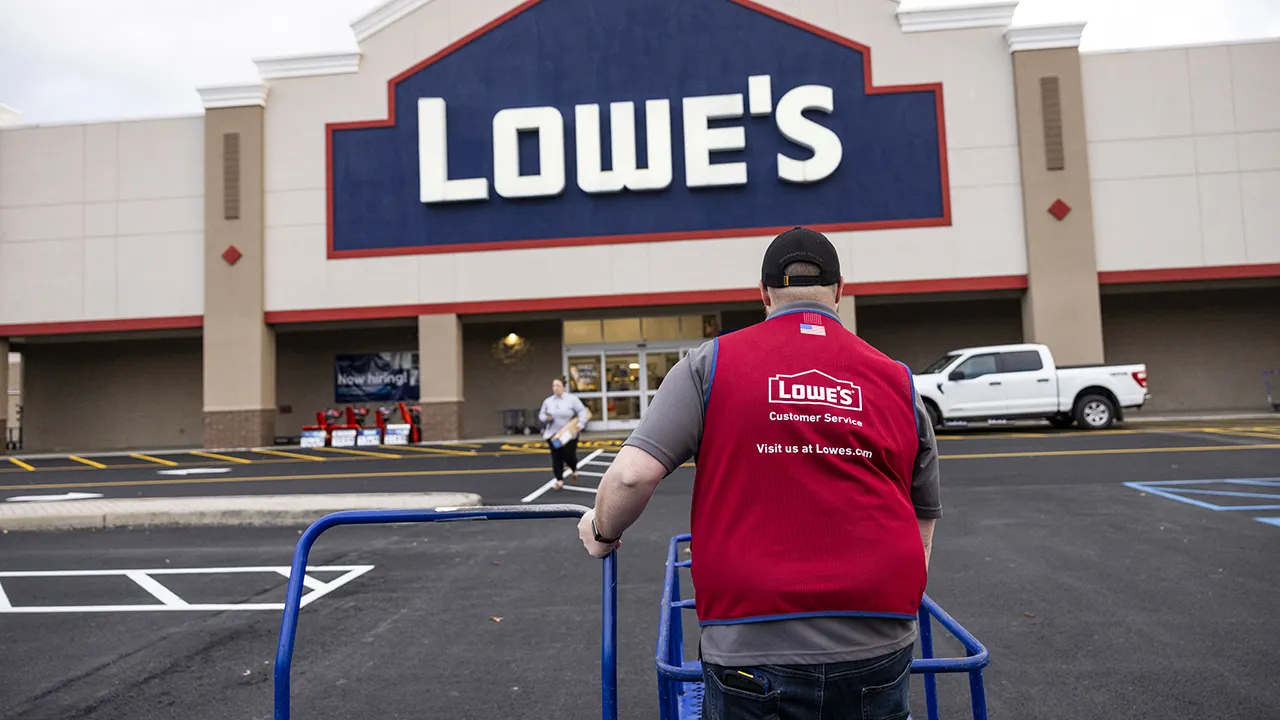
A worker moves empty carts outside a Lowe’s store in Albany, New York, on Tuesday, Nov. 14, 2023. (Getty Images)
The goal is to fill the void in the skilled trades workforce. According to the Associated Builders and Contractors and the latest Bureau of Labor Statistics projections, 349,000 new trade skills workers are needed to meet 2026 demand. Specialty trade contractors added just 95,000 jobs since late 2024, and 92% of construction firms have reported difficulty finding qualified talent.
Recent BLS data also shows that 47% of skilled tradespeople now earn more than the median college graduate, with zero student loan interest eating their take-home pay.
While young Americans have been sold on a college career for decades, Ellison, who holds an MBA, is calling for a culture shift. Even his own executives are now steering their children toward trades to avoid the debt-heavy “prestige” trap.
CEO of mikeroweWorks Foundation Mike Rowe joins ‘Varney & Co.’ to discuss people shifting from white collar to blue collar employment and the launching of an initiative in Texas to promote skilled trades.
“There’s not that one option is better or worse; it’s all about that there are different paths to trying to obtain prosperity, and we all, me included, need to do a better job of presenting skilled trades as rewarding, viable careers, not just backup plans,” the CEO said. “These trades are really a way to create meaningful wealth for yourself, and it’s a way to earn a very dignified living, and you can do it with a lot less debt.”
“Choose your career path, not from pressure around what you think is the most valuable career or most prestigious,” he noted, “but choose it based on your natural interest in your skill set.”
GET FOX BUSINESS ON THE GO BY CLICKING HERE
Made by Anderson Brands co-founders Kory and Ali Anderson discuss their non-profit to encourage and teach students about skilled trades on ‘The Bottom Line.’
With $250 million on the table and a looming worker shortage, the message to American families is simple: The most prestigious job in 2026 might just be the one where you wear a tool belt.
“This is going to be so critical to the future, not only of our company, but to our country,” Ellison said.

BofA maintains Neutral on Nike stock amid regional margin pressures
Business
Trump Warns ‘Whole Civilization Will Die Tonight’ as Iran Faces 8 PM Deadline on Strait of Hormuz
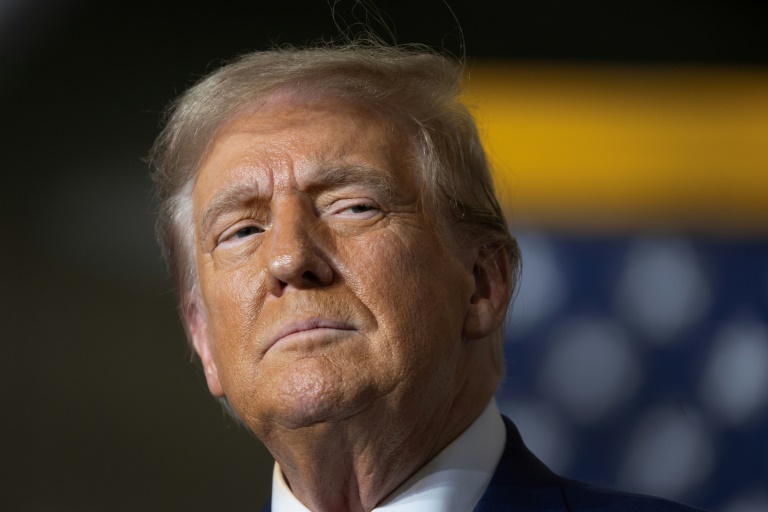
President Donald Trump issued a stark warning to Iran on Tuesday, declaring that “a whole civilization will die tonight, never to be brought back again” unless Tehran meets his deadline to reopen the Strait of Hormuz and agree to a broader deal ending the escalating conflict in the Middle East.
In a Truth Social post published Tuesday morning, Trump wrote: “A whole civilization will die tonight, never to be brought back again. I don’t want that to happen, but it probably will. However, now that we have Complete and Total Regime Change, where different, smarter, and less radicalized minds prevail, maybe something revolutionarily wonderful can happen, WHO KNOWS? We will find out tonight, one of the most important moments in the long and complex history of the World.”
The dramatic rhetoric came with roughly 12 hours remaining before Trump’s self-imposed 8 p.m. EDT deadline for Iran to reopen the vital waterway, through which roughly one-fifth of global oil supplies pass. The president has repeatedly delayed earlier deadlines but signaled Tuesday’s cutoff would be final, tying compliance to freedom of navigation and potential regime moderation.
U.S. forces struck Kharg Island — a key Iranian oil export hub — for the second time in recent days, according to officials, as military pressure intensified alongside the diplomatic ultimatum. Iranian leaders responded defiantly, urging young people to form human chains around power plants and other infrastructure while rejecting immediate ceasefire terms that include reopening the strait.
The escalating tensions stem from broader conflict involving the United States, Israel and Iran that has drawn in regional actors and disrupted global energy markets. Oil prices have risen sharply in recent sessions amid fears that closure of the Strait of Hormuz could trigger a severe supply shock.
Trump’s language evoked the ancient roots of Iranian (Persian) civilization, dating back thousands of years, while framing the potential destruction as tied to the current regime’s actions. He left a narrow opening for a positive outcome, suggesting that “regime change” — interpreted by some as leadership shifts rather than full overthrow — could pave the way for a transformative agreement.
White House officials declined to elaborate on the exact consequences if the deadline passes unmet, but Trump has previously spoken of targeting Iranian power plants, bridges and other infrastructure in what he described as overwhelming force capable of “taking out” significant portions of the country in a single night.
Iranian officials showed no signs of immediate capitulation. State media reported missile activity and defensive preparations, while diplomats pushed back against what they called unacceptable demands. Tehran has sought a lasting end to hostilities that includes lifting sanctions and guarantees for safe passage, but has resisted linking those to immediate reopening of the strait.
The situation has sparked alarm in world capitals. European leaders urged restraint and renewed diplomacy, while China and Russia — traditional Iranian partners — warned against further escalation that could destabilize energy markets and the broader region.
Markets reacted with volatility. Energy stocks rose, while broader indexes showed caution as investors weighed the risk of wider war against the possibility of a last-minute deal. Shipping companies rerouted vessels away from the Persian Gulf, adding to logistical strains already felt from earlier disruptions.
Background of the Crisis
The current standoff builds on decades of U.S.-Iran tensions, intensified by the ongoing Israel-Iran shadow war that erupted into more direct confrontations. Trump, in his second term, has taken a hard line, demanding verifiable steps toward de-escalation that include unrestricted maritime access through the Strait of Hormuz.
Previous deadlines set by the administration were extended, allowing time for back-channel talks, but Trump has grown increasingly frustrated with what he calls Iranian stalling. In recent days he has publicly threatened “hell” on Iran and described potential strikes in vivid terms.
The reference to “civilization” carries particular weight given Iran’s cultural heritage as one of the world’s oldest continuous civilizations, home to ancient sites and a proud national identity. Critics inside and outside the U.S. expressed concern that such rhetoric risks inflaming nationalist sentiments in Iran and complicating any future negotiations.
Supporters of the president’s approach argue that maximum pressure, backed by credible military threats, is necessary to force concessions from a regime they view as destabilizing through its support for proxy groups and nuclear ambitions. Iran has long denied seeking nuclear weapons while advancing its enrichment program.
International Reactions and Risks
Allies and adversaries alike weighed in. Israeli officials have coordinated closely with Washington, conducting their own strikes on Iranian targets in recent weeks. Gulf states, heavily dependent on the strait for exports, have privately urged calm while bolstering defenses.
The United Nations Security Council convened emergency consultations, though veto powers held by permanent members limited expectations for unified action. Humanitarian organizations warned that any large-scale strikes on infrastructure could cause civilian casualties and long-term suffering in Iran, already strained by sanctions and internal challenges.
Oil analysts noted that even a brief closure of the strait could send crude prices surging toward $150 per barrel or higher, with ripple effects on global inflation and economic growth. Alternative routes exist but lack the capacity to fully replace Hormuz volumes quickly.
Domestically, the Trump administration faces questions about congressional authorization for potential military action. While the president maintains broad executive authority in national security matters, some lawmakers from both parties have called for greater oversight amid fears of another prolonged Middle East conflict.
What Comes Next
As the 8 p.m. deadline approaches, attention focuses on whether Iran will offer any gesture toward compliance or if U.S. forces will escalate strikes. Trump has hinted at the possibility of “revolutionarily wonderful” developments if “smarter minds prevail,” suggesting openness to a face-saving agreement that allows de-escalation without full capitulation.
Iranian President’s office and foreign ministry have issued statements emphasizing resilience and the right to defend sovereignty. Reports from Tehran described heightened public anxiety mixed with displays of national unity.
Military experts caution that destroying key infrastructure is easier than managing the aftermath, including potential refugee flows, environmental damage from oil facilities and retaliation through proxies or asymmetric attacks.
For now, the world waits. Trump’s Tuesday morning post has amplified global focus on the hours ahead, turning what began as a demand for maritime access into a high-stakes test of wills with implications far beyond the Persian Gulf.
The president’s blend of threat and optimism reflects a negotiating style that mixes maximum pressure with the promise of transformative deals — a pattern seen in past trade and nuclear talks. Whether it yields breakthrough or broader conflict may become clear by nightfall.
As evening descends on Washington, officials across agencies remain on high alert. Diplomatic channels, though strained, have not fully closed, leaving a slim window for last-minute developments.
Trump’s warning has dominated headlines and social media, sparking debate about rhetoric, strategy and the human cost should the deadline pass without resolution. For a region long defined by ancient civilizations and modern rivalries, Tuesday night could mark a pivotal chapter — one that determines whether conflict deepens or a fragile peace takes hold.
Starbucks customers across the United States reported widespread issues with the company’s mobile app Tuesday, with many unable to place orders, log in or complete payments during the morning rush as the coffee giant’s digital platform experienced another disruption amid ongoing reliability concerns.

Downdetector, which tracks user-reported outages, showed elevated complaints for Starbucks on April 7, with the majority — about 68% — centered on the app itself, followed by checkout problems at 30% and login difficulties at 1%. Users flooded social media with screenshots of error messages, spinning loading wheels and failed order attempts, many expressing frustration as they stood in longer lines or resorted to in-store cash or card payments.
As of mid-morning Pacific Time, Starbucks had not issued an official statement confirming a full outage, but the pattern of reports mirrored previous incidents where server-side issues or high traffic temporarily crippled mobile ordering. The Starbucks website remained accessible, and many physical locations continued operating normally, though mobile order and pay — a cornerstone of the company’s convenience strategy — appeared impacted for thousands.
This latest hiccup comes as Starbucks pushes its “Back to Starbucks” initiative under CEO Brian Niccol, which includes sunsetting up to 90 mobile-order-and-pickup-only locations by the end of fiscal 2026 to refocus on full-service cafes and in-store experiences. While the strategy aims to revitalize the brand and reduce reliance on app-heavy operations, customers who depend on the app for quick rewards redemptions, customized orders and contactless pickup voiced irritation at the timing.
“I can’t even add my usual latte to the cart — it just spins forever,” one user posted, echoing complaints that echoed past outages tied to high-demand periods or technical glitches.
Starbucks has faced recurring app troubles in recent years. Previous widespread disruptions, including those linked to broader cloud outages or heavy traffic during new menu launches, have drawn similar spikes in reports on Downdetector. In early 2026, users reported similar problems, with some attributing intermittent failures to iOS updates or backend server strain. The company has typically resolved such issues within hours, often without detailed public explanations beyond acknowledging “temporary technical difficulties.”
For a brand built on convenience and loyalty, the app is critical. Launched years ago and continually updated with features like personalized recommendations, Starbucks Rewards integration and seamless payment, the platform handles millions of transactions daily. It allows customers to order ahead, skip lines and earn stars toward free drinks — features that became especially vital during the pandemic and remain popular even as foot traffic rebounds.
Analysts note that repeated app instability could erode customer trust at a time when Starbucks is battling sluggish same-store sales growth, increased competition from rivals like Dutch Bros and local coffee shops, and internal operational challenges. The company has been closing underperforming stores and adjusting its menu and staffing to improve the in-cafe experience, but digital ordering remains a key growth driver.
Troubleshooting tips circulated quickly on social media and help sites. Common advice included closing and reopening the app, restarting the phone, checking for app updates, clearing cache, or reinstalling the software entirely. Users were also directed to check Downdetector or Starbucks’ official social channels for real-time updates. In many cases, these steps resolved individual issues when the problem was device-specific rather than a broad server outage.
Starbucks customer service has acknowledged past problems via its support accounts, sometimes directing users to wait or try alternative ordering methods. On Tuesday, no immediate dedicated post appeared addressing the reports, though the company has a history of restoring service quietly once engineers identify and fix the root cause — often related to capacity limits, software bugs or third-party integrations.
The timing of Tuesday’s issues coincided with typical morning peak hours when commuters and office workers rely heavily on mobile orders for their daily caffeine fix. In affected areas, baristas reported busier counters as customers shifted to in-person ordering, potentially slowing service and frustrating both patrons and staff.
Broader context reveals Starbucks’ digital transformation has been both a strength and a vulnerability. The app drives significant revenue through rewards members who spend more on average, but any downtime highlights the risks of heavy dependence on technology. The company continues investing in backend infrastructure, AI-driven personalization and loyalty enhancements, yet scaling reliably during surges remains a challenge shared by many retail apps.
Some customers used the moment to voice longer-standing grievances. Complaints about app glitches have appeared on Reddit’s r/starbucks forum for months, with threads discussing everything from loading errors after recent updates to persistent problems on certain iPhone models. Others noted that while the app usually recovers quickly, the frequency of disruptions feels higher than in prior years.
Starbucks, founded in 1971 and now operating thousands of locations worldwide, has leaned into technology to stay competitive. Features like mobile tipping, gift card management and seasonal promotions keep users engaged, but reliability is paramount. CEO Niccol, who joined in 2024, has emphasized returning to core coffeehouse roots while modernizing operations — a balance that includes refining the digital experience without over-relying on it.
As reports continued into the afternoon, some users noted partial recovery in certain regions or for lighter functions like browsing the menu. Others continued facing full blocks on ordering. Monitoring sites like IsItDownRightNow showed the main Starbucks website as operational, suggesting the issue was isolated to the mobile application backend rather than a total service collapse.
For affected customers, alternatives included using the website on a browser (though less convenient on phones), ordering in person or switching to competitors’ apps. Loyalty members worried about missing out on daily challenges or bonus stars, adding to the annoyance.
Industry observers say such outages, while temporary, underscore the need for robust redundancy in retail tech. Starbucks has not commented on specific investments in failover systems or expanded server capacity, but past incidents have prompted internal reviews.
By late morning, the volume of new reports on Downdetector appeared to moderate in some graphs, a common sign that resolution efforts were underway. Starbucks has resolved similar spikes within a few hours in the past, restoring full functionality without long-term impact.
Still, the episode serves as a reminder for heavy app users to have backup payment methods or flexibility in their routines. For a company whose stock and reputation ride on customer convenience, even short disruptions can amplify perceptions of unreliability during a period of brand revitalization.
Starbucks employs hundreds of thousands globally and generates tens of billions in annual revenue, with mobile orders forming a growing share of transactions. Its Rewards program boasts millions of members who expect seamless digital access.
As the day progressed, attention turned to whether the company would provide an official explanation or simply let the service normalize. In the meantime, baristas across the country likely fielded extra questions from disappointed app users.
For now, customers experiencing problems are encouraged to try basic troubleshooting or monitor official channels. Most incidents like Tuesday’s resolve without permanent data loss or reward issues, but the inconvenience highlights how integral the app has become to the modern Starbucks experience.
Whether this proves to be a minor blip or part of a larger pattern of digital growing pains will be watched closely by investors and loyal patrons alike. In the fast-paced world of specialty coffee, a few hours without mobile ordering can feel like an eternity — especially when that first cup of the day is on the line.


With combined experience of covering technology companies on Wall Street and working in Silicon Valley, and serving as an outside adviser to several seed-round startups, Gary Alexander has exposure to many of the themes shaping the industry today. He has been a regular contributor on Seeking Alpha since 2017. He has been quoted in many web publications and his articles are syndicated to company pages in popular trading apps like Robinhood.
Analyst’s Disclosure: I/we have a beneficial long position in the shares of ESTC either through stock ownership, options, or other derivatives. I wrote this article myself, and it expresses my own opinions. I am not receiving compensation for it (other than from Seeking Alpha). I have no business relationship with any company whose stock is mentioned in this article.
Seeking Alpha’s Disclosure: Past performance is no guarantee of future results. No recommendation or advice is being given as to whether any investment is suitable for a particular investor. Any views or opinions expressed above may not reflect those of Seeking Alpha as a whole. Seeking Alpha is not a licensed securities dealer, broker or US investment adviser or investment bank. Our analysts are third party authors that include both professional investors and individual investors who may not be licensed or certified by any institute or regulatory body.

Steinberg family-backed fund Purpose Ventures has reached across the globe for its latest investment, a UK-based platform for software engineers founded by entrepreneurs from Perth.
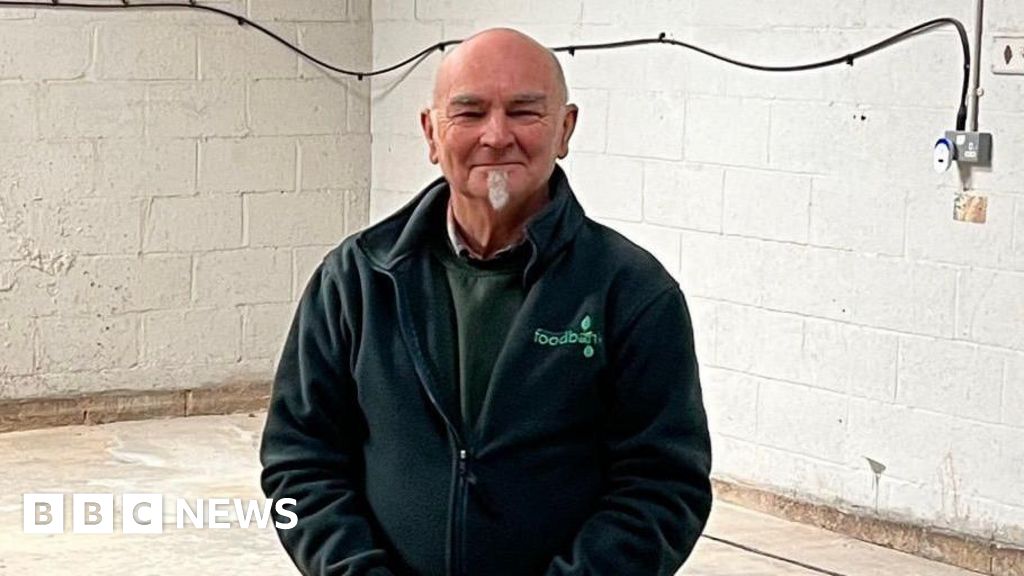
The charity says the expansion at its base will give its support services a “new lease of life”.
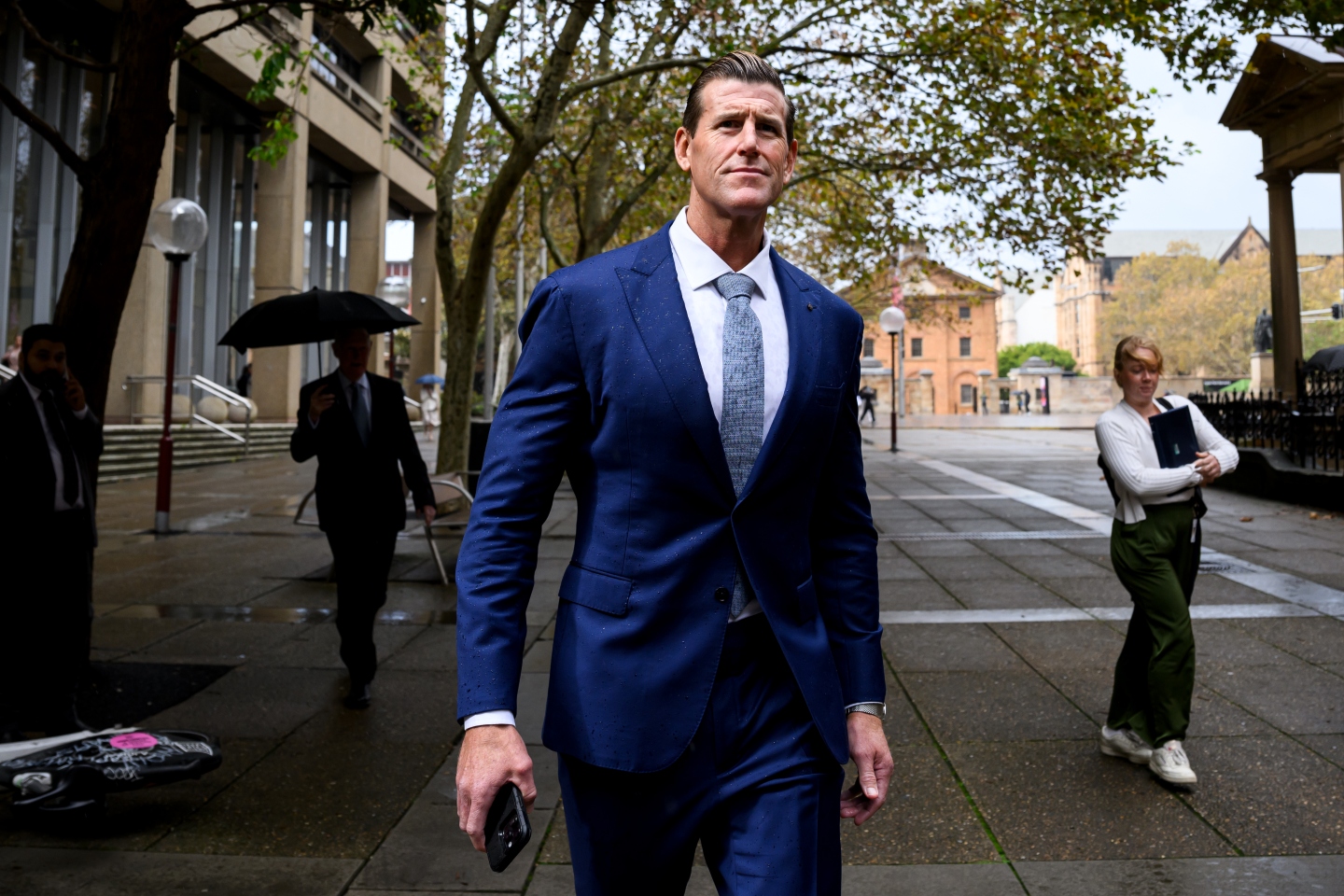
UPDATED: Former SAS soldier Ben Roberts-Smith will spend the night behind bars after being charged with the murder of unarmed Afghan civilians.

Airlines have reduced services and lifted ticket costs as the Iran war weighs on jet fuel supplies.

Transcend appoints Elizabeth Jackson as marketing chief

Lowe’s commits $250M to train 250,000 skilled tradespeople amid AI rise

Ether Treasuries Must Embrace Liquid Staking to Beat ETFs

Lil Tjay Arrested At Same Casino As Offset’s Shooting


-

 NewsBeat5 days ago
Steven Gerrard disagrees with Gary Neville over ‘shock’ Chelsea and Arsenal claim | Football
-

 Business5 days ago
No Jackpot Winner and $194 Million Prize Rolls Over
-

 Fashion4 days ago
Weekend Open Thread: Spanx – Corporette.com
-

 Crypto World6 days ago
Gold Price Prediction: Worst Month in 17 Years fo Save Haven Rock
-

 Business2 days ago
Three Gulf funds agree to back Paramount’s $81 billion takeover of Warner, WSJ reports
-

 Business3 days ago
Expert Picks for Every Need
-

 Sports3 days ago
India men’s 4x400m and mixed 4x100m relay teams register big progress | Other Sports News
-

 Business6 days ago
Login and Checkout Issues Spark Merchant Frustration
-

 Sports7 days ago
Tallest college basketball player ever, standing at 7-foot-9, entering transfer portal
-

 Crypto World7 days ago
Bitcoin enters the public bond market as Moody’s gives a first-of-its-kind crypto deal a rating
-
Crypto World7 days ago
Bitcoin stalls below key resistance as technical signals skew bearish
-

 Tech5 days ago
Commonwealth Fusion Systems leans on magnets for near-term revenue
-
Business2 days ago
No Jackpot Winner, Prize to Climb to $231 Million
-

 Politics7 days ago
Starmer’s centre has collapsed, and the left was right all along
-

 Crypto World6 days ago
Ripple rolls out enterprise crypto treasury platform for corporates
-

 Fashion1 day ago
Massimo Dutti Offers Inspiration for Your Summer Mood Board
-
Crypto World7 days ago
AI Memory Rout Wipes 9% Off Nvidia Stock: Chart Says More Pain Ahead
-

 Crypto World6 days ago
Why It’s Partnering, Not Issuing
-
 Sports7 days ago
How to teach yourself the perfect impact position with every club
-
 Sports6 days ago
Steal Gary Woodland’s subtle power move for longer drives
You must be logged in to post a comment Login