

Business
Form 8K SmartStop Self Storage REIT Inc For: 23 March




Florida wildlife officials are drafting legislation to temporarily ban the import of sloths after numerous deaths of the animals at Sloth World in Orlando. (Courtesy: The Florida Channel)
Florida wildlife officials signed an executive order on Wednesday to temporarily ban the importation of sloths following dozens of animal deaths at an Orlando facility.
Florida Fish and Wildlife Conservation Commission (FWC) executive director Col. Roger Young said the planned attraction, Sloth World, has relinquished all of its permits after a fatal intestinal infection swept through its animals.
Young confirmed the outbreak is isolated to Sloth World and said inspections of other Class III wildlife facilities in Florida found no widespread issues.

Sloth World was a planned attraction in Orlando, Fla. (Ricardo Ramirez Buxeda/Orlando Sentinel/Tribune News Service via Getty Images / Getty Images)
The crackdown comes after Sloth World imported at least 69 wild-caught sloths for a planned “Slotharium” exhibit, according to the Sloth Conservation Foundation (SloCo).
At least 31 of the sloths died before the facility opened to the public and roughly 24 sloths remain unaccounted for.
Following Sloth World’s closure, 13 surviving sloths were relocated to the Central Florida Zoo & Botanical Gardens on April 24 for emergency veterinary treatment.
Three of the sloths that arrived in the most critical condition — Bandit, Habanero and Dumpling — have since died, according to the zoo.
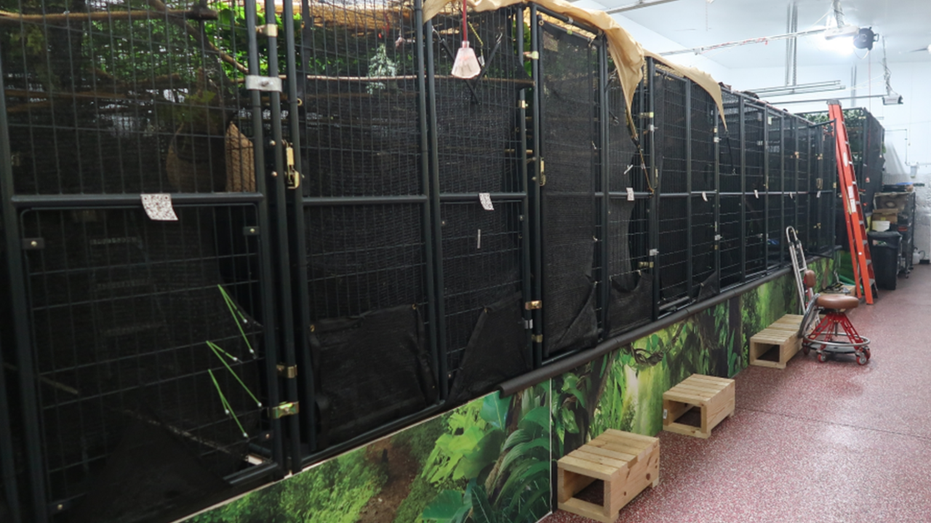
PETA alleges sloths owned by Sloth World died in the dark inside cages. (Florida Fish and Wildlife Conservation Commission inspection report via PETA / Fox News)
Necropsy reports confirmed the primary cause of death for the animals was severe emaciation, with Bandit also suffering from abnormal fluid accumulation in his body.
The youngest and smallest of the rescued group, a sloth named Mr. Ginger, remains in critical condition in intensive care.
Zoo veterinary staff are working around the clock to save the remaining sloths and recently received a special shipment of fecal samples from healthy sloths at the Los Angeles Zoo to help restore the gut microbiome of the sick animals.

Sloths Mr. Ginger, left, Dumpling and Habanero. (Central Florida Zoo & Botanical Gardens)
DOG TREATS RECALLED OVER FEARS OF SALMONELLA CONTAMINATION, FDA SAYS
SloCo officials said the surviving sloths can never be released back into the wild because their exact origins are unknown. Returning the animals could carry genetic risks to wild populations and the potential of introducing foreign pathogens.
Since sloths have lifespans of over 50 years, the organization said survivors now face a lifetime in human care at accredited Association of Zoos & Aquariums (AZA) facilities.
Earlier this month, U.S. Rep. Maxwell Frost, D-Fla., and Democratic Florida State Rep. Dr. Anna Eskamani visited the Central Florida Zoo to meet with conservationists and discuss overhauling the permitting and importation of exotic animals.
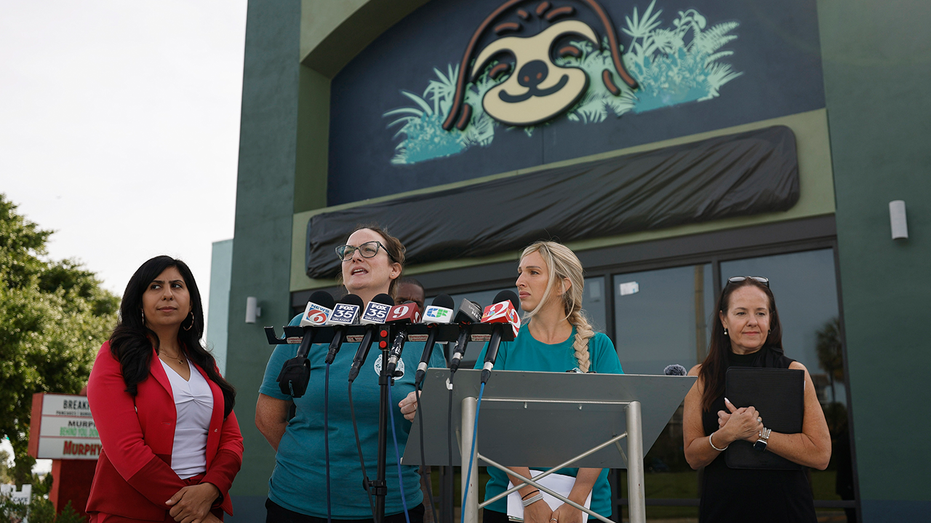
Florida state Rep. Anna Eskamani, left, Sam Trull, co-founder and executive director of The Sloth Institute in Costa Rica, Dr. Rebecca Cliffe, founder and executive director of The Sloth Conservation Foundation, and Orange County Commissioner Nicole (Ricardo Ramirez Buxeda/ Orlando Sentinel/Tribune News Service via Getty Images / Getty Images)
AMAZON’S RING EXPANDS AI-POWERED NETWORK TO HELP LOCATE LOST DOGS
Florida’s temporary 60-day pause on imports will likely have national implications, as roughly 98% of sloths imported into the U.S. enter through Miami.
Wildlife advocacy groups, including The Sloth Institute (TSI), SloCo and People for the Ethical Treatment of Animals (PETA), urged officials to take the executive order further, pushing for permanent federal protections.
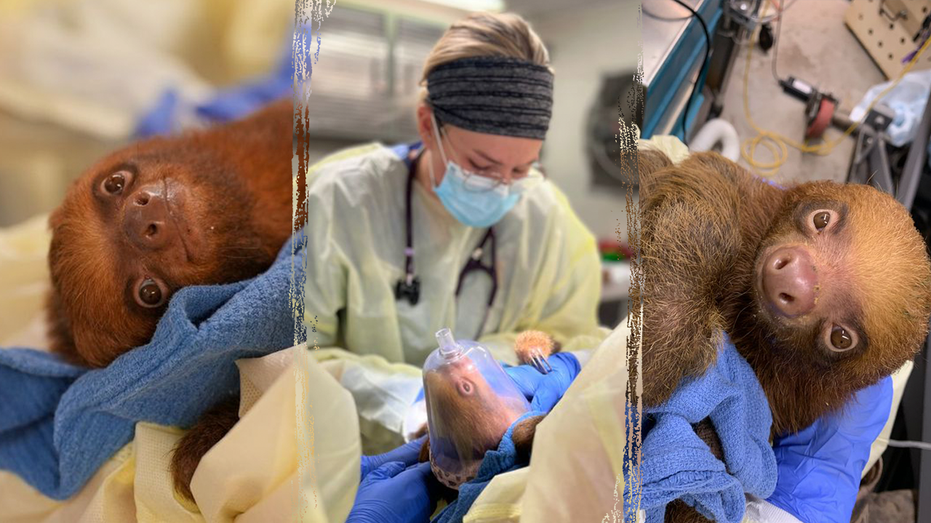
Split of sloths receiving medical treatment at the Central Florida Zoo & Botanical Gardens. (Central Florida Zoo & Botanical Gardens / Fox News)
“Sloth World is an egregious example of the damaging effects of the sloth trade on the welfare and conservation of sloths,” TSI Co-Founder Sam Trull wrote in a statement provided to FOX Business.
Rebecca Cliffe, founder of SloCo, added the tragedy has “pulled back the curtain on an industry that is extremely dark and damaging.”
“Why did Sloth World not have to declare the deaths of the sloths in their care?” Cliffe said. “Why was all of this legally able to happen?”
Central Florida Zoo & Botanical Gardens rescued numerous sloths from Orlando’s Sloth World after it was shut down. (Credit: Central Florida Zoo & Botanical Gardens)
GET FOX BUSINESS ON THE GO BY CLICKING HERE
PETA submitted a complaint April 30 to the Florida Department of Law Enforcement calling for a cruelty investigation into Sloth World co-owners Peter Bandre and Benjamin Agresta.
PETA spokesperson Cydnee Bence told FOX Business the sloths were “snatched from their rainforest homes, endure[d] a terrifying journey, [and] were left to die in a barren warehouse.”

Sloths Bandit, left, and Mr. Ginger. (Central Florida Zoo & Botanical Gardens / Fox News)
“There’s no excuse for tearing animals out of their wild homes just so humans can harass them,” Bence said. “… With Sloth World in particular, it was a mass death by greed. Being confined in a totally unsuitable storage unit, just to be used in a roadside zoo is egregious.
“PETA is definitely looking forward to seeing Bandre and Agresta being held accountable for their actions and urges everyone to steer clear of any facility that uses wild animals as photo ops.”
The FWC, Sloth World and Central Florida Zoo did not immediately respond to FOX Business’ requests for comment.


Trump, Xi set for Beijing talks with trade truce, Iran war at stake

Check out what’s clicking on FoxBusiness.com.
Cisco Systems is planning to cut nearly 4,000 employees as part of a broader strategic shift toward artificial intelligence (AI), following a stronger-than-expected earnings report on Wednesday.
The layoffs, representing less than 5% of the company’s global workforce, sent shares up roughly 20% in after-hours trading.
The San Jose-based tech giant said the move reflects its strategy to position itself for the AI era by redirecting investment toward areas with the strongest demand and highest value.
“I’m confident Cisco will be one of those winners. This means making hard decisions,” Cisco CEO Chuck Robbins said.
META’S BAY AREA LAYOFFS AFFECT ROUGHLY 200 WORKERS AS COMPANY POURS BILLIONS INTO AI INFRASTRUCTURE

Cisco’s slated layoffs represent roughly 5% of the company’s global workforce. (David Paul Morris/Bloomberg via Getty Images, File / Getty Images)
“With this, we are making changes today that will result in the reduction of our overall workforce in Q4 by fewer than 4,000 jobs, representing less than 5% of our total employee base.”
Hours earlier, the company reported Q3 FY2026 earnings that significantly exceeded Wall Street expectations.
Revenue hit a record $15.8 billion, compared with $15.56 billion expected, while adjusted earnings per share came in at $1.06 versus $1.04 expected.
| Ticker | Security | Last | Change | Change % |
|---|---|---|---|---|
| CSCO | CISCO SYSTEMS INC. | 101.87 | +2.58 | +2.60% |
Year-over-year revenue growth reached 12%, rising from $14.15 billion in the same quarter last year, which ended around April 26.
Cisco also said it has secured $5.3 billion in AI infrastructure orders from hyperscalers year to date. If momentum continues, the company expects to generate about $9 billion in FY2026 AI orders, up from a prior estimate of $5 billion. FY2026 revenue from this segment is also projected to reach $4 billion, revised upward from a $3 billion projection.
PRIVATE SECTOR ADDED 63,000 JOBS IN FEBRUARY, ABOVE EXPECTATIONS, ADP SAYS
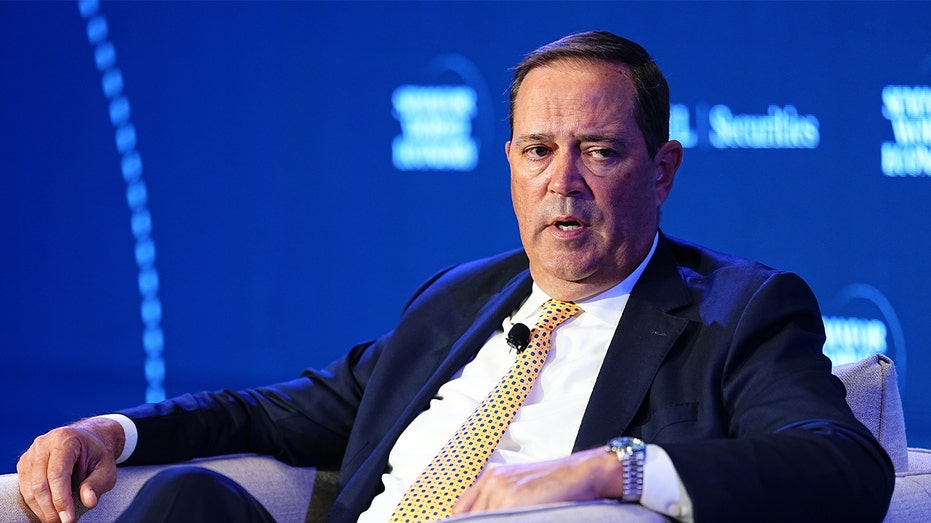
Chuck Robbins, chief executive officer of Cisco Technologies Inc., speaks at the Semafor World Economy Summit during the International Monetary Fund (IMF) and World Bank Spring meetings, April 15, in Washington, D.C. (Aaron Schwartz/Bloomberg)
Despite reporting record-breaking revenue, the company said it plans to issue workforce notifications starting May 14 across its global operations as it continues shifting focus toward high-growth areas such as AI, security and networking.
The company said it will support affected employees with severance packages, extended training resources, and job placement assistance through its internal and external placement services program, which reportedly helped roughly 75% of participants secure new roles.

Cisco will lay off nearly 4,000 employees amid company’s AI push. (Photo Illustration Omar Marques/SOPA Images/LightRocket via Getty Images / Getty Images)
GET FOX BUSINESS ON THE GO BY CLICKING HERE
Cisco estimates that its restructuring plan, including severance and related costs, will result in pre-tax charges of up to $1 billion.
The company expects to recognize approximately $450 million of those charges in the following quarter, with the remainder to be recorded in fiscal 2027.

TUCSON, Ariz. — The investigation into the disappearance of 84-year-old Nancy Guthrie took a sharp new turn Tuesday as Pima County Sheriff Chris Nanos faced accusations that he scolded a county assessor for sharing information with the FBI, reigniting long-simmering questions about inter-agency cooperation more than 100 days after the high-profile abduction.
Pima County Assessor Suzanne Droubie told The Arizona Republic that Nanos contacted her in February after technicians in her office, which handles property records, forwarded data to the FBI at the bureau’s request. Droubie said the sheriff expressed frustration, suggesting her office had created extra work for his department by generating additional leads that investigators then had to pursue.
“It was inferred that we were creating a lot of additional work for the sheriff’s department,” Droubie said in the interview published Tuesday. She added that Nanos ultimately acknowledged she had done the right thing by cooperating with the FBI but left her feeling reprimanded for the outreach.
The claim comes as the case — involving the mother of NBC’s “Today” show co-anchor Savannah Guthrie — enters its fourth month with no arrest, no recovery of Nancy Guthrie and mounting public scrutiny over how local and federal authorities have worked together.
Nancy Guthrie was reported missing from her Catalina Foothills home north of Tucson on Feb. 1. Security footage showed a masked figure on her porch the night before, tampering with a doorbell camera. Blood was found on the porch, and investigators believe she was abducted. A Bitcoin ransom demand followed but yielded no results. The family offered a $1 million reward, and the FBI later increased its own to $100,000.
Tensions between the sheriff’s office and the FBI surfaced early. In February, reports emerged that Nanos initially resisted sending key evidence — including a glove and DNA samples from the home — to the FBI’s lab in Quantico, preferring a private Florida facility instead. FBI Director Kash Patel later publicly criticized the delay, claiming federal agents were kept out for four days. Nanos has repeatedly denied blocking the FBI and insisted collaboration began almost immediately.
On Tuesday, as Droubie’s account circulated, Nanos provided a routine 100-day update but did not directly address the assessor’s allegations. He described the investigation as active, with DNA analysis ongoing across multiple labs and tips still pouring in. “We are getting closer,” he said in earlier remarks, though reporters have questioned the optimism given the lack of public breakthroughs.
The assessor’s office became involved because property records can reveal ownership patterns, liens or connections potentially relevant to suspects. Droubie said her staff acted promptly when the FBI requested assistance, viewing it as standard inter-agency support in a major case.
Critics see the latest flap as symptomatic of deeper coordination problems. Former FBI agents and forensic experts have questioned the decision to route evidence through a private lab rather than leveraging federal resources from the start. Genealogy company Othram, known for high-profile cold cases, publicly called the move “devastating” for potentially slowing identification efforts.
Savannah Guthrie has maintained a low public profile on the investigation while continuing her work. On Mother’s Day, she posted a poignant plea: “We will never stop looking for you.” The family continues to offer the substantial reward for information leading to Nancy’s recovery.
As of mid-May, more than 100 days have passed since the abduction. No suspects have been named publicly, though authorities have detained and released individuals for questioning. Volunteer search groups, including the United Cajun Navy, have offered assistance but reported being largely sidelined by the sheriff’s office.
The case has drawn intense national attention, in part because of Savannah Guthrie’s prominence. It has also highlighted challenges in missing persons investigations involving elderly victims in suburban areas. Digital evidence, enhanced video analysis and DNA remain central, with the FBI assisting on technical fronts despite reported friction.
Sheriff’s officials maintain they are pursuing every lead methodically. In March, they highlighted possible activity around Jan. 11 — weeks before the reported disappearance — based on digital forensics. New neighborhood surveillance videos showing masked individuals have surfaced, though connections remain unclear.
Droubie’s account adds a new layer of alleged internal discord. County officials typically defer to law enforcement in active cases, making her decision to speak publicly notable. She framed the interaction as professional but tense, emphasizing that her office sought only to help solve the mystery.
Legal observers say such inter-agency spats, while not uncommon, can erode public confidence when a case stalls. High rewards and celebrity ties amplify pressure on investigators to produce results or at least demonstrate seamless teamwork.
The Pima County Sheriff’s Department has not issued a direct rebuttal to Droubie’s specific claims as of Wednesday. A spokesperson reiterated commitment to the investigation and partnerships with the FBI. “This remains an active case,” the department said in a statement. “We continue reviewing tips and analyzing evidence.”
For the Guthrie family, each passing week without resolution deepens the anguish. Nancy, described as vibrant and independent, was last seen in her home of many years. Blood evidence suggested possible violence, yet authorities still operate under the hope she may be found alive.
Public tips continue to flood in, with the FBI’s Phoenix office urging anyone with information to come forward anonymously. Neighborhood patrols have increased amid concerns over amateur sleuths disturbing potential evidence.
As the investigation stretches into summer, questions linger about resource allocation, lab choices and communication protocols. The latest controversy over the assessor’s FBI tip underscores how even well-intentioned actions can complicate an already complex probe.
Nancy Guthrie’s disappearance has become one of Arizona’s most watched cold cases in recent memory. Whether the sheriff’s response to the new claims calms or further fuels speculation may determine if public trust — and crucial tips — continue flowing. For now, the search persists, with federal and local agencies publicly aligned even as private tensions surface.


Ukrainian capital Kyiv under attack from Russian drones, missiles, officials say
Business
Southeast Asian Leaders Approve Emergency Strategy to Reduce Impact of Middle East Conflict

ASEAN leaders met in Cebu, Philippines, adopting a contingency plan addressing the Iran war’s impact, including emergency fuel sharing, a regional power grid, and evacuating citizens from the Middle East, while acknowledging implementation challenges amid ongoing economic hardships.
Key Points
- ASEAN leaders met in Cebu, Philippines, adopting a contingency plan to address the economic impact of the Iran war, including emergency fuel sharing agreements, a regional power grid, fuel stockpiles, and diversifying crude oil sources.
- Over one million Southeast Asian citizens working in the Middle East face safety risks, prompting leaders to coordinate evacuations and strengthen information sharing to protect nationals in conflict-affected areas.
- Philippine President Marcos warned that damage from the Iran war could last years, while Thailand’s foreign minister stressed the ceasefire must be extended and safe passage through the Strait of Hormuz must be guaranteed.
ASEAN’s Contingency Response to the Iran War Crisis
Southeast Asian leaders convened at the ASEAN summit in Cebu, Philippines, adopting a comprehensive contingency plan to address the economic and humanitarian fallout from the ongoing Iran war. Hosted by President Ferdinand Marcos Jr., who stripped the event of its traditional formalities, the summit focused on urgent regional priorities. The plan includes emergency fuel-sharing agreements, development of a regional power grid, diversification of crude oil sources, promotion of electric vehicles, and exploration of civilian nuclear energy — measures aimed at shielding member nations from severe energy supply disruptions.
Implementation Challenges and Long-Term Economic Damage
While the contingency steps are intended for immediate implementation, leaders acknowledged that establishing a regional fuel stockpile and power grid remains highly complex and time-consuming. Marcos openly questioned logistical details, such as whether a fuel reserve would be centralized or distributed across member states. Beyond energy concerns, he warned that economic recovery could take years, even if hostilities ceased immediately. “The damage to critical infrastructure, vital systems, and trust in general will continue to be felt for years to come,” Marcos cautioned, underscoring the deep and lasting vulnerabilities exposed by the conflict.
Humanitarian Concerns and Regional Security Outlook
A major dilemma facing ASEAN leaders involved safeguarding over one million citizens living and working in the Middle East, amid fears of escalating hostilities near the strategically vital Strait of Hormuz. A joint declaration called for strengthened coordination with international organizations to protect nationals in affected areas. Thailand’s Foreign Minister Sihasak Phuangketkeow was notably direct, stating the war “should not have occurred” and urging an extended ceasefire. Leaders also addressed other regional flashpoints, including South China Sea disputes, Myanmar’s civil war, and the Thailand-Cambodia border conflict, reflecting a broader climate of geopolitical uncertainty.
Other People are Reading

EagleRock Land prices IPO at $18.50 per share

The likes of Apple, Microsoft and Google are all putting cartoon characters centre stage.

Innodata EVP & COO Ashok Mishra sells $21.9m in company stock

Innodata director Louise Forlenza sells $2.67 million in stock

#joshuavan #fighter #myanmar #thailand #indonesia #malaysia #love #facebook #money

much-needed water industry reforms do not go far enough

Florida bans sloth imports after dozens die of animals at Sloth World facility

Manchester United reach agreement with Casemiro over contract clause amid transfer speculation

US brings back mandatory military draft registration

Steven Gerrard disagrees with Gary Neville over ‘shock’ Chelsea and Arsenal claim | Football
#joshuavan #fighter #myanmar #thailand #indonesia #malaysia #love #facebook #money

Johnson Reacts To Trump Saying, ‘I Don’t Think About Americans’ Financial Situation,’ Re Iran War

Before party after party #birthdaycelebration #financial #memeshorts
-
 Crypto World6 days ago
HarrisX Poll Found 52% of Registered Voters Support the CLARITY Act
-

 Fashion5 days ago
Weekend Open Thread: Marianne Dress
-

 Crypto World7 days ago
Upbit adds B3 Korean won pair as Base token gains Korea access
-
 NewsBeat7 days ago
NCP car park operator enters administration putting 340 UK sites at risk of closure
-

 Fashion2 days ago
Coffee Break: Travel Steam Iron
-

 Tech4 days ago
Auto Enthusiast Carves Functional Two-Stroke Engine from Solid Metal
-

 Fashion3 days ago
What to Know Before Buying a Curling Wand or Curling Iron
-

 Politics2 days ago
What to expect when you’re expecting a budget
-
 Business5 days ago
Ignore market noise, India’s long-term story intact, say D-Street bulls Ramesh Damani and Sunil Singhania
-

 Politics5 days ago
Politics Home Article | Starmer Enters The Danger Zone
-

 Tech3 days ago
GM Agrees To Pay $12.75 Million To Settle California Lawsuit Over Misuse Of Customers’ Driving Data
-

 Politics6 days ago
Simon Cowell Says He Was ‘Horrible’ To Susan Boyle During BGT Audition
-

 Entertainment7 days ago
Sarah Paulson Called Out For Met Gala ‘Hypocrisy’
-

 Entertainment6 days ago
General Hospital: Ric & Ava Bombshell – Ric’s Massive Secret Exposed!
-

 Crypto World7 days ago
Robinhood says Wall Street is building onchain
-

 Sports7 days ago
UEFA Champions League final schedule, teams, venue, live time and streaming | Football News
-

 Entertainment7 days ago
Why David Letterman Called CBS ‘Lying Weasels’
-
Entertainment7 days ago
Hayden Panettiere reveals she's estranged from mom, addresses brother Jansen's sudden death: 'I was floored'
-
 Sports7 days ago
Mike Tyson speaks out on status of Floyd Mayweather fight
-
 Entertainment7 days ago
Paramount+’s ‘Landman’ Season 3 Gets Promising New Update From Returning Director
You must be logged in to post a comment Login