Frito-Lay is pulling select bags of potato chips from store shelves after discovering they may contain an undeclared allergen.
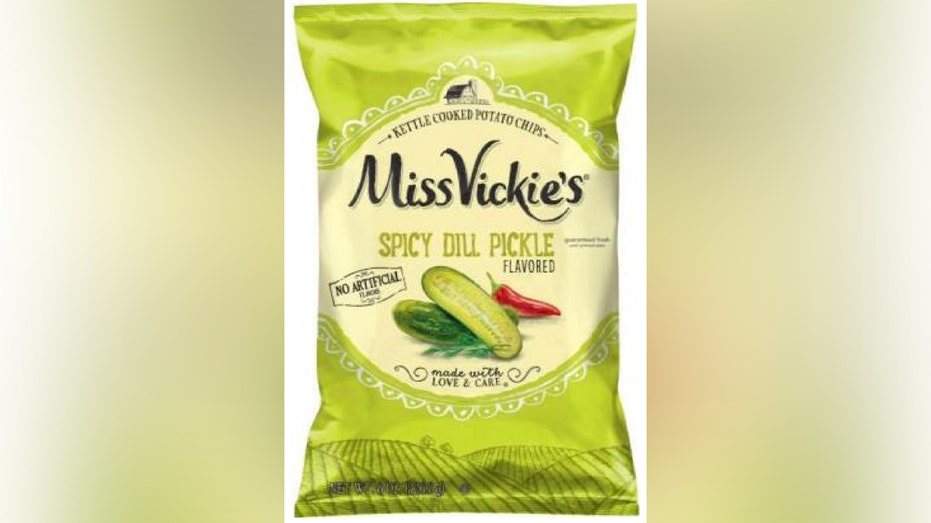
The recall covers certain 8-ounce bags of Miss Vickie’s Spicy Dill Pickle Potato Chips that may have mistakenly included jalapeno-flavored chips containing milk, according to a notice Wednesday from the U.S. Food and Drug Administration (FDA).
Advertisement
“Those with an allergy or severe sensitivity to milk run the risk of a serious or life-threatening allergic reaction if they consume the recalled product,” the notice said.
Frito-Lay is pulling select bags of Miss Vickie’s Spicy Dill Pickle Potato Chips from store shelves after discovering some may contain an undeclared allergen. (U.S. Food and Drug Administration)
The affected bags were distributed as early as Jan. 15 to grocery, convenience and drug stores — as well as online retailers — in Arkansas, Louisiana, Mississippi, New Mexico, Oklahoma and Texas.
No other Miss Vickie’s flavors, sizes or variety packs are included in the recall.
Affected bags were distributed as early as Jan. 15 to stores in Arkansas, Louisiana, Mississippi, New Mexico, Oklahoma and Texas. (iStock / iStock)
Consumers should check for 8-ounce bags of Miss Vickie’s Spicy Dill Pickle chips with a UPC of 0 28400 761772, a “Guaranteed Fresh” date of April 21, 2026 and one of two manufacturing codes — 38U301414 or 48U101514.
The codes appear on the front of the bag along the right side.
“If consumers have an allergy or sensitivity to milk, they should not consume the product and discard it immediately,” the notice said.
His first collection is expected to be unveiled at London Fashion Week in September
Christopher Kane is the new creative director of Mulberry(Image: Colin Dodgson)
Somerset-headquartered luxury handbag maker Mulberry has announced the appointment of a new creative director. Scottish designer Christopher Kane will be responsible for relaunching the Chilcompton-based brand’s women’s ready-to-wear collection, with the debut expected to take place at London Fashion Week in September.
The news of the 43-year-old Glaswegian’s appointment has been hailed by the fashion industry, with Vogue reporting that Kane’s absence since closing his business in 2023 was “almost criminal oversight of a major talent of his generation”.
Mulberry, meanwhile, has said the partnership marks “the next step” in its recovery strategy, which was launched last year in a bid to revive falling sales.
Kane, who has worked for Donatella Versace, is highly regarded in the fashion world and counts the likes of stars such as Rihanna and Michelle Obama among his fans. A graduate of Central Saint Martins, he is the winner of the Vogue Fashion Fund and four British Fashion Awards, including Womenswear Designer of the Year.
Advertisement
He founded his label – Christopher Kane – alongside his sister Tammy in 2006 and in 2013, French multinational Kering snapped up a 51 per cent stake in the label. Some five years later Kane acquired the business back, but was forced to shut it down amid the pandemic as the fashion sector came under immense pressure.
A return to London Fashion Week this year would be Mulberry’s first catwalk show for nearly a decade. Kane’s collection will be in stores and online from January 2027, according to the heritage brand.
“Welcoming Christopher marks an important moment for Mulberry as we open a new chapter for ready-to-wear,” said Andrea Baldo, chief executive of Mulberry. “Christopher brings a rare combination of creativity, intellectual rigour and instinctive playfulness, alongside a deep respect for craft and materials.
“His vision resonates strongly with Mulberry’s heritage and the spirit of British creativity that defines the house. Together we look forward to evolving Mulberry’s creative language beyond accessories and shaping a compelling future for ready-to-wear on a global stage.”
Advertisement
Kane said: “It is an honour to join Mulberry, a brand with such a rich British heritage and a deep commitment to craft. I look forward to working closely with Andrea and the team to create a new chapter of ready-to-wear that celebrates the spirit of Mulberry.”
In January, Mulberry posted robust sales figures for the Christmas trading period, suggesting its transformation plan is starting to bear fruit.
Starting a rice business in the Philippines is one of the most practical and sustainable entrepreneurial ventures. Rice is a staple food in Filipino households, ensuring steady demand regardless of economic conditions. Whether you plan to open a bigasan, rice trading business, wholesale supply, or premium rice brand, choosing the right business name is a crucial first step.
A strong business name helps you stand out in a competitive market, builds trust with customers, and makes your brand easier to remember. In this article, we share 10 unique rice business name ideas designed specifically for aspiring Filipino entrepreneurs—along with practical tips and a legal-safe disclaimer to guide you.
Why Your Rice Business Name Matters
Your business name is more than just a label—it represents your brand identity. In the rice industry, where many businesses sell similar products, a distinctive name can help you:
Advertisement
Differentiate from nearby competitors
Create a professional and trustworthy image
Attract both retail and wholesale buyers
Make your business easier to promote online and offline
A well-chosen name also gives you flexibility if you decide to expand into rice milling, packaging, delivery, or online selling in the future.
10 Unique Rice Business Name Ideas
1. Butilaya Rice Trading
Derived from the Filipino word butil (grain) and a creative suffix, this name sounds warm and trustworthy. It works well for neighborhood rice stores or regional traders who want a friendly, Filipino-inspired brand.
2. AniSagana Grains
“Ani” means harvest, while “sagana” implies abundance. This name sends a strong message of prosperity and consistent supply—ideal for wholesalers and bulk rice distributors.
3. Maharlika Butil Co.
This name evokes heritage and premium quality. It’s suitable for businesses offering high-grade rice, organic varieties, or branded rice products aimed at discerning customers.
4. Bigasera PH
Modern, catchy, and easy to remember, this name blends traditional rice culture with a contemporary feel. It’s perfect for online sellers, delivery-based rice businesses, or social media-focused brands.
Advertisement
5. AniGold Rice Supply
Gold symbolizes value and quality. This name suggests premium grains and reliable sourcing, making it a strong choice for both retail and wholesale rice operations.
6. Luntian Harvest Rice
“Luntian” means green, which is often associated with freshness and sustainability. This name fits well with organic rice, eco-friendly packaging, or farm-direct business models.
7. SariButil Enterprises
“Sari” implies variety, while “butil” refers to grain. This name is ideal for businesses that sell multiple rice varieties, such as regular milled rice, brown rice, and specialty grains.
8. Dakilang Ani Trading
Strong and proudly Filipino, this name conveys honor and success. It works well for established traders or businesses aiming to scale across regions.
Advertisement
9. ButilPrime Rice
A clean and modern name that suggests top-quality grains. This is suitable for premium branding, packaged rice, and future expansion into exports.
10. SinagAni Rice Co.
Combining “sinag” (light or hope) and “ani” (harvest), this name symbolizes growth, positivity, and success—perfect for startups with long-term vision.
Tips for Choosing the Right Rice Business Name
Before finalizing your business name, consider the following practical tips:
Keep it simple: Easy-to-pronounce names are easier to remember.
Think long-term: Choose a name that still works if your business grows.
Check availability: Always verify name availability with DTI, SEC, and online platforms.
Consider branding: Make sure the name looks good on signage, sacks, and packaging.
You may also want to check domain availability if you plan to create a website or sell online.
Advertisement
Important Disclaimer (Please Read)
Disclaimer:
The business name ideas listed in this article are provided for inspiration purposes only. While these names are originally created and intended to be unique, the author does not guarantee that they are not currently in use, registered, or trademarked by other businesses.
Readers are strongly advised to conduct their own due diligence by checking:
DTI Business Name Registration (for sole proprietorships)
SEC Registration (for partnerships and corporations)
IPOPHL Trademark Database
Online platforms such as Google, Facebook, Shopee, and Lazada
The author and publisher assume no legal responsibility for business name usage. Registration and approval depend entirely on the relevant government agencies.
Starting a rice business in the Philippines is both a meaningful and profitable venture. With the right business name, you can build a brand that reflects quality, trust, and Filipino pride. Use the ideas above as a starting point, customize them to your vision, and always take the necessary steps to register your business properly.
Advertisement
A good name is the first grain in your harvest of success. Choose wisely—and may your business grow abundantly.
Business News Philippines was launched in October 2015 as a portal for readers to learn more about operating a business in the Philippines.
Jefferies has doubled down on its bullish stance on HDFC Bank, calling valuations “attractive” after a sharp 25% year-to-date slide in the stock and reiterating the lender as one of its top sector picks. The brokerage has a “Buy” rating on HDFC Bank with a target price of Rs 1,240, implying an upside of 64% from the previous close of Rs 756.25, and sees the bank’s American Depositary Receipt (ADR) climbing 50% to 40 dollars.
Jefferies analysts Prakhar Sharma and Vinayak Agarwal note that HDFC Bank’s share price is down 25% so far in 2026, underperforming peers amid concerns around the exit of its chairman and the potential impact of the West Asia conflict. “Now, valuations at 1.6x FY27E adjusted P/B, 13x PE are at a discount to large private banks and at a low premium to peers,” Jefferies writes, arguing that the derating has overshot fundamentals.
During the day, HDFC Bank shares were trading around 2% lower at Rs 744 on BSE. Last week, Jefferies’ top equity strategist Christopher Wood announced in his ‘GREED & fear’ newsletter that he is exiting HDFC Bank from both his Asia ex-Japan and global long-only equity portfolios.
While Wood stopped short of clarifying the reason behind the exit, former bureaucrat Atanu Chakraborty’s resignation letter last week as the chairman of HDFC Bank worried investors, as he cited “certain happenings and practices within the bank” that he said were “not in congruence” with his personal values and ethics.
Live Events
However, looking beyond the crisis, Jefferies contends that the current multiples are compelling given HDFC Bank’s “stronger asset quality, healthy growth and ROE” and that its sensitivity to higher credit costs and lower topline is “manageable”.
Key things that Jefferies said on HDFC Bank in its latest report
For FY27, Jefferies forecasts a return on assets of 1.7% and a return on equity of 14%, with gross non-performing assets at 1.2% and net NPAs at 0.4%, alongside a capital adequacy ratio of 19%.“It is among our sector top picks,” the report says, placing HDFC Bank in the same preferred bucket as ICICI Bank, Axis Bank, and Kotak Mahindra Bank within private lenders.
Jefferies’ base-case scenario builds in a 13% compound annual growth rate in loans over FY26-28, average net interest margins of around 3.5%, and stable asset quality metrics, and values the core bank at 2.5 times adjusted book for March 2028.
The sum-of-the-parts framework pegs the standalone bank’s value at Rs 1,110 per share and group subsidiaries such as HDFC Life, HDFC AMC, HDB Financial, HDFC Ergo, and HDFC Securities at another Rs 131 per share, taking the consolidated fair value to Rs 1,240.
Advertisement
On the risk side, Jefferies flags that clarity on “board issues and rollover of CEO term / Chairman appointment can aid rerating,” implicitly acknowledging that governance overhangs have weighed on sentiment. It warns that a spike in interest rates could hurt, as the merged entity now has a higher share of non-retail funds and its cost of funding is more closely linked to market rates than in the past. A slower ramp-up in priority-sector lending could also drag margins and ROA through higher compliance costs.
Even so, Jefferies sees the headwinds as transient against the merger-led structural positives. The house expects synergies from the HDFC Ltd amalgamation to flow through in the form of cross-selling opportunities, better service and operational efficiencies. It also believes that continued branch expansion will support the deposit mobilisation needed to fuel loan growth.
It also points out that while HDFC Bank’s loan-to-deposit ratio at 99% (3QFY26) is among the highest in the peer set, its liquidity coverage ratio of 116% remains healthy, suggesting that balance-sheet risks are contained.
Jefferies underlines that the current correction has pushed HDFC Bank below its own historical valuation bands. The stock now trades under its long-term average one-year forward price-to-earnings and price-to-adjusted-book multiples, even as the bank is projected to deliver net profit growth of 11% in FY26 and 7% in FY27, and to lift earnings per share from Rs 49 in FY26 to Rs 52 in FY27 and Rs 60 in FY28.
Top officials from energy, finance and logistics sectors will meet Sir Keir Starmer on Monday as the government scrambles to ease the energy crisis from the Iran war
Samuel Norman www.cityam.com
07:51, 30 Mar 2026
Sir Keir Starmer will meet business leaders to discuss energy prices rises(Image: Brook Mitchell/Getty Images)
A number of senior executives from the likes of HSBC, Goldman Sachs and Shell are set to meet Prime Minister Sir Keir Starmer on Monday, as the government moves swiftly to help address the deepening energy crisis triggered by the war in Iran.
Advertisement
Senior figures from the energy, finance and logistics industries will attend the roundtable on Monday, which will also feature an operational briefing from the Commander Maritime Operations, who is responsible for directing and coordinating UK naval and Royal Marine operations globally.
Also in attendance will be chief executives from BP, Centrica, Equinor, Maersk, CMA, HSBC, Goldman Sachs and Lloyd’s of London.
The gathering will enable senior ministers to hear directly from industry figures, and for the government to outline how it is engaging with partners and allies in the region to pursue de-escalation.
Starmer has pledged to use “every lever” at his disposal to shield households from rising energy costs, amid mounting concerns that the Iran war is causing significant damage to the UK economy, as reported by City AM.
Advertisement
Rachel Reeves has confirmed that “contingency plans” are being drawn up to address various scenarios in which energy prices remain elevated for a prolonged period.
However, the Chancellor has indicated that any measures will concentrate on ‘targeted support’, having criticised a Conservative government-era energy support package that cost approximately £40bn.
“That left us with high levels of national debt, a cheque written then for a bill that is still being paid today,” Reeves said.
The meeting with industry leaders arrives as the US and Iran display few indications of reaching a peace settlement.
Advertisement
Expectations had been heightened following reports the US had delivered a 15-point peace proposal to Iran over the past week. Trump has also since postponed his ultimatum for Iran to re-open the Strait of Hormuz by another 10 days following a previous five-day extension.
However, Iranian officials have rejected such notions of “progress” on talks, accusing the US of “negotiating with [itself]”.
Sources have also informed the Washington Post that the Pentagon is preparing for “weeks of ground operations” in Iran.
Iran’s parliament speaker has cautioned the US against a ground operation and threatened to set American troops “on fire” as well as intensify attacks on allies.
Advertisement
Elsewhere on Monday, Chancellor Rachel Reeves and Energy Secretary Ed Miliband will meet their G7 counterparts and central bank governors.
Reeves is anticipated to urge the G7 nations to follow the UK’s example in the transition to renewable power.
The major Gloucestershire infrastructure project began this year and is expected to boost the region’s economic potential
Carmelo Garcia and Local Democracy Reporter
08:14, 30 Mar 2026
Part of the M5 junction 10 improvements site(Image: Local Democracy Reporting Service / Carmelo Garcia)
The major upgrade to junction 10 of the M5, which is regarded as crucial for unlocking Gloucestershire’s economic prospects, is anticipated to reach completion in 2029. Work on the £372m project, which will span an area equivalent to more than 260 football pitches, started this year with archaeological excavations and the construction of bat roosts.
Advertisement
On completion, the road enhancements will open up land for 20,000 homes and support the Golden Valley development and National Cyber Innovation Centre, which are projected to generate approximately 12,000 jobs west of Cheltenham.
The road improvements will include the creation of a new junction offering access in all directions on and off the motorway. The scheme also encompasses widening the A4019 Tewkesbury Road and a new link road to the B4634 in west Cheltenham, alongside cycle paths, walkways and flood mitigation measures.
The improvements are intended to unlock access to planned housing, including the approved 4,115 homes and 60 acres of employment land at Elms Park and employment development sites on the outskirts of the spa town.
Gloucestershire County Council’s economic development, planning and infrastructure chief Julian Tooke (LD, Pittville and St Paul’s) previously said the scheme will serve as a “catalyst for transformational growth” between Birmingham and Bristol.
Advertisement
He believes the additional Government funding has marked a turning point for the county. Shire Hall leader Lisa Spivey (LD, South Cerney) described the project as central to their growth strategy along the M5 corridor.
“It’s great to see all the councils and MPs come together to support the project,” she said, explaining the scheme was enabled by crucial funding from Homes England.
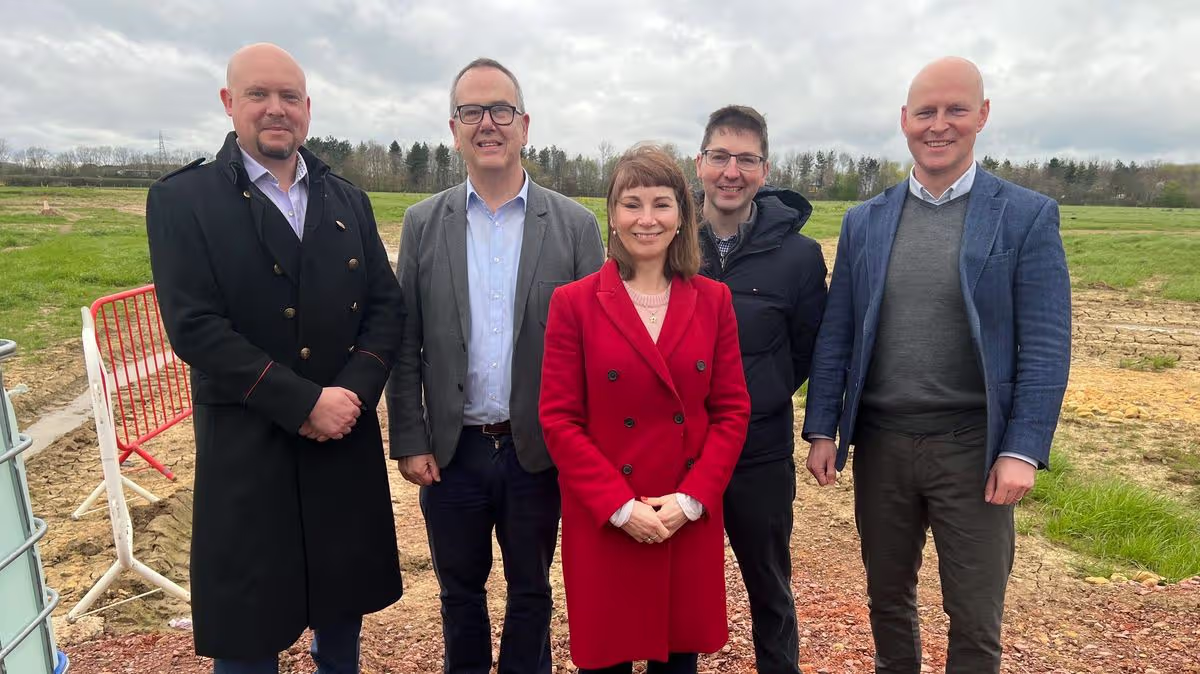
From Left: Tewkesbury MP Cameron Thomas, Infrastructure Cabinet Member Julian Tooke, County Council Leader Lisa Spivey, Tewkesbury Bororough Council Leader Richard Stanley and Cheltenham MP Max Wilkinson at the M5 junction 10 improvements site(Image: Local Democracy Reporting Service)
Cllr Spivey said there were genuine concerns about the project’s viability before the Government confirmed earlier this year that Gloucestershire would receive the funding.
Cheltenham MP Max Wilkinson said it was a relief to finally witness progress at the site, as the shortcomings at junction 10 have been a persistent frustration for residents.
Advertisement
“After so many years of campaigning, it’s a relief to finally see progress – not least because the upgrade will unleash the full potential of the Golden Valley development,” he said.
“That will bring billions of pounds of investment to our town, generating thousands of good jobs in cyber and tech and building on the expertise we already have at GCHQ and our thriving cyber ecosystem.”
Meanwhile, Tewkesbury MP Cameron Thomas praised those involved in the project and the Government officials who have opted to invest in Gloucestershire.
“The Golden Valley Project represents the culmination of ten years of planning and negotiation, and is a credit to the collaborative work of government and industry,” the Liberal Democrat said.
Advertisement
“Keeping with Gloucestershire’s engineering and cyber tech heritage, this strategic development will create highly technical employment opportunities for skilled professionals from across the West Midlands and South West, alongside thousands of affordable homes and infrastructure.”
Starting a hardware business in the Philippines is one of the most practical and resilient negosyo ideas today. From booming residential construction to constant home repairs and renovations, the demand for hardware supplies never disappears. However, before you open your doors, one crucial step is often overlooked: choosing the right business name.
Your hardware business name is more than just a label. It represents trust, durability, reliability, and service—qualities customers look for when buying tools, construction materials, and home improvement supplies. A strong and unique name helps your store stand out, build brand recall, and look professional from day one.
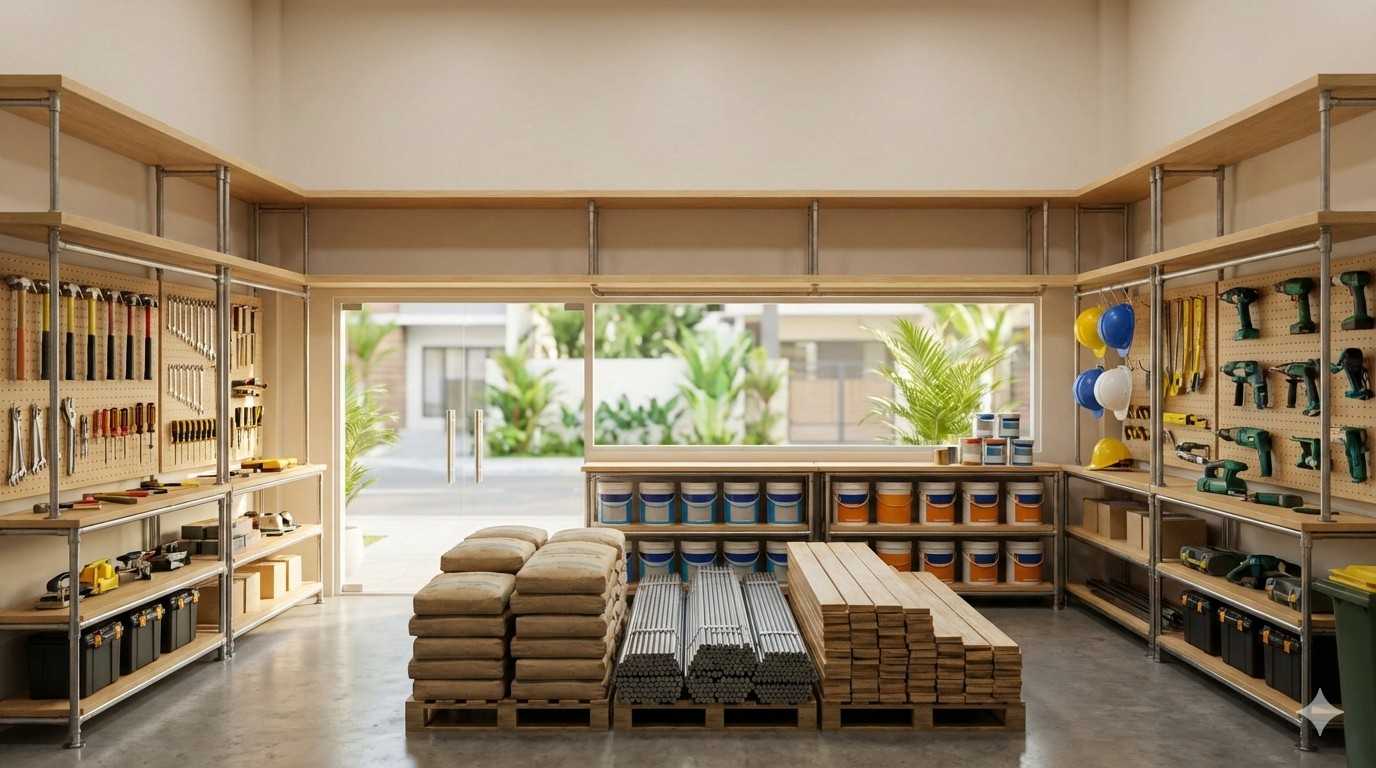
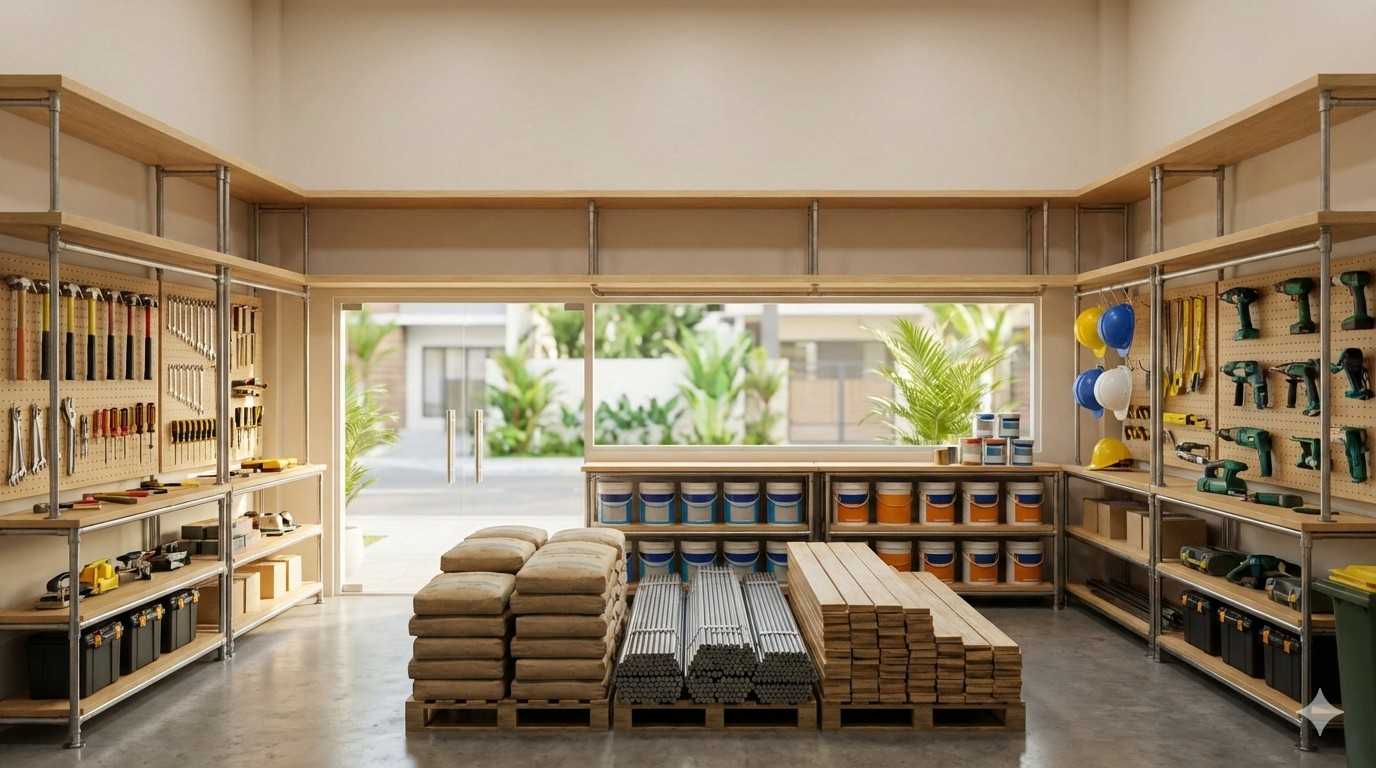
Image credit: AI-generated image created using Google Gemini
In this article, you’ll find 10 unique hardware business name ideas tailored for the Philippine market. Each name includes a brief explanation and branding insight to help you decide which one fits your vision. A legal and safety disclaimer is also included to guide you when publishing or registering your business name.
1. TibayWorks Hardware
The Filipino word tibay means strength and durability—two values every hardware store should stand for. TibayWorks Hardware sounds modern, professional, and dependable, making it ideal for a store that focuses on construction materials, tools, and heavy-duty supplies.
Advertisement
Branding Tip: Use bold colors like dark blue, gray, or black to reinforce the image of strength and reliability.
2. Matatag Builders Depot
Matatag means firm or strong. Combined with “Builders Depot,” this name appeals directly to contractors, foremen, and serious DIY builders. It sounds established and trustworthy, even for a newly opened business.
Best For: Stores catering to contractors, engineers, and bulk buyers.
3. Pundasyon Hardware Hub
Pundasyon means foundation, symbolizing a solid start and long-term reliability. This name works well for hardware stores that want to emphasize quality materials and long-lasting construction solutions.
Advertisement
Branding Tip: Highlight quality assurance and durable products in your marketing materials.
4. Bayanihan Tools & Hardware
Bayanihan represents community cooperation—a deeply rooted Filipino value. This name is perfect for neighborhood hardware stores that prioritize friendly service, affordability, and community trust.
Why It Works: Customers feel a sense of connection and support when buying from a business that reflects Filipino culture.
5. SolidGrip Hardware Supply
SolidGrip suggests firm handling, control, and safety—important qualities when dealing with tools and construction equipment. This name feels modern and versatile, suitable for both physical stores and online selling.
Advertisement
Best For: Hardware shops offering hand tools, power tools, and safety equipment.
6. LakásPro Hardware
Lakás means strength or power, while “Pro” adds a professional edge. LakásPro Hardware sounds like a premium brand that professionals can rely on.
Target Market: Contractors, skilled workers, and serious home renovators.
7. BuildSure Hardware & Trading
BuildSure emphasizes confidence and assurance. Customers want to feel “sure” when purchasing construction materials, and this name communicates exactly that.
Advertisement
Branding Tip: Emphasize warranties, product standards, and trusted suppliers.
8. AnchorPoint Hardware
An anchor represents stability and support. AnchorPoint Hardware is a strong, English-based name that works well for urban areas or business districts where modern branding is important.
Best For: Hardware businesses targeting engineers, architects, and commercial clients.
9. HabiBuild Hardware
Habi means to weave or connect. This name symbolizes bringing different materials together to complete a project. It feels creative, unique, and meaningful.
Advertisement
Why It Stands Out: It’s uncommon yet easy to remember, perfect for branding and storytelling.
10. Cornerstone PH Hardware
A cornerstone is the most important part of any structure. This name communicates leadership, quality, and dependability, making it ideal for long-term business growth.
Branding Tip: Use minimalist logos and professional typography for a premium feel.
Advertisement
Important Disclaimer (Please Read)
Disclaimer: The hardware business names listed in this article are creative suggestions only. While these names were generated to be unique and original at the time of writing, we do not guarantee that they are not already registered, trademarked, or in use by another business.
Before using any business name, we strongly recommend that you:
Check availability with the DTI (Department of Trade and Industry) for sole proprietorships
Verify with the SEC if registering a partnership or corporation
Search existing trademarks via the Intellectual Property Office of the Philippines (IPOPHL)
Check domain name and social media availability if you plan to build an online presence
The publisher of this article is not liable for any legal issues arising from the use of these name ideas. Proper due diligence is the responsibility of the business owner.
Choosing the right hardware business name is a powerful first step toward building a successful negosyo in the Philippines. A well-thought-out name builds trust, attracts customers, and supports long-term branding. Whether you prefer a Filipino-inspired name, a modern English brand, or a combination of both, the key is to align your name with your vision and target market.
Remember: a strong foundation starts with a strong name. Choose wisely, verify legally, and build your hardware business with confidence.
Advertisement
Good luck with your hardware negosyo!
Business News Philippines was launched in October 2015 as a portal for readers to learn more about operating a business in the Philippines.
Komal is passionate about finance and the stock market. She enjoys forecasting future market trends using a fundamental and technical approach with a focus on both short- and long-term horizons. She intends to provide unbiased analysis to assist investors in selecting the best investment strategies to stay ahead of the market.
Analyst’s Disclosure: I/we have no stock, option or similar derivative position in any of the companies mentioned, and no plans to initiate any such positions within the next 72 hours. I wrote this article myself, and it expresses my own opinions. I am not receiving compensation for it (other than from Seeking Alpha). I have no business relationship with any company whose stock is mentioned in this article.
Seeking Alpha’s Disclosure: Past performance is no guarantee of future results. No recommendation or advice is being given as to whether any investment is suitable for a particular investor. Any views or opinions expressed above may not reflect those of Seeking Alpha as a whole. Seeking Alpha is not a licensed securities dealer, broker or US investment adviser or investment bank. Our analysts are third party authors that include both professional investors and individual investors who may not be licensed or certified by any institute or regulatory body.
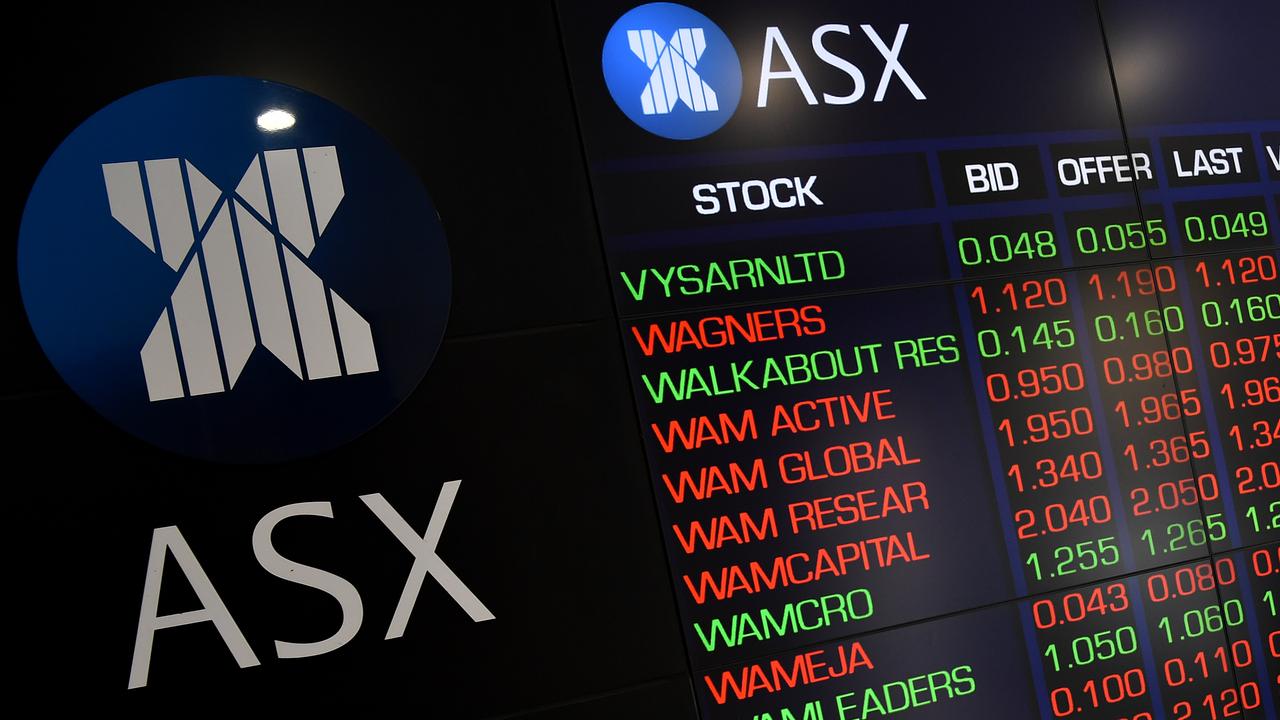
The Australian share market has fallen again after oil rose to near a four-year high, amid fears another strategic Middle East waterway could become an energy choke point.


























































You must be logged in to post a comment Login