
Business
From Addiction to Mental Health Leadership


A Second Life Built on Accountability and Recovery
John Joseph Cardwell’s story does not start in a clinic. It starts with loss.
He grew up in Christchurch, New Zealand, in a large family with strong roots. His father was a New Zealander. His mother was Samoan. He was the eldest of five siblings. As a young person, life was active and structured. He played rugby, soccer, cricket, and rugby league at representative levels.
But over time, that structure broke down.
“My journey through addiction to alcohol and numerous illegal substances and denial of the impact I was causing those around me, especially my family, cost me everything,” Cardwell says. “My identity, my relationships, and my sense of purpose.”
This period would define the turning point of his life.
Hitting Bottom and Facing Public Failure
Cardwell does not avoid talking about his lowest moments. In fact, he leans into them.
“I was exposed in the public eye for my behaviours in active addiction for the whole world to see,” he says. “It was a massive failure in my life.”
That exposure forced a decision. Stay the same or rebuild.
For Cardwell, rebuilding meant full accountability.
“The success was to see it, be accountable, and commit to change,” he explains.
This mindset became the foundation of everything that followed. Not just recovery, but leadership.
The Recovery Process That Changed Everything
Cardwell has been clean and sober since October 2021. But he is clear that recovery was not instant.
“Recovery wasn’t instant,” he says. “It was built through pain, honesty, and resilience.”
He credits structure and community as key factors. He leaned on mentors who had already built stable lives.
“Two men in particular had what I couldn’t manage to get,” he says. “A stable job, studying at university, their own place, relationships, family back in their life, the fact they could commit for a long period of time baffled me. They reminded me of the lengths I would go to score my substances, I could do the same for a different way of living to live”. He thought it was such a long shot to achieve all of what he thought at the time, was impossible.
He followed their example step by step.
“I found and surrounded myself with people who had walked in my shoes before,” he says. “They role modelled a better way to live.”
Faith also played a role.
“I overcame obstacles with my faith in God,” he adds.
These influences helped him rebuild not just habits, but identity.
From Lived Experience to Clinical Practice
After stabilising his life, Cardwell made a decision that would shape his career. He chose to formalise his experience through education.
He studied at Auckland University of Technology. There, he graduated having studied Health Science with a Major which was the main focus on Mental Health and Addictions. He continued with the study pathway assisted by lecturers towards postgraduate study to become DAPAANZ – (Drug and Alcohol Practitioner’s Association of Aotearoa New Zealand) registered.
Today, he works in the Health Sector as a clinician and counsellor.
His work includes individual sessions, couples counselling, and group facilitation. He focuses on alcohol and drug recovery, often referred to as AOD counselling. Alongside other addictions like gambling, internet and gaming often highlighting (CEP) Co-Existing Problems.
What sets him apart is not just training. It is a lived experience.
“I stand not just as someone who is surviving addiction,” he says, “but as someone who found purpose through it.”
A Culturally Grounded Approach to Mental Health
Cardwell’s work is shaped by the communities he serves. He works closely with Māori and Pasifika populations.
He uses culturally grounded modalities such as:
- Te Whare Tapa Whā
- Fonofale Model
These frameworks focus on the whole person. Not just symptoms, but family, culture, and environment.
“I apply a culturally grounded approach,” he explains. “It’s about holistic, whānau-centred wellbeing.”
This approach allows him to address deeper issues. These include intergenerational trauma and systemic barriers.
He focuses on building trust first.
“Cultural safety is key,” he says. “Without that, there is no real progress.”
Leadership Through Service and Community Impact
Cardwell does not frame himself as a traditional business leader. But his work shows clear leadership traits.
He is a communicator. A problem solver. And someone who leads by example.
He is also active in the recovery community. He participates in a number of 12-step recovery programs and has shared by performing his story publicly through theatre, including a production called Recovery Street.
“Shame and guilt are a strength of mine today,” he says. “Because I can speak to it openly and honestly.”
This openness helps others connect with him. It also builds credibility.
He is not speaking from theory. He is speaking from experience.
Building Toward the Next Phase
Looking ahead, Cardwell is focused on growth. Not just personal growth, but impact.
He is working toward opening a private counselling practice and a bigger goal to establish a detox / rehabilitation centre alongside his partner in the Christchurch / Mid Canterbury region.
The goal is clear.
“To help the addict who still suffers,” he says.
His approach to goals is structured but simple.
“Set goals. Break them into small steps. Stay consistent,” he says. “Know your why.”
For him, that “why” is rooted in family, community, and service.
A Story That Continues to Evolve
Today, Cardwell describes his life in simple terms.
“I have peace and freedom from active addiction,” he says.
But he does not position himself as finished. His story is still evolving.
His journey from addiction to clinician is not just personal. It reflects a broader shift. One where lived experience is becoming a key part of mental health leadership.
And in that space, Cardwell is building a role that is both practical and impactful.
“My story is no longer about struggle,” he says. “It’s about giving back.”

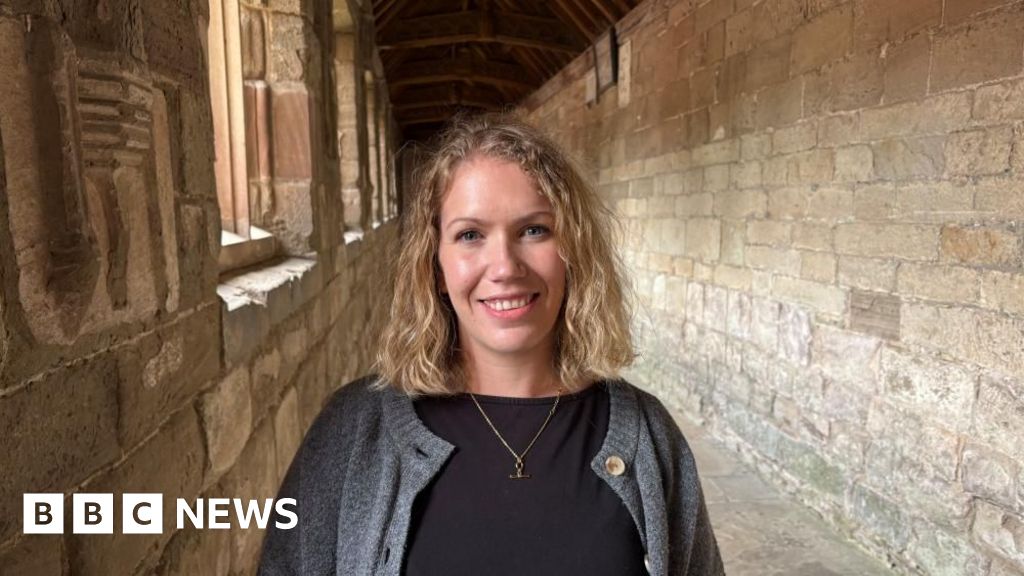
Hereford Cathedral says it will provide operational support to help the “incredible volunteers”.


Minor’s Kitchen is available in four varieties.


Beth Kindig is a veteran technology analyst with more than 15 years of experience covering both the private and public markets. She began her career in Silicon Valley in 2011—just as technology overtook oil as the world’s most valuable industry—and quickly distinguished herself for her prescient, high-conviction calls on emerging tech trends. By 2014, her analysis was being cited in major outlets, and she was invited to speak at leading industry conferences including Android Developers Conference, Advertising Week NYC, Tech Week Chicago, and BlackHat. Beth has forged her methodology following exposure to thousands of growth-stage companies, giving her a unique, pattern-recognition-driven approach that traditional Wall Street training cannot replicate. Beth is perhaps best known as the “Queen of Nvidia,” a title earned from her early and accurate calls on AI semiconductors dating back to 2018, but her proven track record spans dozens of companies where she has identified winning investments years ahead of consensus.As founder of the Tech Insider Network—one of the top-performing audited tech portfolios with 326% cumulative returns since May 2020 (29.2% annualized)—Beth has built a loyal following of thousands of paying subscribers, tens of thousands of newsletter readers, and more than 172,000 Twitter followers. Going into 2023, she held a 45% allocation in AI semiconductors, well ahead of legendary investors such as Stanley Druckenmiller at 29%. Beth is a regular guest on Fox Business, Bloomberg Tech, and Bloomberg Asia, where hundreds of thousands of investors tune in monthly to her insights. She has also appeared on CNBC, NPR, BBC Radio, Real Vision, Schwab Network, and CoinDesk. Her written work has been featured in Forbes, MarketWatch, VentureBeat, MediaPost, and AdExchanger. What drives her work is a deep commitment to empowering individual investors. Beth believes that access to accurate, high-quality research should not be limited to institutions. With a reputation for accuracy, consistency, and bold yet well-researched calls, Beth Kindig has established herself as one of the most trusted analysts in the technology sector today. Learn moreTech Insider Network is unique in that we blend real tech industry experience with active portfolio management. We pioneered combining cutting-edge fundamentals with high-performing technical analysis for retail. Beth cares deeply about individual investors having access to the same quality of information as institutions — especially in regards to the tech industry. Tech overtook oil in 2010 as the world’s most valuable industry and she was at the forefront of this change in Silicon Valley. She wants to bring her experience and insights to ordinary investors so they can participate in the extraordinary gains that tech has to offer. Her weekly newsletter has tens of thousands of subscribers.
Analyst’s Disclosure: I/we have a beneficial long position in the shares of NVDA either through stock ownership, options, or other derivatives. I wrote this article myself, and it expresses my own opinions. I am not receiving compensation for it. I have no business relationship with any company whose stock is mentioned in this article.
Seeking Alpha’s Disclosure: Past performance is no guarantee of future results. No recommendation or advice is being given as to whether any investment is suitable for a particular investor. Any views or opinions expressed above may not reflect those of Seeking Alpha as a whole. Seeking Alpha is not a licensed securities dealer, broker or US investment adviser or investment bank. Our analysts are third party authors that include both professional investors and individual investors who may not be licensed or certified by any institute or regulatory body.


Seeking Alpha’s transcripts team is responsible for the development of all of our transcript-related projects. We currently publish thousands of quarterly earnings calls per quarter on our site and are continuing to grow and expand our coverage. The purpose of this profile is to allow us to share with our readers new transcript-related developments. Thanks, SA Transcripts Team


Bret Jensen has over 13 years as a market analyst, helping investors find big winners in the biotech sector. Bret specializes in high beta sectors with potentially large investor returns.Bret leads the investing group The Biotech Forum, in which he and his team offer a model portfolio with their favorite 12-20 high upside biotech stocks, live chat to discuss trade ideas, and weekly research and option trades. The group also provides market commentary and a portfolio update every weekend. Learn More.
Analyst’s Disclosure: I/we have no stock, option or similar derivative position in any of the companies mentioned, and no plans to initiate any such positions within the next 72 hours. I wrote this article myself, and it expresses my own opinions. I am not receiving compensation for it (other than from Seeking Alpha). I have no business relationship with any company whose stock is mentioned in this article.
Seeking Alpha’s Disclosure: Past performance is no guarantee of future results. No recommendation or advice is being given as to whether any investment is suitable for a particular investor. Any views or opinions expressed above may not reflect those of Seeking Alpha as a whole. Seeking Alpha is not a licensed securities dealer, broker or US investment adviser or investment bank. Our analysts are third party authors that include both professional investors and individual investors who may not be licensed or certified by any institute or regulatory body.

Tomorrow is May Day, and somewhere in the middle of the country, a married couple in their early forties is opening up a small bakery for the third Friday in succession on which they have not, between them, drawn a salary.
They started the business in 2022. They re-mortgaged the house. They missed two of their daughter’s school plays last term, including the one where she had a line. They have not, for nineteen months, taken a day off. They are, on the official ONS labour-market classification, “self-employed”, which is to say they are not, technically, considered workers at all.
I would like, on this particular May Day, to suggest that they are.
There is a particular sleight-of-hand in British political language that has, over the last fifty years or so, produced an increasingly narrow definition of the word “worker”. A worker, in current usage, is someone who is paid by an employer in return for doing a job, ideally with a contract, a payslip, and a pension contribution. The “workers’ movement”, in modern parlance, is the political and industrial movement representing exactly that figure. Anyone outside the definition is, by implication, something else, an entrepreneur, an investor, a self-employed person, a small-business owner, a family-firm founder. They get other ministries, other sympathies, other adjectives. They do not, on the whole, get celebrated on May Day.
This is, frankly, ridiculous. The bakery couple work, on the broad numbers, more hours than any of their employees. They take home, on average, less per hour than their employees. They have less holiday, less protection, less pension, less sick pay, less of everything. Their economic risk is total. Their political clout is somewhere between negligible and non-existent. Their public image, in much of British political discourse, is closer to that of the tax-avoiding non-dom than that of the sympathetic NHS porter, which is, when you actually meet either, a perfect inversion of reality.
There are, by the latest ONS estimate, just over 4.3 million self-employed workers in the UK. Of those, around 600,000 run businesses with employees of their own. They collectively contribute approximately £303 billion to UK GDP, which is more than the entire UK financial-services sector. They pay corporation tax, dividend tax, capital gains tax, employer NICs, business rates, VAT, and insurance premium tax. They keep more than three million Britons in PAYE jobs. They are, in any meaningful definition, the productive backbone of the country.
And, for at least the last decade, they have been treated by every successive UK administration with a mixture of mild benign neglect and occasional, almost incidental, cruelty. IR35 was a cruelty. Making Tax Digital is a cruelty. The narrowing of business property relief on inheritance tax has been a cruelty. The withdrawal of various small expenses and reliefs has been a cruelty. None of these things has been done because anyone in Whitehall actively dislikes the small-business owner; it is rather that, in the present political configuration, the small-business owner is too small to matter, too dispersed to organise, and too busy to march. The civil servants drafting the SI get the headline figures right, and the headline figures, individually, are small.
May Day, in its original conception, was a workers’ holiday, but, as anyone with any knowledge of the period will tell you, the “workers” it commemorated were not, exclusively, the wage-labour pay-packet figure of present-day usage. They were the broader productive class: artisans, shopkeepers, mechanics, makers, the journeymen in the literal sense who worked with their own tools to produce something useful. A baker in Walsall, in 2026, getting up at 4am to mix the dough, fits that older definition perfectly. The fact that she has, technically, incorporated herself as a private limited company should not, surely, exclude her from the holiday.
I do not, please understand, wish to undermine the more familiar version of May Day. The march, the bunting, the speeches, the flag, they are part of a recognisable British political tradition that I rather enjoy. I just would like, this year, to make a small modest plea for the inclusion in it of the people whose labour is no less skilled, no less hard-won, no less honest, and considerably less protected, than the labour the day was originally meant to celebrate.
So if you are in the bakery this morning, or the small workshop, or the family-run pub, or the consultancy that lives at the kitchen table, or the farm that has been in your name for thirty years, happy May Day. The country is, despite the available evidence, better off because of you. Take five minutes off, if you can. Drink a coffee. Watch the bunting. And, before you go back to it, remember that whatever the textbook says, and whatever the marching song goes, the work you do is, exactly, work.

Richard Alvin
Richard Alvin is a serial entrepreneur, a former advisor to the UK Government about small business and an Honorary Teaching Fellow on Business at Lancaster University.
A winner of the London Chamber of Commerce Business Person of the year and Freeman of the City of London for his services to business and charity. Richard is also Group MD of Capital Business Media and SME business research company Trends Research, regarded as one of the UK’s leading experts in the SME sector and an active angel investor and advisor to new start companies.
Richard is also the host of Save Our Business the U.S. based business advice television show.

Texas Pacific Land faces earnings test after shareholder shakeup
Energy Collective Co observes that businesses often recognise that people-related challenges can have significant implications for cost and performance, yet the route to resolving them is not always clearly defined. “We’ve seen organisations encounter HR solutions that appear broad in scope or disconnected from tangible outcomes,” says founder Jade Donegan. “This can create a gap between identifying an issue and implementing an effective response.” She established Energy Collective Co to help bridge this space, encouraging a closer examination of how performance is influenced across both people and systems.
The company focuses on helping improve workforce productivity by examining the psychosocial factors that influence how work is designed and experienced. Drawing on her background in culture and transformation, Jade positions the business alongside organisational decision-making, where people, systems and commercial priorities meet. “I work with leaders to understand what’s driving performance,” she explains. “I believe the path forward becomes clearer when you can distinguish between system factors and individual factors.” This viewpoint sets the foundation for how the organisation engages with its clients and informs the structure of its services.

This perspective, Jade notes, also connects to a common assumption within organisations: that increased HR investment will lead to improved outcomes. She says, “Additional spend can sometimes focus on visible symptoms instead of underlying causes, which can limit the overall impact.” Energy Collective Co introduces the idea that many organisational challenges are not immediately visible, even though their effects can be observed through productivity or engagement. By identifying and addressing one or two high-impact factors, organisations may begin to unlock meaningful improvements in performance.
Broader research provides useful context for this way of thinking. A report shows that 82% of organisations experience some level of misalignment between HR and overall business strategy, with only 18% reporting strong alignment across key areas such as strategy execution and leadership collaboration. “This indicates that even well-intentioned initiatives can fall short when they aren’t directly connected to commercial priorities,” Jade remarks. In this context, Energy Collective Co places emphasis on linking people-related insights to measurable business outcomes, helping ensure that interventions are informed by both organisational needs and strategic direction.
Jade shares an example that illustrates how this philosophy translates into action. “In one case, a company considered investing approximately $15,000 in personality profiling to improve collaboration within its procurement team,” she shares. “Through diagnostic analysis, I identified that the challenge was process inefficiency rather than interpersonal dynamics.” By refining the workflow instead of introducing a new tool, Jade notes that the organisation was able to address the issue more directly.
“It’s about asking whether we are solving the right problem,” she says. “Sometimes the answer sits in how the work is designed, not in who is doing it.” This example highlights the importance of examining assumptions before committing resources.
To support this level of insight, Energy Collective Co has developed a structured diagnostic process that moves beyond standard engagement surveys. The organisation uses a culture, performance and productivity survey with adaptive questioning, allowing responses to guide deeper exploration into specific areas.
This is complemented by a psychosocial diagnostic framework that examines several factors, including leadership capability, work design and organisational systems. Through this process, Jade notes that organisations may gain a clearer understanding of whether challenges originate from structural elements or individual behaviours, which in turn informs the next steps.
This distinction becomes increasingly relevant when considering wider workforce trends. Insights from an HR monitor survey indicate that 32% of employees do not yet have all the skills required for their current roles. “This tells us that performance challenges may relate to capability development, role design or system effectiveness, rather than individual effort alone,” Jade says. By incorporating these factors into its analysis, Energy Collective Co connects workforce capability with broader organisational performance, helping ensure that recommendations reflect both immediate and longer-term considerations.
Once key drivers have been identified, the organisation focuses on delivering targeted and scalable solutions. These may include consulting engagements, tailored training programmes or self-service tools that enable leaders to address challenges directly within their teams. Ongoing pulse checks form part of this process, providing a way to monitor progress and maintain alignment over time. “Sustainable change happens when the business takes ownership of the solution,” Jade states. “Our role is to provide tools that make that possible.” This emphasis on ownership supports continuity beyond the initial intervention.
The delivery model is designed to remain accessible, with streamlined engagement processes and a focus on timely implementation. This can allow organisations to act on insights without unnecessary delay, supporting momentum as changes are introduced. At the same time, it can provide leaders with a structured way to consider the implications of inaction, including replacement costs, legal exposure and complexities linked to workforce management.
Alongside organisational systems, Energy Collective Co also considers individual energy as a contributing factor to performance. Its frameworks explore how mental, emotional and physical energy influence decision-making, collaboration and resilience. By connecting these elements with organisational dynamics, the model presents a more integrated understanding of how performance develops across different levels of the business.
Ultimately, as organisations continue to navigate evolving workforce expectations, Energy Collective Co encourages leaders to reflect on the nature of the challenges they encounter. Questions such as whether an issue stems from people or processes, and how that distinction can be identified, offer a starting point for more informed decision-making. Jade states, “Leaders need to ask more precise questions to create the conditions for more effective decisions.”

The maker of Johnnie Walker whisky and Guinness stout said Wednesday that organic net sales rose 0.3% in period, beating 2.3% slump expected by analysts surveyed by Bloomberg.
Diageo kept its guidance for this fiscal year unchanged, with organic net sales expected to decline between 2% and 3%.
Like rival drinks makers, Diageo is grappling with persistent weak demand for beer and spirits in critical markets, including the US. Consumers are moderating their alcohol intake to improve their health and in response to higher living costs from US President Donald Trump‘s trade tariffs and conflict in the Middle East.
The distiller is also trying to overcome self-inflicted errors such as poor service levels to some customers since Covid and an intense focus on premium drinks that has left the company underrepresented in growing parts of the market, like “ready-to-drink” canned cocktails.
IonQ earnings on deck: Can contract wins fuel revenue growth?

Two British people self-isolating in the UK after returning from ‘hantavirus cruise’ | News UK

Cathedral to help run food share scheme in city

Strategy Bitcoin Dividend Sales Signal Treasury Strategy Shift

Manchester United reach agreement with Casemiro over contract clause amid transfer speculation

US brings back mandatory military draft registration

Steven Gerrard disagrees with Gary Neville over ‘shock’ Chelsea and Arsenal claim | Football


-
 Business7 days ago
Tesla Officially Registers Elon Musk’s Stock: What Investors Need to Know
-

 NewsBeat3 days ago
Channel 5 – All Creatures Great and Small series 7 new post
-

 Entertainment7 days ago
Insider Claims Reason Behind Key & Peele Split
-
 Tech5 days ago
Trump’s 25% EU auto tariff breaches Turnberry Agreement that also covers semiconductors and digital trade
-
 Sports5 days ago
Paul Scholes issues Marcus Rashford reality check as agreement emerges over Man United star
-

 Entertainment5 days ago
Met Gala 2026 Rumored Guest List Is Turning Heads
-

 Entertainment7 days ago
Celebrities Who Are Attending the 2026 Met Gala Event
-

 Business6 days ago
Strait of Hormuz Blockade Persists Amid US-Iran Standoff, Sending Oil Prices Soaring
-
Entertainment5 days ago
New on Prime Video in May 2026 — Full List of Movies and Shows
-

 Sports5 days ago
Cavaliers vs. Raptors Game 6 live score, updates, highlights from 2026 NBA playoffs first-round series
-
 Sports5 days ago
David Benavidez responds to team Canelo saying the fight will never happen
-

 Crypto World7 days ago
Meta (META) starts stablecoin payout to creators in Circle’s USDC on Polygon, Solana via Stripe
-
Business7 days ago
Strait of Hormuz Remains Heavily Restricted on April 29 Amid Iran Conflict
-

 Entertainment5 days ago
Kylie Jenner Hit With Second Lawsuit From Ex-Housekeeper
-
 Sports5 days ago
IPL 2026: ‘Love you darling’- Hardik Pandya’s reaction to MS Dhoni steals the show |Watch | Cricket News
-

 Entertainment5 days ago
Young and the Restless Next Week: Cane Arrested & Matt’s Deadly New Scheme!
-

 Sports7 days ago
Saudi Arabia set to withdraw LIV Golf funding after 2026 season, per reports
-

 Tech7 days ago
Mark Zuckerberg Says Meta Is Working On AI Agents For Personal And Business Use
-

 Sports5 days ago
Plane crash in Wimberley, Texas kills 5 pickleball players at tournament
-

 Tech5 days ago
Meta ends Sama contract after Kenyan workers report seeing intimate footage from Ray-Ban smart glasses users
You must be logged in to post a comment Login