Connect with us

Business

From Public Housing to Policy Change

Published

on

From Public Housing to Policy Change

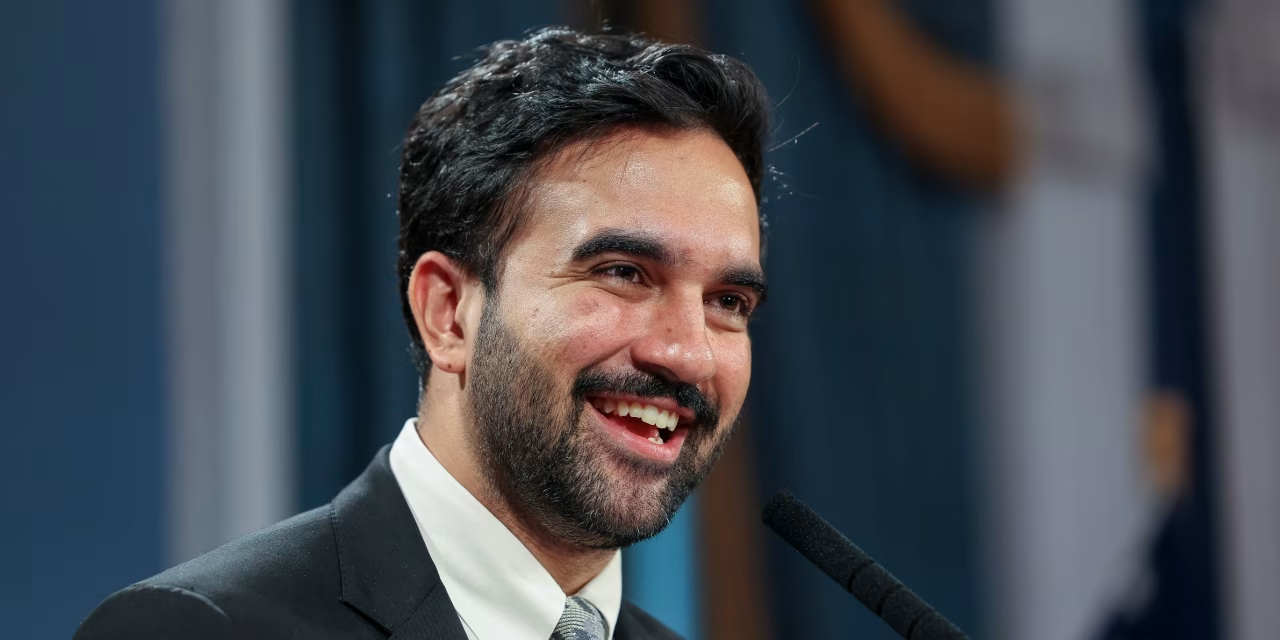
Manuel Rivera was born on November 27, 1958, and raised in a New York City public housing development. His earliest lessons in advocacy came from watching neighbors organize for better living conditions and fair treatment.

These were not abstract political movements. They were families fighting to keep the lights on and maintain basic dignity.

“I was just a kid watching neighbors fight to keep the lights on,” Rivera recalls. “It taught me that community power isn’t abstract. It’s what keeps families going.”

Those formative years planted seeds that would shape his entire career. Rivera saw firsthand who got heard and who didn’t. He decided early that he wanted to stand with the people who weren’t being heard.

Building a Foundation in Education and Social Work

Rivera attended Sara J. Hale High School in New York City before pursuing higher education at SUNY Stony Brook. He studied political science as an undergraduate and went on to earn a master’s degree in social work from the same institution. This combination gave him both the theoretical framework and practical tools to turn his early observations into tangible action.

Advertisement

“Growing up in public housing, you see quickly who gets heard and who doesn’t,” he explains. “I decided early that I wanted to stand with the people who weren’t being heard.”

His education equipped him with the skills to translate community needs into policy language, but his real classroom had always been the housing development where he grew up.

A Career Focused on Housing and Homelessness

Manuel dedicated his professional life to addressing homelessness and expanding access to affordable housing in New York City. He worked to create housing opportunities for individuals experiencing homelessness, focusing on long-term stability rather than temporary fixes.

His approach was rooted in a simple but powerful belief. “Housing is the start,” Rivera says. “Without it, people can’t stabilize their health, their work, their families. Everything else breaks down.”

Advertisement

He understood that housing was more than shelter. It was the foundation that allowed people to access healthcare, maintain employment, and build stable family lives. Without that base, every other intervention fell short.

“Housing is not just shelter,” he emphasizes. “It’s dignity. It’s safety. It’s the base for everything else.”

Rivera’s work was deeply informed by lived experience. He brought a perspective that policy documents alone could never capture. “When you sit across from someone who has nowhere to go, the issue stops being abstract. You focus on solutions.”

Leading the NYC Black and Latino LGBTQ Coalition

Rivera became Chairperson of the NYC Black and Latino LGBTQ Coalition, a citywide coalition uniting LGBTQ organizations across New York City to promote equity and inclusion. The role allowed him to bridge communities and issues that were too often treated as separate.

Advertisement

“There was too much siloing,” Rivera observed. “You’d have one group fighting for health equity, another for housing rights, and a third for trans justice. But it’s the same people facing all of it. We needed to connect the dots.”

His leadership focused on coalition building and intersectional advocacy. Rivera recognized that LGBTQ individuals, especially those who were low-income or housing insecure, were navigating multiple systems at once.

“When you’re queer, low-income, and housing insecure, you’re not just fighting one system,” he notes. “You’re navigating all of them.”

This understanding shaped his approach to coalition work. He brought together organizations that might otherwise operate in parallel, creating a unified front that could advocate more effectively for the community’s most vulnerable members.

Advertisement

Continuing the Work at GMHC

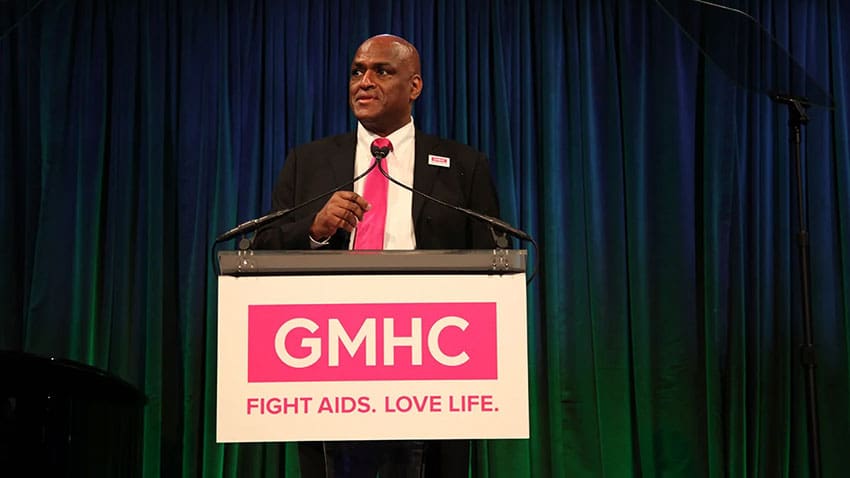
Now retired from full-time work, Manuel continues to serve the LGBTQ community as Chairperson of the Consumer Advisory Board and a member of the Board of Directors at GMHC (Gay Men’s Health Crisis). The organization has long been a pillar of HIV/AIDS advocacy and LGBTQ health services in New York City.

In his leadership roles at GMHC, Rivera provides guidance on community needs and program development. He ensures that the organization’s work reflects the realities of the people it serves.

“If a policy doesn’t reflect their reality, it won’t work,” he says.

His approach remains grounded in the same principles that guided his earlier career. He listens first. He centers the voices of those most affected. And he insists that solutions come from the community itself.

Advertisement

“Communities know what they need,” Rivera explains. “The role of leadership is to listen and then act.”

He was recognized with the Leadership and Public Service Award from the GMHC Black History Month Committee, an acknowledgment of his dedication to the community he serves.

A Philosophy Rooted in Lived Experience

Throughout his career, Rivera has maintained that the best ideas come from those closest to the problem. “Ideas start with listening,” he says. “Growing up in public housing, I saw that the best solutions came from residents themselves.”

This philosophy has guided his work in housing advocacy, LGBTQ coalition building, and health equity. He brings meticulous preparation to his roles, understanding that effective advocacy requires both data and community perspective.

Advertisement

“Preparation made me productive,” he notes. “If I walked into a meeting without knowing the data or the community perspective, I was not doing my job.”

Rivera’s work has always been about more than policy. It’s about people. It’s about creating systems that recognize the full humanity of those they serve.

“We’re not talking about abstract policy,” he emphasizes. “We’re talking about people trying to find a safe place to live and being turned away, ignored, or priced out.”

A Legacy of Community Power

Manuel Rivera’s career offers a model for effective advocacy. He has shown that lasting change comes from those who live the issues they fight for and who stay in the fight over the long term.

Advertisement

“Change doesn’t come from the top,” Rivera reflects. “It comes from people who live the fight and stay in it.”

His work has connected housing justice, LGBTQ rights, and health equity in ways that reflect the interconnected realities of marginalized communities. He has demonstrated that policy is powerful only when it reflects real lives.

“Policy is powerful,” he says. “But policy only works if it reflects real lives.”

From his childhood in public housing to his leadership at GMHC, Rivera has remained committed to the principle that community power is not abstract. It’s what keeps families going. It’s what creates lasting change. And it’s what continues to drive his work today.

Advertisement

Continue Reading
Click to comment

You must be logged in to post a comment Login

Leave a Reply

Business

The Global Story – Trump ‘tightens the noose’ on Iran. Will it backfire?

Published

on

The Global Story - Trump 'tightens the noose' on Iran. Will it backfire?

Available for over a year

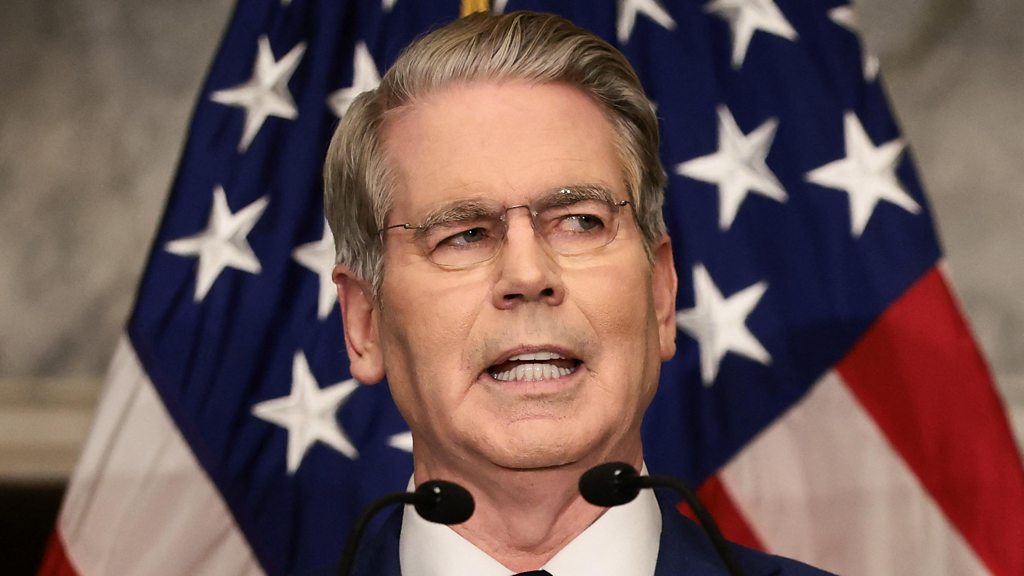
There have been a lot of sanctions programmes against Iran. But this week US Treasury Secretary Scott Bessent announced Operation Economic Outcast, which promises to go further than ever before. It will punish not just Iran but any country helping Iran – including China.

It is the Trump administration’s latest attempt to end the war. Will it work?

We speak to Vali Nasr,  professor of international affairs and Middle East studies at Johns Hopkins University, and ask whether in trying to end one war, President Trump risks starting a global trade conflict.

Advertisement

(Photo: US Treasury Secretary Scott Bessent speaks during a press conference to outline further sanctions against Iran, at the Treasury Department in Washington, DC, 24 August, 2026. He has short, mousy-grey hair and is wearing glasses, with the American flag behind him. Credit: Evelyn Hockstein/Reuters)

Producers: Mhairi MacKenzie and Lucy Pawle

Sound engineer: Travis Evans

Editor: James Shield

Advertisement

Senior news editor: China Collins

Programme Website

Continue Reading

Business

‘Not far enough’ – parents and teens on Meta’s new limits for young users

Published

on

Julianna (left), Paige (centre) and mum Elizabeth Cardner at a baseball game

For Elizabeth Cardner, a mother of two girls in Houston, Texas, Meta’s new limits on how teenagers can use its platforms are a welcome sign that more people are aware of social media’s potential dangers.

But, she tells the BBC, they probably won’t help much in the long-term.

“It will save a few arguments at home, but it doesn’t go far enough,” she says.

This week, Meta announced new restrictions on its platforms – which include Instagram, Facebook and Whatsapp – as part of an $18bn (£13.25bn) settlement with US states in a lawsuit on social media’s effects on children.

Advertisement

The company said it would set a daily two-hour time limit, hide the number of likes that a post receives, remove autoplay on videos, mute push notifications during school hours, and ban extreme make-up filters.

It also announced changes to its age-verification process and parental controls as well as agreeing to appoint an independent auditor to check the measures are implemented and maintained.

Many parents across the US see the restrictions as helpful, but are still sceptical. Those who spoke to the BBC described feeling stuck – where they feel they can’t cut their children off from social media but also can’t protect them from the harms they believe it causes – and they are waiting to see how much of a difference these new rules will make.

Cardner’s 14-year-old, Paige, believes the restrictions will lead to “more real-life scenarios” and less “fake content”, which she says dominates social media. She and her sister both approve of hiding the numbers of likes and restricting filters.

Advertisement

But Paige sees those gains as short-lived, “since AI is evolving”.

“People will find new ways to have fake filters, and correct certain parts of their videos or pictures,” she says. “So I think it’ll help until people use other resources to try and find new ways to do that.”

Cardner says banning her daughters entirely from social media would only result in them being left out by their peers.

“Damned if you do, damned if you don’t,” she says. “I don’t think there’s any winning on it.”

Advertisement
Continue Reading

Business

Goodwin profits more than double as defence supplier benefits from military spending surge

Published

on

Business Live

Group which makes radar equipment and submarine parts said it would hand more cash back to shareholders

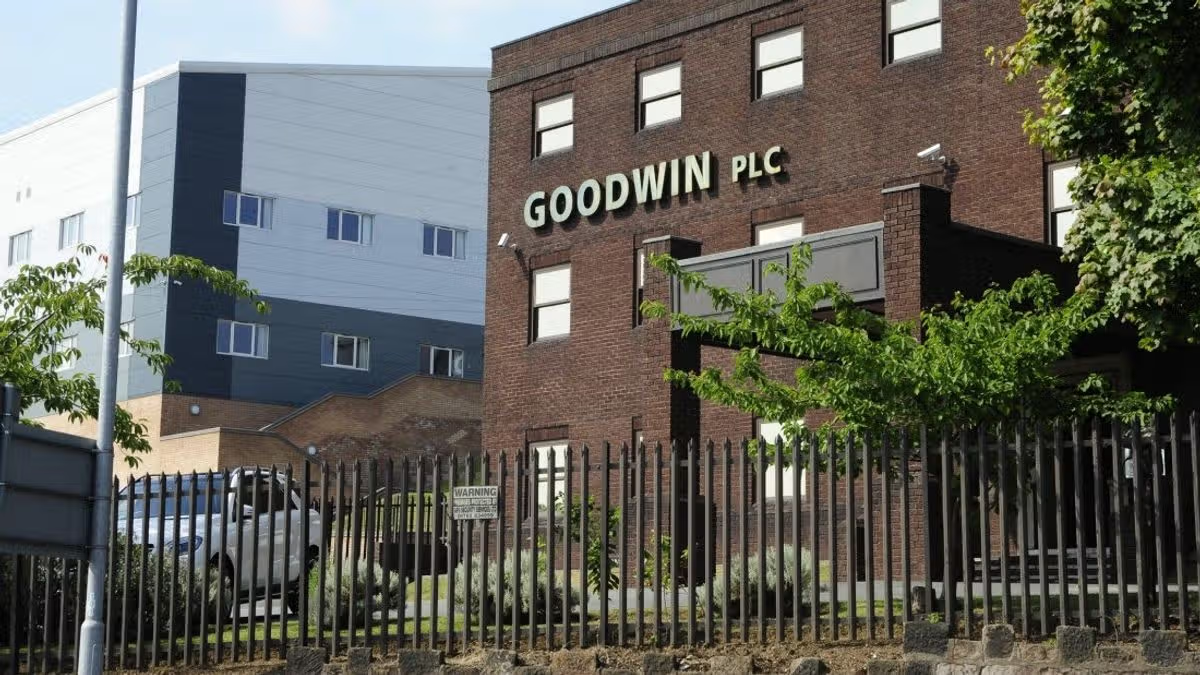
Goodwin plc in Stoke-on-Trent

Goodwin plc, in Stoke-on-Trent

Profits have more than doubled at defence supplier Goodwin, buoyed by a surge in military spending across the globe.

Advertisement

The Stoke-on-Trent-based firm, which manufactures radar equipment and submarine components, announced on Friday that it would return more money to shareholders on the back of the strong performance.

The group also signalled that shareholders could stand to benefit further should it press ahead with the potential disposal of elements of its mechanical engineering division.

The company, which comprises several subsidiary businesses, posted trading profits up 118% to £77.5 million for the year to April, compared with the previous year.

The result was underpinned by revenues rising 27% to £280 million over the same period.

Advertisement

Turnover received a significant boost from an improved showing by its mechanical engineering arm, driven by robust demand for products supplied to UK and US naval and submarine programmes.

Founded in 1883, Goodwin is majority-owned and run by the Goodwin family, with its shares listed on the London Stock Exchange.

The group continues to evaluate the potential sale of parts of its mechanical engineering division, which provides components to major defence and nuclear programmes.

The firm described the sale process as “progressing well”, with talks currently under way with a number of prospective buyers.

Advertisement

Goodwin sought to reassure customers, suppliers and employees that business operations would continue uninterrupted throughout the process. “The disposal process is being actively pursued in accordance with the board’s approved plan, which targets completion within the next twelve months, and shareholders will be kept informed of material developments as appropriate,” the company said.

The firm announced plans to raise the group’s annual dividend by 18% to 330p for the year.

Continue Reading

Business

How Taylor Farms became integral to America’s food supply system

Published

on

How Taylor Farms became integral to America's food supply system
How Taylor Farms became so important to the U.S. food supply

The cyclospora outbreak that has sickened thousands of people across the U.S. has brought fresh scrutiny of the integral role Taylor Farms and other massive suppliers play in the country’s food supply.

The company, which the Food and Drug Administration has linked to the parasite’s spread, is one of the world’s largest producers of fresh-cut vegetables and salads, supplying some of the biggest grocery chains and restaurant companies in the U.S. Its products are sold at retailers including Walmart, Kroger, Whole Foods and Target, and its restaurant customers include McDonald’s, Taco Bell and Chipotle. Taylor Farms says 40% of salad kits sold at grocery stores come from the company, giving it a massive role in supplying a convenient and cheap vegetable option for many shoppers.

The company, founded in 1995, has grown through a combination of scale and acquisitions, building an operation that spans much of the food supply chain. Taylor Farms works with hundreds of family farms for its produce and handles processing, packaging and distribution itself.

That reach has made the company an increasingly important link between farms and some of America’s biggest food companies, and heightens the risk of food safety problems spreading. Taylor Farms’ scale has put the company under a brighter spotlight as the FDA investigates the cyclospora outbreak that the agency has linked to iceberg lettuce processed at Taylor Farms’ facility in central Mexico, some of which was served at Taco Bell restaurants.

Advertisement

Taylor Farms declined CNBC’s invitation for an interview but sent comments defending the steps it has taken to respond to the outbreak and keep its produce safe.

“We are confident in our food and food safety systems and will continue to be transparent as more information becomes available,” a spokesperson for Taylor Fresh Foods, the corporate name for Taylor Farms, told CNBC.

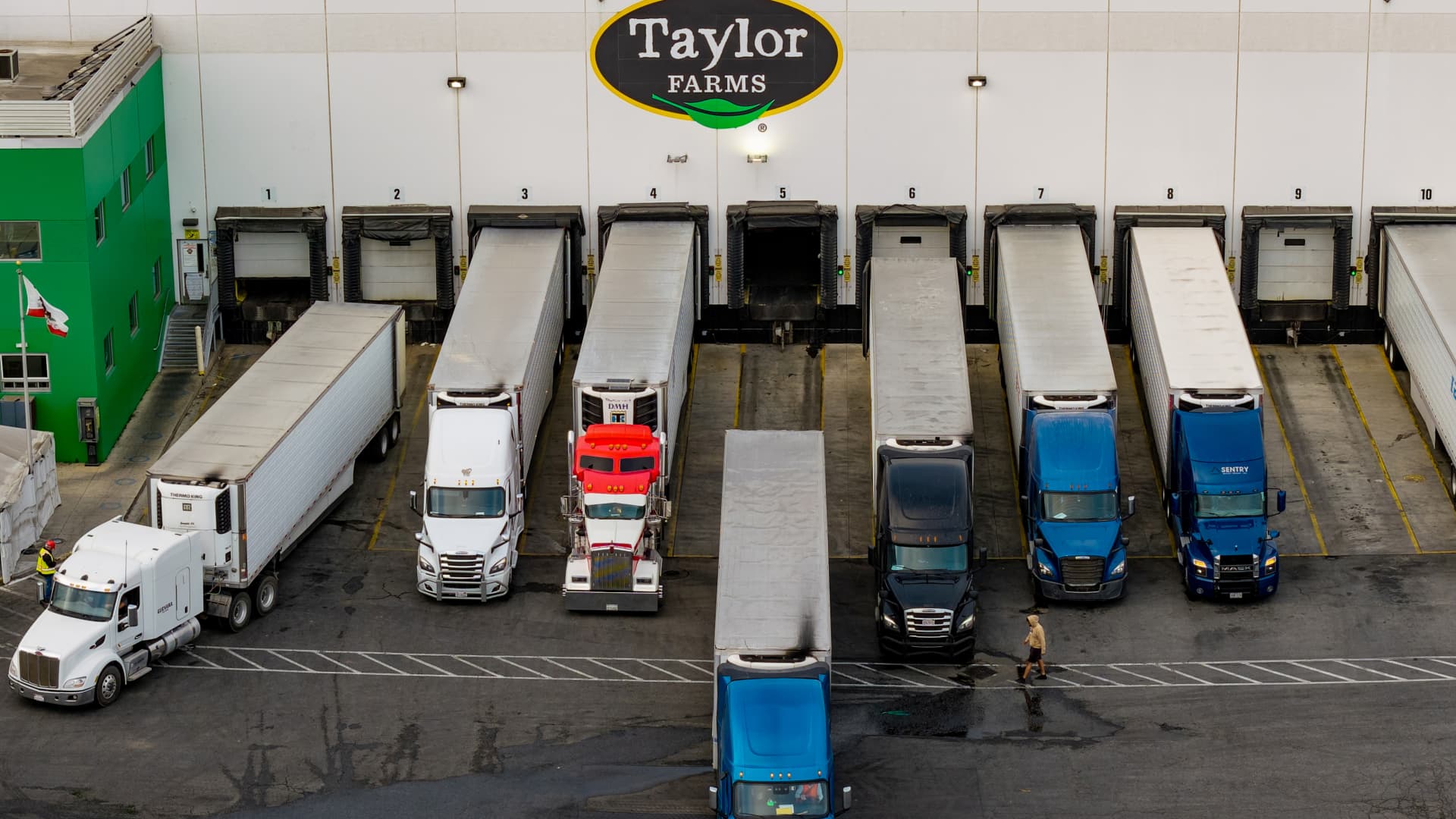
Tractor trailers at a Taylor Farms facility in Salinas, California, Aug. 10, 2026.

Josh Edelson | Bloomberg | Getty Images

Advertisement

Taylor Farms said in an August post on its website that it spends more than $200 million a year on food safety. The company added in a statement to CNBC that safety is its “biggest area of funding by several orders of magnitude.”

Taylor Farms has also voluntarily suspended iceberg lettuce sourcing and production from central Mexico and commissioned independent experts to conduct a review of food safety practices at its facility there. The FDA has not reported a positive product sample for cyclospora, because it can take weeks for symptoms to show and lettuce has a short shelf life, so it is difficult to test the right crop.

The breadth of the outbreak, which has led Walmart to recall bagged salads and Taco Bell to pull lettuce at some restaurants, underscores how integral Taylor Farms has made itself to the U.S. food system, and why broader industry consolidation risks worsening foodborne illness outbreaks.

Why Taylor Farms’ scale is important

A forklift transports crates of produce at a Taylor Farms facility in Salinas, California, Aug. 10, 2026.

Josh Edelson | Bloomberg | Getty Images

The company has also become more important by getting bigger. Taylor Farms has expanded its infrastructure through a string of acquisitions and investments, including its purchases of Earthbound Farm in 2019 and agricultural robotics company Farmwise in 2025.

The benefit of that consolidation has been reliable supply, standardized products and potentially lower labor costs, said Zagor.

Advertisement

But there is another side.

“The consolidation has camouflaged sources,” Zagor said. “It’s all put in one big pot. And if that pot has now gone bad, that affects the entire downstream logistic food chain.”

Zagor called it a “culinary national nightmare” when a company that distributes food to so many other businesses finds itself at the center of a foodborne illness outbreak.

It’s not the first time Taylor Farms has been tied to an outbreak.

Advertisement

Food safety lawyer Bill Marler compiled a list of outbreaks linked to Taylor Farms and whether they led to product recalls. Among them is a 2009 salmonella outbreak linked to shredded lettuce, along with a 2024 E. coli outbreak tied to slivered onions served at McDonald’s.

His law firm, Marler Clark, has filed five complaints based on the current cyclospora outbreak so far in Ohio, Michigan and Kentucky, against four separate Taco Bell franchise operators and the restaurant chain itself, along with Taylor entities including four operators and one supplier.

Growth and regulation

A customer reaches for Taylor Farms bagged salads for sale at a grocery store in Hercules, California, July 17, 2026.

David Paul Morris | Bloomberg | Getty Images

Advertisement

Taylor Farms, along with other food service giants such as US Foods and Sysco, has become bigger and more vital in part by buying other companies.

Taylor Farms has completed more than a dozen acquisitions or investments since 2011. While the cyclospora outbreak — the largest in U.S. history — has brought fresh scrutiny of the effects of consolidation, it’s unclear how much skepticism there was of the deals when they happened.

CNBC asked the Justice Department and Federal Trade Commission whether either agency had reviewed or challenged Taylor Farms’ acquisitions and investments. The DOJ did not respond. The FTC said it could not provide additional details without knowing the purchase prices of the transactions, which determines if the agency even had the opportunity to review.

CNBC found no public evidence that the FTC has challenged a Taylor Farms acquisition. Those deals took place under multiple presidential administrations of both parties, and various FTC leaders.

Advertisement

Some experts also highlighted a separate issue in the U.S. food system: the strength of oversight and regulation of food safety as distributors get larger and more influential. As the cyclospora outbreak raged, various news reports highlighted that Taylor Fresh Foods made a $1 million donation to the pro-Trump super PAC MAGA Inc. last year, around the time the Trump administration delayed a rule related to food tracing requirements. The company has also spent millions on anti-regulatory lobbying.

“If what you want is light enforcement of anything that’s going to be expensive and cost you money, it’s very nice to have political power,” said Marion Nestle, professor emerita of nutrition, food studies and public health at New York University. “You can go to Congress and say, we don’t want to do that.”

Taylor Fresh Foods rejected suggestions that its political contributions have resulted in favorable regulatory treatment.

“Taylor Farms categorically rejects any suggestion that the company has attempted or received favorable regulatory treatment as a result of political contributions or any other improper influence,” a spokesperson said. “The allegations are false.”

Advertisement

Nestle worries whether regulators have enough power as a few big companies become increasingly vital parts of the food system.

“Companies want to produce food as cheaply as possible,” said Nestle.

“And that means you need oversight,” she added.

Choose CNBC as your preferred source on Google and never miss a moment from the most trusted name in business news.
Advertisement
Continue Reading

Business

Bloom Energy: Nancy Pelosi (And Other Bulls Too) Needs To Rethink Its 80x P/E (NYSE:BE)

Published

on

Chalkboard Illustration of AI Energy Needs with Hands Holding Colored Chalk

This article was written by

Envision Research, aka Lucas Ma, has over 20+ years of investment experience and holds a Masters with in Quantitative Investment and a PhD in Mechanical Engineering with a focus on renewable energy, both from Stanford University. He also has 30+ years of hands-on experience in high-tech R&D and consulting, housing sector, credit sector, and actual portfolio management.He leads the investing group Envision Early Retirement along with Sensor Unlimited where they offer proven solutions to generate both high income and high growth with isolated risks through dynamic asset allocation. Features include: two model portfolios – one for short-term survival/withdrawal and one for aggressive long-term growth, direct access via chat to discuss ideas, monthly updates on all holdings, tax discussions, and ticker critiques by request.

Analyst’s Disclosure: I/we have no stock, option or similar derivative position in any of the companies mentioned, and no plans to initiate any such positions within the next 72 hours. I wrote this article myself, and it expresses my own opinions. I am not receiving compensation for it (other than from Seeking Alpha). I have no business relationship with any company whose stock is mentioned in this article.

Seeking Alpha’s Disclosure: Past performance is no guarantee of future results. No recommendation or advice is being given as to whether any investment is suitable for a particular investor. Any views or opinions expressed above may not reflect those of Seeking Alpha as a whole. Seeking Alpha is not a licensed securities dealer, broker or US investment adviser or investment bank. Our analysts are third party authors that include both professional investors and individual investors who may not be licensed or certified by any institute or regulatory body.

Advertisement
Continue Reading

Business

Go Grandmaster Shin Jinseo, Who Beat AI Program KataGo, Donates Prize Money to Sick Children in Seoul

Published

on

Florida Confirms New Burmese Python Breeding Hotspot Outside the Everglades,

SEOUL — Shin Jinseo, one of South Korea’s top-ranked Go players, has donated part of the prize money he earned for defeating the artificial intelligence program KataGo to a children’s hospital, extending a run of quiet philanthropy that predates his latest victory.

Shin, a 9-dan professional, visited Severance Children’s Hospital in Seoul on Wednesday and personally handed over a donation of 30 million won, or roughly $22,000, to hospital director Cheon Geun-a. The gift draws on winnings from a July match in which Shin, playing with a two-stone handicap, took on KataGo, widely regarded as one of the strongest Go-playing AI systems in the world.

Shin won that contest 2-1, earning appearance fees and victory bonuses that together totaled 250 million won, or about $180,000. Wednesday’s donation represents a portion of that total.

Shin said he decided to donate because the July match was played on behalf of humanity as a whole, drawing more support from fans than his matches typically receive, and that giving back felt like the right way to repay that encouragement. He added that he hoped the funds would offer even a small measure of help to children and teenagers fighting illness as they work to recover their health.

Advertisement

The gesture continues a pattern of giving that stretches back several years. Shin has previously contributed to relief funds during the COVID-19 pandemic in 2020, supported scholarships for young Go players and students from his home region, and donated to child welfare organizations. Some of his charitable activity has gone unpublicized, according to people familiar with his giving.

July’s match unfolded against a backdrop of rapid advances in Go-playing artificial intelligence, which have steadily outpaced human players’ capabilities in recent years. Observers in the Go community said Shin’s win carried particular weight given his standing as one of the top-ranked players in the world, even under handicap conditions designed to offset the AI’s advantage.

Figures in the Go world described Shin’s decision to direct part of his winnings toward the hospital as adding a dimension beyond competitive results, framing the episode as pairing a high-profile win over advanced technology with attention to vulnerable members of society. Some suggested his approach could serve as a model for younger athletes across sports.

Severance Children’s Hospital said the donated funds would go toward improving treatment conditions for young patients battling serious illness. Hospital officials were said to have expressed gratitude for Shin’s continued support.

Advertisement

Shin, born in 2002, rose through South Korea’s competitive Go ranks as a teenager and has since become one of the sport’s most recognizable figures both domestically and internationally. In addition to his 2026 match against KataGo, he has taken part in several high-profile exhibition matches against AI systems in recent years, appearances that have drawn broader public attention to competitive Go.

The Go community has said the growing sophistication of AI systems is reshaping how professional players train and how the sport is presented to the public. Many top players now use AI tools to sharpen their own game even as exhibition matches pitting humans against machines have become more frequent. Against that backdrop, Shin’s win over KataGo — and the donation that followed — drew wider attention than a typical tournament result.

People close to Shin said he intends to continue his charitable work independent of his competitive schedule. His latest donation, observers said, illustrates less about the size of the gift than about a broader approach to sharing the results of competition with the wider community.

Advertisement
Continue Reading

Business

Energy prices: SSE gas price to increase by 19% from October

Published

on

A close up of a ring on a gas cooker with blue flame burning

Northern Ireland’s largest provider of natural gas, SSE Airtricity, is to increase its prices by almost 19% from 1 October for its 200,000 domestic and small business customers.

It means the annual gas bill of a typical household in the greater Belfast and west gas network areas will increase by almost £172.

The company said “unprecedented levels of volatility in global energy markets and higher wholesale gas prices” had led to the price rise.

Wholesale gas prices in the UK have effectively doubled since the US and Israel began their attack on Iran.

Advertisement

Colin Broomfield from the Utility Regulator said the increase would be “difficult news for many households and small businesses, particularly at a time when wider cost pressures remain a concern”.

“The main reason for the increase is the sustained rise in the wholesale cost of gas, due to the ongoing conflict in the Middle East.

“The Iranian conflict has continued to impact energy prices globally for the past six months.

“In recent weeks, we have seen the wholesale price of gas reaching 169 pence per therm. This is twice as high as pre-conflict prices.”

Advertisement

The Middle East conflict sent global oil prices soaring as it effectively closed the Strait of Hormuz – one of the world’s key water transport routes for oil, liquid natural gas and other essential commodities – limiting global supplies.

About 20% of the world’s oil and liquefied natural gas normally passes through the waterway.

The UK is heavily reliant on oil and gas imports, with the majority coming from the US and Norway.

The price of oil on the global market determines how much the UK pays for it.

Advertisement

Although the UK does get some oil from the North Sea, most of that is exported for refining elsewhere.

Continue Reading

Business

Here Are the Business Executives Who Have Mamdani’s Ear

Published

on

Here Are the Business Executives Who Have Mamdani’s Ear

New York City Mayor Zohran Mamdani is expected to unveil on Thursday a new business advisory council with 15 CEOs and other executives. The council represents a chance to reset his relationship with the capitalist class after a rocky start to the year.

The council will be made up of executives across finance, insurance, sports and other industries. It is expected to act as a go-between for two powerful groups who mix about as well as oil and water: the Democratic Socialists who run City Hall and the wider business community. 

Copyright ©2026 Dow Jones & Company, Inc. All Rights Reserved. 87990cbe856818d5eddac44c7b1cdeb8

Continue Reading

Business

Gaming and Leisure Properties: A High Yield And Deep Discount Too Hard To Ignore (Upgrade)

Published

on

Gaming and Leisure Properties: The Numbers Don't Justify This Discount (NASDAQ:GLPI)

Gaming and Leisure Properties: A High Yield And Deep Discount Too Hard To Ignore (Upgrade)

Continue Reading

Business

E-Commerce Firm Nears Buy Point As AI Shopping Strategy Clicks Investor’s Business Daily

Published

on

E-Commerce Firm Nears Buy Point As AI Shopping Strategy Clicks Investor's Business Daily

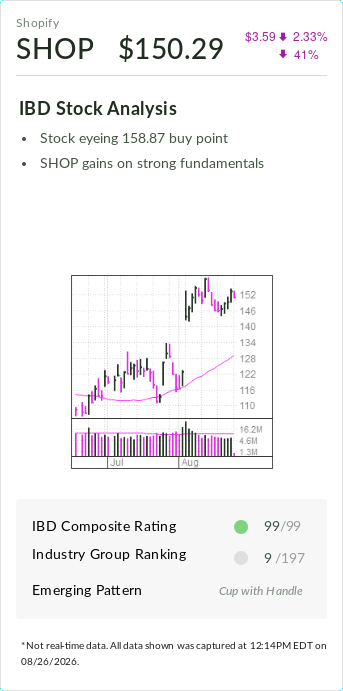
Shopify Shopify SHOP $ 150.29 $3.59 2.33% 41% IBD Stock Analysis Stock eyeing 158.87 buy point SHOP gains on strong fundamentals IBD Composite Rating 99/99 Industry Group Ranking 9/197 Emerging Pattern Cup with Handle Cup with Handle A positive chart pattern named such because it resembles the outline of a coffee cup with a handle. The pattern can last from…

Copyright ©2026 Investor’s Business Daily, LLC. All rights reserved. 87990cbe856818d5eddac44c7b1cdeb8

Continue Reading

Trending

Copyright © 2025