NEW YORK — GameStop Corp. shares fell about 1.4% in morning trading Tuesday, trading near $21.06 as investors weighed the video game retailer’s aggressive but unsuccessful push to acquire eBay against an upcoming quarterly report and broader market dynamics.
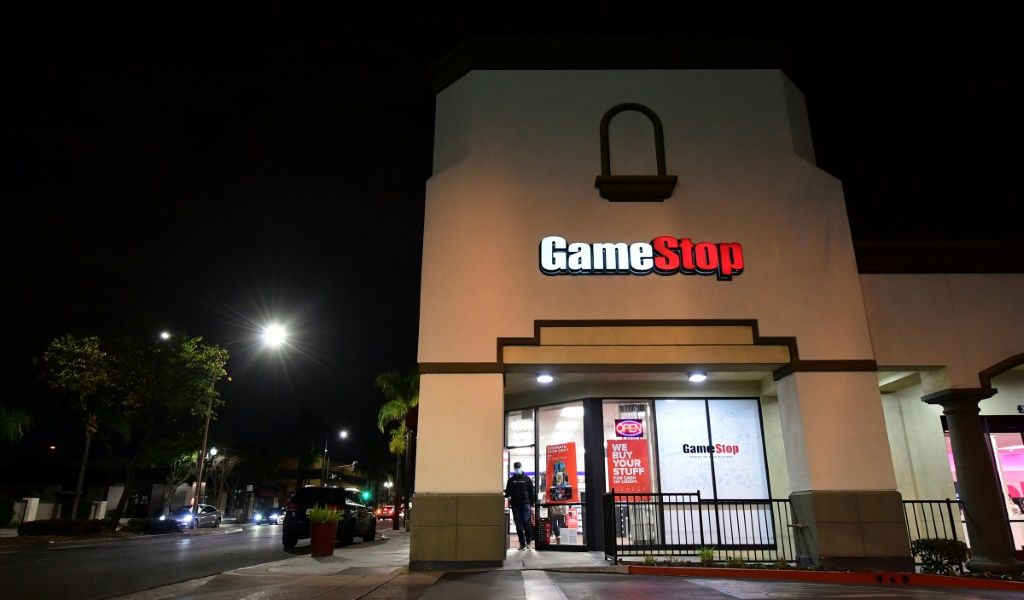
GameStop Stock Dips Modestly as eBay Takeover Drama and Earnings Loom AFP / Frederic J. BROWN
The slight decline came on moderate volume, with the stock showing limited movement in a session where many retail names faced pressure. GameStop closed the previous session at $21.36 after a modest gain. Year-to-date, the shares are up roughly 6%, outperforming several other former meme stocks that have struggled in 2026.
Bold Strategic Moves Define 2026
GameStop has remained in the spotlight this year largely due to Chairman and CEO Ryan Cohen’s ambitious vision for transformation. In May, the company made a surprise $56 billion unsolicited bid for eBay, proposing a mix of cash and stock that valued the online marketplace at a significant premium. eBay’s board quickly rejected the offer as “neither credible nor attractive,” prompting Cohen to push back publicly and raise GameStop’s stake in the target company.
By late May, GameStop had increased its ownership in eBay to 7.8% from earlier levels, signaling continued interest despite the rebuff. Cohen has framed the potential combination as a way to create a major player in consumer commerce, leveraging GameStop’s cash reserves and retail footprint with eBay’s platform.
Advertisement
The company holds a substantial war chest, with analysts estimating nearly $9 billion in cash and marketable securities as of early 2026. This liquidity stems from previous share offerings, cost-cutting measures and conservative balance sheet management under Cohen’s leadership.
Financial Performance and Outlook
GameStop’s most recent full-year results, released in March for fiscal 2025, showed net sales of $3.63 billion, down from the prior year amid industry-wide shifts toward digital gaming. However, the company posted stronger profitability, with net income rising significantly to $418.4 million. Adjusted figures highlighted operational improvements.
Investors are now looking ahead to first-quarter 2026 earnings, expected around June 9 or 10. Consensus estimates call for revenue near $767 million and earnings per share of about $0.16. The report will provide fresh insight into same-store sales trends, collectibles performance and progress on diversification efforts.
Advertisement
The retailer has been closing underperforming stores while investing in higher-margin areas like collectibles, which showed strong growth in prior quarters. Management has also explored technology and e-commerce enhancements to adapt to changing consumer habits.
Leadership and Incentive Structure
Cohen’s compensation remains tied closely to performance. In January, the board approved a long-term incentive plan granting him options for up to 171 million shares, exercisable only upon achieving ambitious targets, including substantial EBITDA growth and market capitalization milestones. The structure includes no base salary or guaranteed bonuses, emphasizing alignment with shareholder outcomes.
This approach has drawn mixed reactions. Supporters see it as a high-conviction bet on Cohen’s ability to deliver transformative growth, while skeptics question the feasibility of the lofty goals in a challenging retail environment.
Advertisement
Meme Stock Legacy and Market Sentiment
GameStop retains its status as a favorite among retail investors, a legacy of the 2021 short squeeze that propelled shares to extraordinary heights. Short interest remains notable at around 14% of float, though far below pandemic-era peaks. Options activity continues to reflect speculative interest.
The stock has exhibited lower volatility in recent months compared to its history but still carries a beta above 1.0, moving with broader market swings. Its 52-week range spans from roughly $19.93 to $31.05.
Analyst coverage remains limited and cautious. Most firms maintain neutral or hold ratings, with price targets clustering near current levels. The lack of a clear turnaround narrative in core video game retail has kept many institutional investors on the sidelines.
Advertisement
Challenges in Core Business
The video game industry continues evolving rapidly, with digital downloads and subscriptions pressuring traditional brick-and-mortar sales. GameStop has responded by reducing its store count and emphasizing services, pre-owned products and pop culture merchandise.
Competition from Amazon, Walmart and specialized online platforms adds pressure. Meanwhile, console cycles and game release schedules heavily influence quarterly results.
Broader economic factors, including consumer spending on discretionary items, could impact performance in the second half of 2026. Any slowdown in gaming demand or delay in major titles might weigh on results.
Advertisement
Strategic Risks and Opportunities
The eBay pursuit highlights GameStop’s willingness to pursue large-scale deals, but it also carries execution risks. Regulatory scrutiny, integration challenges and shareholder approval would be required for any future transaction of that magnitude. Cohen has indicated openness to other “very big” consumer acquisitions that could multiply the company’s value.
On the positive side, GameStop’s cash position provides flexibility for share repurchases, investments or further M&A. Recent warrant distributions have also offered shareholders additional upside potential while potentially bolstering capital.
What to Watch
Advertisement
Near-term focus rests on the Q1 earnings release and any updates on strategic initiatives. Management commentary around capital allocation and acquisition pipelines will be closely parsed.
Longer term, success hinges on whether GameStop can stabilize its retail operations while executing on transformative opportunities. The company’s meme-stock following ensures high visibility, but sustained fundamental improvement is needed for lasting valuation gains.
As of midday Tuesday, broader market sentiment appeared neutral, with technology and consumer discretionary sectors showing mixed performance. GameStop’s movement remains heavily influenced by company-specific news flow rather than sector trends.
Investors will continue monitoring social media sentiment and options flows, which have historically amplified volatility in the name. With the stock trading well below its 2021 peaks but above multi-year lows, the coming weeks could prove pivotal in determining near-term direction.
Nancy Guthrie has been missing since February, and investigators are still trying to determine whether a series of ransom notes offered real clues or misleading messages.
On NBC’s “Today,” Savannah Guthrie made an emotional plea for information. “Somebody knows something,” she said. “We are in agony. We cannot be at peace … please do the right thing.”
Which Notes Investigators Believe Are Real
Advertisement
On “CUOMO,” NewsNation correspondent Brian Entin said investigators believed at least some of the early ransom notes were authentic and taken seriously by both law enforcement and the Guthrie family.
“Those are the ones that I’m told the FBI believes are real, that Savannah Guthrie believes are real,” Entin said, referring to two notes sent to local TV stations shortly after Guthrie went missing.
Entin also pointed to separate emails sent to TMZ founder Harvey Levin from an unknown source claiming to have information about the case in exchange for money. “The FBI took it seriously,” Levin said. “They felt that this person might indeed know.”
Former FBI special agent in charge Andrew Black acknowledged criticism of the early investigation, saying there were “a number of missteps,” while also defending the bureau’s overall approach.
Advertisement
“I do trust the FBI’s judgment on how to utilize resources,” Black said.
Questioning the Motive Behind the Notes
Entin said he still believes the case fits a kidnapping scenario but questioned whether the person behind the notes acted out of panic or guilt rather than planning. “Does the person really feel bad?” he said, pointing to language in the second note.
Guthrie’s disappearance from her home in the Catalina Foothills near Tucson, Arizona, in early February has now stretched well beyond four months without a confirmed suspect, despite the extensive efforts of investigators and the wide range of leads — from the ransom notes to surveillance footage of a masked individual at her home — that have emerged throughout the case. The conflicting nature of the notes themselves, with one suggesting she remained alive and another claiming she had died, has only deepened the uncertainty surrounding her fate and complicated investigators’ efforts to determine which pieces of evidence reflect genuine knowledge of what happened to her.
Advertisement
The Ongoing Question of Authenticity
At the center of the renewed scrutiny is a basic but unresolved question: which, if any, of the various ransom communications received by media outlets and family members actually originated from someone with real knowledge of Guthrie’s whereabouts or fate. While the FBI and Savannah Guthrie reportedly believe the earliest two notes sent to local television stations carry some degree of authenticity, the broader pattern of messages — including the more recent, unconfirmed claim that she was “buried with nature” — has left investigators and outside experts divided on how much weight to give the communications overall.
A Family Still Seeking Answers
Savannah Guthrie’s continued public appeals, including her recent comments on “Today,” reflect the family’s ongoing struggle to find closure nearly five months into the investigation. Her description of the family being “in agony” and unable “to be at peace” underscores the emotional toll the prolonged uncertainty has taken, even as investigators continue working through the various leads generated by the ransom notes and other evidence gathered since her mother’s disappearance.
Advertisement
With investigators continuing to assess the credibility and significance of the various ransom communications received throughout the case, the question of whether key leads were overlooked in the early stages of the investigation remains a point of ongoing scrutiny, even as former officials like Black defend the bureau’s overall handling of its resources. Given the continued disagreement among investigators, family members, and outside experts about which notes deserve serious weight, the path toward determining Nancy Guthrie’s fate appears likely to remain unresolved for the foreseeable future, with the FBI and Pima County Sheriff’s Department continuing to seek public assistance in identifying those responsible for her disappearance.
‘Fox News Saturday Night’ host Jimmy Failla discusses the importance of celebrating America’s 250th anniversary, emphasizing the nation’s exceptionalism and the American Dream, while criticizing those who focus on negativity.
FIRST ON FOX: Bank of America is expanding its signature “Museums on Us” program for the July 4th weekend, offering eligible cardholders free admission to 250 museums and cultural institutions nationwide as the U.S. marks its 250th anniversary.
Bank of America, Merrill and Bank of America Private Bank credit and debit cardholders can receive free general admission to 250 cultural and civic institutions on July 4 and July 5 by presenting an eligible card and a government-issued ID, the financial institution said.
Advertisement
“Visiting one of these museums is an opportunity to celebrate the people, places and institutions that have shaped our country and continue to define our communities,” Meghan Hughes, head of arts and heritage at Bank of America, said in a statement. “As people travel and gather for July 4th weekend, we’re encouraging cardholders to take advantage of Museums on Us and to experience these additional programs celebrating our nation’s history.”
Bank of America’s “Museums on Us” program is expanding to 250 cultural institutions nationwide for the July 4th weekend. (Bank of America)
“Museums on Us” typically gives eligible Bank of America, Merrill and Bank of America Private Bank cardholders free general admission during the first full weekend of each month. This July, the bank is expanding the program to 250 participating institutions as part of its broader support for America 250.
Bank of America is also providing grant support to the National Archives in Washington, D.C., allowing the institution to extend its operating hours until 10 p.m. through July 5. The bank said the extended hours are intended to give more visitors the chance to view the Declaration of Independence.
The company is backing additional America 250 programming in several major markets.
In Boston, Bank of America is supporting free access to the MA250 + Boston Pops Fireworks Spectacular, described as one of the country’s oldest and largest Fourth of July events.
Bank of America’s expanded “Museums on Us” program includes museums, historic sites and cultural institutions across 43 states and 158 cities. (Bank of America)
In Detroit, the bank is supporting The Henry Ford’s Salute to America and the Michigan Science Center’s “Science of Safety” initiative.
Advertisement
In Miami, the Freedom Tower will join “Museums on Us” and offer free admission throughout the duration of the FIFA World Cup 2026.
Bank of America is also supporting presidential history initiatives, including the Theodore Roosevelt Presidential Library, which is scheduled to open July 4 in Medora, North Dakota. The bank has made a $5 million founding gift to the library, which will focus on Roosevelt’s presidency, conservation and civic responsibility.
The company has also announced support for the Smithsonian’s National Portrait Gallery through an Art Conservation Project grant to assess and conserve 110 presidential portraits and frames.
Bank of America cardholders can receive free general admission at eligible institutions on July 4 and July 5. (Bank of America)
In New York, Bank of America has committed to raising $500,000 and matching those funds for a total of $1 million in support of the Intrepid Museum’s mission of honoring service members.
The bank has also partnered with Vet Tix to offer thousands of free FIFA World Cup 2026 tickets to veterans, current military members and first responders.
B&M Bargains is moving to a bigger premises but the move leaves a large unit in the centre of Carmarthen with an uncertain future
Ian Lewis Chief Reporter, Carmarthen
11:44, 24 Jun 2026Updated 11:44, 24 Jun 2026
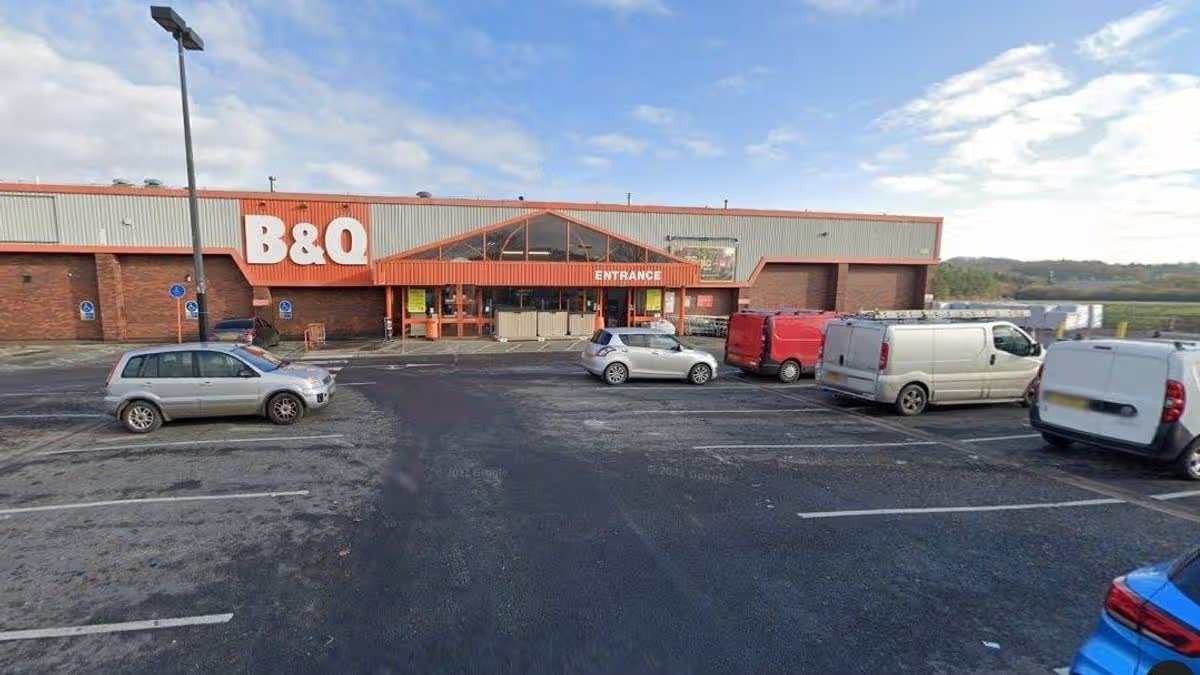
(Image: Google)
A large retail chain is relocating to a bigger unit on the outskirts of Carmarthen but in doing so will leave behind another empty shop in the town centre.
Advertisement
B&M Bargains has confirmed it will move from its Hall Street location after 15 years of trading to the former B&Q store just off the A40 heading out of town at a site known as Glanyrafon Road.
The retailer has put several banners emblazoned with the opening date outside the now-empty former B&Q building.
B&Q itself relocated to the Pensarn area of Carmarthen in February and B&M Bargains’ decision to close up shop in the town centre and relocate raises questions over the future of the current Hall Street store once it closes in August.
The unit represents one of Carmarthen town centre’s biggest retail spaces and was previously home to Woolworths for decades.
Advertisement
After the collapse of Woolworths in early 2009 the space became clothing store Ethel Austin and later homeware shop Life&Style before B&M opened in early 2011 .
It means the store will now be vacant for the first time in 15 years raising concern from business leaders.
Chair of Carmarthen Chamber of Trade and Commerce, Jack Yeates, said he hoped the blow to the town centre would be a short one.
He said: “It’s always sad when businesses decide to move just outside of town.
Advertisement
“As a chamber we hope that the Hall Street shop isn’t vacant for long and doesn’t join the list of empty properties within town because it is a large space to be left unused.
“If it can be filled quickly and helps pull people into town then all the better.”
B&Q announced last year it was closing its store off the A40 due to the expiry of a lease agreement.
That sparked the move to a smaller premises at Parc Pensarn retail park just over a mile away.
Advertisement
The new B&Q now occupies a unit formerly occupied by Poundstretcher and Laura Ashley.
Work to prepare for B&M’s move into the former B&Q premises has been ongoing since February and the site is currently fenced off to the public with several banners in place advertising the planned opening.
Addressing its relocation B&M Bargains said in a statement: “B&M Hall Street will be relocating to Glanyrafon Road.
“The new store will be much bigger and better with over 26,957 sq ft of sales space offering an even bigger selection of great bargains from grocery, toiletries, and health and beauty to toys, homeware, and DIY.
Advertisement
“The store will also boast its own 10,098 sqft garden centre selling hundreds of plant varieties and gardening essentials.
“The current Carmarthen store will shut its tills for the final time on Saturday, August 15, but customers won’t have to wait much longer to get back in store as the new site will open its doors at 8am on Saturday, August 22.”
Even as foreign institutional investors (FIIs) continue to pull billions out of Indian equities amid global volatility and geopolitical tensions, select pockets of the market are still attracting steady inflows. One such stock is Suzlon Energy, where foreign investors have increased their holdings for the third consecutive quarter.
The country’s largest renewable energy solutions provider has seen sustained FII interest even as broader market sentiment remains cautious. Suzlon shares currently trade about 15% below their 52-week high of Rs 68 but have still gained more than 11% in 2026, a year marked by tariff-related uncertainty and heightened geopolitical tensions stemming from the Middle East conflict.
Behind the stock’s resilience lies a bigger transformation story. Suzlon is attempting to transform from a wind-focused company into a full-stack renewable energy solutions provider. Combined with favourable industry tailwinds and a strengthening business model, the transition is increasingly drawing the attention of brokerages and investors alike.
Will Suzlon deliver for its 56 lakh shareholders?
Domestic brokerage firm Motilal Oswal has described Suzlon Energy as “the most investable renewable energy player.” At its recent investor meet, the company unveiled an ambitious FY31 roadmap aimed at transforming itself from a wind-centric business into a broader renewable energy platform. Suzlon is targeting revenue growth of more than 25% CAGR through FY31 while further strengthening its leadership position in the domestic wind energy market.As part of this strategy, the company plans to increase its share of India’s wind market to more than 40% from around 33% currently.
Advertisement
Live Events
Motilal Oswal has a Buy rating on the stock with a target price of Rs 65, implying an upside of 18% from current levels. The brokerage said management addressed several medium- to long-term concerns by outlining a clear roadmap for growth and diversification beyond its core wind business. According to the brokerage, Suzlon’s planned expansion into adjacent renewable energy segments could improve earnings resilience over time. JM Financial also sees the next phase of growth being driven by what it calls “Suzlon 2.0”, a shift that marks the company’s evolution from a wind turbine supplier to an integrated renewable energy developer. JM Financial noted that Suzlon’s target of expanding its AMS portfolio to 70 GW from the current 18 GW could create what it describes as the highest-quality earnings stream within the business.
Suzlon 2.0 strategy focused on RE solutions
Under its Suzlon 2.0 roadmap, the company aims to evolve beyond a pure-play wind OEM by offering end-to-end renewable energy solutions. Key strategic pillars include becoming a one-stop provider for customers’ renewable energy requirements through integrated Wind + Solar + BESS solutions, acting as a lifetime service partner across the renewable energy asset lifecycle, and delivering globally competitive products by combining world-class technology, localised engineering capabilities and India’s cost-efficient manufacturing base.
High localization a strategic advantage
The Indian wind industry currently operates with approximately 60% localization levels, whereas the company has achieved 80-85% localization across its value chain. This strengthens supply-chain resilience, reduces dependence on imports and positions the company favourably amid an increasingly volatile global trade and geopolitical environment.
Expanding product portfolio
The company has recently launched its 5MW turbine platform, Blue Sky, designed for international low-wind-speed sites, with the first installation completed in May’26. The company is also developing the S163 (6MW) turbine targeted at mid-to-high wind-speed locations, with the first turbine installation expected in 1HFY27.
DevCo model to reduce project gestation
Wind projects in India typically face delays of 6-12 months because of land acquisition, right-of-way (RoW), grid connectivity and regulatory approvals. Overall project gestation periods generally range between two and three years.
Advertisement
Suzlon’s DevCo model seeks to reduce project timelines to 15-18 months by securing more than 50% of the required land and obtaining early grid connectivity approvals before execution begins. Management expects DevCo to contribute over 60% of revenue by FY31, say experts.
“Suzlon has spent three years strengthening its balance sheet and ‘Suzlon 2.0’ recasts the company from a wind equipment-EPC-O&M provider into a wind-first, full-stack RE solutions house, offering site development, equipment, turnkey projects and asset management across wind, solar and storage,” ICICI Securities said in a note last week.
The strategic shift is coherent with the demand preference shift towards firm and dispatchable RE. Suzlon, through its end-to-end solutions, plans to turn execution bottlenecks (such as land, RoW, and grid connectivity) into its moat to achieve a unique positioning. The framework is sound and a 5.5GW order book (OB) lends near-term comfort while the company builds a base for the next leg of growth,” the brokerage said.
Export opportunity
Global wind installed capacity stood at approximately 1,299 GW at the end of 2025, with around 165 GW added during the year and nearly 2,000 GW estimated by 2030.
Advertisement
Suzlon’s Blue Sky platform has been launched with country- and grid-specific certifications. The company already has more than 6 GW of existing installations and is targeting entry into select export markets with 3 GW of order intake.
Management highlighted approximately 74 GW of export opportunity across addressable markets over the next five years, along with around 18 GW of additional repowering opportunity.
Contrarian view
Last week, Nuvama Institutional Equities downgraded Suzlon Energy to Hold with a target price of Rs 55. Analysts expect annual domestic wind capacity additions to stabilise at 8-10 GW over the next two to three years as competition from solar and battery energy storage projects intensifies.
Assuming Suzlon maintains a market share of 30-35%, the brokerage estimates annual execution could plateau at around 3-3.5 GW during FY27-28.
Advertisement
Sebi order a key overhang?
While Suzlon’s long-term growth narrative continues to gather momentum, the recent regulatory concern remain an overhang.
Capital markets regulator Sebi has imposed penalties totalling nearly Rs 29 crore on Suzlon Energy and several former executives. Sebi concluded that the company misrepresented its financial position through transactions involving subsidiaries, inflated profits and inadequate disclosures.
With foreign investors steadily increasing their holdings and brokerages backing its renewable energy ambitions, Suzlon’s next phase of growth will ultimately hinge on execution, diversification and its ability to deliver on the promises of the 2.0 growth map.
(Disclaimer: Recommendations, suggestions, views and opinions given by the experts are their own. These do not represent the views of The Economic Times)
Foreign brokerage giant JP Morgan has initiated coverage of India’s capital markets sector with a bullish outlook, arguing that the country’s fast-growing Systematic Investment Plan (SIP) ecosystem continues to drive long-term wealth creation despite muted equity market returns.
According to JP Morgan, India’s capital market story remains firmly anchored by retail financialisation through SIPs. Monthly SIP inflows surged 48% year-on-year to Rs 310 billion in May 2026, even as the Nifty 50 delivered a modest 0.8% CAGR over the last two years and foreign portfolio investors sold nearly US$36 billion worth of Indian equities during FY25 and FY26.
The brokerage highlighted that SIPs accounted for nearly 77% of total equity and balanced fund net inflows in FY26, underscoring the resilience of retail participation despite market volatility. Supportive tax policies and a growing shift of household savings toward financial assets are expected to keep inflows strong in the coming years.
Advertisement
JP Morgan is also constructive on the structural growth of trading activity. Industry average daily premium turnover in index options has expanded from Rs 10 billion in FY14 to Rs 699 billion in FY26, driven by rising retail participation, algorithmic trading, and the proliferation of weekly expiry contracts. In the commodities segment, Multi Commodity Exchange of India witnessed a sharp surge in volumes, with futures average daily turnover jumping 138% year-on-year during FY26.
Live Events
While several capital-market stocks have already delivered strong returns over the past year—including BSE Limited (+50%), MCX (+78%), and NAM (+56%)—JP Morgan believes earnings growth and operating leverage will increasingly differentiate winners from laggards. The brokerage remains neutral on BSE and KFin Technologies, awaiting better entry points, while maintaining an underweight stance on Central Depository Services Limited and MCX.However, JP Morgan cautioned that its bullish thesis could be challenged if monthly SIP inflows fall below Rs 250 billion for a sustained period or if regulatory changes lead to a more than 20% decline in derivatives trading volumes.
For investors looking to ride India’s continuing financialisation wave, the brokerage sees Angel One, CAMS, and ICICI AMC as the standout beneficiaries of the country’s rapidly expanding retail investment ecosystem.
JP Morgan has assigned an Overweight (OW) rating to Angel One, CAMS, ICICI AMC, Nippon Life India Asset Management (NAM), and HDFC AMC. Among its preferred picks, the brokerage has set a price target of Rs 420 for Angel One, Rs 950 for CAMS, and Rs 4,090 for ICICI AMC. It has also given price targets of Rs 1,360 for NAM and Rs 3,250 for HDFC AMC. (Disclaimer: Recommendations, suggestions, views and opinions given by the experts are their own. These do not represent the views of The Economic Times)
The brokerage believes the global textile and apparel industry is gradually emerging from a prolonged period of weakness. Global textile and apparel trade remained largely flat between CY21 and CY25 after the strong post-pandemic demand surge in FY22.
Apparel, which accounts for around 60% of global trade, saw muted growth, while the home textile segment declined during the period. Inflationary pressures, weak discretionary spending, retailer inventory corrections, softer demand in key markets such as the US and Europe, supply chain disruptions, high freight costs and tariff uncertainties weighed on the sector.
According to Motilal Oswal, conditions have started improving from CY25 onwards, aided by inventory normalisation, easing inflation and lower tariffs. The brokerage expects India’s textile sector to be a key beneficiary of this recovery, supported by upcoming free trade agreements with the UK and EU, favourable tariff realignments and improving incentives such as RoSCTL.
Advertisement
Buy-rated stocks
Gokaldas Exports: The company could benefit from capacity expansion in India and improved utilisation in its Africa business following the renewal of the African Growth and Opportunity Act (AGOA). The brokerage forecasts revenue, EBITDA and adjusted PAT CAGR of 18%, 33% and 73%, respectively, over FY26-28 and has assigned a Buy rating with a target price of Rs 1,110, an upside of 34%. Arvind Fashions: The brokerage sees a strategic shift from a fabric-focused business to a garment-led model, which it believes offers a larger addressable market. It also expects the advanced materials segment to support growth and margins. Motilal Oswal projects revenue, EBITDA and adjusted PAT CAGR of 15%, 23% and 29%, respectively, and has set a target price of Rs 670 (43% upside) with a Buy rating.
Live Events
Pearl Global Industries: It is expected to see growth driven by capacity expansion across India, Bangladesh, Vietnam and Indonesia. The brokerage forecasts revenue, EBITDA and adjusted PAT CAGR of 14%, 25% and 29%, respectively, and values the stock at Rs 2,300 (22% upside) with a Buy recommendation. Indo Count: The company is expected to benefit from growth in its utility bedding business and the domestic bed linen segment. Motilal Oswal projects revenue, EBITDA and adjusted PAT CAGR of 20%, 44% and 90%, respectively, over FY26-28 and has assigned a Buy rating with a target price of Rs 550, an upside of 40%. Welspun Living is expected to deliver mid-teen revenue growth led by its home textile business, supported by lower tariffs and prospective trade agreements with the UK and EU. The brokerage forecasts revenue, EBITDA and adjusted PAT CAGR of 14%, 43% and 97%, respectively, and has set a target price of Rs 200 (24% upside) with a Buy rating.
Neutral-rated stocks
KPR Mill: It is expected to benefit from its leadership position in textile and apparel manufacturing and its garmenting capacity, along with contributions from its sugar and ethanol businesses. Motilal Oswal projects revenue, EBITDA and adjusted PAT CAGR of 13%, 20% and 20%, respectively, and has assigned a target price of Rs 1,200 (6% upside). Trident: The brokerage expects high single-digit growth led by its home textile portfolio, followed by paper and yarn businesses. It forecasts revenue, EBITDA and adjusted PAT CAGR of 11%, 17% and 29%, respectively, and values the stock at Rs 28 (9.3% upside). Vardhman Textiles: The company is expected to post mid-single-digit growth, driven by its garment business and supported by better yarn realisations. Motilal Oswal projects revenue, EBITDA and adjusted PAT CAGR of 9%, 24% and 32%, respectively, and has initiated coverage with a Neutral rating and a target price of Rs 700 (9.5% upside).
Indian textile market grew at a 6% CAGR between FY22 and FY26, led by apparel growth of around 8% and home textiles growth of about 5%. While the domestic market, which contributes roughly 80% of the industry, expanded 9%, exports declined 4% due to weak global demand. Motilal Oswal expects exports to recover going forward and highlighted the government’s target of expanding the textile market to USD 350 billion from USD 194 billion in FY26.
The brokerage also pointed to global supply chain shifts as a structural opportunity for India. Restrictions on Xinjiang cotton by the US and EU, declining spindle capacity in China and political instability in competing sourcing hubs such as Pakistan and Bangladesh have strengthened India’s position. India remains the world’s second-largest cotton producer and spindle capacity holder, supported by a large export base, execution capabilities and abundant labour availability.
Advertisement
(Disclaimer: Recommendations, suggestions, views and opinions given by the experts are their own. These do not represent the views of The Economic Times)
The Bad Homburg Open is back for its sixth edition this week, serving as the final major grass-court tune-up before Wimbledon. Here are 10 things to know about this year’s tournament.
1. It’s the Final Wimbledon Warm-Up Event
The Bad Homburg Open is due to take place between June 21-27 in Germany and is the final grass court warm-up before Wimbledon. The tournament has positioned itself as a key stop for top players looking to sharpen their grass-court form before the year’s third major championship.
2. It Carries WTA 500 Status
Advertisement
The 2026 Bad Homburg Open powered by Solarwatt is a women’s professional tennis tournament to be played on outdoor grass courts at the TC Bad Homburg in Bad Homburg, Germany, from 22 to 28 June 2026. It will be the sixth edition of the Bad Homburg Open and is classified as a WTA 500 event on the 2026 WTA Tour. The Bad Homburg Open has been a WTA 500 event since 2024, having launched as a smaller WTA 250-level tournament in 2021.
3. It Features an Elite Field
This year’s tournament has drawn several of the sport’s biggest names. It sees an elite field with Elena Rybakina, Iga Swiatek, Mirra Andreeva, Elina Svitolina, and Karolina Muchova involved. Rybakina is set for her debut alongside Muchova.
4. The Defending Champion Is Skipping It
Advertisement
Jessica Pegula was the reigning champion, but did not participate this year. Her absence opens the door for a new champion to emerge from this year’s deep field.
5. Several Top-20 Players Are Also Competing
Beyond the headline names, the draw includes a broad swath of the WTA’s upper rankings. Linda Noskova, Naomi Osaka, 2024 champion Diana Shnaider, Iva Jovic, and Ekaterina Alexandrova are among the top 20 players in the fold.
6. The Tournament Has a History of Dramatic Finals
Advertisement
Bad Homburg has built a reputation for producing closely contested championship matches since its inception. The town known for champagne air and tradition is adding exciting women’s tennis to its list of attractions, with three of the first four finals all ending in a tiebreak or a deciding third set.
7. The Draw Features 32 Singles Players and 16 Doubles Teams
The tournament’s full competitive field spans both singles and doubles competition. 32 singles players and 16 doubles teams show up to TC Bad Homburg ready to rally on outdoor grass courts.
8. The Top Four Seeds Received First-Round Byes
Advertisement
As is standard for WTA 500 events of this size, the tournament’s highest-ranked competitors were given an advantage entering the main draw. The top four seeds received a bye into the second round, allowing the tournament’s biggest stars to bypass the opening round entirely before the bracket narrows.
9. The Opening Round Produced a Tournament-Record Match
This year’s edition has already delivered a notable piece of tournament history in its earliest stage. At three hours and 12 minutes, the first round match between Leylah Fernandez and Katie Boulter was the longest match in tournament history.
10. The Event Coincides With a Wider Controversy in Women’s Tennis
Advertisement
The tournament’s broader backdrop has been shaped by significant news affecting the sport this week. Marketa Vondrousova was suspended from tennis for four years for refusing an anti-doping test, a development that has generated substantial discussion within tennis circles and added an unusual layer of controversy to a week otherwise focused on Wimbledon preparation.
Where the Tournament Goes From Here
With the tournament currently in its round-of-32 and round-of-16 stages as of this week, the field continues narrowing toward the final, which will close out the event on June 27 or 28. Several seeded players, including top seed Iga Swiatek, No. 2 seed Mirra Andreeva, No. 3 seed Elina Svitolina, and No. 4 seed Karolina Muchova, remained active in the draw as of the tournament’s most recent updates, while seventh seed Diana Shnaider, the 2024 champion, had already been eliminated.
With the Bad Homburg Open running through June 27-28 and Wimbledon set to follow shortly after, this week’s results will offer one of the clearest indicators of grass-court form heading into the year’s third Grand Slam. Given the strength of this year’s field — featuring Swiatek, Rybakina, Andreeva, Svitolina, and Muchova all competing in the same draw — the eventual Bad Homburg champion will enter Wimbledon with valuable momentum on a surface that continues to favor a select group of the sport’s most adaptable players.
MIAMI — The Miami Heat completed a blockbuster trade for Giannis Antetokounmpo on Monday, but adding another superstar in LeBron James appears unlikely despite renewed speculation about a potential reunion in South Beach.
Heat president Pat Riley orchestrated the deal that sent Tyler Herro, Kel’el Ware, Jaime Jaquez Jr., Kasparas Jakucionis, the No. 13 pick in this week’s NBA Draft and future assets to the Milwaukee Bucks for the two-time MVP and Bobby Portis. The move signals Miami’s all-in approach for the upcoming season.
Now, with Antetokounmpo joining Bam Adebayo in the frontcourt, attention has turned to whether the Heat could pursue James, who becomes an unrestricted free agent this summer. Miami Herald reporter Barry Jackson reported that while the Heat could offer James their full mid-level exception, a return to South Beach is considered a long shot.
James spent four seasons with the Heat from 2010 to 2014, leading them to two NBA championships and four straight Finals appearances. His departure to return to the Cleveland Cavaliers in 2014 came after a somewhat contentious exit, though he has spoken fondly of his time in Miami in recent years.
Advertisement
The 41-year-old James just completed his 23rd NBA season with the Los Angeles Lakers, averaging over 20 points per game. With the Lakers reportedly focusing their future on Luka Doncic, James could be seeking a new challenge or a chance to chase another title in familiar surroundings. Teaming with Antetokounmpo and Adebayo under coach Erik Spoelstra could prove tempting.
However, financial constraints and roster fit present significant hurdles. The Heat are hard-capped at the first apron after using more than 100 percent of the traded player exception in the Antetokounmpo deal. Offering James a mid-level exception around $15 million would require creative maneuvering.
James has not publicly commented on the rumors, and his representatives have not responded to requests for comment. Sources close to the situation indicate James is weighing multiple options, including staying with the Lakers or exploring other contenders.
Riley’s History of Big Moves
Advertisement
Pat Riley has built a reputation for bold roster constructions throughout his career. The executive helped assemble superteams featuring James, Dwyane Wade and Chris Bosh, as well as more recent groups with Jimmy Butler. His ability to attract talent has been a hallmark of Heat culture.
Chad Johnson, a former Heat player, recently suggested Riley has “one more thing up his sleeve” regarding roster moves. While not explicitly mentioning James, the comment fueled speculation about potential additions to complement Antetokounmpo.
Beyond James, Miami could target veterans like Nikola Vucevic, Tobias Harris, Khris Middleton, Kelly Oubre Jr., Tim Hardaway Jr. and Anfernee Simons in free agency to add depth and shooting around their new star duo.
Impact of Antetokounmpo Trade
Advertisement
The acquisition of Antetokounmpo transforms the Heat’s outlook for the 2026-27 season. The Greek Freak, a two-time MVP and Defensive Player of the Year, brings elite scoring, rebounding and playmaking to Miami. Pairing him with Adebayo creates one of the most formidable frontcourts in the Eastern Conference.
Milwaukee received a significant haul in return, but the Bucks will enter a rebuilding phase. The trade ends Antetokounmpo’s tenure in Milwaukee after 13 seasons, during which he led the franchise to its first championship in 50 years in 2021.
For the Heat, the move represents a clear win-now strategy. Miami has been competitive in recent years but has fallen short of championship aspirations. Adding Antetokounmpo elevates their ceiling significantly.
Analysts project the Heat could contend for 48 or more wins in the upcoming season, potentially making a deep playoff run. The addition of James would further boost those expectations, though the financial and roster realities make it challenging.
Advertisement
James’ Career Crossroads
James enters free agency at a pivotal point. After averaging more than 20 points per game in his latest season, he remains one of the league’s most productive players. His basketball IQ and leadership would be assets to any contending team.
A return to Miami would reunite him with Spoelstra, under whom he won two titles. The familiarity could ease transition, and the opportunity to play alongside Antetokounmpo offers a chance at another championship run.
However, James has strong ties to Los Angeles, where his family has settled. The Lakers’ direction with Doncic may influence his decision. Retirement remains an option, though James has shown no indication of slowing down.
Advertisement
Free agency officially begins June 30. Teams will have until then to prepare offers, with James expected to carefully evaluate his options for the final chapters of his Hall of Fame career.
Heat’s Free Agency Plans
Even without James, Miami has options to bolster the roster. Veterans like Vucevic could provide frontcourt depth, while shooting specialists such as Hardaway Jr. would complement Antetokounmpo and Adebayo’s interior presence.
Riley’s track record suggests the Heat will remain active. Whether pursuing James or other targets, the franchise aims to maximize the window opened by the Antetokounmpo acquisition.
Advertisement
The NBA world will closely monitor developments in South Beach. A James reunion would generate massive excitement, though current indications point to it remaining a long shot. Regardless, the Heat enter the offseason with renewed championship aspirations.





















































You must be logged in to post a comment Login