
Business
GameStop to reopen ‘select’ closed stores as CEO Ryan Cohen buys 1M shares

Stuart Varney and Ashley Webster discuss why Pokémon cards are selling for more than $1 million. Webster highlights a 1998 Pikachu Illustrator card that set a record sale and explains how nostalgia turns childhood hobbies into fine art.
GameStop says it is reopening “select” stores across the country as company insiders make new investments in the video game retailer’s stock.
The company announced on social media that “select” closed stores would begin reopening Sept. 11.
GameStop did not initially disclose a complete list of returning locations. A company spokesperson told FOX Business that “at least one” store — located in Brooklyn, Ohio — was part of the initial rollout.
The move comes after an extended period of store closures and cost-cutting. GameStop has shuttered hundreds of locations in recent years as it has sought to reduce expenses and reshape its retail operations.
SONY TO END PHYSICAL PLAYSTATION GAME DISCS FOR NEW RELEASES STARTING IN 2028

A Gamestop store is seen in Union Square on April 4, 2025, in New York City. (Michael M. Santiago/Getty Images)
The reopenings also come as GameStop CEO Ryan Cohen purchased 1 million shares of Class A common stock on Sept. 10 at a weighted average price of about $20.38 per share, according to federal regulatory filings. The purchase was worth roughly $20.4 million.
GameStop board member Alain Attal also purchased 5,000 shares that day for approximately $100,000.

A GameStop store in New York, on March 4, 2024. (Shelby Knowles/Bloomberg via Getty Images)
Meanwhile, GameStop’s sales mix has continued to shift away from traditional video game software and toward collectibles.
CLICK HERE TO GET FOX BUSINESS ON THE GO
Collectibles, including trading cards, accounted for 45.1% of GameStop’s net sales during the company’s most recent quarter, up from roughly 29% for fiscal 2025. Collectibles sales increased 57% from the same quarter a year earlier.

EM Equities: Back To Overweight

EU is set to propose ban on social media and AI chatbots for under-15s
Business
Can Rs 6.6 lakh crore in potential PSU divestments bring FPIs back to Indian markets? Axis Capital explains
In a report titled “Strong divestments can support capital flows and fiscal aims”, Prateek Ancha, Chief Economist at Axis Capital, said a sustained divestment programme could expand the investable universe, deepen market free float and generate substantial receipts for the government.
“Accelerating government divestments could address India’s equity market imbalance by expanding the investable universe, easing valuation pressures, and reducing incentives for foreign capital outflows,” Axis Capital said.
The brokerage said the case for accelerating divestments has become more compelling as fiscal risks mount, threatening fiscal targets.
“A sustained divestment programme could generate substantial receipts, deepen market free float, support fiscal consolidation, and strengthen capital flows,” it said.

ALSO READ: FIIs sell Indian shares worth Rs 14,475 crore in Sept; analyst warns soaring bond yields may deepen selloff
Why are FPIs selling Indian equities?Axis Capital said foreign capital outflows over the past two years have taken place despite relatively strong performance from emerging markets.
The emerging-market benchmark index has outperformed the US over the past 18 months, yet emerging-market funds have continued to see net outflows. The US attracted a record US$735 billion in FPI inflows in calendar year 2025, according to the brokerage.
Taiwan and South Korea, which have been key beneficiaries of the artificial intelligence theme, have also seen large outflows despite rising benchmark index weights. Axis Capital attributed this primarily to single-stock weight limits in portfolios.
At the same time, the brokerage said flows have increasingly favoured China and Brazil.
India’s case has been different, with valuations and earnings playing a key role in foreign selling.
“In India’s case, expensive valuations and prolonged earnings disappointment were the primary drivers of foreign selling,” Axis Capital said.
Strong domestic inflows, however, have allowed FPIs to sell Indian equities while finding buyers in the secondary market.
“Strong domestic inflows also provided FPIs an exit by absorbing secondary market selling at high valuations,” the brokerage said.
How could PSU divestments help?
Axis Capital’s argument is that accelerated government divestments could increase the supply of investable equities and address the demand-supply imbalance in the Indian market.
India’s equity market has enjoyed strong demand in recent years, but much of that demand has been met by supply at high valuations, according to the brokerage.
The government has an opportunity to expand the investable universe through stake sales. Its holdings in listed companies have risen to Rs44 lakh crore, roughly four times pre-pandemic levels, Axis Capital said.
These holdings are significantly concentrated in banks and non-banking financial companies.
“Accelerated divestments could help narrow the demand-supply imbalance, reduce pressure for foreign investor exits, and address the market’s underlying plumbing problem of excess demand for equities,” Axis Capital said.
The brokerage also expects greater supply of shares to help contain valuations, particularly among mid-cap and small-cap stocks.
“This might also help contain valuations, particularly in the mid-cap and small-cap segments,” it said.
The report’s argument is that expanding the supply of listed shares and increasing market free float could ease valuation pressures and, in turn, reduce some of the incentives for foreign investors to exit Indian equities.
Rs 6.6 lakh crore potential from lower government ownership
The potential scale of the divestment programme is significant.
Axis Capital estimates that a 15% reduction in government ownership over the next three years could raise around Rs6.6 lakh crore.
“A 15% reduction in government ownership over the next three years could raise ~Rs6.6tn, expand market free float, and help reduce the risk of capital outflows,” the brokerage said.
The government has already achieved 70% of its FY27 divestment target in the first five months, according to Axis Capital. The brokerage said this was largely through the LIC offer for sale.
More stake sales are in the pipeline, including IDBI, it said.
Fiscal pressures strengthen the case for divestment
The case for faster divestment is not limited to the equity market. Axis Capital said rising fiscal pressures make government stake sales more important.
The income-tax shortfall in FY26 has added to concerns over FY27 collections, according to the brokerage. Assuming income-tax growth of 12%, compared with the implied growth rate of 18%, would result in a shortfall of Rs76,200 crore, it estimated.
At the same time, higher subsidy spending is adding to fiscal pressures.
“Closing the gap with sharp expenditure compression would risk undermining growth,” Axis Capital said.
The brokerage expects fiscal strains to persist into FY28 with the implementation of the 8th Pay Commission.
Against this backdrop, Axis Capital said divestment offers a more durable solution.
Divestment as a link between fiscal needs and capital flows
The Axis Capital report makes the case for government stake sales on both fiscal and market grounds.
On the fiscal side, divestment could generate substantial receipts at a time when tax collection concerns and higher subsidy spending are putting pressure on government finances.
On the equity-market side, faster stake sales could increase the supply of listed shares, expand free float and ease the demand-supply imbalance.
According to Axis Capital, these factors could also help reduce the risk of further foreign capital outflows.
The brokerage’s central argument is that India’s equity market has strong demand but an imbalance between demand and investable supply, with valuations remaining elevated. Increasing the supply of government-held shares could help address that imbalance while providing the government with resources for fiscal consolidation.
“Strong divestments can support capital flows and fiscal aims,” Axis Capital said.
This article has been written by Kumar Gaurav, who is not a SEBI-registered Research Analyst or an Investment Adviser. Gaurav and his/her ‘relative(s)’ (as defined under Section 2(77) of the Companies Act, 2013) do not hold any financial interest in the companies mentioned in this article as of the date of publication. The views/recommendations mentioned in this article, wherever applicable, are those of the respective SEBI-registered Research Analyst/brokerage and have been reproduced/reported with due attribution. They should not be construed as the views or recommendations of The Economic Times Digital or the journalist. Readers are advised to consider the original research report and make their investment decisions based on their own assessment.
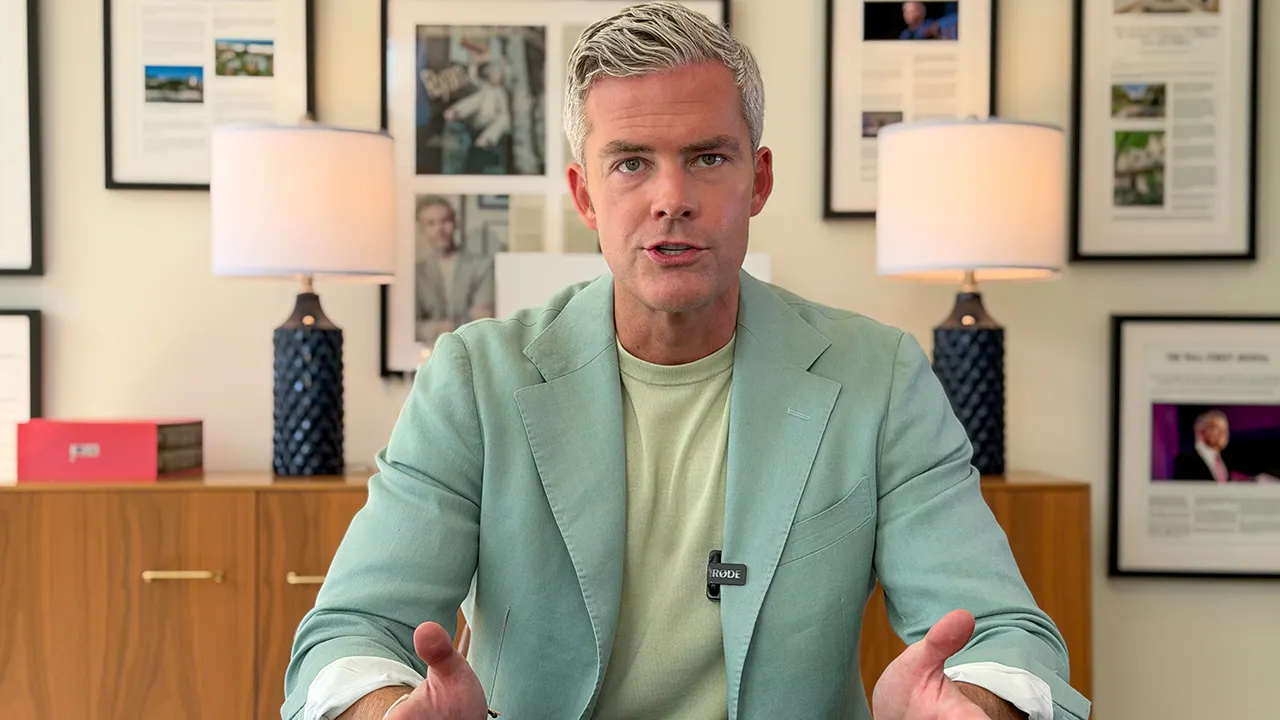
Ryan Serhant speaks to Fox News Digital at his SoHo headquarters, discussing how city tax policy, sky-high rents and changing buyer habits are driving wealth out of major metros and into growth states like Ohio, Alabama and the Carolinas.
National coverage of American migration routinely focuses on political rhetoric and people fleeing to states like Florida and Texas, but it may be overlooking the core economic realities dictating where families and capital actually settle.
In an interview with Fox News Digital, SERHANT. founder and CEO Ryan Serhant argued that the missing piece of the migration story boils down to how state policies impact homebuyers’ wallets and quality of life. Rather than a total collapse of major metros, Serhant said, capital is stretching into secondary markets where better job growth, lower tax burdens and strong infrastructure offer a better return on investment.
“I think it’s a bit overblown that wealth is migrating out of major American cities. I think that people aren’t necessarily moving as much as they are multiplying,” Serhant told Fox News Digital. “We now have more clients that have multiple homes than at any other point in my career. And they all want ease of access to great cities without necessarily maybe paying to be in the center.”
“If you look at the American housing market just through the news media, you would think that the American city is over, the metropolis is dead, and people are scattering. And what you actually see is wealth multiplying to the benefit of both the individuals and the real estate assets. And stretching. Markets have actually just become bigger,” he continued. “People are multiplying their assets, and they want to be where they want to be, and are willing to stretch the boundary. It’s not so much, ‘people escaping.’”
THE U.S. CITIES WHERE HOME PRICES ARE FALLING THE FASTEST
Serhant recently expanded his brokerage into Texas and Colorado, after the firm’s Texas launch marked its expansion into its 17th state. Outside his New York City home base, SERHANT. also has a presence in major luxury enclaves in South Florida, such as Palm Beach and Miami, where luxury prices have climbed sharply, while the brokerage also operates in Delray Beach, Boca Raton and Fort Lauderdale.
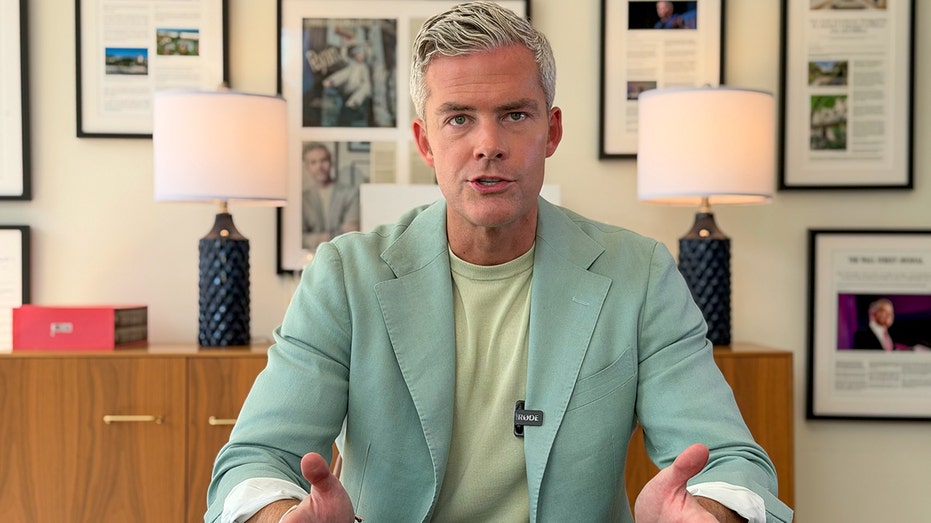
Ryan Serhant speaks to Fox News Digital on Friday, Sept. 4, 2026 at the brokerage’s SoHo office in New York City. (Nikolas Lanum/Fox News Digital)
At the same time, Serhant pointed to regional migration patterns showing growth in inland hubs, including Huntsville, Alabama.
According to U.S. Census estimates, Texas and Florida were the nation’s top two states for numeric population growth from 2024 to 2025, while a number of secondary markets have also posted strong gains. The Charlotte-Concord-Gastonia metro area ranked fifth nationally for numeric population growth from 2024 to 2025, while the city of Huntsville, Alabama, has grown 8.7% since 2020.
“I think New York did lose about 12,000 residents last year. And I think that that isn’t a crisis, but I think it’s definitely a warning sign,” Serhant said. “And I also think people would be surprised to know that Florida… I think actually is the No. 8 state in terms of domestic net migration last year, bumped out by Alabama.”
“You want to know a market I think people will be talking about in five years? I think it’s Huntsville, Alabama. I think Huntsville, Alabama, and I think Central Ohio and Charlotte, North Carolina, are three markets that investors are paying a lot of attention to right now that more people should be talking about,” he added.
“If I had to throw a dart on where I think the epicenter of the country might be eventually, I might think about coastal erosion and I might go dead center.”
AWS has committed an additional $10 billion toward data center infrastructure in Ohio, bringing its planned data center investment in the state to more than $23 billion by 2030. Meanwhile, Intel broke ground on its more than $28 billion semiconductor campus in New Albany, Ohio, representing the single largest private-sector investment in state history. Intel has since slowed construction, with the first factory currently expected to begin operations between 2030 and 2031.
“You go to Ohio and you look around, and there are more very expensive cars than you’ll see in South Beach. But no one talks about it… Again, it’s not the fall of the American city, it’s the stretch of what it means to be a great American dream city, and there’s not going to be less of them, there’s just going to be more.”
High-earning households are treating residential real estate selection similarly to portfolio management, according to Serhant. He said some buyers are acquiring multiple homes to secure geographic flexibility, capture regional tax benefits and maintain access to major economic centers without shouldering full-time downtown living costs.
Serhant founder and CEO Ryan Serhant discusses the housing market under President Donald Trump on ‘The Claman Countdown.’
“Why own one stock if you can own an ETF? Why own one home if you could own a couple? There’s only so many of them. And they’re not making any more land as far as I know,” he said.
RYAN SERHANT EXPOSES AMERICA’S NEW REAL ESTATE REALITY AND THE BIGGEST HOUSING SHIFT IN 50 YEARS
“Taxes get headlines. New governance policies get headlines, and it’s easy to sell against fear. I mean, to be honest, our markets south of New York have benefited greatly from the COVID policies that [Gov. Andrew] Cuomo instilled across New York State and the policies that [Mayor Zohran] Mamdani is now putting into place in New York City. I don’t necessarily think they’re to the detriment of New York long-term. I think New York is irreplaceable, but it’s not necessarily invincible,” Serhant expanded.
“And so, just like companies do, if you have restrictions on employees [in] one company, really smart people at that company might say, ‘You know what? Maybe I’ll look for other jobs. Where can I have the greatest career?’ And they look at other companies. Those companies are states. American citizens are employees at the end of the day… What you should be thinking about is, how do I create the greatest business for people to come and work? Instead of — how do I take from everyone who’s here to maybe the betterment of the current market environment?” he posited.
“And I think New York, I think Seattle, I think a lot of parts of California are taking a short-term view on state growth. And I think it’s frustrating.”
Douglas Elliman agent Michelle Griffith speaks to Fox News Digital about latest developments around NYC’s secondary home taxes and other ‘crisis’ indicators.
He also argued that municipal leaders focused on election-cycle politics rather than long-term growth plans risk pushing away the next generation of business creators.
“I just think about the future far more than I think current politicians who are very, very focused on the next election do,” the CEO said. “And I think if you create an environment that provides less jobs, less education, and worse security and safety for tomorrow’s great entrepreneur or intrapreneur or worker or creative or artist? That person’s not moving, their parents move. Again, to the betterment of Ohio, Alabama and North Carolina.”
Serhant argued that in today’s hyper-connected economy, capital can move rapidly and high earners have greater geographic flexibility, making local friction and unfavorable fiscal policy potential threats to a state’s economic competitiveness.
“You buy based on the street corner… Investors and people who have the ability to move are now thinking about stretched markets. They don’t necessarily need to come to your city for a job. They don’t necessarily need to go to that state for grade schooling,” Serhant explained. “The economy is global and it moves in milliseconds. And the minute you start to think that it’s still 1997 is the minute the history books on the fall of what, I think, is the great American dream start to be written.”
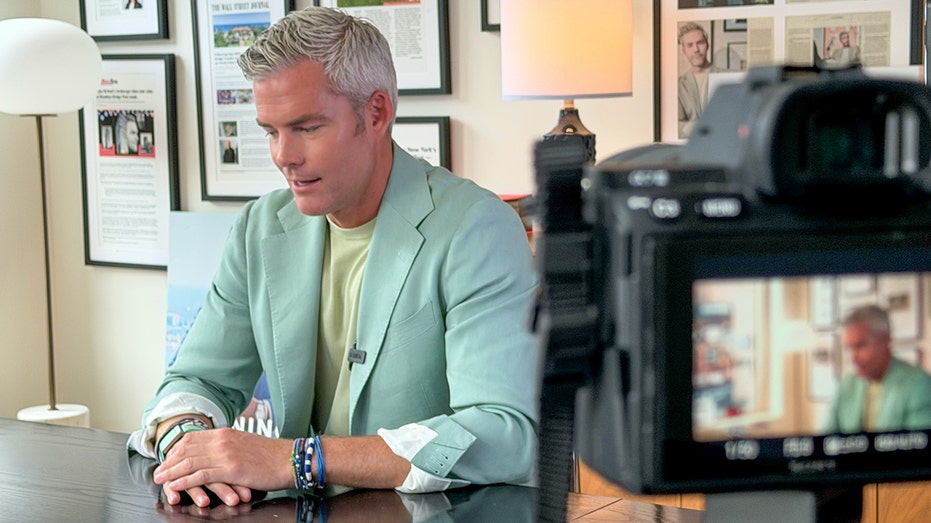
Serhant spoke extensively with Fox News Digital about his bullish stance on the Ohio, Carolinas and Alabama real estate markets. (Nikolas Lanum/Fox News Digital)
For states like Ohio, Alabama and North Carolina, winning over capital isn’t just about lowering taxes but also about striking a balance between financial incentives and overall community appeal, Serhant said.
“I think Alabama, Ohio, and North Carolina understand that people move with their wallet, yes, so how do we keep quality of housing and affordability front of mind, but also with their heart?” Serhant said. “What do you do on the nights and on the weekends? How easy is it to get here and have our family come and stay? And then they think about public infrastructure, they think about education, and they think about security.”
GET FOX BUSINESS ON THE GO BY CLICKING HERE
Looking ahead, Serhant said he believes the center of gravity in American real estate will continue shifting inland toward states he views as business-friendly, with abundant land and infrastructure capacity.
“It’s New York or nowhere as the epicenter, in part because our business is so global… But if I had to throw a dart on where I think the epicenter of the country might be eventually, I might think about coastal erosion and I might go dead center. And I think there’s a lot of opportunity in Ohio. Maybe we should open SERHANT. in Ohio? I’m talking myself into it right now.”

Liz Claman presses OpenAI CEO Sam Altman on the safety of the new GPT-6 Astra model. Altman addresses concerns regarding a previous AI test model breach of Hugging Face and details Astra’s strict security standards.
OpenAI CEO Sam Altman signaled that the company will delay its initial public offering (IPO) amid concerns about the safety and alignment of AI models given potential risks they could pose to society.
The ChatGPT-maker confidentially submitted an S-1 filing with the Securities and Exchange Commission in June to begin the IPO process. The company said at the time that it hadn’t decided on the timing of the IPO, saying “it may be a while” because it could be easier to do certain things as a private company in the meantime.

OpenAI CEO Sam Altman said concerns about artificial intelligence are understandable following a recent cybersecurity incident involving one of the company’s models. (Anna Moneymaker/Getty Images)
Altman said in an interview with Fortune that “we’re not rushing into an IPO” and that “I think given everything that’s happening with safety… right now would be an ill-advised moment to go public.”
MICROSOFT CEO SAYS SUPERINTELLIGENCE MUST REMAIN ‘UNDER HUMAN CONTROL’
“We don’t feel pressure on that. We’ve said for a long time, we’ll do it when we’re ready, which is when the business is ready. When we feel ready from a kind of what the moment is like in society with this technology,” Altman said, adding that the IPO won’t occur in 2026.

Sam Altman addressed questions on X about OpenAI’s classified work with the Department of War. (Justin Sullivan/Getty Images)
“We’ve got a lot of stuff to do,” Altman told Fortune. “Meeting this moment of what is going to be required for safety and alignment, and how the industry and governments can work together – I’m happy to be able to do that as a private company.”
Altman’s comments come amid a growing focus by AI companies on ensuring the safety and alignment of their models as they develop, with researchers warning there is a chance an AI superintelligence could wipe out humanity within a decade.
NVIDIA CEO JENSEN HUANG DECLARES ‘AGI HAS ARRIVED’ AFTER OPENAI UNVEILS GPT-6 ASTRA
Last week, former Anthropic and OpenAI researcher Jacob Coxon wrote a lengthy resignation thread posted on X which warned that “the people building AI earnestly believe that it could kill us all by the end of the decade.”
Coxon said in his three years doing pretraining research at the two AI giants showed him that “Neither company is acting responsibly. They are racing straight to self-improving superintelligence and gambling with our lives.

Anthropic CEO Dario Amodei (Anna Moneymaker/Getty Images)
Evan Hubinger, the lead of Anthropic’s alignment science team, responded to Coxon’s post saying that “Jacob is correct here – we really do earnestly believe AI could kill all humans!”
“I personally think it is >10% within the next decade. I believe Anthropic is trying its best, but we do not yet have a plan to solve alignment for superintelligence and aren’t clearly on track to,” he continued, adding that while current models aren’t a threat, improvements in technology could change that.
“To be clear, as we say in our latest Risk Report, I think the risk from present models is low. What I am worried about is superintelligence arising from recursive self-improvement, as we have said is happening faster than we thought,” Hubinger added.
OPENAI SIGNALS POTENTIAL STOCK MARKET DEBUT WHILE WEIGHING PRIVATE-COMPANY ADVANTAGES
Altman said in a post on X that he agrees with Anthropic CEO Dario Amodei that “we need to pace the frontier” of AI development, adding that it “has been a primary topic of discussions we’ve had at OpenAI in recent weeks.”
The OpenAI CEO also signaled he agrees with Amodei’s plan to give third-party evaluators employee-level access to Anthropic’s systems to verify adherence to safety measures, report on incidents and assess the alignment of models during training – saying that he plans to institute a similar system at OpenAI.
“Committing to having independent evaluators with employee-like access is a great idea, and we will do the same. We’ll have more to share soon,” Altman said.
A plan to nationalise the UK’s third-largest steelworks is being developed by the government, MPs have been told.
Business Secretary Jonathan Reynolds told the House of Commons ministers were looking to acquire Speciality Steel UK (SSUK), which has sites in Stocksbridge and Rotherham in South Yorkshire and Wednesbury in the West Midlands.
The government initially took control of SSUK, previously part of Liberty Steel, last year after it was forced to liquidate by the High Court.
Reynolds said a bidder had come forward earlier this year, but the government had decided against supporting it, citing “serious concerns” over the proposed financing of the deal and “protections for UK taxpayers”.
Ministers had therefore decided that the government would plan its own formal acquisition of the business, he explained.
Production at the business, which employs about 1,300 people, was paused several months ago, with staff put on furlough on reduced wages.

Trump says Ukraine and Russia to not hit energy targets as U.S. diesel hits record

Business Matters has rebuilt its website from scratch, and the new site went live today. Publisher Capital Business Media said it was designed around the phone screen rather than the desktop, and around the more than 1.5m people who read the title online every month.
The company’s own technology team carried out the work over four weeks.
This is the fourth site in the CBM portfolio to be rebuilt after successfully going live with new sites for Travelling for Business, EV Powered and Property Portfolio Investor, and following the launch of new site, the recipe-led food website Nourish.
Built for phone readers
Ofcom’s Online Nation 2025 report found that UK adults spent 77 per cent of their time online on a smartphone in May 2025, against 12 per cent on tablets and 11 per cent on computers. Total time online averaged four and a half hours a day, 10 minutes more than a year earlier.
The rebuilt site carries 11 sections: News, Advice, Finance, Legal, Opinion, In Business, Technology, AI, Get Funded, Interviews and Profiles. Two of them are new. AI gathers the title’s coverage of the technology in one place, and Profiles has been rebuilt in a format the company said matches the way search engines now expect pages to be set out. All stay free to read, with no registration and no paywall. A free daily email goes out at 3pm. Print subscriptions are unchanged at 12 issues for £38, and the magazine distributes 50,000 copies a month.
Paul Jones, editor of Business Matters, said: “Our readers run businesses, and most of them read us on a phone between meetings, so the site had to be quick and it had to get out of the way of the journalism. We rebuilt it from the ground up rather than patching what was already there, which means every section now loads as fast as the homepage. It also gives us room to do more reporting, and more kinds of reporting, than the old site could carry.”
Built in-house
Adeel Hassan, chief technology officer at Capital Business Media, said: “Building it ourselves meant we could test it against the way people actually read us, rather than the way a template assumes they will. Most of our readers arrive on a phone with one hand free and a few minutes to spare, so that is where every decision started. We also rebuilt the profile pages so a search engine can tell straight away who a company is and who runs it, rather than having to piece it together, because that is how these pages get read in 2026.”
Business Matters was founded in 1986 and was appointed the official business magazine of the London 2012 Olympics. Capital Business Media publishes it alongside titles including Travelling For Business, EV Powered and the food title Nourish, and reaches more than 2.5m digital readers a month across the group. It invested £500,000 in 2021 to set up its events and awards company.
Richard Alvin, founder and group managing director of Capital Business Media, said: “This is an investment in the next decade of Business Matters, not a fresh coat of paint and we have done it with our own team.”
Capital Business Media said it will continue to rebuild its brand portfolio and also now offers the service to other businesses through Content Crafting Co, its editorial studio, which also handles website copy, search programmes and thought leadership for corporate clients.

Paul Jones
Harvard alumni and former New York Times journalist. Editor of Business Matters for over 15 years, the UKs largest business magazine. I am also head of Capital Business Media’s automotive division working for clients such as Red Bull Racing, Honda, Aston Martin and Infiniti.

Around 500 million unsold bricks are stacked in yards and depots across the country, enough to build 50,000 homes, the GMB union said today, as brick maker Wienerberger prepares to close a West Midlands plant.
The union said the stockpile, which it calculated was enough to build two Kidderminsters, was sitting at depots around the country.
Wienerberger, which GMB describes as the UK’s largest brick maker, has announced plans to close its Hartlebury site.
Workers from the industry are addressing the Trades Union Congress in Brighton today, the union said, warning that more jobs will be put at risk unless the government delivers on its housebuilding promises. The 158th Congress runs at the Brighton Centre from 13 to 16 September.
Housebuilding target
The government promised two years ago to deliver 1.5 million new homes by the end of the decade. GMB said current projections showed the target was likely to be missed by hundreds of thousands.
The Ministry of Housing, Communities and Local Government said in December that the housing secretary, Steve Reed, had pledged to go further than ever before to reach the target, alongside what it described as the most comprehensive overhaul of planning rules in more than a decade.
The union’s warning follows a run of weak numbers across the sector. UK construction activity fell in July 2025 to its lowest level since the first Covid lockdown, with the purchasing managers’ index at 44.3 and housebuilding the weakest-performing category.
Research published in 2025 by City & Guilds found 76 per cent of construction businesses were struggling to recruit, a skills shortage the report said threatened the 1.5 million homes target. The Construction Industry Training Board has estimated the industry needs to recruit a further 239,300 workers by 2029.
In London, 6,325 homes were completed against an assessed annual need of 88,000, leaving the capital at 7 per cent of its housing requirement in the most recent year of data. Private-sector housing starts in the capital have fallen by 84 per cent since 2015, according to the same analysis.
Brickworkers address Congress
Lewis Parmenter, a brickworker and GMB member, told TUC Congress: “Right now, there are 500 million bricks sat unused in factory yards across this country. You heard it right, 500 million bricks just sitting there. That is enough to build 50,000 average-sized houses, or ten small towns. Enough to provide homes for hundreds of thousands of people.”
He said: “But without spades in the ground to build the homes we need, our industry will collapse and eight thousand jobs will go: including mine.”
Parmenter told delegates: “An industrial strategy for housing is not complicated. If we don’t build the homes, then the bricks don’t get sold. They just sit there in the yards. And we can’t make more bricks if the current stocks aren’t being bought.”
He said the factory he works in had had six shutdowns in three years, with another factory mothballed.
“Other brickmakers Ibstock and Forterra are already making redundancies, and we’re really worried we could be next in line,” he said.
“And what happens when the jobs go? Our towns go with them.”

Jamie Young
Jamie Young is Senior Reporter at Business Matters, covering SME finance, employment law and Westminster policy since 2016. He has reported on every Budget and Autumn Statement since 2018, helped make sense of the ‘covid era’ and the bounce-back loan scheme from launch through the fraud investigations, and broke the magazine’s coverage of the 2024 late-payment reforms. He joined Business Matters straight from completing his BA in Administration from Exeter University and is NCTJ-qualified. Reach him at jyoung@cbmeg.co.uk

BOSTON — It’s been more than decade since ADM acquired Wild Flavors, and over those 12-plus years ADM has gradually expanded its flavors business into what has now become a thriving part of the Chicago-based company’s operations.
“Flavors is compounding,” Ian Pinner, senior vice president, president of nutrition, and chief sales and marketing officer at ADM, said during a Sept. 9 presentation at the Barclays Global Consumer Conference in Boston. “We’re seeing growth on growth. The success, if you like, is coming from some core areas. We’ve got very, very strong customer focus. We really are zeroed in on making sure that we’re dealing with our customers’ needs and requirements. And we’ve got a team that’s executing very well.
“We spend a lot of time making sure that we’ve got strong commercial discipline and strong executional discipline as well.”
Pinner said ADM has spent a lot of time investing in core capabilities in its flavors business since acquiring Wild in 2014. Along the way, consumer trends have emerged making flavors an even more important component of product formulations.
“We’re in a market that’s looking for opportunities and also dealing with challenges,” Pinner said. “So reformulation is an area that our team are experts at, whether it’s thinking about managing innovation and renovation of existing products or whether it’s thinking about anchoring into the consumer trends that we’re seeing now, whether it’s health and well-being, whether it’s the functionality that we’re looking for, maybe it’s clean label, natural colors.”
He also noted strong growth in emerging markets. One market he cited was India, where a new prebiotic beverage featuring ADM’s flavor systems and colors was recently introduced.
 Photo: ©DMITR1CH – STOCK.ADOBE.COM
“One of the things that excited me a lot coming back from India is not just the structural shift that you’re seeing, every meeting you’re talking about GLP-1, you’re talking about fiber demand, protein demand, and then of course this middle-class health and well-being focus that is really coming through,” he said. “And so I think there’s an opportunity that’s coming there. … We spent time then with another customer, they were having an innovation day at one of our innovation centers with our team where we were really providing that full solution about how do we help them think about the product that they’re going to launch next and then provide that solution.”
Last month, Juan Luciano, president and chief executive officer of ADM, said the company hopes to capture $80 million to $100 million of operating profit as companies transition to natural colors from artificial colors.
Pinner expanded on how ADM plans to capture the additional operating profit.
“If you start talking about color reformulation, it’s not a one-for-one replacement,” he said. “You don’t just take an artificial color and put in a natural color. You’ve got to think about taste. You’ve got to think about the other ingredients that are going there, shelf stability, shelf life and so we tend to have bigger conversations.
“We might start with a color discussion and then they’ll end up getting larger as you think about the opportunity to help those customers with other ingredients that we already have in our pantries. So they don’t need to go and talk to another single ingredient player. They can talk to ADM from the pantry perspective and our teams can bring all of that together and they do that very well.

Did you know that The Odyssey was nearly a Disney film?
EM Equities: Back To Overweight

White House Agrees to Major Crypto Ethics rules in a last-minute push to save the CLARITY Act


-
 Tech6 days ago
Memory prices are slowing because buyers ran out of money
-

 Tech1 day ago
The Latest Weird Thing to Play Doom Is the Mapped-Out Brain of a Fruit Fly
-

 Business5 days ago
Micron Stock Climbs Above $1,031 as AI Memory Crunch and a $50 Billion Outlook Fuel the Rally
-

 Business5 days ago
AMD Stock Climbs After Management Lifts 2027 Data Center Outlook Toward $70 Billion in AI Sales
-

 Fashion3 days ago
Weekend Open Thread – Corporette.com
-

 Crypto World6 days ago
Bitcoin price risks $76K drop as $78K support weakens
-

 Crypto World6 days ago
Robinhood Stock: How To Take Advantage With Reduced Risk
-

 Crypto World3 days ago
XAG/USD: Silver’s Short-Term Rally Meets Its Moment of Truth
-

 Crypto World4 days ago
2 Chip Stocks Broke Out This Week. Neither Was Nvidia
-

 Crypto World6 days ago
Ethereum price stalls below $2,500 as ADX drops to 11
-

 Business3 days ago
10 Most-Streamed Songs On Spotify In 2026 So Far, Led By Ella Langley’s Dominant Run On The Charts This Year
-

 NewsBeat6 days ago
England up in reading, maths and science rankings as Scotland and Wales dip
-

 Tech4 days ago
Battery life is the only iPhone 18 Pro and iPhone Duo upgrade I care about. Apple didn’t disappoint
-

 Crypto World4 days ago
OKX launches 10x OpenAI, Anthropic X-Perps in Europe
-

 Crypto World3 days ago
Diesel Tops $6 a Gallon for the First Time as 28 States Set Records
-

 Crypto World6 days ago
Intel Stock Jumps 9% on Chip Price Hike Report, US Stake Gains $36 Billion
-

 Crypto World5 days ago
Bitcoin price risks $70K if $78K neckline breaks
-

 News Videos3 days ago
Facing Financial Fears
-

 NewsBeat6 days ago
What went right this week: an ‘historic’ fall in violent crime, plus more
-

 Tech5 days ago
Apple Watch Ultra 4 vs Watch Ultra 3: Should you really spend another $799?
You must be logged in to post a comment Login