






Connect with us
DAPA Banner

Business

Gas Prices Soar, Market Loses Over $300 Billion

Published

on

Sydney

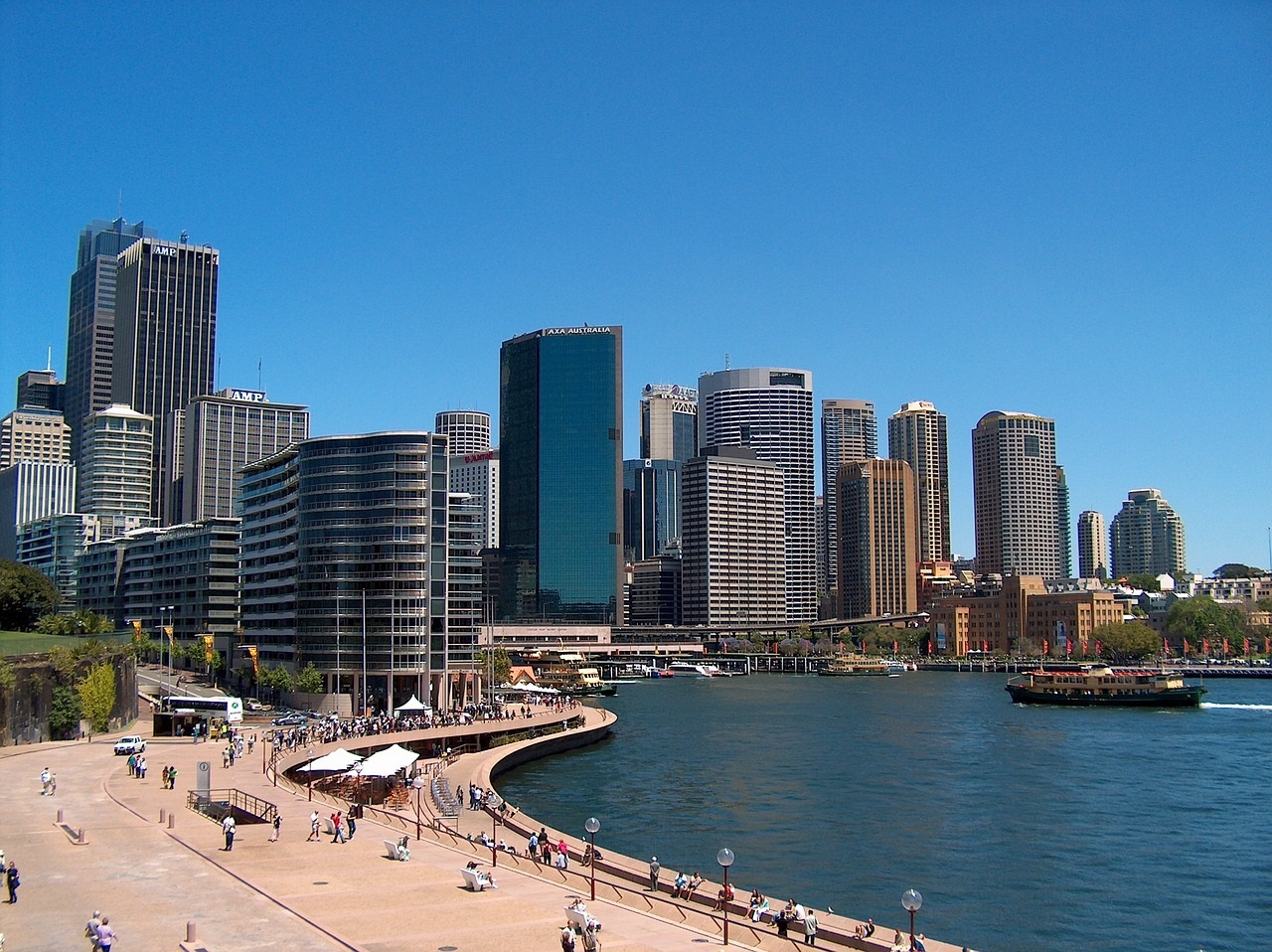
SYDNEY — Australia is absorbing significant economic losses from the ongoing US-Iran war, with petrol prices hitting record highs near A$2.20 per litre, inflation forecasts revised upward by as much as 1.25 percentage points and more than A$300 billion wiped from the share market since fighting erupted in late February 2026, even as the nation’s role as an energy exporter provides some offsetting gains in commodity revenues.

Sydney
Sydney
Pixabay

The conflict, which began with US and Israeli strikes on Iranian targets on Feb. 28, has disrupted roughly one-fifth of global oil supplies through repeated threats to and partial closures of the Strait of Hormuz. Oil prices have swung wildly, spiking above US$110-120 per barrel at peaks before settling around US$100 or higher in recent days — a roughly 50% jump from pre-war levels near US$70-75.

For Australia, which imports about 90% of its refined transport fuels while exporting crude oil, condensate and LNG, the net effect has been painful for households and businesses despite benefits to resource companies. Petrol prices have climbed 20-70 cents per litre in many areas since the war started, with wholesale diesel reaching A$2.45 per litre in some reports. Motorists and farmers are feeling the pinch, prompting panic buying at service stations and warnings of potential shortages if disruptions persist beyond mid-April.

Treasury analysis released in mid-March projected that if oil averages US$100 per barrel in the first half of 2026 before easing, headline inflation would peak 0.75 percentage points higher than previously expected, while gross domestic product would be about 0.2% lower. In a worse-case scenario with prices hitting US$120 and taking three years to normalize, inflation could rise an extra 1.25 points and GDP take a 0.6% hit by 2027 — equivalent to roughly A$18 billion in lost output.

The Reserve Bank of Australia has signaled it is “very alert” to the risks, with Governor Michele Bullock noting potential second-round effects on inflation expectations. Higher fuel costs feed directly into the consumer price index, where automotive fuel carries significant weight, and indirectly raise prices for goods transported by road, air or sea, as well as energy-intensive products like fertiliser and plastics.

Advertisement

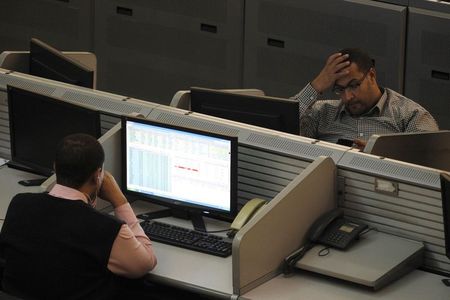
The stock market has borne a visible cost. The S&P/ASX 200 has fallen more than 9% from its early March peak, shedding over A$300 billion in value as investors priced in slower global growth, higher interest rates and uncertainty. Mining and energy stocks have shown mixed performance: some like Woodside and Santos benefited from elevated commodity prices, but broader sentiment dragged the index toward correction territory.

Exporters face additional headaches. War-risk insurance premiums have surged for shipping through or near affected areas, complicating deliveries to the Gulf and Europe. Air freight costs have risen, and some routes have been lengthened to avoid risky airspace. Consumer confidence has also dipped, potentially curbing spending and weighing on retail and tourism sectors.

Australia’s low fuel stockpiles — around 36 days for petrol, 32 for diesel and 29 for jet fuel as of early March — have amplified vulnerability. The government temporarily relaxed fuel quality standards to boost local production by an extra 100 million litres per month and has coordinated with suppliers in Singapore, a key source of refined fuels. Energy Minister Chris Bowen authorized these measures to ease short-term pressure, but officials warn that physical shortages from Asian refineries cutting output could arrive after a supply-chain lag.

Farmers in regional areas are particularly exposed, with diesel shortages threatening autumn planting and higher input costs squeezing margins. Transport operators and airlines, including Qantas, have flagged fare increases or operational adjustments due to elevated jet fuel prices.

Advertisement

On the positive side, higher global energy prices have lifted Australia’s terms of trade. LNG and coal export revenues are rising, boosting corporate profits in the resources sector and supporting government tax receipts. Some analysts note this could partially offset the drag on household disposable income, where the average family may face an extra A$14 per week or A$730 annually in fuel costs.

Still, most economists view the overall impact as negative in the near term. Westpac and CommBank modelling suggest retail petrol could average around A$2.02 per litre and diesel A$2.50 if prices hold, with underlying inflation remaining sticky above the RBA’s target into 2027 and GDP growth shaved by 0.1-0.5 percentage points depending on duration.

The war has also prompted strategic responses. Australia has deployed military assets to the Middle East to support operations, including evacuation and potential escort duties, while participating in international efforts to secure shipping lanes. Critics argue deeper involvement risks complicating trade ties with China, a major buyer of Australian commodities and source of some fuel imports.

Longer-term risks include sustained pressure on the Australian dollar, which has weakened amid risk-off sentiment, and potential RBA rate hikes that could further dampen growth. Treasurer Jim Chalmers has described the economic consequences as “very substantial,” noting they will shape the May budget. Calls have grown for a windfall profits tax on fossil fuel exporters to help ease cost-of-living pressures.

Advertisement

The situation remains fluid. Oil prices have shown extreme volatility, plunging on de-escalation hopes only to rebound on renewed threats. International efforts, including IEA-coordinated stockpile releases and diplomatic talks involving multiple nations, aim to stabilize flows, but analysts warn a prolonged Hormuz disruption could push prices toward US$150 or higher in extreme scenarios.

For ordinary Australians, the pain is already real at the pump and in broader price pressures. Businesses are absorbing or passing on costs, while policymakers balance short-term relief with longer-term energy security reforms. Australia’s paradox — a major energy exporter with thin domestic fuel reserves — has rarely been more exposed.

As the conflict enters its fourth week, the full bill remains uncertain. Treasury and bank forecasts will likely be updated as events unfold, but early indications point to a meaningful hit to living standards and growth, tempered only partially by resource sector windfalls. Economists stress that a swift resolution would limit damage, while prolongation risks scarring the economy for years.

Advertisement
Continue Reading
Click to comment

You must be logged in to post a comment Login

Leave a Reply

Business

Apple CarPlay Ultra Will Soon Launch to Hyundai, Kia, and Other Mainstream Brands

Published

on

Apple CarPlay

Apple’s next-generation in-car system, CarPlay Ultra, is poised to expand beyond its initial debut, with new reports indicating wider adoption across major automotive brands.

After initially launching in select Aston Martin vehicles, the platform is now expected to reach more mainstream markets.

Hyundai, Kia, and Genesis Set to Adopt CarPlay Ultra

Apple CarPlay
Apple’s upcoming iOS 26.4 update will let CarPlay drivers talk to ChatGPT and other AI chatbots, enhancing in-car assistance, productivity, and conversation while keeping safety in mind.

According to MacRumors, Apple previously confirmed that Hyundai, Kia, and Genesis are preparing to integrate CarPlay Ultra into upcoming models.

Recent reports suggest that at least one new vehicle from these brands could feature the system in the second half of the year. If confirmed, this would mark a major shift from luxury exclusivity toward broader consumer accessibility.

What Sets CarPlay Ultra Apart

Unlike traditional Apple CarPlay, CarPlay Ultra delivers deeper integration with a vehicle’s internal systems.

Advertisement

The platform extends beyond the infotainment display into the instrument cluster, enabling drivers to view real-time data, including speed, fuel levels, tire pressure, and engine temperature, within a unified interface. It also supports direct control over features like climate settings, radio, and rear-view camera displays.

Personalized Interface Meets Brand Identity

According to VOI, the key feature of CarPlay Ultra is its adaptability. Apple allows automakers to customize the interface to match their brand identity, ensuring a consistent in-car aesthetic.

Drivers can also select from multiple design layouts, adding a layer of personalization that enhances both usability and visual appeal.

For everyone who’s always interested in any Apple software, what the Cupertino giant did with CarPlay Ultra is one step ahead of others.

Advertisement

Originally published on Tech Times

Continue Reading

Business

China food delivery stocks subdued as authorities crack down on ‘ghost deliveries’

Published

on


China food delivery stocks subdued as authorities crack down on ‘ghost deliveries’

Continue Reading

Business

Big update on plans for new Blackpool sports village

Published

on

Business Live

Scheme largely funded by £6.5m from the UK Government’s Town Deal

The plans for the Revoe Community Sports Village project in Blackpool.

The plans for the Revoe Community Sports Village project in Blackpool(Image: Local Democracy Reporting Service)

A multi-million pound community sports village for Blackpool has taken a major step forward as new details on the project emerge.

Advertisement

A planning application for the Revoe Community Sports Village project, which is primarily funded by £6.5 million from the UK Government’s Town Deal, was last week submitted to Blackpool Council, which is working with Blackpool FC and Blackpool FC Community Trust.

The scheme includes the provision of two 7- a-side synthetic 3G football pitches, two padel courts and a Multi-Use Games Area (MUGA) and associated floodlighting.

A 3G (third-generation) football pitch is a modern, high-performance synthetic turf surface designed to replicate natural grass, featuring long fibers (40mm-60mm) infilled with sand and rubber crumb. They offer durable, all-weather play for training and competitive matches.

In addition, the plans also include proposed enclosures and boundary treatments, hard and soft landscaping, car parking and installation of two storage containers and associated works .

Advertisement

A Planning, Design and Access Statement in support of the project stated: “This project will support sport and community provision by creating new facilities adjacent to Blackpool Football Club’s Bloomfield Road stadium.

“The Council is working alongside Blackpool Football Club and the BFC Community Trust to implement and subsequently operate the development.”

It concludes: “The proposals are considered to represent appropriate development which supports the overall aims of the Local Authority in improving access to sports facilities to support the health and wellbeing of the local community.

“For these reasons, it is considered that full planning permission for the proposed development should be granted. “

Advertisement

What does the scheme offer?

The statement says: “All of the pitches would have associated floodlighting and two storage containers to be installed on-site would allow for equipment storage.

“The 3G pitch is designed to be configured as either two 7-a-side or four 5-a-side pitches, to FA standards.

“Each pitch will be bound by 4.5m high weld mesh fencing with floodlighting provided.

“It is proposed that the facilities would be open between 9am and 9pm daily. This reflects the opening hours of other 3G pitch facilities in Blackpool. The pitches would not be in use when first team home games are being played to mitigate any potential impact on traffic.”

Advertisement

School use and possible tournaments

The BFCCT will manage the use of the facilities once operational. This will include facilities for educational provision and other sports programmes.

In respect of the 3G pitches, the Blackpool Football Club Ladies and Girls grassroots teams are expected to utilise the facilities as will the FA Girl’s Emerging Talent Centre, which is the Fylde Coast’s centre of excellence.

Bookable slots will be offered to local schools and junior grassroots football clubs, to utilise the space and hire facilities. The Community Trust will also be exploring options for developing some competitive opportunities, such as matches and tournaments.

What the council says

Cllr Mark Smith, Blackpool Council’s Cabinet Member for Built Environment and Economy, said the project was part of the council’s aim to improve the area around Central Drive with quality housing and green space.

Advertisement

He said: “While our housing projects are about providing better homes for people to live in, this (sports) project is about improving the healthy lifestyles of people who live centrally, by creating community sports facilities for everybody to enjoy.

“The project will also help the football club’s community trust to increase its offer to local people, while also facilitating improvements to the East Stand to make the area around the football stadium a nicer place to visit.”

To find all the planning applications, traffic diversions, road layout changes, alcohol licence applications and more in your community, visit the Public Notices Portal.

Advertisement
Continue Reading

Business

Global Wealth Research – April 2026

Published

on

Wall Street Brunch: Oil And Rates Will Still Dominate Sentiment (undefined:USO)

Satellite view of the Strait of Hormuz with white graphic lines representing global shipping lanes and maritime traffic between the Persian Gulf and Gulf of Oman. Strategic oil transport concept

Alones Creative/iStock via Getty Images

By Indrani De, CFA, PRM, Head of Global Investment Research FTSE Russell, David McNay, CFA, Director – Global Investment Research FTSE Russell, and Zhaoyi Yang, CFA, FRM, Sr Manager – Global Investment Research FTSE Russell

Continue Reading

Business

Cook government's pre-budget announcements keep coming

Published

on

Schools to get $2.1b in pre-budget splash

More than $2.1 billion has been committed to state school infrastructure funding ahead of the May budget.

Continue Reading

Business

Casely power bank recall reannounced after woman’s death and plane fire

Published

on

Casely power bank recall reannounced after woman's death and plane fire

A recall affecting more than 400,000 power banks has been reissued after federal regulators reported additional incidents, including a fatal fire and a separate onboard airplane fire.

About 429,000 Casely Power Banks 5000mAh portable MagSafe compatible wireless chargers are included in the recall announced last week due to fire and burn hazards, according to the U.S. Consumer Product Safety Commission (CPSC).

Advertisement

The recall was first announced in April 2025. At that time, Casely had received 51 consumer reports of the charger overheating, swelling or catching fire while being used to charge phones, causing six minor burn injuries.

MORE THAN 30K WIRELESS POWER BANKS RECALLED AFTER REPORTS OF FIRE, EXPLOSIONS

Casely Power Banks 5000mAh portable MagSafe wireless phone charger

About 429,000 Casely Power Banks 5000mAh portable MagSafe wireless phone chargers are impacted by the reannounced recall. (U.S. Consumer Product Safety Commission / Unknown)

Since that recall was regulators say 28 additional incidents have been reported, including the death of a 75-year-old woman from New Jersey.

In August 2024, the elderly woman was charging her cell phone with the power bank on her lap when it caught on fire and exploded. She suffered second- and third-degree burns and later died from her burn injuries.

Advertisement

In another incident, a 47-year-old woman in February was charging her cell phone with the power bank on a plane when it caught on fire and exploded, causing first-degree burns to the woman.

Recalled power bank

The recall was first announced in April 2025. (U.S. Consumer Product Safety Commission / Unknown)

The power banks affected by the recall have the model number “E33A” printed on the back and “Casely” engraved on the front right side.

The chargers were sold on Casely’s website, Amazon and other online retailers from March 2022 through September 2024 for between $30 and $70.

Consumers are urged to stop using the power banks immediately and contact Casely for a free replacement.

Advertisement

OVER 1.1M POWER BANKS RECALLED AFTER REPORTS OF FIRES, EXPLOSIONS

amazon packages at a warehouse in new jersey

The chargers were sold at the Casely website, Amazon and other online retailers from March 2022 through September 2024. (REUTERS/Eduardo Munoz / Reuters)

GET FOX BUSINESS ON THE GO BY CLICKING HERE

The power banks should not be thrown away in the garbage since they pose a risk of fire, the commission warned. Consumers are instructed to contact local household hazardous waste collection centers for disposal guidance.

Advertisement
Continue Reading

Business

Asia stocks rise as tech gains offset US-Iran tensions; China keeps LPR steady

Published

on


Asia stocks rise as tech gains offset US-Iran tensions; China keeps LPR steady

Continue Reading

Business

Economic, Geopolitical, and Technological Pressures

Published

on

Steering Through 2026's Contrasting Fortunes

Southeast Asia faces a complex web of interconnected risks, from economic downturns and job scarcity to geopolitical rivalries and the disruptive force of AI. The region’s diverse economies, from wealthy Singapore to poorer Myanmar, experience these challenges unevenly, forcing nations to balance immediate stability with long-term strategic autonomy.

Key Details

  • Economic growth is uneven: While Singapore thrives, countries like Myanmar, Laos, and Brunei struggle with debt, inflation, and joblessness; even wealthy Singapore faces cost-of-living pressures.
  • Geopolitical tensions are acute: ASEAN nations, heavily reliant on China for trade, are squeezed by U.S. tariffs (e.g., 46% on Vietnamese exports) and legal uncertainty after the 2026 U.S. Supreme Court ruling, forcing ad-hoc bilateral deals.
  • AI adoption is accelerating but unequal: Major investments in Indonesia, Malaysia, and Vietnam contrast with low SME adoption (15% in Singapore); energy-intensive data centers risk massive emissions spikes (e.g., 7x in Malaysia by 2030).
  • Risks reinforce each other: Trade shocks fuel inflation and unemployment; AI gains may widen inequality; supply chain shifts expose cybersecurity gaps; domestic politics limit fiscal flexibility.

While AI adoption promises growth, uneven implementation, energy constraints, and workforce displacement could exacerbate inequalities. Governments and businesses must adopt integrated, adaptive strategies, acknowledging that economic, geopolitical, and technological pressures are converging, demanding a coordinated, forward-looking response to navigate this volatile landscape.

There is growth but it’s not reaching everyone

Economic growth is a case in point. In the survey, the top three perceived risks in the region are economic downturn, lack of jobs or economic opportunity and inflation, reflecting a shared anxiety about how individuals will experience growth. The signs of stress are already visible.

In Thailand, growth forecasts have been revised downward due to trade uncertainty and high household debt. Meanwhile, Brunei is still trying to reduce its reliance on oil and gas, and Lao PDR faces serious debt pressures that limit room to manoeuvre.

Advertisement

Meanwhile, ageing demographics in Malaysia and Viet Nam are outpacing economic development, a challenge requiring different investments in productivity and skills.

AI Surge in the Region Sparks Opportunities Amid Growing Divides

Southeast Asian executives rank the risks from artificial intelligence (AI) adversely at fourth regionally, compared to 10th globally. There is also relatively higher concern about online harms and the risks posed by frontier technologies more broadly.

AI-driven growth initiatives are gaining momentum across the region. For instance, Microsoft has unveiled significant cloud and AI investment programs in Indonesia and Malaysia.

Qualcomm has launched an AI research and development center in Viet Nam. Meanwhile, Singapore’s Green Data Centre Roadmap positions computing capacity as a strategic national infrastructure, akin to how previous generations prioritized highways and ports.

Advertisement

Source link

Continue Reading

Business

Factbox-From airlines to banks: Australian, New Zealand firms feel heat of Gulf crisis

Published

on

Factbox-From airlines to banks: Australian, New Zealand firms feel heat of Gulf crisis


Factbox-From airlines to banks: Australian, New Zealand firms feel heat of Gulf crisis

Continue Reading

Business

Austal delivers final guardian boat to Maldives

Published

on

Austal delivers final guardian boat to Maldives

WA shipbuilding giant Austal has officially concluded one of the largest naval programs in the state’s history, delivering the final Guardian-class patrol boat.

Continue Reading

Trending

Copyright © 2025