
Business
Gen Z, Locked Out of Home Buying, Puts Its Money in the Market


A generation of young people locked out of homeownership has found another way to build wealth: putting money into the stock market.
The share of people 25 to 39 years old making annual transfers to investment accounts more than tripled between 2013 and 2023 to 14.4%, outpacing increases for those 40 and over, according to data from the JPMorgan Chase Institute. The share of 26-year-olds who transferred funds to investment accounts since turning 22 shot up from 8% in 2015 to 40% as of May 2025. The numbers don’t include people investing in 401(k)s.
“We’ve seen really strong, surprisingly strong growth in retail investing in recent years among people who may otherwise be first-time home buyers,” said George Eckerd, the research director for wealth and markets at the institute.
The age range includes young millennials and there is overlap in the numbers between investors and homeowners, but Eckerd was struck by the rise in young and lower-income investors at the same time that home buying activity has fallen. That, he said, has tilted the balance of wealth accumulation toward financial markets for young people.
Copyright ©2026 Dow Jones & Company, Inc. All Rights Reserved. 87990cbe856818d5eddac44c7b1cdeb8

Business
Wordle #1751 Answer and Hints Revealed for April 5, 2026 Puzzle ENVOY as Players Tackle Diplomatic Challenge
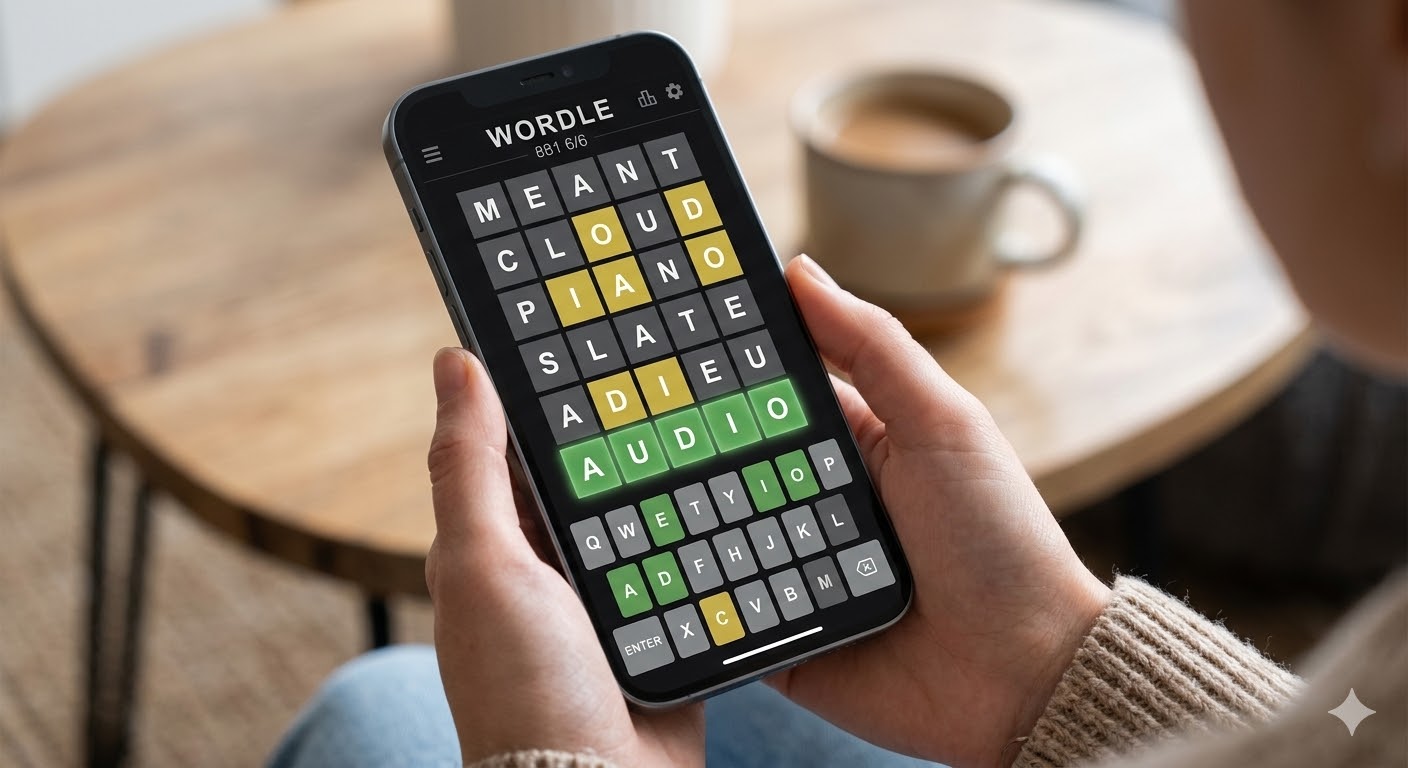
Wordle enthusiasts logging in Sunday faced a moderately tricky puzzle with the answer “ENVOY” for the New York Times’ daily word game #1751 on April 5, 2026, a noun referring to a diplomatic representative or messenger that left some players guessing until the final attempts.

The popular online puzzle, created originally by Josh Wardle and now owned by The New York Times, continues to captivate millions worldwide with its simple yet addictive formula: guess a five-letter word in six attempts, with color-coded feedback guiding players toward the solution. Green tiles indicate correct letters in the right position, yellow shows correct letters in the wrong spot, and gray means the letter is not in the word at all.
For Sunday’s puzzle #1751, many players reported needing four or five guesses after starting words like “SLATE,” “CLOUT” or “AUDIO” failed to deliver quick greens. The word “ENVOY” features common letters but a less frequently used combination, making it feel trickier than average for a weekend puzzle.
Here are progressive hints that could have helped solvers without spoiling the answer immediately:
Start with vowel placement. The word contains two vowels, positioned as the first and fourth letters. This narrows possibilities significantly since many five-letter words cluster vowels differently.
The word begins with a vowel, specifically “E,” which is one of the most common starting letters but still requires confirmation through early guesses. It ends with the consonant “Y,” often functioning as a vowel sound in words like this one.
The fourth letter is “O,” creating the sequence “E _ _ O Y.” This distinctive pattern helps eliminate many common words and points toward diplomatic or representative terms.
No letters repeat in today’s solution, meaning each of the five unique letters appears exactly once. This eliminates guesses with double letters and encourages broader exploration of the alphabet.
A subtle thematic hint: the word relates to someone sent on a mission, often in an official capacity. Synonyms include messenger, diplomat or emissary. It is not an adjective describing texture or appearance, steering players away from words like “FOAMY” or “SANDY” that appeared in recent puzzles.
For those who prefer direct position reveals after attempting guesses:
– Position 1: E
– Position 2: N
– Position 3: V
– Position 4: O
– Position 5: Y
The full answer for Wordle #1751 on April 5, 2026, is **ENVOY**.
According to Webster’s New World College Dictionary, “envoy” means “an agent sent by a government or ruler to transact diplomatic business.” It can also refer more broadly to any messenger or representative. The word dates back to the 17th century, derived from French “envoyer,” meaning to send.
Players who solved it quickly often started with words containing E, O and Y early on. Common opening strategies like “ADIEU” or “AUDIO” would have revealed the E and O positions relatively fast, though the V and N required additional logic. Wordle Bot recommendations and community discussions on Reddit highlighted “ENVOY” as one of the final two or three options for many after three guesses.
The puzzle comes one day after Saturday’s #1750 solution “SANDY,” continuing a run of words that test players’ vocabulary breadth rather than relying on obscure terms. Wordle maintains a curated list of approximately 2,300 possible answers, with a larger pool of allowable guesses, ensuring solutions remain fair and dictionary-valid.
Since its addition to The New York Times in 2022, Wordle has become a daily ritual for millions, spawning variants like Wordle Unlimited, Quordle, Octordle and even musical or number-based spin-offs. Its appeal lies in the shared experience — friends and families compare scores, streaks and starting words via text or social media.
Streak preservation remains a high priority for dedicated players. Missing a day resets the counter, though the game allows practice in “past puzzles” mode without affecting statistics. On Sunday, many reported relief upon seeing “ENVOY” fit perfectly after struggling with similar-sounding words like “ENJOY” or “ENDOW.”
Tips for improving at Wordle include:
– Use starting words with multiple vowels and common consonants, such as “SLATE,” “CRANE,” “TRACE” or “AUDIO.”
– Pay attention to letter frequency: E, A, R, I, O, T, N and S appear most often in English.
– Eliminate possibilities systematically rather than guessing randomly once yellow and green feedback appears.
– Consider word patterns — for instance, knowing the fourth letter is O and it ends in Y limits options to a manageable list.
– Avoid reusing gray letters in subsequent guesses to narrow the field efficiently.
For April 5 specifically, players who guessed words with “VOY” or diplomatic themes early gained an edge. The absence of repeated letters simplified the process once two or three positions were confirmed.
The game’s accessibility contributes to its enduring popularity. It requires no downloads, works on any device with a browser, and features a clean, minimalist interface with a single dark or light mode option. Statistics track games played, win percentage, current streak and guess distribution, providing satisfying data for analytical minds.
Wordle has also sparked educational discussions about language, etymology and cognitive benefits. Solving daily puzzles may help maintain vocabulary and pattern-recognition skills, particularly for older adults or students.
Community forums like Reddit’s r/wordle buzzed Sunday with shared Scoredle screenshots, strategy debates and light-hearted complaints about the puzzle’s difficulty level. Some called #1751 “tricky but fair,” while others celebrated solving it in three guesses with clever openers.
Looking ahead, the New York Times continues refining the answer list to avoid offensive or overly obscure words, maintaining the game’s family-friendly appeal. Future puzzles will test players with fresh combinations while preserving the core challenge that made Wordle a global phenomenon.
Whether players nailed “ENVOY” on the first try or needed all six attempts, the daily ritual fosters connection in an increasingly digital world. Friends text screenshots, coworkers compare notes over coffee, and families compete for the lowest average guess count.
For those who missed Sunday’s solution or want to revisit it later, the official Wordle archive allows practice on past puzzles without impacting streaks. The answer “ENVOY” joins thousands of others in the game’s rich history of linguistic challenges.
As Wordle enters its fifth year under New York Times stewardship, its simple premise continues to deliver daily moments of triumph, frustration and communal fun. Today’s diplomatic revelation reminded players that sometimes the right word is one that represents communication across borders — much like the game itself connects people worldwide.
If you solved #1751, congratulations. If not, tomorrow brings a fresh five-letter puzzle and another chance to extend or restart your streak. Until then, keep sharpening those guessing skills and enjoy the mental workout that has captivated millions since its quiet launch in 2021.

Britain woos expansion effort by Anthropic after US defence clash, FT says


US rescues airman whose F-15 was downed in Iran, US officials say
Business
NYT Connections #1029 Hints and Answers Revealed for April 5 2026 Puzzle with Atomic Sherlock and Slush Themes
Puzzle fans tackling The New York Times’ Connections game on Sunday, April 5, 2026, encountered puzzle #1029, a moderately challenging grid that tested knowledge of atomic science, classic detective attire, everyday flips and clever wordplay involving “slush” synonyms.
The popular word-grouping game requires players to sort 16 words into four thematic categories of four words each. Difficulty levels range from yellow (easiest) to purple (hardest), with one mistake allowed before the puzzle ends in defeat. Many players reported solving #1029 in four to six attempts, praising its blend of scientific, literary and idiomatic connections.
The 16 words in Sunday’s grid were: ELECTRON, NUCLEUS, ORBIT, SHELL, DEERSTALKER, MAGNIFYING GLASS, PIPE, VIOLIN, COIN, LIGHT SWITCH, PANCAKE, THE BIRD, GOOGOL, MUSHROOM, PASTEURIZE, PULPIT.
Here are progressive hints, ordered from easiest to hardest as the game structures them:
**Yellow (Easiest) Category Hint:** Think basic building blocks of matter. These terms describe parts or concepts from atomic physics and chemistry models.
**Green Category Hint:** Imagine a famous fictional detective solving crimes in foggy London. These items form the iconic look and tools associated with that character.
**Blue Category Hint:** What actions or objects involve turning something over quickly? Consider common gestures, kitchen tasks and switches.
**Purple (Hardest) Category Hint:** These words all begin with terms that can mean a semi-liquid mixture of snow and water, or similar mushy concepts.
For those seeking more targeted assistance without full spoilers:
– One group revolves around the inner workings of an atom, including the dense central part, paths of electrons and layered electron arrangements.
– Another set evokes Sir Arthur Conan Doyle’s Sherlock Holmes, complete with his signature headwear, investigative tool, smoking accessory and musical instrument.
– A third connects to things people literally “flip” in daily life, from currency to breakfast food to rude hand gestures.
– The trickiest group features words that start with synonyms or slang for “slush” — a large number, a fungus, a sterilization process and a raised platform for speaking.
**Full Spoiler Answers for NYT Connections #1029 on April 5, 2026:**
**Yellow — Atomic Structure Terms:** ELECTRON, NUCLEUS, ORBIT, SHELL
These words describe fundamental components and features in atomic models taught in basic science classes. The nucleus is the center, electrons orbit it, and shells represent energy levels.
**Green — Parts of a Sherlock Holmes Costume:** DEERSTALKER, MAGNIFYING GLASS, PIPE, VIOLIN
Sherlock Holmes is often depicted wearing a deerstalker hat, using a magnifying glass to examine clues, smoking a pipe and playing the violin to think. This literary grouping delighted fans of the detective stories.
**Blue — Things to Flip:** COIN, LIGHT SWITCH, PANCAKE, THE BIRD
Players flip a coin to decide, a light switch to illuminate a room, a pancake on the griddle and “the bird” as slang for an obscene hand gesture involving the middle finger.
**Purple — Starting With Synonyms for “Slush”:** GOOGOL, MUSHROOM, PASTEURIZE, PULPIT
“Slush” synonyms here include “googol” (a huge number, like a slush of zeros), “mushroom” (can grow in slushy conditions or refer to “mush”), “pasteurize” (involves heating to treat, akin to making something less “raw”), and “pulpit” (from “pulp,” a mushy substance). This meta category required lateral thinking.
The solution earned many players a perfect or near-perfect score, though the purple category tripped up some who missed the “slush” wordplay connection.
Connections, created by Josh Wardle (the same mind behind the original Wordle), joined The New York Times portfolio in 2023 and has grown rapidly in popularity. Unlike Wordle’s single-word focus, Connections encourages broader associations across science, culture, idioms and puns. Its daily reset at midnight Eastern Time makes it a morning or evening ritual for millions.
Strategies that helped with #1029 included scanning for obvious clusters first, such as scientific terms or recognizable proper-name references. Players advised looking for words that could pair with “atomic,” “Sherlock” or action verbs like “flip.” Avoiding red herrings — words that almost fit multiple groups — proved key, as several terms had overlapping potential meanings.
For example, “pipe” might initially seem mechanical but clearly belonged with Holmes accessories. “Shell” could evoke beach or software contexts but fit perfectly in atomic structure.
The New York Times provides official hints through its Connections Companion articles, revealing one word per category progressively. Community sites and social media, including Reddit’s r/NYTConnections, buzzed Sunday with shared grids, victory screenshots and debates over the purple group’s cleverness.
Educational value remains one of Connections’ strengths. Sunday’s puzzle reinforced atomic vocabulary, literary knowledge and idiomatic English while stretching creative thinking. Teachers and parents often use similar grouping exercises to build cognitive skills in students.
Difficulty varies daily. Puzzle #1029 struck a balance — accessible enough for casual players yet satisfying for veterans seeking a challenge. Average solve rates and guess distributions will appear in players’ personal statistics, tracking current and longest streaks.
Tips for improving at Connections:
– Start with the most concrete categories, often yellow, involving straightforward factual groupings.
– Look for proper nouns, brand names or cultural references that stand out.
– Consider multiple meanings of words — homophones, slang and technical terms frequently appear.
– Use the “shuffle” button to rearrange the grid and spot new patterns.
– Save difficult categories for last once three groups are solved, reducing options.
For those who missed Sunday’s puzzle or want to practice, The New York Times allows access to past Connections through its archives, though streaks only count for the current day’s game.
As Connections enters its third full year, it continues evolving with fresh themes while maintaining the core mechanic that hooked Wordle fans. Sunday’s mix of hard science and detective fiction with playful flips and word origins exemplified the game’s range.
Public reaction on social platforms highlighted appreciation for the Sherlock grouping and the satisfying “aha” moment of the purple category. Some players noted it felt thematically cohesive, linking intellectual pursuits from atoms to literature to everyday actions.
Looking ahead, Monday’s puzzle #1030 will bring a new set of 16 words and fresh connections at midnight. Whether players achieved a streak extension or needed a restart on April 5, the game delivers daily mental exercise wrapped in fun.
Connections complements other NYT Games offerings like Wordle, Spelling Bee, Mini Crossword and Sudoku, creating an ecosystem for puzzle lovers. Its shareable results — complete with colored squares mirroring the categories — foster friendly competition among friends and families.
For April 5 specifically, solvers who nailed all four categories in order earned the satisfaction of a clean grid. Those who stumbled on purple still walked away having strengthened associative thinking skills.
The enduring appeal lies in its simplicity and depth: 16 words, four hidden links, one satisfying solution. As one player summarized online after solving #1029: “Atoms, detectives, flips and slush — only Connections could make that combination work so elegantly.”
Whether a novice or daily devotee, Sunday’s puzzle offered another chance to connect disparate ideas in an increasingly disconnected world. Tomorrow brings a new challenge, but today’s solution stands as a small triumph in pattern recognition and vocabulary.

Nexgel earnings missed by $0.09, revenue fell short of estimates

This is the forum for daily political discussion on Seeking Alpha. A new version is published every market day.
Please don’t leave political comments on other articles or posts on the site.
The comments below are not regulated with the same rigor as the rest of the site, and this is an ‘enter at your own risk’ area as discussion can get very heated. If you can’t stand the heat… you know what they say…
More on Today’s Markets:
Moderation Guidelines:
We remove comments under the following categories:
- Personal attacks on another user account
- Anti-Vaxxer or covid related misinformation
- Stereotyping, prejudiced or racist language about individuals or the topic under discussion.
- Inciting violence messages, encouraging hate groups and political violence.
Regardless of which side of the political divide you find yourself, please be courteous and don’t direct abuse at other users.
For any issue with regards to comments please email us at : moderation@seekingalpha.com.
Seeking Alpha’s Disclosure: Past performance is no guarantee of future results. No recommendation or advice is being given as to whether any investment is suitable for a particular investor. Any views or opinions expressed above may not reflect those of Seeking Alpha as a whole. Seeking Alpha is not a licensed securities dealer, broker or US investment adviser or investment bank. Our analysts are third party authors that include both professional investors and individual investors who may not be licensed or certified by any institute or regulatory body.
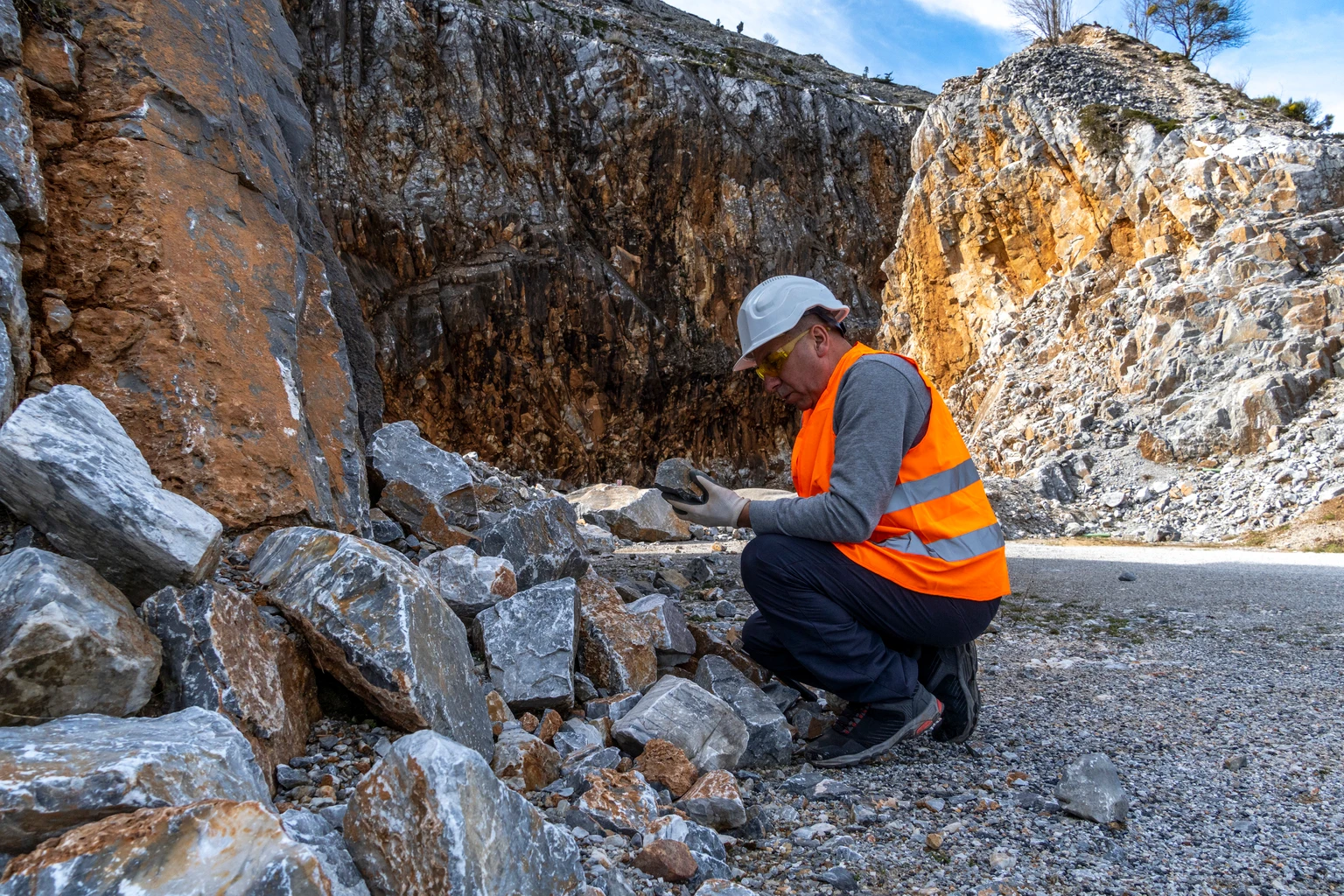
GNR: A Beneficiary Of Rising Energy Prices


South Korea asks Gulf nations for steady energy supply, safety of Korean vessels
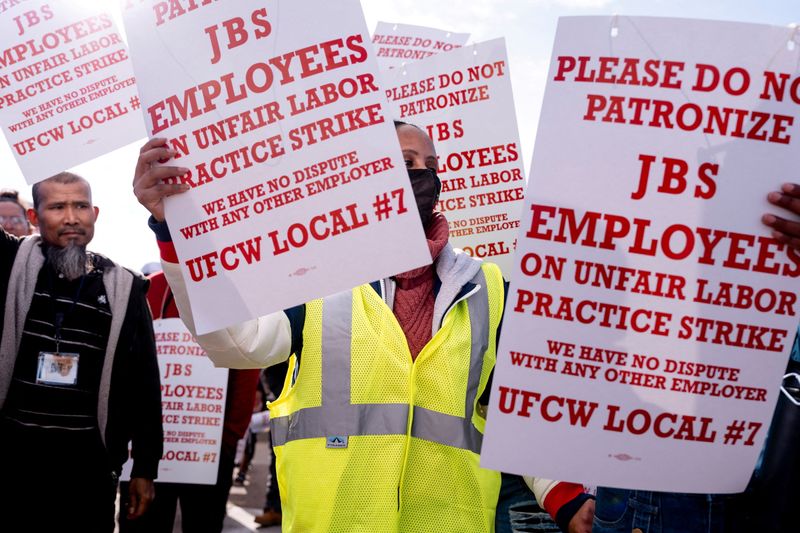

Striking JBS workers to return to Colorado plant on promise of talks


I have a masters degree in Analytics from Northwestern University and a bachelors degree in Accounting. I have worked in the investment arena for over 10 years starting as an analyst and working my way up to a management role. Dividend investing is a personal hobby and I look forward to sharing my thoughts with the Seeking Alpha community.
Analyst’s Disclosure: I/we have a beneficial long position in the shares of SBAC, PAYX, NKE, ACN, ADP, MKC, PEP either through stock ownership, options, or other derivatives. I wrote this article myself, and it expresses my own opinions. I am not receiving compensation for it (other than from Seeking Alpha). I have no business relationship with any company whose stock is mentioned in this article.
Seeking Alpha’s Disclosure: Past performance is no guarantee of future results. No recommendation or advice is being given as to whether any investment is suitable for a particular investor. Any views or opinions expressed above may not reflect those of Seeking Alpha as a whole. Seeking Alpha is not a licensed securities dealer, broker or US investment adviser or investment bank. Our analysts are third party authors that include both professional investors and individual investors who may not be licensed or certified by any institute or regulatory body.
Gigi Hadid Addresses Her Appearance in the Epstein Files

‘WE GOT HIM’: Trump declares success after US airman shot down in Iran rescued

Wordle #1751 Answer and Hints Revealed for April 5, 2026 Puzzle ENVOY as Players Tackle Diplomatic Challenge


-

 NewsBeat2 days ago
Steven Gerrard disagrees with Gary Neville over ‘shock’ Chelsea and Arsenal claim | Football
-

 Business2 days ago
No Jackpot Winner and $194 Million Prize Rolls Over
-

 Fashion1 day ago
Weekend Open Thread: Spanx – Corporette.com
-
Entertainment6 days ago
Fans slam 'heartbreaking' Barbie Dream Fest convention debacle with 'cardboard cutout' experience
-

 Crypto World3 days ago
Gold Price Prediction: Worst Month in 17 Years fo Save Haven Rock
-

 Tech6 days ago
The Pixel 10a doesn’t have a camera bump, and it’s great
-
Crypto World5 days ago
Dems press CFTC, ethics board on prediction-market insider trades
-

 Tech6 days ago
Avatar Legends: The Fighting Game comes out in July and it looks pretty slick
-

 Business3 days ago
Login and Checkout Issues Spark Merchant Frustration
-

 Sports7 hours ago
India men’s 4x400m and mixed 4x100m relay teams register big progress | Other Sports News
-

 Tech6 days ago
Apple will hide your email address from apps and websites, but not cops
-

 Tech5 days ago
EE TV is using AI to help you find something to watch
-

 Sports5 days ago
Tallest college basketball player ever, standing at 7-foot-9, entering transfer portal
-

 Politics5 days ago
Should Trump Be Scared Strait?
-

 Tech5 days ago
Flipsnack and the shift toward motion-first business content with living visuals
-

 Tech7 days ago
Elon Musk’s last co-founder reportedly leaves xAI
-

 Fashion6 days ago
The Best Spring Trends of 2026
-

 Tech5 days ago
How to back up your iPhone & iPad to your Mac before something goes wrong
-
Tech5 days ago
Daily Deal: StackSkills Premium Annual Pass
-
 Crypto World6 days ago
Bitcoin’s Six-Month Losing Streak: What On-Chain Data Says About the Market’s Next Move
You must be logged in to post a comment Login