







UK government borrowing costs climbed on Monday as markets reacted to intensifying pressure on Sir Keir Starmer, with investors pricing in heightened political risk and the possibility of a shift towards more left-leaning Labour policies.
The yield on the benchmark 10-year UK government bond rose by as much as 0.08 percentage points to nearly 4.6 per cent, while yields on 30-year gilts reached their steepest level since November. Bond yields move inversely to prices, meaning the rise reflected a sell-off in gilts.
The move came after Anas Sarwar, leader of the Scottish Labour Party, publicly called on Starmer to step down, triggering speculation over the prime minister’s future. Yields later pared back some of their gains after senior cabinet ministers rallied behind Starmer.
Currency markets were more mixed. Sterling strengthened 0.4 per cent against the dollar to $1.36, while slipping 0.26 per cent against the euro to €1.14. London’s FTSE 100 ended the session 0.16 per cent higher.
Investors appeared to react to concerns that Starmer, under pressure from within his party, could pivot towards more interventionist or higher-spending policies to shore up support from Labour backbenchers. Markets also weighed the prospect of a leadership contest that could elevate figures from the party’s left.
Advertisement
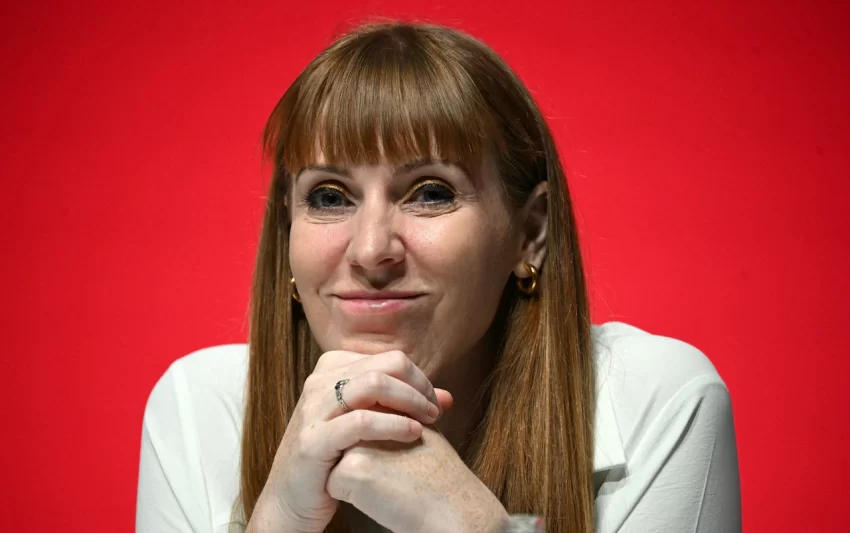
One name increasingly discussed by traders is Angela Rayner, who is seen as sitting to the left of Starmer. Although Rayner was among senior Labour figures to publicly back the prime minister, her potential ascent has unsettled investors wary of a change in fiscal direction. Wes Streeting, associated with Labour’s more centrist wing, is also viewed as a possible contender in any future leadership race.
Kathleen Brooks, research director at XTB, said markets were beginning to reprice UK assets. “A political risk premium is once again being built into UK asset prices, as investors worry about what a new leader could mean for economic policy,” she said.
The gilt sell-off also unfolded against a backdrop of broader volatility in global bond markets following Japan’s general election, though UK-specific political concerns were seen as the main driver.
Speculation around Starmer’s position intensified further after the resignation of his head of communications, Tim Allan, following the weekend departure of chief of staff Morgan McSweeney. The turmoil has been compounded by controversy surrounding the appointment of Lord Mandelson as Britain’s ambassador to the United States, despite warnings over his past association with convicted sex offender Jeffrey Epstein.
Advertisement
For now, markets remain on edge, with investors closely watching whether Labour’s internal strains translate into a change of leadership, or a change of economic course, in the weeks ahead.
Amy Ingham
Amy is a newly qualified journalist specialising in business journalism at Business Matters with responsibility for news content for what is now the UK’s largest print and online source of current business news.
Exxon MobilXOM 2.23%increase; green up pointing triangle plans to move its legal home to Texas from New Jersey, joining other companies that have flocked to the Lone Star state in search of a more business-friendly environment.
Exxon, which has been incorporated in New Jersey since 1882, plans to ask its shareholders to vote on a proposal to redomicile in Texas. If successful, Exxon will follow Tesla, Coinbase GlobalCOIN 0.35%increase; green up pointing triangle and others that have reincorporated in Texas.
The war in Iran could raise global food prices as the conflict disrupts fertilizer shipments through one of the world’s most critical trade routes.
While energy markets have focused on oil supply risks, analysts say threats to fertilizer supply chains through the Straight of Hormuz may also bring long-term economic issues through food inflation.
“Beyond energy, another risk receiving less attention is the potential knock-on effect on food prices, as fertilizer shortages push agricultural costs higher,” said Wolfe Research chief economist Stephanie Roth in a note written on Tuesday.
Roth estimates the disruption could raise “food-at-home” inflation by roughly 2 percentage points, adding about 0.15 percentage points to headline inflation in the U.S., on top of roughly 0.40 percentage point increase from energy.
Customers shop at Walmart on January 22, 2026 in Little Rock, Arkansas.
Will Newton | Getty Images
More than one-third of globally traded fertilizer passes through the Straight of Hormuz, making it a critical artery for agricultural supply chains. Commercial traffic through the route has largely been halted since the war started late last month, disrupting shipments just as farmers across the Northern Hemisphere prepare fields for spring planting.
Advertisement
The timing is critical because fertilizers are applied early in the crop cycle and help determine yields later in the year.
“If fertilizer supply tightens during this window, farmers may reduce application rates,” Roth said in the note. That could reduce yields for crops like corn, soybeans, wheat and rice and increase agricultural costs.
Economists in the fertilizer industry are equally concerned and say prices are already rising.
Between the weeks ending Feb. 27 and March 6 — which encompass the start of the war — the price per short ton of urea fertilizer imports in the U.S. jumped by 30%, according to data collected by industry advocacy group The Fertilizer Institute.
Advertisement
Urea — a nitrogen-based fertilizer widely used to boost crop yields — is one of the most heavily traded fertilizers moving through the region.
Higher fertilizer prices for farmers and retailers could ultimately raise food costs for consumers if the trade disruption lasts, said Veronica Nigh, chief economist at The Fertilizer Institute.
“This is a global impact on fertilizer costs,” said Nigh. “I would imagine that there would be much more passing on of these costs to consumers in this scenario, which is not something we have seen before.”
The U.S. relies on global fertilizer markets, importing roughly 20% of its total use, though nitrogen fertilizers like urea come from a more wide-ranging group of suppliers including Canada, Trinidad and Tobago, Russia and elsewhere.
Advertisement
The ripple effect could stretch around the world and beyond commodities. Asia and Africa are especially dependent on fertilizer exports from the Gulf region. Countries such as India rely heavily on Gulf supplies, while several African economies depend on imported materials used to produce fertilizers.
While disruptions to fertilizer shipments could lower crop yields for farmers and raise costs for households, fertilizer producers could stand to benefit.
CF Industries hit an all-time high Monday and shares are up nearly 10% over the past week, their biggest multi-day gain since 2022.
Medtronic plc (MDT) Leerink Global Healthcare Conference 2026 March 11, 2026 9:20 AM EDT
Company Participants
Thierry Pieton – Executive VP & CFO
Conference Call Participants
Advertisement
Michael Kratky – Leerink Partners LLC, Research Division
Presentation
Michael Kratky Leerink Partners LLC, Research Division
Advertisement
All right. I think we can kick things off. But thank you all for joining. My name is Mike Kratky. I’m our Senior MedTech Analyst at Leerink and thrilled to be joined today by Medtronic’s CFO, Thierry Pieton. So thanks so much for joining.
Thierry Pieton Executive VP & CFO
Yes. Thanks for having me.
Advertisement
Question-and-Answer Session
Michael Kratky Leerink Partners LLC, Research Division
Advertisement
You just passed the 1-year mark at Medtronic. We’d love to maybe kick it off by hearing from your perspective, how the business has evolved over the last year. And as you look out over the next 12 months, what gets you most excited?
Thierry Pieton Executive VP & CFO
Yes. Look, first of all, it’s been an interesting 12 months. I mean we’ve had a lot of things going on between sort of accelerating some of the new product launches and some of the portfolio actions that we’ve taken that I’m sure we’ll talk about, the IPO of MiniMed and we’re going back on offense in M&A, and we’ve done a couple of things in the last 3 or 4 months. So it’s been pretty busy. Look, I think the business has growing confidence.
Advertisement
I think a lot of the work that has been done for several years in the past few years to build the portfolio and to reinforce some of the operating mechanisms in the team and to work on R&D on some of the innovations that we’re launching now, it’s starting to pay off. And I think there’s a lot of excitement