

Business
Global Market Today: Asian stocks drop, oil climbs on Iran tensions

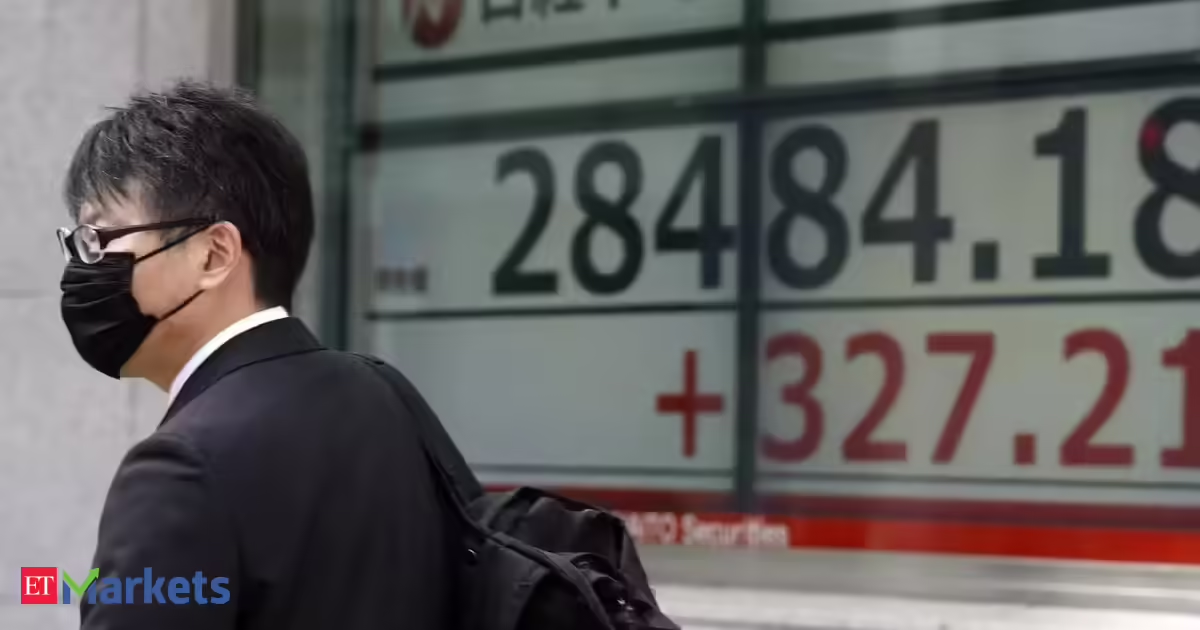
The MSCI Asia Pacific Index fell 0.9% at the open, following clashes between the US and Iran. US stock-index futures erased their losses from the open and traded flat.
Brent crude jumped 2.3% to over $102 a barrel on concerns the Middle East crisis will prolong the closure of the key Strait of Hormuz. The dollar strengthened and the 10-year Treasury yield held gains from the previous session as the outlook for a deal to end the 10-week war worsened.
American forces responded to Iranian attacks on Navy destroyers as they were sailing in the Strait of Hormuz on Thursday, US Central Command said. “Just like we knocked them out again today, we’ll knock them out a lot harder, and a lot more violently, in the future, if they don’t get their Deal signed, FAST!” President Donald Trump said in a social media post. Trump described the action a “love tap” in a telephone interview with ABC News, and said that the ceasefire with Iran was still “in effect.”
While stocks signaled a modest weakness on Friday, traders have at times looked past geopolitical headlines, helping drive equities to record highs amid a revival in the artificial intelligence trade. Even with bouts of volatility, investors continue to focus on signs that the US is seeking to de-escalate the situation.

“Investors are now assuming some resolution in the next month or so in terms of the Iran war or Strait of Hormuz,” said Jun Bei Liu, co-founder of hedge fund Ten Cap Investment Management. “Near term, there might be volatility, news headlines like today, but the market will move to buy the dip unless a new flare up becomes severe.”
The US is looking to restart the initiative to guide stranded ships through Hormuz that it had paused earlier this week, the Wall Street Journal reported. The plan, which Trump dubbed “Project Freedom,” had resulted in clashes with Iran and missiles fired at the United Arab Emirates.Washington is waiting on Tehran to respond to its proposal to reopen the strait, with tensions still high in both the Persian Gulf and in Lebanon. An Iranian official said the nation wouldn’t allow a reopening with “an unrealistic plan,” the Wall Street Journal reported, citing Press TV.
“Across equity markets, the pace of gains has indeed been quite rapid with limited drivers, so when negative news emerges, markets are vulnerable to profit taking,” said Yugo Tsuboi, chief strategist at Daiwa Securities Co. “I don’t believe the optimism about reaching an agreement that built up over the past week will completely disappear after this.”
Elsewhere, Trump’s 10% global tariffs were declared unlawful by a federal trade court in a fresh blow to the administration’s economic agenda in the latest setback for the president’s effort to levy tariffs without input from Congress.
While the fall in stocks indicated that Asian trading week would end on a downbeat note, the previous four sessions saw regional equities repeatedly climb to record highs. South Korea’s Kospi Index has jumped 11% this week, extending its advance this year to 74%.
The Kospi is the world’s best-performing gauge in 2026 as traders bet the country’s corporations will boost earnings as the key suppliers to the artificial intelligence buildout.
“Once again, the news flow on the geopolitical front has shown that the path towards a lasting agreement is anything but linear,” wrote Chris Weston, head of research at Pepperstone Group. “Traders have had to rethink the assumptions on the trajectory of the conflict and the normalization of vessel flows through Hormuz that had been made over the last couple of sessions.”
On the economic front, initial jobless claims rebounded slightly after falling in the previous week to near the lowest levels in decades, signaling layoffs remain muted. Friday’s jobs reading is expected to show the first back-to-back monthly increases in payrolls in almost a year.

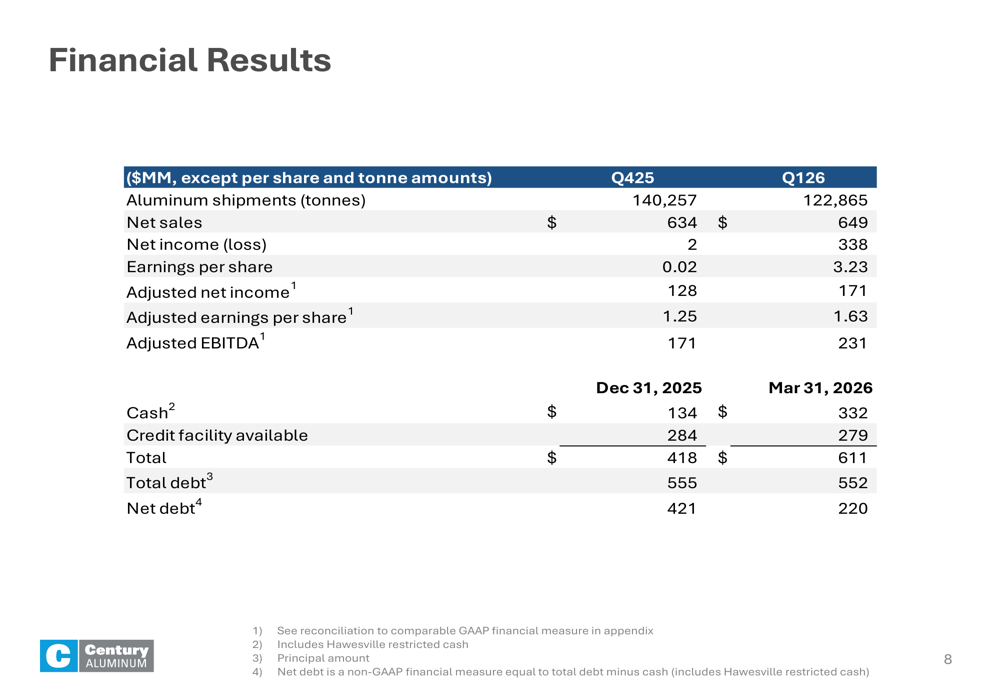
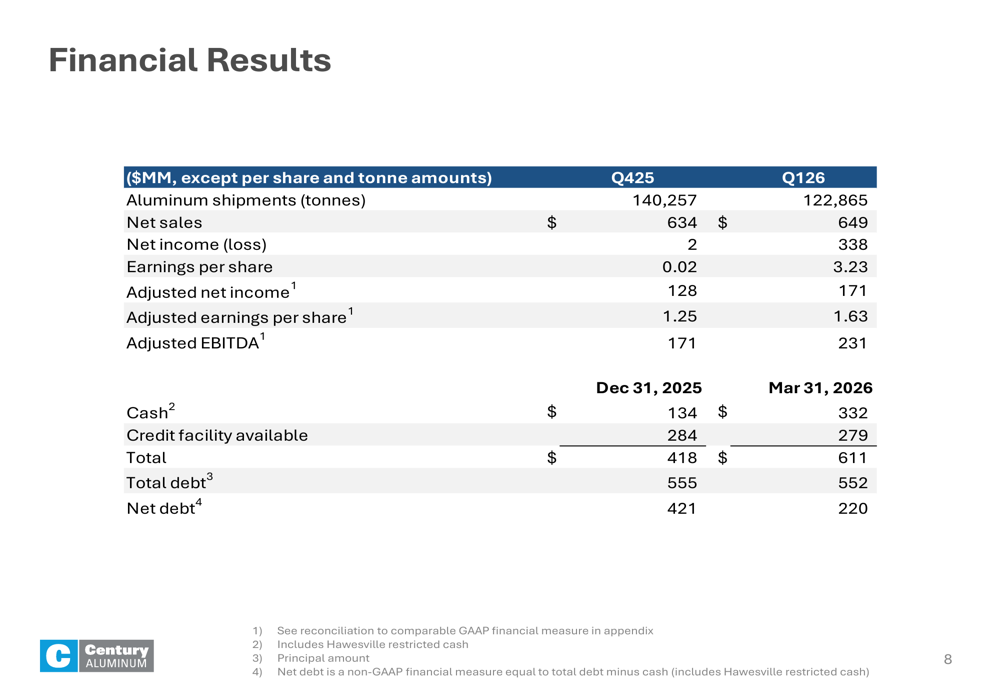
Century Aluminum Q1 2026 slides: EBITDA surges 35% on pricing strength
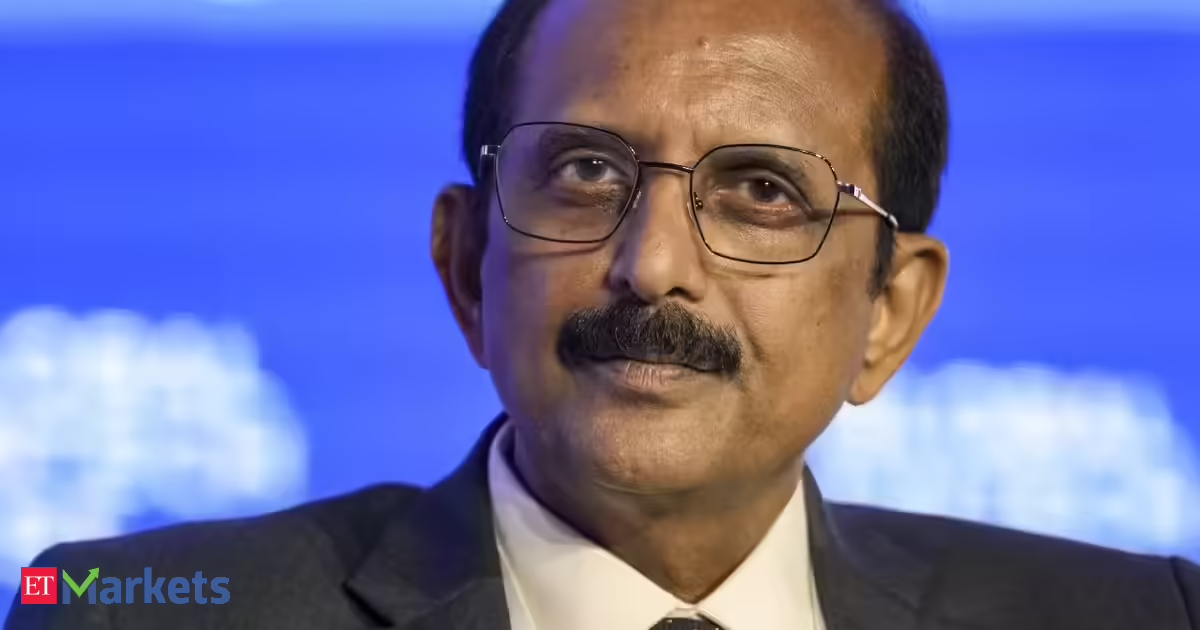
“This scheme is available for everyone and it is an opt-in scheme. We are hopeful that in the next 8 to 10 days implementation issues will be resolved. We are working with various MSME associations on this scheme. Our estimate is that SBI can provide a Rs 70,000 crore to Rs 80,000 crore credit facility through this scheme,” Setty said.
On Wednesday, the Union Cabinet approved ECLGS 5.0 aimed at the country’s micro, small and medium enterprises (MSMEs) and the airline sector, to support these sectors in light of the West Asian conflict. The government said that the latest scheme will enable Rs 2.55 lakh crore in additional credit for eligible business borrowers, including Rs 5,000 crore for airlines facing short-term liquidity stress.
The scheme envisages an additional credit of up to 20% of peak working capital utilised during the fourth quarter of the fiscal year ended March 2026, capped at Rs 100 crore for MSMEs and 100% of working capital for airlines, up to a limit of Rs 1,500 crore per borrower, subject to satisfying certain conditions.
For MSMEs, the tenor of the loan is five years from the date of first disbursement, including a moratorium of one year, while for airlines it is seven years, including a moratorium of two years. Some sectors not impacted by the West Asia crisis have been left out, such as education institutions, defence, horticulture, power, and sugar.
“This is a proactive measure and the government is clear that there was a substantive scheme which needed to be put in place for MSMEs not to be impacted,” said Financial Services Secretary M Nagaraju.
Earlier on Wednesday, SBI Research said that it expects the scheme to benefit 1.1 crore MSME accounts. “Though it is too early to say about the expected results of ECLGS 5.0…the timely intervention will ensure liquidity support, protect jobs, sustain supply chains, and strengthen the resilience of the Indian economy. Our preliminary estimates indicate that around 1.1 crore MSME accounts (45% of total MSME portfolio) are eligible to get benefit from the scheme, with per account on an average additional credit flow of (Rs 2 to 2.3 lakh),” SBI Research said.
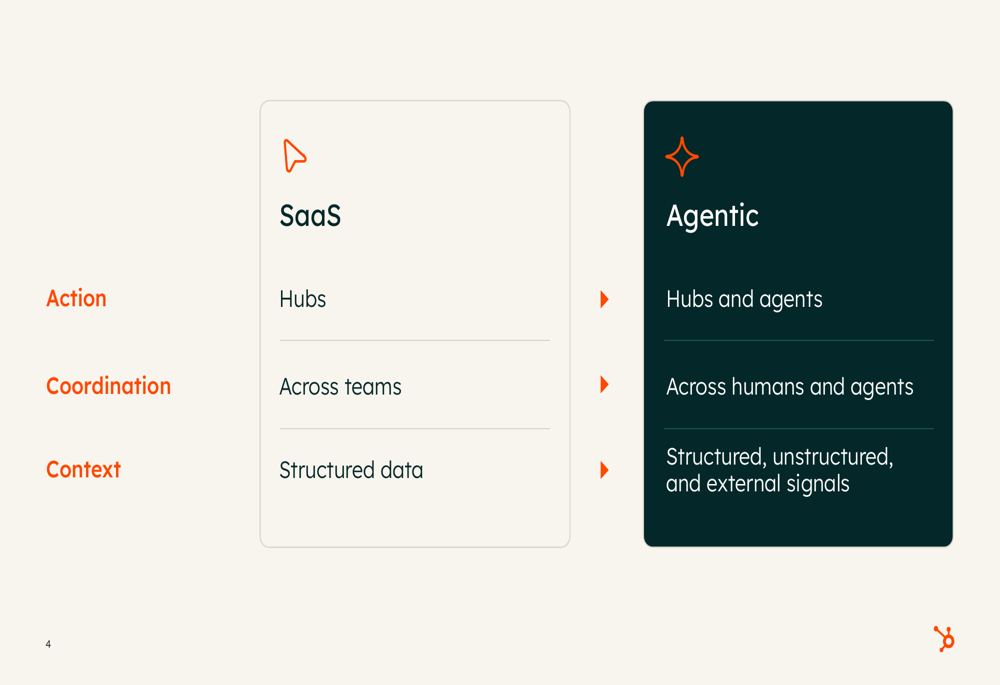
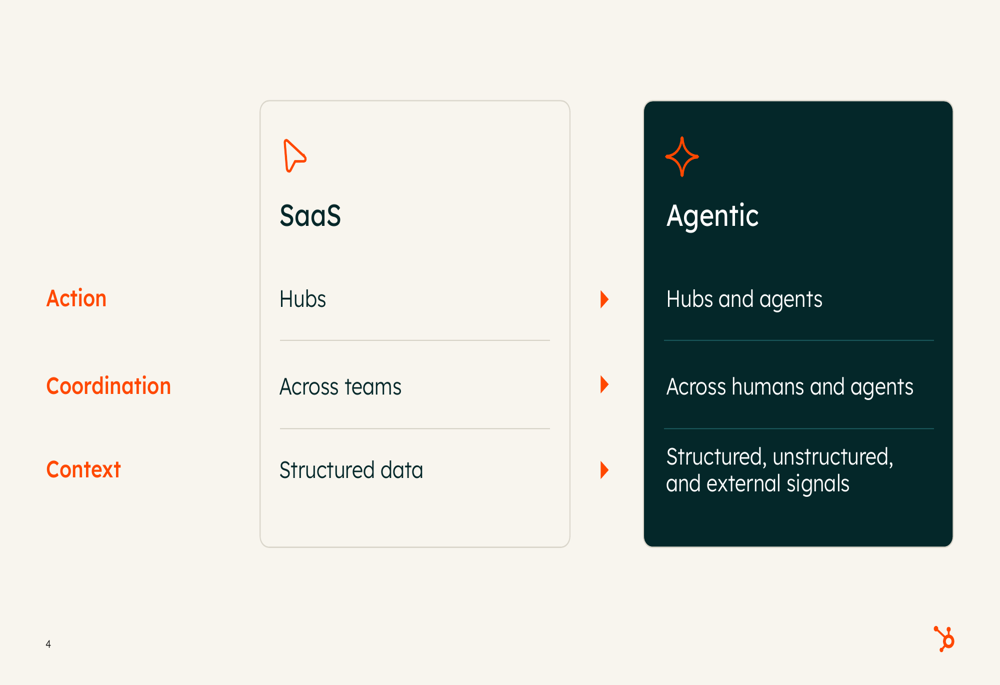
HubSpot Q1 2026 slides: agentic platform drives 23% revenue growth
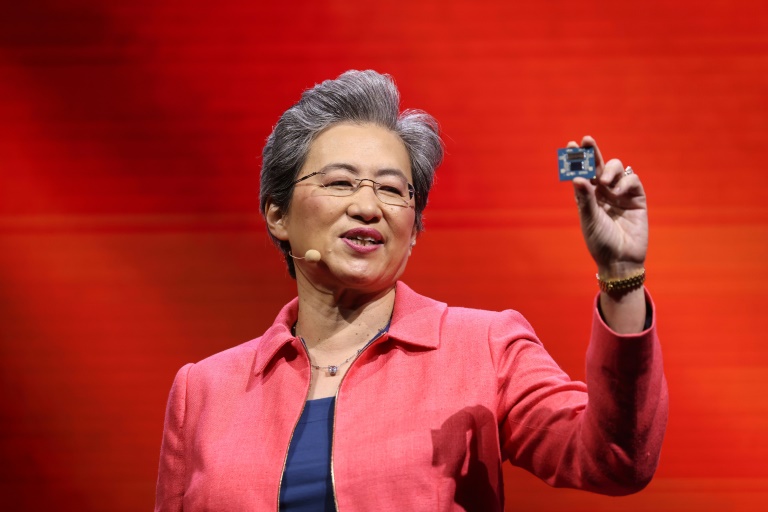
NEW YORK — Advanced Micro Devices Inc. shares have surged dramatically in 2026, trading near $400 after a blockbuster first-quarter earnings beat that sent the stock up more than 15% in a single session, prompting fresh debate on whether investors should buy, hold or consider taking profits amid the ongoing AI boom.
As of May 7, 2026, AMD closed at approximately $398.73 on Wednesday, reflecting robust gains driven by accelerating data center revenue and upbeat guidance. The chipmaker’s market capitalization now exceeds $650 billion, positioning it as a major beneficiary of hyperscaler spending on AI infrastructure.
Wall Street’s consensus remains overwhelmingly bullish. Out of roughly 40-44 analysts covering the stock, the vast majority rate it a Buy or Strong Buy, with an average 12-month price target around $385-$390 and highs reaching $530. No major firm currently recommends selling. Recent upgrades, including DA Davidson’s move to Buy with a $375 target and multiple analysts lifting targets above $500, underscore confidence in AMD’s trajectory.
Q1 2026 Earnings: AI Demand Fuels Outperformance
AMD delivered stronger-than-expected results for the quarter ended March 31. Revenue reached $10.25 billion, up 38% year-over-year and beating estimates of $9.89 billion. Adjusted earnings per share hit $1.37, topping forecasts of $1.29. Data center revenue — the key AI driver — soared 57% to $5.8 billion, powered by EPYC processors and Instinct GPUs.
CEO Lisa Su highlighted “accelerating demand for AI infrastructure,” noting strong momentum in inferencing and agentic AI workloads. The company guided Q2 revenue to approximately $11.2 billion, well above consensus, with non-GAAP gross margin expected near 56%. Free cash flow reached a record $2.6 billion.
The results triggered a sharp rally, with shares jumping as much as 18% in early trading the following day. Investors rewarded the company’s ability to gain share in CPUs while building credibility in accelerators as a viable alternative to Nvidia.
Bull Case: AI Supercycle Has Room for Multiple Winners
Proponents of buying AMD point to several tailwinds. The AI opportunity is massive, with data center spending projected to grow at high double-digit rates through the end of the decade. AMD’s full-stack offerings — combining CPUs, GPUs, and rack-scale solutions like Helios — appeal to customers seeking diversification and better economics.
Major wins include Meta’s planned deployment of up to 6 gigawatts of Instinct GPUs and partnerships with AWS, Google Cloud and Microsoft. Upcoming products such as the MI450 series position AMD strongly in the fast-growing inference market, where it claims advantages in performance-per-dollar.
Analysts like those at Wells Fargo, Bernstein and KeyBanc have raised targets significantly, citing sustained market share gains and operating leverage. Long-term forecasts see data center revenue growing at more than 80% annually in coming years under optimistic scenarios.
At current valuations — trading around 30-40 times forward earnings depending on estimates — many view AMD as reasonably priced relative to its growth potential, especially compared to Nvidia’s premium multiple.
Risks and the Sell Case
Skeptics caution that AMD still trails Nvidia significantly in high-end AI accelerators, with market share estimates in the 5-15% range for GPUs. Execution risks remain on supply chain constraints, particularly advanced packaging and high-bandwidth memory. Geopolitical tensions and potential export restrictions could also weigh on results.
Near-term challenges include competition in client and gaming segments, as well as heavy capital expenditures that could pressure free cash flow if AI ramps slow. Some analysts note the stock’s volatility and warn of profit-taking after the recent run-up.
Valuation remains a point of debate. While bullish targets imply substantial upside, more conservative forecasts see limited near-term gains if growth moderates. Macro factors such as interest rates and broader tech spending could influence sentiment.
Balanced Outlook for Investors
For long-term investors, the consensus leans heavily toward buying or holding AMD as a core AI play. The company’s diversified portfolio — spanning data center, client, gaming and embedded — provides resilience that pure-play GPU makers may lack. Management’s track record under Su has consistently delivered on key milestones.
Short-term traders may consider tactical selling into strength, particularly ahead of potential volatility around upcoming product launches or macro events. However, with no Sell ratings on Wall Street and strong momentum post-earnings, the path of least resistance appears higher for patient holders.
Institutional ownership remains high, and retail enthusiasm has returned following the earnings beat. Options activity shows continued bullish positioning, though implied volatility reflects awareness of risks.
Strategic Considerations for 2026
Investors evaluating AMD should consider portfolio allocation, risk tolerance and time horizon. Those seeking growth exposure in semiconductors may view it as a compelling complement or alternative to Nvidia. Diversification across the AI stack — including software, systems and energy efficiency — strengthens the investment thesis.
AMD’s “Advancing AI 2026” event scheduled for July could serve as a major catalyst, showcasing next-generation technologies. Continued execution on guidance and customer wins will be key to sustaining the rally.
As the year progresses, focus will remain on data center traction, margin expansion and progress toward long-term targets. While nothing is guaranteed in the fast-moving tech sector, AMD enters the remainder of 2026 with strong fundamentals and analyst backing.
Whether buying on dips, holding through volatility or adding on confirmed milestones, the overwhelming Wall Street view supports AMD as a core holding for those bullish on AI’s multi-year transformation. The stock’s performance will ultimately hinge on delivering tangible results in one of the largest technology shifts in decades.
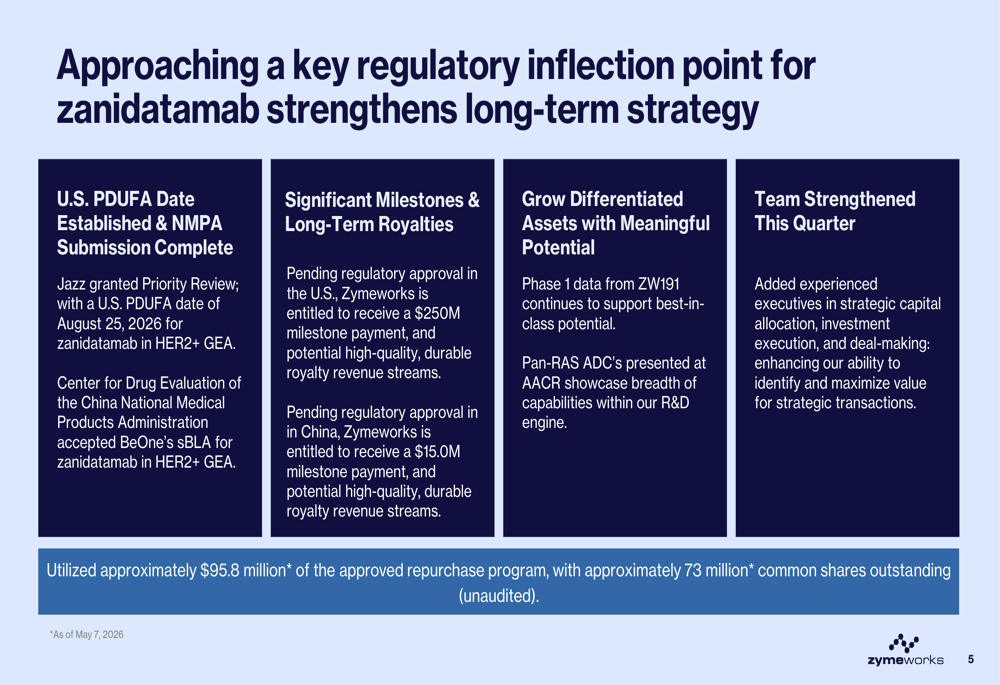
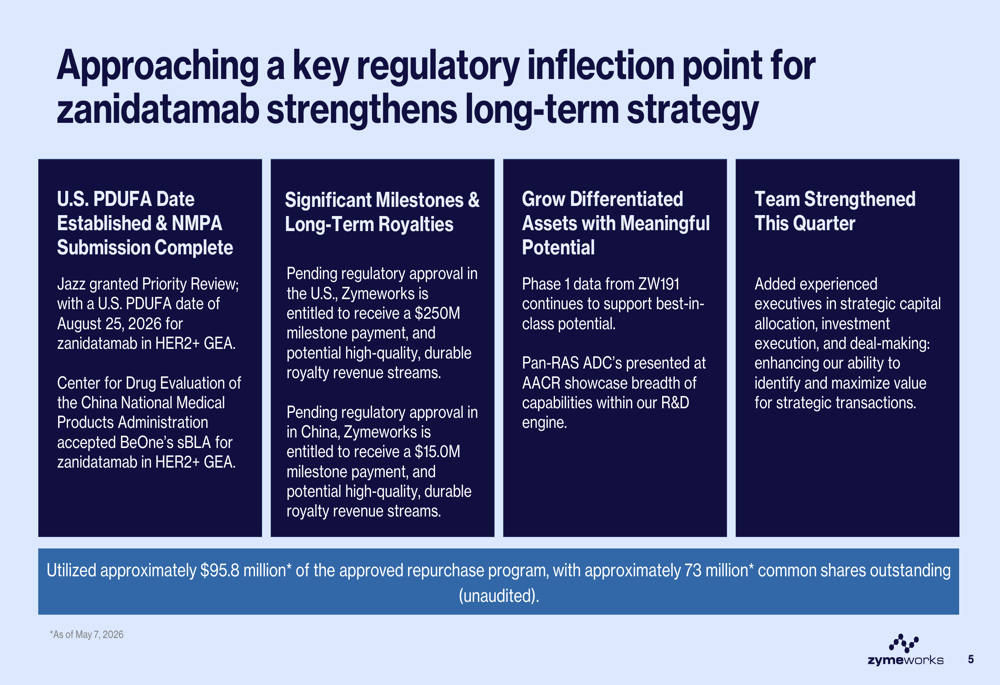
Zymeworks Q1 2026 presentation: zanidatamab nears FDA decision

SYDNEY — The S&P/ASX 200 Index climbed 84.5 points, or 0.96%, to close at 8,878.1 on Thursday, May 7, 2026, snapping a string of recent losses as easing oil prices on renewed U.S.-Iran ceasefire optimism and record Wall Street closes fueled a broad-based rally across mining, banking and energy stocks.
The benchmark Australian share index opened strongly and maintained gains throughout the session, with materials and financials leading the advance amid improved global risk sentiment. The broader All Ordinaries also rose solidly, reflecting widespread participation beyond the top 200 companies.
Thursday’s rebound provided welcome relief after the ASX 200 had endured multiple losing sessions in recent weeks amid Middle East tensions, Reserve Bank of Australia rate hikes and mixed domestic corporate earnings. The 0.96% gain marked one of the stronger daily performances in May and helped lift the index off recent lows.
Drivers Behind the Rally
Global cues were overwhelmingly positive. U.S. markets hit fresh records overnight, with the S&P 500 and Nasdaq climbing on strong tech earnings from companies like AMD and continued optimism around artificial intelligence. Easing oil prices, which briefly dipped below $100 per barrel on ceasefire progress, reduced inflationary fears and supported a risk-on mood.
In Australia, the materials sector outperformed as iron ore and copper prices stabilized and major miners advanced. Banking stocks also gained ground, benefiting from a slight softening in bond yields after the RBA’s recent rate hike to 4.35% was viewed by some as nearing restrictive territory.
Uranium-related stocks stood out among top movers, buoyed by ongoing global energy transition themes. Individual winners included companies linked to resources and select industrials, while defensives lagged modestly.
Ceasefire Hopes Ease Energy Market Fears
Progress in U.S.-Iran ceasefire negotiations via Pakistani mediation played a key role. President Donald Trump’s signals of potential de-escalation and a one-page framework proposal helped calm oil markets after weeks of disruption in the Strait of Hormuz. Lower energy prices directly benefit Australia’s import-dependent economy and reduce cost pressures on businesses and households.
Analysts noted the relief rally could prove short-lived if diplomatic efforts falter, but Thursday’s session demonstrated the ASX’s sensitivity to global risk appetite and commodity prices.
Sector and Stock Highlights
Materials led with solid gains from BHP, Rio Tinto and other heavyweights. Financials followed, with the Big Four banks posting modest advances despite ongoing margin and economic growth concerns. Energy names benefited from the oil price stabilization even as some profit-taking occurred.
Tabcorp shares came under pressure after an AUSTRAC investigation announcement, highlighting how company-specific news can diverge from broader market trends.
Broader Market Context in 2026
The ASX 200 has faced volatility throughout 2026, buffeted by higher interest rates, geopolitical risks and shifting global capital flows. While Wall Street has repeatedly hit records on AI enthusiasm, the local market has contended with a stronger Australian dollar at times, domestic inflation challenges and slower growth in certain sectors.
Year-to-date performance remains mixed, with resources providing support while technology and healthcare have faced headwinds. The RBA’s recent tightening cycle has added caution, though Governor Michele Bullock’s comments suggesting policy is now “a bit restrictive” offered some reassurance that further aggressive hikes may be limited.
What Lies Ahead
Traders will watch upcoming domestic data releases, including inflation prints and employment figures, as well as further developments on the Iran ceasefire. Corporate earnings season continues, with results potentially influencing sector rotations.
Economists remain divided on whether the current environment favors Australian equities. Some see value emerging after recent weakness, particularly in banks and resources, while others warn of persistent headwinds from high interest rates and global uncertainty.
International factors will continue dominating sentiment. Any sustained drop in oil prices or positive AI-related news from the U.S. could support further gains, while renewed Middle East flare-ups or hotter-than-expected Australian inflation could trigger pullbacks.
Investor Implications
For local investors, Thursday’s session underscores the importance of diversification and monitoring global macro signals. Superannuation funds with heavy exposure to Australian equities likely benefited from the rebound, but volatility remains elevated compared to historical norms.
Analysts advise focusing on companies with strong balance sheets, exposure to thematic growth areas such as energy transition, and resilience to higher interest rates. Long-term investors may view dips as buying opportunities, while shorter-term traders should remain nimble amid headline-driven moves.
As the trading week progresses, attention turns to whether the ASX can build on Thursday’s momentum or if profit-taking will cap gains. With Wall Street in record territory and oil pressures easing, conditions appear supportive in the near term, though underlying domestic challenges persist.
The S&P/ASX 200’s 0.96% advance to 8,878.1 reflects a market quick to respond to positive global developments, even as it navigates a complex local and international backdrop in 2026. Investors will continue weighing ceasefire hopes against economic realities in the sessions ahead.
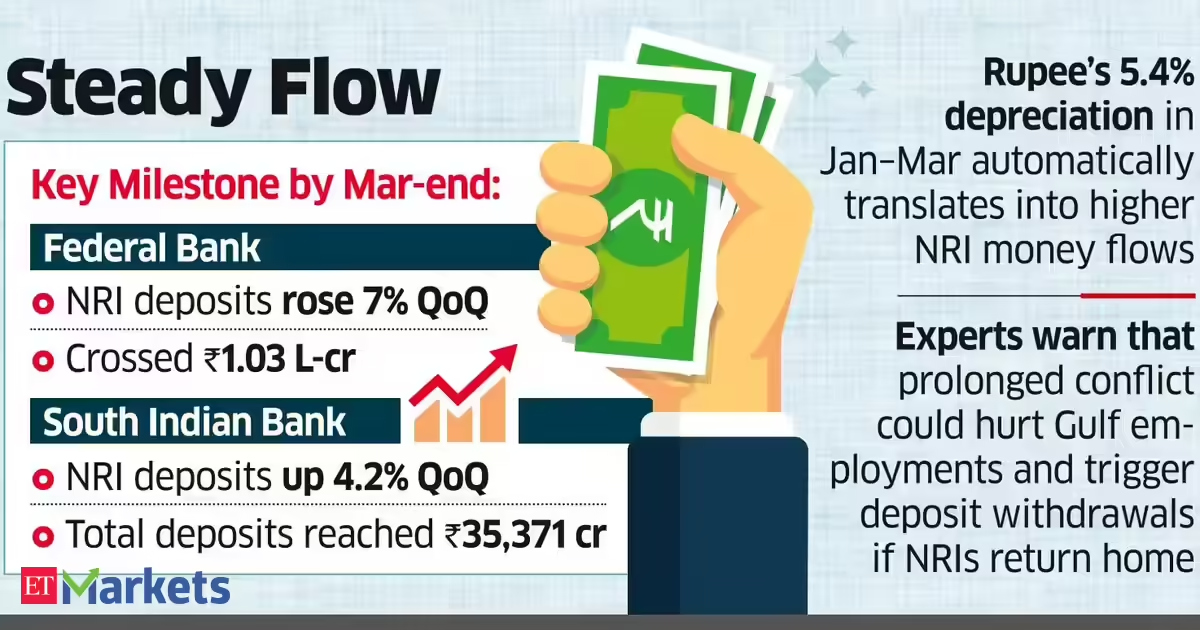
The Kerala-based Federal Bank and South Indian Bank showed quarter-on-quarter growth in non-resident deposits inflow, indicating that the lifeline to Kerala remains largely stable despite the Iran war.
Remittances and overseas deposits play a pivotal role in the southern state’s economy.
The rise in flow also reflects a 5.4% rupee depreciation between January and March. A depreciating local currency automatically translates into higher remittances on the same base amount.
 ET Bureau
Life as usual so far The state accounts for one-fifth of foreign money sent by Indian diaspora
Indians working abroad deposit their surplus money mostly in non-resident external (NRE) accounts in banks operating here, while they remit money to family members for monthly expenses using online platforms or bank wire transfers. The money deposited in foreign curreny gets converted to rupee in both the cases.
Federal Bank’s non-resident deposits grew 7% quarter-on-quarter to ₹1.03 lakh crore at the end of March. The fact that the growth rate was more than rupee depreciation suggests that there has been a rise in transaction in foreign currency. The bank also enjoys a substantial market share in inward remittances.
“Remittances, as of now, remain elevated. My sense is that unless you see significant job losses and returning Indians from UAE for good into India, I don’t think this story is likely to change immediately,” Federal Bank managing director KVS Manian told analysts in a post-earning interaction.South Indian Bank reported a 4.2% growth in inbound flows to ₹35,371 crore growth for the same period, largely reflecting the impact of currency depreciation.
These two banks along with State Bank of India hold the first three positions in terms of attracting NRI deposits in Kerala, people aware said.
“We have a large business in the Middle East in the area most impacted by the current crisis. Our view is that in the short run, it will be a positive for us in the sense that people living in those areas may want to transfer money back home so as to protect themselves in the future. So, there will be increased flows,” South Indian Bank managing director PR Seshadri told ET.
Experts however warned that a prolonged West Asia conflict could threaten these inflows in the long run.
“The problem will happen if the issue continues over a longer period and people’s livelihoods in those countries are impacted… Those balances will get drawn down when those individuals come back home,” Seshadri said.
The Reserve Bank of India (RBI) data showed that more than a third of India’s remittances, totalling ₹3.74 lakh crore in 2023-24, came from Gulf countries such as the UAE, Saudi Arabia, Qatar, Kuwait and Oman.
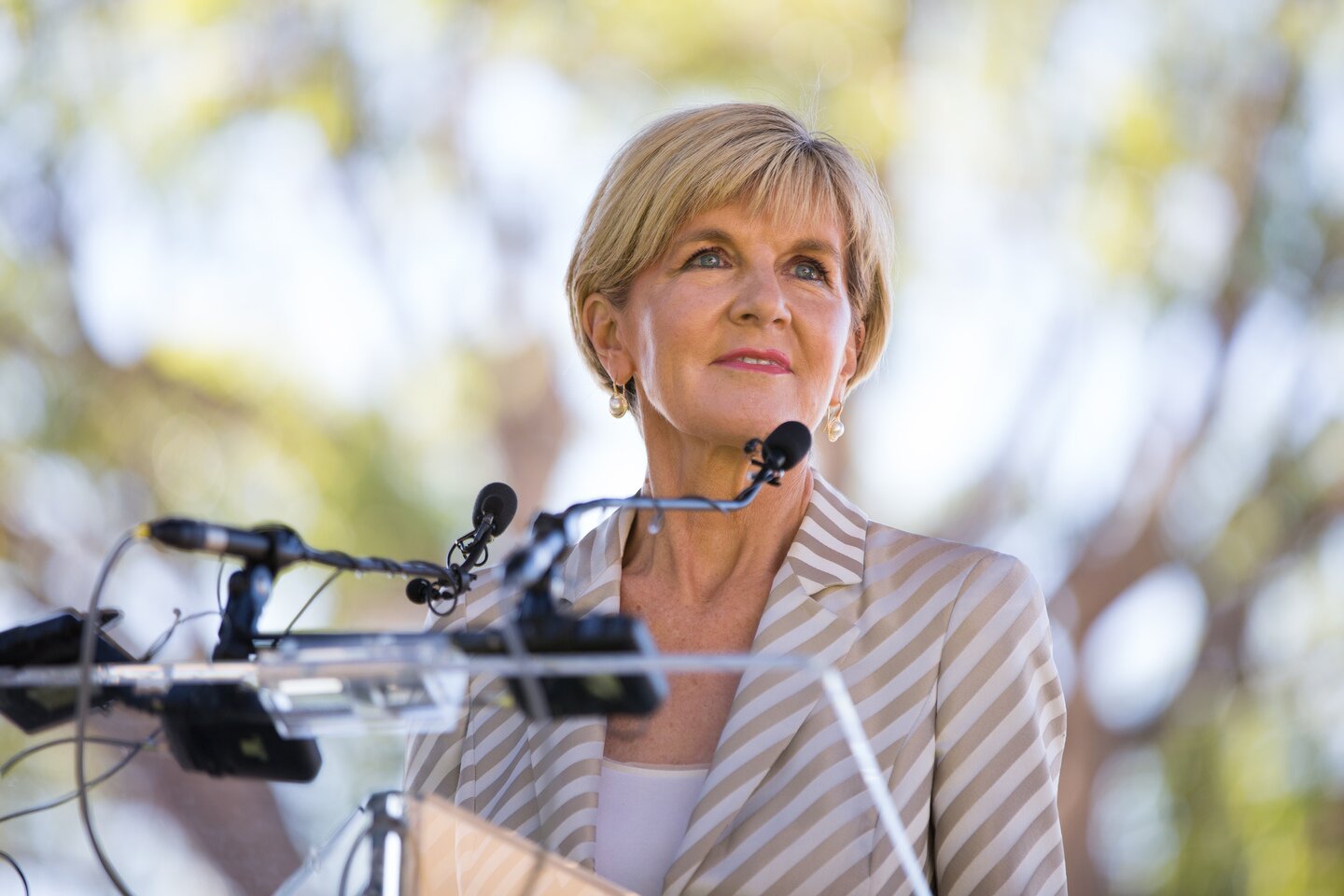
Former foreign minister Julie Bishop has resigned as chancellor of one of the nation’s most prestigious universities, effective immediately.

Daniel Marshall
Senior Manager of Communications & Ownership
Good evening. I’m Daniel Marshall, Senior Manager of Communications and Ownership at Ginkgo. I’m joined by Jason Kelly, our Co-Founder and CEO; and Steve Coen, our CFO. Thanks, as always, for joining us. We’re looking forward to updating you on our progress.
As a reminder, during the presentation today, we will be making forward-looking statements, which involve risks and uncertainties. Please refer to our filings with the SEC to learn more about these risks and uncertainties, including our most recent 10-K. Today, in addition to updating you on the quarter results, we’re going to provide insight into how and why we see autonomous labs like Nebula, our autonomous lab, replacing the lab bench, which is where nearly all of biological science is done today. As usual, we’ll end with the Q&A session, and I’ll take questions from analysts, investors and the public. You can submit those questions to us in advance via X. #GinkgoResults or e-mail, investors@ginkgobioworks.com. All right.
Over to you, Jason.
Jason Kelly
Co-Founder, Co-COO, CEO & Director
Thanks, Daniel. We always start with this. Ginkgo’s mission is to make biology easier to engineer. And I mentioned this at the last earnings call, but in 2026, our focus will be on investing to win the category of autonomous labs. And I’m really excited, even since we just spoke a few months ago, this category has really been growing in attention, new companies in Silicon Valley pursuing this, a lot of interest from the AI Frontier labs about the application of AI models in science via autonomous labs. Government talking more about this. So I
Business
(VIDEO) Teen Girl, 16, Dies in Horrific Cliff Swing Harness Failure at Sichuan Adventure Park

BEIJING — A 16-year-old girl plunged to her death at a newly opened adventure park in Sichuan province on Sunday after her safety harness failed during a high-altitude cliff swing ride, prompting an immediate shutdown of the facility and a criminal investigation into staff negligence.
The tragic incident occurred at Malewa Adventure Park, which had been operating for only about 40 days since opening in March 2026. According to eyewitness accounts and preliminary reports, the young tourist from mainland China was pushed off the platform by staff despite alerting them that her safety rope was not securely fastened. Almost immediately after leaving the ledge, the harness appeared to snap or detach, sending her falling over a 200-meter drop where she struck the cliff face multiple times.
She was pronounced dead while being rushed to a local hospital. The case has been preliminarily classified as a work safety liability accident, and local authorities have reached a compensation agreement with the victim’s family. Operators of the park and responsible personnel remain under criminal investigation for suspected negligence.
Details of the Fatal Ride
The cliff swing, a bungee-style attraction offering adrenaline seekers a dramatic free-fall experience high above a mountainous landscape, was one of the park’s flagship activities. Video footage circulating on Chinese social media, later referenced in news reports, showed the girl expressing concern moments before the push. Staff reportedly proceeded anyway, leading to the catastrophic failure.
Safety experts have criticized the apparent lack of double-check protocols and emergency stop mechanisms. The park’s short operational history raises questions about rushed safety certifications and staff training in a country where adventure tourism has boomed post-pandemic but regulatory oversight sometimes lags.
Broader Context of Adventure Tourism Risks in China
This incident is the latest in a series of high-profile accidents at Chinese adventure parks and extreme sports venues. Similar harness failures and equipment malfunctions have occurred in recent years at bungee jumps, zip lines and rope courses, often linked to cost-cutting, inadequate maintenance or insufficient regulation.
China’s adventure tourism sector has grown rapidly as young people seek thrilling experiences, but safety standards vary widely between established operators and newer facilities chasing quick profits. Malewa Adventure Park marketed itself heavily on social media with dramatic footage of its cliff swing, attracting visitors eager for shareable content.
Authorities in Sichuan have ordered an indefinite closure of the park pending a full safety investigation. Provincial tourism regulators announced they would conduct province-wide inspections of similar high-risk attractions.
Public Reaction and Calls for Accountability
News of the tragedy spread quickly on Weibo and Douyin, sparking outrage over perceived negligence. Many commenters questioned how staff could ignore the girl’s warnings and why the equipment failed so dramatically. Hashtags related to adventure park safety trended briefly before being moderated.
Parents and safety advocates called for stricter licensing requirements, mandatory third-party audits and better emergency response protocols at extreme sports venues. Some compared the incident to past tragedies, urging authorities to prioritize lives over tourism revenue.
The victim’s family, while accepting compensation, is reportedly cooperating with investigators. Details about her identity have not been publicly released out of respect for privacy.
Industry Response and Safety Concerns
China’s State Administration for Market Regulation and tourism authorities have previously issued guidelines for adventure activities, but enforcement remains challenging in a vast country with thousands of small operators. Experts recommend that visitors always check recent safety records, insist on visible double-harness systems and avoid parks with short operating histories.
The incident highlights broader tensions between economic development through tourism and public safety. Sichuan, known for its scenic mountains and growing adventure offerings, faces pressure to balance visitor appeal with rigorous oversight.
Lessons and Moving Forward
As the investigation continues, this heartbreaking case serves as a stark reminder of the risks inherent in extreme sports when safety is compromised. Families grieving the loss of a young life have called for systemic changes to prevent similar tragedies.
Adventure park operators nationwide are expected to review protocols in the coming weeks. For thrill-seekers, the message is clear: excitement should never come at the expense of verified safety measures.
The young girl’s death has left a community in mourning and reignited national conversations about accountability in China’s booming leisure industry. While compensation has been arranged, the loss of a 16-year-old with her whole life ahead remains an irreplaceable tragedy that underscores the need for unwavering commitment to safety standards.
Authorities have urged the public to report unsafe attractions, and tourism boards are promoting certified operators with transparent safety records. In the aftermath of this Sichuan cliff swing disaster, one hope remains: that meaningful reforms will emerge so no other family has to endure such preventable pain.

York Gin named finalist in Press Best Retailer award

Century Aluminum Q1 2026 slides: EBITDA surges 35% on pricing strength
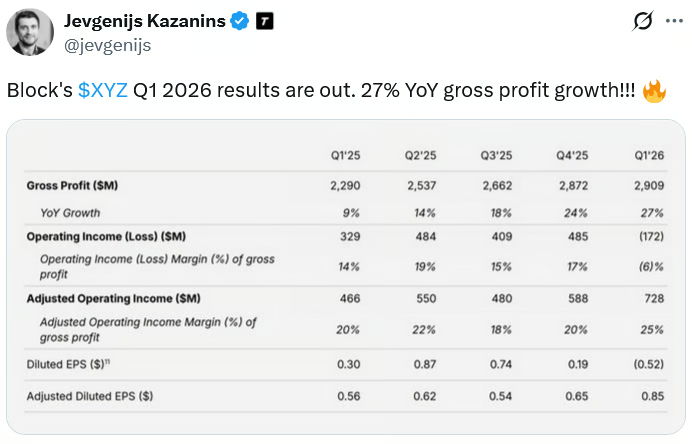
Block Shares Jump on Strong Quarter Despite Bitcoin Dip

Manchester United reach agreement with Casemiro over contract clause amid transfer speculation

US brings back mandatory military draft registration

Steven Gerrard disagrees with Gary Neville over ‘shock’ Chelsea and Arsenal claim | Football
![BITCOIN: CRAZY!!!! THIS IS CRAZY!!!! [trades]](https://wordupnews.com/wp-content/uploads/2026/05/1778214197_maxresdefault-80x80.jpg)


-

 NewsBeat4 days ago
Channel 5 – All Creatures Great and Small series 7 new post
-

 Crypto World20 hours ago
Upbit adds B3 Korean won pair as Base token gains Korea access
-
 Tech6 days ago
Trump’s 25% EU auto tariff breaches Turnberry Agreement that also covers semiconductors and digital trade
-
 NewsBeat21 hours ago
NCP car park operator enters administration putting 340 UK sites at risk of closure
-
 Sports6 days ago
Paul Scholes issues Marcus Rashford reality check as agreement emerges over Man United star
-

 Entertainment6 days ago
Met Gala 2026 Rumored Guest List Is Turning Heads
-
 Business7 days ago
Strait of Hormuz Blockade Persists Amid US-Iran Standoff, Sending Oil Prices Soaring
-

 Entertainment6 days ago
Kylie Jenner Hit With Second Lawsuit From Ex-Housekeeper
-
Entertainment6 days ago
New on Prime Video in May 2026 — Full List of Movies and Shows
-

 Tech7 days ago
Meta ends Sama contract after Kenyan workers report seeing intimate footage from Ray-Ban smart glasses users
-

 Sports6 days ago
Cavaliers vs. Raptors Game 6 live score, updates, highlights from 2026 NBA playoffs first-round series
-
 Sports6 days ago
David Benavidez responds to team Canelo saying the fight will never happen
-
Entertainment5 days ago
New Netflix Movies in May 2026 — My Top 3 Picks to Stream
-

 Entertainment5 days ago
Melissa Joan Hart and More Stars Attend 2026 Kentucky Derby
-
 Sports6 days ago
IPL 2026: ‘Love you darling’- Hardik Pandya’s reaction to MS Dhoni steals the show |Watch | Cricket News
-

 Entertainment6 days ago
Young and the Restless Next Week: Cane Arrested & Matt’s Deadly New Scheme!
-

 Business5 days ago
Luka Doncic Injury Update: Doncic’s Hamstring Recovery Slows Lakers’ Hopes Against Thunder: Can He Run Yet?
-

 Sports7 days ago
Bayern won’t hand bottom side Heidenheim ‘gifts’ despite PSG game
-
 Crypto World5 days ago
Pi Network Mandates Protocol 23 Upgrade for All Mainnet Nodes Before May 15 Deadline
-

 Sports7 days ago
What Preity Zinta Said After Punjab Kings’ First Defeat Of IPL 2026
You must be logged in to post a comment Login