Connect with us
DAPA Banner
DAPA Coin
DAPA
COIN PAYMENT ASSET
PRIVACY · BLOCKDAG · HOMOMORPHIC ENCRYPTION · RUST
ElGamal Encrypted MINE DAPA
🚫 GENESIS SOLD OUT
DAPAPAY COMING

Business

Gold ETFs deliver up to 61% returns since last Akshaya Tritiya. Should you hold or book profits after the rally?

Published

on

Gold ETFs deliver up to 61% returns since last Akshaya Tritiya. Should you hold or book profits after the rally?
In India, buying gold is not just an investment—it is deeply rooted in tradition. People often purchase gold during festivals as it is associated with prosperity, good fortune, and long-term wealth. Akshaya Tritiya is one such special occasion, widely considered highly auspicious for buying gold.

Against this traditional backdrop, gold exchange-traded funds (ETFs) have also emerged as a strong modern alternative to investment in the bullion.

Gold ETFs have delivered stellar returns of up to 61% since the last Akshaya Tritiya, an analysis by ETMutualFunds showed. Market experts, however, caution that allocation discipline remains key—investors should book profits in line with their asset allocation, trimming exposure when it exceeds targets and rebalancing when it falls short.

Also Read | Mutual funds raise tech exposure in March after 8-year low. Tactical move or trend reversal?

Akshat Garg, Head – Research & Product of Choice Wealth, shared with ETMutualFunds that align profit booking with your long-term asset allocation: trim exposure (e.g., 20-30%) if gold now exceeds your target of 5-15%, reallocating to underweight assets like equities or debt to maintain balance without fully exiting the hedge.

Vishal Dhawan, Founder & CEO, Plan Ahead Wealth Advisors, told ETMutualFunds that on profit-booking, the more sensible lens is usually portfolio discipline, not price excitement, and after a very sharp move, tactical profit-booking can make sense if gold has moved meaningfully above the intended portfolio weight.
But for long-term investors, gold is usually held as a strategic diversifier, so exiting solely because returns were strong can defeat the role it plays in cushioning portfolios during stress, Dhawan further said.

What has driven the rally?

The sharp surge in gold ETF returns has largely been driven by multiple global factors, including geopolitical tensions, central bank buying, a softer interest rate outlook, and persistent macro uncertainty. Gold’s appeal as a safe-haven asset has strengthened as investors seek protection against volatility in equities and currencies.

Advertisement

Experts believe that while the rally has been strong, gold is benefiting from inflation-hedging demand.

Dhawan said that the rally has largely been driven by a mix of safe-haven demand, strong central-bank buying, continued geopolitical uncertainty, a softer US dollar at various points, and falling or volatile real yields, and gold is benefiting from inflation-hedging demand

To this, Garg said central bank buying, massive ETF inflows (especially in India), inflation fears from US tariffs, and global debt pressures have fueled the surge, even as Middle East tensions caused temporary dips via oil-driven USD strength—though the dollar remains range-bound at DXY approximately 98.

Since the last Akshaya Tritiya was celebrated on April 30, 2025, gold ETFs gave an average return of 59.63%. There were 20 gold ETFs in the said period, of which the Tata Gold ETF gained the most, around 60.59%.

Advertisement

Aditya Birla SL Gold ETF and ICICI Pru Gold ETF posted a return of 60.27% and 60.22%, respectively. Zerodha Gold ETF rallied 60.12%, followed by Kotak Gold ETF, which went up 60.06%.

Quantum Gold Fund ETF was the last one in the list, which gained 58.55% from April 30, 2025, to April 16, 2026.

Also Read | Mutual fund SIPs not enough for Rs 3 crore goal in 12 years? Here’s how to bridge the gap

Is the surge sustainable?

While gold ETFs have delivered impressive returns, questions remain about the sustainability of this rally. Valuations in the near term may appear stretched after such a sharp move, but structural drivers for gold remain intact.

Advertisement

According to Garg, this rally is structurally sustainable due to persistent Asian and central bank demand plus macro hedging qualities, though short-term stretches exist post-rally; long-term investors should continue SIPs targeting 5-10% allocation.

Dhawan said that flows into gold ETFs have clearly remained strong, supported in part by sharp trailing returns, though the pattern has not been linear, while the broader trend has stayed firm, there have also been signs of moderation and volatility in flows, both in India and globally which suggests that the rally is no longer a simple one-way flow story and that investor behaviour is becoming more sensitive to price levels and market conditions.

Dhawan added that valuations do appear more stretched than they were a year ago, at least from a momentum perspective. For long-term investors, continuing SIPs may still be the more disciplined approach rather than trying to time the top after a sharp rally and the key, however, is to ensure that gold remains within a planned asset-allocation framework and does not become a disproportionate driver of the portfolio simply because of recent performance.

A right time to invest?

Geopolitical tensions, which traditionally bolster gold, complicated the narrative this time. According to a report by Tata Mutual Fund, war-driven energy price spikes increased pressure on importing nations, some central banks had less room to buy gold, and countries like Turkey even sold gold reserves to stabilise their currency.

Advertisement

Central banks have been the backbone of gold’s rally since 2023. However, this does not signal a full reversal. It’s just a slowdown in buying. Overall, gold swaps by central banks are largely neutral for prices, the report further mentioned.

With gold prices being volatile, many investors are debating whether to enter now or wait for a correction. In response to this, Dhawan said that for a lump-sum investor, waiting for a correction is emotionally attractive but practically difficult, because gold rallies are often driven by unpredictable risk events. For a long-term allocator, staggered entry is generally the cleaner approach than trying to call the perfect level, which is especially true after a sharp run-up when near-term volatility risk is higher.

He further said that a strategic allocation is usually more relevant than a return-chasing allocation. In practical wealth-allocation discussions, many diversified portfolios treat around 5% to 10% as a reasonable strategic range for gold exposure, while going materially above that usually needs a stronger macro view and higher tolerance for commodity volatility, and that is a framework, not a one-size-fits-all prescription.

Garg said that this is suitable for SIP entry at these levels for patient investors; consider waiting for a 5-10% pullback if tactical and aim for 7-12% portfolio allocation, fitting Indian investors’ diversification needs amid equity volatility.

Advertisement

Historical performance

In the last six months, gold ETFs have rallied upto 21.19% with Tata Gold ETF being the top performer. In the last nine months, the gain has been upto 55%. And in the current calendar year so far, gold ETFs gained up to nearly 16%, with LIC MF Gold ETF delivering the highest return of 15.50%.

Also Read | Equity mutual fund average AUM rises 17% in FY26; flexi cap funds lead investor preference: Abakkus Mutual Fund

A rough ride in 2026

Gold and silver emerged as the standout performers till January 29, offering investors superior returns. January 2026 was a very eventful month for gold and silver. Prices of both metals went up sharply during most of the month as many investors rushed towards safe options because of uncertainty in global markets. People looked at gold and silver as protection for their money, which pushed prices higher.

Gold and silver reached very high levels, close to record prices. On January 29, Gold futures scaled fresh lifetime highs on the Multi-Commodity Exchange (MCX) and gold climbed closer to Rs 1.8 lakh per 10 grams.

Advertisement

Silver emerged better than gold in the starting month of the current calendar year because it benefits both as a precious metal and from industrial demand, which added to the buying pressure.

However, towards the end of the month, things changed quickly. Once prices became very high, many investors started selling to book profits. This caused a sudden fall in prices. On January 30, gold prices tanked as much as 12%, or Rs 20,514, in a single day on January 30, marking their worst one-day rout since March 2013, when prices had plunged 9% on the MCX.

What to expect in the next 12-18 months

Garg said that one can expect $4,000-$5,000/oz consolidation through 2026-27, backed by policy easing, steady demand, and geopolitical risks maintaining a bullish tilt.

Dhawan said the base case still looks constructive, but probably with much more volatility than the recent straight-line move suggests. So, over the next 12–18 months, the key variables are likely to be geopolitics, the direction of US real yields, the dollar, central-bank buying, and whether inflation stays sticky enough to keep hedging demand alive.

Advertisement

He further said that if those remain supportive, gold can stay elevated and may still grind higher. But after such a strong run, investors should also expect corrections and weaker ETF-flow months along the way. That makes the medium-term case still positive, but the near-term path much less smooth.

(Disclaimer: Recommendations, suggestions, views and opinions given by the experts are their own. These do not represent the views of The Economic Times)

If you have any mutual fund queries, message on ET Mutual Funds on Facebook/Twitter. We will get it answered by our panel of experts. Do share your questions on ETMFqueries@timesinternet.in alongwith your age, risk profile, and twitter handle

Advertisement
Add ET Logo as a Reliable and Trusted News Source

Continue Reading
Click to comment

You must be logged in to post a comment Login

Leave a Reply

Business

Gilt Yields Hit 28-Year High as Starmer Defies Resignation Calls

Published

on

Gilt Yields Hit 28-Year High as Starmer Defies Resignation Calls

Britain’s bond market delivered its sharpest rebuke yet to Sir Keir Starmer’s premiership on Tuesday, with 30-year gilt yields climbing to their highest level this century as the prime minister stared down a growing chorus of Labour MPs demanding he step aside.

The sell-off, which dragged sterling and equities lower in lockstep, wiped out the relief rally that followed Starmer’s defiant intervention last week. Tuesday’s cabinet meeting, at which the prime minister once again refused to countenance resignation, did little to settle nerves. Investors are now openly pricing in the prospect of a leftward lurch in Labour policy, with the attendant risks of looser fiscal rules, higher gilt issuance and a further squeeze on the cost of capital for British business.

For the country’s 5.5 million small and medium-sized enterprises, the implications are far from academic. Higher long-dated gilt yields feed directly into the swap rates that underpin commercial lending, business mortgages and asset finance, raising the prospect of yet another leg up in the borrowing costs faced by Britain’s corporate backbone at a time when many are still nursing the legacy of post-pandemic debt.

The 30-year gilt yield rose 13 basis points to 5.81 per cent, the highest since May 1998. The benchmark 10-year yield gained 10 basis points to 5.1 per cent, within a whisker of breaching the post-2008 peak it set earlier this month. Bond prices move inversely to yields.

“A new Labour leader may face pressure to ease the fiscal rules and raise gilt issuance,” warned Jim Reid, analyst at Deutsche Bank, capturing the City’s central concern that any successor would lean towards higher spending and heavier taxation of the very businesses the Treasury is counting on to drive growth.

Advertisement

Sterling’s slide alongside government bonds will draw uncomfortable parallels with the dark days of Liz Truss’s mini-budget. When a currency weakens in concert with rising borrowing costs, it is the trading pattern of an emerging market that has lost the confidence of foreign capital, not that of a G7 economy. The pound fell 0.64 per cent against the dollar to a two-week low of $1.352, and shed 0.21 per cent against the euro to €1.152, its weakest since mid-April.

Some of the pressure is undeniably imported. Bunds, OATs and BTPs all sold off as President Trump declared the Iran ceasefire was “on life support”, sending Brent crude up 2.8 per cent to $107.17 a barrel and reigniting inflation fears across advanced economies. The Strait of Hormuz, through which a fifth of global oil and gas once flowed, remains largely shut. Germany’s Dax bore the brunt of the European sell-off, falling more than 1 per cent. But gilts underperformed by a substantial margin, marking out Westminster’s political turmoil as a uniquely British risk premium.

Mohit Kumar, chief European economist at Jefferies, urged clients to short sterling, arguing any change in the composition of government “would likely be left-leaning”. Anthony Willis, senior economist at Columbia Threadneedle Investments, cautioned that the bond market was unlikely to settle “until greater clarity emerges”.

Equities followed suit. The FTSE 100 surrendered 0.3 per cent having opened the week with a 0.4 per cent gain, while the more domestically focused FTSE 250 dropped 211 points, or 0.9 per cent, extending its losing streak to a second day. Mid-cap stocks, dominated by UK-facing businesses, are the clearest read on how the City judges Britain’s economic prospects.

Advertisement

The grim verdict from Andrew Goodwin, chief UK economist at Oxford Economics, is that there is little prospect of meaningful relief. He expects 10-year borrowing costs to remain stuck above 5 per cent for the remainder of the year, regardless of who occupies Number 10. “Markets clearly perceive the UK has a bigger inflation problem and that tighter monetary policy will be needed to limit second-round effects from the energy shock, while political uncertainty has added to pressures at the long end,” he said.

Even were Starmer to dig in, Goodwin argued, the bond market would have little to celebrate, with the prime minister’s “attempts to regain popularity, or, more likely, from a successor implementing more costly left-wing economic policies” weighing on sentiment. “If Starmer sets out a timetable to stand down, the uncertainty premium will persist.”

For owner-managers already navigating a punishing cost base, a softening consumer and the fallout from this spring’s National Insurance changes, the message from the bond vigilantes is unambiguous: brace for borrowing to stay dear, and for political risk to remain firmly on the balance sheet.


Jamie Young

Jamie Young

Jamie is Senior Reporter at Business Matters, bringing over a decade of experience in UK SME business reporting.
Jamie holds a degree in Business Administration and regularly participates in industry conferences and workshops.

When not reporting on the latest business developments, Jamie is passionate about mentoring up-and-coming journalists and entrepreneurs to inspire the next generation of business leaders.

Advertisement

Continue Reading

Business

CPGs need a new playbook

Published

on

CPGs need a new playbook

Sector underperformance calls for retooled growth model.

Continue Reading

Business

Litis to buy $4m Yallingup shack

Published

on

Litis to buy $4m Yallingup shack

The property identity is set to purchase the unique coastal home following more than two decades in the same hands.

Continue Reading

Business

Prudential to admit 5.7 million new shares to London Stock Exchange

Published

on


Prudential to admit 5.7 million new shares to London Stock Exchange

Continue Reading

Business

Amazon launches 30-minute delivery service in dozens of US cities

Published

on

Amazon adds seller surcharge as oil spike from Iran tensions drives logistics costs higher

Amazon is rolling out 30-minute delivery across dozens of U.S. cities, marking its fastest shipping option yet as the retail giant continues to accelerate its push into ultra-fast fulfillment.

The new service, called Amazon Now, will deliver thousands of items — including groceries, household essentials and electronics — to customers’ doors in about 30 minutes.

Advertisement

The offering is now available in Seattle, Philadelphia, Dallas-Fort Worth and Atlanta, and is expanding to additional markets such as Austin, Denver, Houston, Minneapolis, Orlando, Oklahoma City and Phoenix.

“Amazon Now is for when you need or want the convenience of getting your Amazon order delivered in 30 minutes or less,” Udit Madan, senior vice president of Amazon Worldwide Operations, said in a statement. “With thousands of items available for ultra-fast delivery, you can get everything from groceries for dinner, to AirPods before a flight, to household essentials like laundry detergent or toothpaste delivered right to your door.

CALIFORNIA ACCUSES AMAZON OF PUSHING RIVALS TO RAISE PRICES

Amazon driver making deliveries.

A worker near packages in an Amazon delivery vehicle in San Francisco on Monday, Feb. 2, 2026. (David Paul Morris/Bloomberg via Getty Images / Getty Images)

“Amazon Now complements Amazon’s existing fast-delivery offerings, including 1-hour and 3-hour delivery on more than 90,000 products and Same-Day Delivery on millions of items,” Madan added.

Advertisement

Amazon said the new service relies on a network of smaller fulfillment sites located closer to customers, allowing for faster delivery times and shorter travel distances for drivers.

Prime members will pay $3.99 per order for the service, while non-members will pay $13.99. Additional fees will apply for smaller orders, including $1.99 for Prime members and $3.99 for non-Prime members for orders under $15.

AMAZON DISRUPTING ITSELF, REBUILDING CUSTOMER SHOPPING EXPERIENCE AROUND AI FROM GROUND UP

TOPSHOT-US-TECHNOLOGY-INNOVATION-AMAZON

Amazon’s new MK30 Prime Air drone is displayed during Amazon’s “Delivering the Future” event at the company’s BFI1 Fulfillment Center, Robotics Research and Development Hub in Sumner, Washington on October 18, 2023. (Jason Redmond/AFP via Getty Images / Getty Images)

“Amazon Now uses a network of smaller locations designed for efficient order fulfillment, strategically placed close to where customers live and work,” Amazon said. “This approach prioritizes the safety of employees picking and packing orders, reduces the distance delivery partners need to travel, and enables faster delivery times for customers.”

Advertisement

Amazon plans to expand the service to tens of millions of customers by the end of 2026.

AMAZON ADDS SELLER SURCHARGE AS OIL SPIKE FROM IRAN TENSIONS DRIVES LOGISTICS COSTS HIGHER

Amazon is investing $4 billion to expand Prime delivery services to rural America.

Amazon is investing $4 billion to expand Prime delivery services to rural America. (Amazon / Fox News)

The rollout comes as Amazon continues to invest heavily in speeding up deliveries, reporting that U.S. Prime members received more than 8 billion items the same or next day in 2025 — a more than 30% increase from the previous year.

The new offering adds to Amazon’s broader delivery network, which includes Prime Air drone delivery, offering sub-60-minute service in select U.S. locations, as well as one-hour, three-hour and same-day delivery options across thousands of cities and towns.

Advertisement

Amazon said 2025 marked its third consecutive year of record-fast delivery speeds, with more than 13 billion items arriving the same or next day globally. In the U.S., Prime members received over 8 billion of those shipments — up more than 30% year over year — with groceries and everyday essentials making up about half.

CLICK HERE TO GET THE FOX BUSINESS APP

The company said Prime members have access to free shipping on more than 300 million items, and saved an average of $550 on fast delivery last year — nearly four times the cost of a membership.

Advertisement
Continue Reading

Business

Lala unveils RTD yogurt smoothies

Published

on

Lala unveils RTD yogurt smoothies

The nutritional smoothies are available in four flavors.

Continue Reading

Business

Jon Moulton backs biotech firm Infex Therapeutics tackling ‘critical global threat’ of antibiotic resistance

Published

on

Business Live

Mr Moulton and GM&C Life Sciences Fund join £4.3m funding round

Infex Therapeutics has secured £4.3m in funding

Infex Therapeutics has secured £4.3m in funding(Image: Infex Therapeutics)

Venture capitalist Jon Moulton has backed a biotech firm that’s looking to tackle the “critical global threat” of infections that are resistant to antibiotics.

Infex Therapeutics, of Alderley Edge, has secured £4.3m in a funding round led by Mr Moulton alongside the GM&C Life Sciences Fund, managed by Catapult Ventures, and existing high net worth investors.

The company will use the funding to develop its pipeline of new anti-infectives targeting antimicrobial resistance (AMR) and other “critical-priority infectious diseases”.

Dr Peter Jackson, CEO of Infex Therapeutics, said: “We are delighted to secure this investment led by Jon Moulton, with support from the Greater Manchester and Cheshire Lifescience Investment Fund and our existing investors.

Advertisement

“This funding represents strong validation of our progress in developing novel anti-infectives to address the critical global threat of antimicrobial resistance.”

Jon Moulton, founder of Better Capital and now chair of Infex Therapeutics, said: “We have supported Infex from the beginning and continue to be impressed by the company’s scientific progress and strategic execution.”

He highlighted Infex’s lead programme RESP-X, which is being trialled as a therapy for non-cystic fibrosis bronchiectasis (NCFB) patients.

And he said: ”This additional investment reflects our strong conviction in both the team and its innovative approach to tackling antimicrobial resistance.

Advertisement

Nick Wright, CEO of Catapult Ventures which manages the GM&C Life Sciences Fund, said: “Infex Therapeutics has made excellent scientific progress since we first invested several years ago. The company has clearly established itself as a world leader in the AMR and related space and the data it is generating is very compelling.”

Continue Reading

Business

ICL Israel Chemicals earnings ahead: Can fertilizer giant rebound?

Published

on


ICL Israel Chemicals earnings ahead: Can fertilizer giant rebound?

Continue Reading

Business

Elon Musk, Tim Cook and others to travel to China with US delegation: White House

Published

on

Elon Musk, Tim Cook and others to travel to China with US delegation: White House

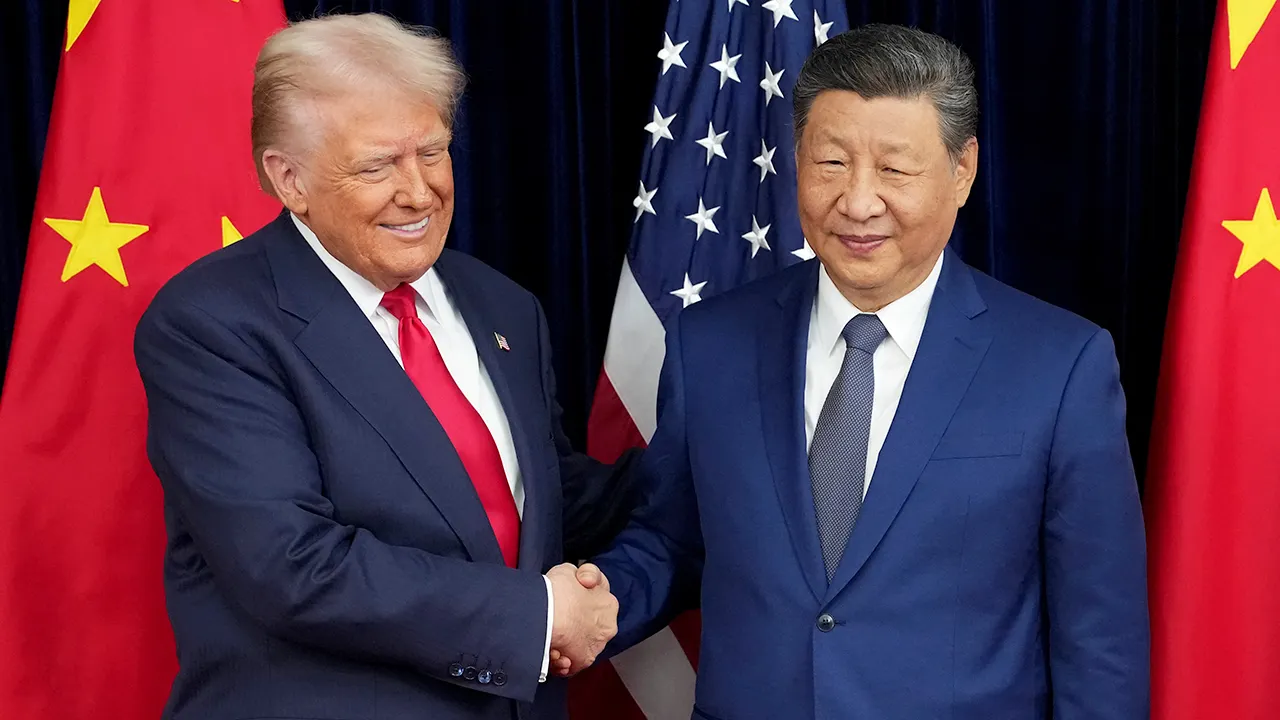
President Donald Trump is slated to visit China this week, and according to a White House official, business figures including Elon Musk, Apple CEO Tim Cook and more than a dozen others will travel to China with the U.S. delegation.

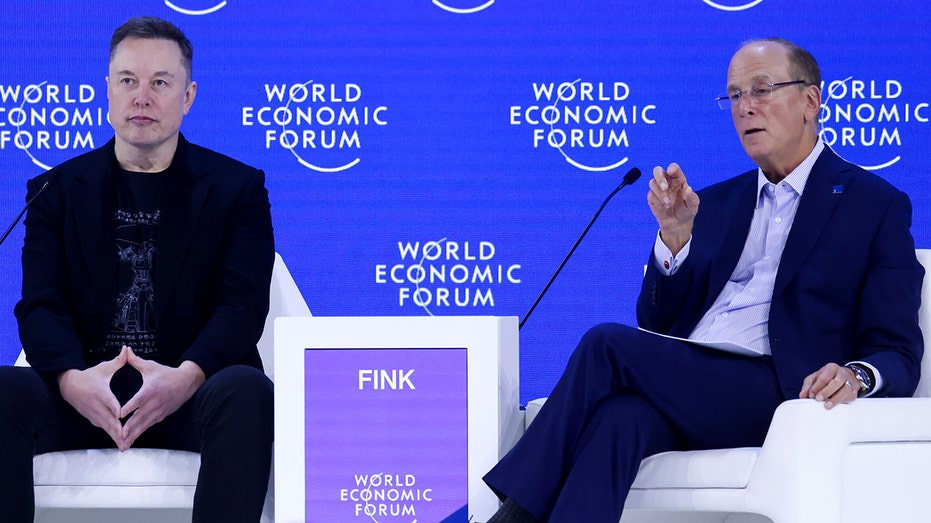
Blackrock CEO Larry Fink, Boeing CEO Kelly Ortberg, and Goldman Sachs CEO David Solomon are some of the other figures listed.

Advertisement

TESLA RECALLS MORE THAN 218K VEHICLES OVER REARVIEW IMAGE ISSUE THAT POSES CRASH RISK

Elon Musk and Larry Fink

Elon Musk, chief executive officer of Tesla Inc., left, and Larry Fink, chief executive officer of BlackRock Inc., during the World Economic Forum (WEF) in Davos, Switzerland, on Thursday, Jan. 22, 2026. (Krisztian Bocsi/Bloomberg via Getty Images / Getty Images)

Others on the list provided by the White House official include Blackstone Chairman, CEO and co-founder Stephen Schwarzman, Cargill Board Chair and CEO Brian Sikes, Citi Board Chair and CEO Jane Fraser, Coherent CEO Jim Anderson, GE Aerospace chairman and CEO H. Lawrence Culp, Jr., Illumina CEO Jacob Thaysen, Mastercard CEO Michael Miebach, Meta President and Vice Chairman Dina Powell McCormick, Micron Chairman, President and CEO Sanjay Mehrotra, Qualcomm President and CEO Cristiano Amon and Visa CEO Ryan McInerney.

“I am very much looking forward to my trip to China, an amazing Country, with a Leader, President Xi, respected by all,” Trump declared in a Monday Truth Social post. 

GORDON CHANG WARNS CHINESE EVS ENTERING US VIA CANADA COULD BECOME ‘ROLLING SPY MACHINES’

Advertisement
President Trump shakes hands with Apple CEO Tim Cook

Apple CEO Tim Cook (R) shakes hands with U.S. President Donald Trump during an event in the Oval Office of the White House on Aug. 6, 2025 in Washington, D.C. (Win McNamee/Getty Images / Getty Images)

“Great things will happen for both Countries!” he added.

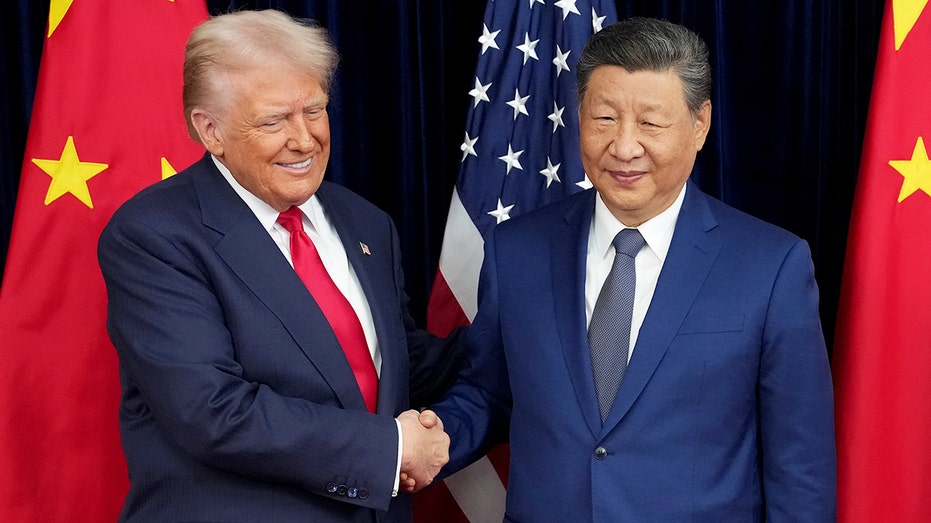
President Donald Trump met with Chinese President Xi Jinping in October in South Korea, according to Reuters.

EX-WHITE HOUSE ‘AI CZAR’ SAYS US, CHINA COULD FIND AI COMMON GROUND DESPITE FIERCE RIVALRY

U.S. President Donald Trump shakes hands with Chinese President Xi Jinping

U.S. President Donald Trump greets Chinese President Xi Jinping ahead of a bilateral meeting at Gimhae Air Base on Oct. 30, 2025 in Busan, South Korea. (Andrew Harnik/Getty Images / Getty Images)

CLICK HERE TO READ MORE ON FOX BUSINESS

Advertisement

During his first term, Trump visited China in 2017.

Continue Reading

Business

Rich Products Corp. is bulking up breakfast options

Published

on

Rich Products Corp. is bulking up breakfast options

Company is launching protein-forward breakfast innovations. 

Continue Reading

Trending

Copyright © 2025